

When you’re repairing or building an acoustic guitar, a great many components add up to the response and the overall complexity of the instrument. The weight and stiffness of the top matter, and so do the weight and stiffness of the back. How the sides are treated matters, too, whether solid wood or engineered, and it runs right down to the selection of the wood and to how the bracing is worked in order to tune and voice the top.
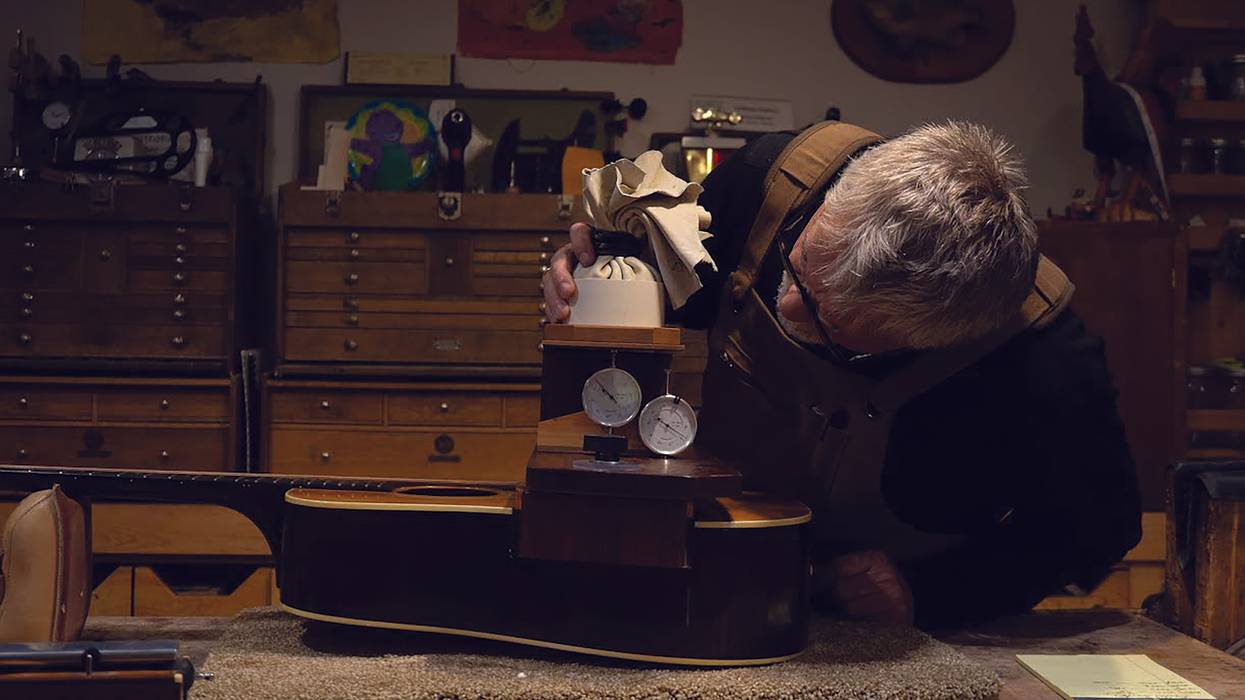
One piece gets overlooked by a lot of builders starting out, and that’s the bridge. It tends to get looked at as an object that’s simply there, without much consideration past that. In my own shop, as with every good luthier I know, we know exactly what our bridges weigh, because bridge weight has a profound effect on the voice of the instrument and on the pitch the top is tuned to in Hertz.
A heavier bridge dampens the top and lowers its pitch, while a lighter bridge raises the pitch and can make the top more efficient. That’s not the end of the story; making a bridge as light as possible is not necessarily the best thing you can do for the guitar. There is a target to hit, not a direction to run in.
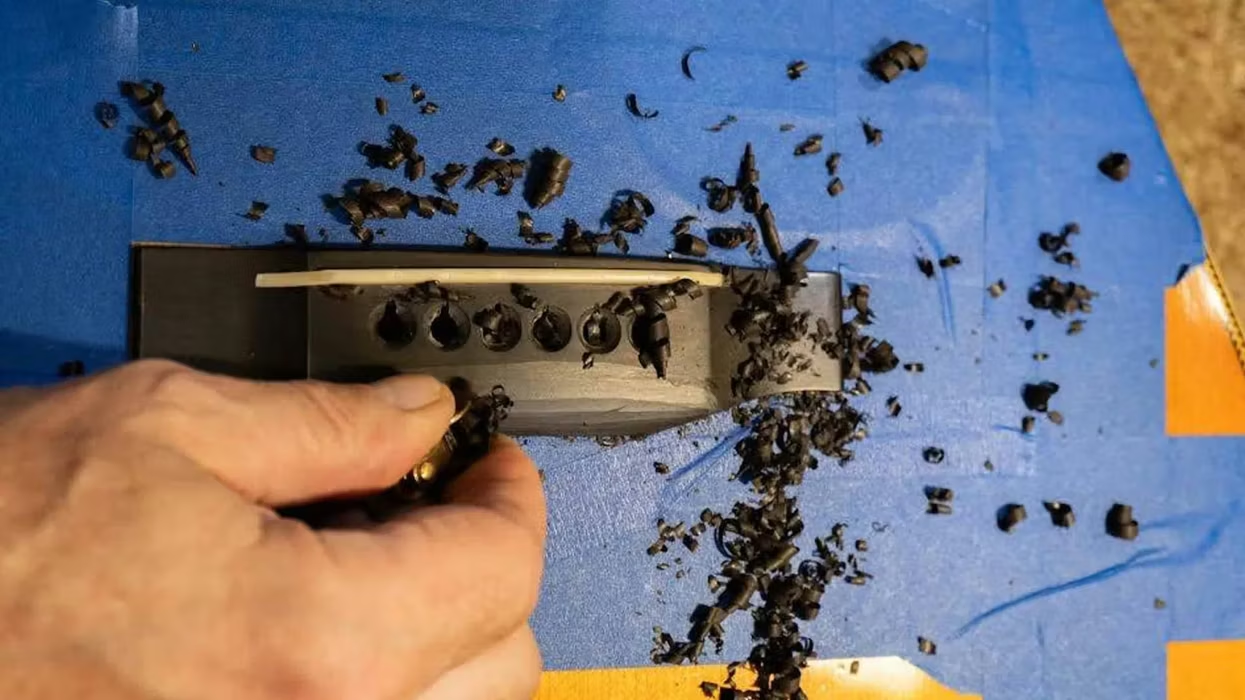
I build two versions of bridges on my own instruments. One is a pinless bridge with string-access holes and a back-string load that, with ebony or Brazilian rosewood, makes a lighter, more efficient bridge, and lets me reach my target frequencies at a little more deflection. Build the same bridge with pins, and the weight of the bone pins has already lowered the pitch of the top, so I reach those targets with less deflection.
The same thinking applies to repair, which brings us to when a bridge should be shaved and when it should not. If what the guitar really needs is a neck reset, and the neck can be reset, then the reset is the correct choice. You never want to shave the bridge first when the right repair is repitching the neck.
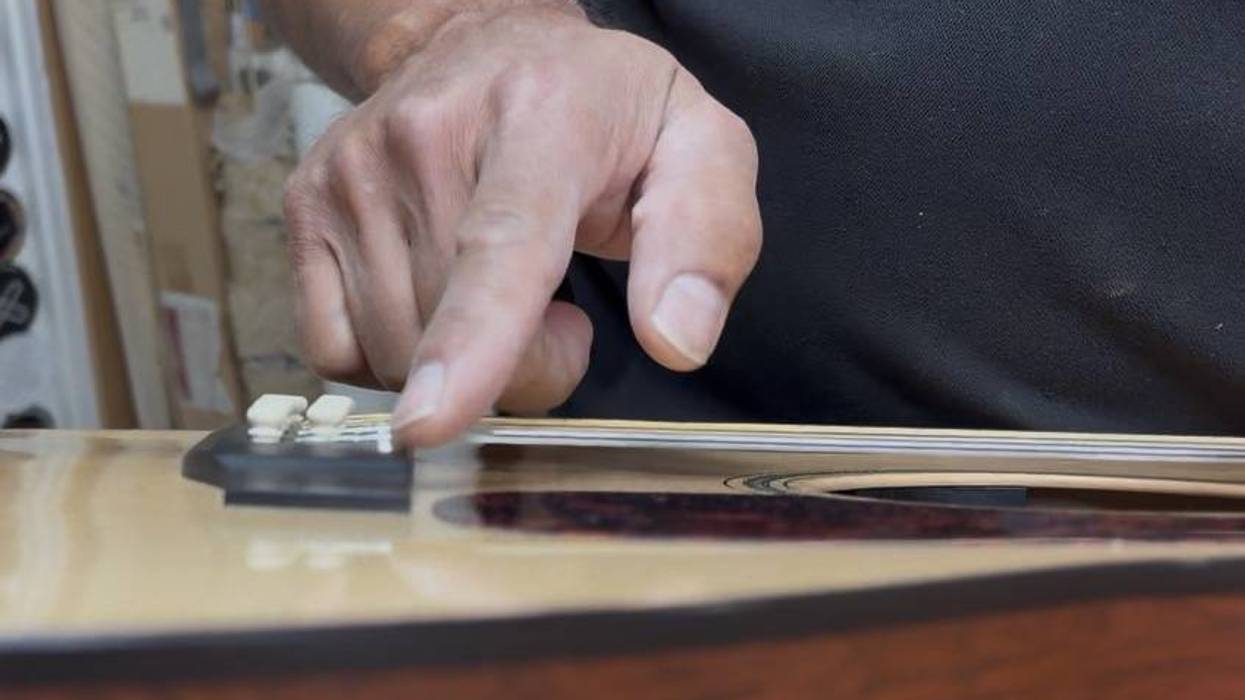
There appear to be roughly three bridge heights on Martin guitars, at .375", .350", and .325". (These are my own observations from years of instruments coming across the bench, not anything written into Martin history.) If a bridge sits at full height and you take twenty-five thousandths of an inch off because that’s all the guitar needs, you still may have changed the pitch and the response of the top. A top at 170 Hz could come out at 175, and if that lands on a note, you have created a dead spot on the neck.
Aggressive shaving is a different matter, and I have seen a great deal of it on old Martins, Gibsons, Guilds, and others. Taking a bridge down to around .300", or to just north of a quarter inch, will completely change the sound. With that much weight gone, a top that averaged 170 to 180 Hz can be pushed into the 190s, where it may no longer couple with the back in any meaningful way.
Not long ago, a 1942 Martin D-28 herringbone came in that had already seen a replacement bridge, some overspray, and a new fretboard. It was in decent shape otherwise, but the top sat right on a note and I wanted to raise it a little.
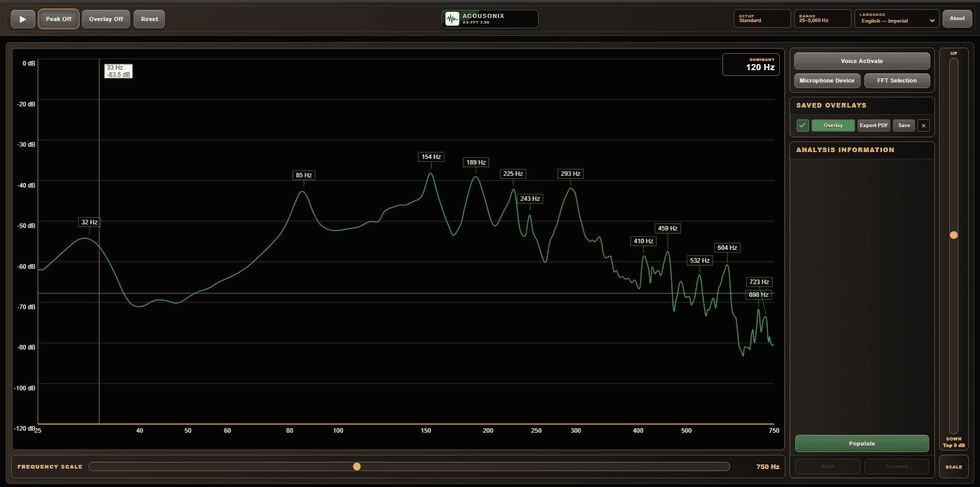
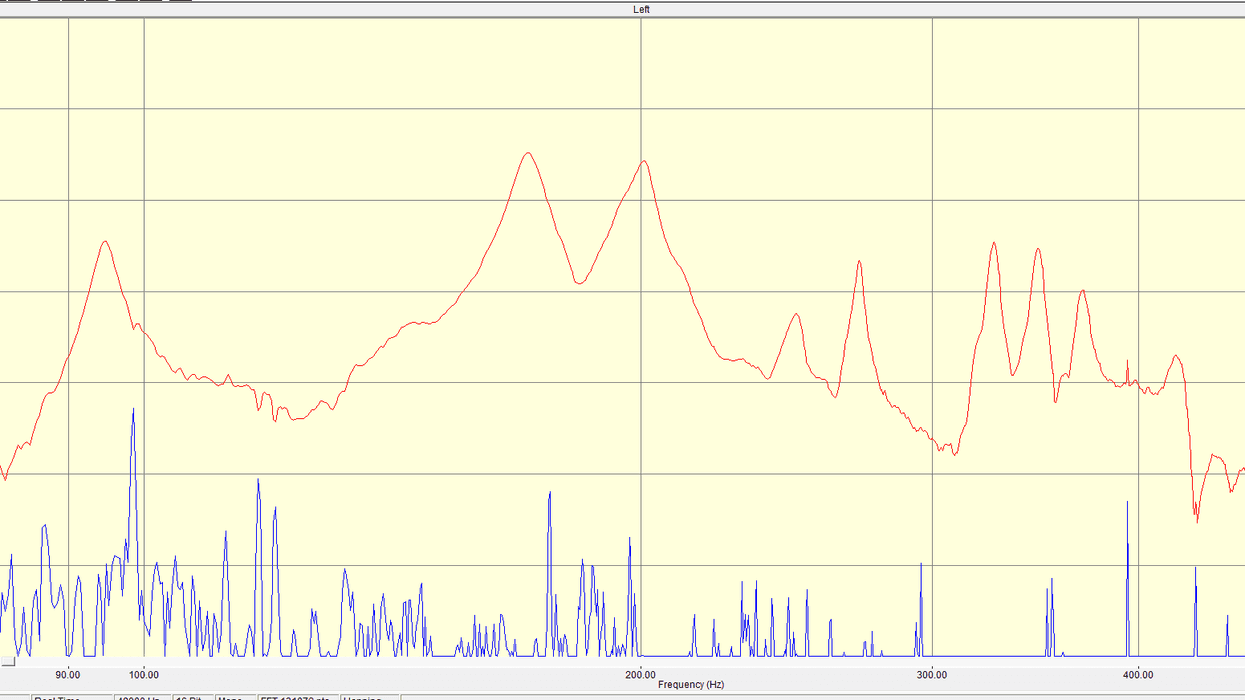
The FFT screenshot lays it out plainly. Air resonance reads 84 Hz, and the top is at 154, which is incredibly low. The back is at 189, where 190 or 195 would sit closer to what the old vintage Martins give you. The 225 is the upper register of the back and the 292 is most likely the long dipole, and you can also make out the upper order harmonics, the cross dipole, the tripole, and the quadrupole.
The replacement bridge was not the correct shape for a vintage Martin of that era, so I could take a little off the rear of it, reshape it to 1942 spec, and lighten it just enough to move the top off that note. That should lift the top from 154 to around 160, and the air resonance will likely come up to 86 or 87. The back will likely not move but at 187 Hz, it’s not far off of target which puts the instrument within standard Martin specs for the era, or close to it.
Then there are guitars where shaving is genuinely the right call. On many imports the neck cannot be removed, or removing it is hard enough that the value does not offset the fight. Shaving will change the tone and should be understood as the last line of repair, but it makes the instrument playable again, squeezing a few more miles out of the guitar.
So, if you are having a bridge shaved, be informed about where your guitar sits, what the work will do, and how it will change the tone. Whenever a bridge is lowered, the wings need reshaping and the whole thing needs sanding right on the guitar without damaging the finish. Every qualified technician I know is aware of these changes. The repair is commonplace, but people are making smarter decisions about acoustic work now than they used to.