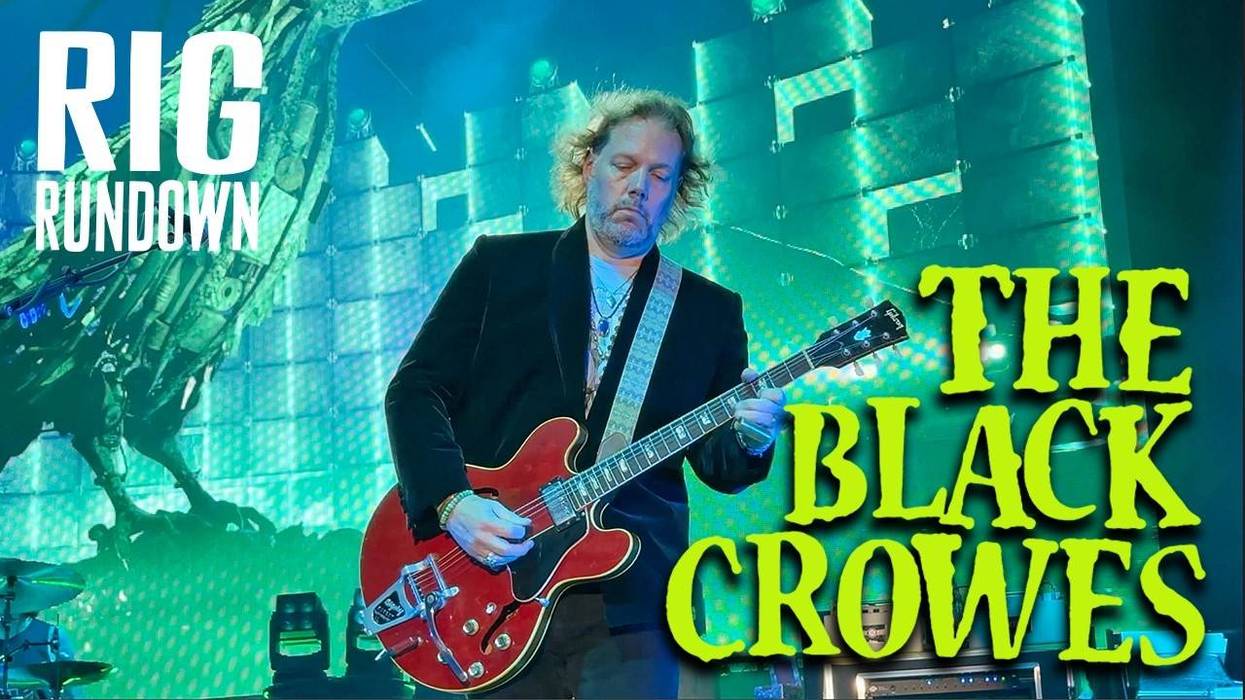


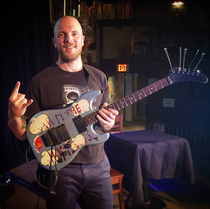
PG’s Chris Kies took a field trip from Nashville to Memphis to catch Mastodon, where Bill Kelliher walked us through a rack that programs his amps for him and new guitarist Nick Johnston explained why he runs his guitar into an amp… and little else. Have a look at some quick highlights below, and tune into the new Rig Rundown for all the details.
Brought to you by D’Addario.
Hand-Drawn
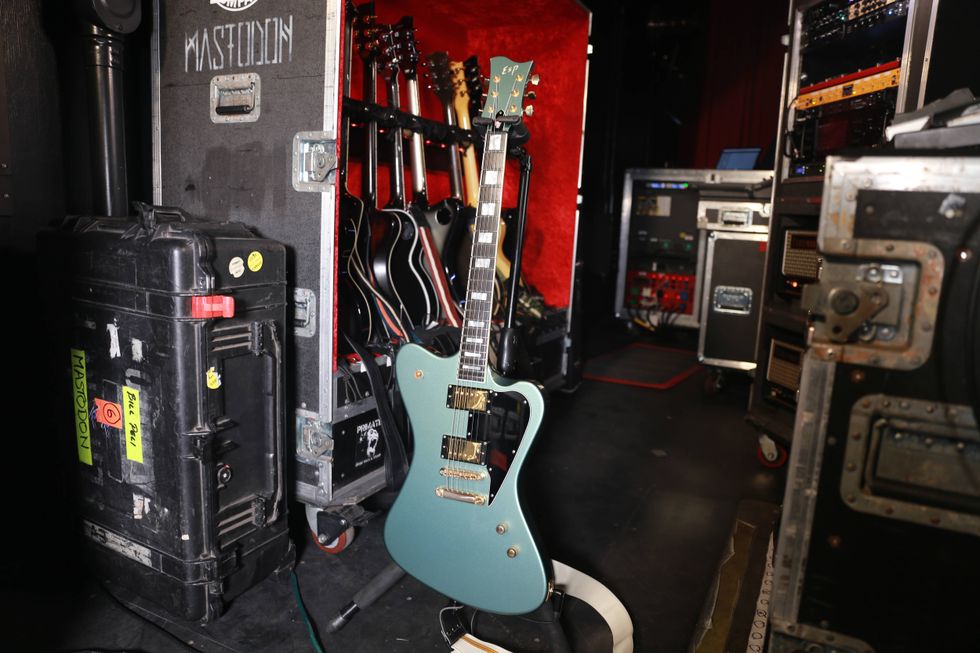
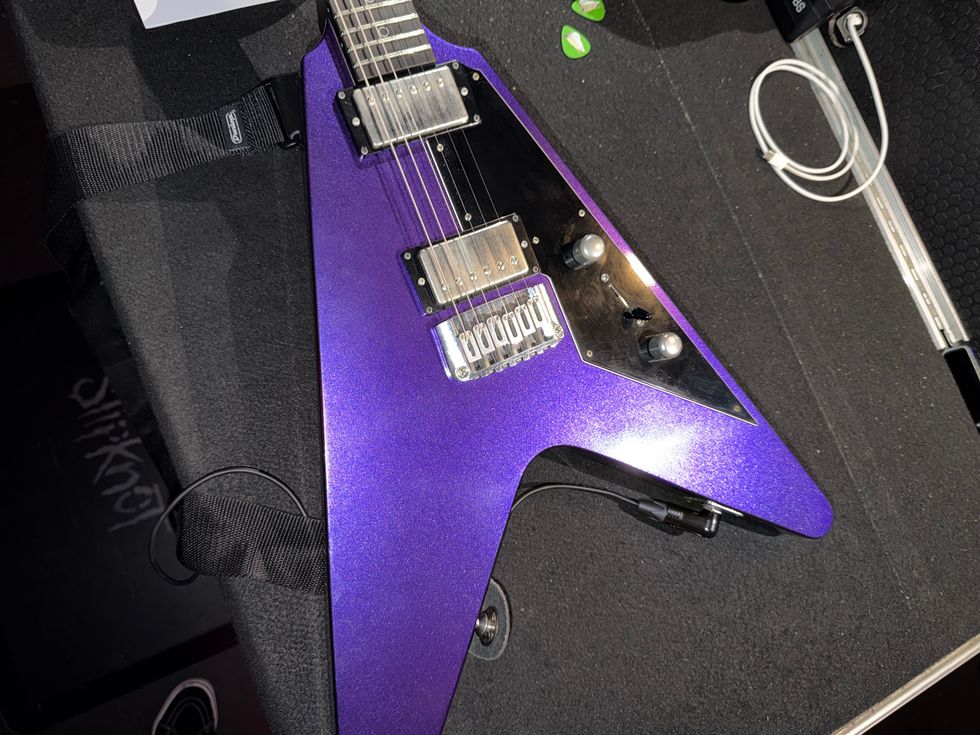
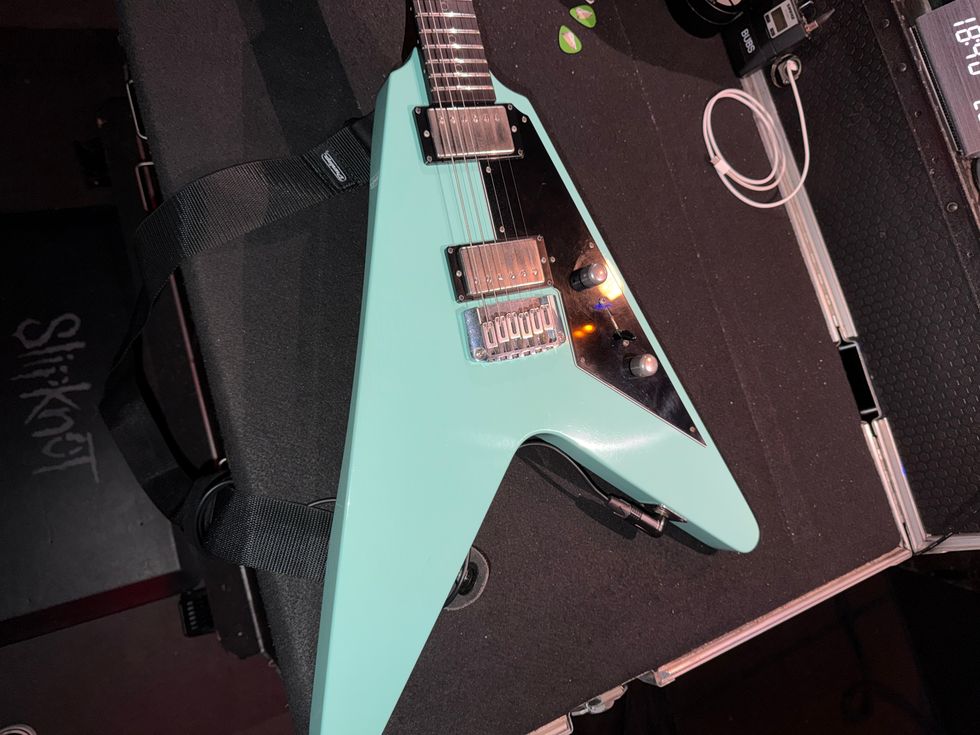
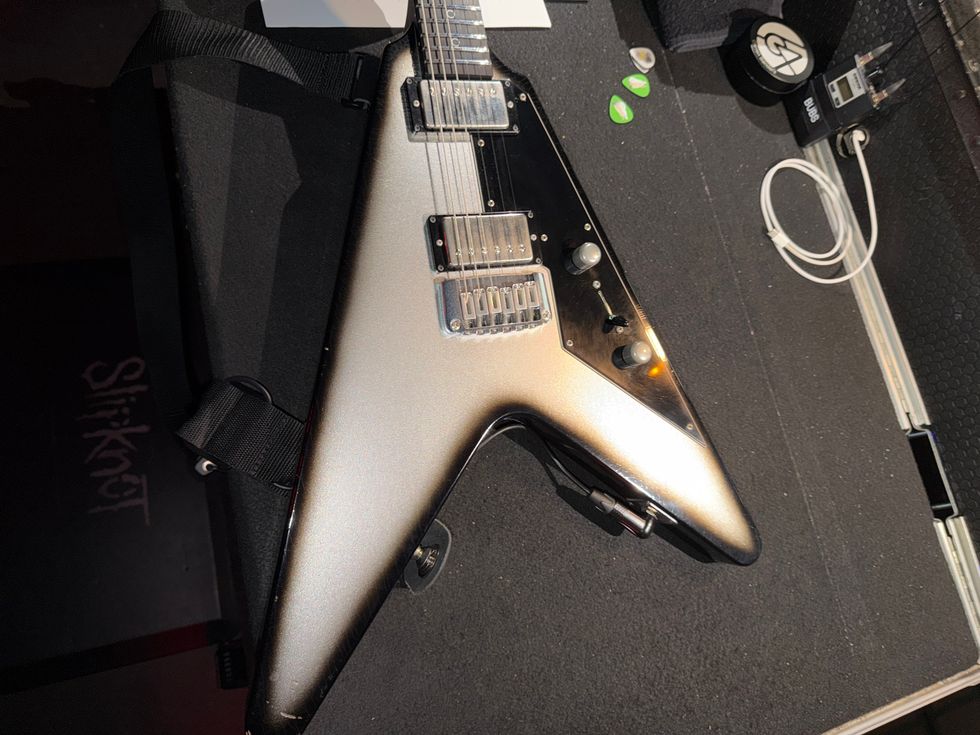
Kelliher drew the Sparrowhawk himself. He describes the shape as an RD meeting a Firebird, and he kept it away from anything pointy because he wanted something that suited the organic side of what Mastodon does. The first prototypes “felt like butter.” Volume and tone are per-pickup with push-pulls for coil splitting, and the input jack moved to the side after he set the first one down on the floor.
Patina Match
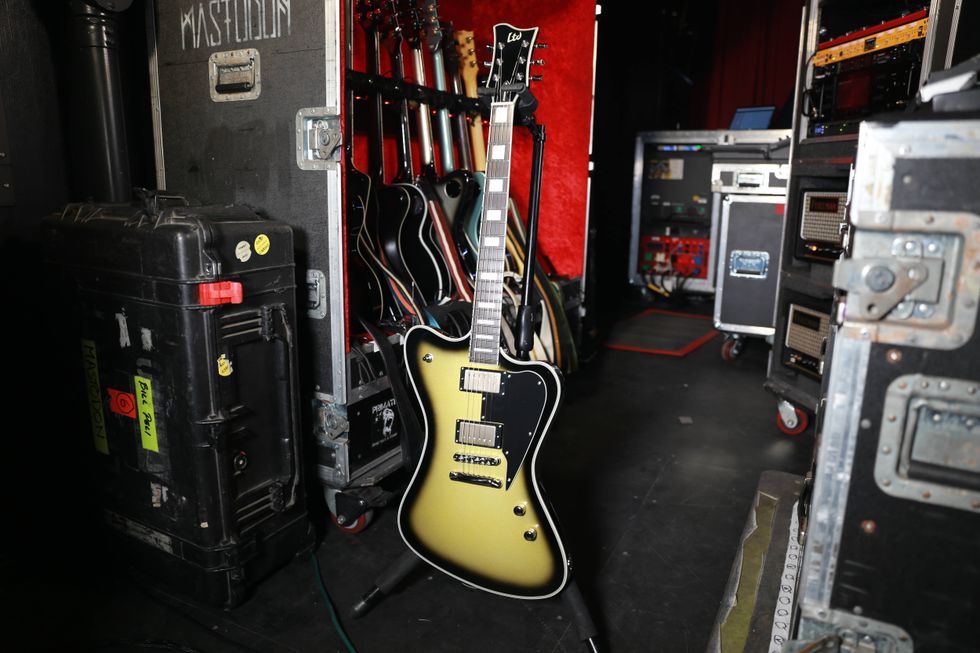
The second Sparrowhawk is finished to match one of Kelliher’s silverburst Les Paul Customs—he picked the one with the best patina, where the silver had turned green, and sent it to ESP so they could photograph it and get the color exact.
Heavy Lifting
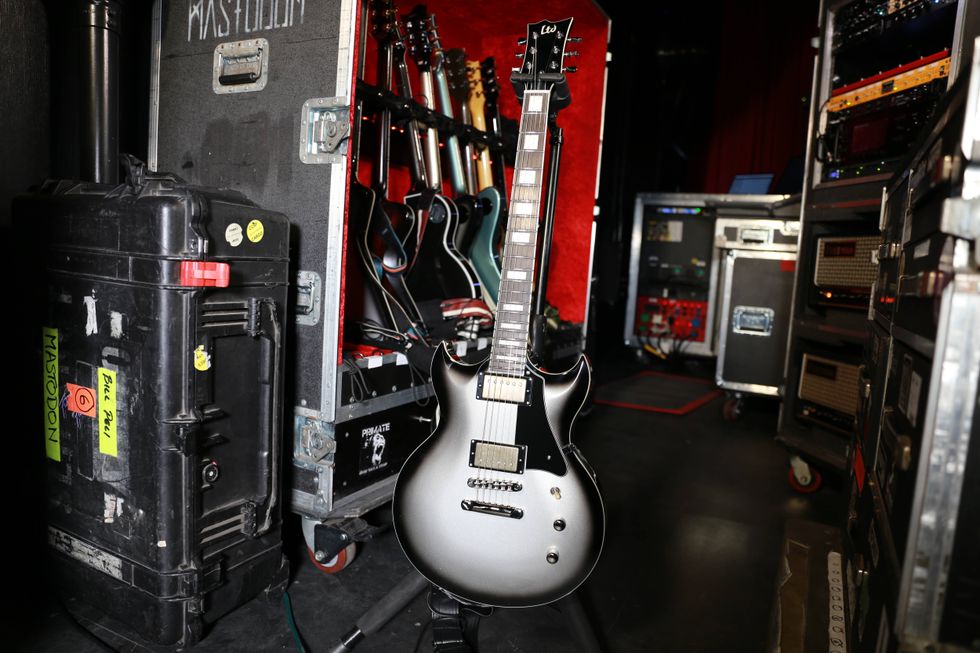
The LTD Royal Shiva is seriously heavy—enough that Kelliher swaps guitars through the set rather than wear it all night. He won’t hear about having anything chambered, though.
Georgia Built
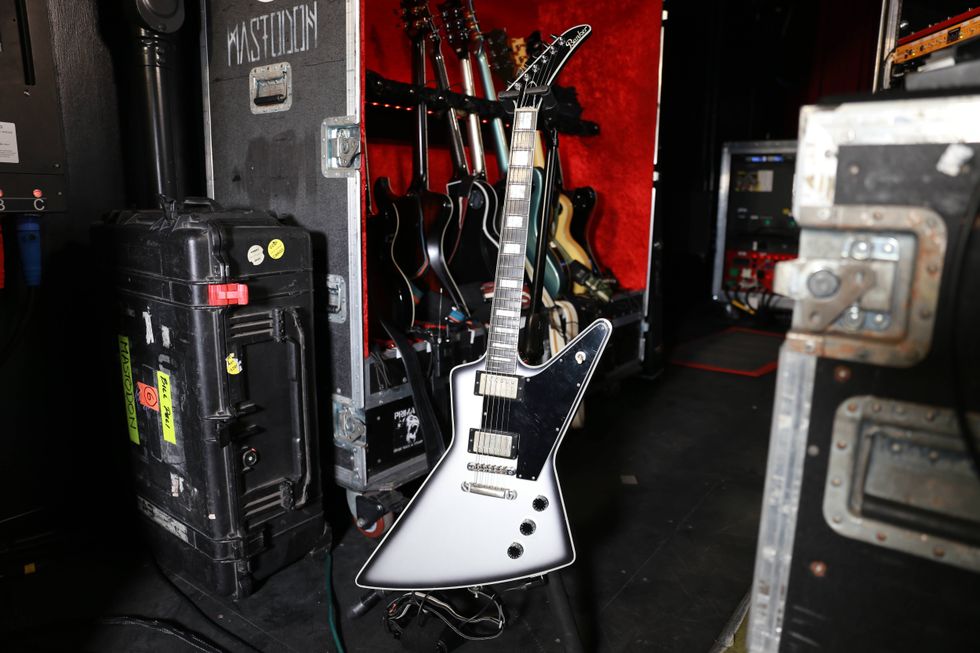
Kelliher’s Banker is built by Matthew Hughes, a friend from Georgia who’s also made guitars for Marcus King and Brent Hinds. Kelliher calls it the finest hand-built guitar he’s played; Hughes does his own binding and painting.
Chris’s Custom
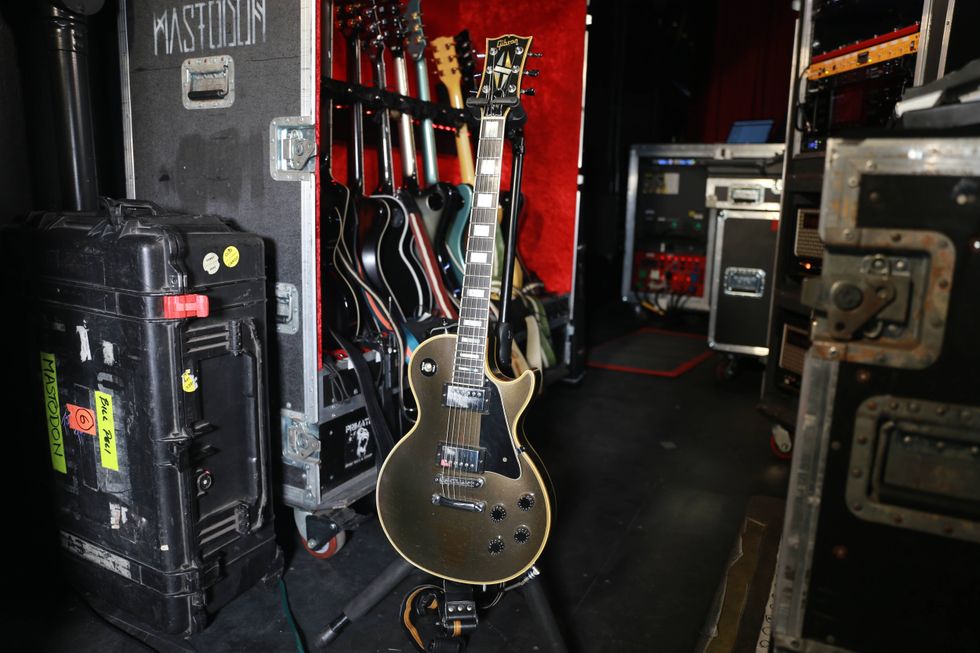
A 1987 Les Paul Custom that belonged to a friend, who left it with him before he died. Kelliher had always told him he wanted the guitar if he ever sold it. He keeps it and thinks of him.
The Father’s Son
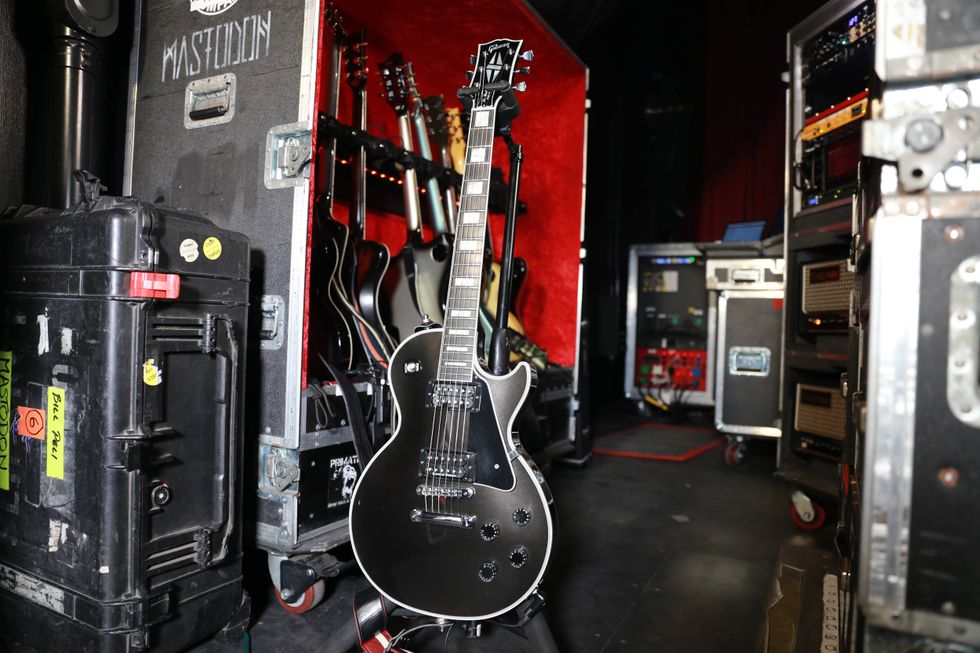
A gunmetal-gray Les Paul Custom loaded with Seymour Duncan Distortions, which Kelliher introduces as the younger sibling of the ’87.
Seattle Find
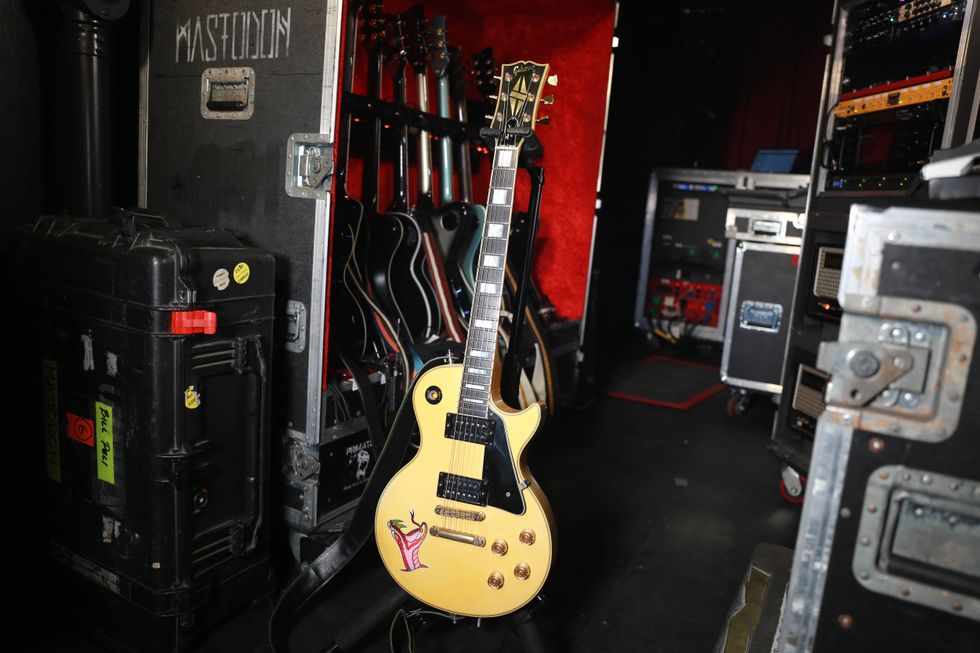
A ’77 or ’78 Les Paul Custom Kelliher bought in Seattle’s U District about 20 years ago. It hadn’t been on tour in years, mostly living at home, and he brought it back out because it’s a workhorse.
Butterslax
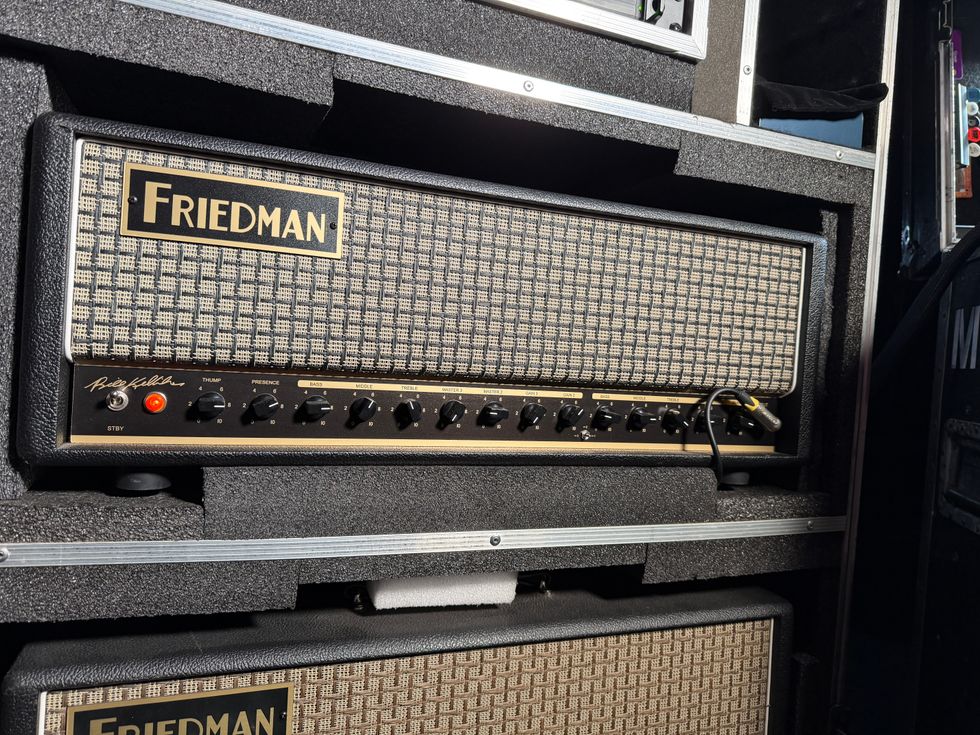
The Friedman Butterslax is a three-channel head Kelliher helped design with Dave Friedman, and it’s been out about a dozen years now. He calls it one of his favorite-sounding amps in the world. He lives on the clean and channel two, with the third there for pushing solos with a lot of gain. Each channel has its own volume and EQ.
The Operating System
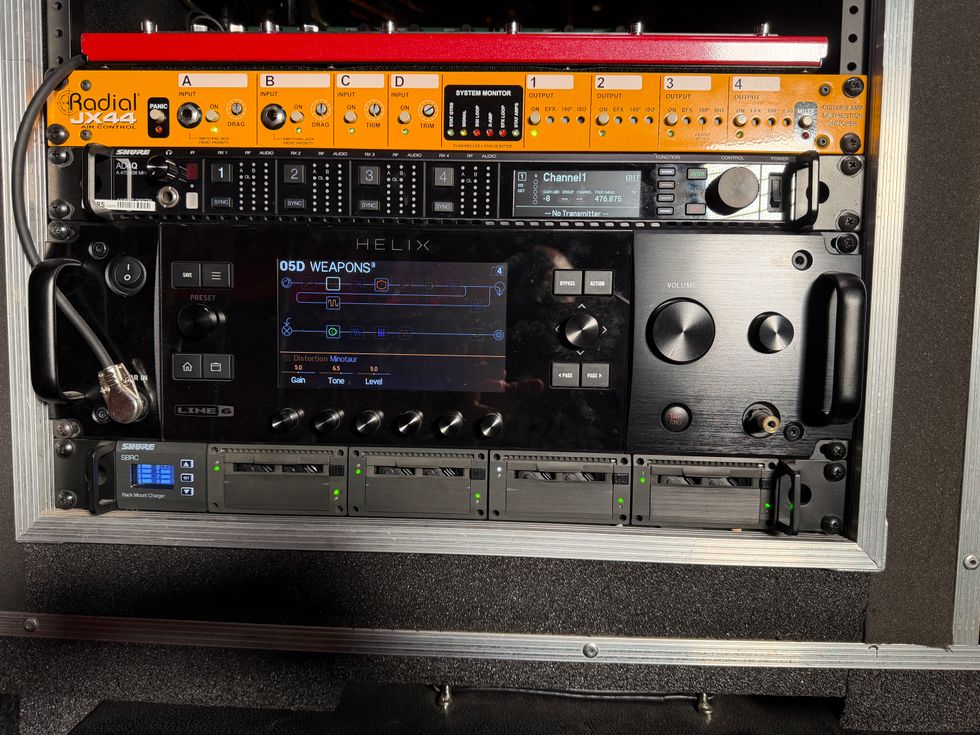
A Line 6 Helix Rack holds Kelliher’s effects and MIDI-programs everything else—he describes it as telling the amps what to do. He’s tried the Axe-Fx and a Kemper and found the Helix easier to get his head around. Friedman cab IRs go to front of house, and hearing his own isolated tracks through the PA at virtual soundcheck is what convinced him the sound out there is covered.
The Future
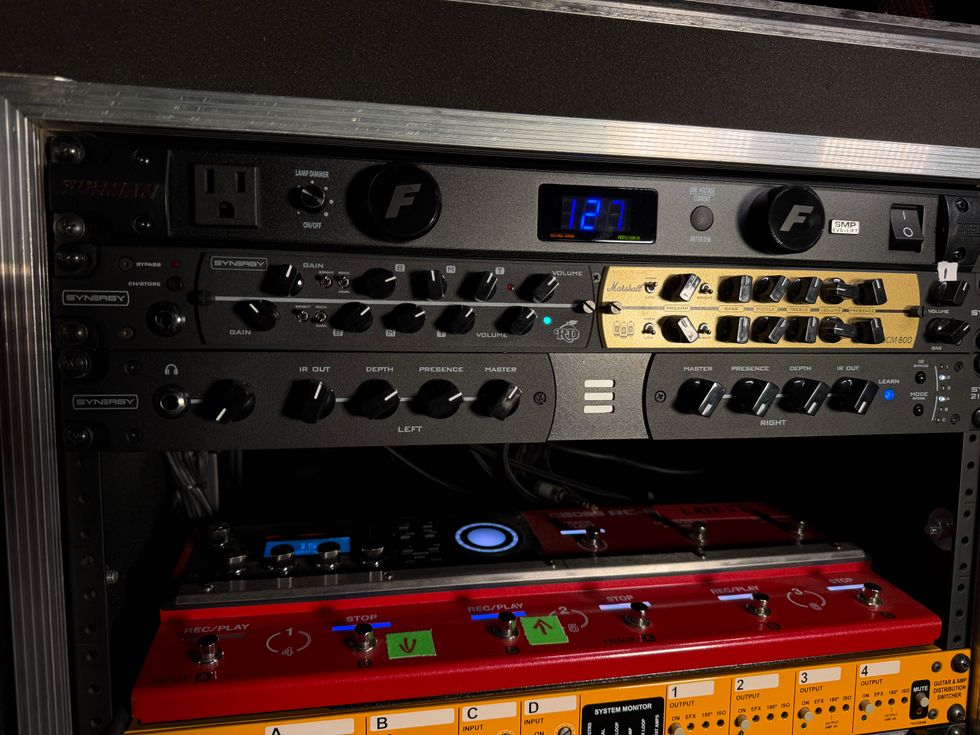
Synergy modules cover fly gigs where the heads can’t travel, and Kelliher has them in the rack too—an Orange RD for gain and a JCM800 that handles his cleans and a dirtier channel both, all MIDI-switched from the Helix song by song.
Sausage Making
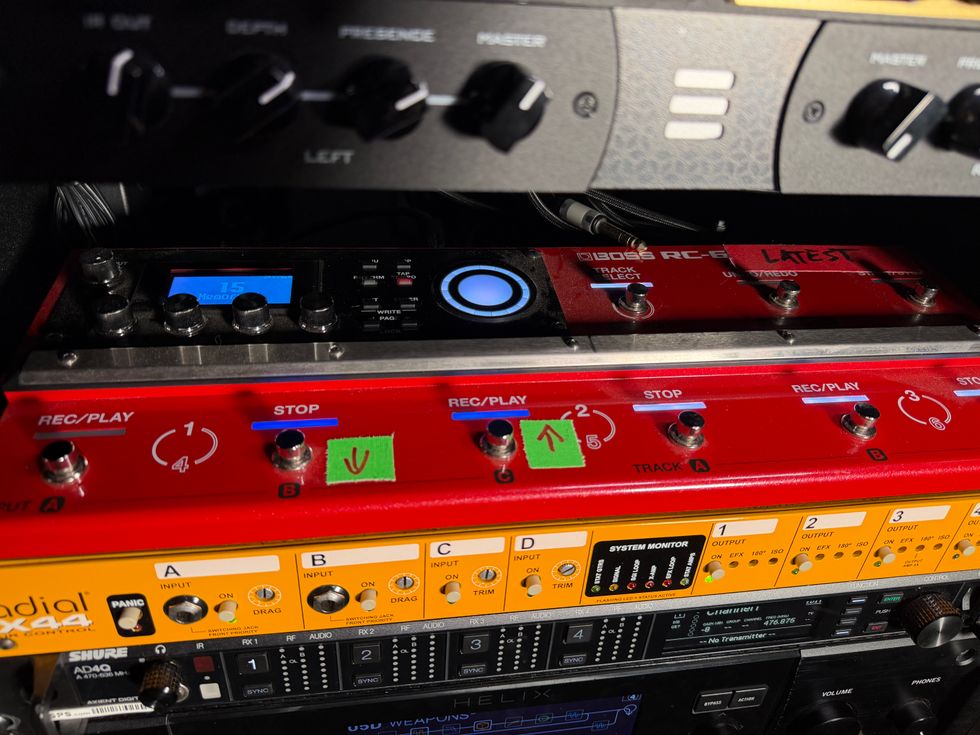
A Boss RC-600 runs clicks, samples, and backing tracks. Kelliher programs it in Pro Tools and dumps it in. The band has been on clicks since Crack the Skye in 2009; now there’s a video wall to stay locked to. Four stereo outputs mean front of house can mix the tracks like separate instruments, and songs can start cold without a count-off. A Radial JX-44 handles guitar switching.
The Masterpiece
Nothing to Hide Behind
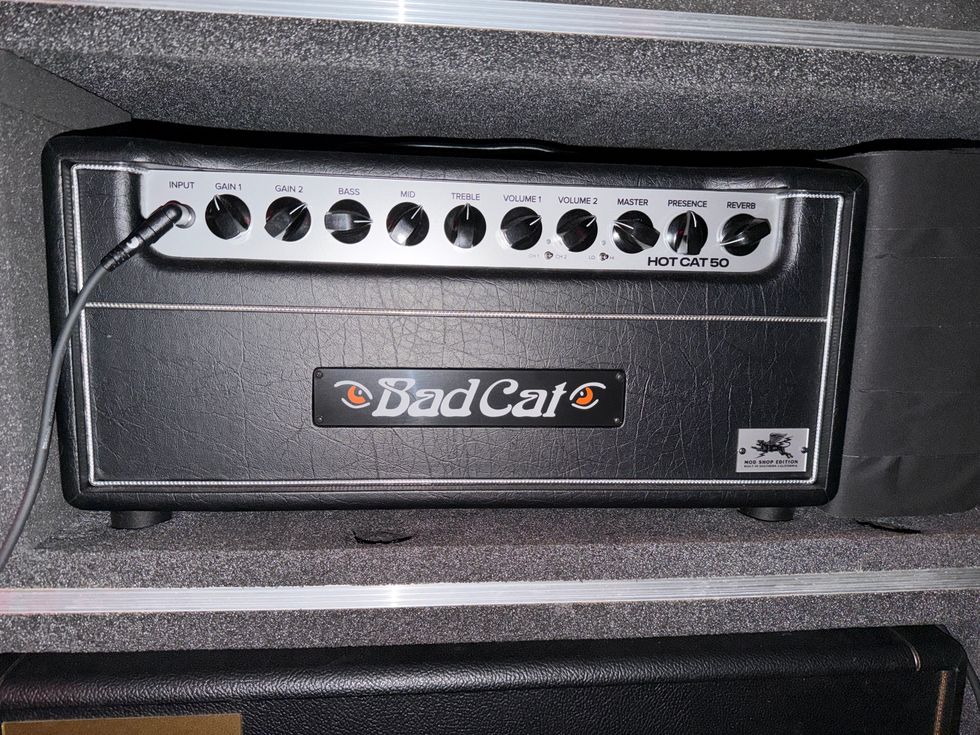
Johnston plugs a custom-shop Bad Cat Hot Cat 50, basically straight in. He grew up on guitar-into-amp and says it keeps everything tighter and forces him to own his mistakes.