

When Richard Bienstock and I first talked about what this column would be, he gave me a wide lane. I could write about gear, or I could write about the parts of this life that don’t normally show up in a guitar magazine. I’ve mostly stayed in the lane. This month I’m taking the shoulder.

A few weeks ago I was in Grand Rapids, Michigan, at a brand new amphitheater, about 90 minutes before showtime. Eleven thousand people were funneling in. Some of them had flown. Some of them had been listening to these songs since they were 19 and had a very specific idea of what the night was going to feel like. They were correct, and they deserved it.
And I was backstage, unable to stop crying, because of a random post I saw on my phone.
It wasn’t even a real article. It was one of those things that circulates, unsourced, unverifiable, claiming to know what dogs think about in their final moments. The claim was that they aren’t frightened and they aren’t sad. They’re just looking for their person.
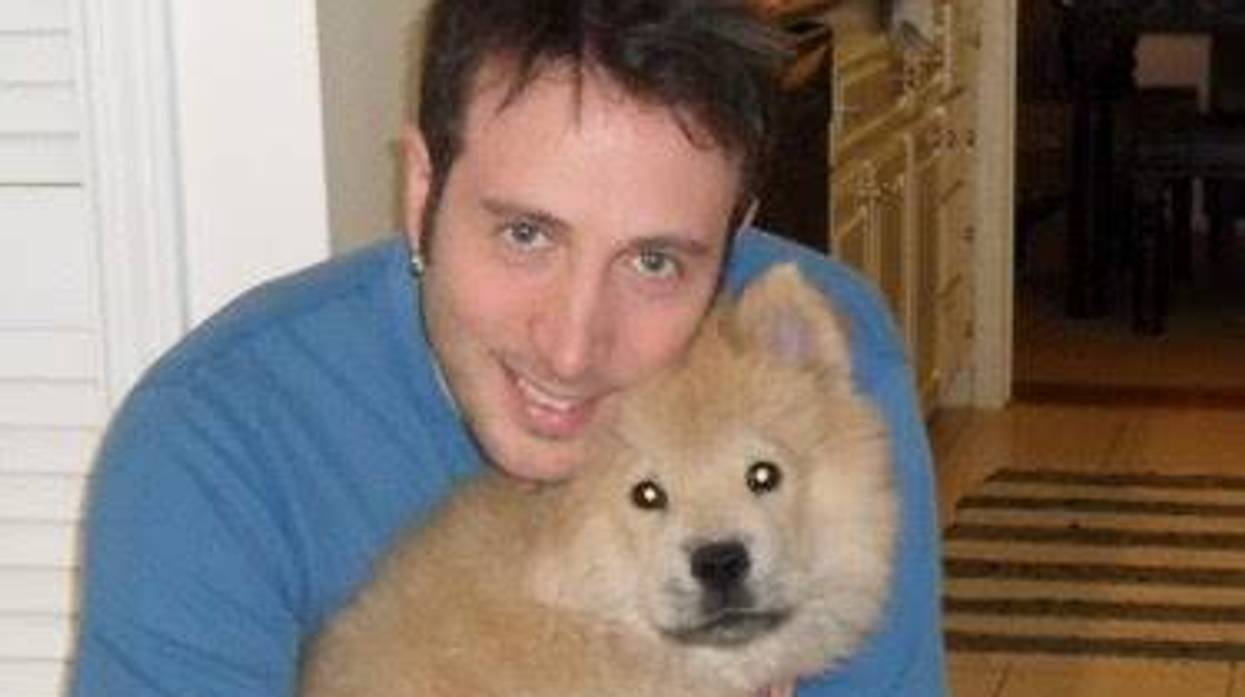
I had a Chow Chow named Nahla for 11 years. She was sick at the end, and I was at a rehearsal a few towns over, and I got a feeling in the middle of the day and called home, and then called again a few hours later and got in the car. It took me 45 minutes. She passed about two minutes before I walked in the door. That was four years ago. Reading a stranger’s unverified post about dogs made it feel like that day again.
I want to be careful here, because this column is not a place for me to be sad at you. The dog isn’t the point. The point is that on a random Tuesday, 90 minutes before I was supposed to walk out and help 11,000 people have the best night of their summer, I got completely leveled by something I did not see coming, and there was no version of the evening where that mattered.
Here’s some context. My daughter had been out with me for three weeks and had flown home a few days earlier, so I was already running with a small crack in the windshield. Add three weeks of broken sleep, a couple of 5 A.M. hotel check-ins, and sharing a moving hallway with eight other people, and you have a nervous system that is not exactly braced for a surprise.
“This job has a price, and the price isn’t paid in gear or per diems or bad hotels.”
Now here’s the part I have to say plainly, because otherwise none of this lands.
I have been extraordinarily lucky. Almost 30 years of this, most of it at a level of comfort that working musicians would rightly roll their eyes at. I have almost always had a tech. I have never done the 10-guys-in-a-van tour. I am not writing to you from the floor of a Sprinter outside Toledo. And I’m saying that on purpose, because the usual version of this conversation is about conditions, and conditions are not the hard part. If I’d made this argument from a van, you could dismiss it as a van problem. It isn’t. The bus is nice. The catering is good. And it still gets you, because what’s actually difficult about this job is never the accommodations.
It’s the accumulated absence. It’s that life keeps happening at full speed in a place you are not.
I’ve watched bandmates go through divorces from the road. I’ve watched a guy lose custody in a proceeding he could only attend by phone. I’ve watched relationships come apart over the course of a routing. I’ve seen friends miss their kids’ graduations, and I’ve stood next to people who found out mid-tour that a parent had died, and then played a two-hour set that night because the alternative was 11,000 refunds. Last year my cousin Dave died while we were in Australia, and I was the only one of my siblings who didn’t make the funeral. Everyone said they understood, and they did, and it didn’t help.
There are no sick days. That’s the whole thing right there. There’s no calling in, no working from home, no version of the night where somebody says, “Take one off, we’ll get a sub, you’ve clearly got a thing happening.”
And here’s what makes me want to shut up about my own bad afternoon: I’m a sideman. My name isn’t on the marquee. Nobody flew in from Denver to see me. If I have a rough night, the machinery absorbs it. Now picture that same Tuesday happening to the person whose name is on the ticket. Same broken sleep, same phone, same ambush, except everything is pointed at them, and they know it, and they know that whatever else is true, they cannot break. Not visibly. Not tonight. I have enormous respect for the people who carry that, and I don’t think most listeners have any idea it’s being carried.
Which brings me to a song.
I’ve been playing Bruce Hornsby songs at the piano since I was a kid, and I’ve known “The Show Goes On” for most of my life. Then I watched the season two premiere of The Bear, where it plays under the opening montage for the first seven and a half minutes, which is the exact length of the song. Something about seeing it set against those images rearranged it for me. The show going on is not presented there as triumph. It’s presented as a fact. The world does not pause for what you’re carrying. The lights come up on schedule.
That’s the part nobody mentions when you’re 22 and deciding to do this. And I understand why. Nobody wants to hear a guy complain about the dream, and I’m not complaining. This job has taken me around the world, let me use the one thing I’m good at to bring people joy, and let me take my daughter to 30 of the 50 states before she turned 14. I’d choose it again.
But it has a price, and the price isn’t paid in gear or per diems or bad hotels. It’s paid in the specific afternoons when you are a wreck in a cinderblock room with a clock on the wall, and 11,000 people are expecting a great show. You owe it to them, and you go do it.
For the record, we played well that night. The first song is loud, and you have to hit the right notes, and the human brain can only hold so much at once. That’s not a triumph of will. It’s just what happens. Not because I’m stronger than anyone else. Because it’s nine o’clock.
The show goes on.