

In the early 1900s, Hawaiian music captivated America. With the advent of electric amplification, the electric lap-steel guitar fit right in with the sound of Hawaiian music in the 1930s and ’40s. The guitar amplifiers you heard on these early electric recordings were straightforward and low-wattage, designed to simply project the sound of the instrument.
This 1948 Oahu 230K is a great example of the warm, natural sounding amps that were produced during the first half of the 20th century. The Oahu Publishing Company was founded around 1930 in Cleveland, Ohio. The company published primarily Hawaiian sheet music and music lessons, and eventually also sold lap steels and accompanying amplifiers. This is a beautiful example of the 230K, with very little work done on it previously.
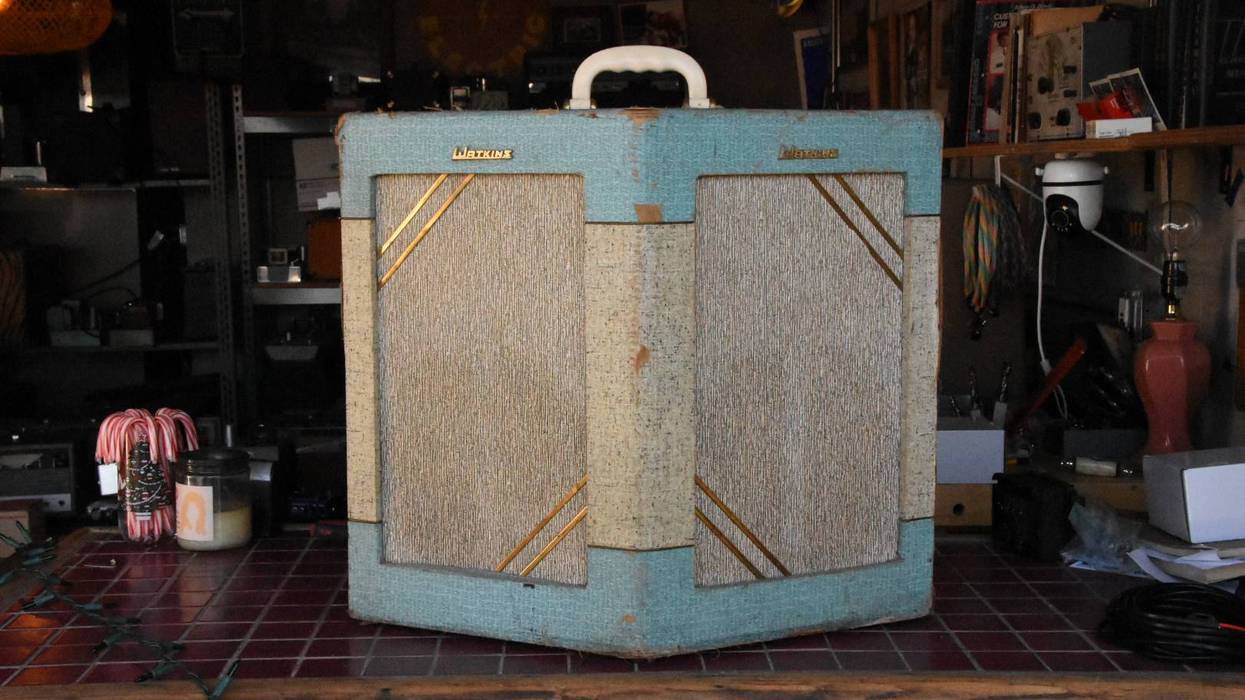
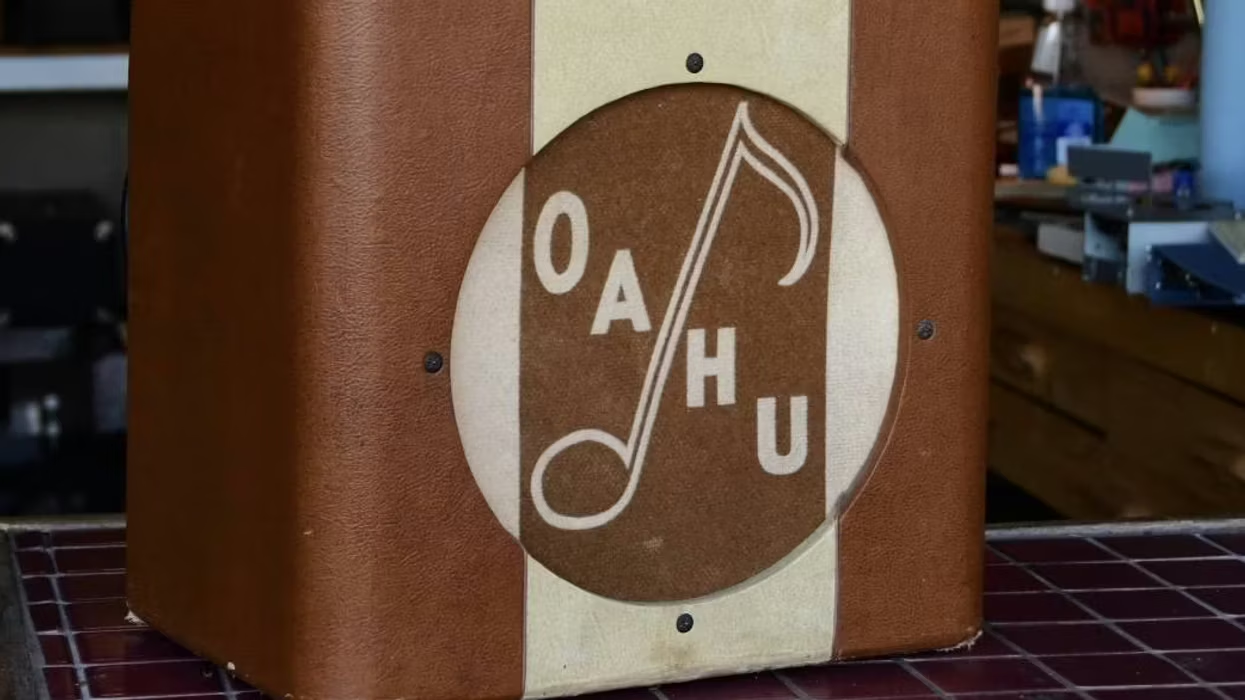
There are a few versions of the “Tonemaster” 230K, coming in different shapes and colorways. Amplifiers from this era often have memorable designs with rich color schemes and textures. This amp is one of my favorite versions of the 230K, with caramel and cream colored Tolex. The grill is velvety soft, with sentimental lettering and a classic music note design. One of the very first amps I ever took apart and studied on my own was the slightly later version of the 230K, which had a shield-shaped grill. Talk about nostalgia!
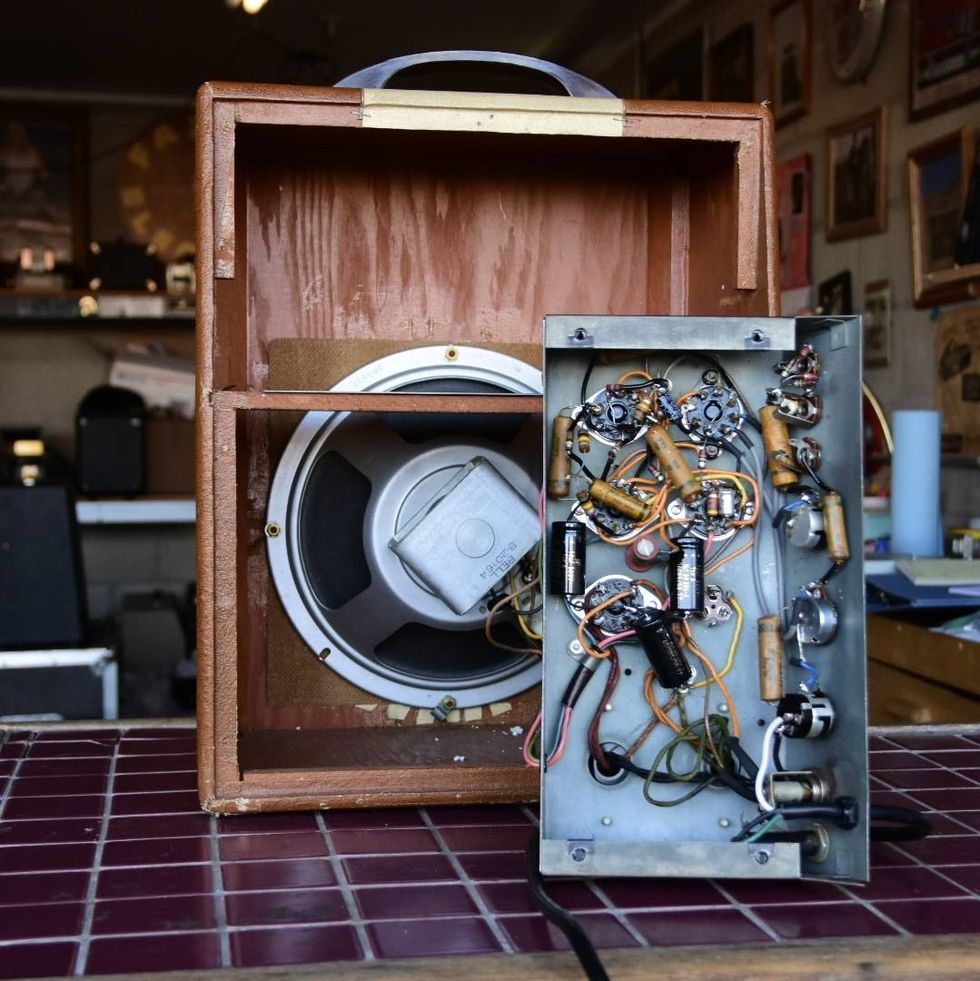
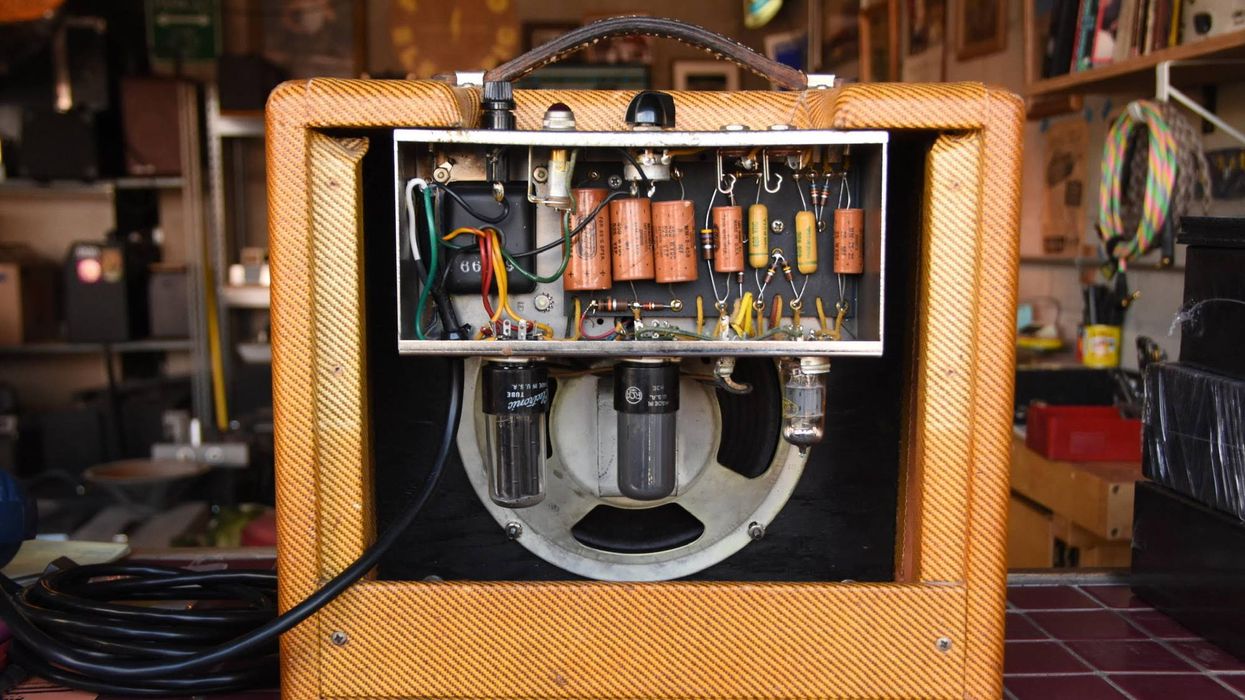
The inside of the 230K shows a simple, straightforward circuit.
This “Tonemaster” amp sports a 12" Rola field-coil speaker, date stamped for September of 1948. It has an instrument channel with two inputs, a microphone channel with one input, and a tone control. In this version of the circuit, the amp uses a 6SC7 for the first gain stage and a 6SL7 driving the pair of 6V6 output tubes. The amp also has a 5Y3 rectifier tube.
The amp came to me with a 2-prong power cord and no modern components in sight. Someone may have replaced some of the main filter capacitors in the ’60s or ’70s. The filter capacitor can was disconnected and individual orange Astron capacitors took their place in the power supply. This amp must have been well kept, as the outer Tolex and inner circuitry is extremely clean for its age. The grill is impeccable with virtually no blemishes. I find myself wondering about life in 1948 when this amp was built—almost 80 years ago.
As is typical for amps of this age, I needed to install a 3-prong power cord. The hot and neutral wires literally disintegrated when I cut them out! I also needed to replace the electrolytic capacitors for safety and reliability. For me, there is no question—the power supply needs to be refurbished if the amp is going to be used. Once this preliminary work was done, I tested the amp for a while. During this time, I listened for any abnormal hissing, crackling, or other noises. Unsurprisingly, the idle noise of the amp turned into sporadic crackling and popping, which led me into phase two of the repair.
To track down noise issues like this, I will pull one tube at a time, starting with the first preamp tube in the circuit. When I pulled the first tube, the 6SC7, the noise was eliminated. This told me that the noise was being amplified by this first gain stage, and the cause lies either before or within that first tube position. I grabbed a NOS 6SC7, installed it, and no more noise! In this case, the issue was simply the tube itself. If there was still crackle with the new 6SC7 installed, I would suspect another component in the circuit.
I noticed that the microphone channel’s volume pot was totally frozen, and it was difficult to turn the control in either direction. This was likely caused by oxidation or corrosion over time. Sometimes, treating and cleaning the potentiometer will help to get it moving, but this one was pretty extreme. I grabbed a new 1M potentiometer and replaced the seized pot. Good as new!
With the amp fully functioning, I was finally able to enjoy some quality time playing through it. This amp was built shortly after the end of World War II, when America was gaining an optimistic spirit and the popular music of the time was emotive. Simply strumming the guitar through this amp at low volumes felt cozy and nostalgic, like wrapping the guitar sound in a warm hug. This is a roughly 10-watt amp, and when the volume gets cranked, the amp growls with that natural tube overdrive. While music at the time did not call for distortion in the guitar tone, it is a welcomed characteristic that is prevalent in many amps of the era.