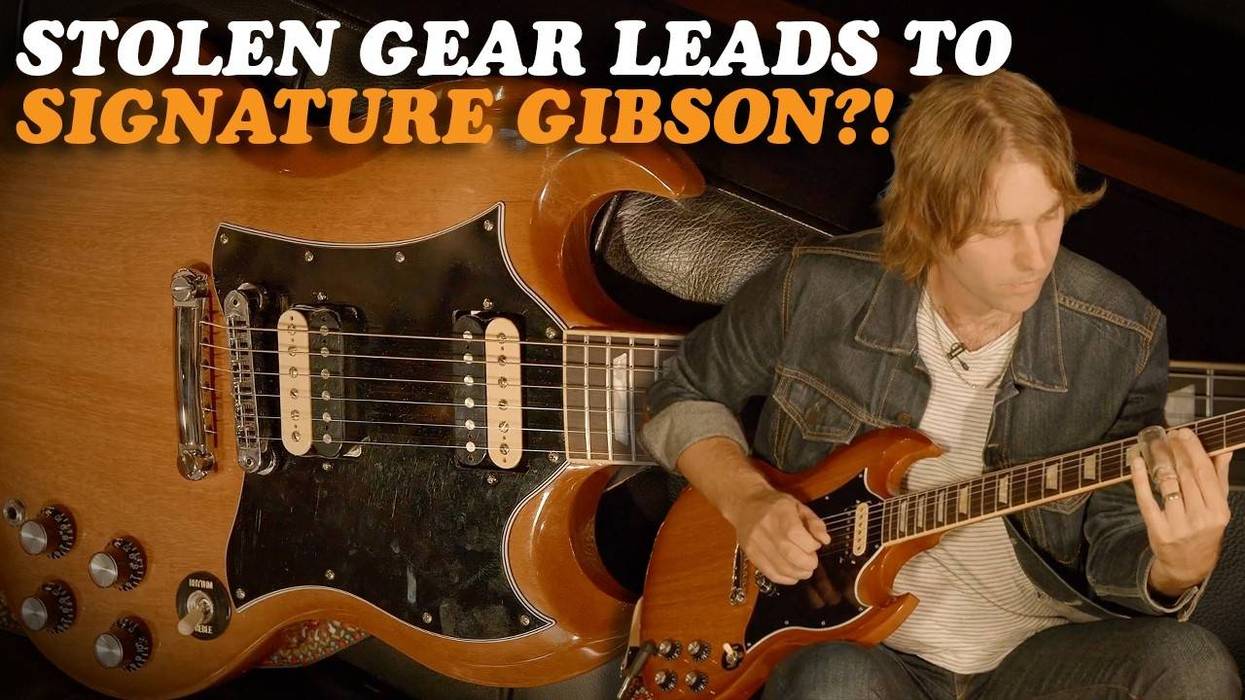
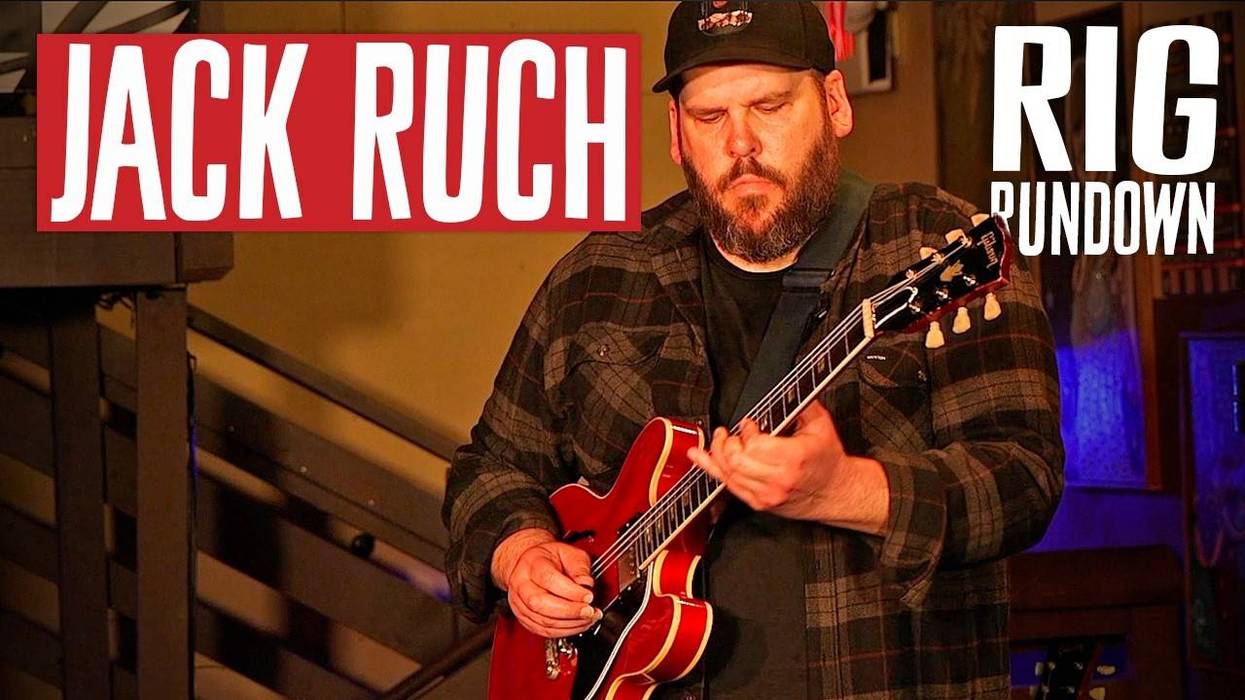
Sadler Vaden is a jack of all trades. He's a consummate pro musician that's spent nearly 15 years as Jason Isbell's stage-right, guitar-slingin' sideman. He's released four solo albums under his own banner [ 2012's Radio Road, 2016's Self-Titled, 2020's Anybody Out There? & 2024's Dad Rock] solidfying his spot as singer-songwriting, guitar-playing bandleader. He's becoming a fixture in the Nashville producer community including overseeing firebrand Morgan Wade's releases Reckless & Psychopath. And now acknowledging his talent, dedication and grind, Gibson has honored Vaden with his own SG that was based on his longtime No. 1 that was a gift after his previous Solid Guitar was stolen. PG host John Bohlinger explores all this in Sadler's journey while also picking his brain about slide guitar.
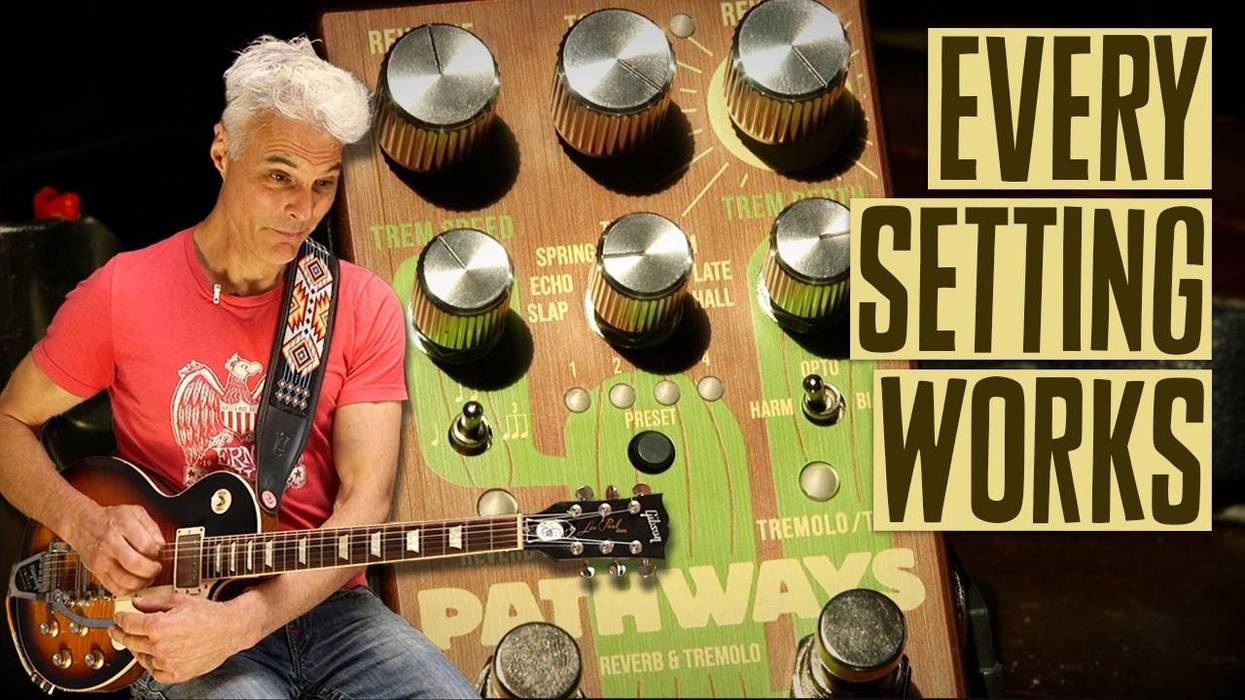
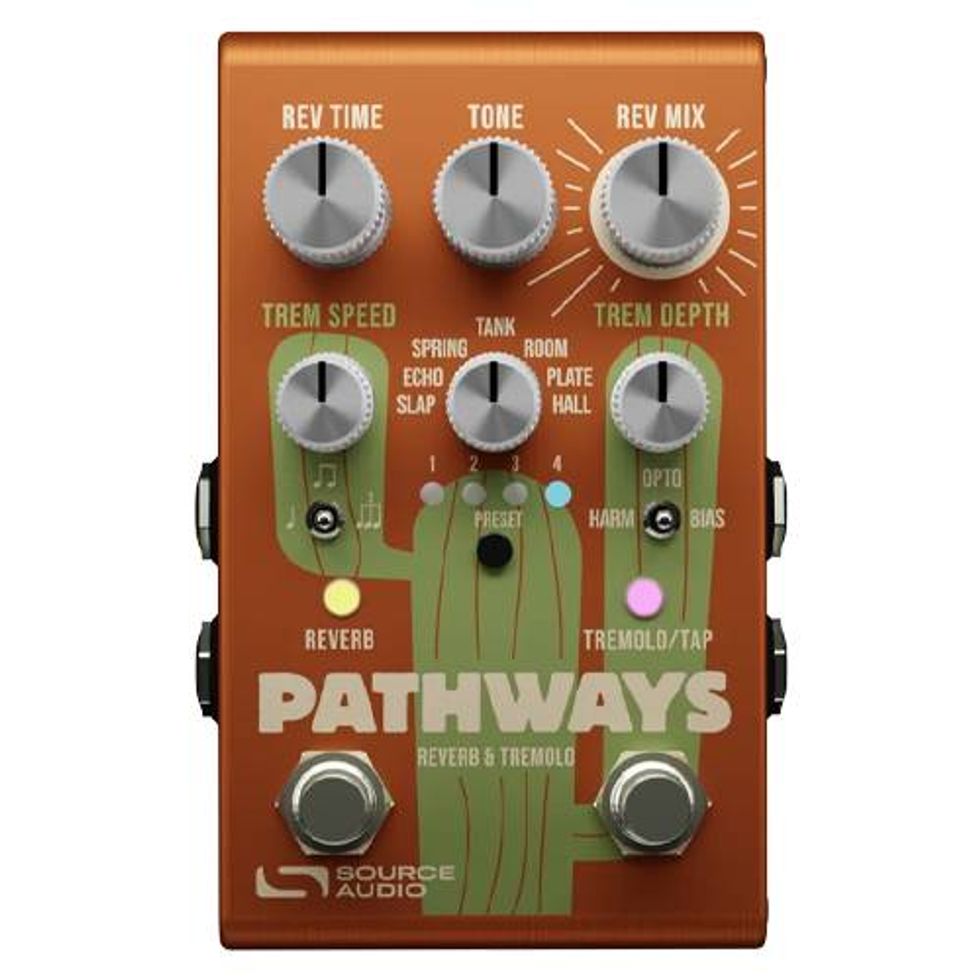
Pathways brings tremolo and reverb together in one compact pedal designed to feel great the moment you plug in. From spring reverb twang and classic amp tremolo to wider, more spacious textures, Pathways delivers sounds players reach for again and again - organic, musical, and easy to dial in.
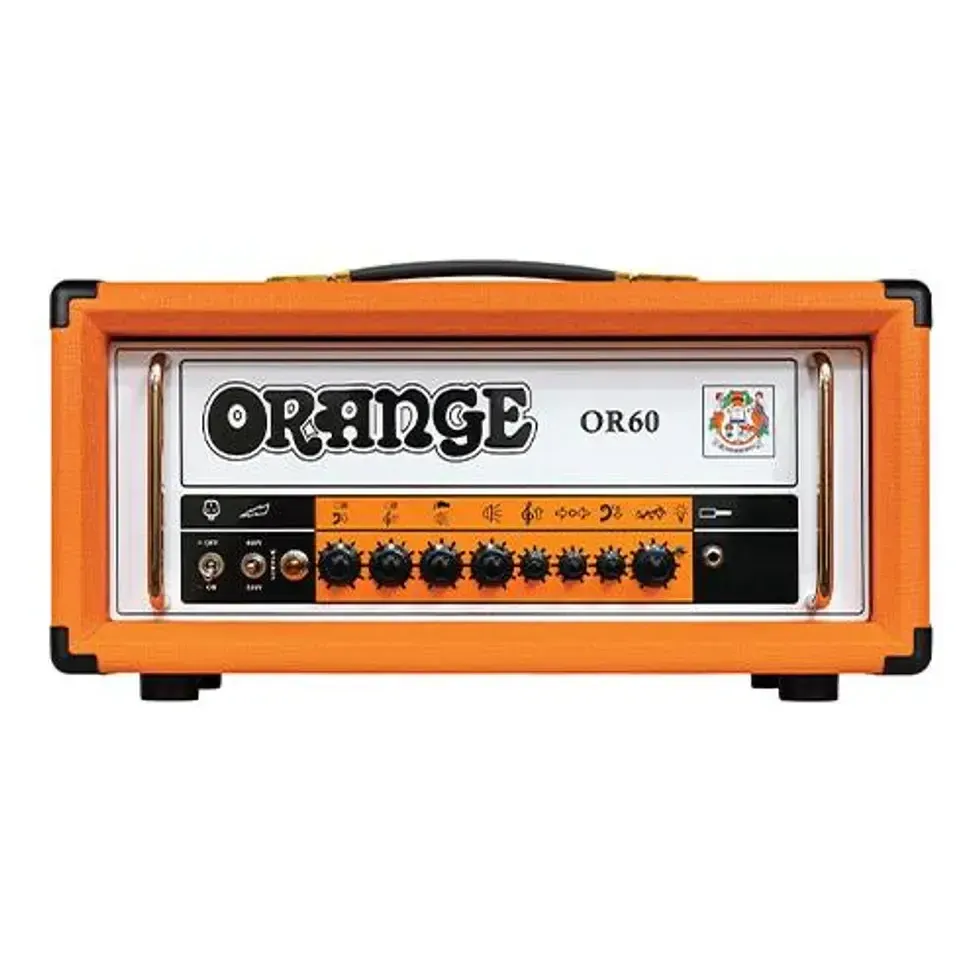
An amp as versatile as it is powerful, with clean tones that are just as compelling as its high-gain roar.
Orange’s calling-card is, in the minds of many, a thick, coppery, and compressed high-gain roar. But for an amp that kicks this hard, the OR60 excels at translating the tonal qualities of a guitar with refinement and balance, and it’s a more subtle and nuanced creature than you might expect. In this respect, it’s much more like a late-'70s Marshall JMP with pre-gain than a hot-rodded Soldano or Bogner. The OR60 ably covers tones ranging from funky when clean to absolutely feral when cranked. And while the single-channel configuration suggests a narrow voice, there’s a massive range of timbres to explore—from chimey to chunky to charging-rhino, and all points in between.
Literal weight aside, the 43-pound OR60 is a heavy hitter that’s not mere high-octane hype. It doesn’t just sound good—it sounds vivid. Real. True. Three-dimensional. If it were an album mix, you might say it has terrific “imaging.” Even at the kind of high gain settings where Orange excels, it grabs onto the essence of your favorite axe without compromising it—a quality that defines most great classic amps. The OR60 is happy doing all this loudly, and no one is going to mistake the amp for a studio-specific low-watt boutique head or a Swiss Army knife modeling unit. Even through a modest Orange PPC212V 2x12 cabinet, this tangerine titan’s 60 watts of twin-6L6 power throw around the kind of sonic weight you’d expect from a 50- or 100-watt half-stack. Still, it has a great clean-to-dirty range.
Orange
OR60-V3 60-watt Amplifier Head
60W, 1-channel Tube Guitar Amp Head with Power Scaling, Bright Switch, Presence and Resonance Controls, FX Loop, and Volume Footswitch
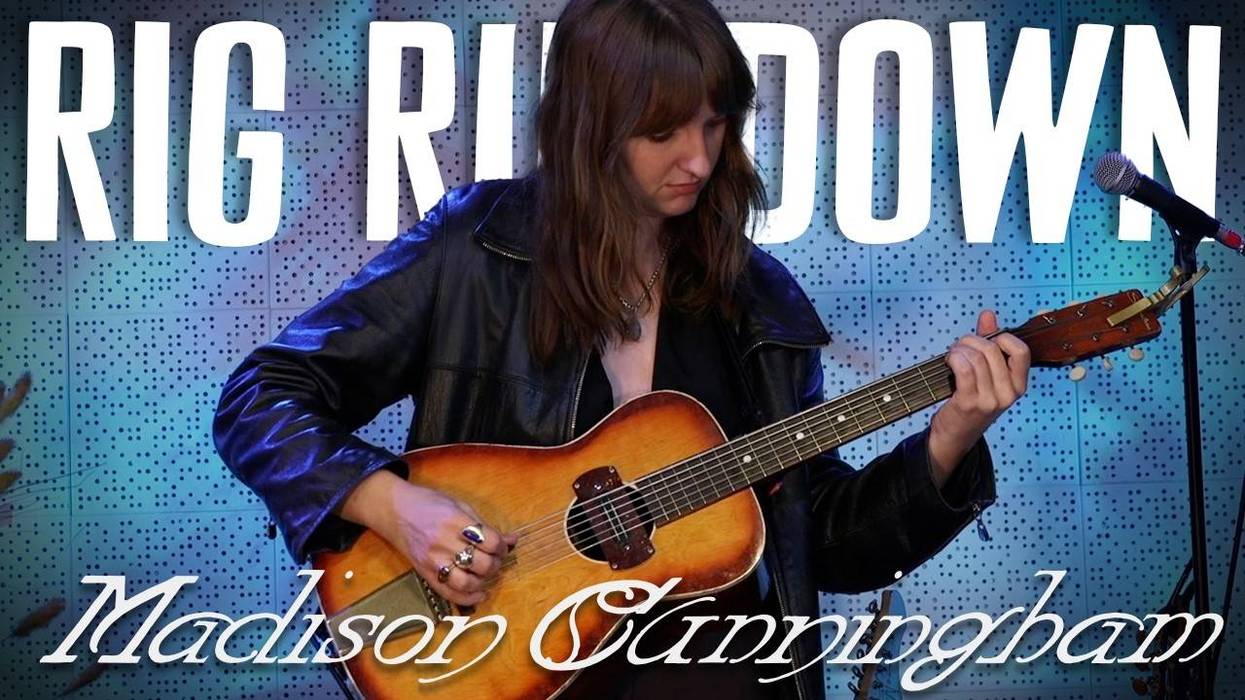
California singer-songwriter Madison Cunningham earned her first Grammy nomination in 2019, when she was just 23. A few years later, at 26, she won the Grammy for Best Folk Album, for her 2022 record, Revealer. Last year, she released her latest collection, Ace, her third with the storied label Verve Forecast.
Back in March, PG’s John Bohlinger met up with Cunningham for this new Rig Rundown at Third Man Records in Nashville, ahead of her show in the label’s Blue Room. Check it out!
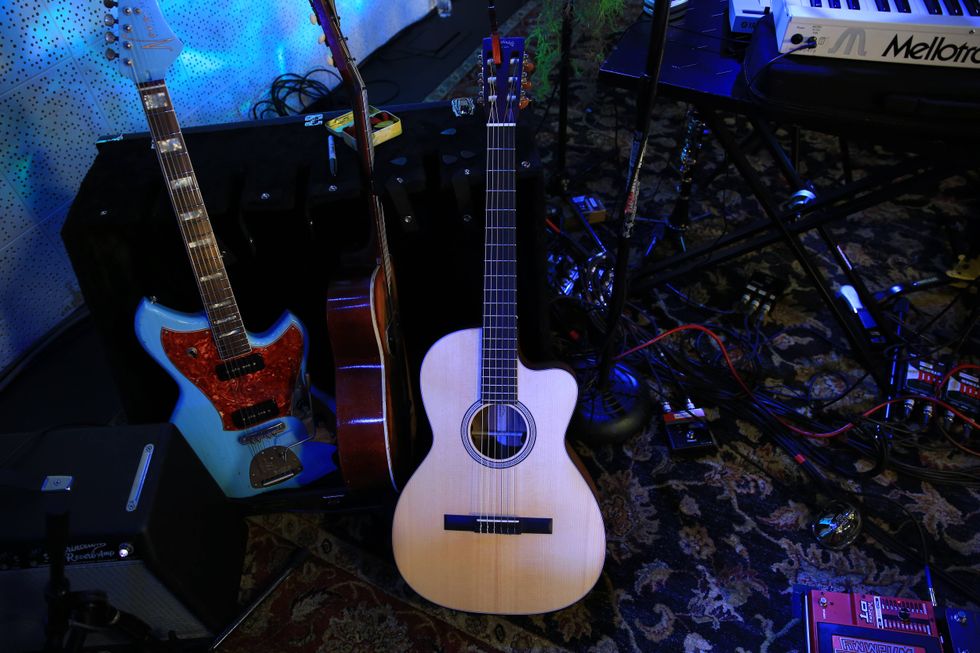
This Martin classical-style is Cunningham’s primary guitar. She uses a unique tuning (B–F#–C#–E–G#–B) that creates what she describes as a suspended-chord sound. Cunningham hasn’t changed a thing on this one—not even the strings.
Rubber Match
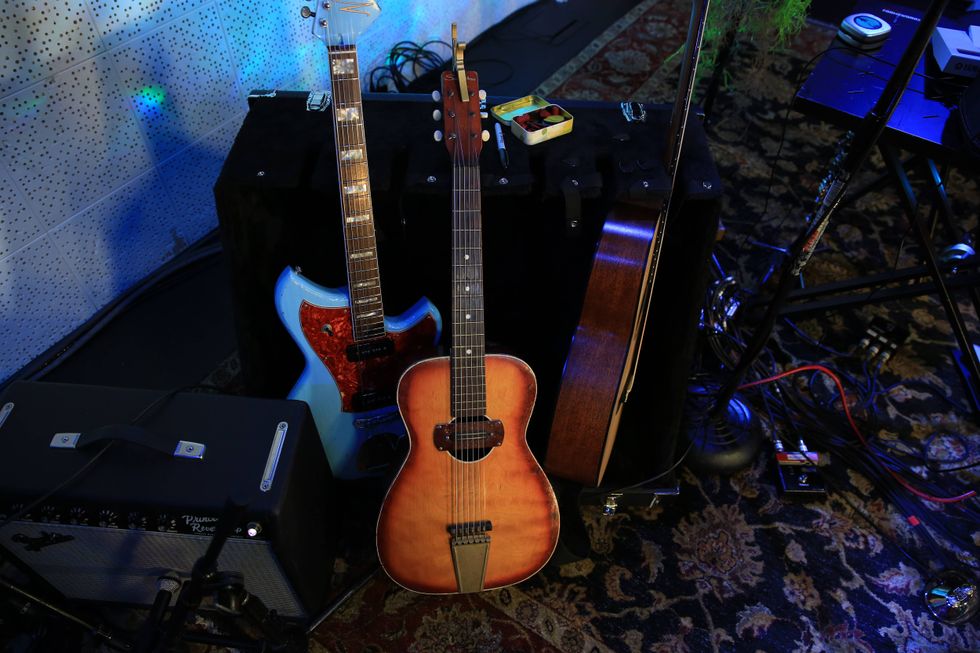
Cunningham’s friend and longtime collaborator Tyler Chester lent her this Silvertone acoustic, which had been fixed up with a rubber bridge and pickup by Reuben Cox of Old Style Guitar Shop in Los Angeles. After some time, Chester insisted that Cunningham keep it; he figured the guitar wanted her now. It’s strung up with flatwounds.
New Novo
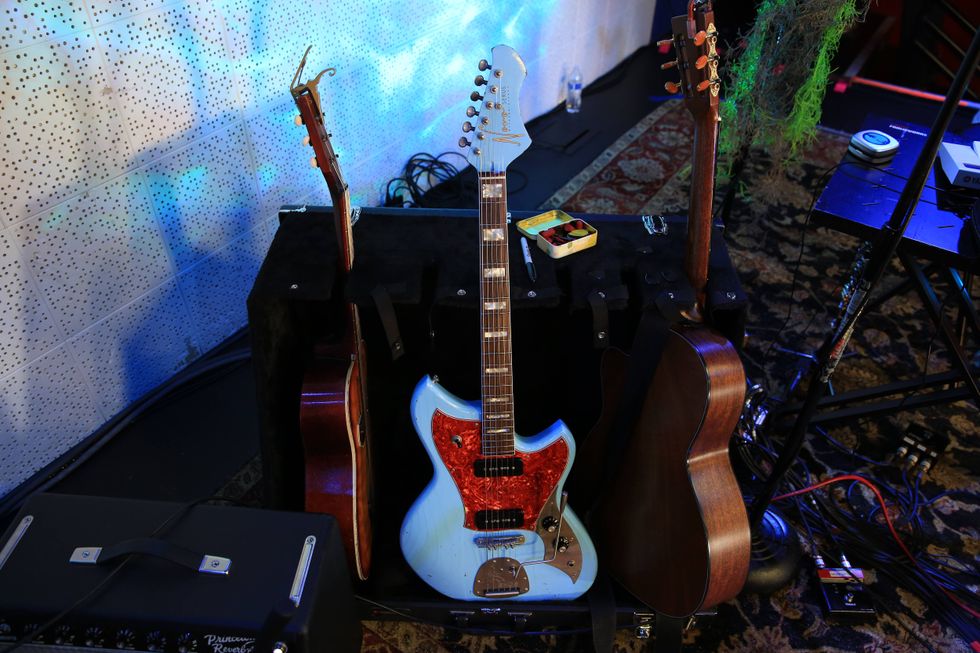
This Novo Serus, tuned to drop C, is brand new to Cunningham, who digs its similar-but-different take on the Jazzmaster design.
Grab and Go
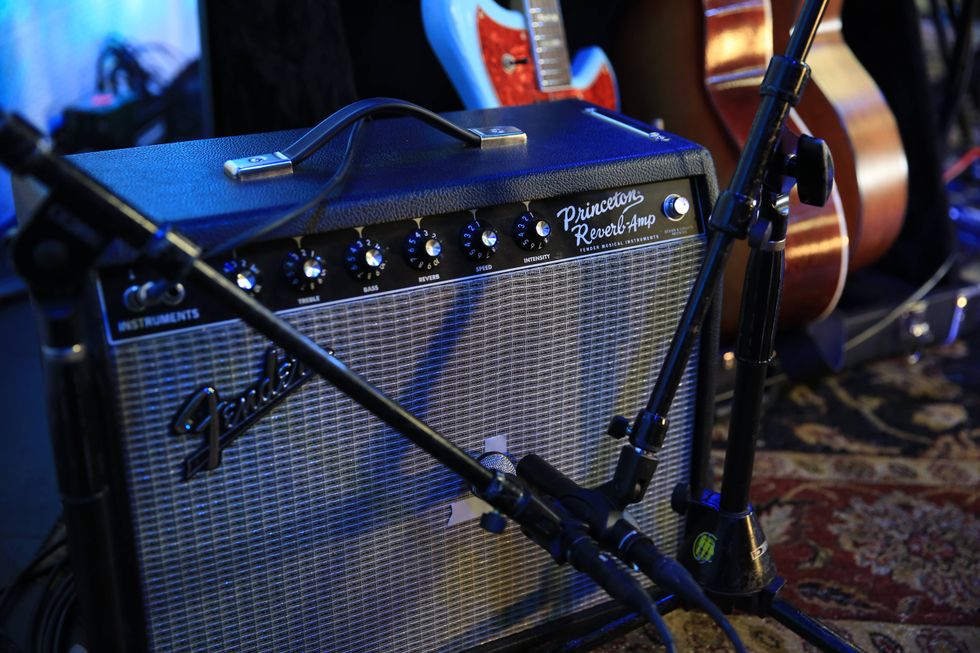
This Fender Princeton combo is Cunningham’s go-to for both studio and stage purposes.
Madison Cunningham’s Pedalboard
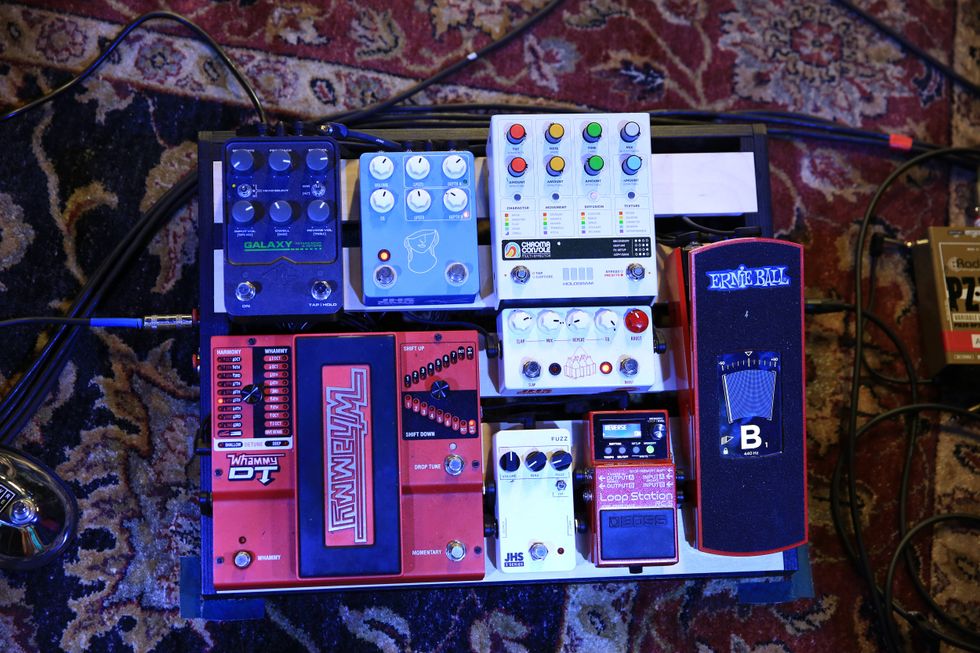
Cunningham’s board includes an Ernie Ball VPJR Tuner pedal, Boss RC-5 Loop Station, JHS Milkman, JHS 3 Series Fuzz, DigiTech Whammy, Hologram Chroma Console, Cunningham’s signature JHS Artificial Blonde, and Universal Audio Galaxy ’74 Tape Echo and Reverb.
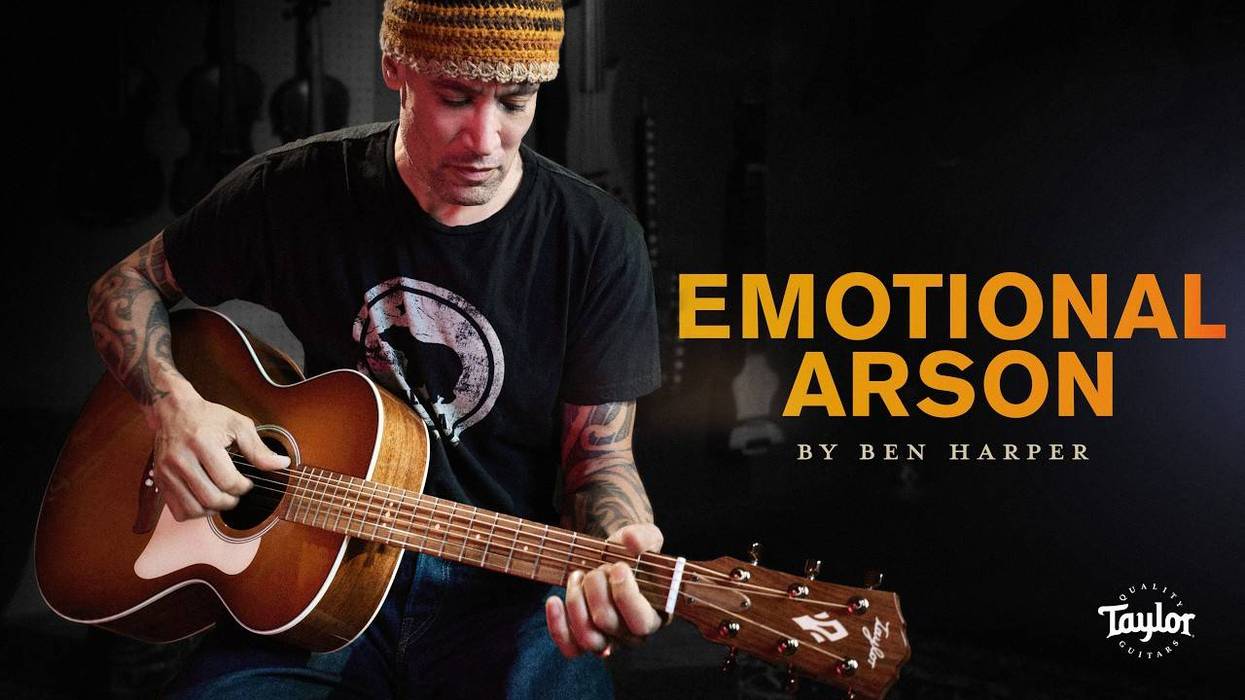
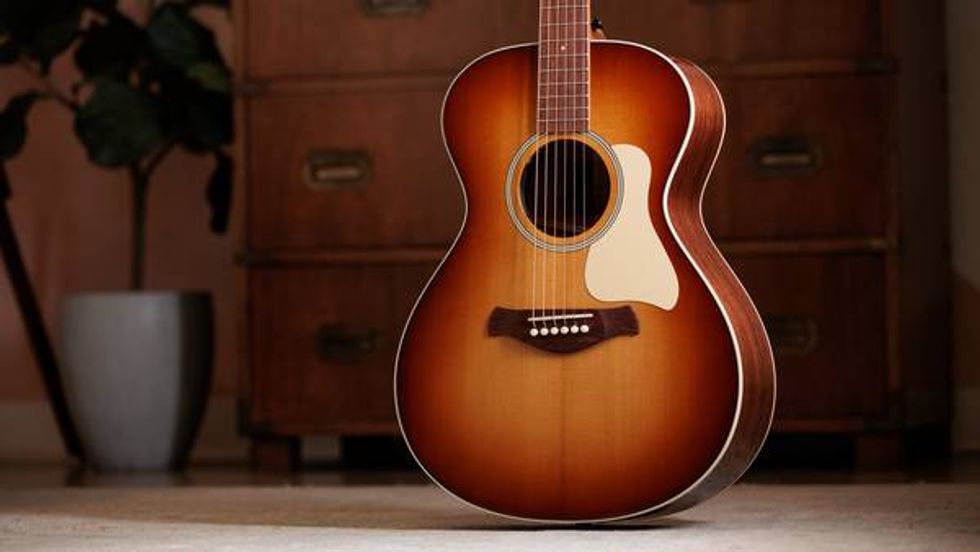
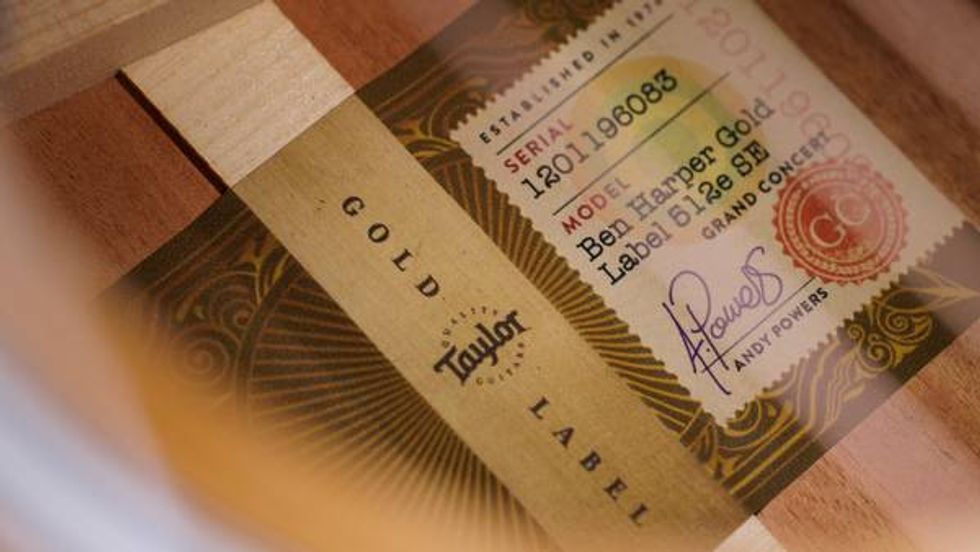
Ben Harper has always played in the spaces between notes. His touch is measured and deliberate—more about feel than force. It’s a style he’s refined over decades, and one that demands a guitar capable of responding as much to nuance as power. In this video, that approach comes into focus as he performs "Emotional Arson" on the new Taylor Grand Concert guitar that bears his name: the Ben Harper Gold Label 512e Special Edition.
The acclaimed singer-songwriter, multi-instrumentalist and three-time GRAMMY Award winner has a new tool well suited for his playing technique and musical style, which has taken on a stripped-down acoustic intimacy over his last few studio albums.
Harper’s relationship with music started early, forged inside the Folk Music Center in Claremont, California—the shop his grandparents opened in 1958. He was immersed in instruments from around the globe and the music of players passing through. Harper has called it his second home, and it’s easy to hear why.
There, absorbing a constant swirl of sound, he developed a passion to play and create his own music. Ultimately, it was country blues singer and fingerpicker Mississippi John Hurt who inspired Harper to learn how to play the guitar. Harper studied and obsessed over the work of blues guitarists such as Reverend Gary Davis, Robert Johnson and Blind Willie Johnson. Later, he connected with John Lee Hooker, Chris Darrow, David Lindley, Brownie McGhee and Taj Mahal, who invited Harper on tour to play lap steel with his band.
The wide world of sound he absorbed at the Folk Music Center shaped the genre-blending strain of roots music that Harper continues to explore, perform and record. His seventeen studio albums explore a kaleidoscope of genres, including blues, folk, reggae, rock, hip-hop, soul, funk and gospel.
For years, that voice has lived across a wide range of guitars. Harper’s introduction to Taylor came in 2017 when he picked up an Indian rosewood/spruce 810 dreadnought at a music store. Soon after, he gravitated toward a pair of Taylor Grand Pacific (round-shoulder dread) models—a mahogany/spruce Builder’s Edition 517 and an Indian rosewood/spruce Builder’s Edition 717. Taylor’s designer-in-chief, Andy Powers, had recently introduced the Grand Pacific, featuring new voicing architecture, and Harper was immediately drawn in by its inspiring feel, sound and expressive potential.
“The Grand Pacific guitars,” Harper said in a previous interview, “seem to resonate even when not being played. My favorite instruments tend to do this.”
That sensitivity—to resonance, to response, to the way a guitar reacts before it’s even fully engaged—not only underpins Harper’s soulful musical storytelling but also influenced the design of his new Taylor guitar. Andy Powers approached the project with Harper’s fingerstyle technique in mind.
“He’s not digging in hard,” Powers says. “He’s relying on nuance, touch and often amplification to carry the sound. When he plays, you hear both hands—right and left. He uses techniques similar to steel players, like pick blocking and muting notes quickly to create space between them. It gives his playing a thoughtful, deliberate quality. Every note has space around it. So a guitar built to support Ben’s style needs quick response, warmth and clarity.”
That blend of responsiveness, warmth and clarity is a hallmark of the sound of the Gold Label Collection—a family of guitars designed to produce a traditional flavor of acoustic tone reminiscent of old-school flattops. The collection’s heritage-inspired tone marks a major departure from the high-fidelity articulation that’s often been associated with the Taylor sound. Gold Label models yield a warmer, deeper, more robust and muscular sound than any other Taylor.
Powers developed a range of innovations for the Gold Label Collection, including new body styles, a new neck design and a new bracing pattern. The newest addition to the collection is a non-cutaway Grand Concert body style with deeper body dimensions. Powers thought Harper’s nuanced touch and melodic rhythms would be perfectly suited for the deeper-body Grand Concert. Designed by Bob Taylor and introduced in 1983, the original Grand Concert has always appealed to fingerstyle players due to its intimate proportions and responsiveness to a delicate touch. Now, the added depth creates greater sonic push, producing a warmer, more powerful sound with slightly blended notes and enhanced low end—all while preserving the intimate feel and balance Grand Concert players expect.
While Powers and Harper collaborated on the design, Powers derived ideas about tonewood choices directly from Harper’s style of play.
“Ben comes from a background that includes Weissenborn-style playing and lap-style techniques,” says Powers. “There’s a built-in preference for direct, forward sound, more like mahogany than rosewood.”
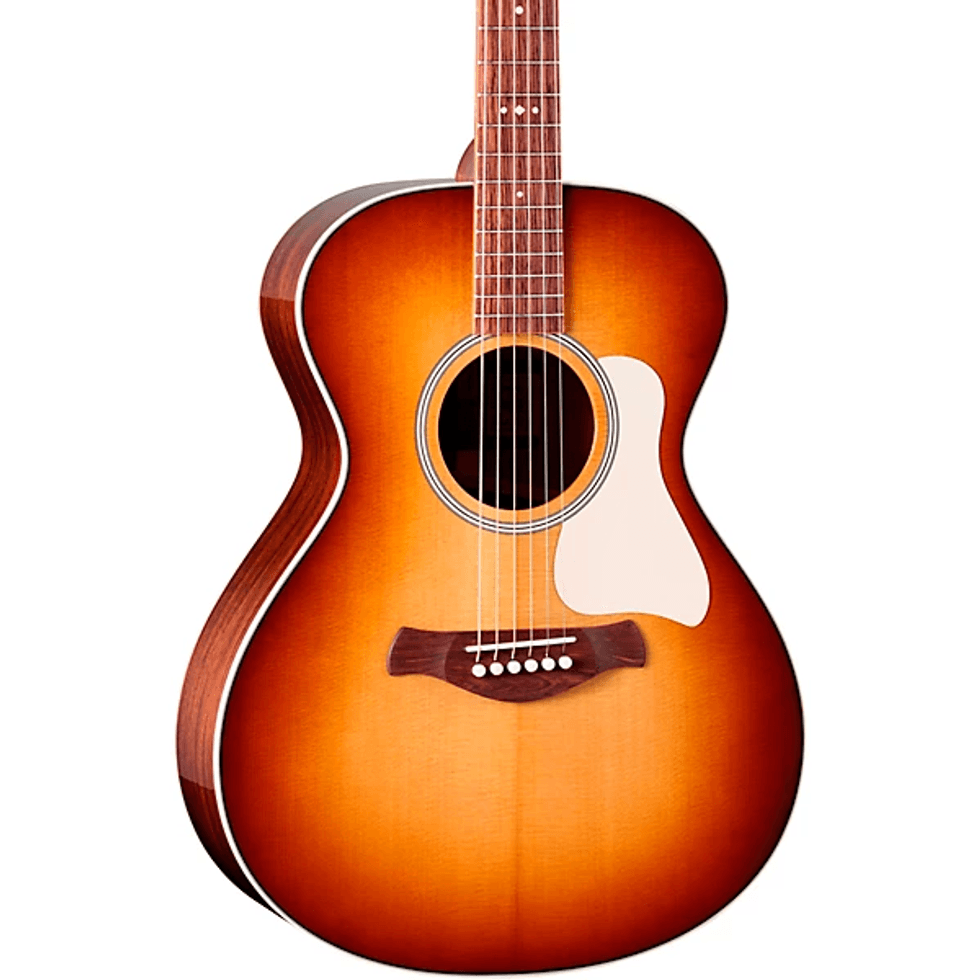
The Ben Harper Gold Label 512e Special Edition features solid mahogany back and sides paired with a torrefied Sitka spruce top, yielding a broad dynamic range with a dry, woody midrange focus and a played-in character.
For the fretboard and bridge, Powers suggested Honduran rosewood because it transmits even more of the strings’ complexity and character into the soundboard than ebony. With Harper’s soft touch, Honduran rosewood allows the guitar to respond in an even more personal and expressive way.
Harper had grown accustomed to playing bigger-body Taylors and admits he had initial doubts about the compact Grand Concert’s sonic capabilities. As he recalls, those doubts were quickly put to rest.
“I love my Builder’s Edition 517 and 717,” says Harper. “I love my 810. So, I was really concerned about this guitar not being able to have the volume or sustain available to me. Then I heard Andy play it. There is sorcery in this guitar. From the size of the sound chamber, this guitar should not be this loud or resonant. I wanted this guitar to be exactly how it turned out.”
One other choice Harper made for his Gold Label model was the inclusion of Taylor’s new Claria™ System electronics, featuring a redesigned undersaddle pickup and a proprietary preamp with soundhole-mounted tone controls that make it easy to shape the amplified sound for virtually any live setting.
“Under-saddle pickups typically can be a pain,” Harper says, “but Claria is a game-changer for me. I tour a lot—the mid-contour control really helps me dial in a sound that I can adapt and tailor to any venue I might play in.
The deeper-body Grand Concert joins an expanding range of body shapes that contribute to the Gold Label Collection’s old-soul sonic personality, including the Super Auditorium and two deeper-bodied dreadnought-style shapes: the round-shoulder Grand Pacific and square-shoulder Dreadnought.
These distinctive body shapes are built with fanned V-Class™ bracing and Taylor’s patented Action Control Neck™, making up the sonic recipe that defines every Gold Label guitar. A variant of Taylor’s patented V-Class voicing architecture, fanned V-Class bracing unlocks greater sonic warmth, resonance and power while preserving the pitch accuracy of the original design. The groundbreaking Action Control Neck allows for quick string height adjustments, enabling players to dial in their preferred action with unprecedented ease and precision—without having to remove or even detune the strings.
Together, these elements redefine how each Gold Label guitar feels in the hands as much as how it sounds in the room. In the case of Harper’s Gold Label model, the payoff is clear. The guitar responds quickly to a light touch and holds onto warmth as notes sustain—qualities that mirror the way he plays.
Taylor has released two additional Grand Concert models in its Gold Label Collection. Players who prefer the deep lows and zesty trebles of Indian rosewood’s sweeping frequency range should consider the Gold Label 712e. Those who appreciate mahogany’s earthy midrange but favor a natural top and ebony fretboard should check out the standard Gold Label 512e.
Watch the video below to learn more about the Ben Harper Gold Label 512e and his connection to this new Grand Concert.
Taylor Guitars
Ben Harper Gold Label 512e Special Edition
Designed with GRAMMY-winning songwriter and guitarist Ben Harper
Torrefied spruce top yields bold projection and aged-in warmth
Mahogany back and sides serve up a woody midrange voice
Deeper Grand Concert body offers a comfortable feel and surprising power
Includes Claria electronics and deluxe hardshell case