I’m always thrilled to see a tweed Fender amp come across my bench. During the tweed era, Fender was producing some of their most dynamic amplifiers, which are still heavily sought after today. Most of the time, I have the pleasure of working on the more common tweed Champs and Deluxes. This month, I was lucky to have a rarer 1958 tweed Bandmaster on the bench for a full restoration.
The Bandmaster was introduced in 1953 as the 5C7. This was during the “wide panel” cabinet era, which quickly shifted to the narrow panel cabinets a few years later. The wide panel 5C7 housed one 15" speaker, while the 5E7 narrow panel Bandmaster housed a total of three 10" speakers. The amp pumps out roughly 25-30 watts of power, and with a ton of natural distortion through the trio of speakers, this amp is one of the more unique of the Fender tweeds.
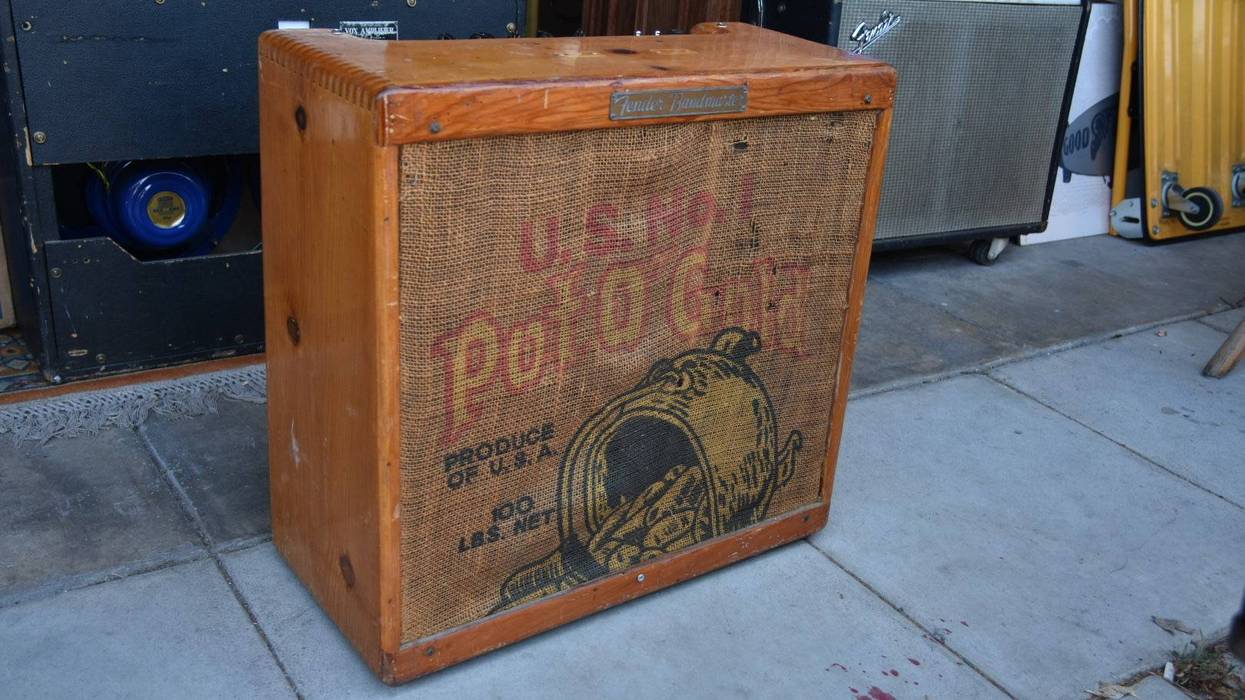
The Bandmaster was brought into the shop by a father who wanted to restore the amp for his daughter to use. Aesthetically, this amp is one of a kind. The cabinet had been previously stripped of its tweed, and now sports a beautiful exposed wood finish. The grill cloth had been replaced with an old burlap “Pot O Gold” potato sack, which gives the amp some very unique character.
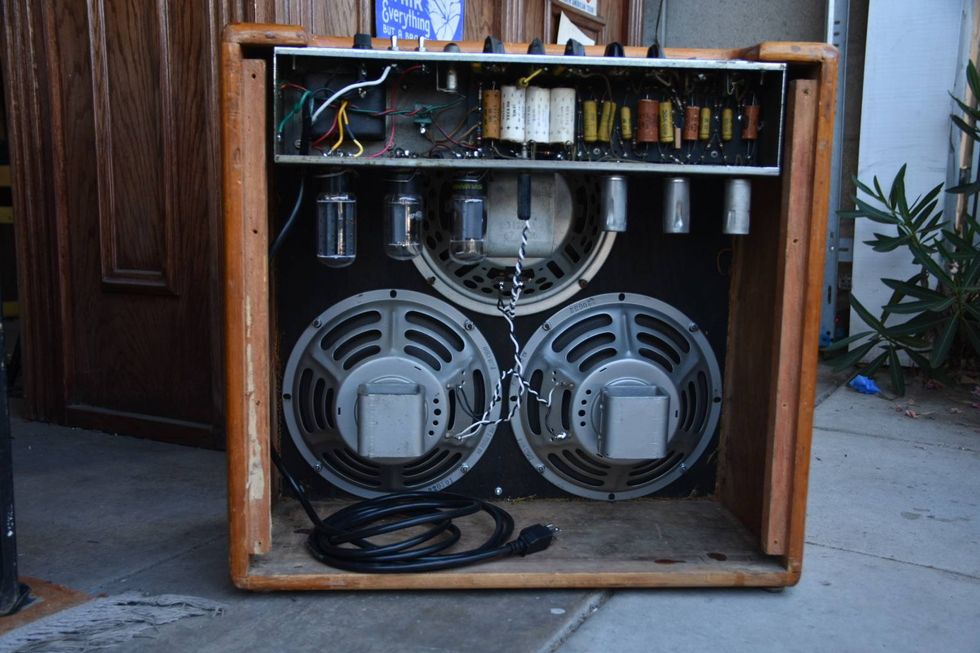
The circuitry in this amp had been mostly untouched. Exposure to the elements left the chassis very dirty, with many broken wires and cracked solder joints. I knew that I would be replacing all of the electrolytic capacitors, which is necessary for an amp of this age. With tweed amps, I like to install the new capacitors inside the old cardboard covers to preserve the original aesthetics. There is nothing like removing the back panel of a tweed amp and seeing those ’50s-era colors and textures.
“This Bandmaster simply oozes soul, and zaps life into the guitar.”
With this amp, it was very important for me to clean out the chassis. So much dust and debris was covering the circuitry and tube sockets, which could certainly cause some safety or overheating issues. With the large electrolytics out of the way, I was able to really get in there and remove as much dirt as possible. This is where the air compressor and shop vac come in handy! Once the chassis was clean, I went through and re-soldered every connection. The fresh, shiny solder joints will help the amp function more reliably than with the dull, cracking joints.
After this first round of work, I installed a grounded 3-prong power cable. The amp was now safe to actually turn on and test. Immediately, I noticed the power and standby switches were sticking and needed to be replaced. I installed new toggle switches and the amp fired right up. Once I confirmed that everything was working properly, I let the amp run for a while to listen for any noise issues. Miraculously, I did not hear any pops, crackles, or hum, which means the restoration is almost complete!
The final circuit check comes down to the coupling capacitors. In this amp, we have beautiful yellow Astron capacitors with green writing. All of these capacitors are original, and in order to leave them all in, I need to make sure they’re still healthy. Some of these capacitors are part of the tone stack, which shapes the guitar signal by blocking or passing specific frequencies. The other coupling capacitors pass the guitar signal from one gain stage to the other. Often these capacitors connect to the plates of the preamp tubes, where signal from one stage has just been amplified. There is a high DC voltage applied to the plates of the preamp tubes, which is necessary to power the tube. We don’t, however, want that high voltage to travel through the coupling capacitor and into the rest of the signal path.
I go through the schematic and check any coupling capacitor that connects to a high voltage point. I confirm the high DC voltage on one side of the cap with my multimeter, and then check the DC voltage on the other side. The goal is to see close to 0 VDC, but sometimes the capacitors will break down and begin to leak the DC voltage into that signal path. If I see more than 1 or 2 volts on the other side of that cap, I may opt to replace it. Sometimes that leaked voltage will cause noise or scratchy controls. In the case of the potato sack amp, I was able to leave all of those yellow Astrons original.
This amp sounded so sweet. I had never played through a tweed Bandmaster before, so this was a treat for me. There was so much natural growl and lively touch response, but without being too loud. There’s no surprise that this amp was favored by guitar players such as Joe Walsh and Pete Townsend. This Bandmaster simply oozes soul, and zaps life into the guitar.
MONO has introduced the MONO x Tim Henson M80 Limited-Edition Classic Dual Electric Guitar Case, marking MONO’s first-ever artist collaboration.
Designed in collaboration with Polyphia guitarist and virtuoso Tim Henson, the limited-edition case brings together MONO’s design-led philosophy with Henson’s creative perspective. Developed over months of prototyping, from initial concepts to the final build, it reflects a shared commitment to purposeful design and uncompromising functionality.
MONO x Tim Henson M80 Classic Dual Electric Guitar Case features include:
Built on MONO's patented dual protection design, the case safely carries two guitars within a single streamlined profile.
A distinctive square-patterned front panel is paired with a custom off-white plush interior for a refined visual statement.
A specially incorporated front handle provides greater control and versatility when carrying the case.
A custom Polyphia metal badge adds a signature detail unique to the collaboration.
Durable, water-resistant Sharkskin™ exterior provides reliable protection for travel and touring.
A reinforced steel-riveted webbing handle offers lasting strength, comfort and durability.
MONO’s patented Headlock® neck suspension system securely supports and protects both instruments while in transit.
Beyond his distinctive approach to guitar, Henson has a deep appreciation for design and aesthetics, making him a natural collaborator for MONO. A longtime MONO user alongside his band Polyphia, he has relied on MONO gear throughout his career, making this collaboration a meeting of MONO's industry-leading approach to instrument protection and one of the most innovative guitarists of his generation.
Launching alongside Polyphia’s latest single, “Power in the Blood”, the campaign follows a day in the life of Henson, carrying his Ibanez nylon-string and electric guitars in the MONO x Tim Henson M80 Classic Dual Guitar Case. Henson shares why he partnered with MONO to create his signature case, the thinking behind the features he selected, and how his creative vision shaped the final product.
"I’ve been using MONO gear for years, so I’m very happy to have gotten the opportunity to make my own version of the M80 Classic Dual,“ said Tim Henson. “I’m constantly switching between my electric and nylon-string signature guitars, so having one case that carries both and looks exactly the way I want it to is perfect."
The MONO x Tim Henson M80 Classic Dual Electric Guitar Case carries a street price of US $399.99. To learn more visit: timhenson.monocreators.com.
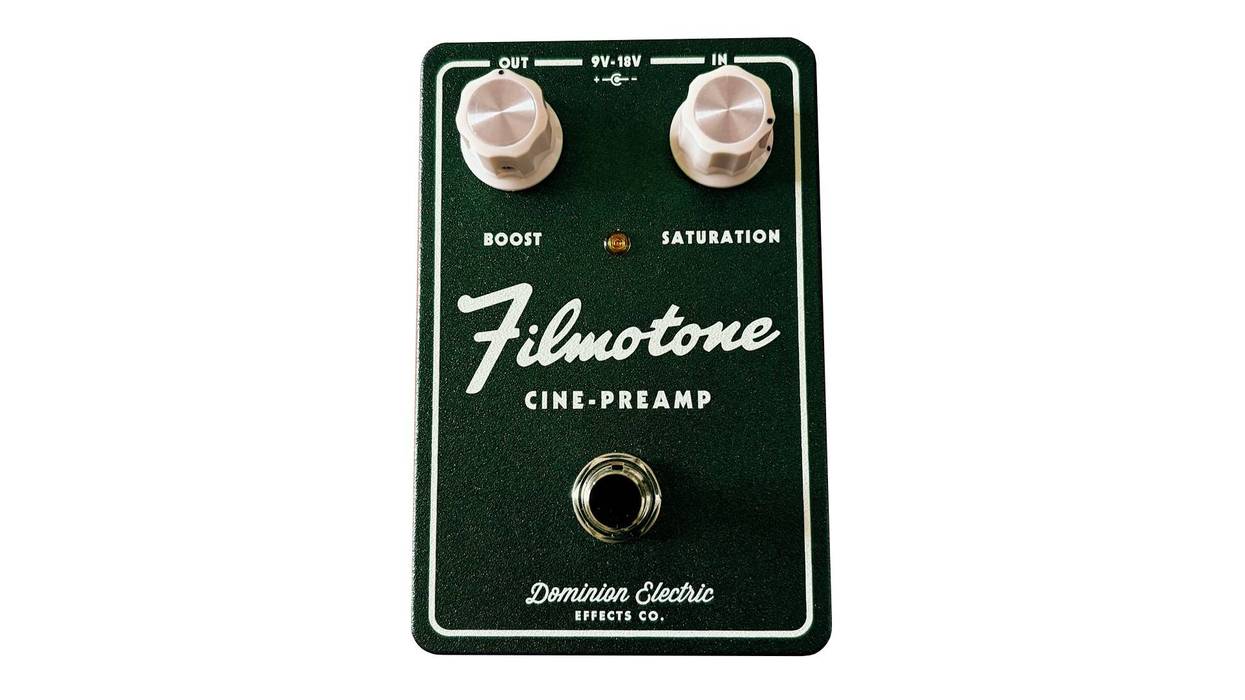
Aaron Sabourin runs Dominion Electric Effects Co., out of Ottawa, Ontario, as a one-man show, building effects using pricey, vintage parts when his day job permits him to. His Faceless Fuzz and Soul Power—inspired by the Fuzz Face and Hendrix’s screaming tone at Fillmore East circa 1970, respectively—are top-shelf recreations of common circuits that have been around for a long time. But it’s Sabourin’s commitment to using premium components in bomb-proof builds that make his pedals so coveted. His latest design, the Filmotone, strays a little further from the guitar-tone canon: It’s an effect pedal designed to approximate the sound and dynamic feel of a single-transistor preamp wrenched from the guts of a Bell & Howell Filmosound film projector.
PG’s John Bohlinger met up with Jeremy DeBardi, a.k.a. Steel Beans, at the Cannery in Nashville. A one-man-band, DeBardi plays guitar and drums at the same time, and does it through a pair of 1965 Silvertones and two vintage amps run in stereo. Have a look at some quick highlights below, and tune into the new Rig Rundown for all the details.