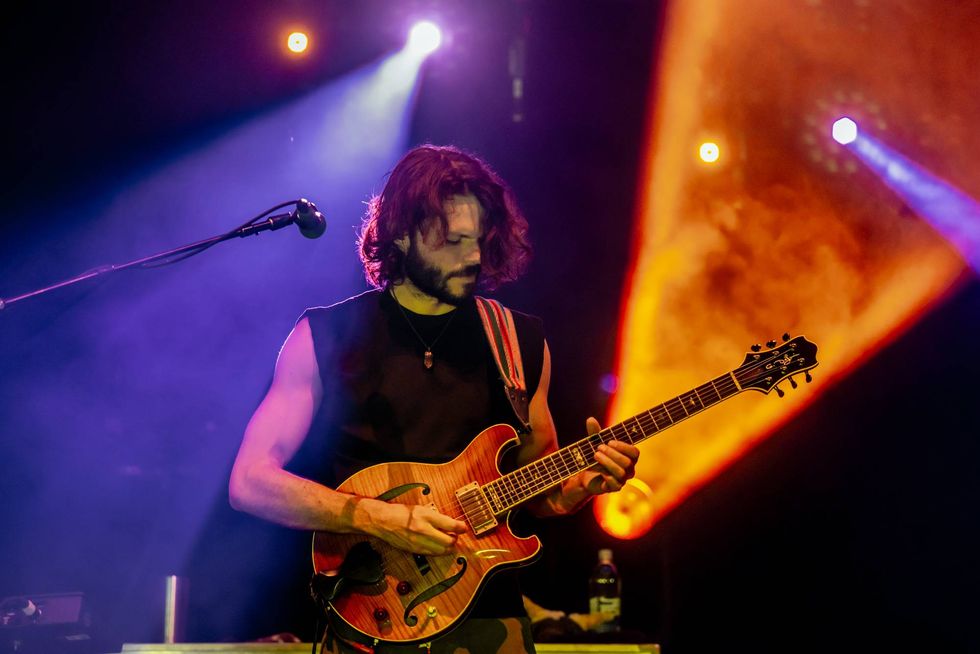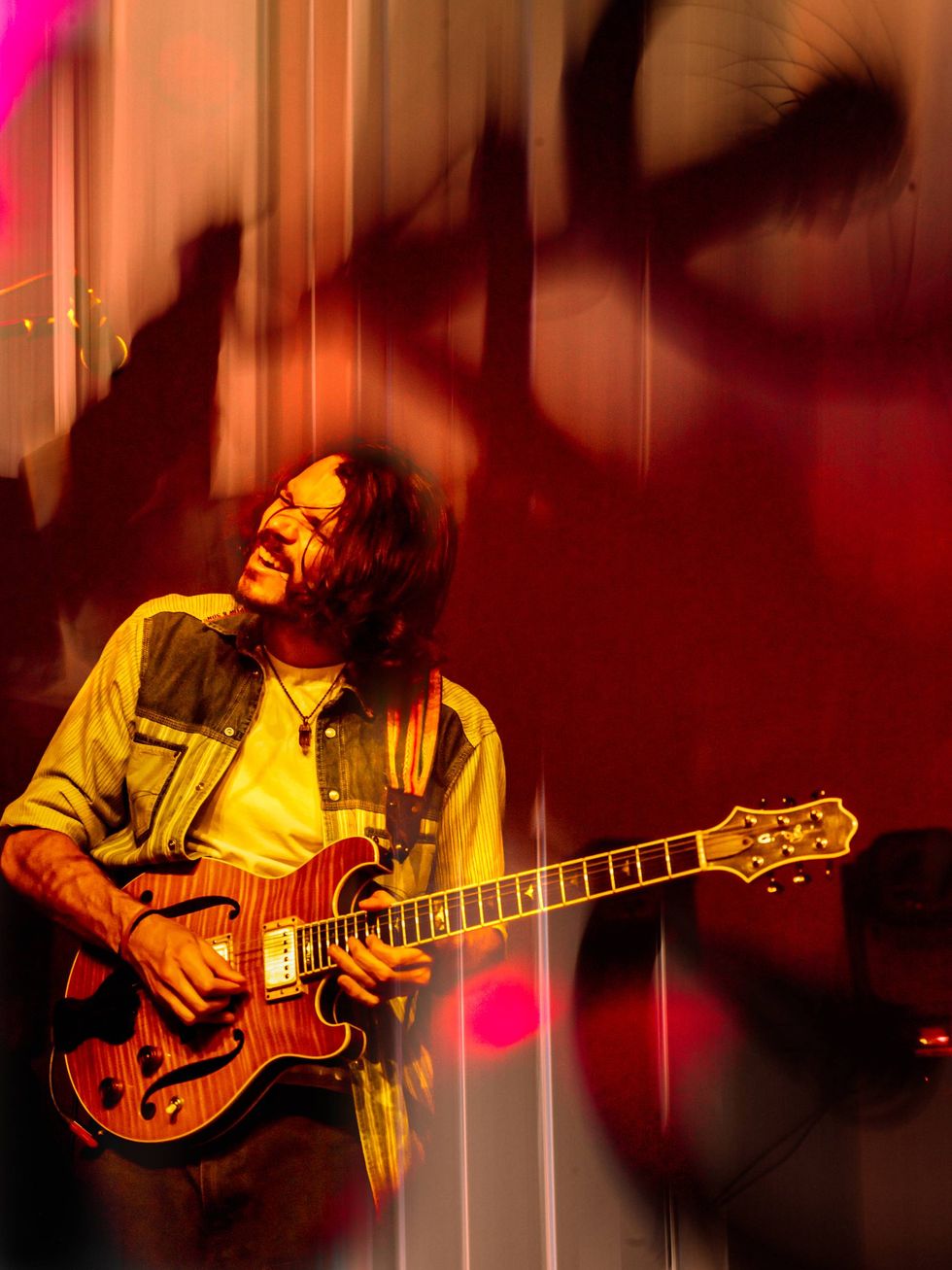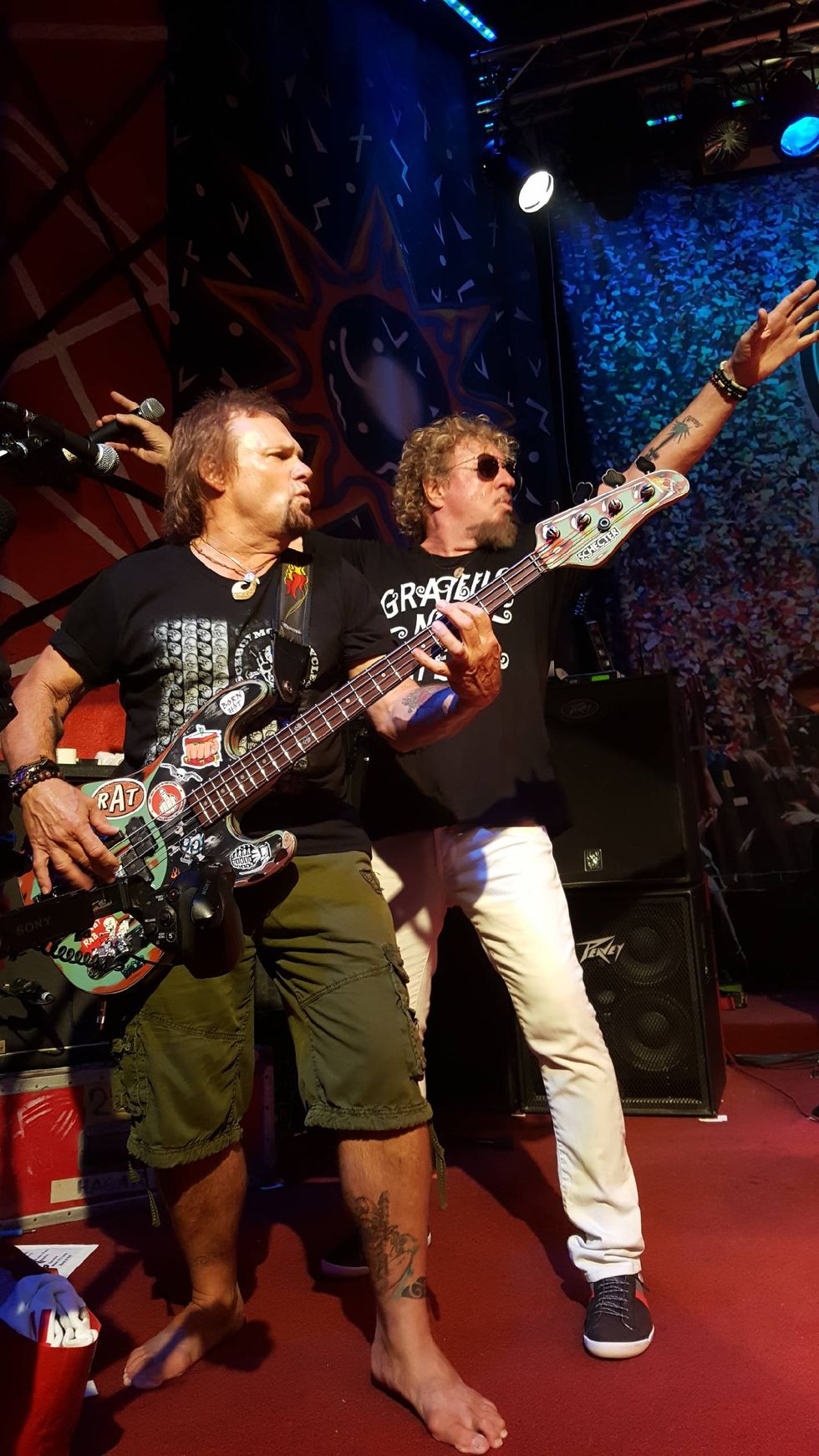

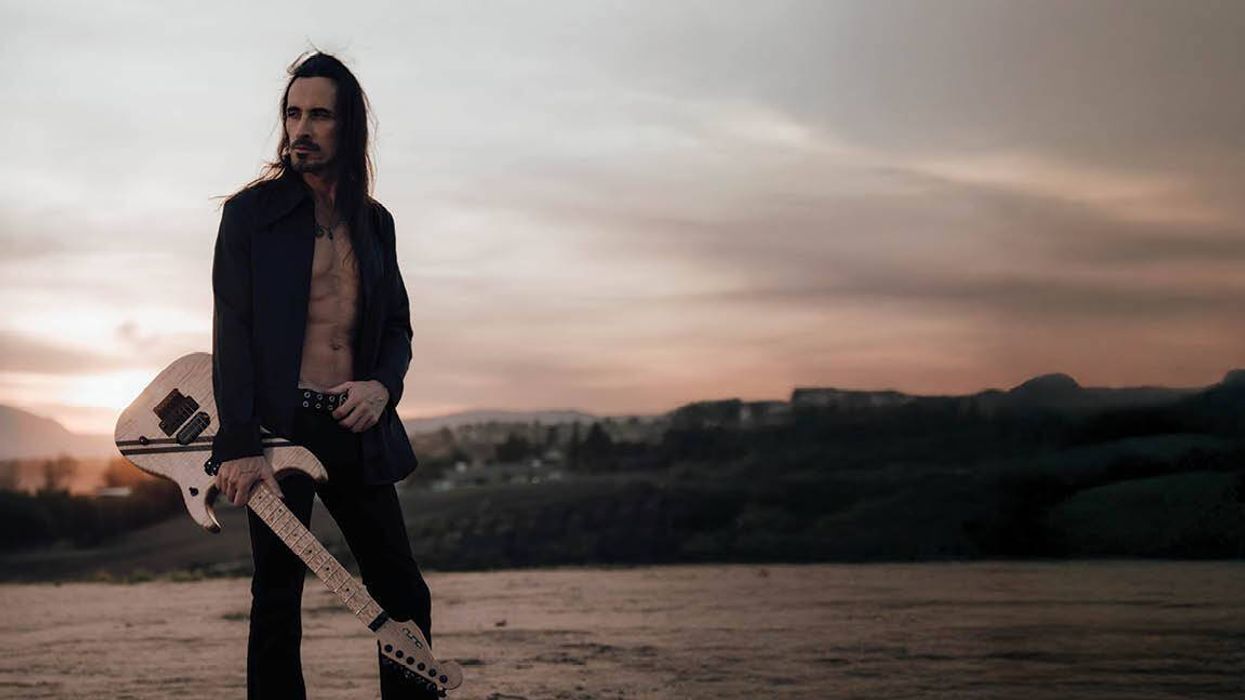
The guitar showed up first in an Instagram video. Nuno Bettencourt in the back of a cab on his way to Villa Park in Birmingham, England, for Black Sabbath’s Back to the Beginning benefit concert on July 5, playing the solo to Ozzy Osbourne’s “Bark at the Moon” on an instrument nobody recognized. Dark wood body with light stripes running through it. And on the headstock: NUNO.
Then he brought it onstage at the event in front of 45,000 people, serving as one of the MVPs in an all-star supergroup that tackled Ozzy and Sabbath classics. The instrument was clearly visible in videos that hit the internet immediately afterward, and the guitar community began speculating about what they’d just seen. But Bettencourt stayed quiet.
A few months later at the MTV Video Music Awards, where he appeared alongside Steven Tyler, Joe Perry, and Yungblud in an Ozzy tribute, he performed with two versions of the unidentified model—the dark one for “Crazy Train,” and a blonde variant for “Changes.” Another high-profile moment, more online chatter, but no further details on the guitars.
Finally, on September 30th, the speculation ended. Bettencourt announced the launch of Nuno Guitars, his own company, marking the end of a 35-year partnership with Washburn. The brand included the Dark Horse and White Stallion—the mystery models from the taxi video and the shows—along with the N4, his signature design that has defined his sound since the early ’90s. For the first time, the N4 would carry his name instead of Washburn’s. (For Bettencourt's full rundown of the Nuno Guitars line, head here.)
It’s a significant move for a guitarist whose influence has stretched across multiple generations. Bettencourt first turned heads in 1989 with Extreme’s self-titled debut album and 1990’s Pornograffitti, albums that showcased both his funky, acrobatic playing and his songwriting versatility. While the latter’s “More Than Words” became an acoustic phenomenon, it was his electric work that made him a guitar hero. He was an explosive guitarist who recalled the best of Eddie Van Halen—incredible rhythm chops, lightning-fast technical dazzle, and genuine melodic songcraft. He could blend funk grooves with shred-level technique, throwing in tapped runs, off-time phrases, and blistering alternate picking lines without ever losing the pocket. He could match any virtuoso, but had the taste to know when to serve the track and when to let loose.
Decades later, that guitar-hero status was reaffirmed when Extreme released Six, their first album in 15 years. The opening track, “Rise,” featured a solo that stopped the guitar universe cold—not an easy thing to do in 2023. YouTubers analyzed it, guitar legends called to congratulate him, and forums lit up with players trying to decode the insane runs that capped the performance. It wasn’t just technical—it was emotional, physical, and undeniably fun. Once again, Bettencourt had reminded people what guitar playing could be.
Through it all, the N4 was his constant. Introduced in the early ’90s, it became one of the most recognizable and longest-running signature guitars in the industry. The design was distinct: a Strat-inspired body with a unique curved cutaway neck joint, fitted with dual humbuckers and a no-frills control layout. It was a workhorse—a term Bettencourt used repeatedly over the years—built for players craving versatility, speed, reliability, and tone. The N4 wasn’t just his guitar; it became the guitar for countless players who grew up idolizing his sound and style.
Which makes the move to his own company significant. The N4 has been in production for over three decades, and walking away from the Washburn partnership means taking full responsibility for everything: design, production, quality control, and the relationship with guitarists who’ve played his signature instrument for years.
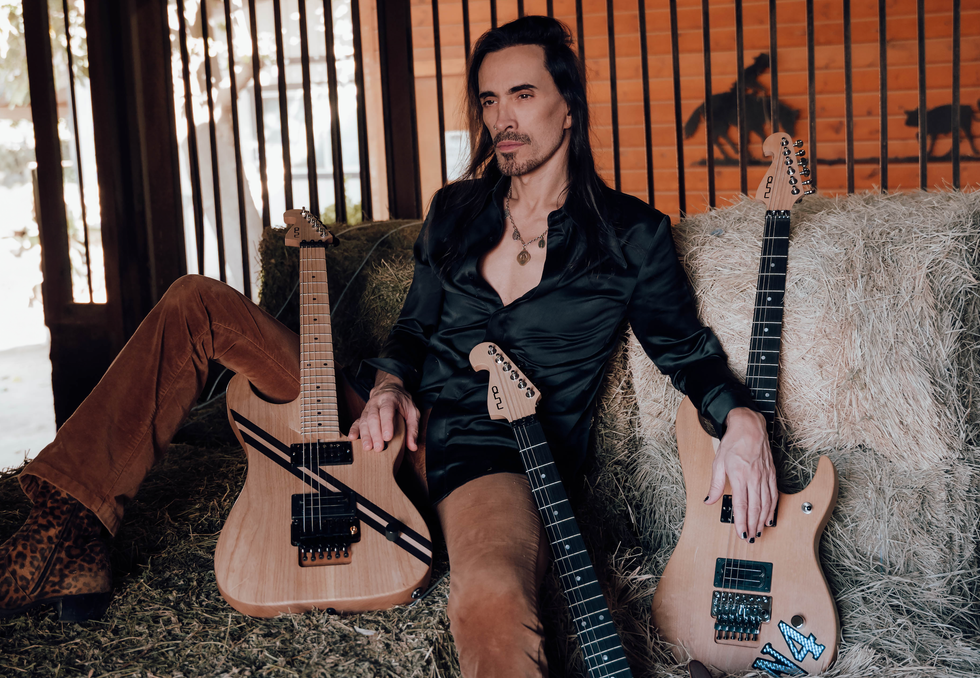
In the stable: Bettencourt with a U.S.-made White Stallion, Dark Horse, and N4
Katarina Benzova
The new brand is structured around three lines: the Thoroughbred Series (Masterbuilt guitars with exotic woods and custom shop-level craftsmanship), the Stable Series (U.S.-made instruments), and the Colt Series (import models). Currently, it’s a direct-to-consumer operation, cutting out traditional retail in favor of a model that lets Bettencourt communicate directly with the people buying his guitars. And he wants every one of those guitars, regardless of price point, to feel like something he’d play himself.
At 59, after four decades of playing, touring, and recording—from Extreme’s platinum records to Generation Axe tours with Steve Vai, Yngwie Malmsteen, Zakk Wylde, and Tosin Abasi, from the Super Bowl halftime show with Rihanna to Black Sabbath’s final concert—Bettencourt is, in one respect, starting over. Not out of necessity, but because he wants to pursue his unfiltered vision and foster a closer connection to the people playing his instruments.
What follows is an exclusive conversation—Bettencourt’s first about Nuno Guitars—about why he finally made the leap, what went into designing these instruments, and what it means to put your name, literally, on what you believe in.
Let’s start with that moment everyone noticed—you were in the cab on the way to the Sabbath show, playing a guitar nobody had seen before. Was that part of a planned rollout?
Nuno Bettencourt: Not at all. To be honest with you, it probably wasn’t a good idea to play that guitar at all. I’d been thinking about this for a long time, and Washburn didn’t know I was leaving. So for them to see not only a guitar they’d never seen, but then to see not their name on the headstock—to see mine—was probably a really fucked up thing to do. [laughs]
But I didn’t really have a contract with them. It was more of a gentleman’s agreement that had been up for so long. After a while, especially after Six came out, I just felt nothing from them. Guitars were back ordered, no press, nothing.
“When someone buys one of these guitars, I want them to feel like it’s something that’s directly from me.”
But the reason I pulled the guitar out that day is because when I got it, I played it and was like, this feels like the best N4 I’ve ever played. I was super excited. I just wanted to play it onstage. It wasn’t marketing or teasing. I was just authentically excited. I was blown away by how the neck felt. It just felt right.
Even if you were leaving Washburn, you could have gone to another established company. What made you decide to start your own?
I’ve always wanted to do it. When Washburn first called, I stayed loyal to them because nobody else gave a shit about me when I first came out. It was only after “More Than Words” that other companies started asking.
But I didn’t want to endorse. I love Les Pauls, I love Strats. I sat down with B.C. Rich, many companies through the years, and it wasn’t because they weren’t great—it just never felt like “me.” So it felt natural to do my own thing now. And without sounding like a hippie, it was time. Everything was happening organically—the Six album, the attention with “Rise,” that solo, the Back to the Beginning concert—all these dominoes were tipping. I felt like the universe was saying, “Here are a few opportunities for you. You’ve worked your ass off, you’ve hustled for 40 years. This is it.”
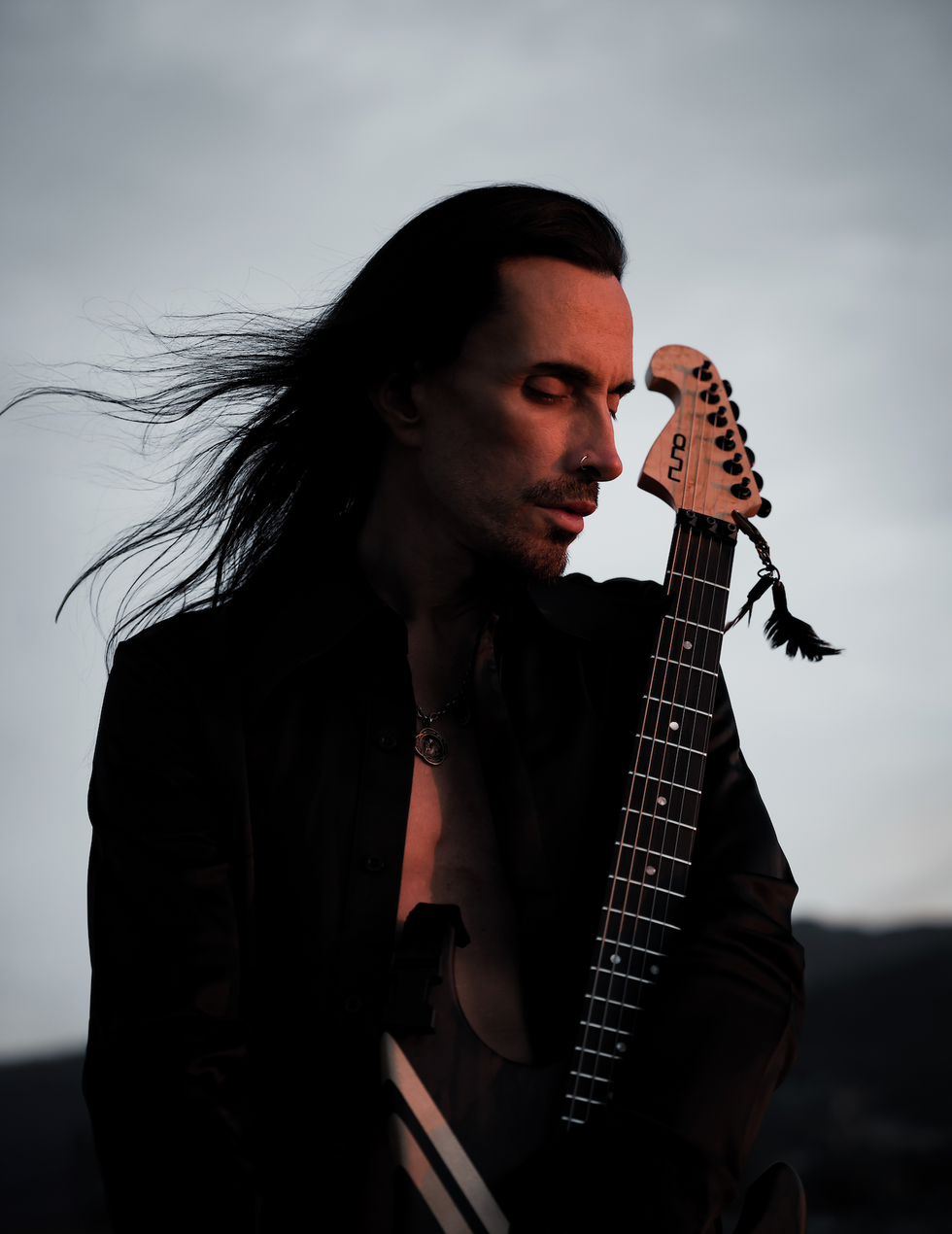
Katarina Benzova
Walk us through the different lines you’re offering—the Thoroughbred Series, the U.S.-made Stable Series, and the import Colt Series.
I’ve always played lighter woods—alder mostly, which I’ve always had in the N4. But with the Masterbuilts, which we’re calling the Thoroughbred Series, I wanted something fresh. I started searching for woods that looked cool, especially darker woods. I found ziricote, and the cool thing about ziricote is every guitar can look a little different. Very personalized. But the wood happened to be really heavy. So we did it as a top. And so the Dark Horse is an alder body, black stained, with a ziricote top. The White Stallion is a white mahogany body with a curly maple top.
And you know, once you get involved in your own company, you’re not just like, “Okay, put out my guitars, good luck.” I’m actually going to these factories. I got sent Stable Series guitars, the U.S. models, and I have to tell you, if you hand me that guitar on stage, no problem. Obviously, once you go into the Thoroughbred Series, yeah, okay, I feel that difference of why it costs this much and not that much, but man, it’s close. It’s so well done.
So even in the Stable Series, I still want it to feel like the Masterbuilts. Don’t fuck around. Don’t give me frets that are all jaggedy. I want it to be smooth. I’m going in and tweaking. I’m not trying to set a world record of selling as many guitars as possible. I don’t want anybody to be bummed and think, “Ah, I gotta pay an extra thousand bucks just for the frets to not hurt my fingers.”
How about the Colt series?
The same thing. I wanna believe that if I’m playing at Back to the Beginning and my guitars don’t make it, and somebody has one of the imports, I better be able to bring that up on stage and still sound like me. That neck better feel like me. That’s the bar. I don’t want it to be like, “Oh, Nuno is just using those expensive ones and the rest are garbage.” That is not the case. And if anybody knows me and the way I work, they know that’s not the case.
“It felt natural to do my own thing now. And without sounding like a hippie, it was time.”
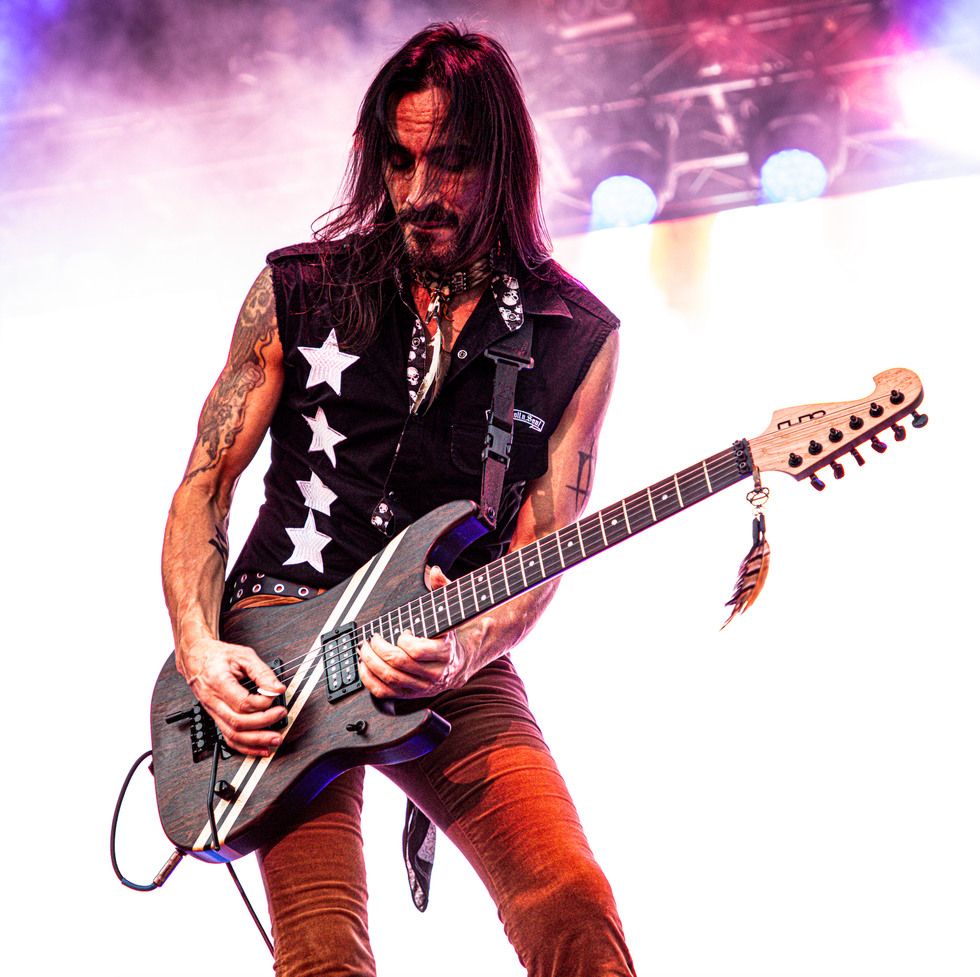 Bettencourt onstage with the Dark Horse at the Motocultor Festival in Carhaix, France, on August 23, 2005 Sarah "Sartemys" Leclerc
 The N4 is part of this new chapter as well. What does that model mean to you now?
I really want it to be what it always was for anybody who wants that guitar. I want people to be able to say, “I want the one that Nuno played, the one that got him everywhere.” I don’t want that to go away.
The Stephen’s Extended Cutaway, which allows greater access to the upper frets on the neck, has always been a signature feature of your guitars. Will it still be present on the N4 and new models?
Yes. We actually reached out to Stephen [Davies, the original designer] about it, and he told us he’s not doing it anymore. The patent, everything about it—he’s moved on. But we asked, “Are you okay if we use the cutaway?” And he said, “Have at it.” So it won’t have his logo or his name or his patent on it, but it’s there as part of the guitar.
One of the things you’re doing with Nuno Guitars is going direct to consumer. What’s the thinking behind that?
I feel there’s a disconnect when you go through traditional channels. There are these platforms and people talking about the guitars amongst themselves. I felt like an outsider. I’m like, I want to get in on that. It’s my guitar. I want to hear what people are talking about. I want to put something up on the website where I can hear what they think. I want them to post videos of them playing—the good, the bad, the ugly.
I’ve always wanted to engage more. I used to ask Washburn, why am I touring all over the world and there are no music stores I’m going to, to play or talk or meet dealers? I always loved having conversations with people, and I felt like nobody else was interested.
“With the Masterbuilts, which we’re calling the Thoroughbred Series, I wanted something fresh.”
Eddie Van Halen has always been one of your idols, and he made his name with a guitar that he built himself, one that became almost an extension of his creative being. While you’re not literally hand-building every Nuno guitar, you are forging a more direct line between your ideas and the guitars themselves.
You actually just made me realize something about Edward. Like him, I did make my first guitar. I put it together from parts. I didn’t buy a company guitar. It was Warmoth parts, and it had a Bill Lawrence pickup that was just a blade. So in a way, you’re right. It’s come full circle where I’m like, “Well, I want to be involved in putting the pieces together.” That’s what I did from the beginning. That’s what I’ve been selling from the beginning, even though somebody else has been manufacturing it. It’s always been Nuno guitars. Now it just has a cool logo. [laughs]
Chris Meade built your Washburn signature model for years, and he now handles your Masterbuilt line. Why was he the guy for this?
It had to be him. The good news was, I didn’t steal Chris from Washburn. Chris was a third-party hire, and all he made was my guitars. I just said to him, “Man, I’m leaving Washburn, and I think that means you might not have a chunk of work anyway.” And Chris is the best. He’s meticulous. He makes guitars that players want to play, not just guitars that look good. It’s like an old baseball glove you put on.
So I’m so excited that he agreed to continue working with me. When I sent him my ideas and I got the guitar back, he surpassed what I imagined. When you get that guitar and it’s not only visual, but the playing and quality are there, you’re like, “Oh, hell yeah.” Chris is amazing. I wouldn’t want anybody else there. It would’ve been hard to find somebody as mental as I am about detail.
“I don’t want it to be like, ‘Nuno is just using those expensive ones and the rest are garbage.’ If anybody knows me and the way I work, they know that’s not the case.”
When you first saw your name on the headstock of these guitars, how did it feel?
It was wild. I felt like, you play Gibsons, you play Fenders—you don’t play your own. I felt uncomfortable with it for a while. Because everybody was like, “Well, what are you gonna call it? Is it gonna be Bettencourt guitars?” And I thought, yeah, maybe it should be Bettencourt Guitars. I almost felt better about that, because that didn’t feel so first-person. That feels like a guitar company. We could write it in cursive, like Fender and Gibson. But then everybody looked at me and said, “No, no, your name is Nuno. There’s nobody else named Nuno. It’s gotta be Nuno.”
What did you think about that?
It took me a minute to wrap my head around it. But then I was like, you know what? You’re 59 years old. Everybody knows who’ve you played with and what’s been going on with you. It should be Nuno. It felt right. It felt like me. And when someone buys one of these guitars, I want them to feel like it’s something that’s directly from me.