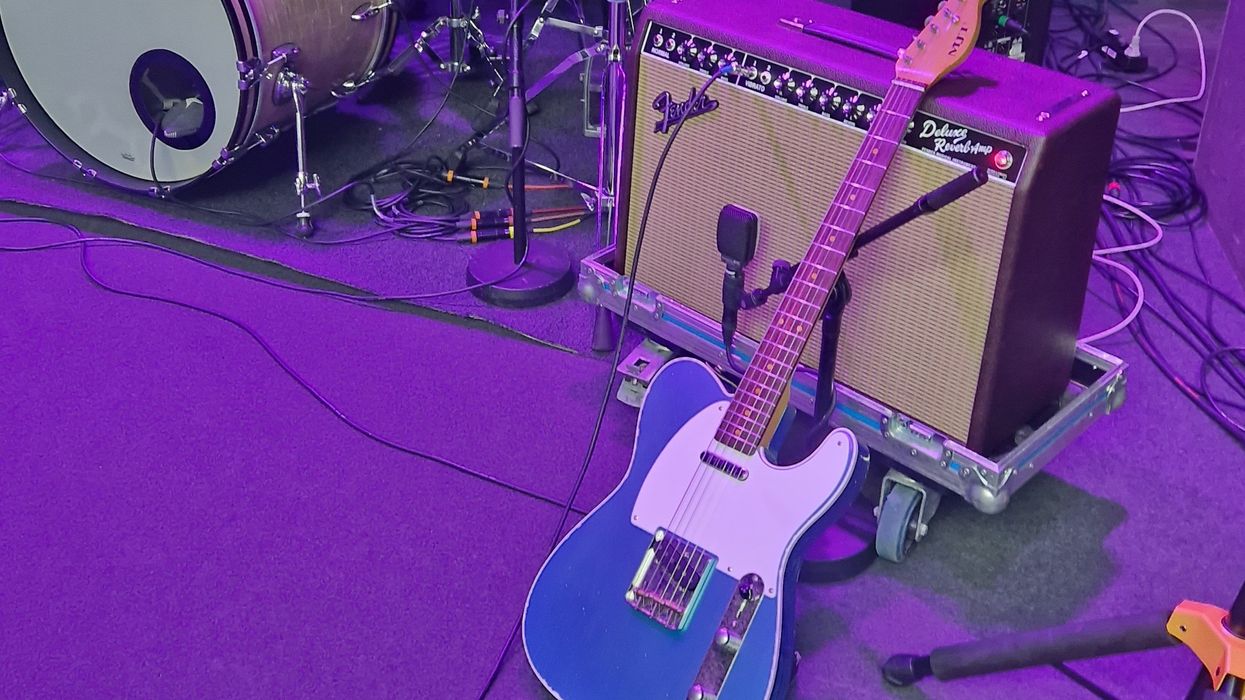


In this column, I’d like to focus on one of the fundamental guitar tones, the sound of a Fender Telecaster plugged into a vintage Fender amplifier. I’m most interested in the sound of a Telecaster’s bridge pickup and the bridge/middle position. For me, these are immediately recognizable. I like how the relatively hot-wound pickups and the metal bridge construction make single notes sound strong and stingy while chords and licks involving multiple strings are “creamy” and saturated.
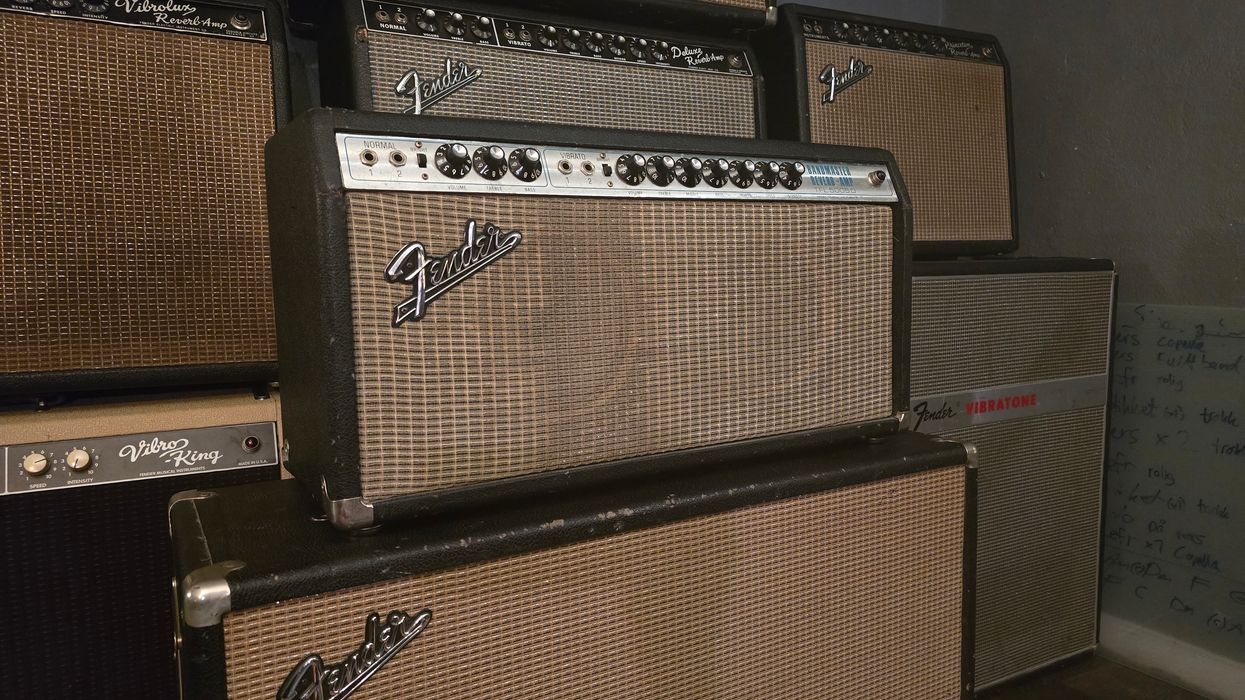
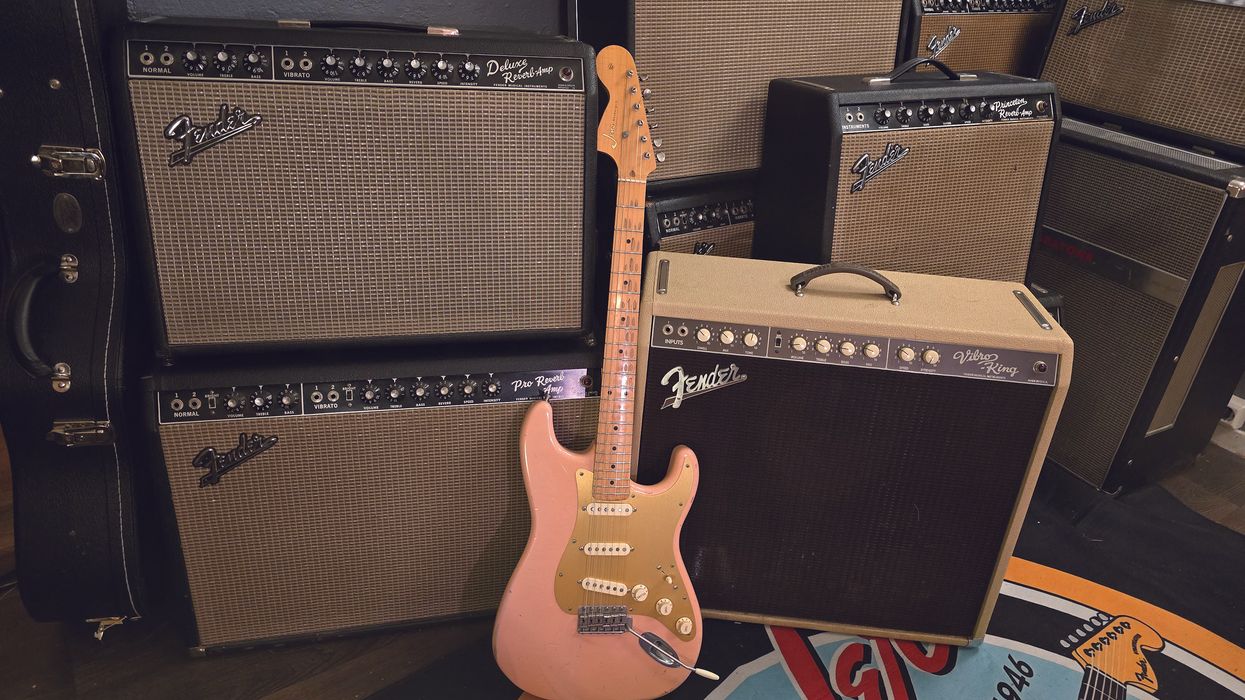
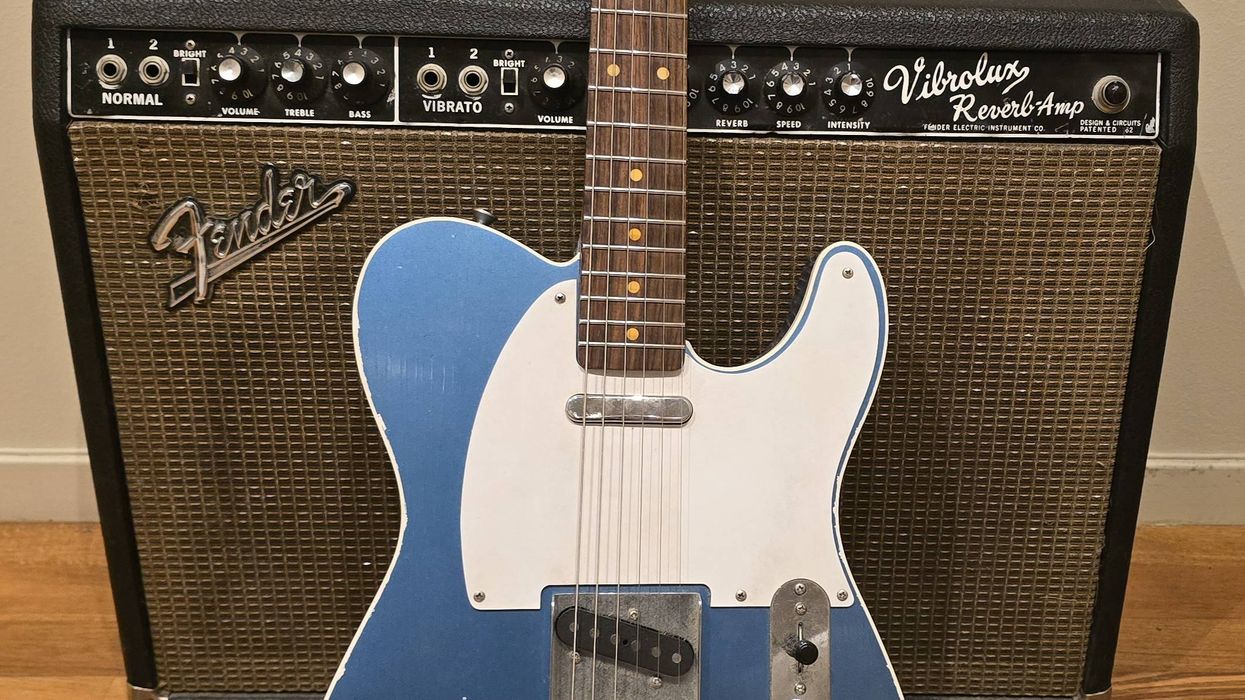
Let’s start with a simple live stage scenario with a single guitar amp. Let’s assume the venue and stage is large enough for us to crank the amp. I’d like to nominate the Fender Vibrolux Reverb as a great Telecaster match. The strong mids from the Telecaster’s bridge pickup pair nicely with the scooped Fender black-panel tone from the two 10" speakers. At 35-watts, it’ll deliver both firm lows and enough sparkle to cut through, which is critical for the mid position to not sound muddy. It’s essential that we can set the volume high enough to achieve beautiful dynamics, compression, sag, and hairy, distorted tones when we hit the strings hard. Depending on the treble response from the speakers, guitar string gauge, pickup-style, and proximity to the strings, I carefully decide if the amp’s bright switch needs to be enabled. By disabling it, I can turn up the treble knob and get more upper mids, which is essential for clear rhythm chords. For solos and lead guitar parts, I sometimes use a delay and an OD pedal that adds a little more volume, treble, and dirt.
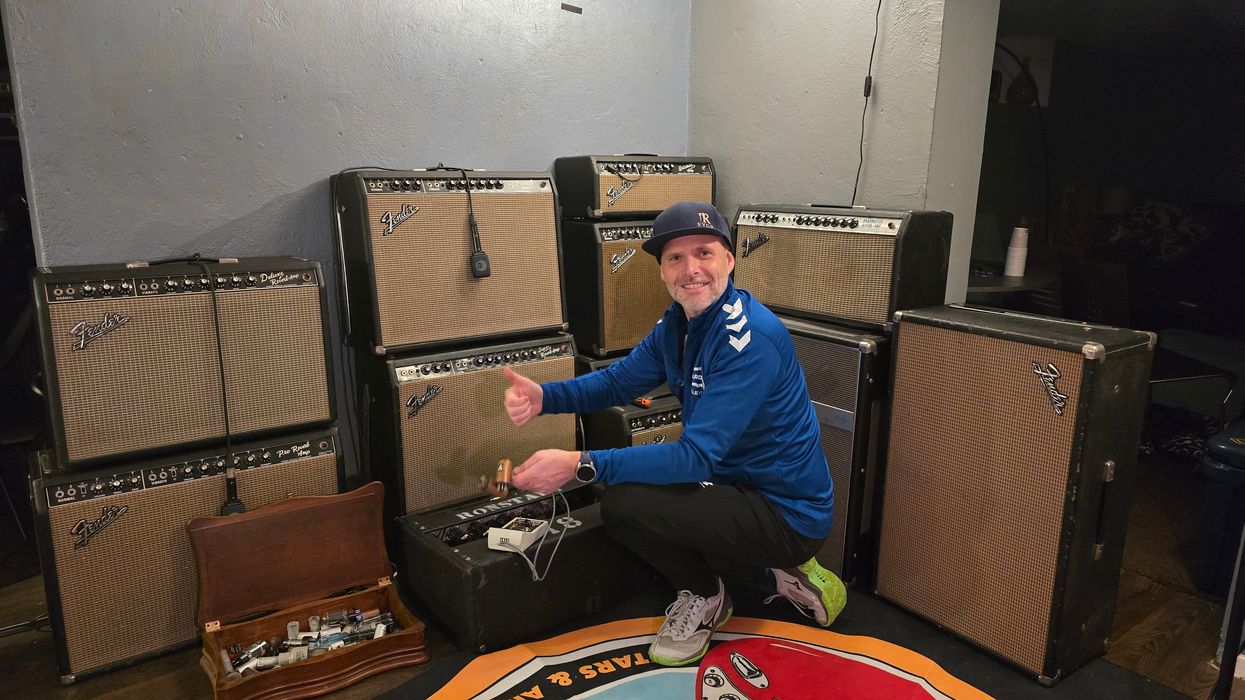
Let’s take it up a notch and add a second amp. A 2x12" Pro Reverb is a nice complement to a Vibrolux Reverb. I recommend warm-sounding speakers and flipping the bright switch off.
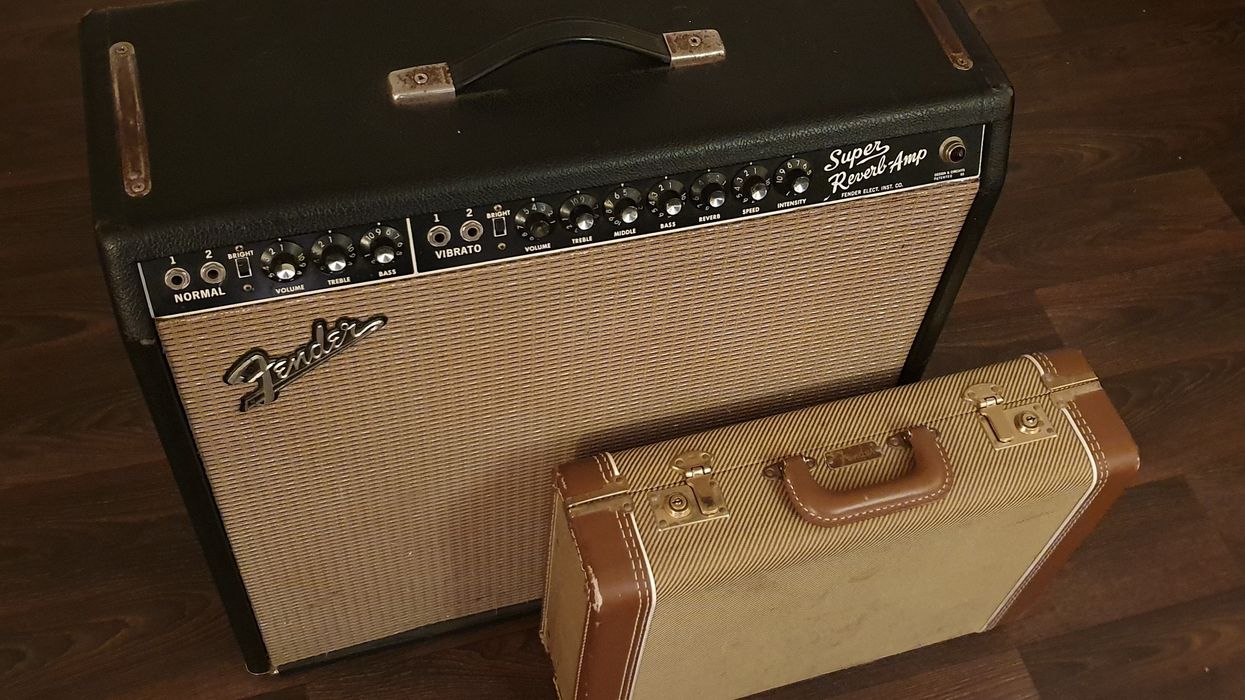
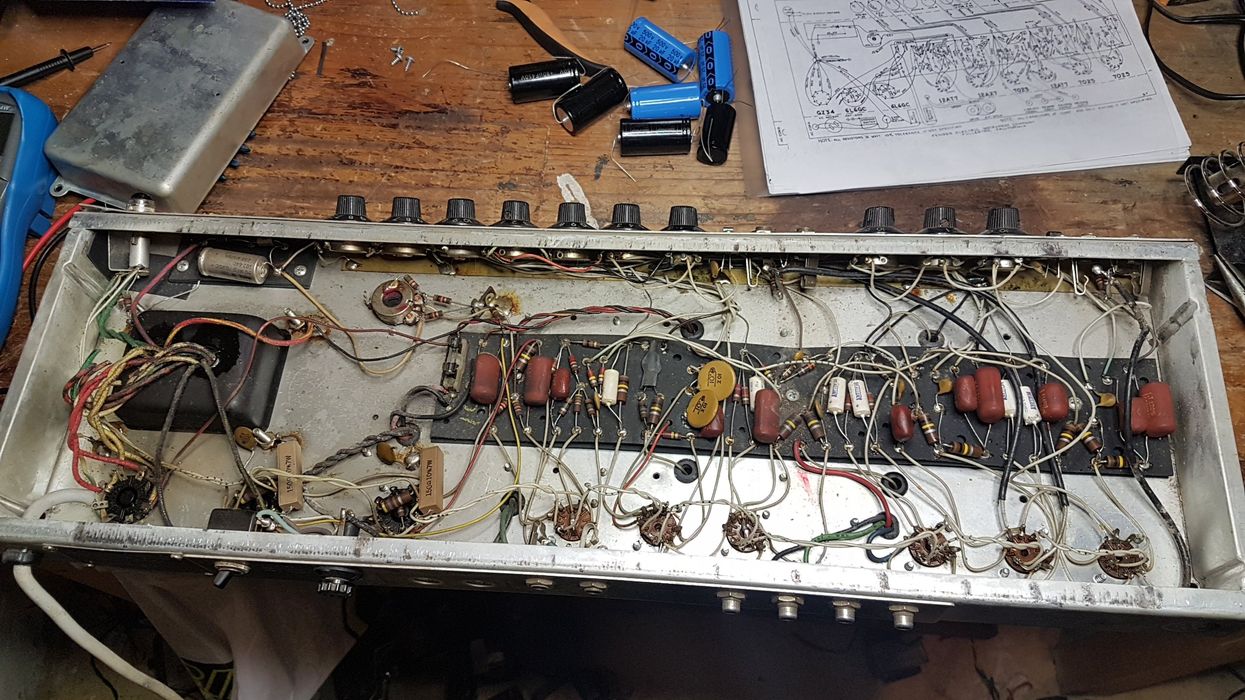
A well-known mod with the Pro Reverb is to install a 25k mid pot mod for more distortion and mids. I would dial the 25k mids high and the bass to zero, and if the volume gets too loud, I’d disengage one of the speakers. The role of this amp is to provide warm, sustaining cranked tones with burning mids and just a little reverb. The Vibrolux will be dialed into clean operation to provide clarity and attack with firm, modest bass and clearly pronounced treble. If the song requires reverb, it comes mainly from the Vibrolux.
“The strong mids from the Telecaster’s bridge pickup pair nicely with the scooped Fender black-panel tone from the two 10" speakers.”
For recording, the first problem is: What you hear in the room is not necessarily how the guitar sounds on tape. You therefore need to dial in your amp(s) based on how the guitar track will sound on tape and not in the room. Second problem: The guitar will sound different depending on your listening device. And problem number three: What sounds good on its own does not necessarily sound good in the mix. I am often surprised how narrow, trebly, and nasal a well-mixed guitar tone sounds on its own. Given all those obstacles, you need to listen to the final end result, and then go back and change what needs to be changed, pedals, amp EQ, microphone techniques, mixing, effects, compressors, EQ, and mastering. Since you can never re-create something that wasn’t there from the beginning—for example a clean tone, a particular overdriven tone, attack or nuances from finger tips—my strategy is to have amps that provide enough of these things.
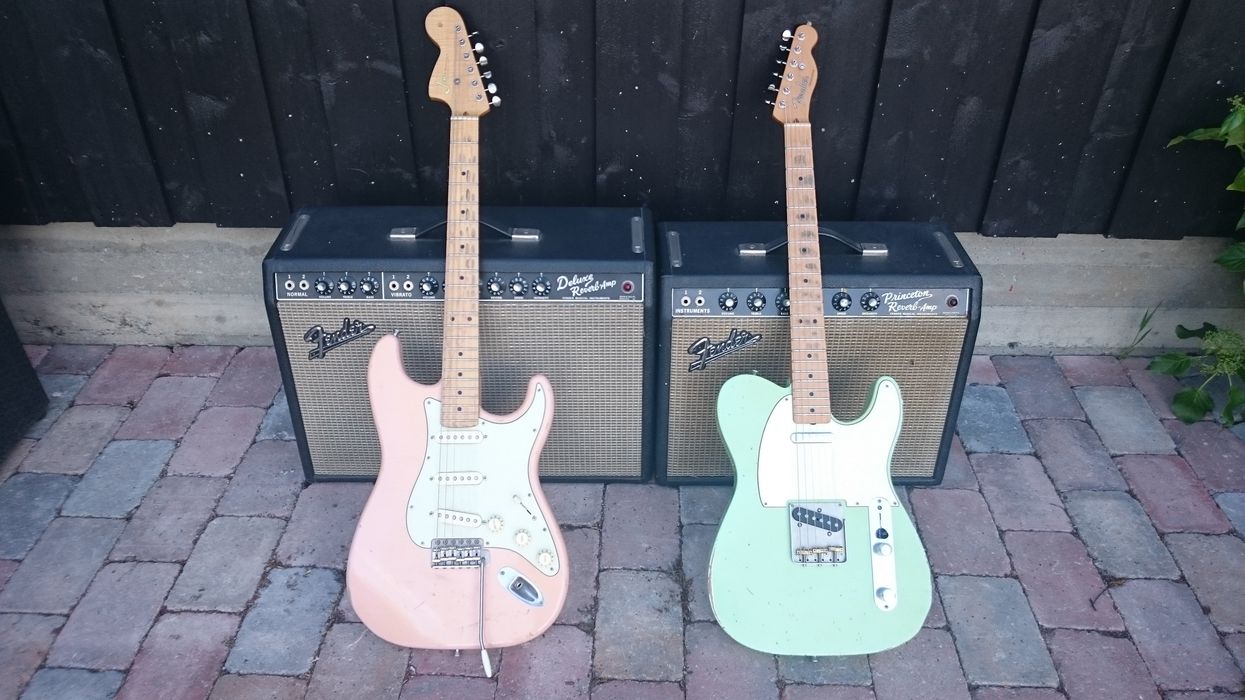
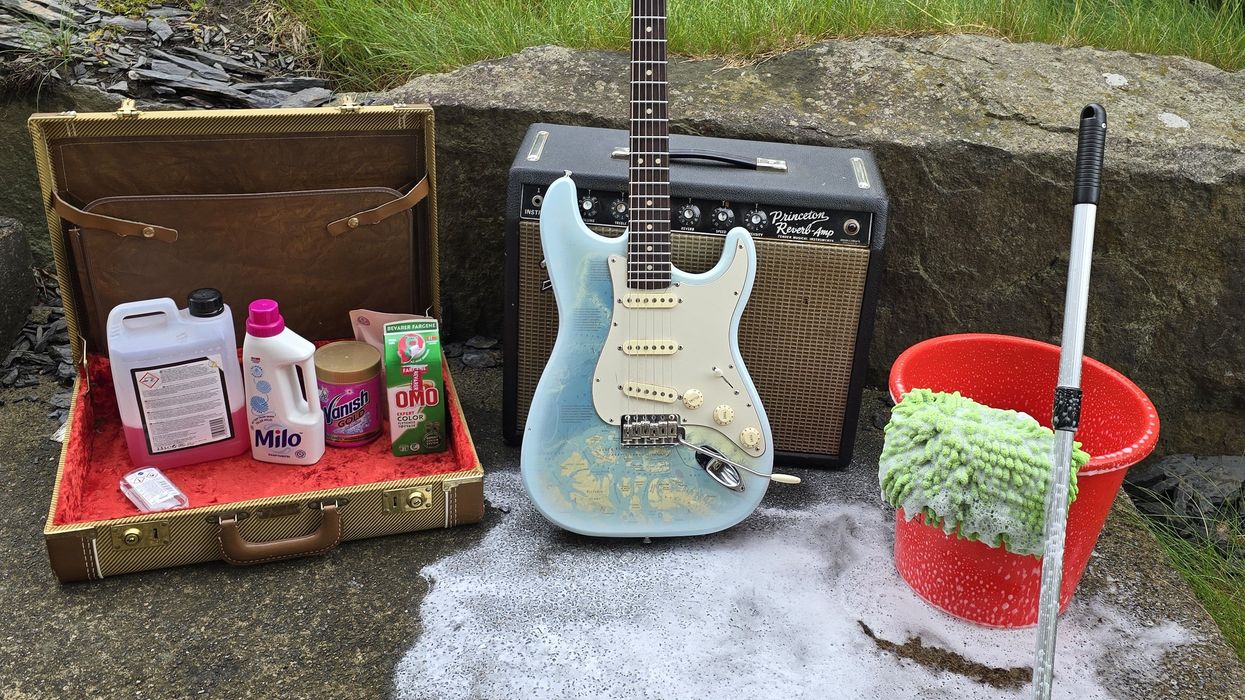
My primary Telecaster amp for studio purposes is my 1966 Princeton Reverb with a bright cap mod. The added 47–100 pF bright cap brings back the top-end frequencies that I want for clean fingerstyle tone. On recordings, my Princeton Reverb’s clean tone sounds like a big 4x10" Super Reverb but with the practicality and breakup level of a small 12-watt amp.
As a second amp for cranked tones, I bring my Pro Reverb with only one speaker enabled. I spend some time EQing and mixing the guitar tracks in the entire mix. It’s important to be careful with high bass settings on the amp, because it can lead to muddiness that’s impossible to clean up afterwards. Same goes with reverb—I use only a little from the amp. It’s better to add more reverb and delay afterwards. The amps are traditionally miked up in front and further away and above for ambience. Having different amp tracks, clean and dirty, I can tweak the balance and tone afterwards. If I want more dirt I increase the level of the dirt amp track, or vice versa.
I hope this was inspiring for you to find your favorite Telecaster tones with Fender amps.