Electro-Harmonix's Bender Royale takes the classic germanium MkIII 3-transistor fuzz circuit and piles on the control: a FAT switch for extra lows and low-mids, a CLIP switch that swaps between germanium and LED clipping, a BIAS knob for gated, sputtery sounds, and a BLEND control that brings back your dry signal for attack and clarity. One lucky reader is taking one home. Read our full review, then enter below by November 17.
Von Frankenstein Monster Gear has teamed up with American heavy metal guitarist Jeff Loomis, best known for his work with progressive metal band Nevermore, his solo albums such as Plains of Oblivion, and projects including Conquering Dystopia; to release two new signature guitar string sets: the Raven VI six-stringset and the Raven VII seven-string set. Engineered to meet the technical demands of high-speed shredding, complex neoclassical solos, and rhythmically advanced six and seven-string riffing, the new series delivers bench-built consistency and reliability for modern progressive thrash, power metal, and death metal players.
Every string in the Raven series is manufactured individually on a U.S. workbench using domestically sourced raw materials, deliberately avoiding mass-production processes. The construction utilizes treated hex steel cores meticulously wrapped with nickel-plated steel. This specific material selection and one-at-a-time wrapping process is designed to deliver the precise build quality, feel, and durability required by discerning players.
“These are the perfect gauges for half step tuning," Loomis says. "Not too light, not too heavy. These custom gauge sets are ideal when standing up with a strap in live settings and being comfortable doing deep bends and vibrato.”
For six-string setups, the Raven VI set runs a precise gauge spread of .009, .012, .016, .026, .036, and .048.
For players needing heavier bottom end, the Raven VII seven-string set takes that exact same foundation and adds a heavy-duty .062 gauge on the bottom end, delivering a total gauge lineup of .009, .012, .016, .026, .036, .048, and .062.
Von Frankenstein Monster Gear teams up with American heavy metal guitarist Jeff Loomis, best known for his work with progressive metal band Nevermore, his solo albums such as Plains of Oblivion, and projects including Conquering Dystopia; to release two new signature guitar string sets: the Raven VI six-string set and the Raven VII seven-string set. Engineered to meet the technical demands of high-speed shredding, complex neoclassical solos, and rhythmically advanced six and seven-string riffing, the new series delivers bench-built consistency and reliability for modern progressive thrash, power metal, and death metal players.
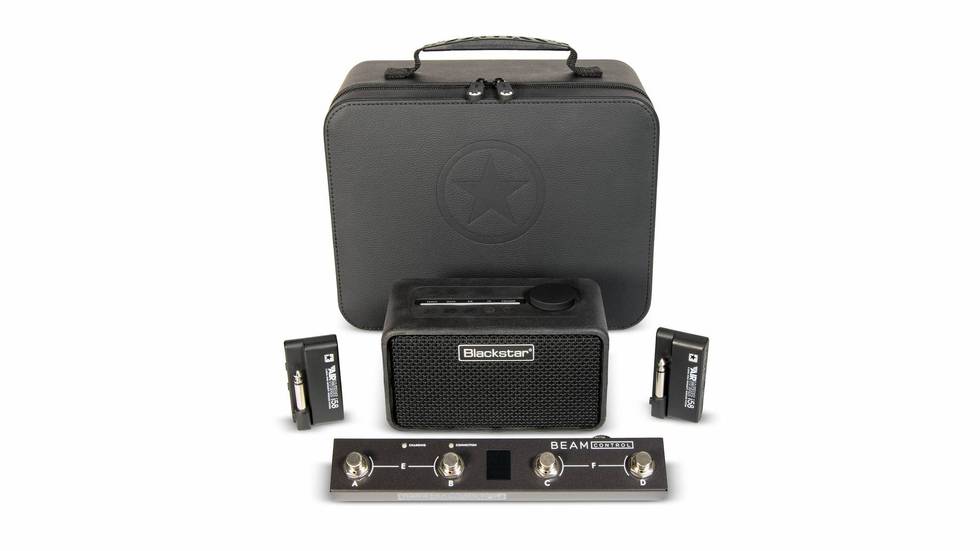
Expanding on the company’s highly regarded Beam Mini smart amplifier, Blackstar has announced two new launches. First, there’s the Beam Control, a dedicated Bluetooth foot controller engineered for all Beam range products. In addition, Blackstar has introduced the Beam Mini Wireless Rig, a fully integrated, cable-free guitar package that integrates the Beam Mini amp, Blackstar’s Airwire i58 wireless instrument system, and the new Beam Control Bluetooth footswitch into a dedicated protective carry case.
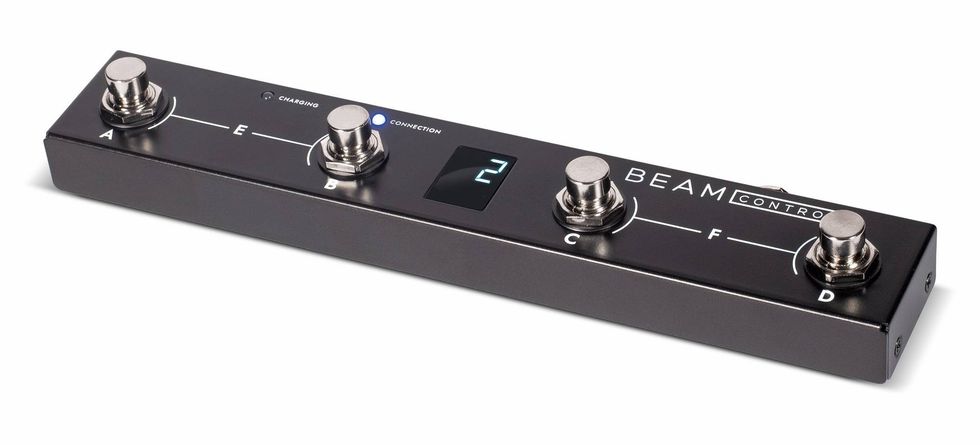
Developed to eliminate cable clutter and give guitarists seamless, hands-free command over their sound, Beam Control links directly to Beam units via an out-of-the-box Bluetooth connection, allowing players to switch sounds and effects wirelessly without taking their hands off the instrument. The device expands the interactive capabilities of Blackstar’s home-focused Beam series.
Beam Control connects directly to Beam hardware in seconds with zero setup programming required, making it the only foot controller designed to work straight out of the box with the Beam lineup. The unit addresses the demands of home practice and rehearsal environments by removing trailing cables between the amp and player, eliminating trip hazards, keeping living spaces organized, and allowing musicians the freedom to place their Beam amplifier wherever desired.
To provide players with complete performance flexibility across a wide range of musical contexts and playing styles, Beam Control incorporates three dedicated operational modes that transform how musicians interact with their sound in real time. In Patch Mode, guitarists can instantly cycle through the five pre-stored sound patches on their Beam amplifier, executing effortless, instantaneous transitions between rhythm beds, pristine clean tones, and high-gain lead voicings without breaking musical flow. When direct sonic manipulation is needed during a song, FX Mode reframes the foot controller as a traditional pedalboard layout, empowering players to engage or bypass individual effects on the fly within whichever patch is currently active. For players requiring a completely tailored workflow, Custom Mode interfaces with the companion Beam app to enable granular mapping across the hardware, allowing musicians to assign each individual footswitch to their exact functional preferences and craft a personalized control setup uniquely tuned to how they play.
Engineered for portability and ergonomics, the foot controller features a compact, ultra-lightweight chassis weighing just 0.22 kg. It includes an integrated expression pedal input for expanded external control and is powered by a built-in USB-C rechargeable battery that provides up to 12 hours of continuous play time on a single charge.
Beam Control carries a $74.99 street price. Key features include:
Compatibility: Dedicated foot controller engineered for all Blackstar Beam products
Connectivity: Direct Bluetooth wireless connection; zero programming required straight out of the box
Control Modes: Three dedicated modes: Patch Mode, FX Mode, and Custom Mode
Patch Switching: Direct access across five stored hardware patches
FX Switching: Individual on/off effect toggling within active patches
App Integration: Custom footswitch assignment and mapping via the Beam app
External Expression: Expression pedal input included
Battery & Power: Internal USB-C rechargeable battery providing up to 12 hours of operational use
The Beam Mini Wireless Rig is an all-in-one solution engineered to eliminate setup clutter, reduce floor-cable hazards, and deliver extended mobile playing capability.
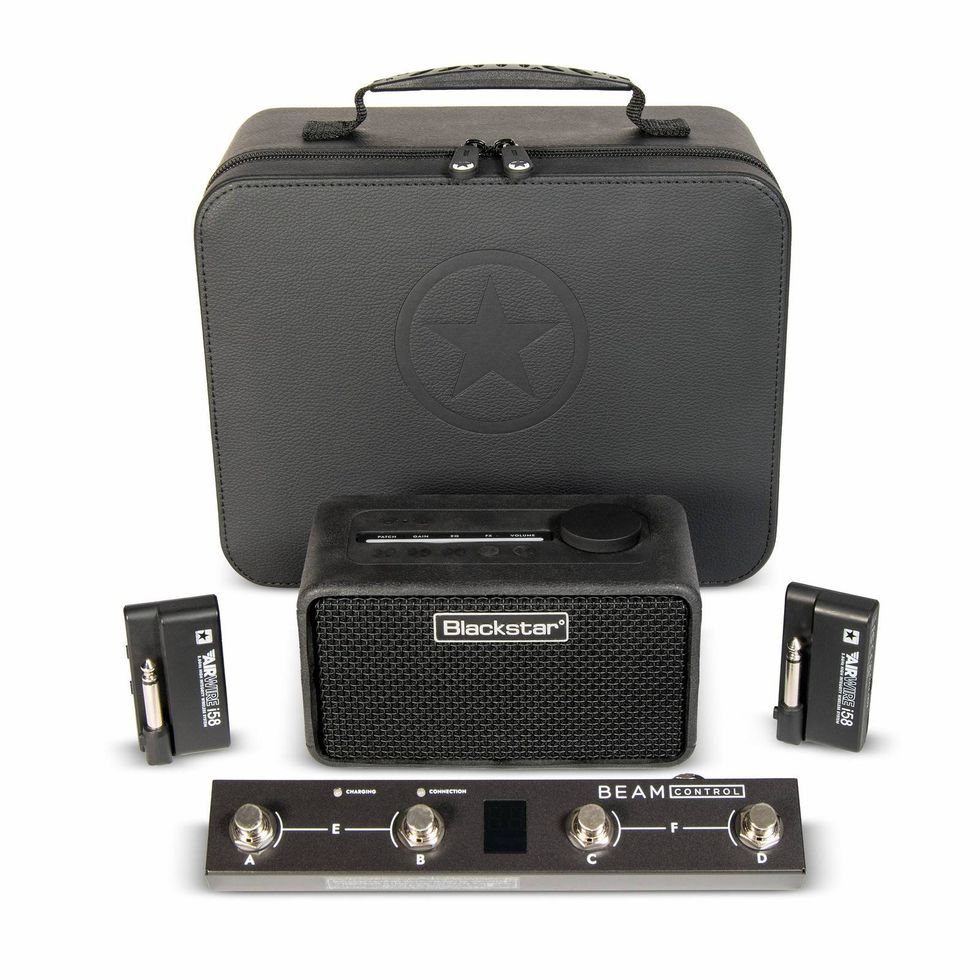
Arriving in a dedicated travel case, the bundle brings together Blackstar’s Beam Mini smart guitar amplifier, the Airwire i58 5.8GHz instrument transmission system, and the Beam Control Bluetooth foot controller. By combining low-latency wireless instrument connectivity, native open-source neural profile loading, and rechargeable battery operation across all hardware units, Blackstar targets modern guitarists seeking an unencumbered practice and performance ecosystem in a single grab-and-go package.
The core of the system is the Beam Mini smart guitar amplifier, which features an IP66-rated enclosure for dust and water resistance. Tone generation is driven by advanced component-level modeling alongside Blackstar’s patented Infinite Shape Feature (ISF) tone control. Spatial sound projection is handled via Super Wide Stereo technology, engineered to create an immersive playing experience as well as high-definition Bluetooth music playback for standard listening.
Expanding its digital footprint, the Beam Mini is the first hardware amplifier to natively load NAM A2 (Neural Amp Modeler) captures. Through a direct partnership with TONE3000, players can browse, audition, and wirelessly transfer thousands of community-crafted profiles straight to the amplifier using the free companion Beam app. In addition, the Beam ecosystem embeds Moises real-time stem separation technology directly into the practice routine, giving musicians the ability to isolate, attenuate, or completely remove original guitar tracks from commercial songs to generate custom play-along backing tracks on the fly.
Instrument connectivity is handled by the Airwire i58 system, which broadcasts across the 5.8GHz frequency band to steer clear of crowded Wi-Fi networks. The system operates with under six milliseconds of latency, supports an operational range of up to 35 meters, and includes switchable Cable Tone emulation to recreate the characteristic capacitive high-frequency roll-off of traditional copper cables. Hands-free command is maintained through the Beam Control wireless foot controller, which pairs over Bluetooth without requiring manual routing or programming. Operating in Patch, FX, or custom app-defined footswitch layouts, it allows users to switch presets and toggle any of the amplifier's 35-plus studio-quality effects seamlessly.
Designed for off-grid operation, the rig provides independent, rechargeable runtimes: up to 18 hours of play time from the Beam Mini amplifier, 12 hours from the Beam Control footswitch, and nine hours from the Airwire i58 wireless unit. All components pack into an impact-resistant, vegan-leather-finished carry case fitted with a heavy-duty handle and an internal zippered storage section designed for guitar accessories.
Beam Mini Wireless Rig carries a street price of $459.99. Features include:
Rig Components: Beam Mini smart guitar amplifier, Airwire i58 wireless instrument system, Beam Control Bluetooth foot controller, and custom hard carry case
Amp Modeling & Effects: Component-level digital modeling, patented ISF (Infinite Shape Feature) control, and 35+ onboard studio-grade effects
NAM Support: World's first hardware amplifier to natively load NAM A2 (Neural Amp Modeler) profiles; access to thousands of captures via TONE3000 partnership
Practice Integration: Moises real-time stem-separation technology for song isolation and backing-track generation
Audio & Audio Playback: Super Wide Stereo technology with Bluetooth streaming capability
Durability Rating: IP66 dust- and water-resistant rating on the Beam Mini amplifier
Wireless Instrument Band: 5.8GHz frequency band to mitigate standard Wi-Fi interference
Footswitch Switching Modes: Patch mode, FX mode, and custom layout configuration via the Beam app
Rechargeable Battery Life: Up to 18 hours (Beam Mini), up to 12 hours (Beam Control), and up to nine hours (Airwire i58)
Case Construction: Impact-resistant shell with vegan leather exterior finish, rugged carrying handle, and zippered internal accessory pouch
Blackstar
Beam Control
Expanding on the company’s highly regarded Beam Mini smart amplifier, Blackstar has announced two new launches. First, there’s the Beam Control, a dedicated Bluetooth foot controller engineered for all Beam range products. In addition, Blackstar has introduced the Beam Mini Wireless Rig, a fully integrated, cable-free guitar package that integrates the Beam Mini amp, Blackstar’s Airwire i58 wireless instrument system, and the new Beam Control Bluetooth footswitch into a dedicated protective carry case.
A guitarist in his 20s recently told me something that rearranged how I think about this whole business. He's auditioned exactly once in his life. One time, at the very beginning. Every single gig since then has come a different way.
I should mention that I'm not exactly in a position to act surprised. I haven’t auditioned for anything in years myself. At some point the phone just started ringing on its own. A gig would end and another would appear, almost always because someone I’d worked with knew someone who needed a player and my name came up in a text thread I never saw. I always chalked that up to time served. You pay your dues, you build a reputation, and eventually the auditions stop because the work comes to you.
But this kid hadn’t put in 30 years. He’d barely started. And he’d already skipped the part of the process I always assumed was mandatory.
At first, I just thought he’d gotten lucky, or that he was so good that word had spread quicker than usual. But that’s not what he described at all. What he described was, essentially, a life. He went to jams. He hung around clubs. He met people who loved the same music he loved, and he made friends with them, both in person and online. He used social media not to audition for strangers but to show what he was into, what he could do, the specific corners of music that lit him up.
And those friends, over time, became the entire engine of his career. Every call he got came from someone in that web of genuine relationships. Not connections. I hate that word—it makes what I’m talking about sound like a transaction, like collecting business cards at a conference. This was the opposite of that. These were real friendships built on a shared love of music, and the work was a byproduct, not the goal.
That distinction matters more than almost anything else I could tell you. People can smell the difference between someone who wants something from them and someone who genuinely loves the same things they do. One is exhausting. The other is the beginning of a friendship. And friendships, it turns out, are how most gigs actually happen now.
The thing that struck me most was his range. He wasn’t trying to be the best at one narrow thing. He was openly, almost joyfully curious about everything—country, indie, r&b, pop, the weirder stuff at the edges. That curiosity wasn’t a strategy. It was just who he was. But it had a side effect: Because he loved so many types of music, he could talk to anybody, play with anybody, and fit into almost any situation.
A genuine love of music and an honest curiosity about styles outside your lane will open more doors than any single skill you can name. Not because it’s clever positioning but because it makes you the kind of musician other musicians want in the room. The player who lights up when someone puts on a record they’ve never heard is a lot more fun to tour with than the one waiting for their solo.
Then there's the part that really separates the players who work from the players who wait. This guitarist doesn’t sit around hoping to be hired. He solves problems.
He related a typical scenario to me: A new artist wants to play live, but the budget is small. A full band is out of the question. Most players would hear that and walk away because there’s no gig there. He hears it and says, I can fix that. He takes the artist's tracks, drops them into Ableton, arranges them for the stage, pulls out the guitar parts, and shows up as a one-man band. Problem solved. The artist gets a live show they can afford, and he gets the gig he just invented out of thin air.
“The player who lights up when someone puts on a record they’ve never heard is a lot more fun to tour with than the one waiting for their solo.”
That’s the whole game right there. He didn’t audition for that. There was nothing to audition for. He looked at a problem somebody had and made himself the answer.
I came up in a different era, when the audition was the front door and you’d better know how to walk through it. That skill still matters, and I’ll always believe in being prepared. But I’d be lying if I told you the front door is where most of the action is anymore.
The action is at the jam. In the club. In the comments under a video posted by someone who loves the same obscure record you do. It’s in being a real person who genuinely loves this stuff, who’s curious beyond their own lane, and who, when someone describes a problem, leans in instead of backing away.
So if you’re young and waiting for the audition that’s going to change your life, I have slightly inconvenient news: It may not be coming. Something better might be, though, and it starts with putting down the practice routine for a night, going to where the music is, and making an actual friend.
Turns out that’s been the real audition all along. We just didn’t call it that.
If you’re the kind of guitarist who enjoys eye candy and more, take note: A new coffee table book featuring stunning photos has arrived just in time for the holidays.
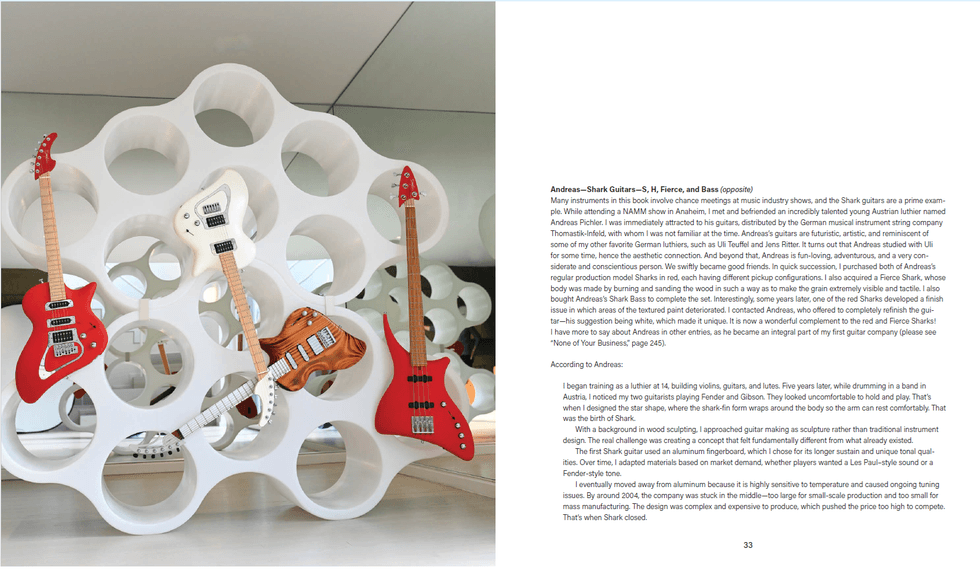
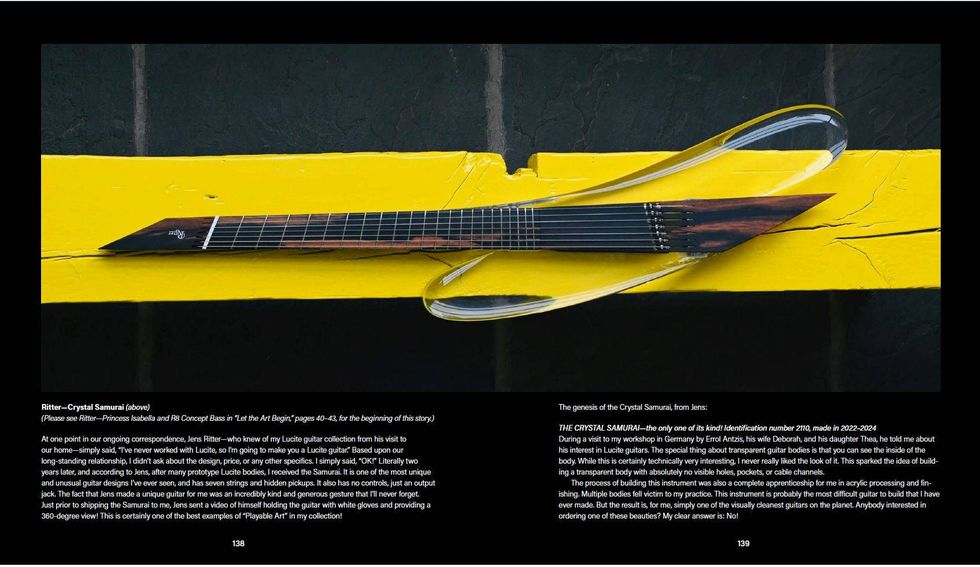
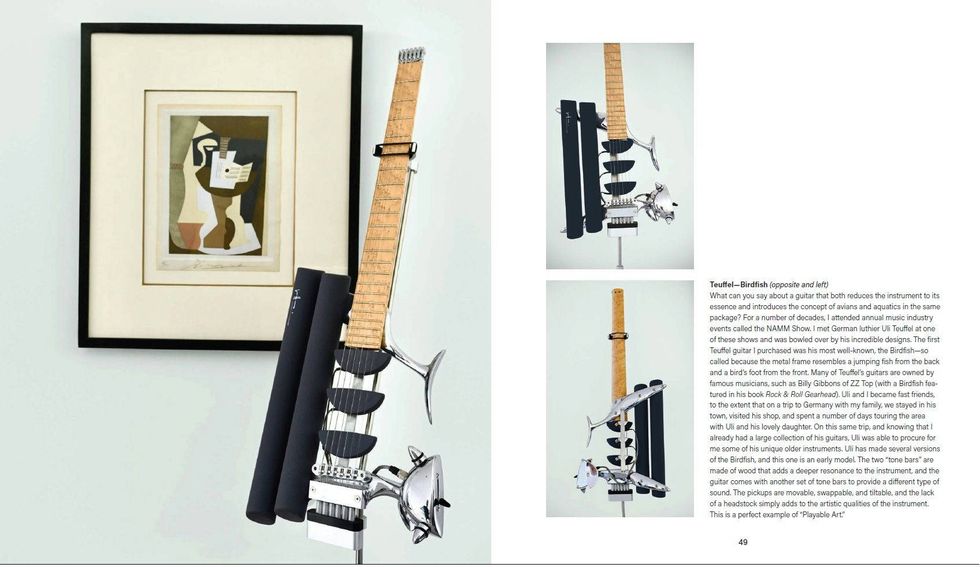
Playable Art: A Life with Guitars by author Errol Antzis explores the instruments, people and experiences that have shaped his musical life. And it contains stories that will be highly relatable for just about anyone who has a lifelong love of the guitar.
Ask a guitarist about a favorite instrument, and the answer often goes well beyond pickups, tonewoods, and neck profiles. There’s the first guitar, the one that got away, the unlikely find—and the one that will never be sold. For musician and collector Errol Antzis, those stories span more than 50 years.
Drawing on a collection of approximately 230 instruments, Antzis brings a player’s perspective and a collector’s curiosity to guitars that caught his attention for the way they look, feel, and play. His interests range from familiar makers to adventurous designs and instruments overlooked by the wider market.
Photographer Michelle Blum gives the collection an equally personal visual treatment. Working with Antzis’s home, grounds, artwork, and furnishings, as well as nearby locations, she places guitars within landscapes and interiors that invite readers to consider their shapes, materials, and character. The photographs bring humor and a sense of discovery to instruments ordinarily seen on a stand or against a plain backdrop.
“What makes this collection unusual is not the presence of celebrity guitars or textbook vintage classics,” Antzis writes in the book’s Introduction. “These are instruments that spoke to me.”
The journey began at age 14 with a used Hagstrom III purchased from an older neighbor for $30. Antzis stripped and refinished it himself. A Les Paul Custom followed, with his parents’ support, and remains in his collection today.
The book follows those connections through individual instruments. Stories include an aluminum Jackson Roswell Rhoads that sharpened Antzis’s appreciation of guitars as art, instruments he created with his daughter, and a signed Yamaha tied to a visit with Michael Jackson’s family. Contributions from Grammy-winning musicians and well-known luthiers add perspectives from the people who play and build the instruments.
Antzis also shares the less orderly side of collecting: changing tastes, purchases reconsidered, guitars sold and later missed. In one account, he decides that 250 guitars are too many and consigns 50 for sale—reasoning that he “only” needs 200.
The guitars have a sound beyond the page too. Readers are directed to Antzis’s Psychoteria recordings to hear music made with instruments that appear in the book. He continues to play, write, and record, maintaining the connection between collecting guitars and making music with them.
“But collecting isn’t just about acquiring objects,” Antzis writes. “At its best, it’s about connections: with history, with beauty, and with kindred spirits.”
For guitarists who remember their first instrument, still search for an elusive model or regret letting a favorite go, Playable Art offers a fellow enthusiast’s account of the pursuit—and the pleasure of living with the guitars that make it worthwhile. And those who are not players will also be fascinated by the photos, the stories, and the passion that are evidenced in the book.