Reverb and delay. What two effects are better suited to live side-by-side in one pedal? Source Audio’s new Encounter reverb and delay is a mirror image of the company’s Collider, which explores the reverb/delay combo via a vintage lens. The mirror by which Encounter reflects the Collider, however, is more like the funhouse variety. There are many psychedelic, cosmic, and wildly refracted echoes to utilize in the Encounter. There are lots of practical ones that can be tuned to subtle ends, too. But Encounter’s realm-of-the-extra-real extras make it a companion for players that ply dreamy musical seas. It’s incredibly fun, a great spark for creativity, and, most certainly, a place to lose oneself.
Exponentially Unfolding
Of Encounter’s six reverb modes and six delay modes, four of them—the hypersphere, shimmers, and trem verb reverbs, and the kaleidoscope delay—are entirely new. Hypersphere, fundamentally, makes reverberations more particulate. Source Audio says it’s a reverb without direct reflections. In their most naked state, these reverberations can still sound a touch angular and perhaps not quite as ghostly and fluid as “no direct reflections” suggests. But they are still complex, appealing, immersive sounds. Odd reverberation clusters can conjure a confused sense of space and highlight different overtones and frequency peaks in random ways. At settings where you can hear this level of detail, hypersphere shines, particularly in spacious solo phrases. Hypersphere also features phase rate and pitch modulation depth functions via the control 1 and control 2 knobs, and they can further accent and enhance those frequency peaks, creating intoxicating, deep fractal reflection systems.

“Blends of the delay and reverb are the kind of places where you can lose track of a rainy day.”
The new trem verb mode can be practical or insane. The two effects together are a pillar of vintage electric guitar atmospherics. But the Encounter’s trem verb explodes those templates. As with the hypersphere mode, trem verb can zest simple chord melodies by using extreme effect settings at low mixes, where chaotic, half-hidden patterns dip in and out of the shadows, sometimes creating eerie counterpoint. But I loved trem verb most at extremes—mostly high mix, feedback, and decay settings with really slow modulation. Sounds here can be intense and vague—like strobe flashes piercing drifting fog. It might not be an ideal place to indulge fast, technical fretwork, but it’s a wonderland for exploring overtones, drone, and melodic possibilities.
Incidentally, the trem verb is a great match for the six delays, and the new kaleidoscope delay in particular, which fractures and scatters repeats in a million possible directions and spaces. Blends of the delay and reverb are the kind of places where you can lose track of a rainy day. The sound permutations often seem endless, and finding magic can take some attention and patience. But you can strike gold fast, too. You have to take care to save settings you really love (you can store as many as eight presets on board, and 128 total via midi) because it’s hard to resist the urge to meander through— and meditate on—hours of sound without stopping. Not all of the Encounter’s sounds are perfectly pleasing. Some combinations reveal peaky little chirps that betray digital origins—the merits of which are subjective and contextual. For the most part, though, the combined sounds are liquid and vividly complex, and can be especially enveloping at high mix and feedback.
Extended Reach
If the onboard controls don’t get you in enough trouble, downloading the Neuro 3 app, which unlocks deep control and functionality, is a minor wormhole. Take the case of trem verb—you can use Neuro 3 to change the wave shape or set up the reverb to affect the wet signal only, just the dry signal, or both of them. All of these changes open up a new system of tone caves as the sound evolves. If you’re deep in the nuance of a mix or arrangement, this functionality can be invaluable. And it’s a boon if you have nothing but time on your hands. In a state of engaged, intuitive workflow, I like to avoid these kinds of app dives. But having that much extended power on your phone or computer is impressive.
Neuro 3 extends the capability of the Encounter in other ways, too. The SoundCheck tool within Encounter is home to prerecorded loops of various instruments that you can then route through a virtual Encounter pedal. That means you can explore Encounter’s potential while stuck in a train station. It’s a real asset if you want to understand the pedal as completely as possible, and certainly a way to extract the most value from the unit’s considerable $399 price.
The Verdict
About that price. It looks steep. For most of us, it’s a significant investment. But when I consider how many sounds I found in the Encounter, how compact it is, and the possibilities that it opens up in performance and portable production (especially when you factor in the stereo ins and outs), that investment seems pretty sound. I must qualify all this by saying I was happiest with the Encounter when exploring its spaciest places—the kind of atmospheric layer where Spacemen 3, ambient producers, 1969 Pink Floyd, and slow-soul balladeers all hang. But there is room to roam for precision pickers that background radical effects, too.
Still looking to justify the cash outlay? Consider the Encounter as a portable outboard post-production and mixing asset. If you’re creating music built on big, shape-shifting ambience, it’s a cool thing to have in your bag of tricks. Different artists will mine more from the Encounter than others, so you should consider our ratings scores on a sliding scale. But as you contemplate the Encounter, be sure to factor in mystery paths that will beckon when you dive in. There’s lots of fuel for creation along most of them.
An all-analog flange and chorus with a lot of character.
Way back in the 2010s, before starting Mr. Black as his pedal-building outlet, when Jack DeVille was releasing effects under his own name, he created the Mod Zero. This multi-modulation unit covered flanging, chorus, rotary effects, and vibrato, and, with a limited run of 250 units, gained a reputation and is long sold out.
Although Mr. Black’s Mod.One is not that pedal, this all-original unit designed by DeVille follows a similar mission, and its reverential name is surely no accident. The Mod.One is a 100-percent-analog modulator that spans chorus, flange, and high-band flange with a unique control set designed for flexibility, sonic excitement, options and a lot of character.
Controls for the Curious
If you come to the Mod.One a little fuzzy on the differences between chorus and flange, here’s a brief explanation: Chorus is created using a slower set of delay times on a secondary, parallel signal. Flange uses shorter delay times, and high-band flange the shortest. On the Mod.One, a pair of knobs—one for lower limit and one for upper limit—allow users to set that range of delay times. The lower limit knob has a max delay of 31 mS and a minimum delay of 1.9 ms. The upper limit knob ranges from 1.9 ms to .5 ms. Within those ranges, you’ll find the difference between chorus and flanging, and the position of the two knobs, rather than a switch, determines which effect you’re using. Ultimately, I’m a firm believer that we should use our ears and not get hung up on definitions when listening to an effect. The Mod.One is a great example. Determining exact delay times and whether you’re chorusing or flanging is inexact but ultimately it doesn’t matter. What matters is what sounds good.
The lower limit/upper limit controls might frustrate purists that want to toggle between a clearly defined chorus and flange tone. But Mod.One’s controls, and its central premise, are all about sound sculpting and opening up creative options. And options abound: LFO speed, for example, reaches up to 20 seconds long when using the tap-tempo switch. Six waveform options also widen the sonic lane.
Let’s Get Exponential
The Mod.One is powerful in a literal sense. The active volume control provides plenty of juice, and is capable of really pushing whatever comes next in your chain. That lends a gooey vibe to everything that passes through the pedal. Whether you use that power to drive your amp or not, the combo of gain and all-analog circuitry give the Mod.One a warm, thick voice. This is not just another metallic-sounding flange device.
I found myself stomping on the Mod.One to add space and texture to rhythms, riffs, and leads that cover a lot of range. Sometimes, I was looking for subtlety—Andy Summers on “Walking on the Moon,” for example. For that, I kept the enhance knob, which determines the intensity of the effect, toward lower settings, and kept the speed on the slowest part of its range, which generates molasses-like movement. For more obvious results, I nudged the speed and enhance knobs. There’s a lot of play in each control, so it doesn’t take much to get things moving in a different direction. The enhance control can even self-oscillate at the top of its range, where more extreme sounds live.
Each of these controls interacts differently with alternate waveform settings, making the possibilities exponential. If there’s one complaint I have about the Mod.One—and I do think it’s just one—it’s that it’s hard to tell which waveform is selected. When experimenting by ear, that’s not the worst thing, but when searching for specific settings, it can be hard to tell if the single LED lights up in a sine, triangle, or other pattern. Eventually I got better at telling the difference, but I didn’t always nail it.
To get some ’70s pseudo-cosmiche tones for a recording project, I rocked the triangle, sine, and hypertriangle waveforms at varying levels of excess. And all three were useful for thickening up high-fretted chordage rather than just the crystalline kind of flange I tend to associate with Prince. I found true excess with the step wave selected and the enhance cranked to its fullest, and there are many experimental sounds to be heard in these wilder places. With so many variables at play, I know there is a lot to be discovered still, which makes the Mod.One compelling.
The Verdict
The Mod.One is a powerful flange and chorus with a strong, recognizable character and wide range. It’s not a do-it-all kind of modulator meant to compete with digital units. But this all-analog device can deliver texture to your sound at dosages that are easily controlled. The unique sculpting possibilities make it exciting and refreshing, and in my time with the pedal, I was impressed with how much I hadn’t yet discovered. It strikes a difficult balance between a quick learning curve and the kind of depth that’ll keep it in heavy rotation for a long time to come. It simply sounds excellent, too.
You might know Tim Shaw, but you've heard his work. He's a lifelong guitar nut that's shaped the sound of your heroes. He's learned from Bill Lawrence, resuscitated the vintage-spec PAF for Gibson, and currently has developed dozens of new and updated pickups for Fender, including the popular Shawbucker and revived the heralded CuNiFe Wide Range humbuckers. But that's just the start of his story, enjoy the hour-long chat host by John Bohlinger. Sponsored by StewMac: https://stewmac.sjv.io/APO2ED
In shape and sound, the Chleo Limited Edition is a very different PRS. It is, in part, a product of the vision of Herman Li, who is one half of the virtuoso lead guitar team behind DragonForce. With a total production of just 200 instruments, and a price tag just below $7,000 (and currently fetching upward of $12,500 on Reverb) the original Maryland-built version remains well out of reach for many of Li’s core fans (not to mention some wealthy landowners).
PRS Chleo SE Herman Li Signature Guitar Demo | First Look
Someone apparently heard the clamor for a more accessibly priced version, though. Enter the PRS SE Chleo. It features the same contoured, maple-topped mahogany body, super-thin neck with 20" fretboard radius, and trifecta of Fishman Fluence single- and double-coil pickups as the more expensive version. It even features Li’s preferred “Eclipse Dragon” fret inlays—a major departure from PRS practice.
All this still comes at a cost. While more affordable than the Limited Edition model, the SE Chleo is priced just under $2,000, which isn’t exactly modest. That raised some eyebrows in the guitar community. After all, the excellent PRS SE DGT David Grissom is around $700 new. The sought-after SE Silver Sky is usually around the high $600 mark. Even the SE Mark Holcomb Signature, the SE Mark Tremonti, and the classic SE Custom 24 Floyd are less than a grand.
Given that the SE Chleo’s materials and build-quality seem on par with those less expensive guitars, what exactly tilts this ostensibly metal-centric SE toward the price range of a U.S.-made PRS Silver Sky or Mark Lettieri Signature Fiore?
Dragon's Teeth
SE Chleo is as well-made and designed as any of the SE class, which is to say, it is very well built. But the SE Chleo also boasts a carbon-fiber reinforced bolt-on maple neck and a custom-contoured maple-topped mahogany body, with an artfully scooped lower cutaway offering unfettered access past the neck’s top 24th fret. The super-flat fretboard radius, smooth ebony fingerboard, and jumbo fretwire mean even the biggest hands will find sure purchase while blazing three-notes-per-string runs and sweep-picked arpeggios. The Chleo’s generous 1.75" nut width also suits the flat radius and is ideal for bigger hands and fretting fanned-out Allan Holdsworth chord voicings.
That said, the body—whose narrow upper and lower horns evoke a 1980s Veillette-Citron—can feel small and a bit awkward while sitting or standing. Whether or not you find the guitar’s ergonomic design beneficial is very personal and subjective, but the SE Chleo’s limited upper-bout surface will offer less support for some players' forearms beyond the wrist. Given that the included steel-saddled Floyd Rose 1000 Tremolo Bridge (with PRS locking nut) practically demands a default palm-mute posture for the right hand, the smaller dimensions sometimes feel like an odd design choice. Herman Li might disagree, however. Weight, by the way, is about 7 pounds, 4 ounces, around the same as an SE Silver Sky.
How to Train Your Dragon
For my money, the most compelling thing about the SE Chleo, and something it shares with its much pricier Limited Edition confrere, is the HSH-arrayed trio of Herman Li Signature Fishman Omniforce hum-free pickups. And with the push-pull volume and tone knobs and 5-way pickup selector blade switch you end up spoiled for choice when it comes to tone blends. Two voicings are available for each pickup using the push-pull tone pot alone. But the push-pull volume pot opens up coil-tap options for each humbucker which can be paired with the middle single-coil pickup. You can also jump the middle pickup entirely and blend the bridge and neck humbucker.
The Chleo’s generous 1.75 nut width suits the flat radius and is ideal for bigger hands and fretting fanned-out Allan Holdsworth chord voicings.
The sound of these single- and double-coil pickup configurations, in concert with the Chleo’s unique body resonance, mean few settings are evocative of a classic Stratocaster, Telecaster, Les Paul, or SG in a literal sense. They can be impeccably clean and have presence, but they are clearly meant to complement the kind of technical, progressive metal that DragonForce excels at with, perhaps, a tip of the cap to PRS-based riff and lead sounds from bands like Opeth, Periphery, and Sevendust.
That said, the bridge pickup’s voicing is aggressive and tight, great for fifth- and sixth-string-based pedal-tone riffing. It also kicks up syrupy sustain for soaring metal lead work (Bleed From Within’s Craig Gowans and Sam Vellen of Caligula’s Horse come to mind). Many other pickup blends hint at the coppery-clean semi-acoustic sounds you associate with King Crimson’s Beat period or latter-day Porcupine Tree.
The Verdict
So, does the PRS SE Chleo merit its nearly $2,000 price tag? Whether it does or doesn’t will be a judgement best left to the beholder. DragonForce’s best-selling record, Inhuman Rampage, moved more than 600,000 copies in the U.S. alone, a prodigious figure for a band and genre outside the mainstream. But that number suggests a lot of possible customers for the SE Chleo, with all its idiosyncracies, as well.
Factor in the persona of Li himself, an affable gentleman rocker and role model who performs challenging technical passages with ease, and the appeal grows. The SE Chleo’s build quality is excellent, so if the guitar design suits your style you should round the “build/design” score up. Similarly, players that favor the Fishman Fluence pickups’ precision should adjust upward accordingly. If Li’s sensational sweep-picking salvos and DragonForce’s fantasy concept albums are your cup of mead, this is a solidbody worth experiencing.
PRS SE Chleo Herman Li Signature Electric Guitar - Charcoal Purple Burst
The similarities between Bad Cat’s light, compact, and versatile new Ocelot lunchbox head and its South American feline namesake make the amp’s moniker a truly apt one. A real ocelot is lean and agile, generally weighs around 20 pounds, and boasts incandescent eyes that glow when illuminated. It also packs a formidable bite quotient and can produce a loud, forceful roar or a softer, if no less menacing, close-range purr.
With its 2xEL84 power stage, and 3x12AX7 preamp, the all-tube, 20-watt Bad Cat Ocelot is similarly taut, lean, and light. The aluminum chassis features a dazzling front panel with orange stripes that glow when the amp is on. And plugged into either an 8- or 16-ohm cabinet, the Ocelot displays a talent for roaring British lead and crunch tones, as well as mellow-to-menacing, but cleaner California-style sounds.
It's also adaptable to almost every conceivable live, studio, and home environment, thanks to its internal speaker load, footswitchable 2-channel, dual-gain-mode versatility, the ability to shift from 20-watt to 1-watt operation with a single switch, and cabinet-simulated XLR and headphone outputs for recording and silent practice. Obviously, the Ocelot offers plentiful possibilities running straight into a speaker. But with software integration and editing capabilities via Two Notes software and their Torpedo DynIR multi-mic cabinet capture—which are deep and powerful tone-shaping tools on their own—the Ocelot shows just how wildly versatile a modern EL84 amp can be.
Prowling the Jam Jungle
I performed a 10-song live Hendrix set with the Ocelot, and while it was far from dimed, the amp hit every corner of the venue. The front-panel EQ with bass, middle and treble is responsive and varied enough to match what your ear wants and needs in most musical situations. The mid control has an especially nice range and moves readily between smooth American tones and British bark. In fact, the only problem with the EQ is not the EQ itself, but the fact that the cool, but very bright orange light on the front grille can make front panel adjustments hard to see.
Channel 1 is a clean machine. Add a dash of slapback delay in the Ocelot’s buffered effects loop, and rockabilly rave-ups and country double-stops on a Telecaster sound punchy and crisp. Choose the middle-bridge pickup combo on your Strat, hit a ninth chord or Curtis Mayfield-style third-based figures and you’ll conjure the spirits of Jimmy Nolen, Prince, Paul Jackson, Jr., and Nile Rodgers, all of which benefit from a whiff of very nice organic compression.
Bump Channel 2 into “hi” mode and you’ll wonder how 20 watts produces lead tones that loud and dynamic. It’s simply wicked.
Jazzbos and bluesmen will dig the Ocelot’s clean headroom, too. Neck and neck/middle position pickup configurations—along with a little guitar tone shaping—summon tones evocative of Otis Rush or Les Paul. Even surf and early garage enthusiasts can have a blast with Channel 1, which, via the included footswitch, can move between “lo” and “hi” gain mode—adding enough grit for Dave Davies, Link Wray, or Wayne Kramer speaker-tearing rages.
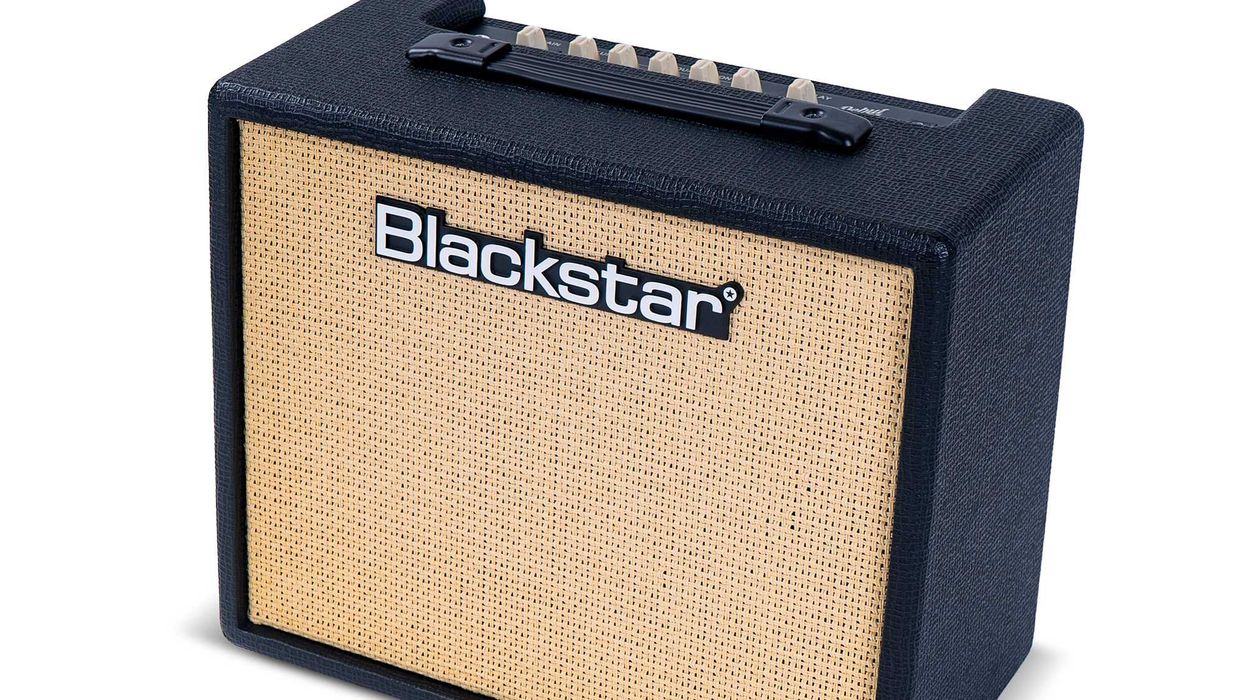
The Hum of the Forest
Channel 2, the higher-gain channel with dedicated gain control, is where many humbucker-oriented players will want to spend their time. And it’s here that the Ocelot pulls the Bad Cat formula into contemporary high-gain realms. Pickups as different as Gibson ’57 Classics, Seymour Duncan Hot Rails, and a brutal Duncan Nazgul set on a Schecter C-1 Standard are all capable of whiplash-inducing, djent-worthy wallop. Bump Channel 2 into “hi” mode and you’ll wonder how 20 watts produce lead tones that loud and dynamic. It’s simply wicked.
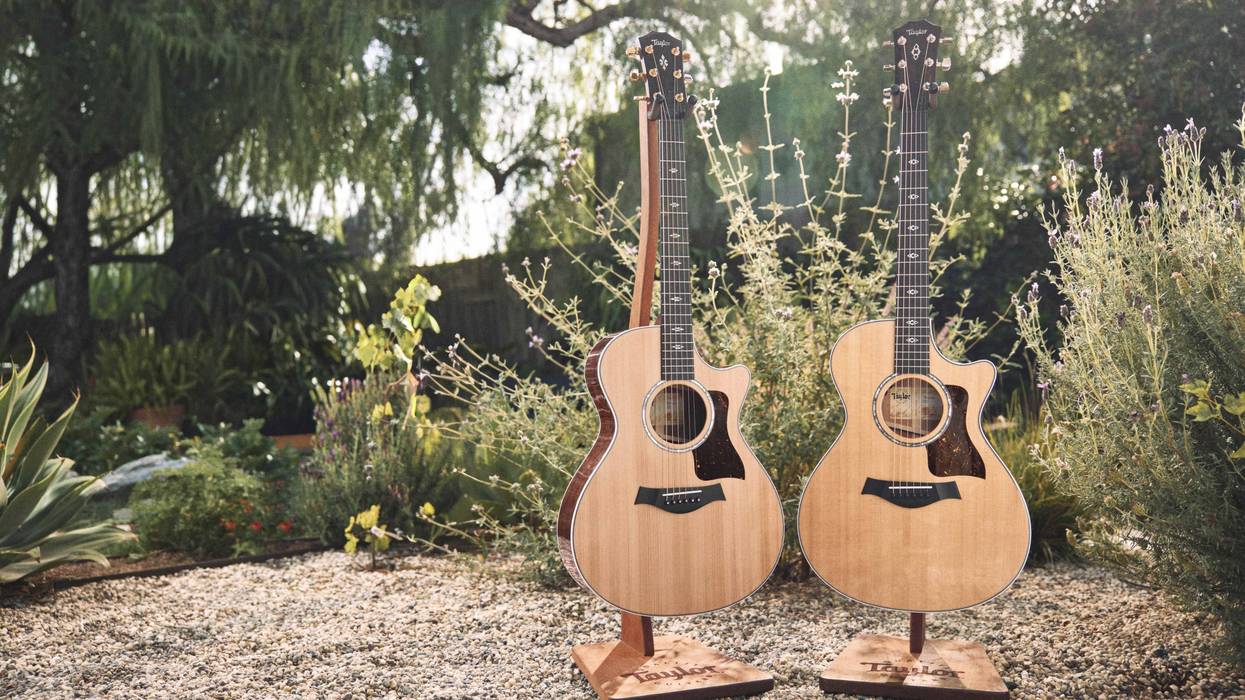
Interestingly, while the Ocelot/single-coil pairings come across as full-throated and dynamic (very much like Eric Johnson’s most singing tones) it was less sweet with noiseless single-coils. This is a subjective observation, but it’s worth investigating if you plan on matching noiseless units with the Ocelot.
Impulse Control
The Ocelot is Bad Cat’s first leap into the world of cabinet emulation and impulse responses. But this direct recording functionality is no afterthought. Bad Cat made solid choices here with the internal load box by working with Two Notes Audio Engineering to help design their cabinet emulations, and by using the company’s Torpedo software for remote editing.
In the interest of brevity, here’s what you absolutely need to know: Ocelot ships with six onboard cabinet emulations, selectable via a knob on the front panel. These are created with DynIR Virtual Cabinet Technology rather than as static impulse responses, and there are myriad options in the editing suite, including eight mic options for each cabinet, dual miking, variable mic axis, and up to 10,000 possible mic locations including front- and back-of-cabinet placings. All can be situated in a plethora of room and studio spaces. Ocelot can store up to 32 of these detailed DYNir Virtual Cabinets in internal memory. When connected to a computer (via the onboard USB-C port) you can use the cabinet manager in Torpedo to assign the IRs to Ocelot’s 6-way cab switch.
The Verdict
Given Bad Cat’s pedigree, the Ocelot’s top-shelf voicing is no surprise. But paired with Torpedo, it offers a standout, standalone direct recording solution that’s competitive with most offerings in that ever-evolving space. And where some power-scaling amps can introduce irritating quirks, the Ocelot’s 2-channel design makes tone crafting across many gain and power levels easy. The Ocelot's $1,200 price is modest for an amp that magnifies the character of pickups this accurately and sounds this velvety right out of the box. Its versatility might just make that price an outright bargain.