

Have you ever wanted a reset? Not exactly a clean slate, total erase, and start over, but maybe a window into a fresh perspective? Most of us want to get better at what we do, and expand our vocabulary within our craft. You can double down on your work or spend more time reading, watching, practicing, and experimenting with your artistry. Those are the building blocks of mastery, but sometimes you get stuck. Inadvertently, I found something that broke the cycle of repetition both in my playing and my building. I stopped.
I wasn’t planning to quit, but a series of events conspired to allow me to pause two of the practices closest to my heart. Going on vacation was the most obvious of breaks, but even before wheels up, I had stepped away from playing and making guitars, something I’ve done almost every single day of my life for six decades. It wasn’t a conscious decision—it happened slowly and almost invisibly. I was just tired, mentally and physically. I’ve written previously about creative block (“Jump Start,” in the October 2019 issue), but this was something totally different, closer to indifference. I felt guilty about it. I have to confess that, as puzzling as it was, it also felt like relief. What I hadn’t known was that there are actually names and tactics for doing what happened organically for me—I’d become a “reframer.”
In psychology and skill development, the name for this action is known as a strategic reset, or sometimes habit unbundling. I don’t care much for bullshit jargon, but the theory is legit. Playing an instrument or almost any other pursuit for a long time, your brain develops deep neural pathways. Over time you naturally plateau and/or pick up habits that are difficult to abandon. Stepping away for an extended period completely forces your brain to forget, or at least diminish automatic and stale routines. When you begin again, you can rebuild skills more consciously, sort of like from the ground up.
“The distance reminds you why you fell in love with music in the first place, which injects soul back into your own playing later.”
Refraining from the actual act of your pursuit is also called de-coupling. It can be done for short periods—or, as in my case, months. This doesn’t necessarily mean you shouldn’t enjoy listening to music, but there are some strategies to employ. Guitarists naturally pick out the guitar track in any recording, just as drummers and bass players have a tendency to focus on their own instrument’s role in any song. This unconscious habit is what I call “player brain.” Musicians tend to automatically translate the sounds they hear into the physical actions required to make them, which is natural, but can also make you deaf to the total ecosystem and emotion of the music. It can be intimidating as well because it focuses on technique. Turning off the “player brain” allows you to feel the raw tension, release, and mood of a track. That’s why stepping away can be important. The distance reminds you why you fell in love with music in the first place, which injects soul back into your own playing later.
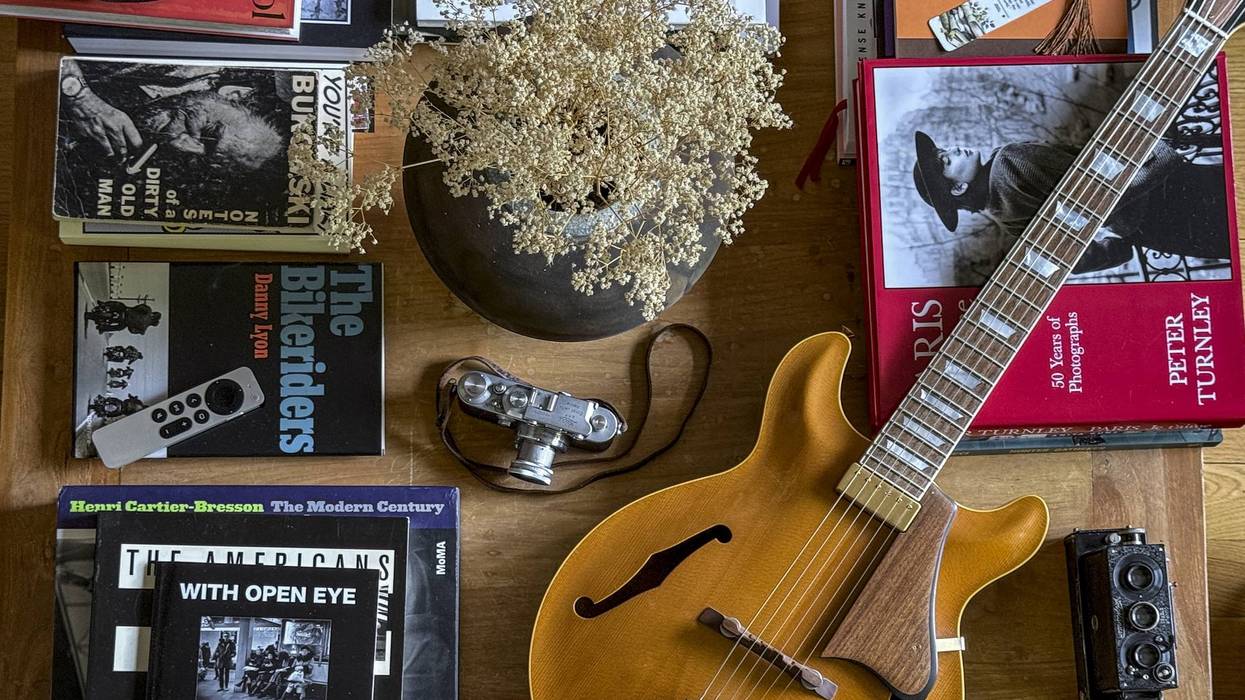
Interestingly, the time I’d spent immersing myself in the world of guitars had also been a reset. I found that my retreat from guitar and my workshop bench opened up time to rekindle other passions that had laid dormant. Before I made guitars I went to school for photography, but life happened and playing and making instruments became my focus. When I picked up my camera again, it felt like the first time I played an electric guitar to make beautiful sounds and express myself. So instead of playing and building, I buried myself in photography, and surrounded myself with books, and doubled down on museums. It is a world that feels new, yet deeply familiar, in a satisfying way.
Lately I’ve returned to the guitar with a newfound appreciation for sounds beyond my old go-to licks and patterns. I’m no Allan Holdsworth, but I’m happy to make noise again. The workshop bench now beckons with the old feeling of getting to the end of the day and having something rewarding to show for it. In my case, it wasn’t a planned abeyance, but that doesn’t mean it can’t be. I hope that, if you are in need of a reset yourself, you’ll find the chance to join me in walking away—and returning to find more than what you left.