


Place a 1937 and 1979 Martin D-28 side by side—which is the true heirloom-quality instrument? The obvious answer, you would think, is the prized 1937 D-28. But… maybe the 1979 D-28 was dad’s beloved guitar, and it brings back memories of him picking “After the Gold Rush” or “Blackberry Blossom.” Maybe dad refinished the top and glued on his name and a new pickguard. Maybe those modifications are what make it so special.
In the 1970s, vintage guitars started circulating among a handful of folks with an appreciation for great used instruments. George Gruhn, Norman Harris, Stan Jay and “Hap” Kuffner, Fred Oster, Matt Umanov, Stan Werbin, Harry West, and others hunted for clean, original examples and did the hands-on research that laid the groundwork for where we are today. This coincided with a not-so-golden era of guitar manufacturing, when established American brands worked to increase revenue by quickly pumping out as many instruments as possible—in turn decreasing the overall quality and appeal of the finished products. This was the era of pancake bodies, three-bolt necks, active electronics, large and goofy pegheads, Indian instead of Brazilian rosewood, Rotomatic tuners installed on anything with strings, bullet truss rods, thick plastic finishes, and bridges glued in the wrong spot.
Before we opened our shop, we both worked at Gruhn Guitars in Nashville. George seems to have mellowed with age, much like a fine vintage instrument settling into excellent, mostly all-original condition, but earlier models of the Gruhn didn't mince words about pretty much any guitar made in the 1970s, or about his true nemesis: modifications to pre-1970 vintage instruments. Here are a few things we've heard him say about modified guitars:
“It’s ruined!”
“It’s an abomination!"
And the classic: “Your grandfather was an idiot!”
1956 Gibson Les Paul Special
Lucky for George, he has always employed a small army of luthiers who spend countless hours bringing instruments back to their former glory respectfully.
It’s safe to assume some of today’s vintage buyers have shifted away from George’s opinions—our shop has found new homes for a lot of player-grade and bizarre vintage gear, as well as droves of great ’70s guitars. But his opinion still informs ours. If it’s vintage and original, do your best to preserve it. But if you’re eyeballing a guitar from the ’70s, don't be afraid to make it your own. It might become your number one until you’re vintage.
“In the 1970s, vintage guitars started getting traded around by a handful of folks with an appreciation for great used instruments.”
Guitar companies (and shop owners) have also long expressed sincere fears that people are going to fall out of love with guitars and replace them with something more modern. In the late 1970s, amid the rise of synths, Gibson worked directly with the king of them, Bob Moog, since his company was also part of the Norlin Corporation.
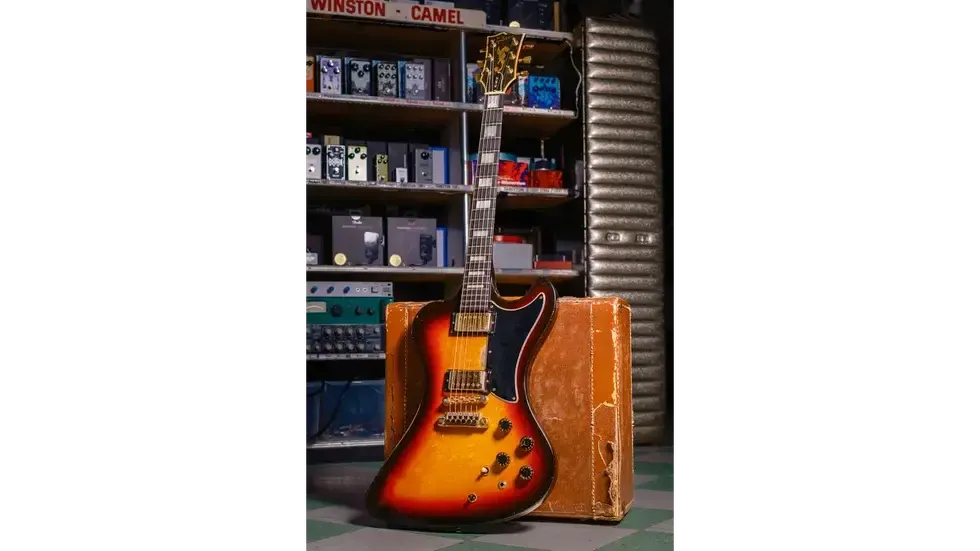
The model name RD is decidedly corporate in origin—it’s an abbreviation for Research and Development. Gibson researched, developed, and then briefly offered three RD models from 1977 to 1979: the RD Artist, with Moog-designed electronics and fancy bindings/inlays; the RD Custom, with less complex electronics/appointments; and the RD Standard, with passive electronics and dot inlays. People describe all three versions as either unique and underrated or undesirable and ugly. A guitar’s beauty and functionality is clearly in the eye of the beholder.
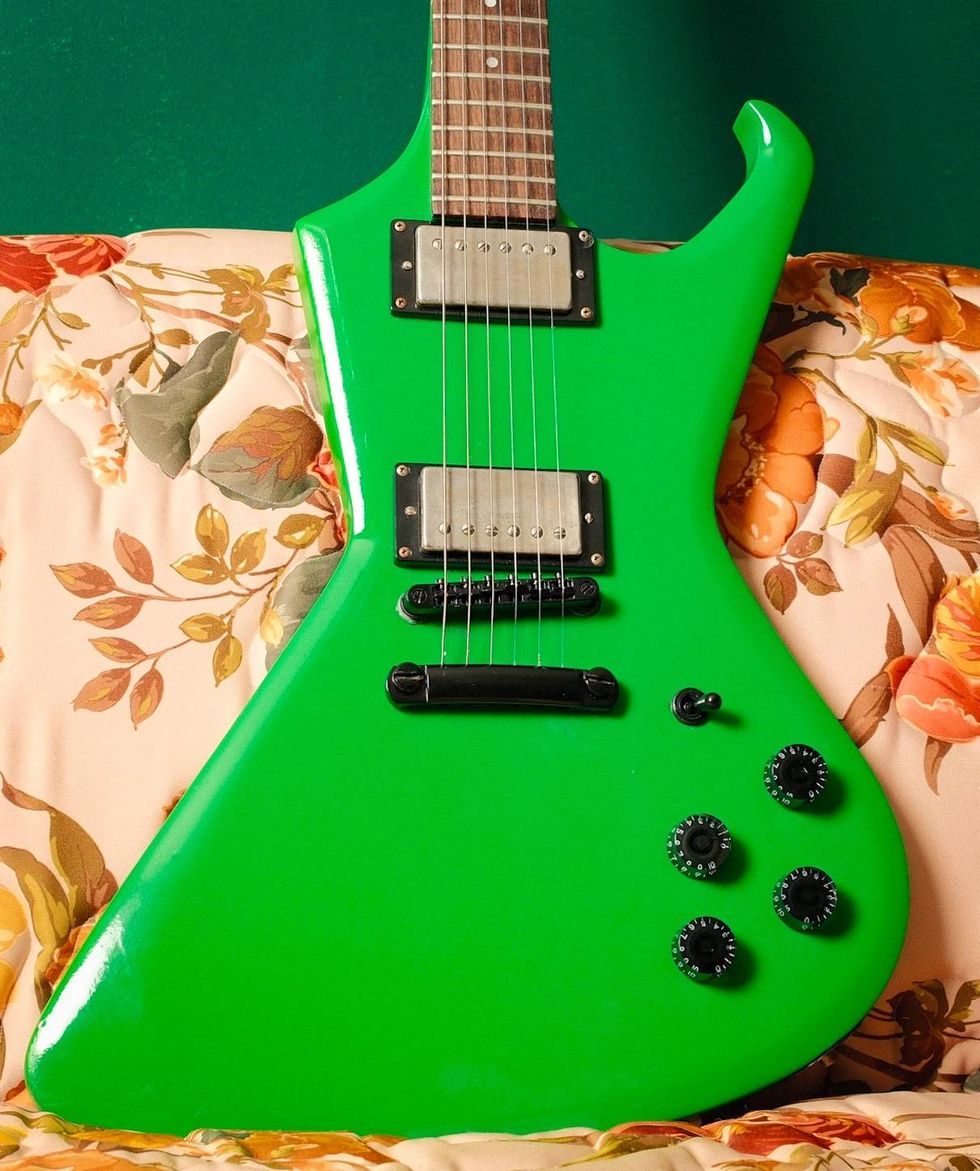
The “Slime Green” 1977 RD Standard
A 1978 RD Artist has been at our shop for a while. The Fireburst finish and winged-F pearl headstock inlay stand out in a crowd. It’s cool. Customers play it, talk about it, and then leave without it. Recently, we had a 1977 RD Standard for sale for just 24 hours. The neck and body were reshaped and refinished in a color we named Slime Green. We removed the active pickups and installed two Dunable Direwolf humbuckers. It was shipped out with a nice woody growl that rips through a high-gain amplifier.
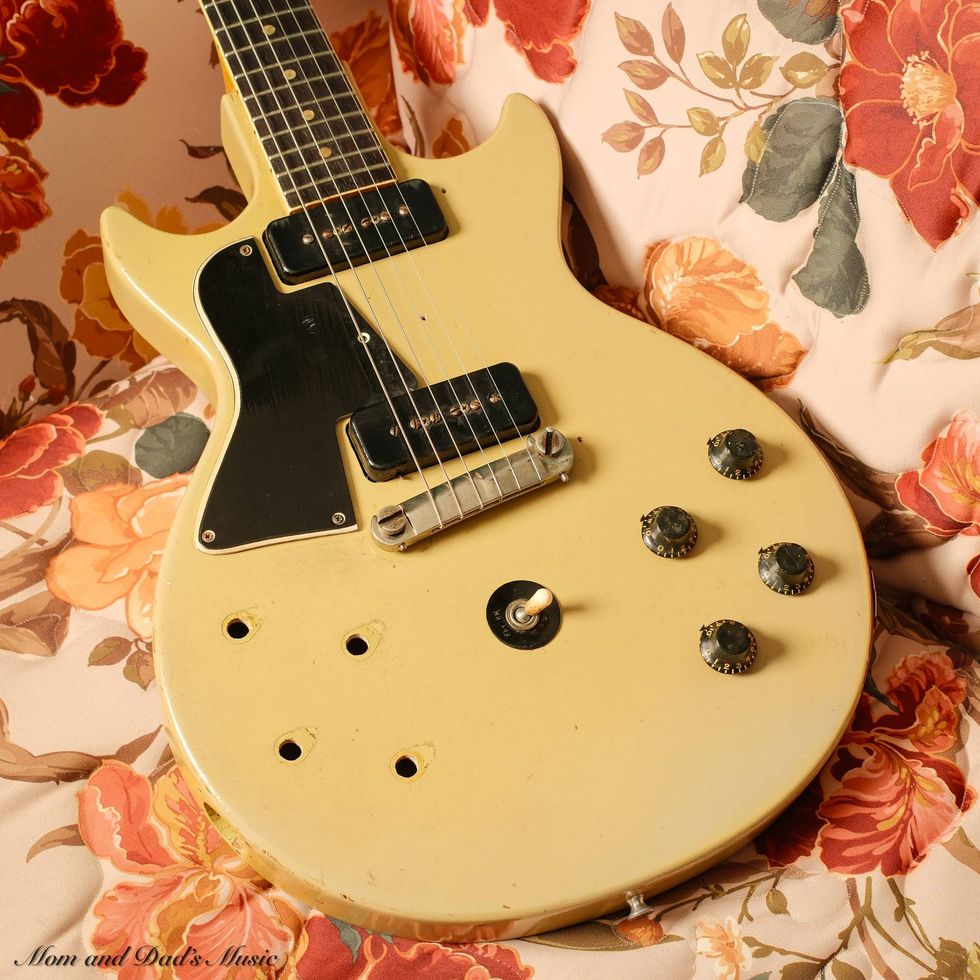
We also have a wild 1956 Gibson Les Paul Special next to two Les Paul Juniors—a mostly original sunburst single-cutaway from 1956, and a refinished/reworked cherry-red double-cutaway from 1958. Someone converted the Les Paul Special to a lefty model by modifying it to an asymmetrical double-cutaway shape, and relocating the wiring harness to the other side of the body and the toggle switch to the center (!!!). The body was sprayed over in an off-yellow color, but the neck retains its original Limed Mahogany “TV Yellow” finish. Then it was switched back to right-handed. Empty holes are still in the body, and the list of mods is longer, but we suspect this quirky Les Paul will sell before the other two vintage Lesters.
With all due respect to the folks who got us all here, in 2026 we’re honestly happy to appreciate these vintage instruments for what they are. One question remains, though: Once you take something this far, how do you know when to stop? Should we leave the holes in the top of the Les Paul Special’s body open in case someone wants to switch it back to left-handed… again? Our best guess is this guitar sounds so good because the body was weight-relieved long before Gibson decided to offer that feature. Though it has been devalued, it sounds like a million bucks!
As for the RD Standard, we replaced the replacement pickups in the guitar, and to us it sounded better as a result. Now that this abomination of an RD has found a new home, what will someone do to it—or with it—next?