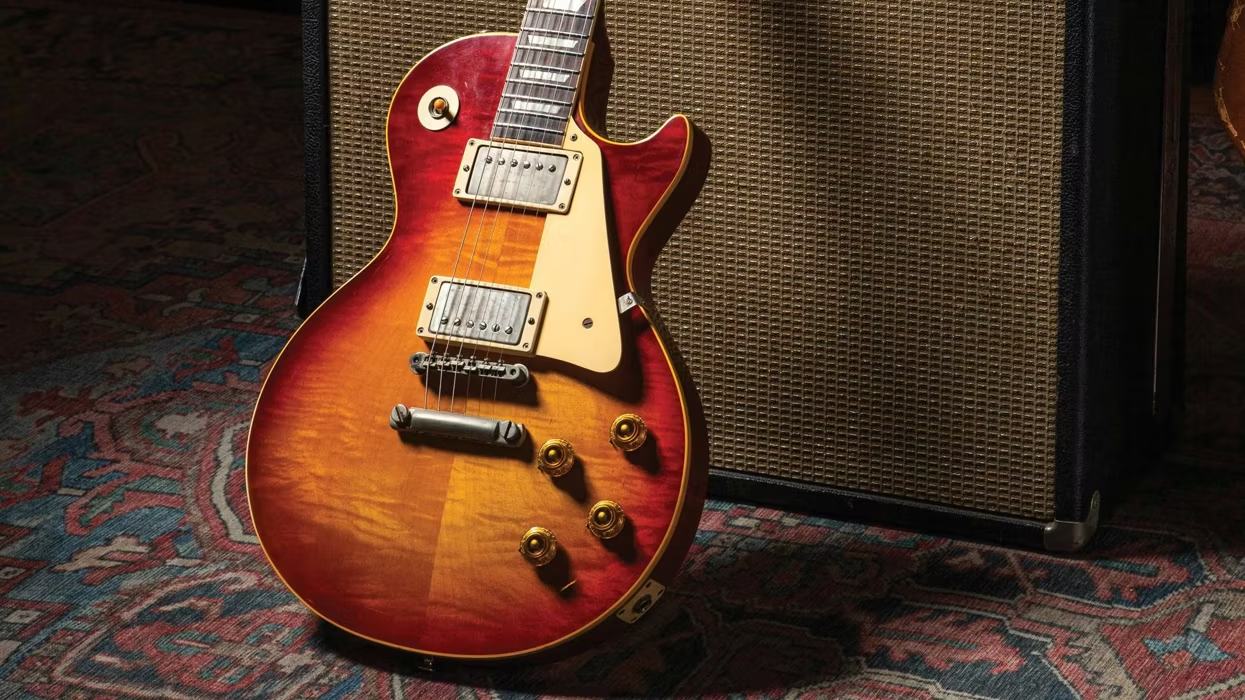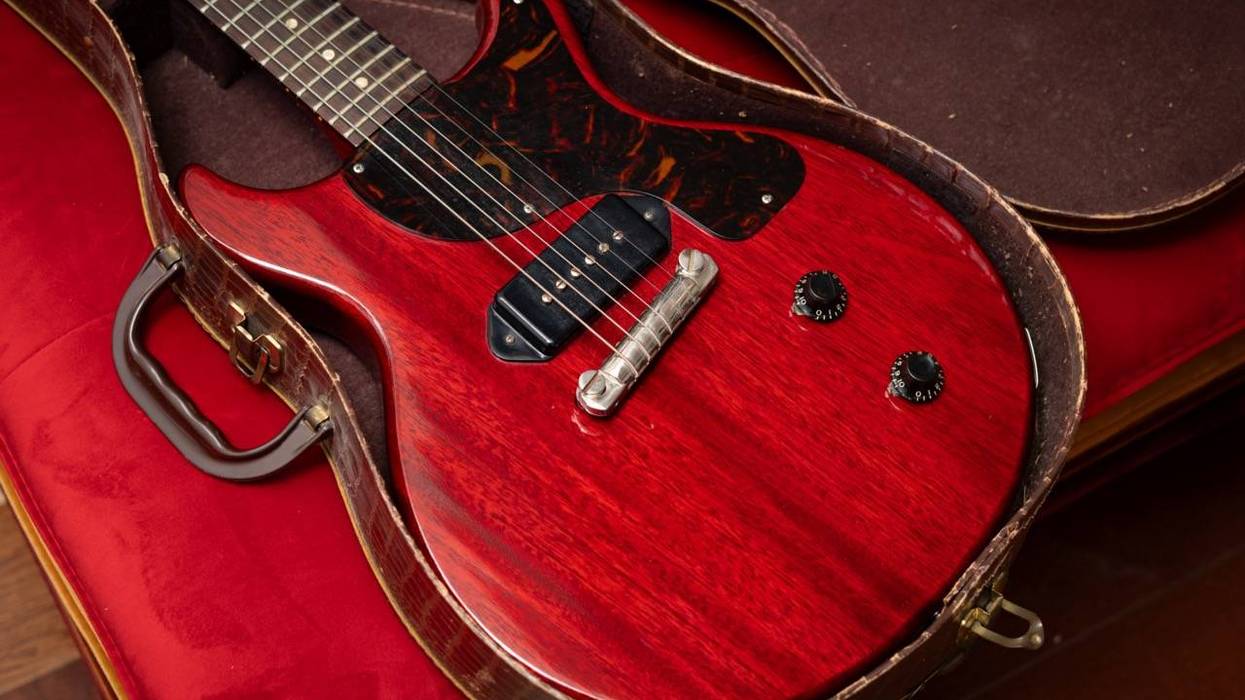


“It’s a Gibson SG, mint condish.”
Jack Black, as Dewey Finn, in the film School of Rock is the ultimate guitar salesman. Watch the scene where he puts the class band together, and you’ll pick up on his awesome energy. Dewey is so into what he’s teaching; he’s like some sort of a sanctified backwoods preacher on a sunny Sunday morning delivering the gospel. It’s his enthusiasm that sparks the kids into learning how to rock. What is Dewey’s Excalibur, his all-conquering and mighty weapon? It’s that Gibson SG guitar.
The way I see it, the guitar in cinema can be considered a ticket. In most cases, it’s a ticket to a better life for the person playing it. Be it creative expression, a way to escape poverty, or a way to escape the humdrum existence of the suburbs à la Marty McFly, the guitar, and music, can take you there.
Today, we’re going to look at the good, the bad, and the unexpected as far as vintage guitars are concerned in movies. Length constraints for this article dictate that I might miss your favorite guitar movie, and I apologize for that. I’ll talk about a couple of mine and maybe one you’re not familiar with.
First, the not-so-good. The Buddy Holly Story was released in 1978. It’s an excellent story about Buddy’s life, and Gary Busey is absolutely incredible portraying the young singer, songwriter, and guitar slinger from Lubbock, Texas. But man, for a guitar geek, it’s a little hard to watch. It’s like the people in the props department for that film didn’t do their homework at all.
In the beginning of this film, we see our hero playing at a roller rink in Lubbock, just before he finds fame as a recording artist. It’s a sock-hop and the kids are there to have some fun. It’s an infectious scene with great energy. What’s Buddy playing? A Fender Bronco.
Cue the record scratch: a Bronco? Wow, that’s an inspired choice! It’s also a guitar that didn’t make the Fender lineup for a full eight years after Buddy, Ritchie Valens, the Big Bopper, and their pilot died in a plane crash early in the morning of February 3, 1959 in Clear Lake, Iowa. It’s a cringe moment for guitar aficionados and historians alike.
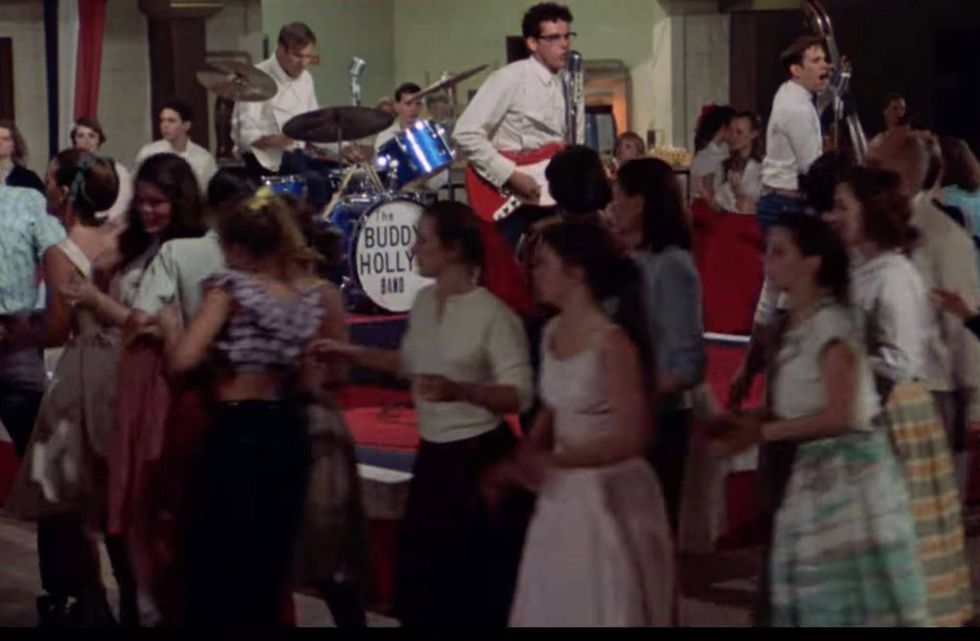
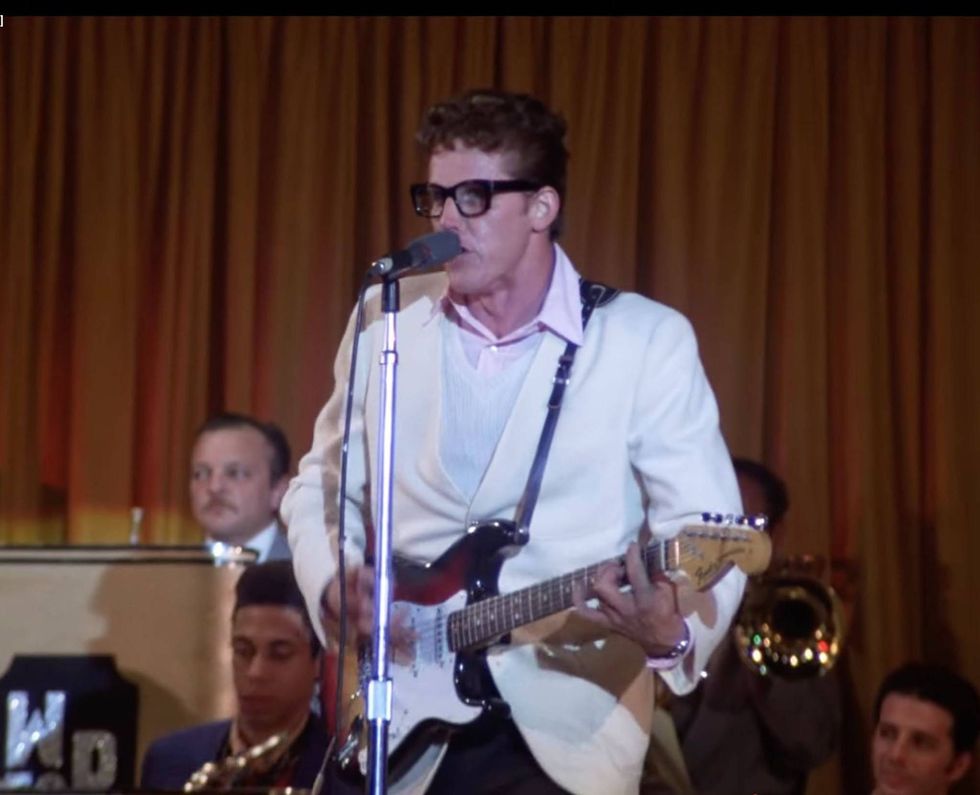
Not only is Holly playing a guitar that didn’t exist in the ’50s, he’s playing it through an amp made by a company that didn’t exist yet either. In the roller-rink scene, Buddy’s plugged into a Music Man amp. Music Man started production in 1974, a full 15 years after Buddy died. At the end of the movie, they show Holly playing his final show with a ’70s Strat with a large headstock. At least they got the Strat part right. It’s like they didn’t even try with the details!
Don’t get me wrong—I love this film. The story is told in a compelling way, and it gets me every time. I just wish they would’ve paid even a small amount of attention to the musical instruments in the film.
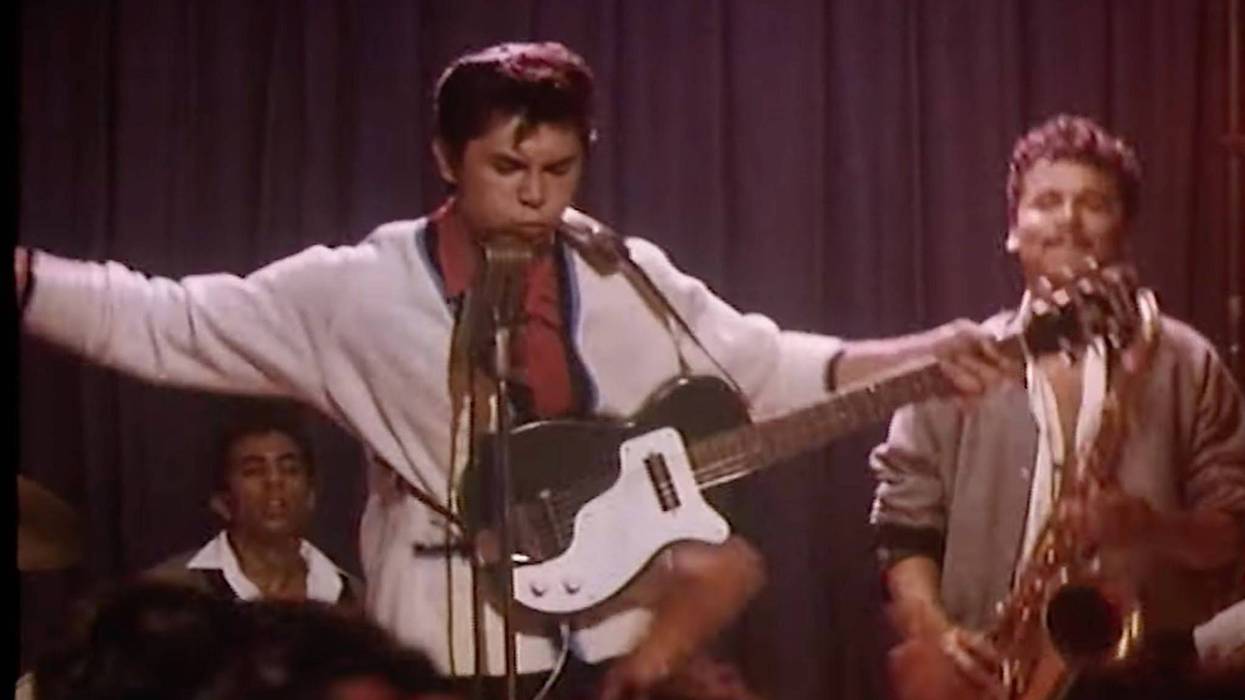
That was the bad; now for the good. La Bamba is my go-to Hollywood film for accuracy in the guitar department—ironically, a story concerning another man killed in the same plane crash, Ritchie Valens. Lou Diamond Phillips plays Ritchie, and does so with aplomb. Every character, every scene, in La Bamba is done with a level of care and attention to detail that seldom come together in a music biopic.
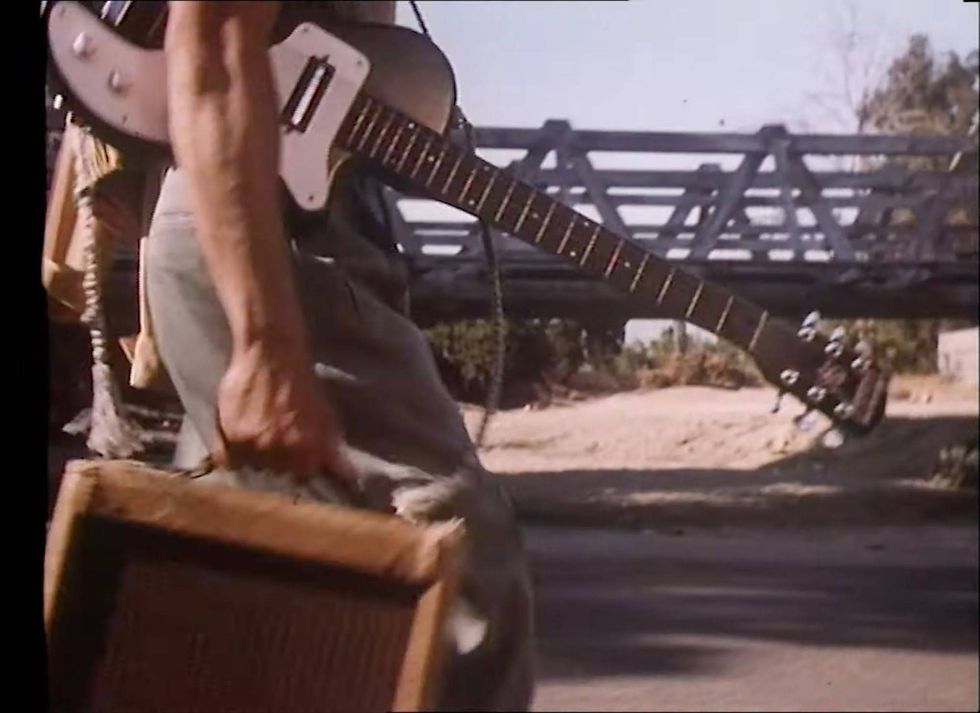
All the musical details in the movie are just about perfect. When pre-fame Ritchie shows up to audition for the Silhouettes, what does he have in tow? A seriously beat-up, single-pickup Harmony Stratotone, and a well-trashed Fender tweed Champ. This was probably the default setup for just about every fledgling rock ’n’ roll hero of the era. Nailed it! Later on in the film, after Ritchie has scored some chart success, we see him out driving around with his girlfriend, Donna. What’s in the back seat of Ritchie’s T’bird? It’s a tweed hardcase, with his Stratocaster inside. It’s a tiny detail, but those details make for a great film.
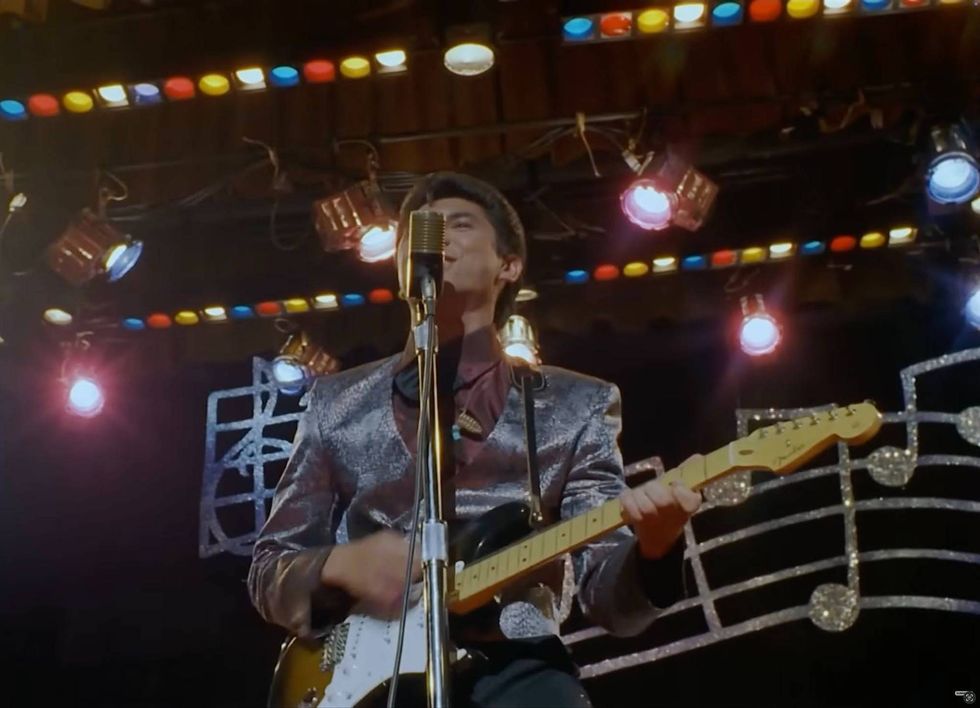
Later, when they show Ritchie playing on American Bandstand, he’s playing what looks like a lightly used ash-bodied Strat, which he probably picked up for $100 or less at a local pawn shop. Ash Strats were made from ’54 to ’56, so it would’ve been a little early for Ritchie to buy one new. At the end of the film, during his last show, he’s portrayed with yet another Strat. It’s a brand new, shiny, alder-bodied Strat. Ritchie likely received this one at the factory in Fullerton, right before he left for his first big tour in 1959. There’s some serious attention to detail in this film. If you haven’t watched it, do yourself a favor and look it up.
And now for the unexpected: Bell, Book and Candle. Made in 1958, it’s a wonderful rom-com about a witch who wants to experience love. (The film’s also the basis for the iconic TV series, Bewitched.) There’s some serious star power here, with Kim Novak as the witch, James Stewart as the love interest, and Jack Lemon as the troublesome little brother. Bell, Book and Candle has a couple of guitar sightings that will totally blow your mind. I don’t want to spoil them here—you just gotta watch it.
Until next time, happy viewing, and as they say in Tinseltown: Cut! That’s a wrap.