
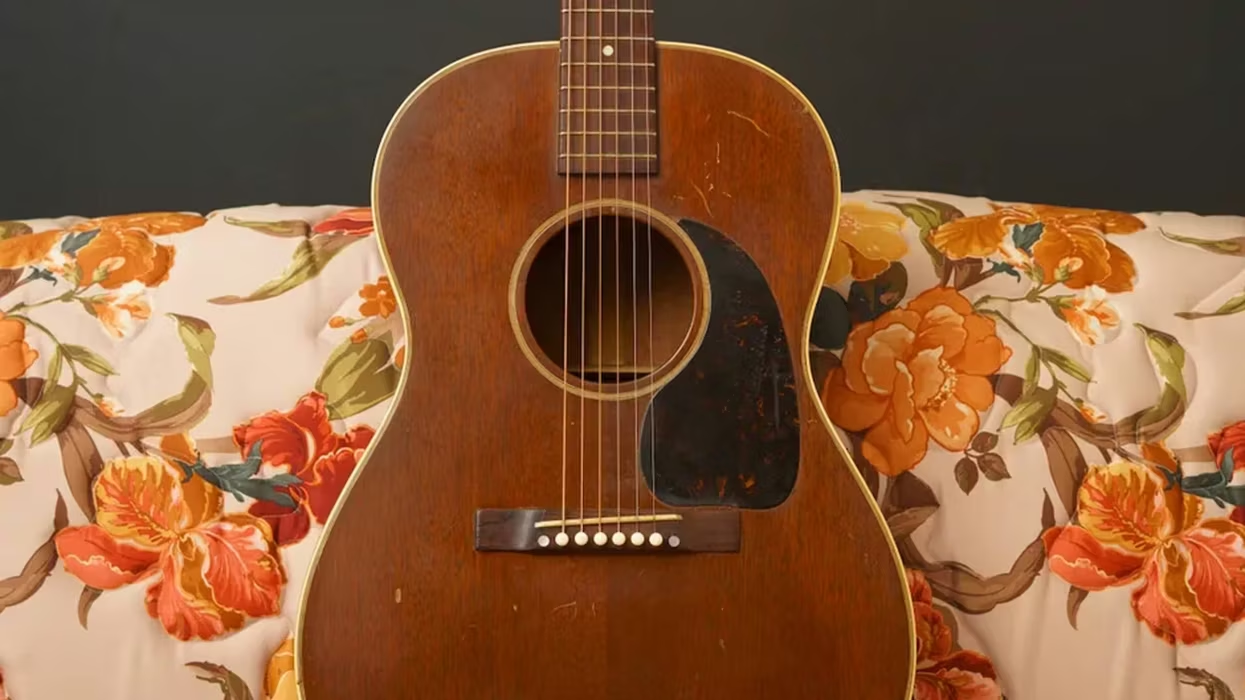
“Banner” Gibson flattops command attention before a note is played. That this particular example—a 1942 LG-1—changed hands off the tailgate of a truck for cash did nothing to diminish it.
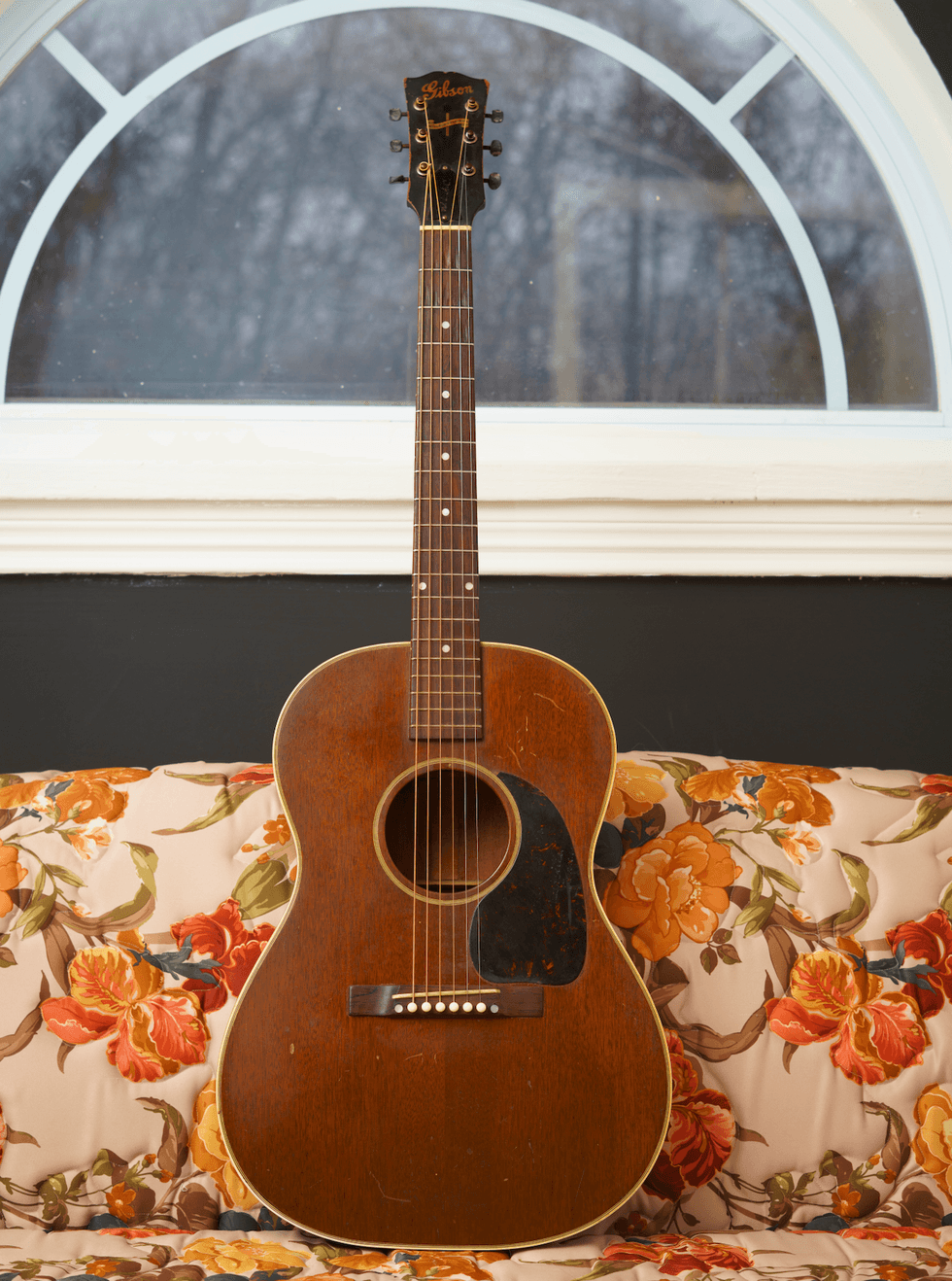
This 1942 Gibson LG-1 is representative of a small but historic run of instruments produced during World War II.
Photo by Lloyd Nicely
Gibson LG models—the LG-0, 1, 2, and 3—are hardly rare, and were produced on the budget side of Gibson’s line. Many resources document the LG-1 model as being introduced in 1947 with familiar specifications: ladder bracing, sunburst finish spruce top, and stenciled block Gibson headstock logo. But Banner-era LGs, as well as the L-00 and other higher-priced models like the J-45s and SJs made between 1942 and 1945, were built in much smaller quantities by a small crew of mostly women. The “Kalamazoo Gals”—as they’ve come to be known thanks to John Thomas’ exceptional book of the same name (now a documentary film!)—were brought on by Gibson to replace their male predecessors, who were in short supply due to U.S. involvement in World War II.
This 1942 LG-1 features unique specifications, including X-bracing, bound mahogany top, back, and sides, script-font Gibson and “Only a Gibson Is Good Enough” banner headstock logos, is stamped inside with factory order number 7705H. These original, often-forgotten LG-1 guitars were only produced in 1942, and all seem to be designated with factory order numbers in the 7700s. According to original records, Gibson built six batches of these instruments, and only made 87 shipments of the LG-1 from 1942 into early 1943. During this period, a typical batch would have been around 40 guitars. After a great conversation with our friend Joe Spann, author of Spann’s Guide to Gibson 1902-1941, we surmised these were smaller, possibly even half-size batches, meaning only around 120 of these LG-1s were produced.
It’s probably safe to say the LG-1 was not a hot seller in 1942. These guitars share the same bout size, dimensions, and X-bracing pattern as the much coveted, and much better selling, LG-2, but with a solid mahogany top and walnut stain finish. Tonally, this particular guitar has that quintessential dry “thump” that old Gibson flattops are famous for, but with a surprisingly poignant cut, and a great deal of volume. The X-bracing, paired with the mahogany top and “banner”-era construction, offers a very distinctive tonal palette that is quite pleasing and intriguing.
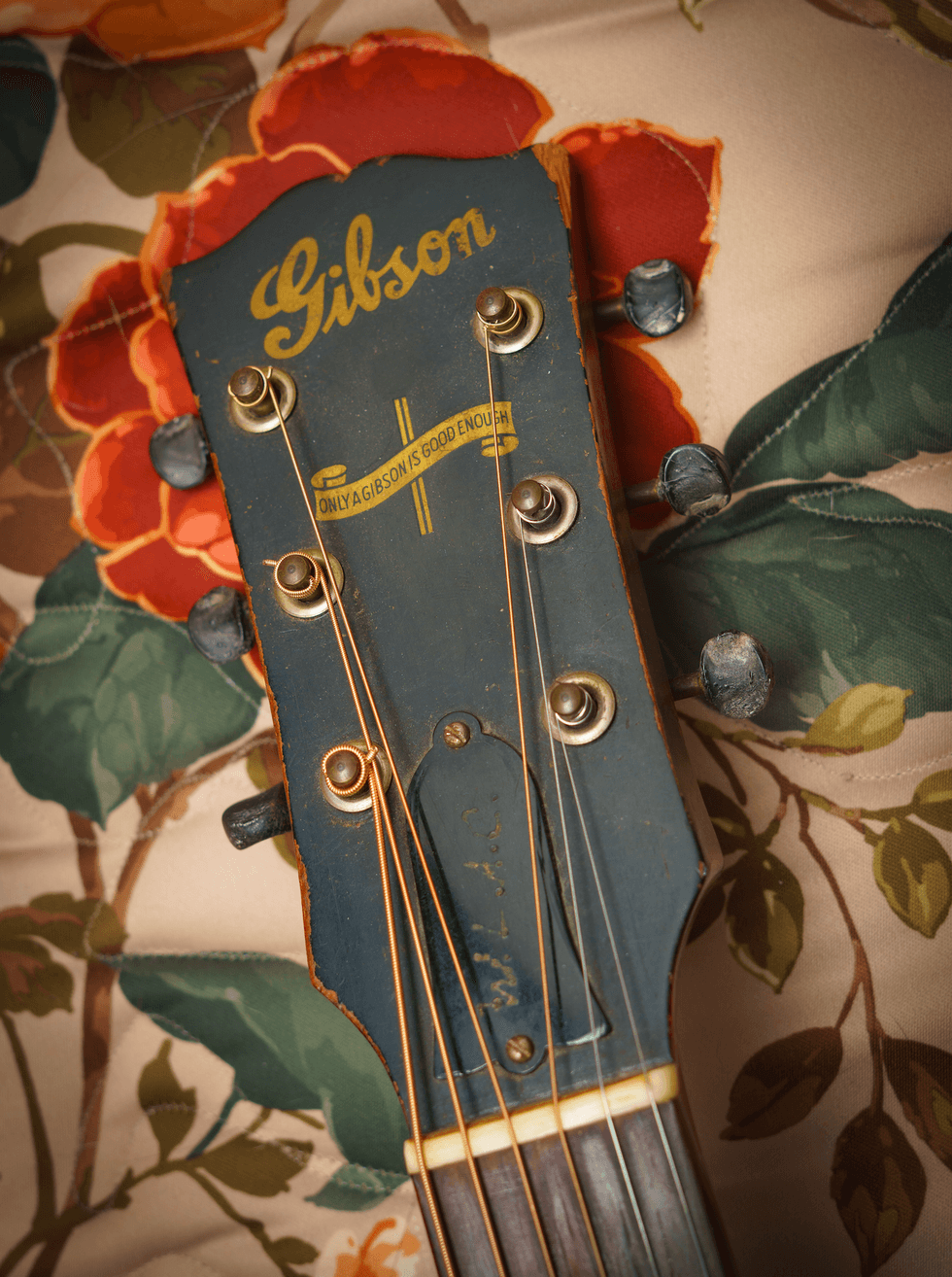
Guitars with this distinctive logo on the headstock are often referred to as “banner”-era Gibsons.
Photo by Lloyd Nicely
How this particular LG-1 made its way from Kalamazoo, Michigan, to radio station WLAC—the call letters of which are hand-engraved on the truss rod cover—in Nashville, remains a mystery. What we do know is that this LG-1 spent the bulk of its life with Violet, guitarist for WLAC’s the Old Gang (formerly WLAC’s the Old Chuck Wagon Gang, and not to be confused with the Chuck Wagon Gang, a gospel group still active after 80-plus years). Promo photos show Violet posing with several different small-body Gibson models—and assorted reasonably sized cowboy hats—during her time with WLAC’s “guaranteed clean” morning show.
“Will someone someday comb through Gibson’s production totals from 2020 to suss out whether their grandma’s SG Standard could be considered rare due to pandemic-era manufacturing reductions?”
Violet’s grandson decided to move this guitar along due to a mighty good cause for downsizing; he and his wife were moving from the spacious sprawl of a Tennessee suburb to a smaller-scale way of life in Hawaii. Any belongings that made the cut would be making their way by boat and priced by collective weight and size. Violet’s grandson and granddaughter-in-law didn’t play guitar, and even if they aspired to, this guitar wasn’t in good, playable shape at the time (even for Hawaiian-style), so practicality must have outweighed sentimentality. We followed up on our promise to have the guitar properly restored, and worked with the fine folks at Glaser Instruments in Nashville, who repaired a crunch in the bass side of the body, heat set the neck, reglued the bridge (original shim removed but retained!), and replaced three deteriorated tuner buttons. We suspect that if Violet was still around, she would be pleased with the results.
Reading old stories about the Kalamazoo Gals building what became known as “floor sweep” guitars with a combination of model specs, or the Martin crew fashioning a copper device to use a pencil all the way down to the eraser end, shines a light on the resourceful manufacturing atmosphere that evolved to keep businesses rolling and guitars shipping out the door at an important moment in music history. Will someone someday comb through Gibson’s production and shipping totals from 2020 to suss out whether their grandma’s cherry-red ’61 reissue SG Standard could be considered rare due to pandemic-era manufacturing reductions? Guess we’ll just have to wait and see.