
What if I told you that you could get a vintage guitar model from the original Big Bang of rock for less than a new U.S.-made Fender or Gibson? With the Gretsch 6122 Country Gentleman, you can.
The double-cutaway Country Gents of the 1960s were ostensibly Chet Atkins signature models. But it was a young man named George Harrison who sent demand for these guitars through the roof, when he played one in living rooms across the United States during the Beatles’ first televised performance on The Ed Sullivan Show in February 1964.
Thanks to Harrison’s unofficial endorsement, Gretsch went from building a comfortable 2,000 models a year to struggling to keep up with demand, reportedly making 100 a day following the explosive Sullivan set.
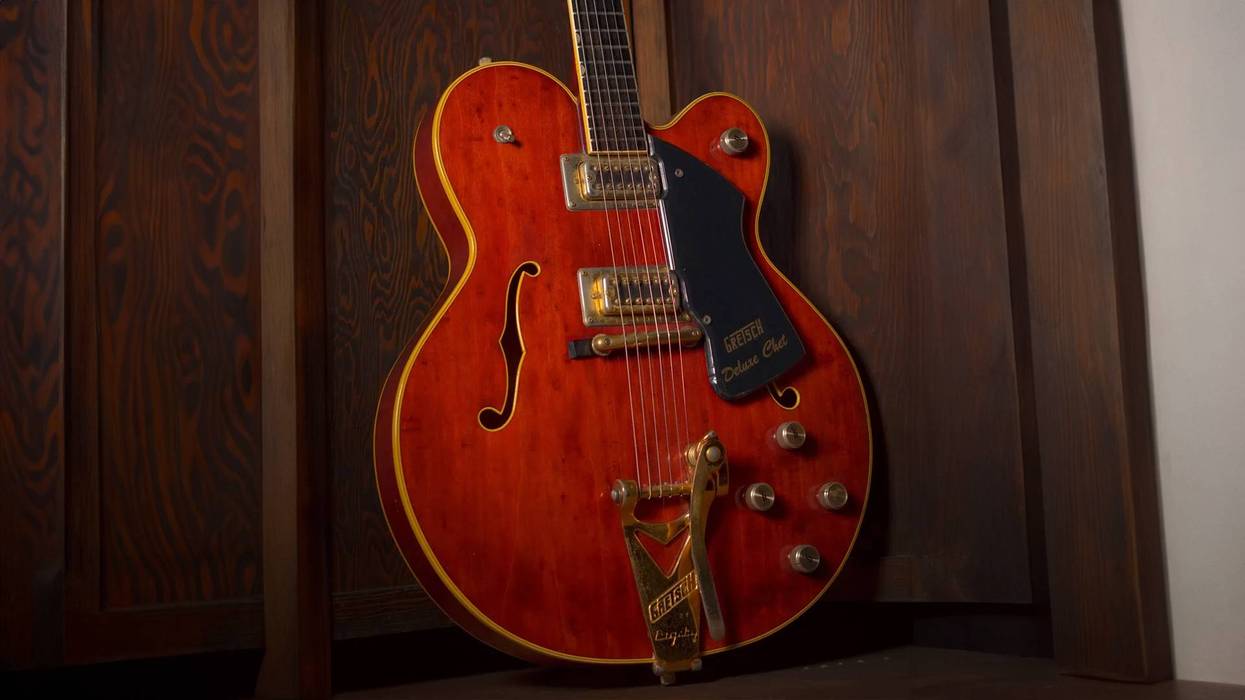
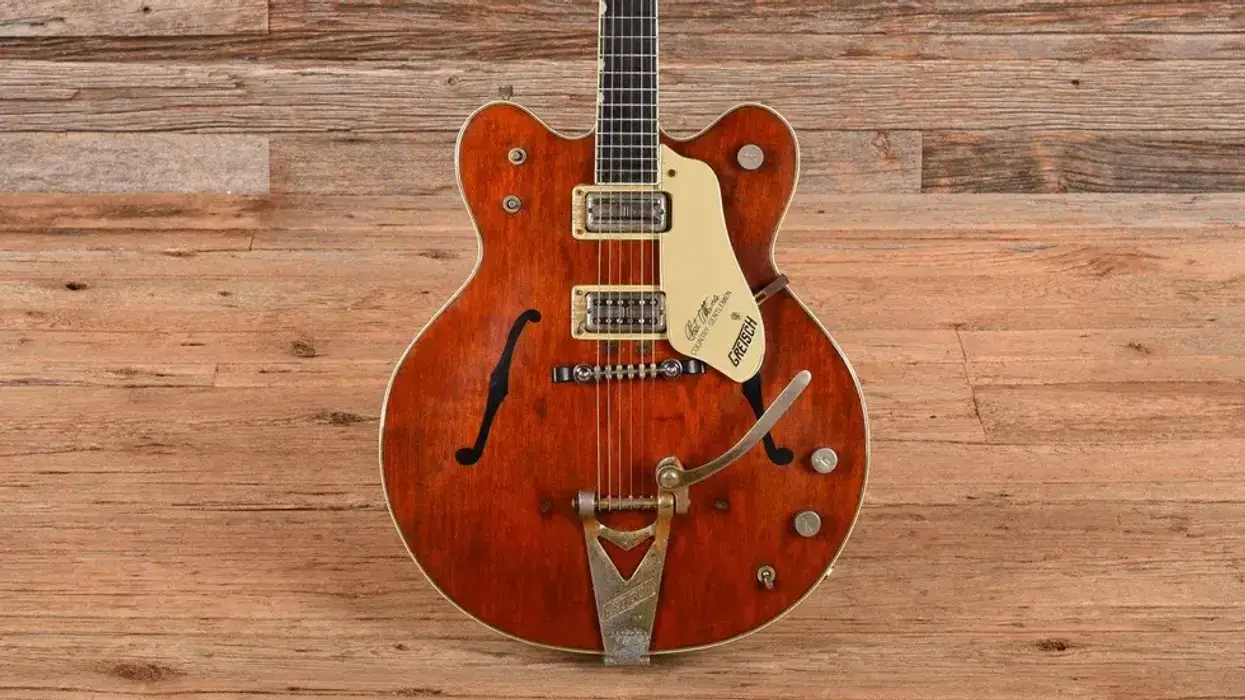
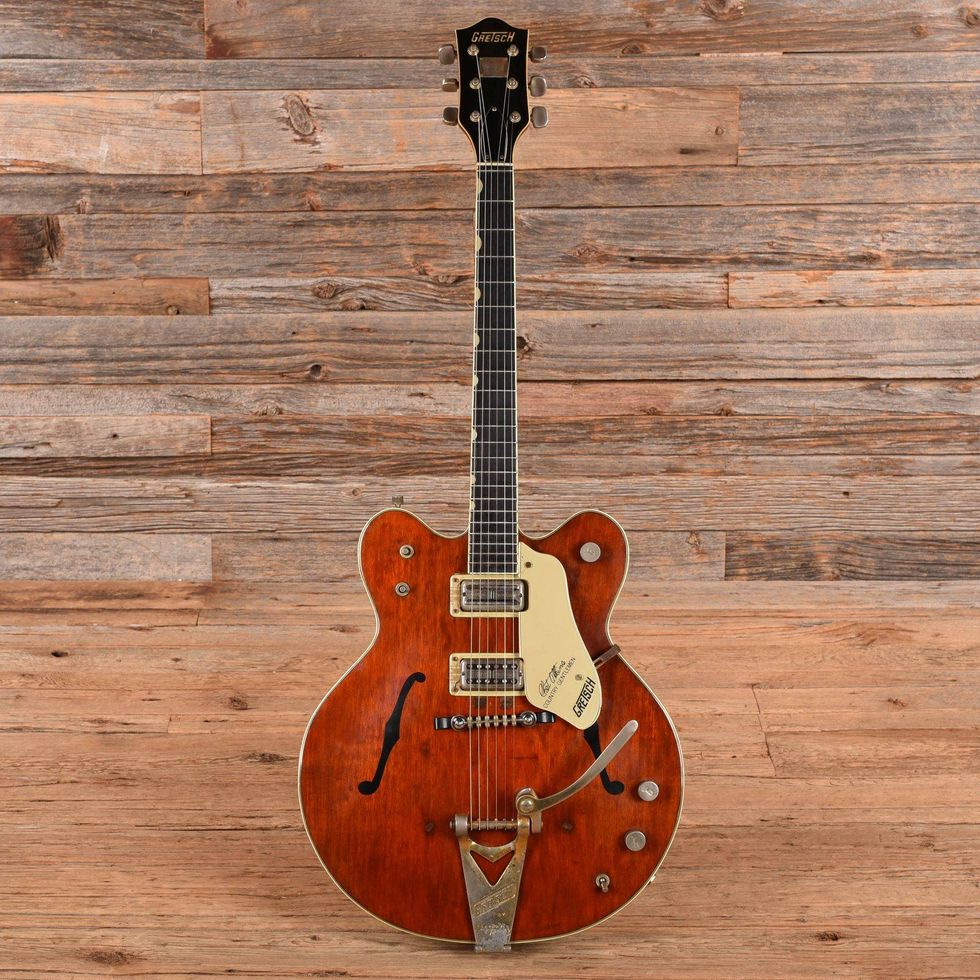
While Harrison’s was a 1963, the production run of Country Gents he inspired from ’64-’70 brought about a few changes: the standard walnut brown finish was lighter than Harrison’s mahogany-colored, the Grover tuners had a more streamlined “kidney” shape, the mute pads changed from red to black, and, over time, some other minor changes were instituted (for example, the “Country Gentleman” branding was made more prominent on pickguards circa 1966).
However, the basic idea that Chet Atkins worked out with Gretsch had remained largely intact since ’61. These were high-end guitars, built for peak performance, without too many distracting frills: hollowbody, 17" wide and about 2" deep, with a laminated maple top, back, and sides. The f-holes were painted on, per Atkins’ orders, so that there were no real holes introducing feedback.
They had ebony fingerboards with a 12" radius, and a 24.5" scale length, a gold-plated Bigsby vibrato tailpiece, a Filter’Tron pickup in the bridge and Super’Tron at the neck, and three volume knobs—that’s right, count ’em, three—for neck, bridge, and master.
There’s not a single tone knob on the whole guitar, but there are three switches: a 3-way tone switch (to choose between bass, standard, and treble), a 3-way pickup selector, and a kill switch.
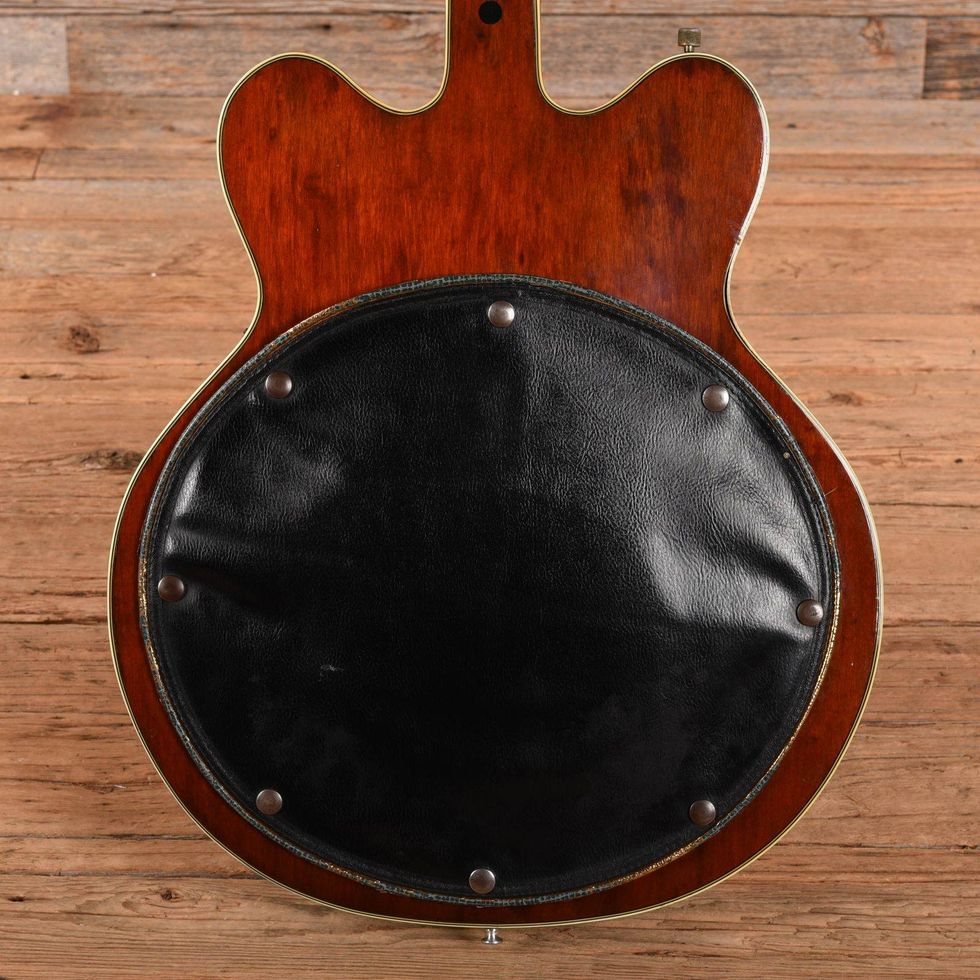
Add it all up, and you’ve got a certified guitar for a certified guitar player. (There’s even a felt pad snapped onto the back so you can stay comfortable while Travis picking for hours on end.)
“You could get a vintage guitar model from the original Big Bang of rock for less than a new U.S.-made Fender or Gibson.”
Back in the mid-’60s, a retailer would have asked for a whopping $595 for a new Country Gentleman—and that’s if they even had it in stock. Adjusted for inflation, that’s over $6,000 in 2026 money, a testament to the top-notch quality Gretsch and Chet targeted.
That figure puts into stark relief what a great buy these are on the vintage market right now. The 1966 Gretsch 6122 Country Gentleman selected for this Vintage Vault column is listed in good condition from Reverb seller Chicago Music Exchange for just $2,650. (Like Harrison’s, at some point a previous owner removed the string mutes and filled in the holes.)
A price tag of $2,650 is still a good deal less than the $3,799 Gretsch asks currently for the closest reissue, the G6122T-62GE Vintage Select. And even that is on the higher-end of average vintage prices at the moment. In 2026 so far, the average final sale price on Reverb for ’64-’70 Country Gents is $1,900, a big drop from the 2021 peak of $3,400.
Country Gent pricing follows a trend in the vintage guitar world that some people—particularly a lot of sellers of vintage guitars—seem to have missed: the vintage guitar market has cooled. Not by a ton, and certainly not uniformly. The overall market is down 10-15% compared to its 2021/2022 peak, with values on the whole remaining above what they had been pre-pandemic.
That said, a lot of once-offbeat models—like the Gretsches of the world, CBS-era Fender offsets, and others—gained a ton of value during the pandemic, only to have slipped further since. Final prices can be 20% to even 40% lower than their peaks. This Country Gentleman is just one example, with plenty more to be found.
It’s a good reminder to all of us vintage guitar nerds out there: These days, it’s a great time to be a buyer. So if you see a guitar you like, go ahead and throw out an offer. Refer to the actual final sale prices you can always find in the Reverb Price Guide, and don’t take asking prices at face value. You just might score a real-deal vintage gem, for way less a current reissue.