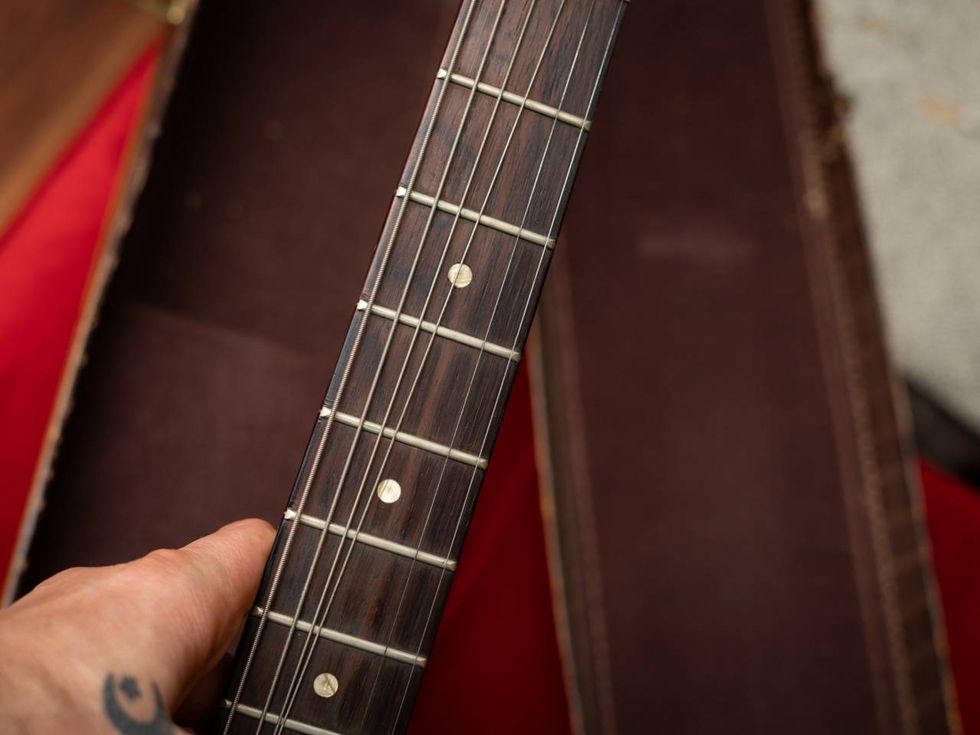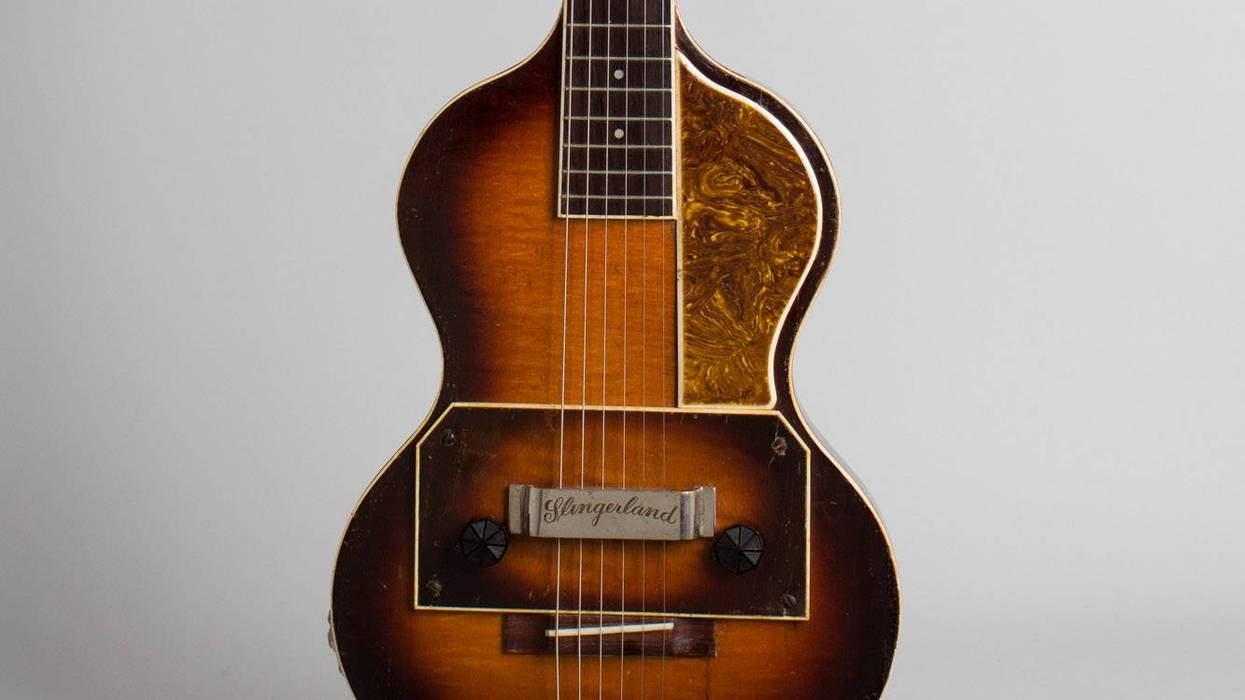

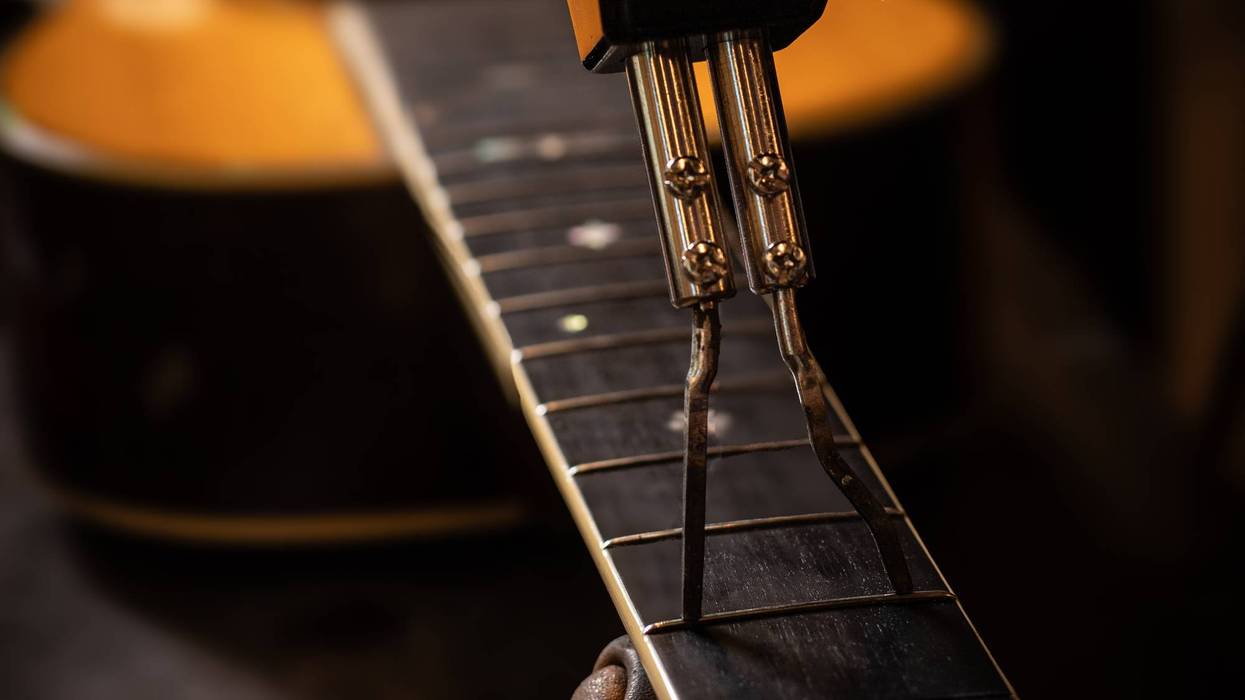

A friend of mine recently bought a really cool late-’50s Fender Stratocaster. The guitar had been refinished, and my buddy wanted a 5-way switch installed along with a blender circuit. It was a super-easy mod job, and his guitar now sounds excellent with the new mods. I was rather taken aback by the playability of the guitar, though; it had virtually no frets. The state of the fretboard on that guitar made me really think: Someone struggled with this guitar, perhaps for years, trying to play it with frets that were lower than what you’d find on an original vintage Les Paul Custom—a k a, “the Fretless Wonder.” The frets were down to the wood in most places, and I scratched my head and wondered, “Why would someone want to do this to themselves?” Luckily, my friend was taking the guitar straight to a luthier to have the frets replaced.
Time for a bold statement: Refretting a vintage guitar does not, in any way, affect its value.
As far as golden-age Gibson, Martin, and Fender guitars go, we are, as the old Amos Milburn tune goes, “Down the Road Apiece.” Some classic Martins are not too far away from being a century old. Golden-age Gibson and Fender electrics, made anywhere from 1950 to early 1965, are anywhere from 50 to over 75 years old. Vintage frets were made of a metal alloy. Yes, they’re metal, but the metal contains mostly nickel, which is rather soft compared to other materials like stainless steel. (A quick PSA: Don’t put stainless-steel frets on your guitar. Just don’t do it. You could put stainless frets on your old guitar, but the tonal difference will surprise you, and for most, it’s not a nice surprise.)
I kept looking at that Strat I was working on and wondering, “What epic struggles took place just to play it?” In terms of guitar playing, there are few things more frustrating than trying to play one with completely worn out frets. An analogy I like to use in regards to refretting an old guitar: Let’s say you just miraculously bought a 1957 Cadillac Series 62 Eldorado in near-mint condition with under 5,000 miles on it. You bought it from someone who’s grandmother used it for her bi-weekly two-mile trip to the Piggly Wiggly, and it was always kept in the garage.
“I’ll say it again: Refretting a vintage guitar does not affect its value.”
You’ve got this killer, crazy-rare, cooler-than-an-igloo-at-the-North-Pole car, but you can’t drive it. The tires are 75 years old, and they’re totally dry-rotted. What do you do? Park the car, put it on cinderblocks, and look at it for the rest of your life? That’s not the best option. Instead, you buy some new tires for it, install them, and take your prize for a ride. Put some new shoes on the old whip and enjoy it!
The same logic applies to vintage guitars, at least nowadays. Back in the day, 40-plus years ago when I got into old guitars, the supply was a bit different than it is now. I remember not buying a guitar for the sole reason that the frets were pretty worn, and I didn’t want to be the guy that devalued it by having it refretted. That same logic still runs around in the minds of some collectors I know. It’s time to change that mindset. I’ll say it again: Refretting a vintage guitar does not affect its value.
Here at Carter Vintage Guitars, we don’t devalue or discount guitars for refrets. Nashville is home to some of the greatest guitar players in the world, and when they come through our doors, they don’t want to pick up and play compromised guitars. Our theory here at the store is that before the guitar heads out to the sales floor, it absolutely has to be 100 percent ready to go. If the guitar’s not totally ready to play, we’re not going to put it up for sale. Our customers—some of the biggest of the big names known the world over—don’t compromise, so we don’t, either. No gray areas.
Come to think of it, is there anything better than a killer vintage guitar that sounds like those old records and plays like a hot knife through butter? No, I’d venture nothing’s better than that—except, maybe, a ’57 Cadillac Eldorado with brand-new tires.