

When I think of surf guitar music, from Dick Dale to the Beach Boys, the first sound that echoes through my mind is spring reverb. The deep, drippy, swampy, dimensional sound of a spring reverb is essential for creating those crashing, wet waves of guitar tone.
Spring reverb was invented by Laurens Hammond in the 1930s, and he officially applied for the patent in 1939. Hammond wanted to use spring reverb in his Hammond organs to recreate the depth and echo of the grand pipe organs that filled up large churches and concert halls. As electrified instruments became a common fixture, many folks were using Hammond organs in smaller churches and at home—and desperately needed to add more dimension to fill up those rooms.
Spring reverb didn’t appear in guitar amplifiers until the early 1960s. The Ampeg Reverberocket, introduced in 1961, was the first combo amp to include it, arriving around the same time as Fender’s early stand-alone reverb units. Fender licensed the spring reverb technology from Hammond, and the rest is history.
The spring reverb effect was not commonly on-board in guitar amps until the mid-60s. Until then, the separate spring reverb unit was sold as an add-on. Fender dominated the market at that time with the 6G15 unit, which was first sold as early as 1961. This was the heyday for surf guitar, and the reverb units provided that extra layer of deep, drippy echo that is an essential dimension of surf guitar music.
The Fender Reverb unit was included in the blonde, brown, and black tolex eras of the Fender product line. The Reverb unit was treated like an effects pedal, where the guitar would plug into the input of the unit, and the output would plug into the amp. Fender first included reverb in the 1963 Vibroverb, which then became a standard built-in effect for many of their amps by the mid-1960s.
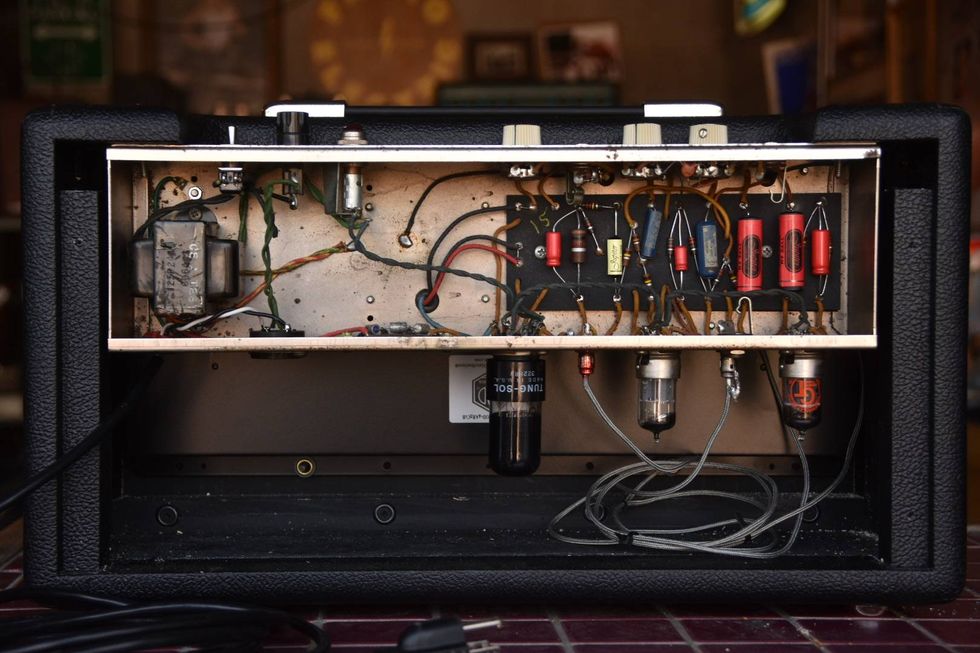
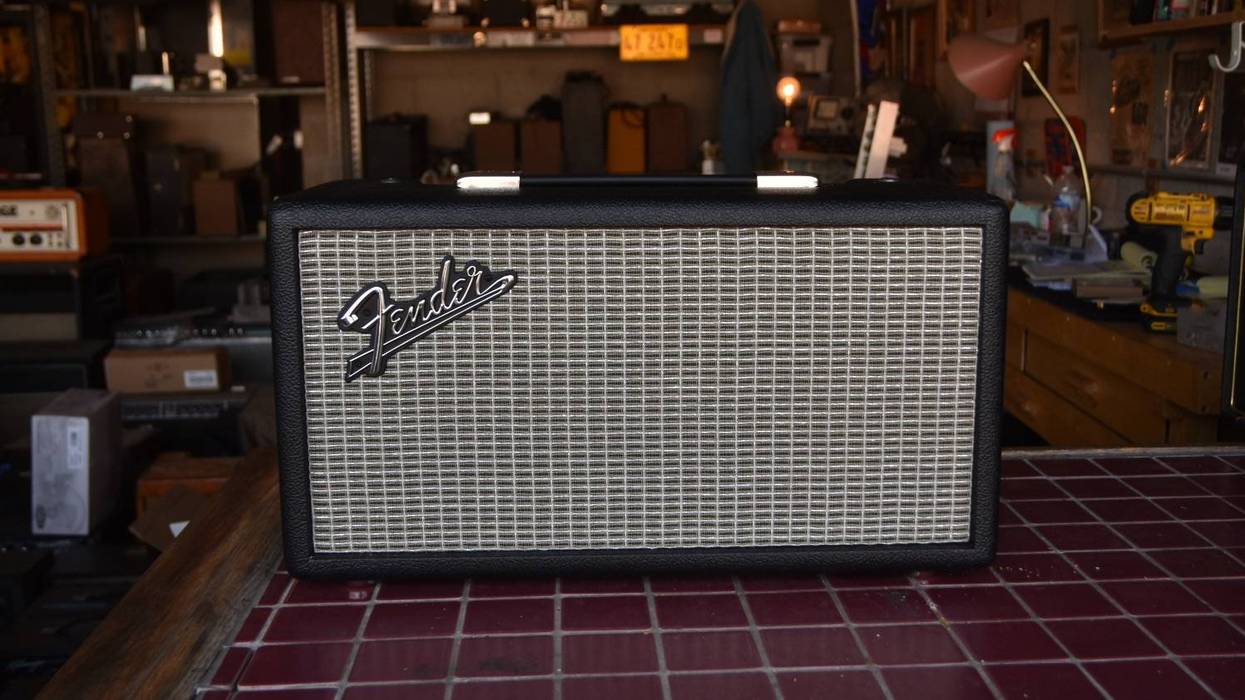
On the bench today, I have a 1964 Fender reverb unit. This is one of the later models, sporting black tolex and white cupcake knobs. The circuitry was mostly rebuilt at some point, but the transformers, a few of the blue molded coupling capacitors, and most of the carbon composition resistors are still original.
This 6G15 came to me with no reverb output. The culprit was the reverb tank, which is often the case when there is no reverb effect. A standard spring reverb tank is made up of an input transducer, the springs themselves, and an output transducer. If one of these components fails, the reverb simply will not operate.
“The deep, drippy, swampy, dimensional sound of a spring reverb is essential for creating those crashing, wet waves of guitar tone.”
In short, the dry guitar signal enters the reverb tank’s input, and travels through the input transducer. This is kind of like a mini transformer, which essentially transforms the electrical audio signal into mechanical energy to physically move the springs. The opposite happens at the output, and the wet guitar signal is sent into the rest of the circuit.
There are tubes in the reverb circuit that are placed before and after the reverb tank. The first tube drives the guitar signal into the reverb driver transformer. This transformer converts the high-voltage signal into a high-current signal, right before it enters the tank. After exiting the tank, the wet signal is boosted by the reverb recovery tube.
Often, the reverb tank is the source of the problem. Sometimes, I get lucky and can repair the original reverb tank. Otherwise, there are modern replacements available that match the stock tank’s specifications. The RCA cables connecting the reverb tank to the amplifier often fail, resulting in buzzy or intermittent reverb. There have also been cases where the driver or recovery tube fail, and I have even seen the reverb transformer fail. All of these components play an integral role in the manipulation of energy to create this analog effect.
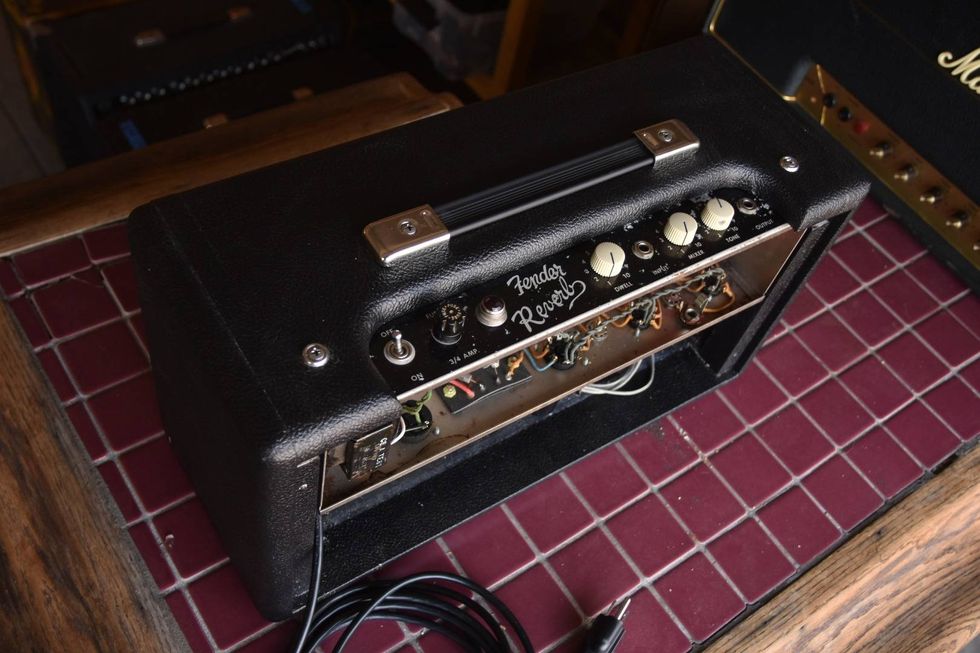
The onboard reverb in Fender amplifiers is an integral part of their legacy. It is a lush-sounding effect, but the 6G15 adds even more versatility to the circuit. The user can adjust the dwell (the overall springiness of the effect), how much wet signal is applied to the mix, and the tone of the reverb itself. By manipulating the tone control, the user can lean towards a bright or a dark reverb sound. All these factors highlight the stand-alone reverb unit’s ability to outshine the single reverb level control in the on-board reverb circuits.
Regardless of the nature of the reverb circuit, the effect is popular to simulate a moody sense of dimension. Analog effects are soulful and life-like, as they manipulate the signal to add or subtract elements of space and time. Add the 6G15 reverb unit to any rig, and it will come alive.
![Rig Rundown: The Black Crowes’ Rich Robinson [2026]](https://www.premierguitar.com/media-library/youtube.jpg?id=66952027&width=1245&height=700&quality=70&coordinates=0%2C0%2C0%2C0)