Ken Settle is a Detroit area photographer who
specializes in music photography. Ken began
his career while barely in his teens,
photographing rock’n’roll legend Bob Seger
during his days playing in Detroit hockey rinks
and clubs, and still keeps a full schedule
shooting live photos and portraits of today’s
top artists.
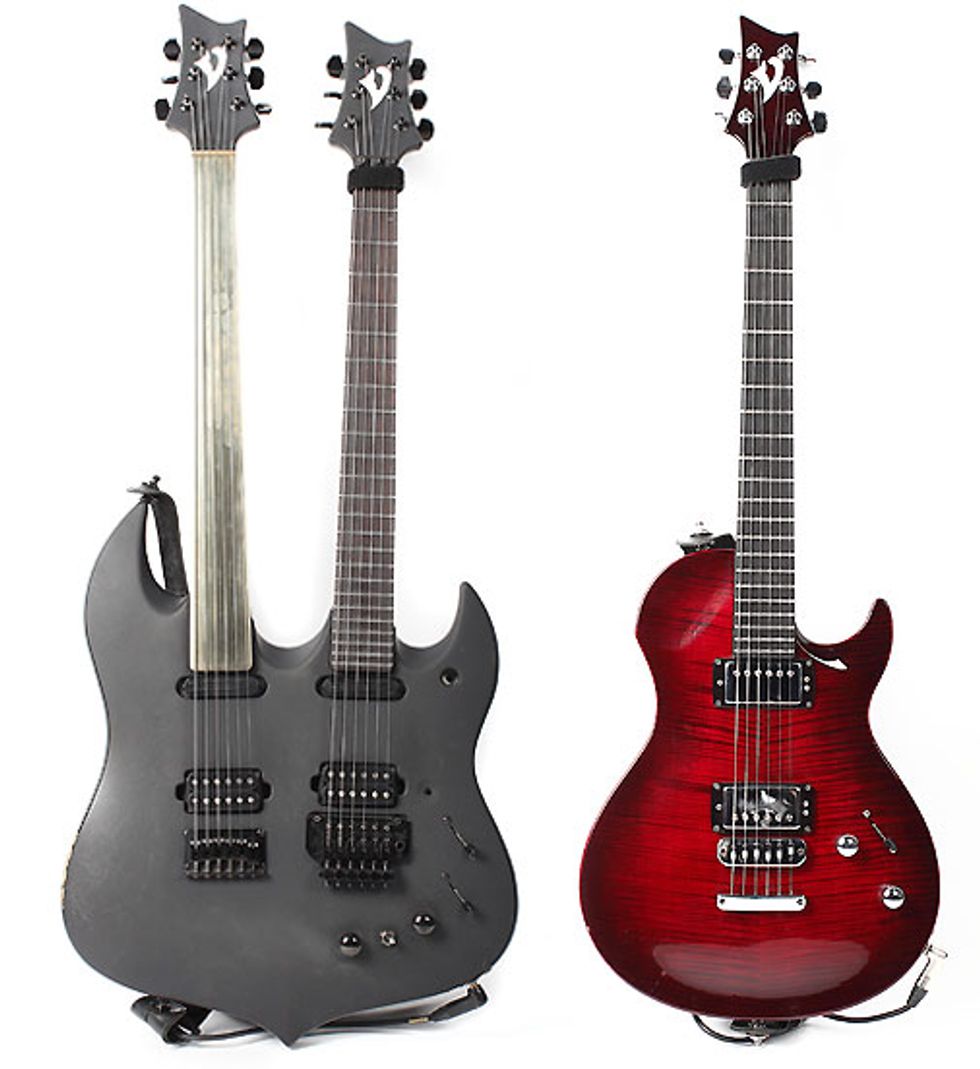
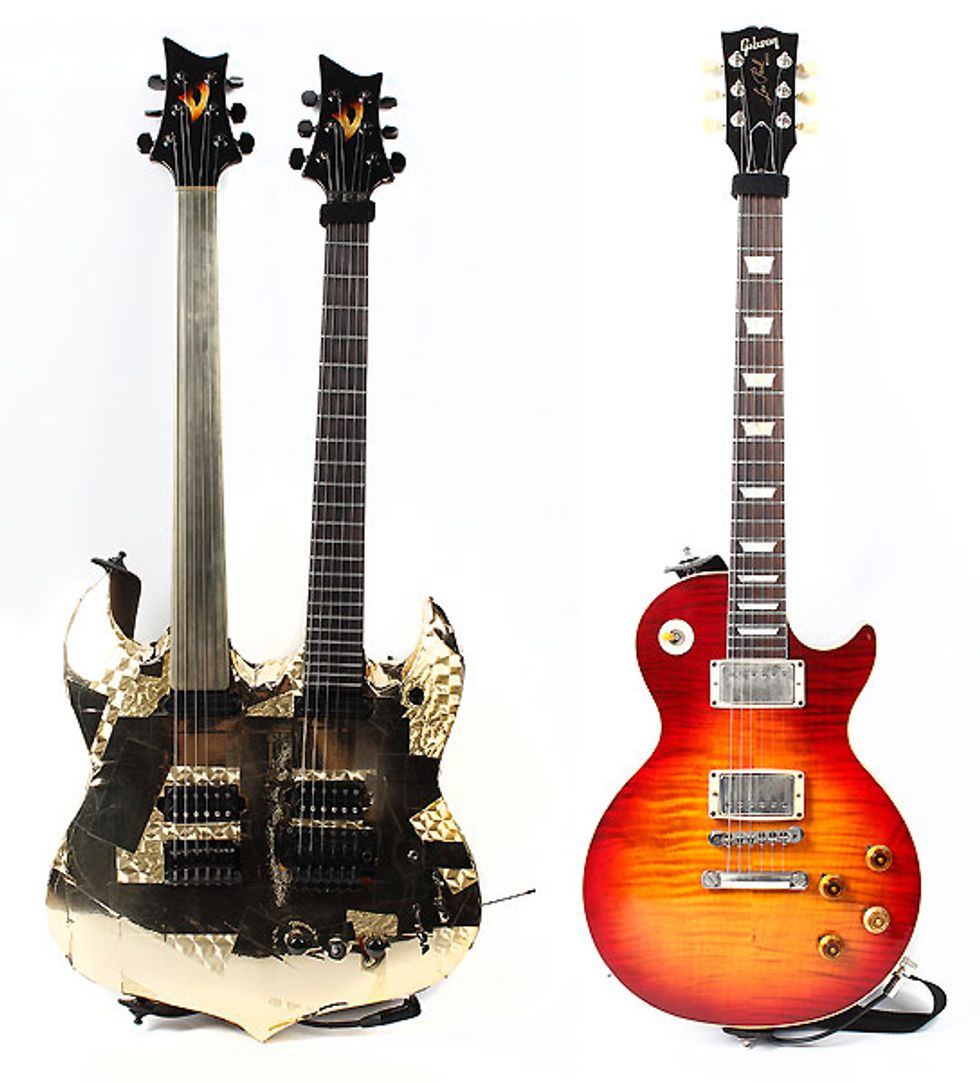
"A Vigier signature artist, Thal uses a G.V. Wood 6-string on the road with GNR in addition to this custom Vigier doubleneck. The fretless neck is tuned to dropped-D. The bands on the fretboard near the nut are used to mute open strings during tapping segments."
The Cars burst onto the national music scene in the late 1970s, capturing the attention of rock radio listeners when the demo of their now-classic “Just What I Needed” went what today we would call “viral.” In the 1980s, the band was also a constant presence on MTV. Like the uniqueness of the Cars’ music, with its quirky mix of pop, rock, and new wave, guitarist Elliot Easton’s playing defies labeling, his genre-hopping blend of rock, blues, jazz and rockabilly seamlessly knit together by his savvy and adventurous musical sense.
Easton’s classic solos and creative rhythm playing turned so many of the Cars’ songs into thrilling guitar adventures, without overshadowing them. Let’s see if we can decipher just how he did it.
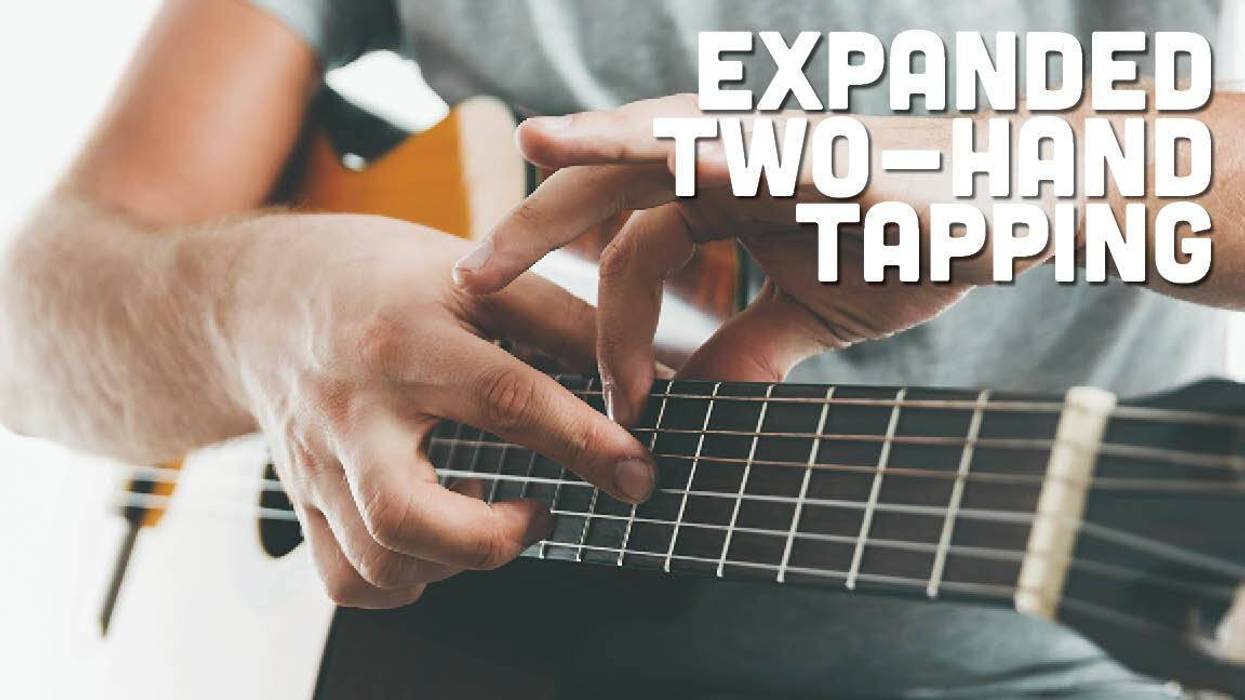
I’ve always loved the unconventional technique of using two-handed tapping in a “chordal” way. In my younger years, I found myself utilizing it for the wow factor. As I matured in my musicianship, I began asking myself, “What is the practical application of this, and how can it be used in a more musical situation?” I began to use the technique as a way to expand solo/chord-melody guitar playing in the style of players such as Stanley Jordan and Victor Wooten. But that is a whole other ball game in terms of time, practice, and development.
As for how this can be used in a simpler and more typical situation, I found the rhythmic,
percussive, and chordal elements of this technique to be extremely fun and expansive when working with small groups such as duos, trios, and quartets. This is especially exciting when applying it to ethnic rhythms such as Latin, Anatolian, and Middle Eastern rhythms.
When I practice this, I think of two main things: left hand and right hand apart, and left hand and right hand together. I would say left and right hand apart is an easier starting point as it doesn’t require the same coordination. I generally like to utilize root, fifth, and octave with the left hand, and extensions like thirds and sevenths with the right hand as they are the color tones.
Explanation of tabs: Below each column of the noted tab, I use the letter R to indicate right hand and L to indicate left hand. They are stacked in a way that represents the tabs. For example, if you see the letter L all the way at the bottom and the letter R on top of that, that would mean your left hand is tapping the lower note while your right hand is tapping the higher note.
Let’s start off with a straightforward syncopated rhythm that focuses on the left and right hand playing apart from each other.
Ex. 1
Ex. 1: Left hand and right hand apart. This example creates a typical 3+3+2 rhythm by playing two individual notes on the left hand, followed by two notes together (two-note combo) on the right hand, repeat, then finish with one note on the left hand and one combo on the right hand.
Ex. 2
Ex. 2: This is the same rhythm and pattern as the first example, but we begin to have some melodic movement in the right hand.
Ex. 3
Ex. 3: Left hand and right hand begin playing together. This example has a bit of a Latin flavor and the juxtaposition of strong down beats in the left hand and syncopations in the right hand creates a cool effect.
Ex. 4
Ex. 4: This is the same rhythm and pattern as Ex. 3 but we have some movement with the extensions of the chords.
Ex. 5
Ex. 5: This example begins to incorporate sliding in the right hand. Whenever I present a new technique, I simplify the overall example to focus on the new technique.
Ex. 6
Ex. 6: This is a standard progression based on the first eight measures of “Blue Bossa.” Clearly, I like minor keys. This example demonstrates more bassline movement with the left hand and application of the style over a longer chord progression. We are keeping the left hand and right hand apart to ease into a busier left hand.
Ex. 7
Ex. 7: This example utilizes all the prior concepts, including slides in the right hand, hammer-ons and pull-offs between the two hands, both hands together, and both hands apart.
I hope these examples help with getting started on some basic—and some not-so-basic—tapping
techniques while playing something that sounds musical and usable.
Great music tells a story. It builds on a plot and holds the listener’s attention as the story unfolds. We are especially moved by soloists who bare their souls and who keep us riveted with every twist and turn from their narrative. Pentatonics are the backbone of modern guitar vocabulary. Partially because they just sound good, but also because they lay so easily on guitar. There are several ingredients that make a guitarist sound brilliant, but one of the most important is chromaticism. Could there a be a way we could combine these two? Let’s find out.
In my experience, constructing lines has always been about texture and structure. Developing ideas for soloing and writing melodies takes a keen sense of harmonic and rhythmic context. It’s about seducing the listener and delivering a ride that’s hard to forget—a ride that caters to the listener. Of course, it’s important to write for yourself and from the heart, but also remember that if your heart’s intent is to inspire others, then you’re on the right track for the long haul. And this is where melody comes in.
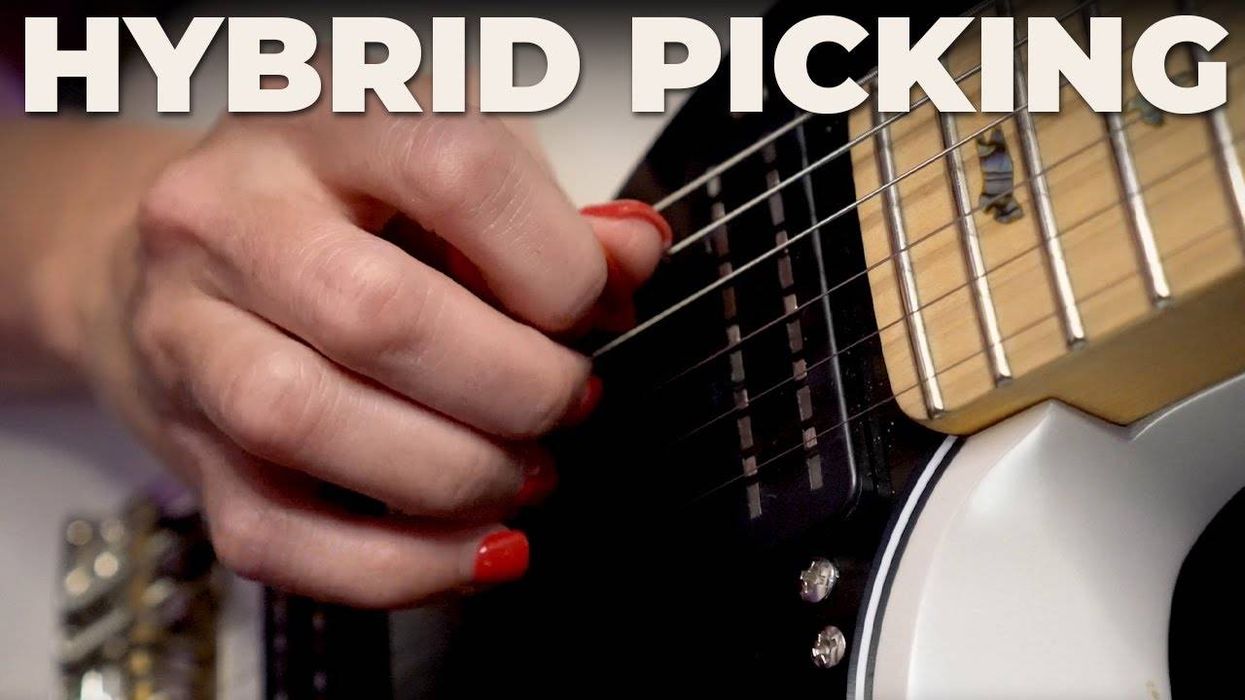
Hybrid picking is a technique used by many players that combines regular flatpicking with fingerpicking. It’s not all arpeggio and patterns though. Caitlin Caggiano guides us through a lesson using this picking technique for chords, melodic lines, and lead lines, and she shows us how the Beatles, Heart, and others have applied hybrid picking to create classic parts. In this video, you’ll learn what hybrid picking is, why we use it, how to implement good technique, and how to practice and apply the technique in your playing.