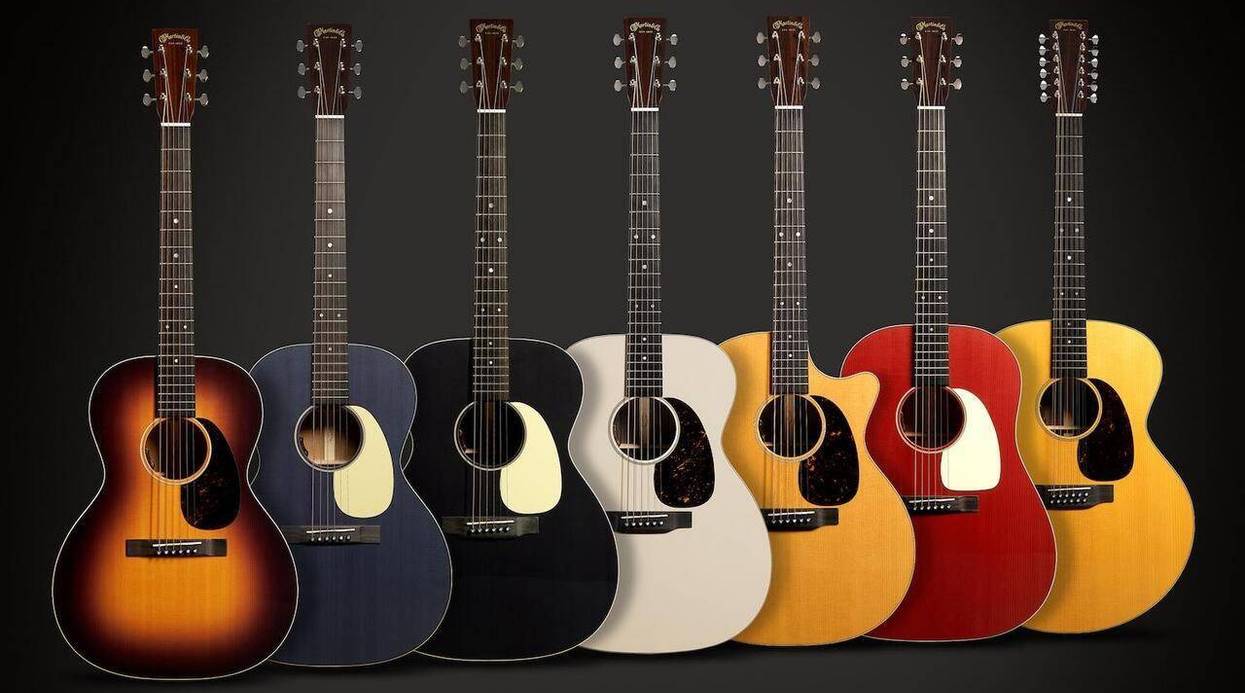
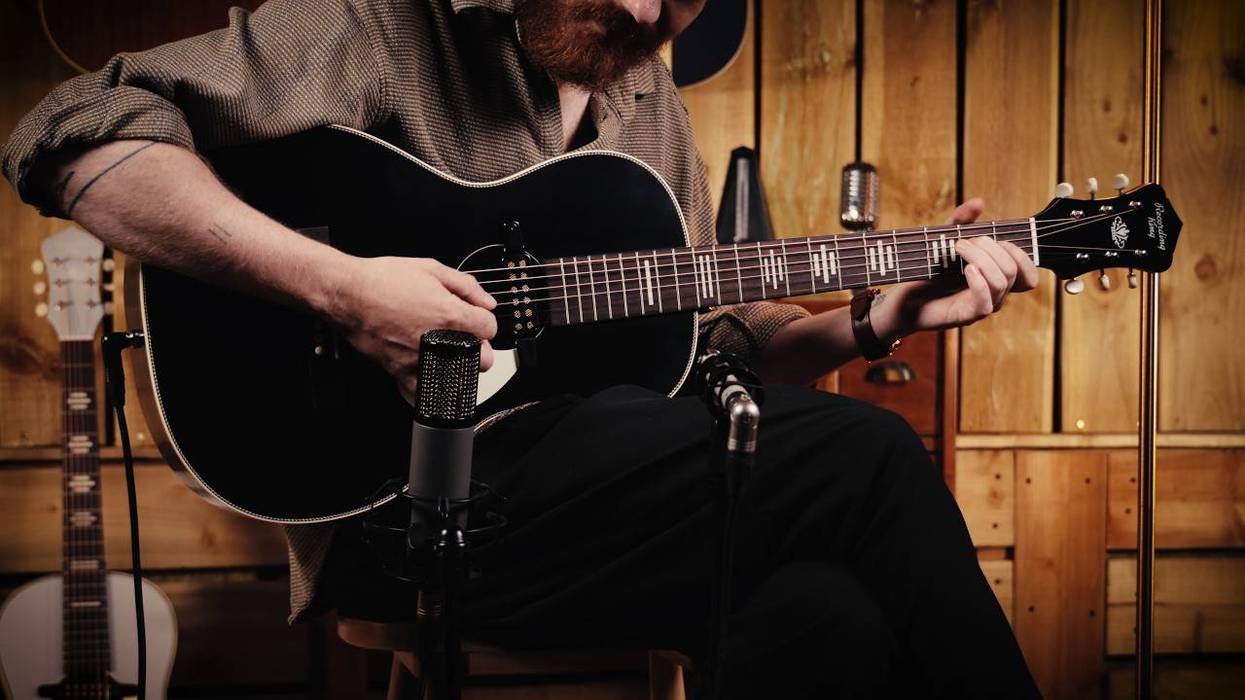
C. F. Martin & Co.® proudly announces the launch of Project 91, an extraordinary new collection that brings to life 91 unique guitars, each a direct descendant of an original pre-war D-45—among the most coveted acoustic guitars ever made. Crafted with Brazilian rosewood backs and sides, every Project 91 instrument is individually linked to its historical counterpart by serial number, honoring the spirit, craftsmanship, and tone of Martin’s golden era.
The first four models in this numbered legacy are now complete:
Each Project 91 guitar is accompanied by a certificate of authenticity in the case pocket, and a commemorative framed poster depicting its original reference instrument—available to those who register their guitar.
A Tribute Nearly a Century in the Making Between 1933 and 1942, Martin built just 91 original D-45s. Today, fewer than that remain in circulation, each representing a priceless piece of music history.
“We’re getting close to 100 years since the first D-45 was introduced,” says Jason Ahner, museum and archives manager. “Project 91 is about recreating 91 of the greatest guitars ever built. We’re doing our best to replicate how they would have been built back in the 1930s and early 1940s.”
Continuing a Golden Era The D-45 has long represented the pinnacle of Martin craftsmanship. “The 45 has always been the culmination of our best work,” says Chris Martin IV, chairman of the board. “During my career, we’ve done D-50s, D-100s, D-200s—but there’s something about the 45. The fact that we made the 91 during what people consider one of our golden eras—I would like to say today is another one—this is really exciting for me.”
Each Project 91 guitar captures the tone and detail that defined that era, from forward- and rear-shifted bracing and vintage neck profiles to Brazilian rosewood backs and sides—while some of the 91 models will feature unique touches like thinner nut widths, a shaded top, a left-handed build, and even one with two pickguards.
“The D-45 represents the absolute top of the line for Martin guitars,” adds Dick Boak, former museum and archives director. “The amount of work, the amount of detail in inlaying not only the top, sides, back, neck, and headstock, but also around the edges of the neck and endpiece—it just sets them apart.”
Owning a Piece of Martin History Every Project 91 guitar connects its owner directly to a specific original D-45. “You have a unique serial number that ties back to its predecessor,” explains Tim Teel, instrument design manager. “When you register your guitar, you’ll receive a framed poster showing that connection—your guitar’s lineage to Martin’s history.” Availability The first four Project 91 guitars are now complete and available through select Martin dealers. The remaining models will be built and released in sequence over the coming years, each meticulously recreating its pre-war counterpart in sound, feel, and detail. For more information on Project 91, visit martinguitar.com.
Third Man Hardware has joined forces with Kansas City, MO’s JHS Pedals to create The Troika Delay, a horse-powered instrument and microphone delay product unlike anything else on the market. More than simply a pedal, The Troika is a multi-purpose, pro-audio, studio-grade delay device designed to work with microphones, guitars, or any instrument. Equipped with both XLR and ¼” inputs and outputs, The Troika utilizes a hi-grade Lundahl transformer on the mic input, and a secondary output transformer, enabling it to work well with other effects and is perfect for desktop and professional recording studios as well as on stage. The Troika Delay is available now in standard black ($349) at thirdmanhardware.com. A limited-edition yellow model ($369) is also available, exclusively via reverb.com/shop/third-man-hardware. For more about JHS Pedals, please visit jhspedals.info.
Third Man Hardware introduced itself to the gear community with its first collaboration in 2014, the Bumble Buzz. They couldn’t stop there. With a vision to bring innovative, introspective, creative sounds to everyone in the gear community, Third Man Hardware has collaborated with over ten different companies that it respects in the gear community in order to produce its current gear line.
Third Man Records was originally founded by Jack White in Detroit, MI in 2001. In March of 2009, a physical location was established in Nashville, TN. Third Man Records, in its current state, comprises a record store, record label offices, a photo studio, a darkroom, and a live venue with an analog recording booth. TMR now has three locations, with its latest addition in London. Almost all of our records are recorded, printed, and pressed in Detroit, MI, and produced by Jack White. In this fashion, TMR strives to bring a spontaneous and tangible aesthetic back into the record business.
JHS Pedals is a USA effects company based in the Kansas Cit metro area known for blending classic analog tone with creative modern design. Since 2007, JHS has become one of the most influential names in guitar effects pedals— developing original circuits, reimagining vintage classics, and collaborating with artists and brands across the globe. With a catalog spanning everything from overdrives to delays to preamps, JHS combines quality craftsmanship with large-scale production expertise. The company also produces popular content on YouTube, where founder Josh Scott explores guitar-related devices, the stories, and the sounds that shape music history.
About Reverb:
Reverb is the largest online marketplace dedicated to music gear. Since launching in 2013, Reverb has helped millions of music makers find the perfect piece of gear from its trusted community of music shops, top brands, and other music makers around the world. Built by musicians and gear lovers, Reverb combines one of the largest selections of musical instruments with tools to help music makers find music gear that inspires them and a passionate musical community to connect with. Sales on Reverb help support Reverb Gives, which provides youth music programs with musical instruments.
Season 2 of Axe Lords kicks off with a legend: Lita Ford joins Dave, Cindy, and Tom for one of the heaviest, wildest, most guitar-nerd–satisfying episodes we’ve ever done. Lita talks about reinventing herself after The Runaways, why she insisted on a three-piece band to prove her guitar chops, and how she developed a voice on the instrument that producers once criticized—until legends like Billy Gibbons co-signed her sound.
And yes: Lita plugs in, cranks a Boss Katana, and rips a live performance that might be the most rock-and-roll ending to an Axe Lords episode yet.
Axe Lords is hosted by Dave Hill, Cindy Hulej, and Tom Beaujour. Produced by Studio Kairos. Presented in partnership with Premier Guitar. Artwork by Mark Dowd. Theme Music by Valley Lodge. Follow and subscribe to Axe Lords @axelordspod.
Subscribe to Premier Guitar for more episodes of Axe Lords and get notified when the next Axe Lords episode drops.
The speed and accuracy with which you react to what’s happening around you musically is definitely not a competition, but I believe it’s the single most important element of any musical performance, and your ears play a pivotal role.
Through some brutally honest self-inventory of my own abilities over the past month, I’ve discovered a few things about my playing that are far from flattering.
Here are a few key takeaways.
I want to get better: I’ll be the first to admit that my abilities—although well-developed after 35 years of practice—can still be improved significantly. Whether it’s recognizing the exact notes in a chord someone is using over my bass line, or hearing a song once and playing it back immediately, there’s plenty of room to grow. As bass players, we get to hang out in the low end and “listen up” the harmony vertically. It’s a great place to be, and the nature of our fundamental role in the band to hold things down often gives us a little more space and time to use our ears. It’s good to be aware of that and make the most of that extra time to absorb more information.
Repetition of listening has never been more important: Depending on the time frame I have from an artist—or my own personal goals—I want to spend as much time as possible listening away from my instrument. I’m making drastic changes to how I allocate my practice time, and the results have been huge. My playing is already sounding more natural because I’m focusing more on my ear than on my chops.
Recording shows religiously: I’ve always had some kind of recording device running during live gigs and practice sessions. Lately, I’ve been leaning much more heavily on this process. The more honest I am with myself about a performance or a practice session, the better I can plan future practice time to fix weaknesses and accelerate growth—even after 35 years!
“No matter where you’re at, creating a positive feedback loop—recording everything we do, listening back, and being self-critical when needed—has enormous potential to make us better musicians right away.”
I think it’s essential to remember that we’re all at different stages of the journey and want different things from our playing and our music. But no matter where you’re at, creating a positive feedback loop—recording everything we do, listening back, and being self-critical when needed—has enormous potential to make us better musicians right away.
I’ve been comparing learning to hear “faster” and more accurately to how a successful athlete approaches their sport. In tennis, for instance, you need multiple specialized skills to become a top player: speed, agility, hand-eye coordination, physical endurance for long matches, and mental toughness to outthink your opponent under pressure.
Similarly, a musician needs great time, great tone, a fantastic ear, solid memory, social skills for working with others, and technical command to execute ideas. It’s no small list of requirements.
But I think the most striking similarity is the mental toughness and focus required to handle the pressure of being onstage or in the studio. The best musicians feel no pressure at all. As a result, their ideas flow freely, they absorb everything happening around them, and their ears catch every detail. That’s where I’m looking to improve: Feel no pressure, and take in as much as I can.
Listening faster has become somewhat of an obsession, and I suspect it will stay at the top of my priority list for life. In just a few weeks, I’ve become more relaxed onstage, uncovered dozens of new things to practice by reviewing old recordings, and started to feel what a great athlete must feel when they step onto the court knowing they’re in complete control.
Distractions are fading, focus and intent are way up, and I feel like I’m playing better than I have in years. I thought I would never get back to the feeling I had when I first picked up a bass in my early teens, but the past month or so has surprised me greatly.
It has actually been quite emotional at times because the past decade has had its fair share of self-doubt, including hitting several plateaus where progress felt nonexistent. But now I can confidently say there’s no end in sight when it comes to new challenges to tackle. The improvements may not come in leaps and bounds, but they’re coming—and that’s what matters.
Phish’s Trey Anastasio is back again on this week’s extra-special episode of Wong Notes. The expansive conversation goes from the mundane to the massive: Trey shares the meaningful gift he bought himself for his 60th birthday, reflects on his most meaningful song, dissects boredom and nostalgia in the streaming era, and names the young bands impressing him most these days.
Then, Trey and Cory dig deep into the songwriting process, and Trey reflects on how his songwriting has (and hasn’t) changed over his length career: “Maybe it’s some kind of human nature, that you’re kind of fighting against who you actually, really are,” he offers. He then opens up the files and plays a few unreleased (and vintage) demos! At this stage in his career, what is Trey Anastasio hoping to accomplish, and has his approach to making music changed? Tune in to find out.
Enjoy the videos and music you love, upload original content, and share it all with friends, family, and the world on YouTube.