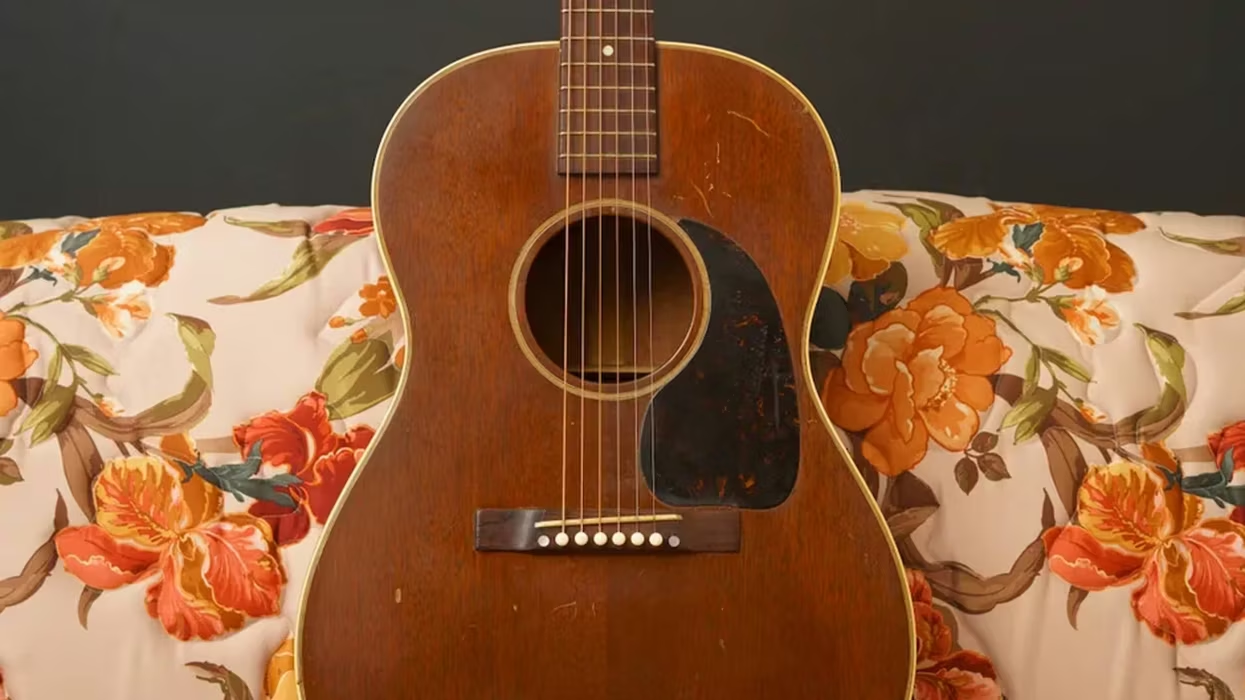
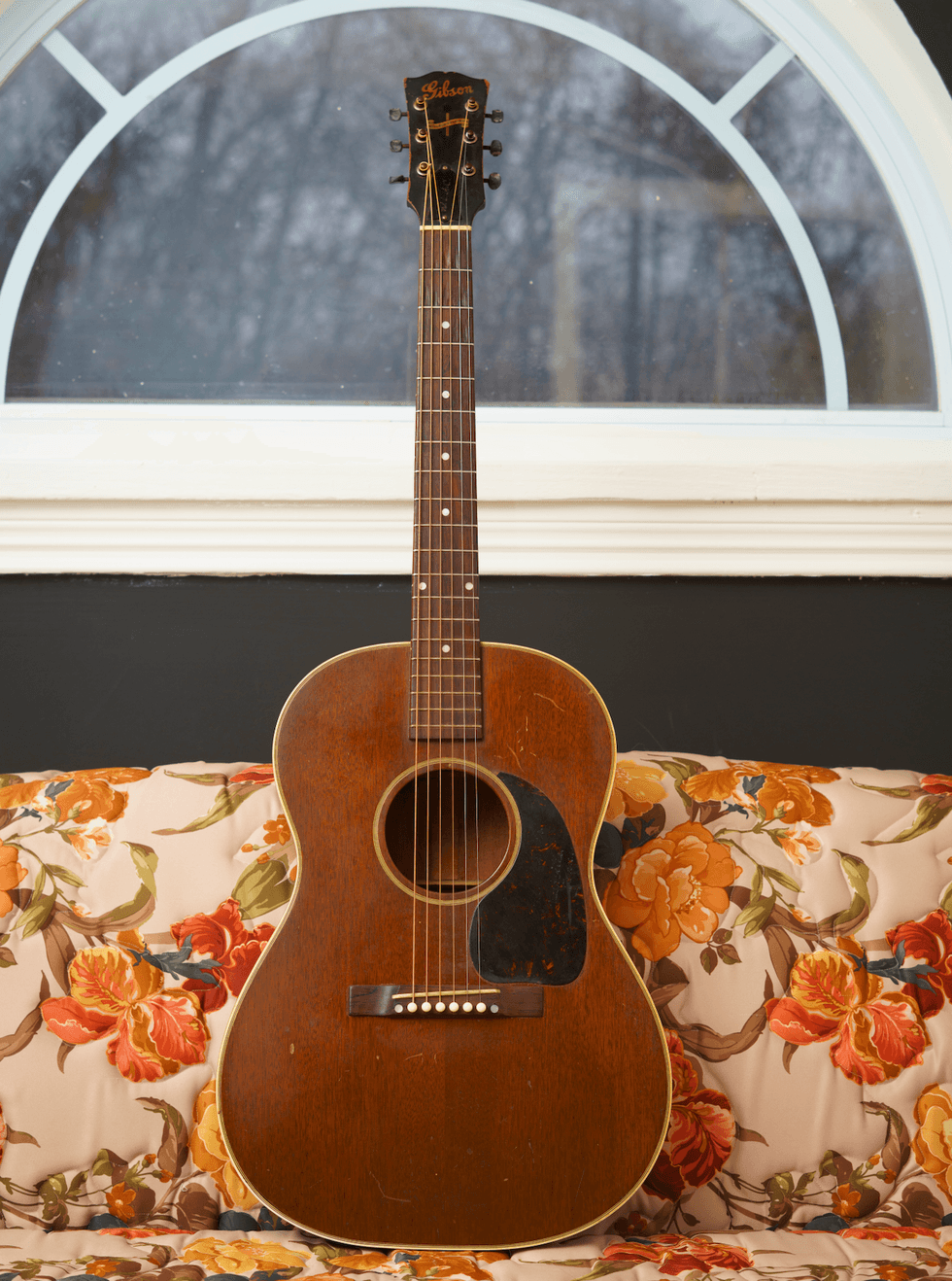
This 1942 Gibson LG-1 is representative of a small but historic run of instruments produced during World War II.
Photo by Lloyd Nicely
“Banner” Gibson flattops command attention before a note is played. That this particular example—a 1942 LG-1—changed hands off the tailgate of a truck for cash did nothing to diminish it.
This 1942 Gibson LG-1 is representative of a small but historic run of instruments produced during World War II.
Photo by Lloyd Nicely
Gibson LG models—the LG-0, 1, 2, and 3—are hardly rare, and were produced on the budget side of Gibson’s line. Many resources document the LG-1 model as being introduced in 1947 with familiar specifications: ladder bracing, sunburst finish spruce top, and stenciled block Gibson headstock logo. But Banner-era LGs, as well as the L-00 and other higher-priced models like the J-45s and SJs made between 1942 and 1945, were built in much smaller quantities by a small crew of mostly women. The “Kalamazoo Gals”—as they’ve come to be known thanks to John Thomas’ exceptional book of the same name (now a documentary film!)—were brought on by Gibson to replace their male predecessors, who were in short supply due to U.S. involvement in World War II.
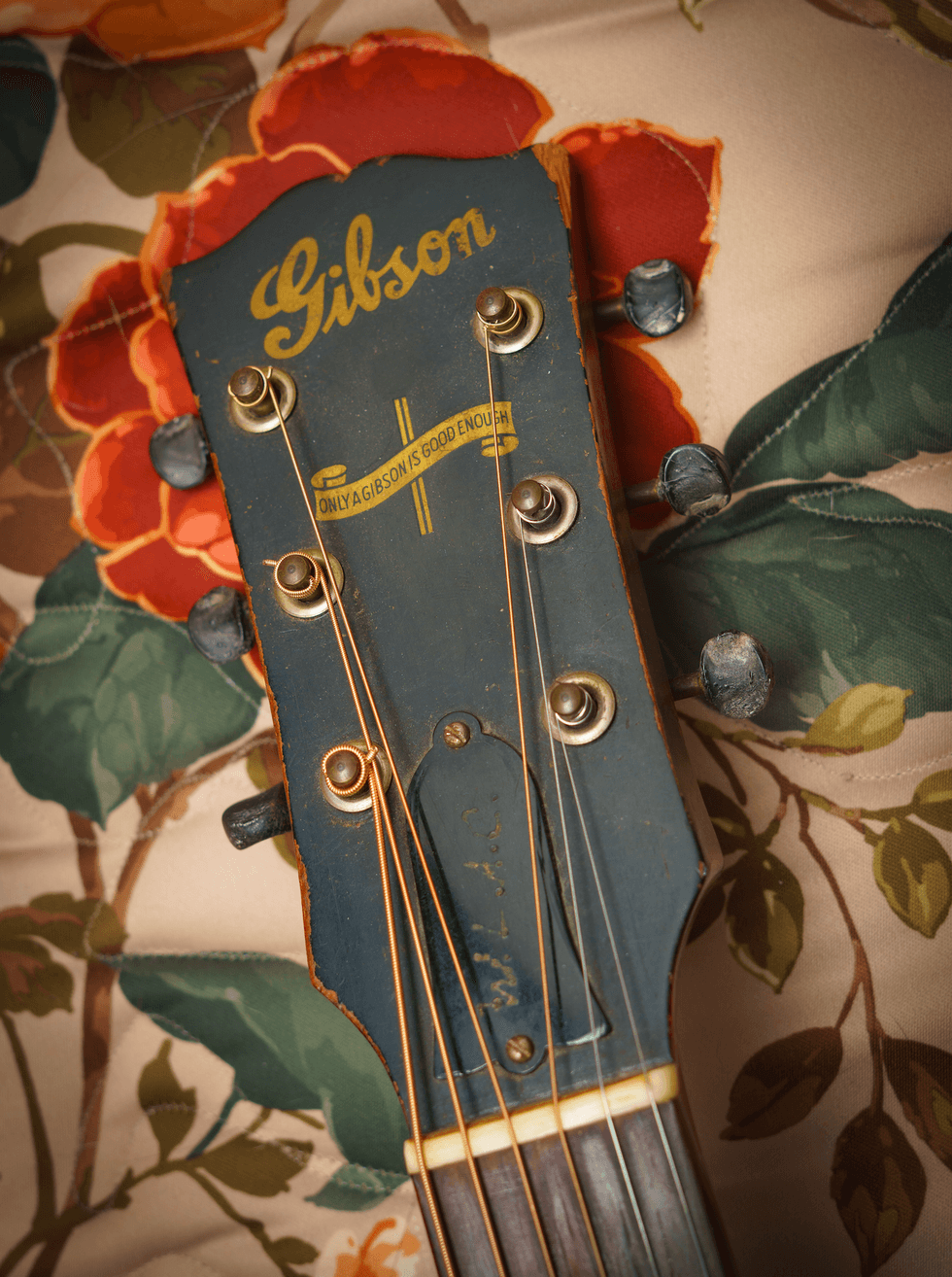
This 1942 LG-1 features unique specifications, including X-bracing, bound mahogany top, back, and sides, script-font Gibson and “Only a Gibson Is Good Enough” banner headstock logos, is stamped inside with factory order number 7705H. These original, often-forgotten LG-1 guitars were only produced in 1942, and all seem to be designated with factory order numbers in the 7700s. According to original records, Gibson built six batches of these instruments, and only made 87 shipments of the LG-1 from 1942 into early 1943. During this period, a typical batch would have been around 40 guitars. After a great conversation with our friend Joe Spann, author of Spann’s Guide to Gibson 1902-1941, we surmised these were smaller, possibly even half-size batches, meaning only around 120 of these LG-1s were produced.
It’s probably safe to say the LG-1 was not a hot seller in 1942. These guitars share the same bout size, dimensions, and X-bracing pattern as the much coveted, and much better selling, LG-2, but with a solid mahogany top and walnut stain finish. Tonally, this particular guitar has that quintessential dry “thump” that old Gibson flattops are famous for, but with a surprisingly poignant cut, and a great deal of volume. The X-bracing, paired with the mahogany top and “banner”-era construction, offers a very distinctive tonal palette that is quite pleasing and intriguing.
Guitars with this distinctive logo on the headstock are often referred to as “banner”-era Gibsons.
Photo by Lloyd Nicely
How this particular LG-1 made its way from Kalamazoo, Michigan, to radio station WLAC—the call letters of which are hand-engraved on the truss rod cover—in Nashville, remains a mystery. What we do know is that this LG-1 spent the bulk of its life with Violet, guitarist for WLAC’s the Old Gang (formerly WLAC’s the Old Chuck Wagon Gang, and not to be confused with the Chuck Wagon Gang, a gospel group still active after 80-plus years). Promo photos show Violet posing with several different small-body Gibson models—and assorted reasonably sized cowboy hats—during her time with WLAC’s “guaranteed clean” morning show.
“Will someone someday comb through Gibson’s production totals from 2020 to suss out whether their grandma’s SG Standard could be considered rare due to pandemic-era manufacturing reductions?”
Violet’s grandson decided to move this guitar along due to a mighty good cause for downsizing; he and his wife were moving from the spacious sprawl of a Tennessee suburb to a smaller-scale way of life in Hawaii. Any belongings that made the cut would be making their way by boat and priced by collective weight and size. Violet’s grandson and granddaughter-in-law didn’t play guitar, and even if they aspired to, this guitar wasn’t in good, playable shape at the time (even for Hawaiian-style), so practicality must have outweighed sentimentality. We followed up on our promise to have the guitar properly restored, and worked with the fine folks at Glaser Instruments in Nashville, who repaired a crunch in the bass side of the body, heat set the neck, reglued the bridge (original shim removed but retained!), and replaced three deteriorated tuner buttons. We suspect that if Violet was still around, she would be pleased with the results.
Reading old stories about the Kalamazoo Gals building what became known as “floor sweep” guitars with a combination of model specs, or the Martin crew fashioning a copper device to use a pencil all the way down to the eraser end, shines a light on the resourceful manufacturing atmosphere that evolved to keep businesses rolling and guitars shipping out the door at an important moment in music history. Will someone someday comb through Gibson’s production and shipping totals from 2020 to suss out whether their grandma’s cherry-red ’61 reissue SG Standard could be considered rare due to pandemic-era manufacturing reductions? Guess we’ll just have to wait and see.
When you hear songs played on guitar, it’s common to hear familiar chords that use open strings: D, C, G, Am, etc. These can make for some beautiful music, but at some point there might be an interest to explore more of what’s possible. One way is to include open strings for new ways to play voicings with close intervals, and also expand the possibilities of the fretboard.
I started to get interested in chords with open strings around the late ’90s. I think I came across the idea from an Eric Johnson video when he mentions “a real pretty Wes chord” (which you can find in Ex. 6). It wasn’t until much later, though, that I started to really explore them. I remember being intrigued by some of the things that were possible when an open string (or two or three) was included in a chord, and how the sound/timbre of the voicing changed when mixed with the fretted notes.
I’d like to start by showing two close voicings I came across (which are not otherwise possible without including an open string) and explain the process I worked through to find them.
I’ve always loved the sound of harmony moving in thirds, so for these examples I’ll be exploring B major sounds and G major sounds focused around the root, 3, 5, 7, 9, and #11.
Ex. 1
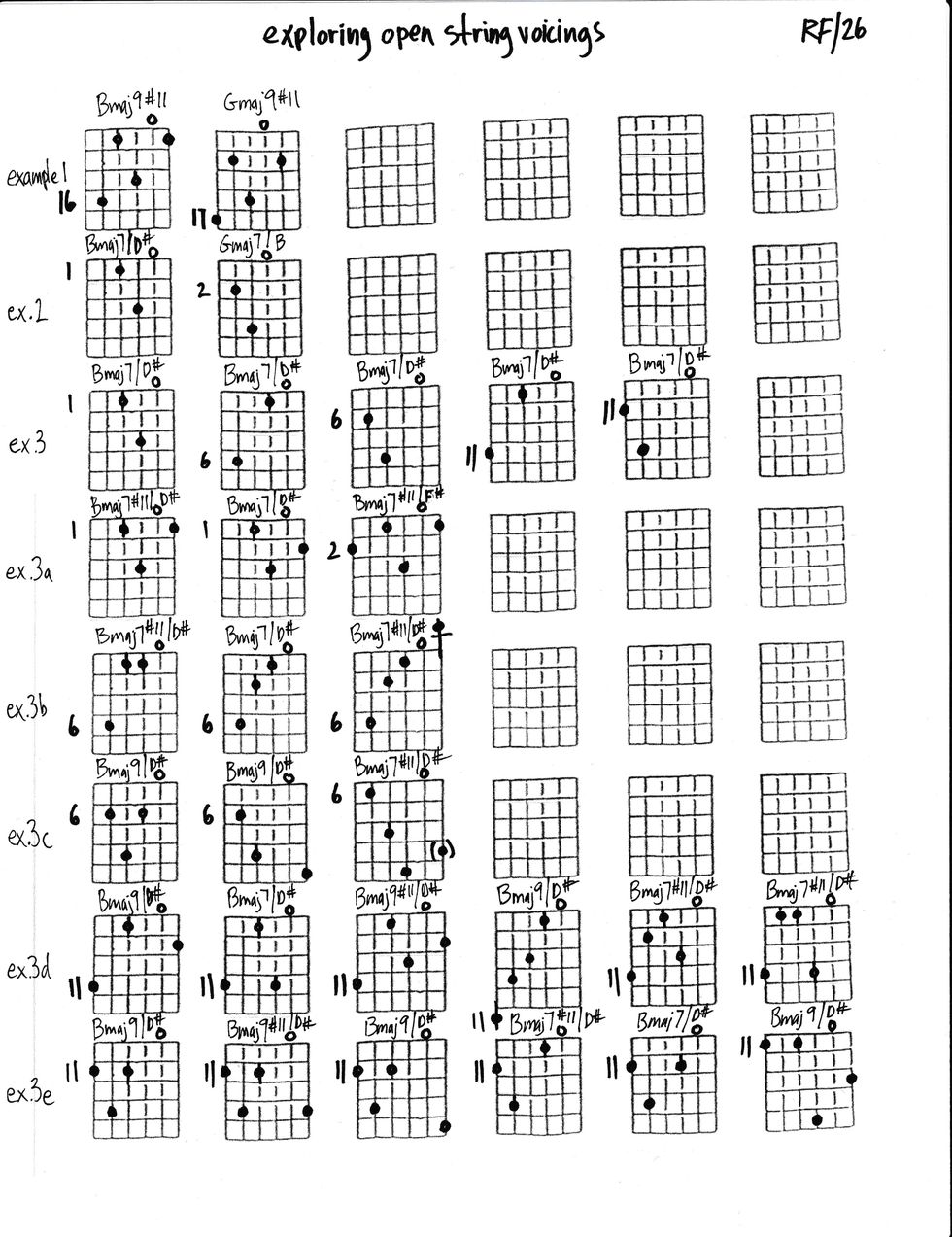
Here’s where I eventually ended up: a chord containing the root, 3rd, 7th, 9th, and #11 with two whole steps on the bottom. On a piano, this wouldn’t be too challenging, and normally on guitar, it wouldn’t be possible. But with the addition of the open string we are able to easily get to it.
Something that I find somewhat challenging about these voicings is that the lowest sounding note is not always on the lowest string of the voicing—it might be somewhere in the middle. So when I work on new voicings, I’ll try to play through them one note at a time from lowest note to highest note, then highest to lowest—I think it helps my ears connect with what my eyes are seeing.
Ex. 2 When I started exploring the idea of major 7th chords with open strings, I probably started with something like this: 3rd, 7th, and an open string as root. (You could also start with the 3rd or 7th as an open string, depending on the key.) In this range, we have a familiar fretted interval—a 5th—with an open string a half-step above the 7th.
Ex. 3 After working on the open-string idea for a while, the term “zones” kept coming back to me. Playing in “positions” on the guitar is pretty common, but that has more to do with giving each finger a specific fret. I think the term “zones” leaves a little more interpretation as to what’s possible in each place on the neck. For instance, in this example, there are five “zones” that give us all the possible ways to play these two fretted notes with the open B, and each one of them offers a slightly different area, sound, and range on the fretboard. These will be the shapes we start with as we work through some of the possibilities of each one. Work through Examples 3a through 3e to hear some of the different colors. Even though the last voicing has the 7th an octave higher, it seemed too good not to share here.
Ex. 4
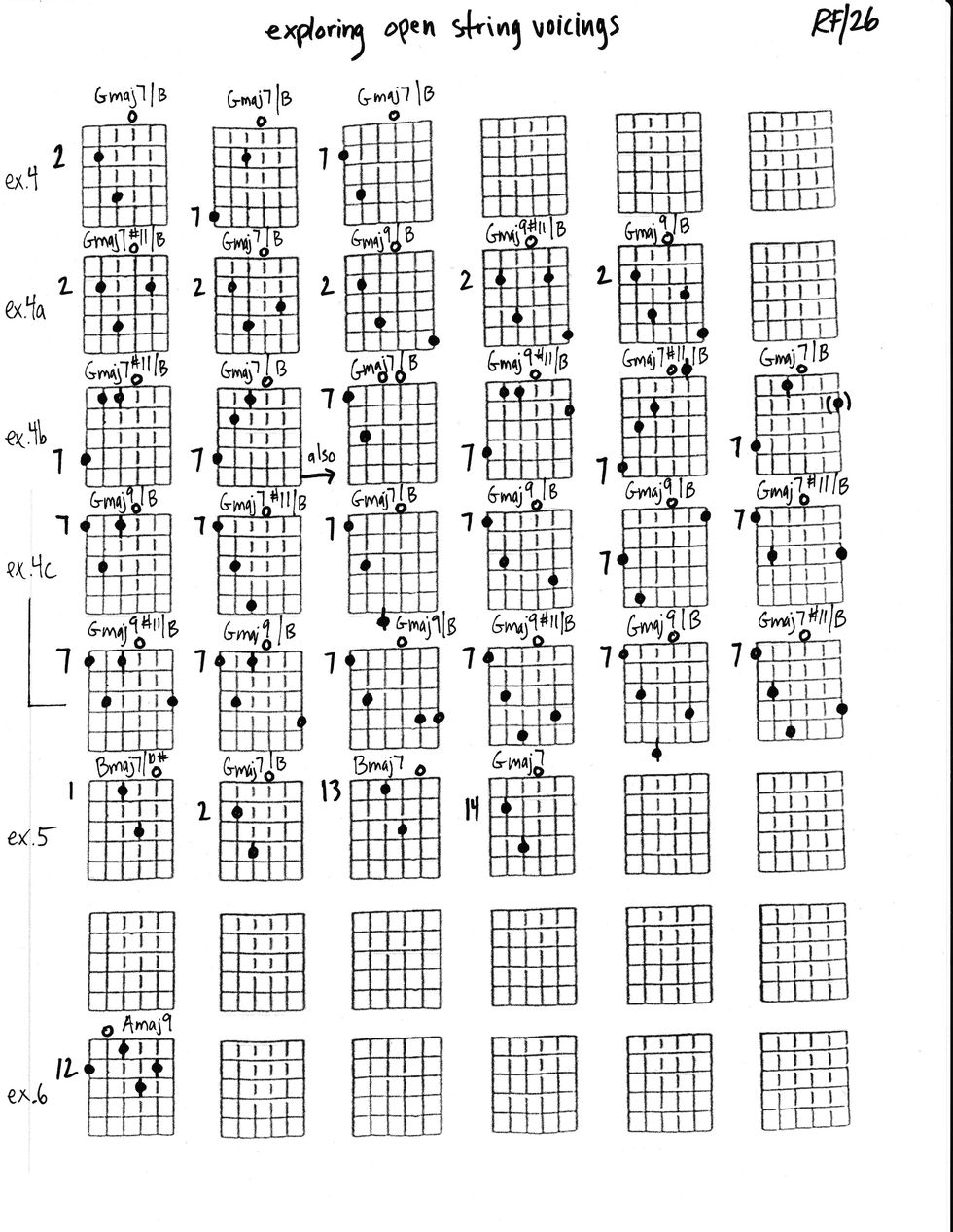
Similar to Ex. 3, these are the possibilities for B, F#, and open G—shapes to build from as we explore these zones.
Ex. 4a gives us a usable range of F# or G in the low end up to an A (the 9th) on the high E string.
The zone for Ex.4b offers the possibility of adding a note on the 5th string, since the B and F# are on non-adjacent strings. The second voicing also might look familiar as a Bm triad (on the bottom three strings), and the third voicing also allows us to play that same voicing, but with two open strings.
Ex.4c gives us access to the highest range—reaching up to a high D on some of the voicings here.
Eventually, as I kept exploring, I came across the two chords from Ex. 1 by moving Ex. 3a up an octave and adding the 9th, which gives us Ex. 5. An important idea with this voicing is that with the fretted notes in the lower octave, an open string would create an interval of a half-step, but by moving the fretted notes up an octave, that same open string would then create an interval of a major seventh.
Ex. 6 (Eric Johnson’s “Wes chord”...)
I hope you found something interesting here, or maybe are able to come away with a new voicing you haven’t seen or thought of before. I always try to remember that it’s not so much about how many voicings one knows—it seems more about knowing one or two that you can really use and that can become part of your playing.
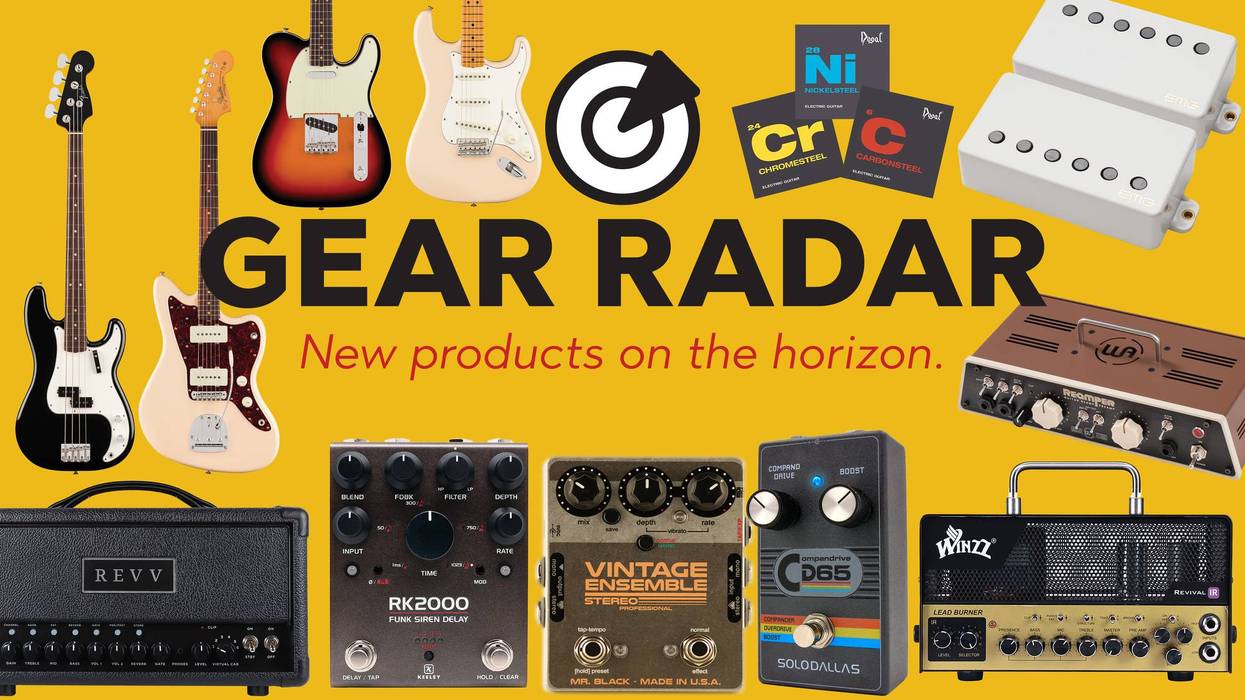
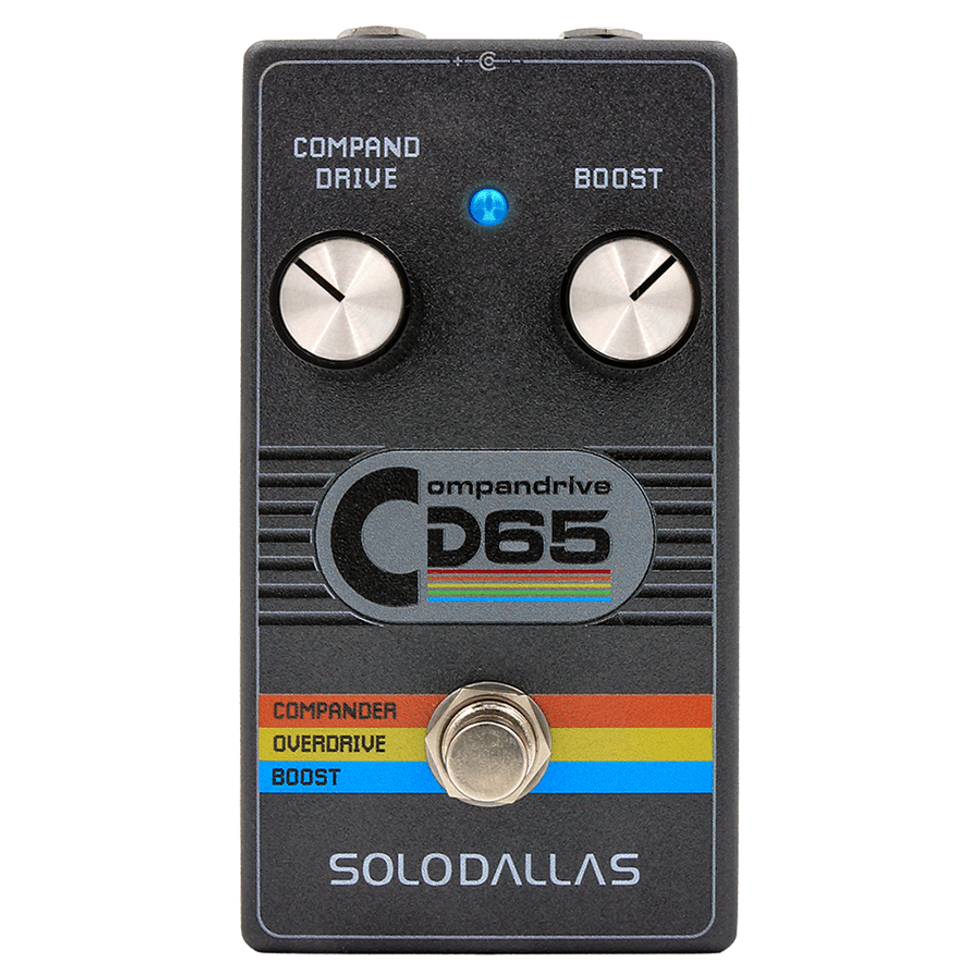
From the studio-secret compression of the SoloDallas Compandrive CD65 to the "Funk Siren" ambient loops of the Keeley RK2000, this month’s Gear Radar is packed with innovative tone-shapers.
EMG Pickups
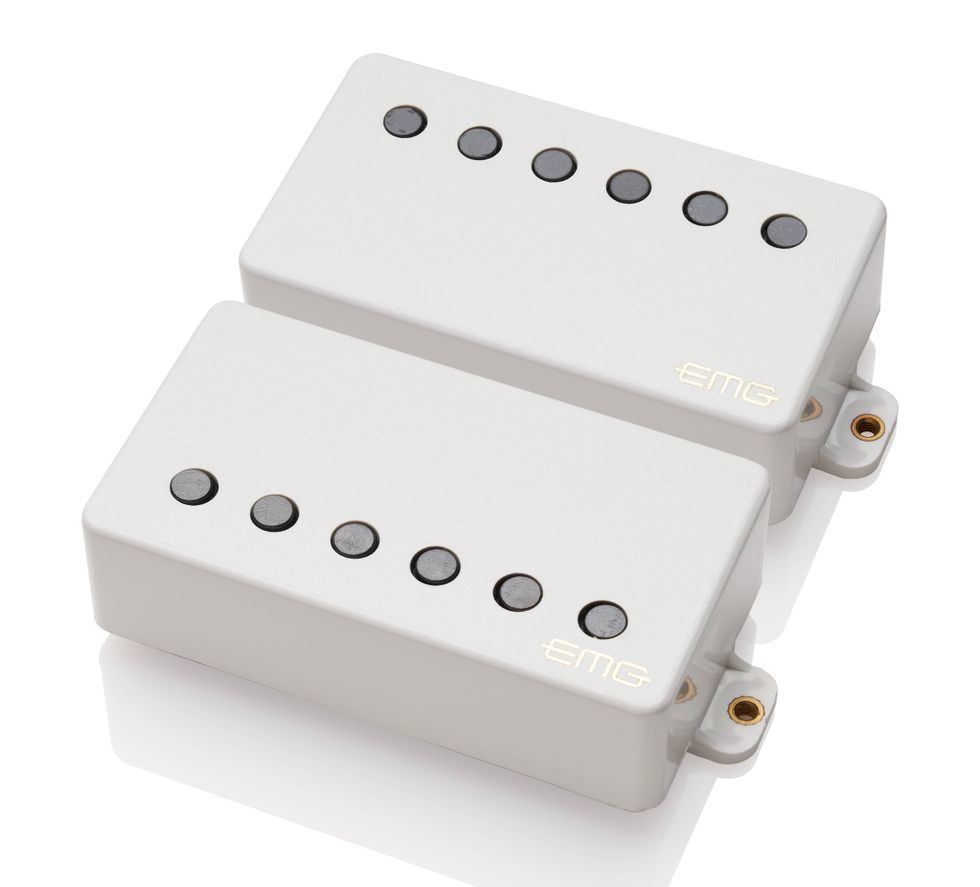
Richie Faulkner RF "Falcons" Set
Richie Faulkner's signature RF Falcons Set was designed with versatility in mind and features a clean, high-headroom design for a truly expressive tone at any level of gain, giving the player the benefits of active pickups with an organic passive feel.
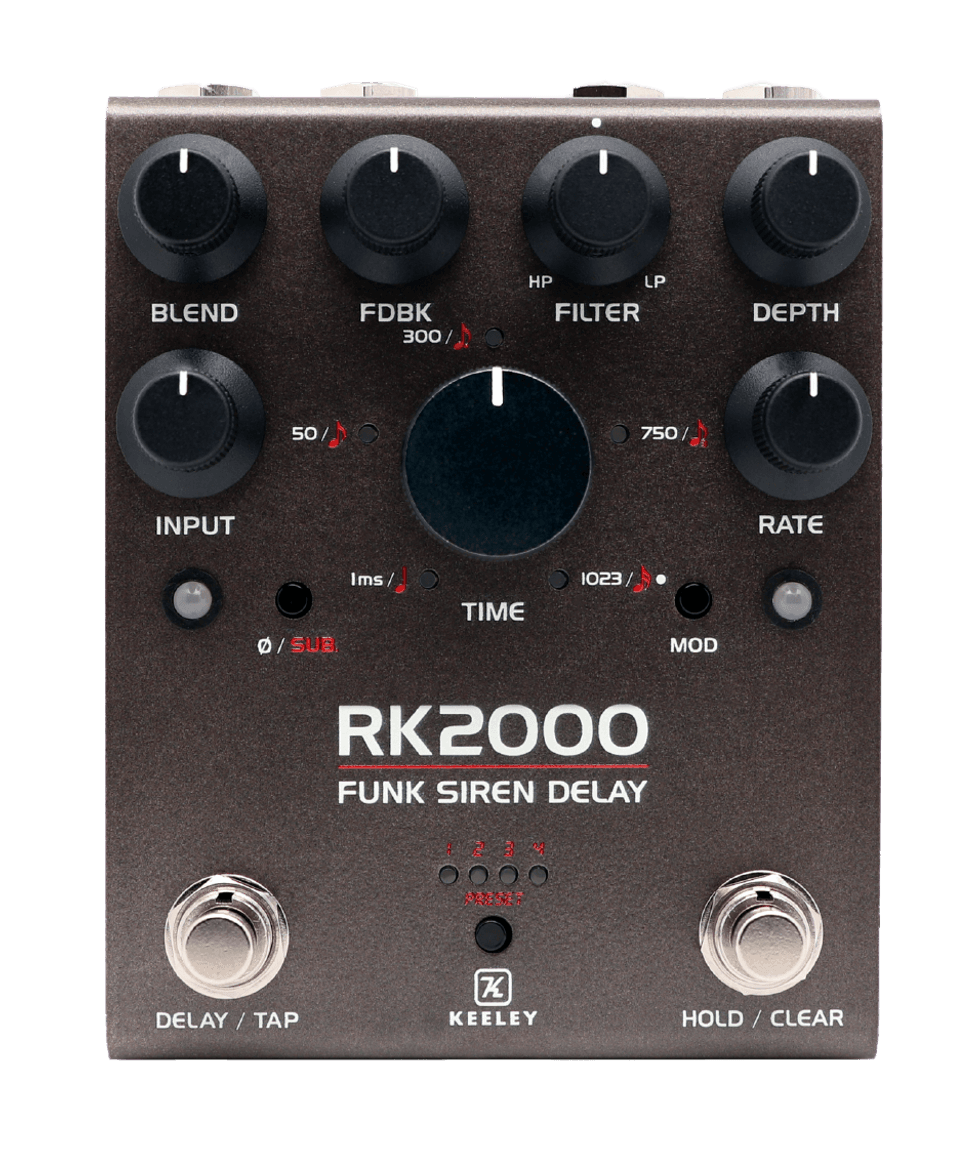
The Keeley RK2000 Funk Siren Delay recreates the legendary DM2000 rackmount unit made famous by Trey Anastasio's iconic "Funk Siren" ambient loops. It delivers dramatic tape-reel-style modulation with signature Hold and Mod switching, instant preset recall, expression pedal control, ping-pong pitch-shifted delays, full MIDI integration, and remote switching — all built and designed in Oklahoma, USA.
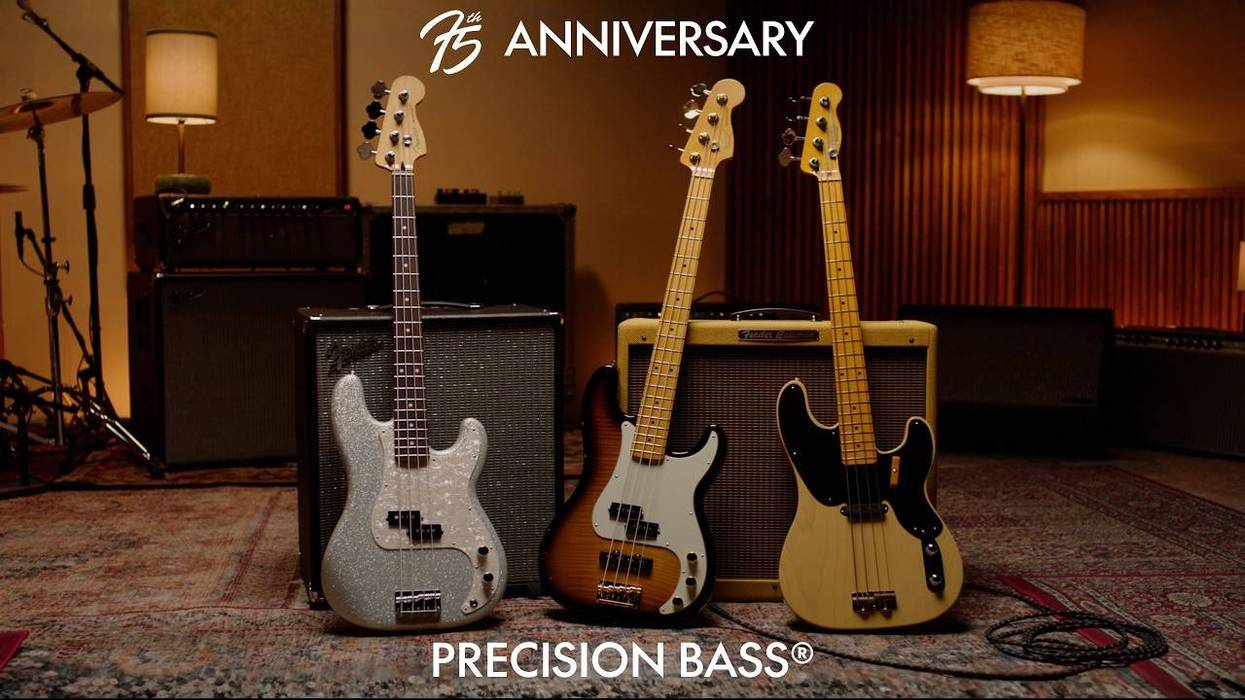
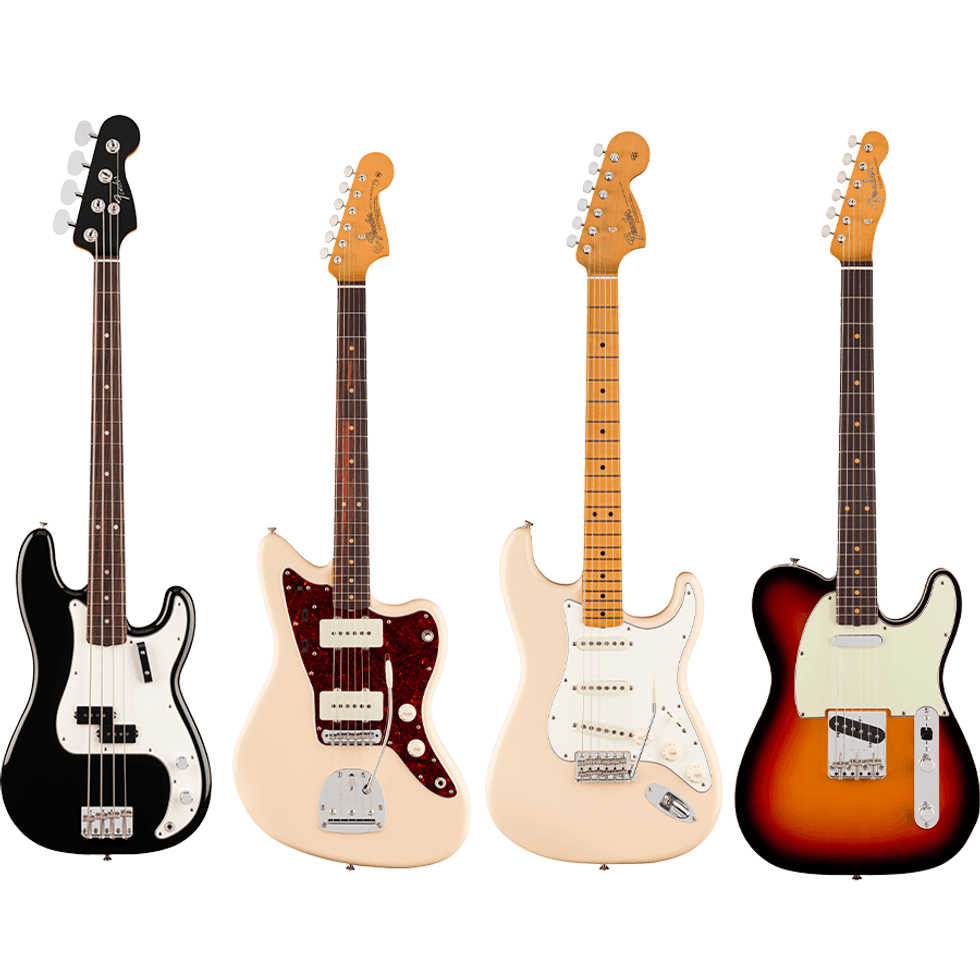
The Fender Vintera III Series takes a "greatest hits" approach to vintage accuracy, focusing on the most iconic specifications from Fender's golden eras. Each instrument features era-correct pickups — including Alnico II and Alnico V designs — faithfully recreated period-specific neck profiles, and authentic headstocks, decals, fingerboard inlays, and finishes across a lineup spanning Stratocasters, Telecasters, Jazzmasters, Jaguars, Mustangs, and basses.
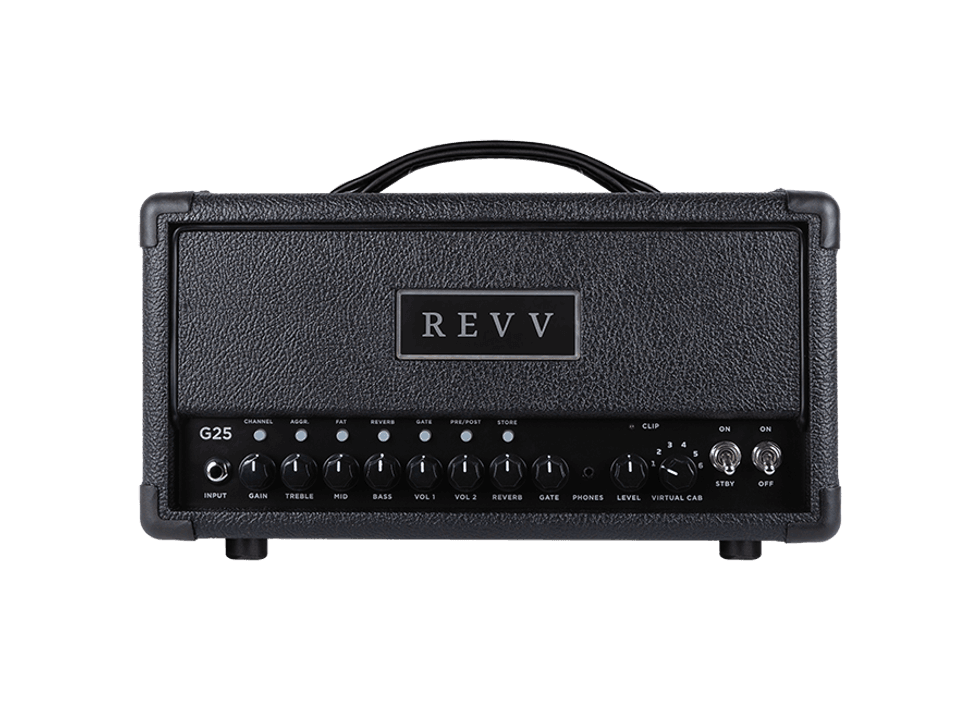
The G25 is a compact, stage-ready amplifier built on the Generator platform, delivering everything from sparkling cleans to extremely tight high-gain tones in a highly portable format. With 25 watts of output, larger transformers, a built-in noise gate and reverb, separate master volume controls, and a 4-button programmable footswitch, the G25 puts total control at your feet. A built-in reactive load with IR loading powered by Two Notes Audio Engineering makes silent practice, recording, and direct-to-FOH setups effortless.
The CompanDrive 65 is the greatest effect rediscovery of the decade and your missing link to studio guitar tones! SoloDallas combined the Dolby NR compander heard on countless albums with a low-mid overdrive and an LM308 boost to place this complex studio process into a compact pedal.
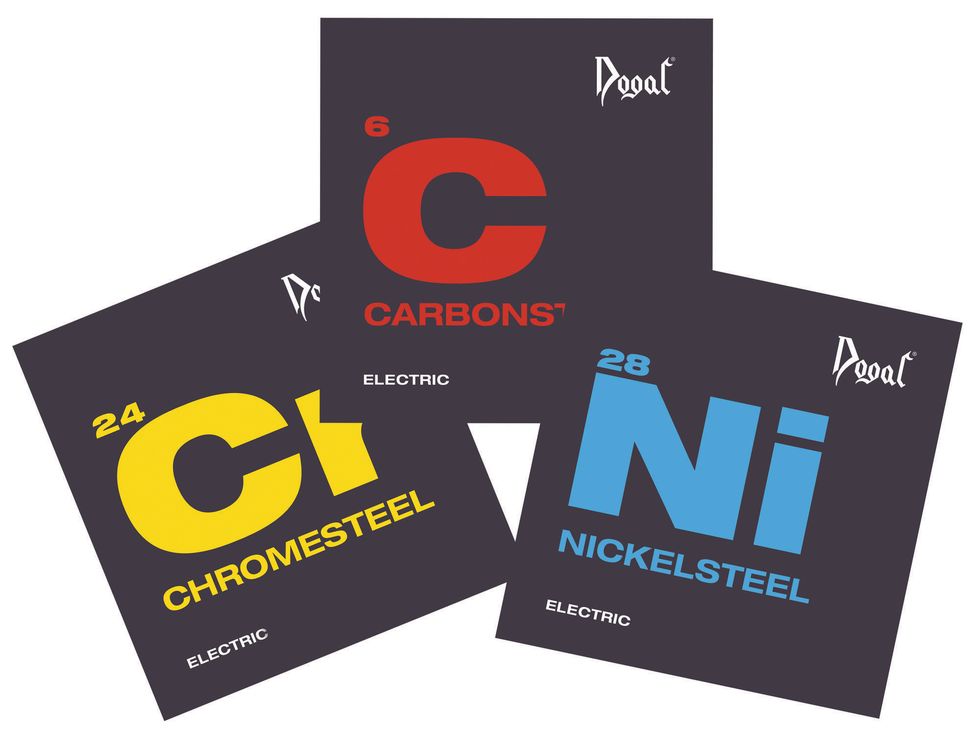
Dogal Nickelsteel, Carbonsteel, and Chromesteel sets
Matteo Mancuso chooses Dogal Strings “I play Dogal strings, handmade from Italy, in Venice, they are incredible strings, with them I find my self……." Dogal handmade strings use extra high content of top quality alloys, for ease of playing, exquisite sound and durability. Available at Strings By Mail
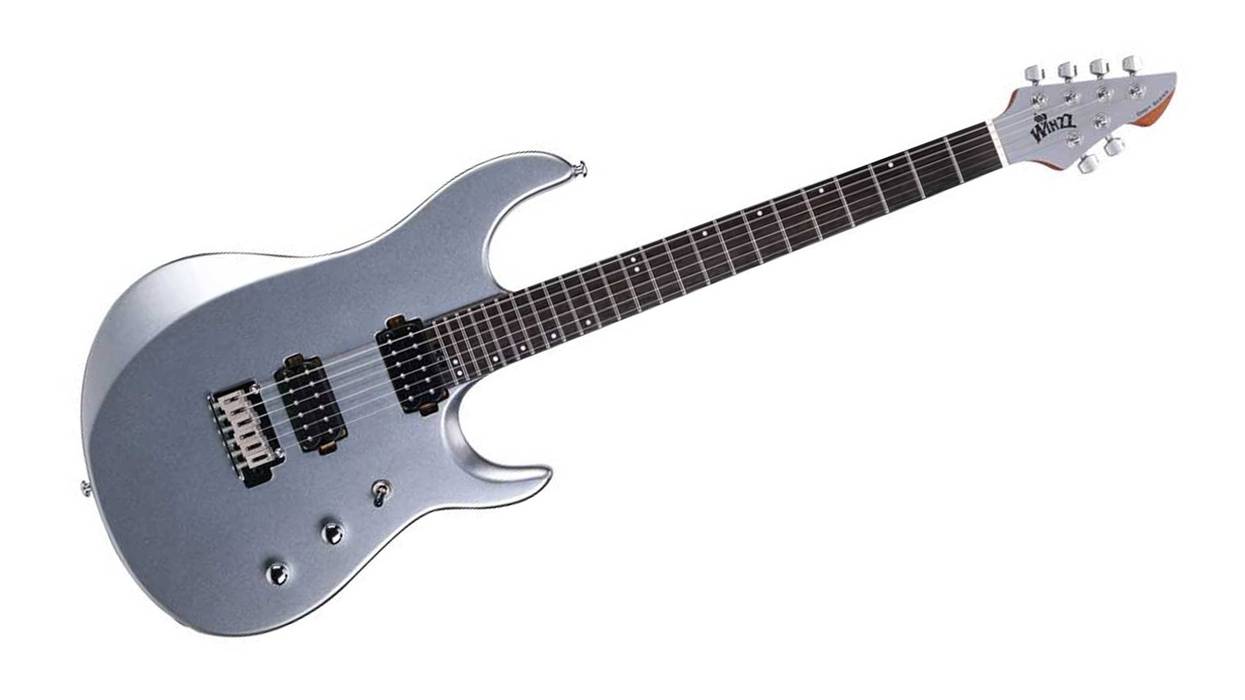
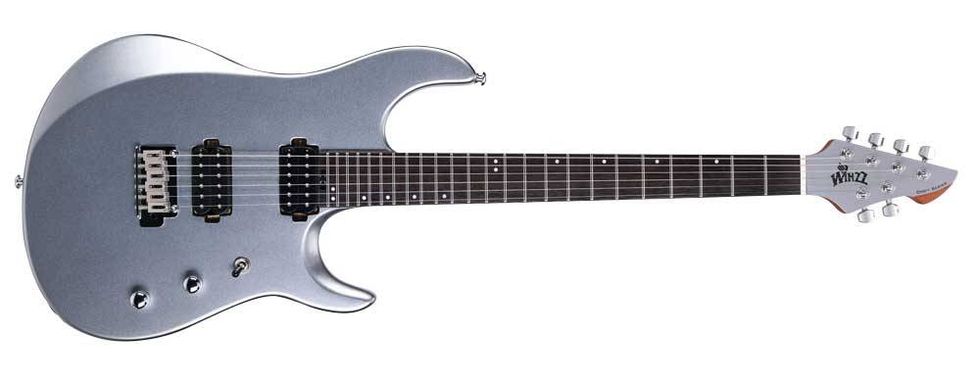
Winzz Guitars has officially launched the WOS 100-24 Electric Guitar, the premier model in their new Orbit Series. Designed for players who demand speed, precision, and power, the WOS 100-24 delivers a new level of modern performance. The new instrument is available to guitarist exclusively factory direct.
The WOS 100-24 is built with a lightweight and resonant alder body using a unique offset shape. The body is finished in gloss polyester, and binding is featured on the Silver Sunburst and Pearl white color options. The guitar uses a 5-bolt construction to join the roasted Canadian maple "glider neck" to the body for maximum stability and finished in a satin polyester for comfort. An ergonomic neck-body joint with an asymmetric heel design ensures easy access up top. The C-D shape neck has a 25.5" (647.7mm) scale length and is paired with a 12” to 16” compound radius fingerboard to provide a smooth and fast playing feel. The neck also features 24 medium jumbo stainless-steel frets, a synthetic bone nut measuring 41.3mm/1.63" in width, and dot position inlays paired with Luminlay side dots for easy navigation in low light settings.
Equipped to deliver a versatile array of tones, the WOS 100-24 features custom Alnico V humbucker pickups in both the bridge and neck positions. These dual humbuckers provide everything from crystal clear cleans to tight, high-gain aggression. Players can shape their sound using a master volume, a master tone, and a 3-way toggle pickup selector. Furthermore, a push/pull pot on the tone control allows for coil splitting, unlocking an extended range of expressive freedom.
The hardware appointments on the WOS 100-24 are performance designed for stability and reliability, featuring a 2-point tremolo with black, steel block saddles. The instrument's iconic headstock features a 10-degree angle to maximize tone and uses 4+2 locking tuners. The hardware finish is available in black or chrome. Adjusting the action is easy via the adjustable truss rod without needing to remove the strings or components. The WOS 100-24 is available in four finishes: Gray Sparkle, Cosmic black, Silver Sunburst, and Pearl white.
For more information and to purchase the Orbit Series WOS 100-24, please visit www.winzzguitars.com.
The renowned songwriter of the popular hitmaker duo Hall & Oates chops it up with host John Bohlinger about developing and nurturing his songcraft skills, how he scored his beloved 1958 Strat, he reflects on how production methods changed over his career, discusses balancing commercial success with artistic authenticity, and of course, the Johns share a pair of jams.