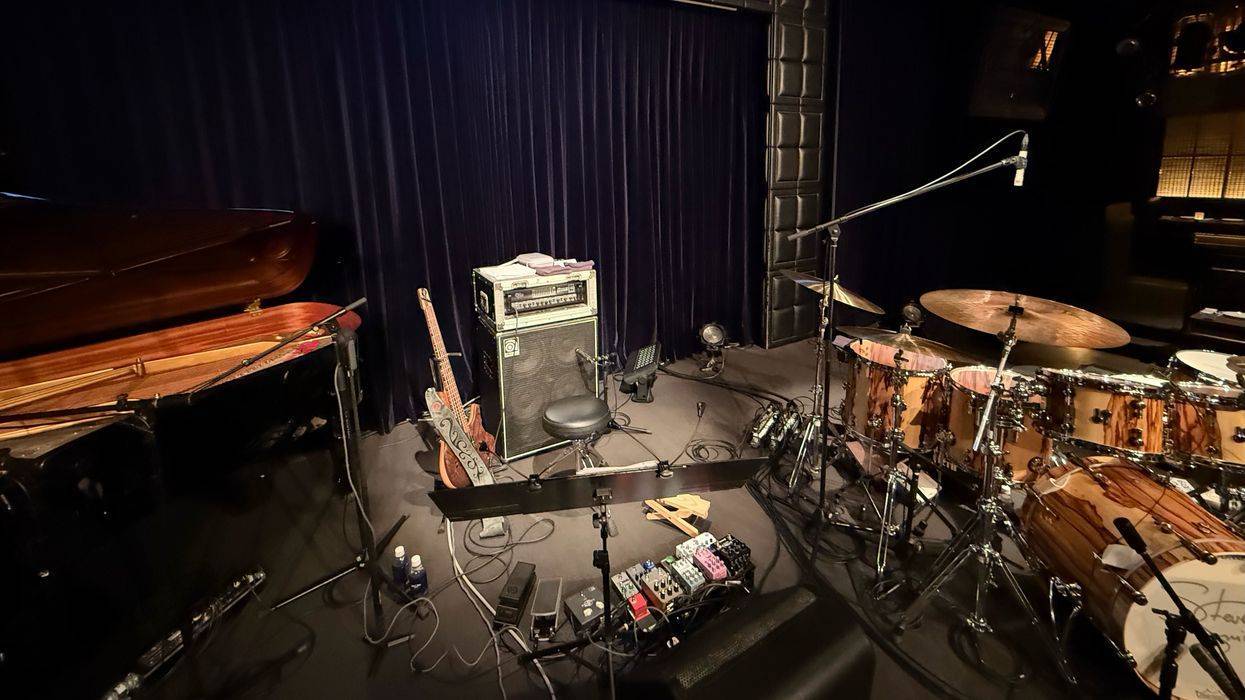

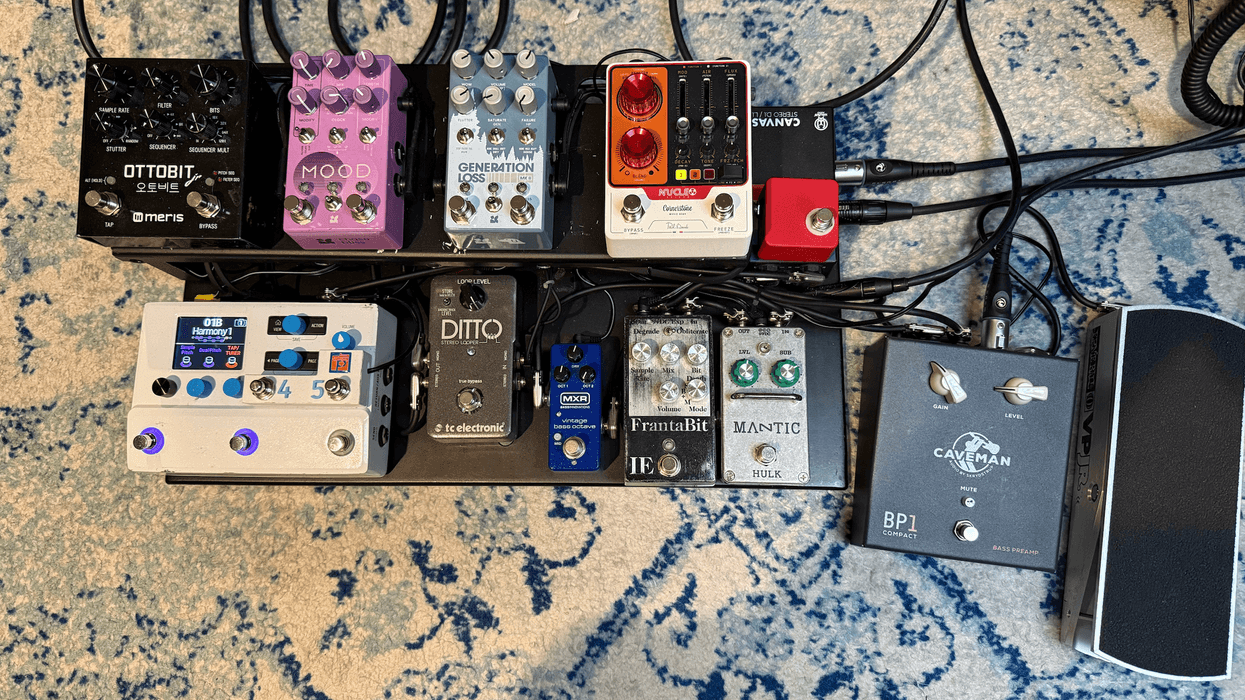

After three decades of owning, borrowing, returning, and exchanging every kind of pedal known to the world of bass and guitar, I think I’m finally getting somewhere with something I wish I hadn’t ignored for so long.
I have always struggled with the balance of sound on my pedalboard, generally running everything in series and basically rolling the dice on my clean tone every time I build a new board. There are only a handful of times over the past five or six years where I’ve thought to myself, “Wow! When I switch off all the pedals, I still sound like me.” It wasn’t until I started playing a passive bass, running my board in stereo, and really caring about having the option of a pristine clean sound whenever I wanted it that light bulbs started coming on in terms of preamps, parallel loop paths, and buffering.
I’m not here to shill gear. I just like making cool sounds with cool pedals. Some were sent to me by the makers, some were purchased, and some were gifted by friends. I only talk about specific brands and models to help you understand exactly what I’m doing, and how you might go about creating a similar sound if you so desire.
“I have always struggled with the balance of sound on my pedalboard.”
In fact, let’s start out with my most recent revelation in the world of parallel loop paths, with a unit that I paid full price for from GigRig. It’s the Wetter Box, and it facilitated taking two of my most beloved (but absolute pain-in-the-arse-to-control) pedals in series—the Meris Ottobit Jr. and the Chase Bliss Mood MkII. It gave me incredible control over not only both of those pedals individually, but my clean tone as it passes through that section of the chain. Suddenly, I have the option to have total chaos one second, and a heavenly, natural sound of the bass the next.
I should add that the reason for my newfound excitement over pedals that don’t actually make any sound is that I’m no longer at the mercy of the wide spectrum of true-bypass and buffer claims made by so many companies—which in reality range from almost acceptable to totally unusable, and suck all the life out of your tone.
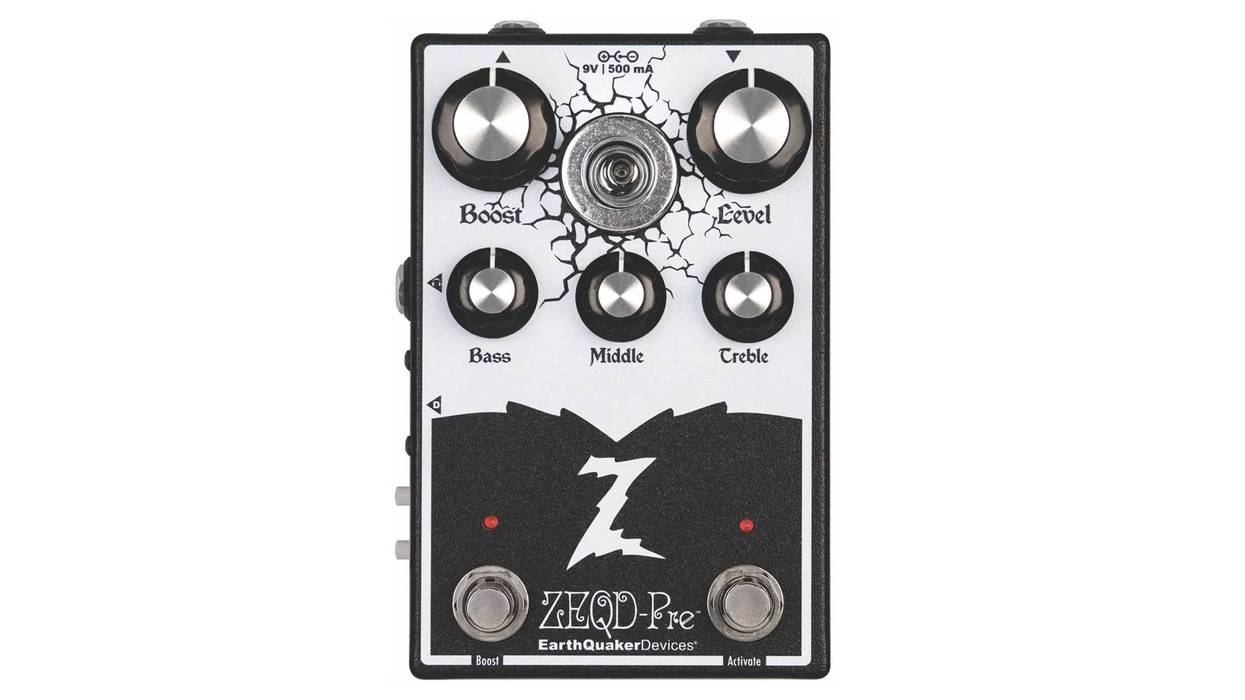
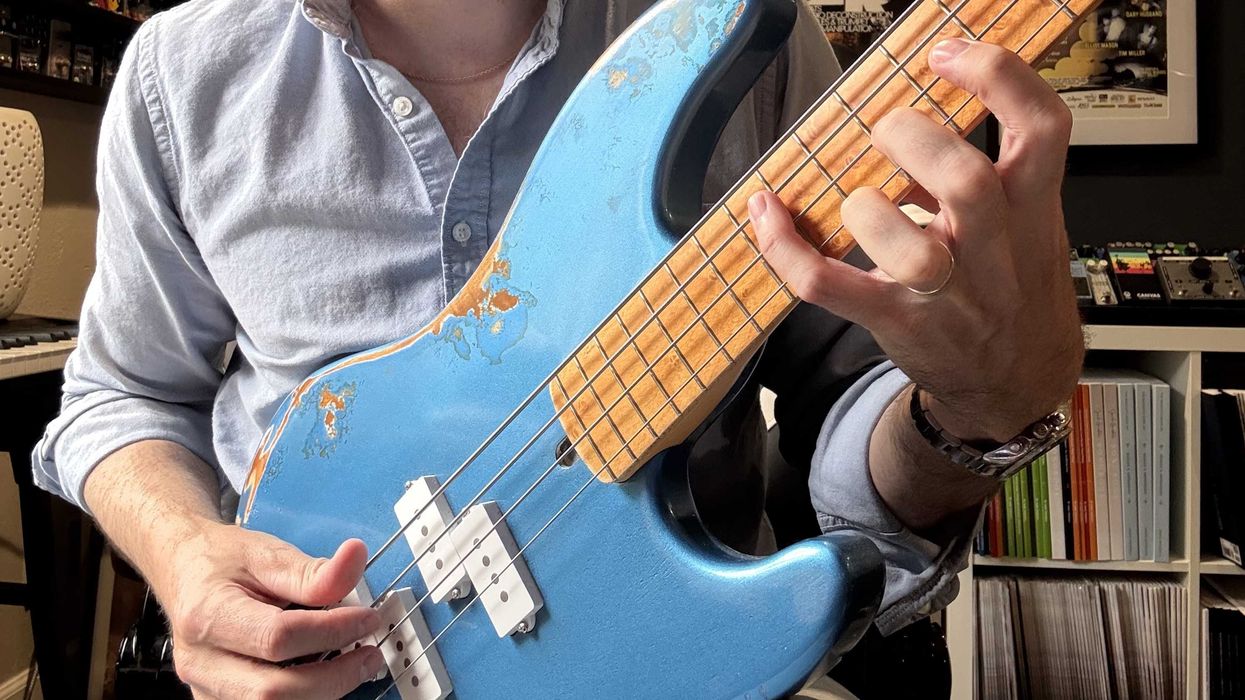
With the recent shift to a passive bass as my main instrument, I’ve been trying a ton of different preamps and EQs at the front of the signal chain. The main reason for this is that it’s nice to have some EQ control when a room you’re performing in doesn’t play nice with your sound. The Colour Box V2 from JHS was incredible on tour last year, and the EQ saved my bacon several times in challenging venues.
I switched to the Caveman Audio BP-1 Compact this month for a tour with Mike Stern, and even without the EQ options of the Colour Box, it was still incredible to have control over the preamp and the output stages of my clean sound.
We then come to something I’ve seen on amps, multi-effects units, and preamps for years and have totally ignored—the effects loop! What was I thinking? I threw the three mono pedals on my board (Mantic Hulk, Iron Ether Frantabit, and MXR Vintage Bass Octave) into the effects loop of the BP-1 Compact and, once again, shortened the signal chain and improved my clean tone when those pedals weren’t engaged.
I know a lot of you reading this are going to be facepalming and saying, “Duh!” But if you're like me—someone who made it this far into a career without figuring this out—or if you're just starting and don't know what you don't know yet, this might help.
Go out and research buffers. Take a look at loop switchers from people like Morningstar or GigRig. And while you’re going nuts, like I have for so many years, over the incredible sounds pedals can bring to your playing, spare a few minutes’ thought for your clean tone. Even someone like me, who's fortunate enough to play a lot of shows and actually use all that weird gear you see me demo on YouTube, still needs a great clean tone most of the time.
The preamp/DI at the front of my signal chain is perfect for recording, and the Walrus Audio Canvas Stereo DI at the end is ideal for sending everything to FOH at shows. Now I can take both concepts anywhere and always have the option to be completely myself, with no compromise on effects or clean tone.