Premier Guitar features affiliate links to help support our content. We may earn a commission on any affiliated purchases.
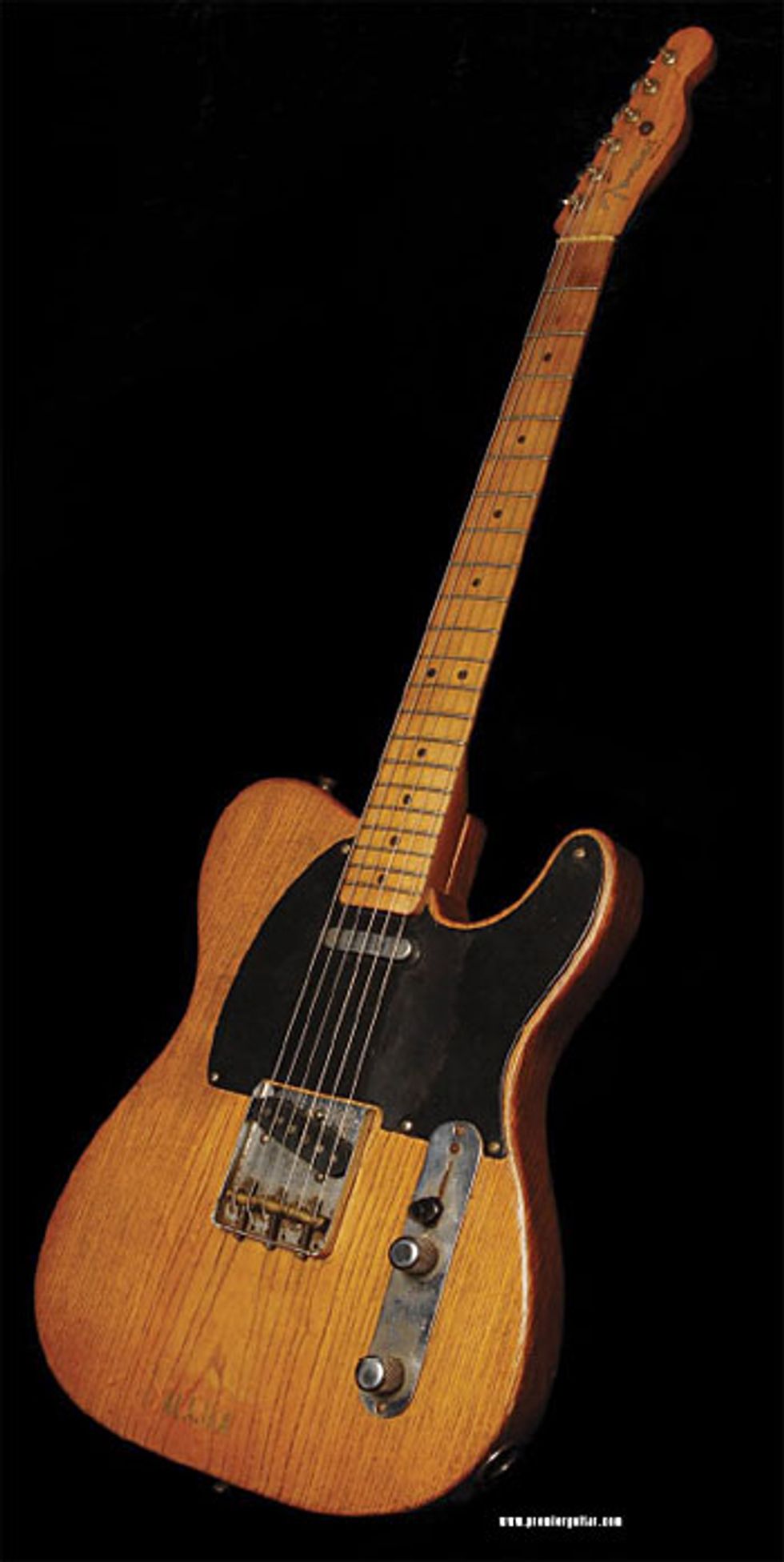
1950 Fender Broadcaster #0099
This gorgeous guitar comes compliments of Johnny Edwards at Coffin Case, and is numbered #0099. This was found in an Alaskan attic, and had one prior owner.
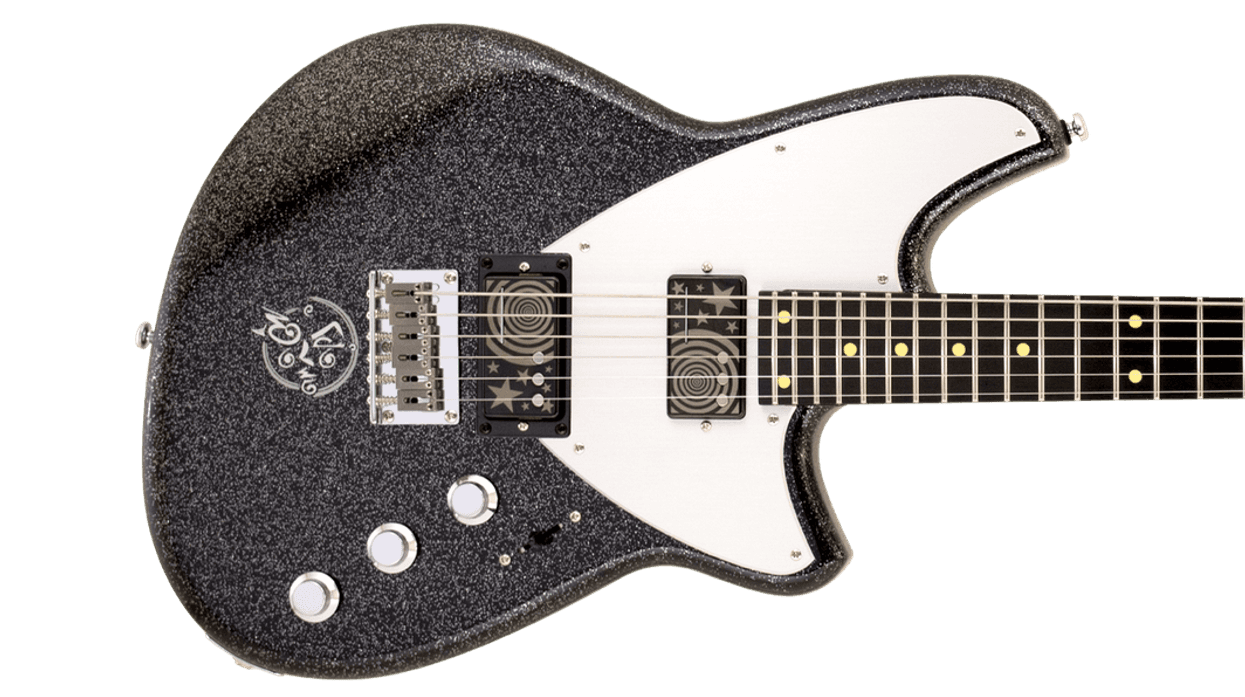
The body of Gary Kibler’s Phoenix Telecaster is from a 2016 Tele made in Mexico, but he added a Fender Classic Series ’60s Telecaster neck and a Fender Pure Vintage ’51 Telecaster pickup set. It’s the Khokhloma Russian folk-art style painting by Kibler’s mother-in-law that makes the guitar so distinctive, as well as a nod to Led Zeppelin-era Jimmy Page.
The Phoenix began life as a 2016 Mexico-made FenderTelecaster. But the real inspiration for the guitar came from Jimmy Page’s legendary Dragon Telecaster—the gift from Jeff Beck that Page played in the Yardbirds, on Led Zeppelin’s 1969 debut, and for the solo on “Stairway to Heaven,” among many other moments. I built this guitar a few years before Fender issued their own tribute model, so I knew I’d have to create my own version from the ground up.
I’d always been fascinated by the Dragon and its storied history. And after watching the band’s 1969 television appearances on Supershow and Danmarks Radio (collected on Led Zeppelin DVD) with Page wielding his psychedelic Tele through blazing renditions of “Communication Breakdown” and “Dazed and Confused,” I knew that’s what I wanted my number-one Telecaster to look like. At the time, I owned five different Telecasters, but none had that visual impact. None were truly personal.
“I approached my Russian mother-in-law, who has an art background, with an unconventional request: Could she paint something in the traditional Khokhloma Russian folk-art style?”
Given my performing outlet at the time, there was a certain irony to desiring Page’s Telecaster. Here I was, playing in a busy Bay Area cover band focused primarily on r&b, country, and pop covers, yet dreaming of a guitar that screamed psychedelic rock rebellion.
But rather than copying Page’s design, I wanted a twist on the dragon theme. So, I approached my Russian mother-in-law, who has an art background, with an unconventional request: Could she paint something in the traditional Khokhloma Russian folk-art style? And instead of Page’s psychedelic dragon, she painted a fiery Phoenix in brilliant reds, golds, and blacks—the signature colors of Khokhloma decorative painting. At the time, I didn’t realize how apt a depiction of the “rising from the ashes” fable would be for this guitar. Early Telecasters like Page’s, after all, were crafted from ash lumber. The symbolism was too perfect to be intentional.
To complete the transformation, I fitted the Phoenix with a Fender Classic Series ’60s Telecaster neck and Fender Pure Vintage ’51 Telecaster pickup set, giving it a vintage look and voice. The result is a unique confluence of old-world Russian and mid-century American design. It also honors an important moment in rock history, while celebrating my wife and Russian in-laws’ rich cultural heritage. Every time I pick it up, it reminds me that the best guitars aren't just instruments, they’re stories— connections between past and present, between different worlds and traditions, all speaking the universal language of music.
Adding to the company’s diverse array of acoustic instruments, Flight has introduced multiple new ukulele models to their product line.
Leading the way is the Aviator, a new slim ukulele model available in tenor and baritone sizes. The instrument features a solid mango top with solid okoume back and sides, producing a warm, resonant sound with notable sustain. Its slim body profile is designed for comfortable playability while still providing the projection expected from a full-bodied instrument.
The Aviator includes a rosewood fretboard, bone nut and saddle, and a gloss-finished black headstock. Its construction emphasizes clean lines, natural materials, and balanced ergonomics, supported by the tonal qualities of mango and okoume. Each model comes with Flight’s Deluxe Gig Bag in royal burgundy.
The tenor version is factory-strung with a Low-G setup to extend its lower range, while the baritone provides a deeper register suited for players who prefer a broader tonal spectrum. Together, these models bring well-crafted additions to Flight’s solid-wood lineup.
The Flight Aviator Tenor Mango Ukulele carries a US street price of $379. The Flight Aviator Baritone Mango Ukulele carries a US street price of $416.
Flight has added two new solid top additions to the Princess Series with its first-ever Calantas models: the Iris Calantas Concert and Iris Calantas Tenor. Each ukulele features a solid calantas top paired with laminate mahogany back and sides, introducing a warm, balanced new tone to the Iris family while offering an affordable solid-top option for players looking for great value.
Calantas is a Southeast Asian hardwood known for its smooth response and distinctive natural grain, adding both character and clarity to these instruments. The familiar Iris appointments remain: slotted headstock, offset front markers, white binding, thin rosette, and fluorocarbon strings. Every model includes a padded gig bag, instructional booklet, and Flight sticker pack.
The concert offers a clear, focused sound, while the tenor adds depth and projection, together marking an elegant new chapter for the Iris lineup.
The Flight Iris Calantas Concert carries a $179 US street price and the Flight Iris Calantas Tenor carries a $189 US street price.
Flight has also expanded its Princess Series with the Iris Tinta, an all-solid mahogany model available in concert and tenor sizes, offering players an affordable way to enjoy the richness of an all-solid build. The line adds a striking stained gloss finish in four colors: Natural, Transparent Black, Transparent Blue, and Transparent Purple. Each shade brings out the wood grain differently, offering players a choice that ranges from classic to bold.
The Iris Tinta features a slotted headstock, rear-facing tuners, offset position markers, fluorocarbon strings, and a padded gig bag. Its solid mahogany build delivers a warm, balanced tone suited to many musical styles, while the glossy stained finish and colorful rosette give the instrument a fresh, fun look.
With these new models, Flight offers bright, colorful options for players who want an all-solid mahogany ukulele with an eye-catching, modern finish.
The Flight Iris Tinta Concert carries a US street price of $219 and the Flight Iris Tinta Tenor carries a US street price of $229.
For more information about the Flight ukulele line visit flightmusic.com.
Our columnist with his preset designs for KIT Plugins’ BB A5 and BB N105.
In the modern DAW world, every plugin comes with a buffet of presets promising instant results: “Vocal Gold.” “Drum Bus Glue.” “Radio-Ready Mix.” The implication is that these settings are the magic sauce separating amateurs from professionals. Just load the preset, and you’re done. Right?
Not quite.
Presets can be powerful tools, but only if you understand what they really are: starting points, not finish lines.
I’ve spent years inside some of the best studios in the world, working with world-class players, gear, and engineers, and I’ve seen how subtle context drives every EQ, compressor, and fader move. That experience shapes how I approach presets—and how I think they should be used.
Designing Presets with KIT Plugins
I’ve had the privilege of working closely with the team at KIT Plugins almost since their beginning—as an early beta tester and collaborator on nearly every product they’ve released. When they asked me to design some of the included presets for the BB A5 (a modern interpretation of a 96-channel Legacy API console, $199 Street) and the BB N105 (modeled after Blackbird Studio’s world-famous Neve 8078 console - $99 Street), I felt genuinely honored.
I’d spent years recording and mixing through those very consoles and EQs at Blackbird, and now I had the chance to help translate that analog DNA into the digital world.
When creating my presets, I didn’t approach them as “ready-made sounds.” Instead, I thought of them as guides—compass points that could help an engineer or musician quickly find a tonal direction. Each one reflects a real-world scenario from my own sessions: a slightly edgy vocal that needed midrange presence, a bass guitar fighting for space in a dense mix, a snare that needed to punch through without losing body.
Every preset I made came from that practical place. My goal was to share a bit of the process—how I think about frequency balance, gain staging, and energy within a mix—not to hand anyone a “paint-by-numbers” result. That distinction matters.
The “Preset Mismatch”
Imagine: you open a plugin, scroll through the options, find something like “Vocal Gold,” and think, “Perfect, that’s exactly what I need.” You load it—and suddenly your vocal sounds worse.
What happened?
Every preset, whether it’s mine or someone else’s, was born in a very specific context. Maybe the original source was a male singer with a soft top end and a ragged low midrange. Maybe he was singing into a vintage Neumann U67 through a Neve 1105 preamp, hitting a “Blue Stripe” 1176, inside a mix stacked with distorted guitars and busy drums.
But if you’re recording a lo-fi shoegaze female vocal with an SM57 in a bathroom through an Apollo X2, that same EQ curve will likely make your singer sound potentially worse. (Or will it?)
“Every preset, whether it’s mine or someone else’s, was born in a very specific context.”
The preset didn’t “fail”—it just wasn’t meant for your signal chain.
There are layers of invisible context behind every EQ decision: the performer, the instrument, the mic, the preamp, the compressor, the room, the genre, and the emotional target of the mix. When you remove a preset from that ecosystem, you have to re-interpret it. Otherwise, you’re comparing apples to lava lamps.
How to Use Presets the Right Way
Presets are at their best when you treat them as teachers. Here are four ways to get the most out of them:
Start, Don’t Stop Load a preset, listen, and then move a few knobs. Ask yourself why it sounds the way it does. Does it bring clarity, weight, excitement? Or does it tilt things too far? You’ll learn more by adjusting than by accepting.
Reverse-Engineer the Intent Solo each band or section. If it’s an EQ, sweep the frequencies. If it’s a compressor, change the attack and release. Try to imagine the sound that inspired those moves. That’s how you train your ear.
Ignore the Labels “Vocal Gold” might be perfect on a snare drum. “Drum Bus Glue” might breathe life into an acoustic guitar. Don’t let the category box you in. Think in terms of function, not title.
Trust Your Ears Over Everything No preset designer, even the most experienced one, can hear what you’re hearing in your room with your monitors. The final call always belongs to your ears.
The Value of Presets
When I sit down to make presets, I’m not trying to predict your sound—I’m trying to invite you into the process. A well-made preset can accelerate learning, spark curiosity, and remind you that every mix decision has a reason behind it.
They’re saying, “Here’s how I started; now make it yours.” Used that way, presets become more than convenience—they become education. They let you peek over the shoulder of another engineer for a second and understand why a particular setting works.
So, the next time you load one of my KIT Plugins presets, don’t treat it like a rulebook. Twist the knobs, push it too far, pull it back, and most of all, listen. Because presets aren’t prescriptions—they’re invitations.
Shnobel Tone has introduced the latest addition to its line of premium guitar effects: the new Dumbbell Boost offers a Dumble® BBC-1 circuit in a compact two knob pedal.
Available in either black or white finishes, it’s a dead-simple way to fine-tune your tone, add some grind and help your guitar stand out in the mix.
The Dumbbell Boost’s Input knob controls the input impedance and impacts your tone and grit. When turned fully to the left (counterclockwise) it gives you a brighter, less bassy sound. Turned all the way to the right (clockwise) you’ll get a full range sound with rich harmonics and Dumble® like tones. The pedal’s Level knob controls the pedal’s overall output volume.
Hand soldered with the best through hole components for maximum tone and reliability. Shnobel Tone’s Dumbbell Boost includes these features:
Simple two-knob control set: Input and Level
True-bypass on/off footswitch
Top mounted power and in / out jacks for easier pedalboard placement
Available in Black or White finish
Hand-built in the USA with through-hole components
Standard 9v center negative power – no battery compartment
Shnobel Tone’s Dumbbell Boost carries a street price of $179 and can be purchased at shnobeltone.com.
“Smoking in the Boys Room” is a collaborative two-in-one distortion and chorus pedal created by Summer School Electronics and Supercool Pedals – A cross-border team-up that delivers unmistakably 90’s grunge tones with a refreshed modern bite and artful design.
Smoking In the Boys Room artfully fuses a Summer School Electronics DS-1-inspired distortion – complete with classic buzzsaw edge and a modernized mid-range snarl – with Supercool Pedals’ organic and watery Small Clone-style analog chorus. This tribute to the legendary Seattle Grunge pioneers Nirvana is unmistakable and loving, summoning classic tones but delivering original spins on sound and circuit to bring this iconic sound into the 21st century.
Smashed into a single thoughtfully designed enclosure (with art that is SATURATED with deep 90’s and Nirvana lore), each effect can be run independently or simultaneously for a classic cacophony of flannelled saturation, with an all-important external order switch to determine the effect chain sequence.
Each pedal offers the following features:
Buzzsaw distortion tones with a revamped easy to use tone circuit.
Watery chorus with adjustable rate and depth.
Internal order swap accessible by an external toggle switch.
Nostalgic and 90’s-rich art and design (with full colour manual, printed fabric bags, and plenty of box candy).
Hand-built across borders by two independent builders: Summer School Electronics (Syracuse, NY) and Supercool Pedals (Peterborough, ON).
True mechanical bypass on both circuits (no more BOSS buffer woes).