Premier Guitar features affiliate links to help support our content. We may earn a commission on any affiliated purchases.
Stories From Seymour Duncan - Clapton's "Blackie"
Seymour Duncan shares his experience of working on "Blackie" and how different tolerance potentiometers change a guitar's tone.
For more information:
Seymour Duncan
Rebecca Dirks graduated from the University of Iowa with degrees in journalism and art, and joined Premier Guitar as an intern in 2007. She lives in the Iowa City area with her husband, two giant dogs, and more cats than are appropriate to mention. When not petsitting, she enjoys challenging herself in the kitchen, watching the Packers dominate, and discovering new music or rediscovering old favorites.
“When in doubt, don’t.” It’s a pearl of wisdom that offends risk takers and guides more than a few tortoises to the finish line ahead of the rabbits. But in the tone-chasing world this dictum carries extra weight, because depending on your aims, anything you situate between guitar and amplifier can subtract as much as it adds. Indeed, a little restraint can go a long way toward sweetening a sound.
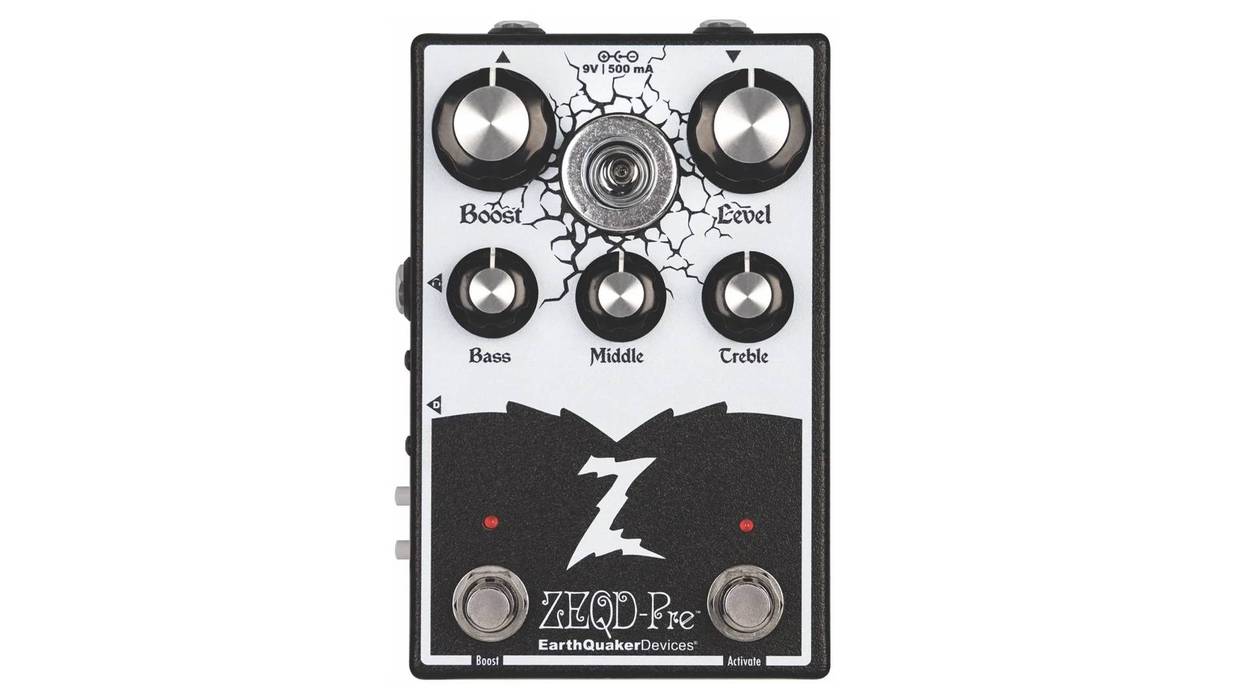
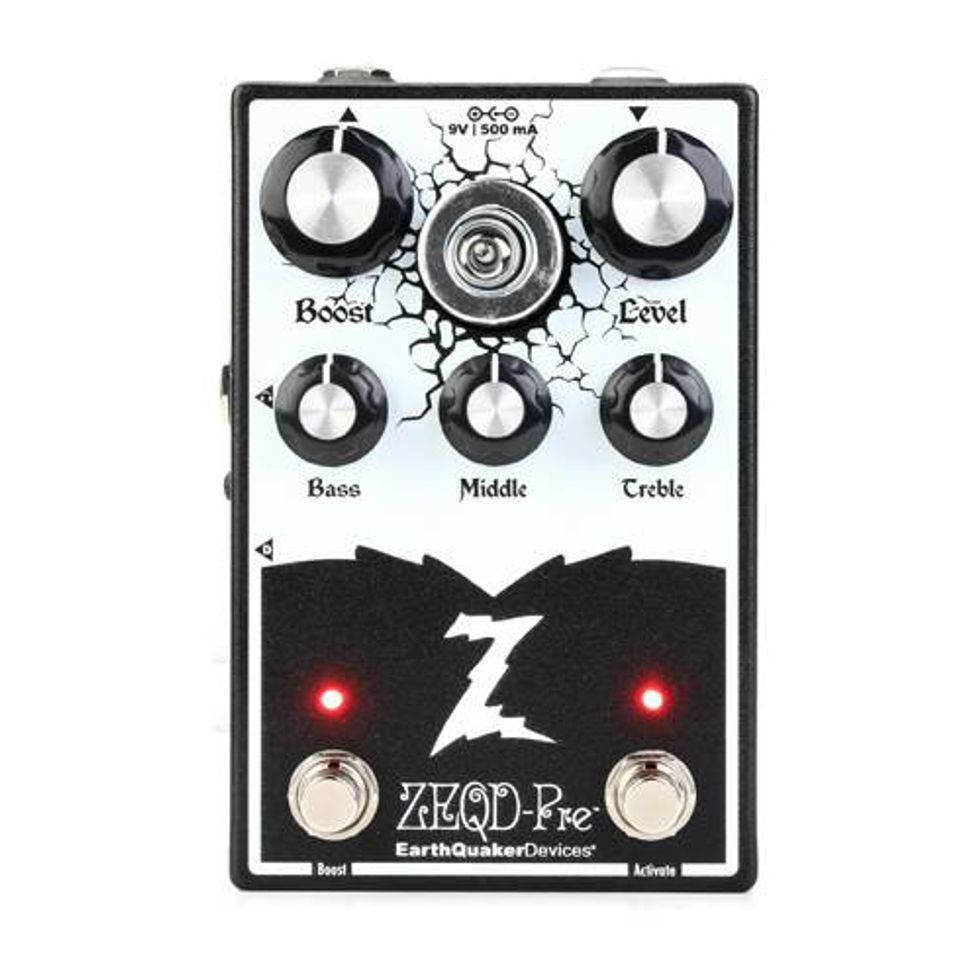
And restraint is one of the things that makes the ZEQD-Pre, a preamp co-designed by EarthQuaker and Mike Zaite (aka Dr. Z), such an elegant piece of kit. The things they didn’t add make it easier to use. The streamlined design also makes the ZEQD-Pre feel truly additive. It can lend body and excitement to big tube amps that sound flat at low volume. And as an analog addition to digital signal chains, it adds real life and a tactile dimension to flat, drab, or spiky DAW and modeler tones.
Feel Free With The Help Of A Pre
Though the ZEQD-Pre is a beautifully integrated whole, it’s effectively made up of two sections. There’s a passive EQ that can do a lot on its own to recast or fine tune the sound of a tube amp or modeler. It also features a boost. Switching on the boost disengages the EQ. But both sections use the level control as an output volume control.
In my first experiments with the ZEQD-Pre, I situated it in front of a 50-watt Fender Bassman and 2x12 cabinet. And though I suspect more potential customers will be interested in the EarthQuaker’s potential in digital environments, it can transform conventional tube amplifiers. I rarely get to turn my Bassman up much past 2 in my house. But the ZEQD-Pre’s EQ section made those modest volumes sound much fuller. The boost is not a high-gain affair, but it adds weight and excites overtones that might otherwise lay dormant at low volume. At higher amp volumes it can add a just-right nudge into the dirty zone that almost always sounds silky rather than harsh.
EarthQuaker Devices ZEQD-Pre Preamp Demo
“It is zingy, responsive, and does much to take away the uncanny valley sense of lifelessness you can feel when interacting with a modeler.”
Use of the EF86 in a preamp is not common—at least relative to the ubiquitous 12AX7. But Dr. Z’s choice of the EF86 for the boost is an inspired one. It is zingy, responsive, and does much to take away the uncanny valley sense of lifelessness you can feel when interacting with a modeler. Those that know the EF86 by its too-hot-to-tame reputation needn’t fear that it will be a handful though. The ZEQD-Pre boost voice is balanced and lively in all the right ways, and these attributes are especially apparent when the pedal is paired with a digital end destination.
When testing the ZEQD-Pre in this capacity—by running a cable from the headphone output straight into the Hi-Z input of my Universal Apollo Twin—I did not make it easy on the EarthQuaker. My main instruments are Jaguars and Jazzmasters, and the relatively thin and trebly output from both of them rarely flatters modeled and DI sounds. But I really liked the tones that I tracked with just the ZEQD-Pre and the DAW—especially without a modeled amp in the mix. The EQ adds body and tone-shaping versatility, and the boost lends real character and color, inhabiting a sweet space that is neither Fender Princeton nor Vox AC15, but which possess some of the smooth richness of the former and the sparkle of the latter. I enjoyed the sound of the ZEQD-Pre direct into the Apollo so much that it ceased to feel like a compromise between amp and modeler. Instead, it felt like something unique—an amp with its own very appealing flavor that I would use for its sonic virtues as much as its convenience.
The Verdict
Though I’ll opt for a tube amp in almost any situation where there is a choice, I’ve warmed to some of our faux-amp friends in the digital domain. That said, I think I would choose the ZEQD-Pre and my pedals over almost any modeler. In direct-to-DAW situations, the ZEQD-Pre is warm, alive, and sounds, well, a lot like a real amp. It also feels like it was designed by people that know how a tube amp should feel under the fingers and in a room.
The ZEQD-Pre makes distortion and fuzz units sound like their real selves. And even without a simulated power amp, the cab sim makes rigs sound great through flat response monitors. The ZEQD is nearly $400, and for most of us, that’s a hefty enough sum to give pause. But the U.S.-made ZEQD-Pre is designed by gifted builders that have poked around the innards of amps and stompboxes for years and built classics in their respective fields. So, you can rest assured that the bars this pedal needed to clear in sonic and quality terms are high ones. I was pleasantly surprised and impressed—to the point where $399 seemed a very reasonable price to pay. And if you’re a tube amp loyalist navigating the worlds of backline-free gigging and digital recording, you may end up similarly smitten.
The tweedDeluxe circuit sets the gold standard in tone for many of us. And for good reason. It’s simple and responsive, with a warm, compressed, midrange-forward voice that’s perfect for jazz and country lines at low to moderate volumes—and a distinctive, saturated gnarliness in the upper reaches of its output that’s hard to beat for rock. If that’s the sound you hear in your head, many would say a vintage model is still the one to have.
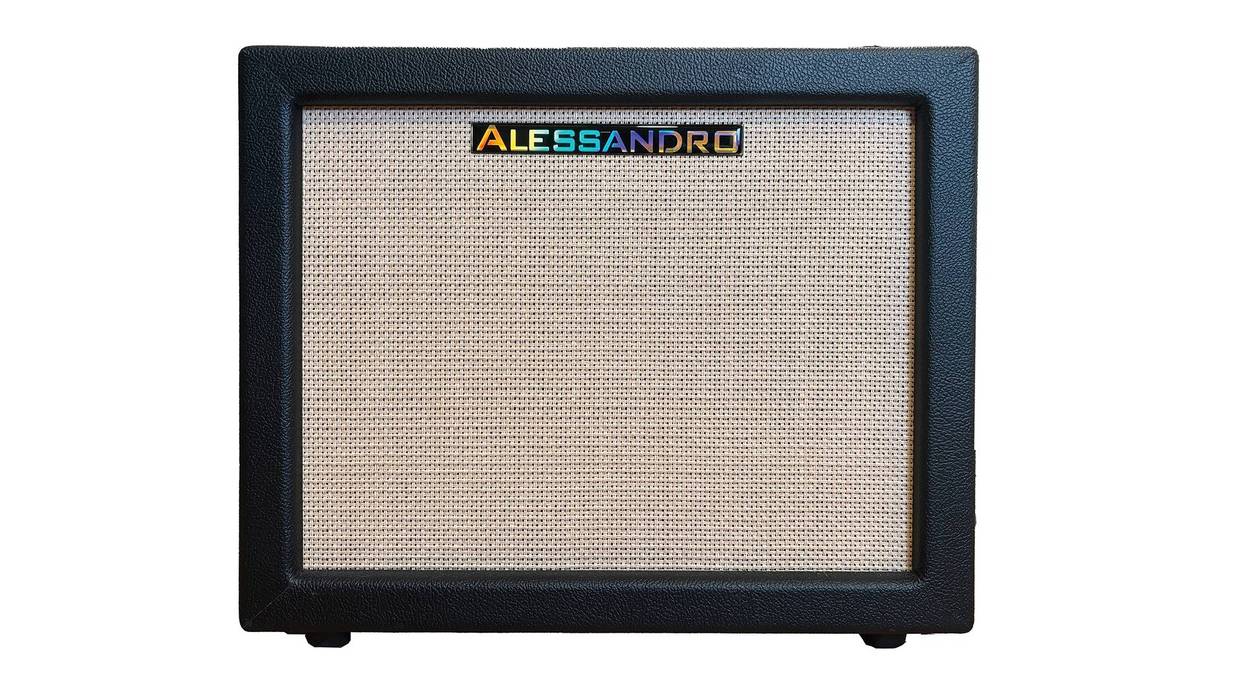
If anyone could top that with a true “tweed killer,” I’d put my money on George Alessandro. That’s not just because his clientele reads like a Mount Rushmore of guitar tone—David Gilmour, Derek Trucks, and Warren Haynes are just a few who’ve cited Alessandro in current gear lists in PG. It’s the combination of his deep firsthand knowledge of the history of guitar amp circuits and his tireless quest to source the finest components that not only land him those rock-star devotees, but easily place his name among mythical amp wizards like Alexander Dumble and Ken Fisher, and make him the guy for the job.
I’ve had the good fortune to play one of Alessandro’s 5E3 copies, and it was so familiar, it felt like what I imagine one of those amps must have sounded like fresh out of the factory in the late ’50s. With his new combo, The Dane, he’s used that circuit as a jumping off point—with a nod toward Dumble as well—and optimized it for a modern pedal-using player. Not only does the 14-watt The Dane deliver the same sonic hallmarks as the 5E3, it offers more headroom and an even wider range of touch-sensitive response.
Do the Evolution
Despite all the tweed Deluxe talk, the Dane is no clone. Instead, it’s inspired by the 5E3 circuit and a Dumble Tweedle Dee—that legendary amp builder’s own tweed Deluxe mod—that landed on Alessandro’s bench for service. From there, Alessandro evolved the design, creating a unique preamp circuit, which uses a pair of ECC83MG/12AX7s. On the user end, the most recognizable change might be the inclusion of a 3-band EQ. Alessandro paired his preamp with a ’50s-style output section that employs a pair of 6V6s. Together, and in conjunction with Alessandro’s signature Eminence GA-SC59, they evoke a vintage vibe, achieving the tube compression and harmonic complexity tweed Deluxe players know well, but with more clean volume.
As a tweed Deluxe player who also loves pedals, I’ve often found myself a little bit conflicted. There’s a weird imaginary line I feel like I cross every time I plug a fuzz—or even worse, a digital pedal—into my 1949 5A3. But if I want to use my prized amp on as many gigs as I do, it’s a necessity. With The Dane, not only is there no conflict, it actually feels more welcoming to pedals. That’s not just about headroom, though that certainly helps—the 3-band EQ really goes the distance when it comes to shaping your sound.
Much like the dynamic interplay between the tone and volume controls on a vintage Deluxe, each of The Dane’s EQ controls seems to shape the whole of the sound. I found this to be especially helpful with dialing in dirt tones. Over the course of a few sessions with The Dane, I plugged in a wide range of gritty pedals, including a Klon KTR, Analog Man King of Tone, EHX Ripped Speaker (there’s some comedy here in using a fuzz that’s supposed to sound a little broken), and an Analog Man Sun Fuzz. In each, I found that I was able to shape their tones with the EQ more than I would ever expect from other amps. And that goes for using those to push The Dane into overdrive as well, which, as ruthlessly delightful as it is to do on a tweed Deluxe, is not especially sculpt-able. With the KTR adding some gain and heading into cranked volume territory, the mid control alone added a heft to my Creston JM-style that felt resolutely heavy and thick—much more so than I would expect from JM-style pickups. And at more polite volumes, I could use the pedal alone to get my overdrive, while still preserving the character and voice of the amp.
Full Control at Your Fingertips
While reviewing The Dane, there’s a quote that kept coming back to me from when I interviewed Alessandro a few years ago: “If I can make it a limitless journey, then I did my job right.” With The Dane, he’s managed to take the tweed Deluxe sound and remove the limits.
I think there are a lot of ways Alessandro gets there, and one of those is through his next-level component sourcing. With the fervor of a hi-fi aficionado, Alessandro has most of his components custom built, with quality control that goes well beyond the consumer-grade level.
The result is that The Dane, like every Alessandro amp I’ve played, responds like a performance sports car: It runs silently, has an ultra wide dynamic range, a broad frequency range, and is fast and articulate, all of which keeps control in the player’s hands. That might be daunting if you’re used to an amp that heavily colors your phrasing by limiting the window of control (though pedals can help with that). But if you want to keep that window wide open, The Dane will get you there.
What, exactly, does that mean? The response, dynamics, and EQ keep the controls in your hands. Playing intensity and attack have more noticeable results. Sustain is there when you need it. In short, The Dane is a thrill to play.
The Verdict
As a devoted tweed Deluxe user, I’m genuinely taken by The Dane. Alessandro has preserved the character of the original while opening it up with more dynamic range, control, and possibility. But it goes beyond that, because The Dane isn’t just a 5E3-style amp—it’s a solution. Whether you’re playing clean articulate lines (I didn’t have an archtop handy, but I can assure you this amp would be the perfect transparent companion for jazz hits) or cranking with abandon, The Dane has the harmonic range and firepower for the gig. Its 14 watts are not only bold and powerful, this combo maintains its composure through its entire output, making it fully usable at all levels. At $3,000, The Dane, handmade by one of the ultimate legends of amp building, is an unrivaled feat.
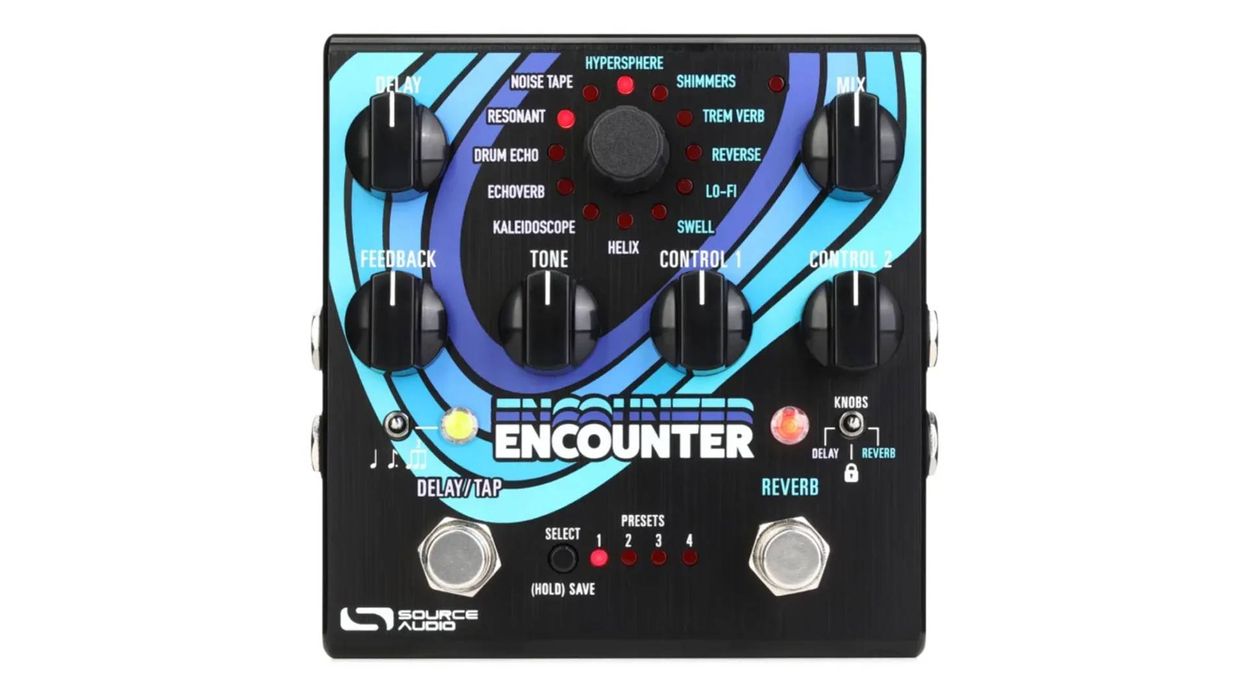
Reverb and delay. What two effects are better suited to live side-by-side in one pedal? Source Audio’s new Encounter reverb and delay is a mirror image of the company’s Collider, which explores the reverb/delay combo via a vintage lens. The mirror by which Encounter reflects the Collider, however, is more like the funhouse variety. There are many psychedelic, cosmic, and wildly refracted echoes to utilize in the Encounter. There are lots of practical ones that can be tuned to subtle ends, too. But Encounter’s realm-of-the-extra-real extras make it a companion for players that ply dreamy musical seas. It’s incredibly fun, a great spark for creativity, and, most certainly, a place to lose oneself.
Exponentially Unfolding
Of Encounter’s six reverb modes and six delay modes, four of them—the hypersphere, shimmers, and trem verb reverbs, and the kaleidoscope delay—are entirely new. Hypersphere, fundamentally, makes reverberations more particulate. Source Audio says it’s a reverb without direct reflections. In their most naked state, these reverberations can still sound a touch angular and perhaps not quite as ghostly and fluid as “no direct reflections” suggests. But they are still complex, appealing, immersive sounds. Odd reverberation clusters can conjure a confused sense of space and highlight different overtones and frequency peaks in random ways. At settings where you can hear this level of detail, hypersphere shines, particularly in spacious solo phrases. Hypersphere also features phase rate and pitch modulation depth functions via the control 1 and control 2 knobs, and they can further accent and enhance those frequency peaks, creating intoxicating, deep fractal reflection systems.
“Blends of the delay and reverb are the kind of places where you can lose track of a rainy day.”
The new trem verb mode can be practical or insane. The two effects together are a pillar of vintage electric guitar atmospherics. But the Encounter’s trem verb explodes those templates. As with the hypersphere mode, trem verb can zest simple chord melodies by using extreme effect settings at low mixes, where chaotic, half-hidden patterns dip in and out of the shadows, sometimes creating eerie counterpoint. But I loved trem verb most at extremes—mostly high mix, feedback, and decay settings with really slow modulation. Sounds here can be intense and vague—like strobe flashes piercing drifting fog. It might not be an ideal place to indulge fast, technical fretwork, but it’s a wonderland for exploring overtones, drone, and melodic possibilities.
Incidentally, the trem verb is a great match for the six delays, and the new kaleidoscope delay in particular, which fractures and scatters repeats in a million possible directions and spaces. Blends of the delay and reverb are the kind of places where you can lose track of a rainy day. The sound permutations often seem endless, and finding magic can take some attention and patience. But you can strike gold fast, too. You have to take care to save settings you really love (you can store as many as eight presets on board, and 128 total via midi) because it’s hard to resist the urge to meander through— and meditate on—hours of sound without stopping. Not all of the Encounter’s sounds are perfectly pleasing. Some combinations reveal peaky little chirps that betray digital origins—the merits of which are subjective and contextual. For the most part, though, the combined sounds are liquid and vividly complex, and can be especially enveloping at high mix and feedback.
Extended Reach
If the onboard controls don’t get you in enough trouble, downloading the Neuro 3 app, which unlocks deep control and functionality, is a minor wormhole. Take the case of trem verb—you can use Neuro 3 to change the wave shape or set up the reverb to affect the wet signal only, just the dry signal, or both of them. All of these changes open up a new system of tone caves as the sound evolves. If you’re deep in the nuance of a mix or arrangement, this functionality can be invaluable. And it’s a boon if you have nothing but time on your hands. In a state of engaged, intuitive workflow, I like to avoid these kinds of app dives. But having that much extended power on your phone or computer is impressive.
Neuro 3 extends the capability of the Encounter in other ways, too. The SoundCheck tool within Encounter is home to prerecorded loops of various instruments that you can then route through a virtual Encounter pedal. That means you can explore Encounter’s potential while stuck in a train station. It’s a real asset if you want to understand the pedal as completely as possible, and certainly a way to extract the most value from the unit’s considerable $399 price.
The Verdict
About that price. It looks steep. For most of us, it’s a significant investment. But when I consider how many sounds I found in the Encounter, how compact it is, and the possibilities that it opens up in performance and portable production (especially when you factor in the stereo ins and outs), that investment seems pretty sound. I must qualify all this by saying I was happiest with the Encounter when exploring its spaciest places—the kind of atmospheric layer where Spacemen 3, ambient producers, 1969 Pink Floyd, and slow-soul balladeers all hang. But there is room to roam for precision pickers that background radical effects, too.
Still looking to justify the cash outlay? Consider the Encounter as a portable outboard post-production and mixing asset. If you’re creating music built on big, shape-shifting ambience, it’s a cool thing to have in your bag of tricks. Different artists will mine more from the Encounter than others, so you should consider our ratings scores on a sliding scale. But as you contemplate the Encounter, be sure to factor in mystery paths that will beckon when you dive in. There’s lots of fuel for creation along most of them.
Most amp kits are Fender flavored, typically recreating historic 5F1 Champ, 5F2-A Princeton, or 5E3 Deluxe tweed-style circuits. And since an actual late-’50s Princeton, for example, costs about $3,000, at well less than a third of that price a DIY kit is an affordable alternative for any guitarist with soldering skills and the patience to follow instructions. But what if Fender isn’t exclusively the taste you’re looking for? What if Valco, Ampeg, Marshall, or modern takes on classic tones also float your rubber raft?
Enter StewMac’s mighty little Valve Factory 18 head kit, a 12-pound beast that punches above its weight class, offers a variety of classic-inspired sounds, and hints at modern boutique amp voices.
Flexible Fryer
Part of the Valve Factory 18’s versatility is due to the two preamp tube options provided in the kit: a 12AX7 or a 12AY7. But it’s mostly the result of a concise-but-flexible set of controls. On the front panel, there are volume, gain, and tone dials, but the way they shape sound depends on whether your guitar is plugged into the low- or high-input jack. The low input is the clearer of the two and hews close to Fender tweed world. But the high input offers gentle breakup that, to my ears, gets into gnarlier old amp voices. Both channels offer plenty of headroom and work well with pedals, but if your primary sources of tone color are stompboxes, the low input may be best for you. Both also benefit from a clean boost footswitch that pumps up the volume without altering the tones in play too much.
On the back, there’s an impedance switch with 4-, 8-, and 16-ohm settings, so the Valve Factory 18 can be used with most cabinets. There’s a single speaker-out jack, and on/off and standby toggles. And as its name implies, the amp delivers 18 watts, and it’s a loud 18 watts at that—fitting for today’s small-amp sweepstakes.
Brick By Brick
Confession: StewMac sent me an immaculate, pre-assembled review model rather than a kit. But I still settled into a meticulous reading of the highly detailed and lavishly illustrated instruction book. It begins with a menu of the included parts, which are metal film and metal oxide resistors, plus a single wire-wound resistor, two 1N5408 diodes, nine various capacitors, a pair of custom-built Pacific Trans transformers (power and output, naturally), wire, heat-shrink tubing, sockets and tubes (more on the tubes later), the fuse and fuse holder, the pilot lamp, screws and locknuts, input jacks, control pots, front and rear faceplates, the fully assembled footswitch for the boost, and a very solid anodized metal chassis.
Point-to-point assembly begins with the filter cap and works through the sockets on up to populating the circuit board, and so on. It’s advisable to have a digital multimeter handy to check each resistor before installation. Our test Valve Factory 18 arrived ready to go save for installing the tubes, which was easy, since this amp does not have a cabinet, so, it's merely a matter of plugging the tubes into the slots on the top of the chassis. Two JJ 6V6s live atop the amp’s crown next to the filter cap, which is also adjacent to the 18-watt power amp. I inserted the provided 12AT7 phase inverter tube and then decided whether to plug the 12AX7 or 12AY7 into the preamp slot.
Totally Tubular
Those aren't the only tubes that can be swapped in the preamp slot. The amp will function happily with 7025, 5751, 12AT7, and 12AU7 valves. But I stuck to the provided 12AX7 and 12AY7. Both performed true to their tendencies. I used the Valve Factory 18 to power a Sam Hill Custom 1x12 cab with a 50-watt Eminence Private Jack and plugged in a two-humbucker Les Paul, a PRS SE Silver Sky, a Dean electric resonator with a lipstick pickup and a piezo, and a Steinberger Spirit. In all these combinations the 12AY7 yielded a little more headroom than the 12AX7, little breakup when pushed, and a cleaner sound profile overall. That is not to say the 12AX7, my favorite of the two, lacks headroom—especially when I plugged into the low-input jack. But playing through the high-input side, the 12AX7 gave me exactly what I want from an amp: enough clean tone to stay articulate along with a gritty patina that speaks the language of rock and blues.
For me, that sound sings best with the tone between 10 and 2 o’clock and the gain between 10 and 12 o’clock which generates genuine old-school breakup. The tone control has great range. Turned hard to the left, it creates a booming, bass dominated voice; hard right, it’s bright and cutting, but never piercing. I did not find an unsatisfying sound within its scope. Dialing the gain to the top and the tone to about 8 o’clock, visions of doom rock danced in my head. With the tone at noon and higher, and the gain all the way up, I could hear the hard rock and metal applications, though the Valve Factory 18 isn’t a 5150 by any means. The volume dial simply makes things louder without significantly impacting the tone, which is ideal.
The Verdict
Short story: I dig this amp in all its sonic variations. Although the Valve Factory 18 is simple to use—and seems relatively easy to build—it is cleverly designed too. Playing it is a joy. So much so that I am disappointed that it’s not gig-ready. Without a cabinet or some cover to protect the tubes, transformers, and filter cap, it’s easily damaged. That said, the power, versatility, tonal range, and sense of accomplishment in building a point-to-point packed with character seems well worth $599.
After a devastating theft in 2021, the metal band’s guitarist rebuilt his tone empire around some life-changing loans.
Chicago post-metal band Russian Circles had to battle their way back to gear heaven. In 2021, the bulk of the band’s gear was stolen while on tour, leading to a years-long rebuild. As a result, many of the items you might’ve seen in guitarist Mike Sullivan’s Rig Rundown back in 2017 are long gone.
PG’s Chris Kies recently met up with Sullivan at the band’s Chicago practice space, where they’ve resided for nearly 20 years. Check out some highlights from Sullivan’s new, resurrected rig below.
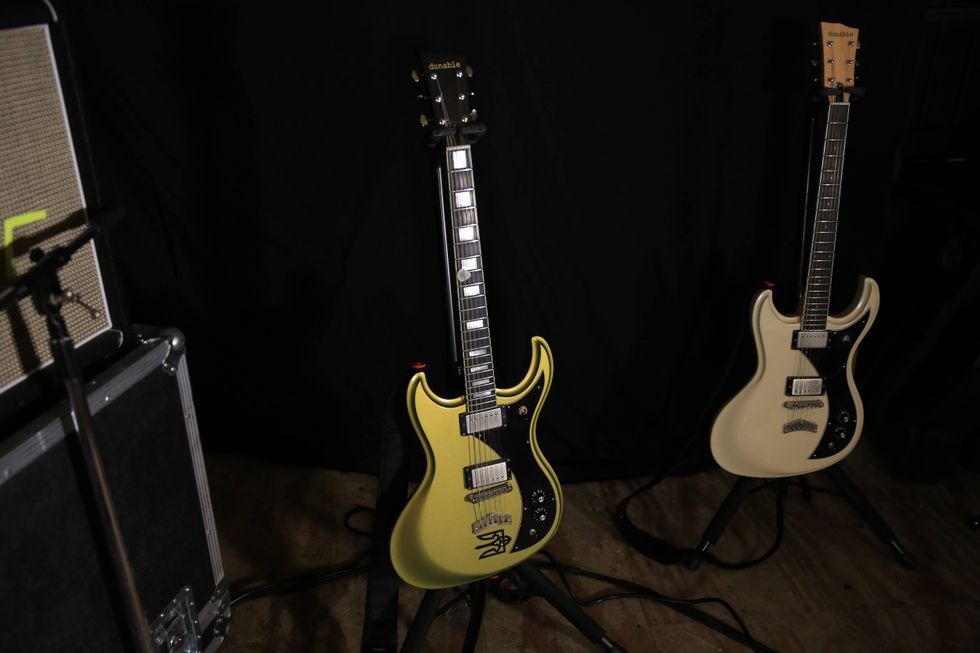
Sullivan has been favoring Dunable guitars of late, borrowing one from tourmate Chelsea Wolfe after his other guitar was nabbed. The green one is based on the Dunable Narwhal, with a more Gibson-like scale—comparable to Sullivan’s old Les Paul. This Narwhal has a mahogany body and neck, maple top, and a coil-tap function for the two humbuckers: a DiMarzio PAF 26th Anniversary and a DiMarzio Joe Duplantier Fortitude signature. Vibrating atop those pickups are D’Addario strings—a set of .011–.056, with the low E swapped for a .058. Sullivan uses a number of different down tunings, all with D-A-D-G-A-D as a starting point.
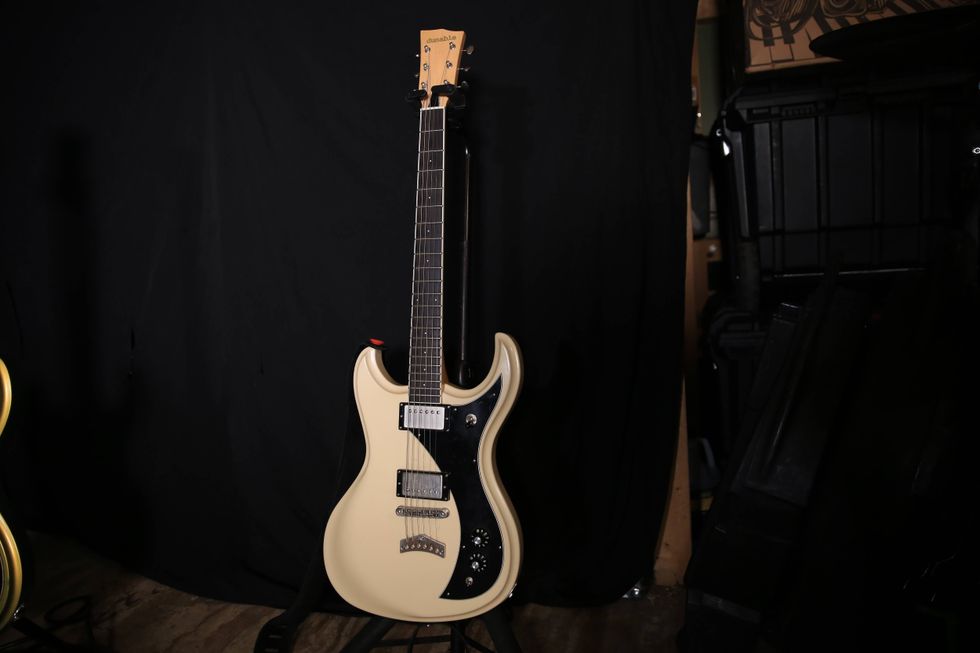
The white Dunable has a maple neck, a 25.5” scale, and is tuned lower, with a .062 for the low E string. It’s used for drop-A tunings, and has the same DiMarzio pickups.
Gettin’ Hi
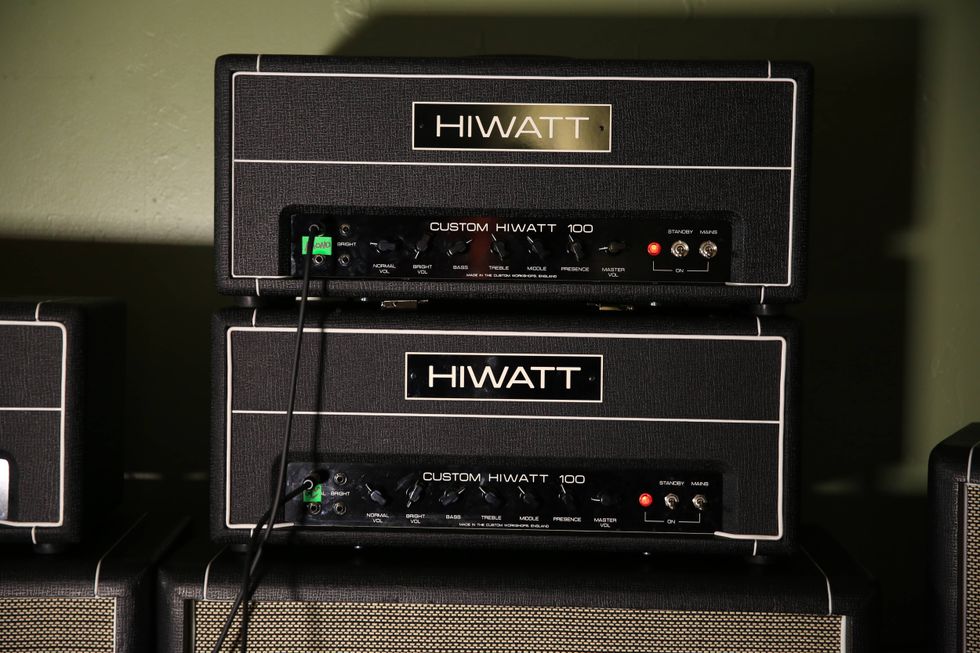
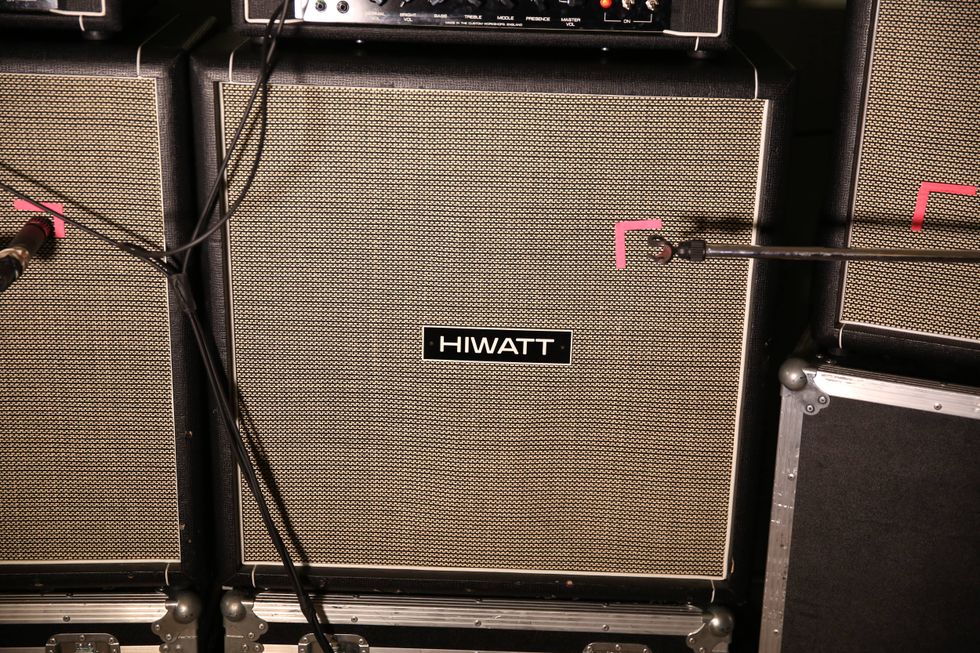
Sullivan was turned onto Hiwatts after acquiring some on loan in the wake of the gear theft, and he hasn’t turned back since. The cabinets are loaded with Hiwatt Octapulse speakers.
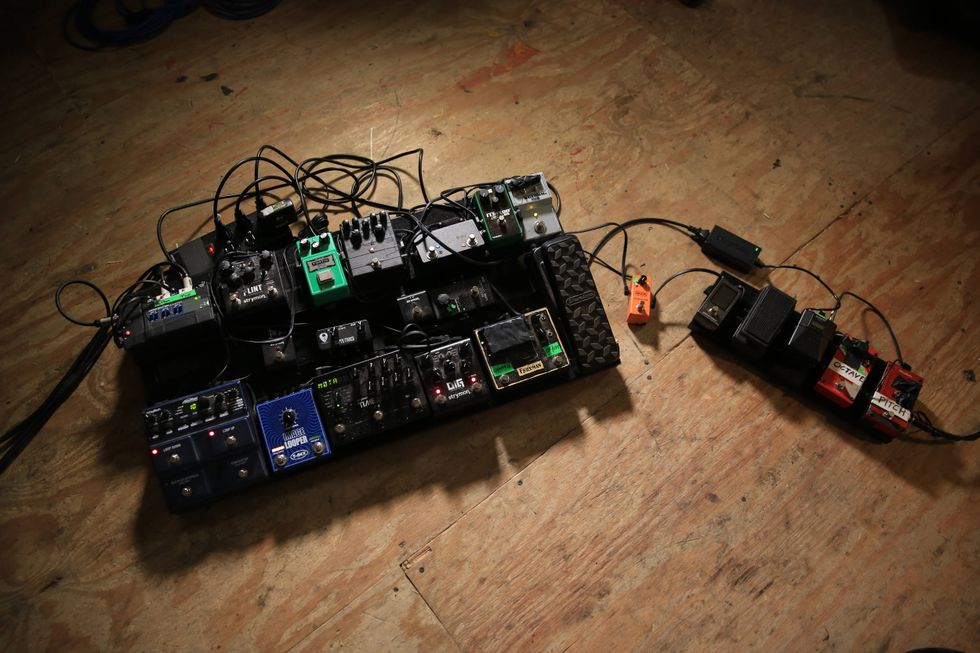
Mike Sullivan’s Pedalboard
Sullivan runs two pedalboards. The first includes a Peterson tuner, Shure P9HW, Dunlop CBM95 Cry Baby Mini, DigiTech Drop and Whammy Ricochet, and MXR Phase 95.
The motherboard carries a Dunlop DVP3 volume pedal, a Friedman BE-OD Deluxe, Strymon Dig, TimeLine, and Flint, a T-Rex Image Looper, DigiTech JamMan Stereo, MXR CAE Boost/Line Driver, Foxrox Octron3, Electric Eye Cannibal Unicorn, Maxon Apex808, Fortin-Modded Ibanez Tube Screamer, and a Radial Shotgun Guitar Splitter and Buffer.





![Rig Rundown: Russian Circles’ Mike Sullivan [2025]](https://www.premierguitar.com/media-library/youtube.jpg?id=62303631&width=1245&height=700&quality=70&coordinates=0%2C0%2C0%2C0)