

The 1970s were a time when the great guitar heroes ruled the earth. Legendary 6-string warriors like Jimmy Page, David Gilmour, and Ritchie Blackmore regularly held tens of thousands of fans spellbound in arenas and stadiums across the United States and beyond.
Among those titans stood Robin Trower. His breakthrough album, 1974’s Bridge of Sighs, featuring the FM radio staple “Day of the Eagle,” transformed his power trio into one of the hottest live acts in rock. But it wasn’t just the virtuosity or the riffs that captivated listeners—it was his sound. Vast, emotional and velvety, it moved and churned like a rising tide enveloping the listener.
“We recorded Bridge of Sighs quick—in just a little over two weeks,” Trower recalls to Premier Guitar. “The guitar sound was my invention, but we were very lucky to get Geoff Emerick to engineer it. The studio was quite big, and Geoff just listened while he walked around the room and placed the mics where he thought things sounded best. There was no science—it was just him and his magic set of ears.”
At the time, Emerick was one of the most respected engineers in the world, having worked extensively with the Beatles, and his instinctive approach helped shape the immense, swirling guitar tone that became a defining element of Trower’s music.
The following year, that humungous sound arrived onstage in Stockholm.
On February 3, 1975, Trower, bassist-vocalist James Dewar, and drummer Bill Lordan stepped onto the stage of Stockholm Concert Hall to begin a European tour. The stately 1,770-seat venue—home of the Swedish Royal Philharmonic Orchestra and the Nobel Prize ceremonies—was designed for classical music, but its wood-paneled interior gave the trio’s sound an unusual warmth and clarity. What the band didn’t realize was that Swedish Radio was recording the entire performance on a state-of-the-art RKB-branded Nagra eight-track mobile recorder, capturing what would eventually become one of the most celebrated live guitar albums of the decade.
Caption: Onstage with bassist/vocalist James Dewar (l) and drummer Bill Lordan (obscured)
Photo by Ron Draper
“We were very lucky that tape was rolling that night,” Trower says. “We were performing in a proper concert hall and it sounded fantastic, which inspired us to play in top form. It was very refreshing, because most of the time we were playing in these hockey arenas that sounded awful. We weren’t even aware that they were recording it.”
To Trower’s surprise, a few months later Swedish Radio sent the band a cassette of the broadcast. Like many European broadcasters at the time, the network routinely recorded touring rock acts for its archives. Hearing the power of the performance—and the unusually high quality of the recording—the decision was made to remix the tapes and release them as a live album.
The result surfaced a year later, in March 1976, as Robin Trower Live!, a record that arrived just as the guitarist’s career was reaching its commercial peak. Mixed by Trower and Emerick, the album cracked the Top 10 in the United States and became Trower’s biggest chart success in the U.K., confirming what concert audiences already knew: that the soft-spoken guitarist from Southend had quietly become one of the defining players of the decade.
But despite its reputation among fans, the original Live! album only told part of the story.
The Stockholm concert itself had been considerably reshaped to fit the limitations of a single LP. Of the twelve songs performed that night, only seven were selected for release. Even those tracks were re-sequenced, abandoning the original running order in favor of a set designed to deliver maximum impact across two vinyl sides. The result captured the spirit of the show—but not the full arc of the performance.
“We were very lucky that tape was rolling that night.”
Even the album’s artwork introduced a bit of theatrical sleight of hand. The cover image suggested Trower performing before a vast outdoor stadium crowd—a sea of heads stretching into the distance. In reality, the recording came from a comparatively intimate Scandinavian concert hall.
“It didn’t occur to me at the time,” Trower says when asked about the discrepancy. “There were no photos taken at the gig. The one they used was from a baseball stadium in San Francisco, I believe.”
If the cover leaned toward rock ’n’ roll illusion, the audio carried its own behind-the-scenes adjustments. During the mixing sessions at London’s AIR Studios, Emerick and Trower discovered that Dewar’s vocal microphone had captured substantial spill from the drums and amplifiers onstage, making it unusable. The solution was simple: Dewar re-recorded his vocal tracks in the studio.
“Jimmy sang it all again,” Trower explains matter-of-factly. “He polished it off in about an hour—just ran through it in real time.”
Trower today
Photo by Blackham Images
Nearly 50 years later, the new anniversary edition of Live! reveals the full picture for the first time. Remixed by Richard Whittaker from the original tapes, the restored edition presents the entire Stockholm performance exactly as it unfolded that evening—12 songs rather than seven, sequenced in their original order, with Trower’s onstage introductions and the audience’s reactions intact. What once felt like a highlight reel now plays like a complete musical journey.
The difference is striking. The pacing of the show suddenly makes sense. The opening salvo—“Day of the Eagle” followed by “Bridge of Sighs”—builds the atmosphere naturally before the trio moves into material from For Earth Below, which had not yet been released at the time of the concert. Later in the set, the delicate meditation of “Daydream” gives way to the explosive momentum of “Too Rolling Stoned,” a moment when the band shifts into near-punk velocity.
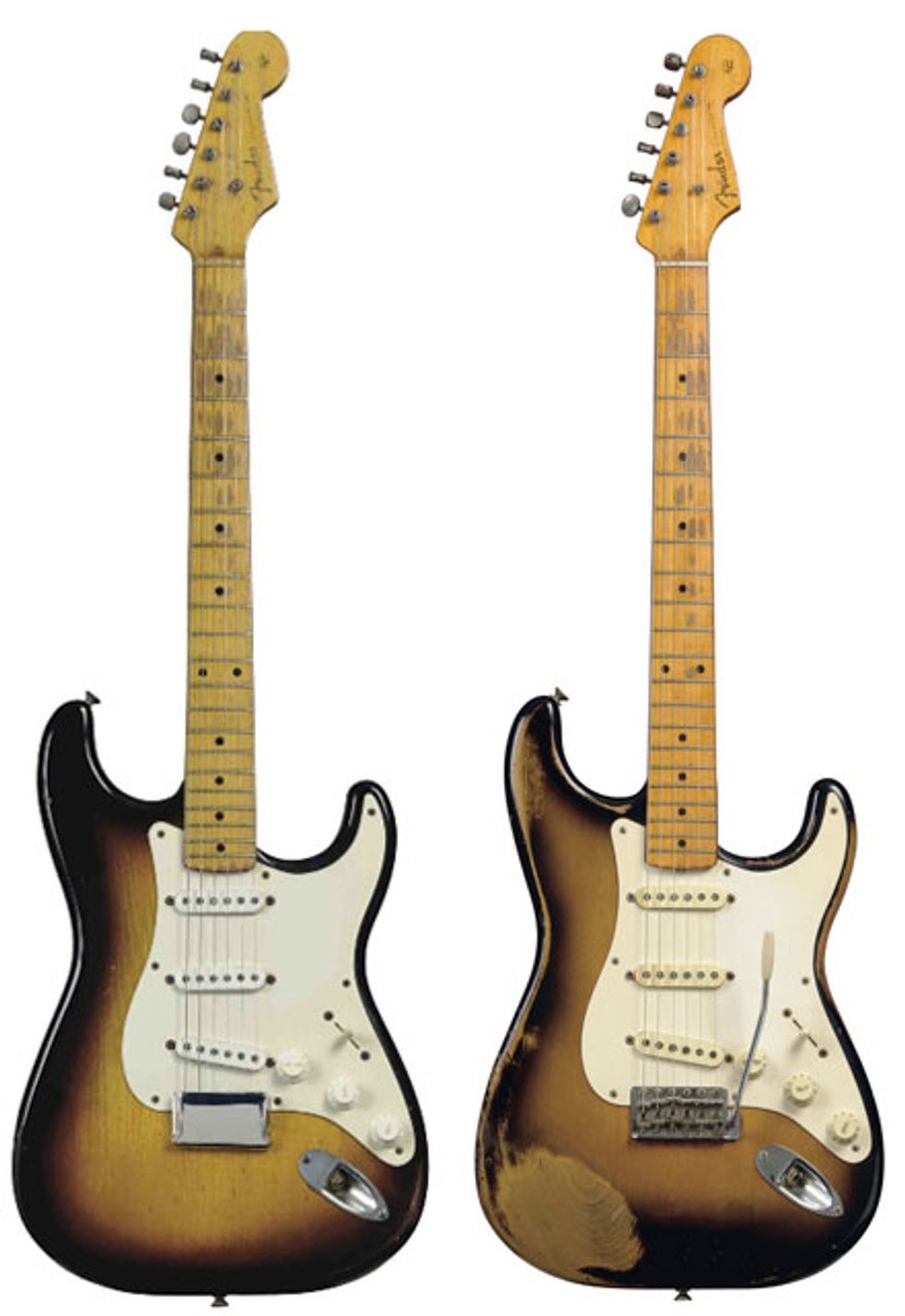
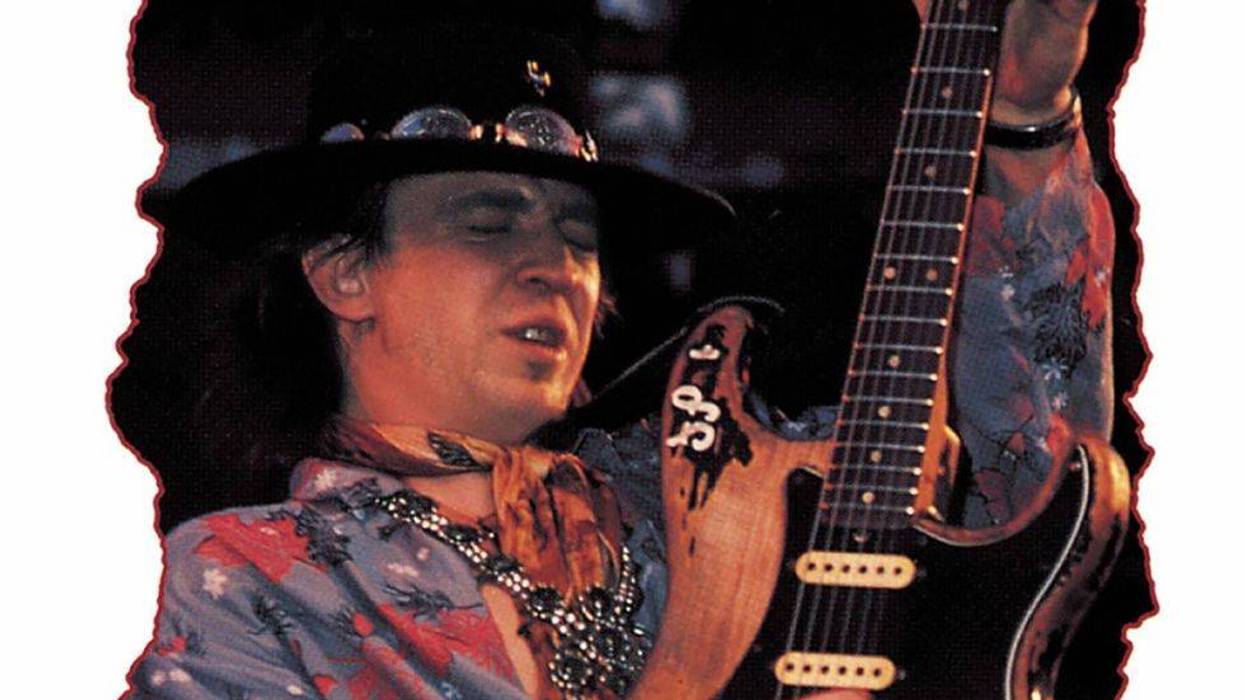
Listening now, what stands out most is the chemistry between the three musicians. Dewar’s bass lines provide both muscle and melody beneath his soulful vocals. Lordan’s drumming drives the music forward with power. And at the center stands Trower himself, shaping vast arcs of spacey atmosphere and psychedelic blues from his Stratocaster. Together, they created a sound that felt far larger than the trio format should allow. And on that winter night in Stockholm, the band was flying.
“If there’s any secret to my tone, it’s that all my guitars have relatively high action and heavier strings.”
So how exactly did Trower achieve that otherworldly sound?
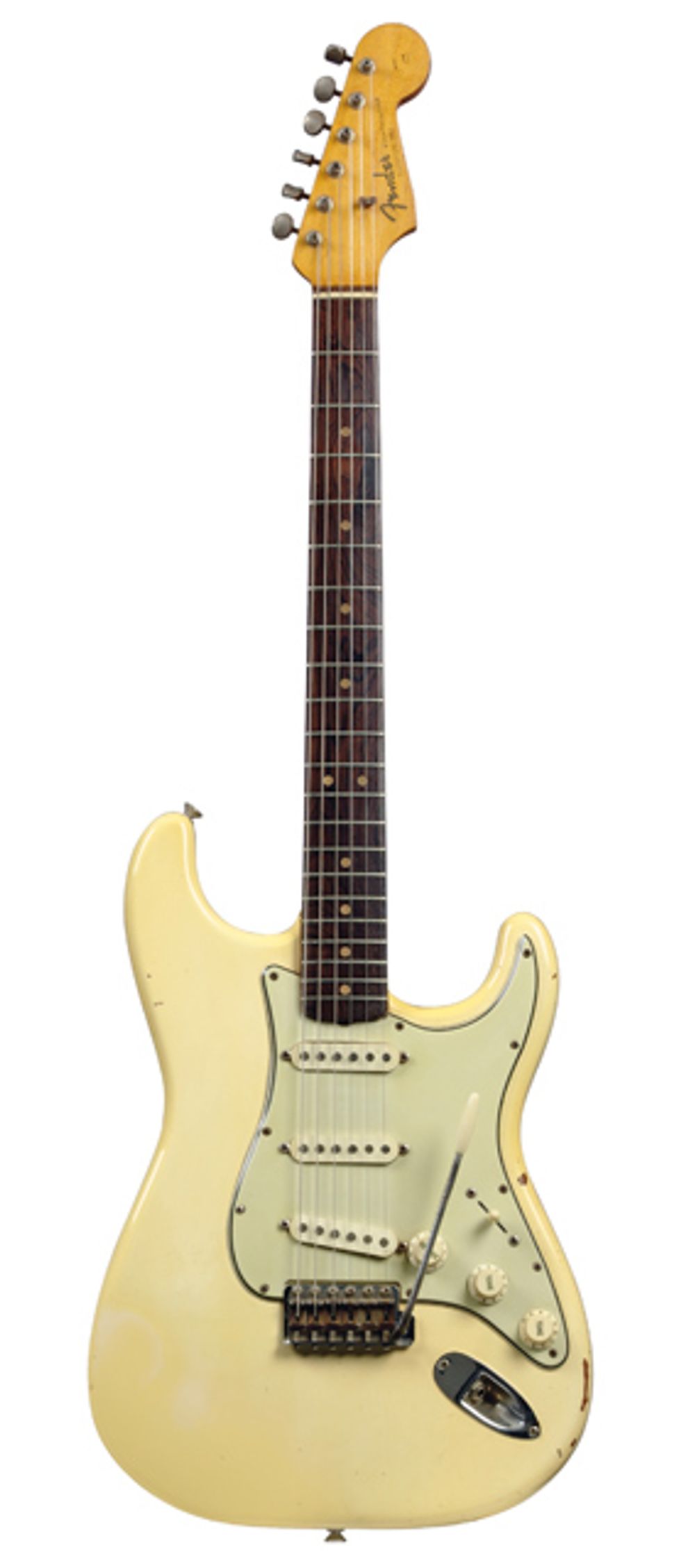
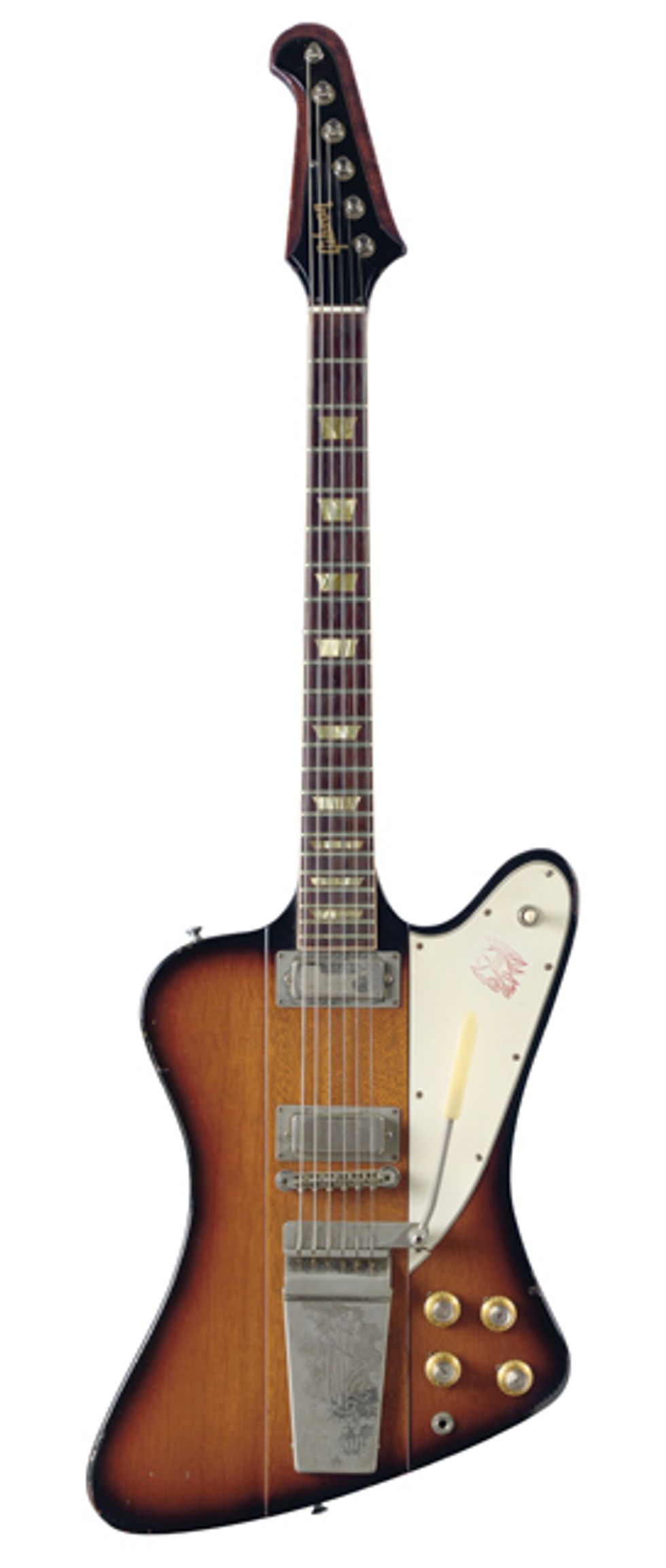
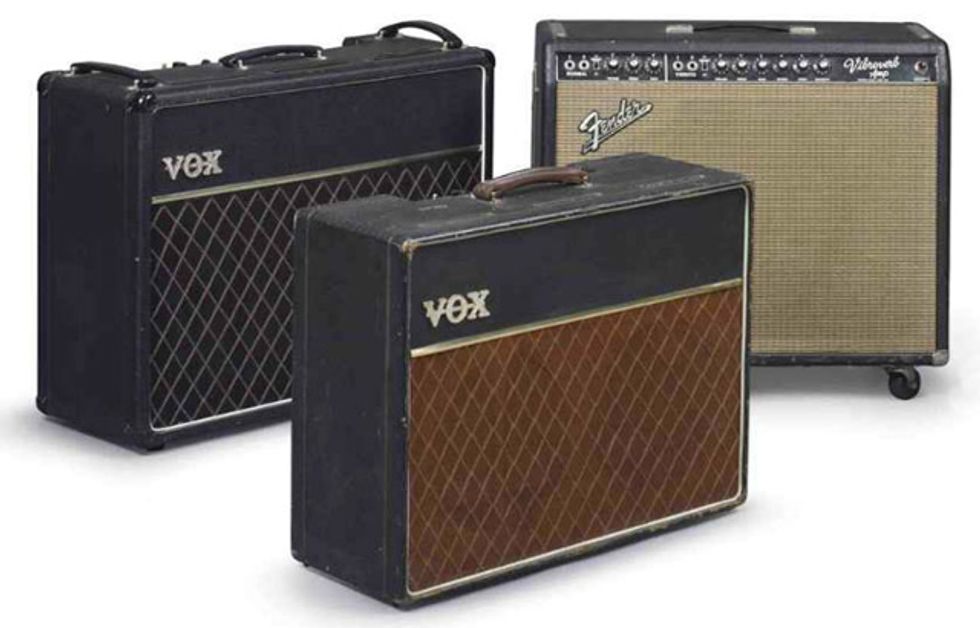
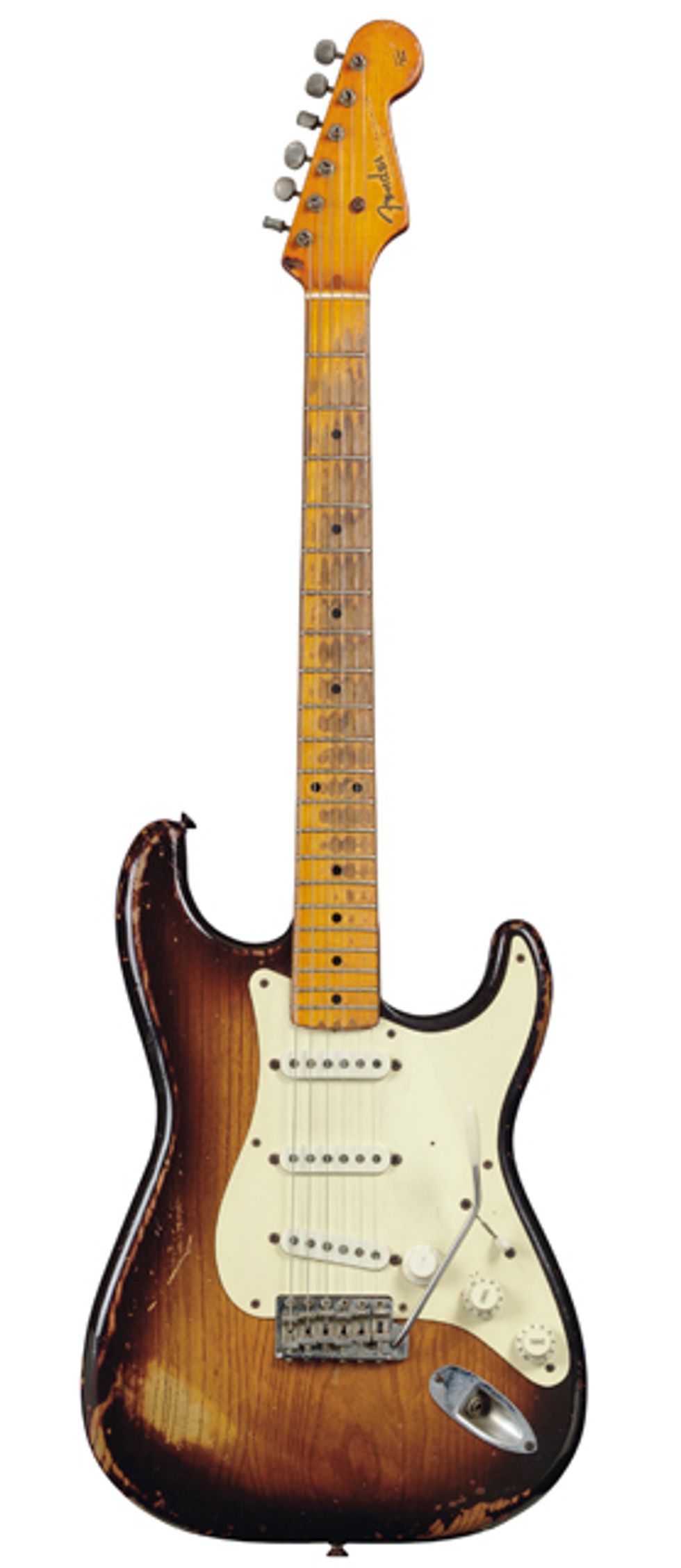
“There was no magic amp or special guitar,” he says. “Almost everything I owned was pretty new. I just went to Manny’s, the legendary guitar shop in New York City, bought a 100-watt Super Lead Marshall, and listened to about six or eight Strats acoustically before settling on a black-and-white one with a maple neck.
“If there’s any secret to my tone, it’s that all my guitars have relatively high action and heavier strings. Back then I played in standard tuning and used .010-gauge strings. It’s all about getting the strings to ring acoustically, and that’s what translates into a great electric sound.”
Effects also played an important role in shaping Trower’s liquid tone. His signal chain typically included a Vox V846 wah, a Shin-ei Uni-Vibe, and a custom-made boost pedal that pushed the signal level before hitting his Marshall. The simple “clean boost” provided a lift for solos without drastically altering the guitar’s character, adding sustain, thickening the Strat’s midrange, and making the Uni-Vibe’s swirling modulation sound even more liquid.
“There was no magic amp or special guitar,” Trower says of his revered tone.
Photo by Ron Draper
Trower also kept his overall gain surprisingly restrained.
“I usually kept the volume around seven or eight,” he says. “You need to have a little head room. I’m not interested in having too much distortion. My goal is to keep the clarity of the notes and chords and maintain a clear midrange, which is very important to my sound. I tried to avoid creating any mush.”
While Trower is proud of the 50th anniversary edition of Live!, he’s not particularly nostalgic or inclined to dwell on the past. What’s remarkable is that he has continued releasing albums well into his late seventies and early eighties—something very few guitarists from the classic-rock era have managed. In the last decade alone, he has recorded eight albums, including Come and Find Me (2025) and the blistering concert set, One Moment in Time – Live in the USA (2026).
Still, if Trower tends to look forward rather than back, he has no hesitation when it comes to praising the musicians who helped shape his most celebrated work—especially bassist and singer Dewar, who died in 2002 at the age of 59. Dewar was far more than a supporting player in the trio. With his rich, soulful tenor and muscular bass lines, he provided the emotional center of the band’s sound, grounding Trower’s expansive guitar work with a voice that was equal parts blues grit and melodic warmth. Across seven studio albums—from Twice Removed from Yesterday through Victims of the Fury—Dewar emerged as one of the defining vocalists of the 1970s guitar era.
“I’ve always enjoyed the trio format. It forces me to cover a little more ground instrumentally, but in a way, the economy was our secret weapon.”
“I couldn’t have asked for a better collaborator than Jimmy,” Trower says. “He was warm, funny, and never sang a bad note. People always say he’s underrated, and I totally agree. But that probably wouldn’t have been the case if we’d been called the Jimmy Dewar Band,” he adds, with a wry shrug.
Alongside them was drummer Bill Lordan, whose disciplined yet powerful playing completed the chemistry of the group. Lordan, who had previously worked with Sly Stone, brought a precise sense of groove that allowed Trower’s expansive guitar phrasing to breathe, while still driving the music forward with authority. Together, the three musicians created a sound that felt far larger than the trio format might suggest.
For Trower, the stripped-down lineup was never a limitation—it was the very thing that made the band’s sound so powerful. “I’ve always enjoyed the trio format,” he says. “It forces me to cover a little more ground instrumentally, but in a way, the economy was our secret weapon. It was much easier to achieve definition and clarity with just three instruments and a vocal when you played in those big, boomy halls. It would be less of an issue today—the PA systems and monitors are so much better.”
That sense of space and definition is part of what gives Robin Trower Live! its enduring power. Unlike many live albums of the era, which relied on layers of overdubs or heavy post-production polish, the Stockholm recording captures a band operating with remarkable precision and restraint. The trio moves with the ease of musicians who had spent hundreds of nights refining the material onstage, allowing the songs to stretch and breathe without losing their focus.
Photo by Richard McCaffrey
Years later, Robert Fripp, the famously exacting guitarist of prog-rock pioneers King Crimson, offered a vivid assessment of Trower’s playing during that era. Fripp first encountered Trower while touring the United States in the early 1970s.
“I toured America in 1974 with Ten Years After top of the bill, King Crimson second, and Robin Trower bottom,” Fripp recalled in a 1996 essay penned for the liner notes to a Trower reissue. “The chart positions were the opposite: Ten Years After in the Billboard 160s, Crimson in the 60s, and Trower climbing remorselessly through the Top 20. Nearly every night I went out to listen to him. This was a man who hung himself on the details—the quality of sound, the nuances of each inflection and tearing bend, and the abandonment to the feel of the moment. He saved my life … and later, in England, he even gave me guitar lessons.
“He is one of the very few English guitarists that have mastered bends and wobbles,” Fripp continued. “Not only has he got inside them, with an instinctive knowing of their affective power, but they went to live inside his hands.”
Fripp’s admiration speaks to something many guitarists recognized at the time but rarely articulated so clearly. Trower’s playing was never about speed or flash. Instead, he built his style around touch—wide bends, patient vibrato, and an almost orchestral sense of space that allowed every note to bloom and hang in the air.
That sensibility is all over Robin Trower Live! Nearly half a century on, the sound Trower summoned from a Strat and a Marshall still feels otherworldly. It’s no wonder even Robert Fripp went looking for lessons.
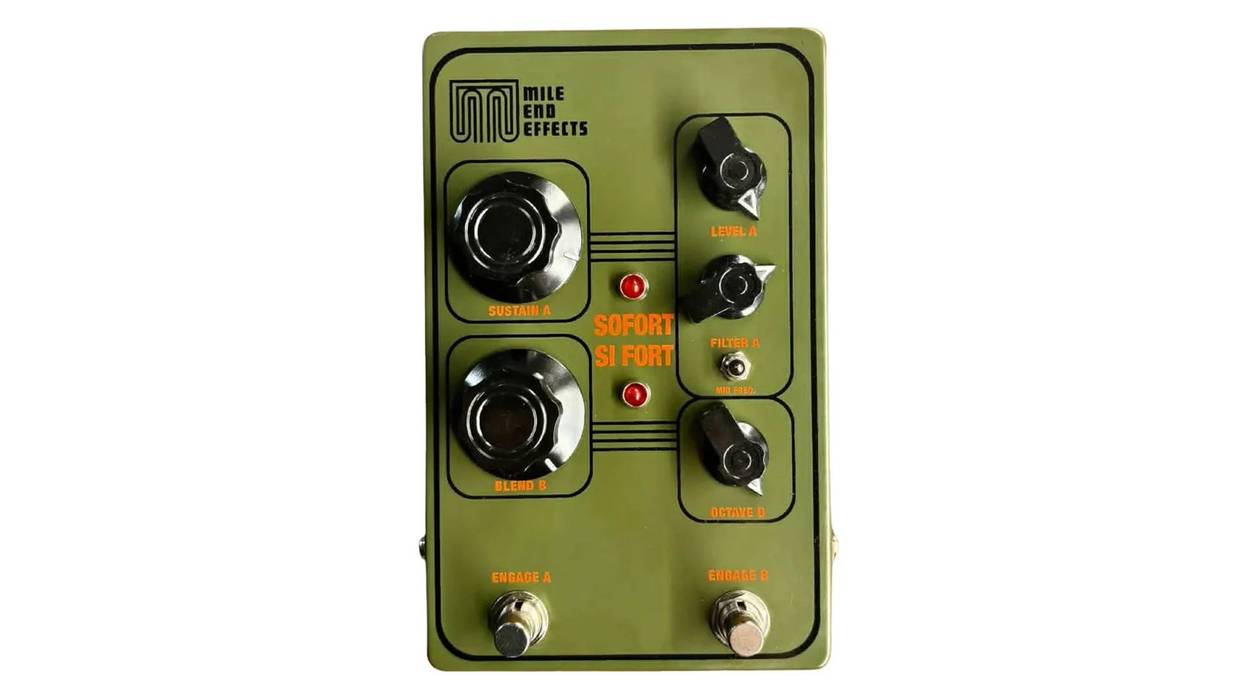
Spurr has introduced the OSCIX VSM (Virtual Sound Modeler) pedal, a chorus pedal with a dedicated reverb knob for added depth.
A tribute to the 1990s, the OSCIX VSM is designed for musicians who seek to bridge the gap between vintage soul and modern versatility.
According to Spurr, the heart of the OSCIX VSM was born from a place of quiet observation: the massive, towering satellite dishes of a local Earth Station. Nestled in a wooded landscape, these silent giants from the 80s and 90s, once the gateway for international transmissions inspired the pedal’s unique aesthetic. The OSCIX captures that specific vintage essence, where technology feels alive, peaceful, and profoundly human.
The OSCIX VSM is a visual and sonic homage to the satellite TV stations of the late 20th century, capturing the industrial mystique of long-range signal reception.
The OSCIX’s virtual sound modeler (VSM) engine allows musicians to "tune in" to textures that go far beyond standard modulation. Featuring 8 unique waveforms, the pedal’s integrated display offers a visual window into the signal, reminiscent of the monitoring screens in a classic telecom hub.
The OSCIX VSM introduces the Depth + control, an expansive reverb architecture that defines the pedal’s spatial character:
Lush Ambience: The reverb can be blended with the chorus or used as a standalone atmospheric tool.
Satellite Clouds: When combined with the Shift function, the pedal generates a shimmering, ethereal halo, emulating signals drifting through the upper atmosphere.
The pedal captures nostalgic imperfection with Vibe and Warble modes. To capture the "popcorn" crackle and warm instability of old analog broadcasts:
Vibe Mode: A single button press removes the dry signal, leaving only a haunting, organic vibration.
Lo-Fi Textures: The Warble control introduces pitch-drifting instabilities, summoning the nostalgic charm of a faded analog transmission.
The Warble control serves as a tribute to vintage video tapes, introducing the charming pitch instabilities and 'tracking' imperfections of a nostalgic analog broadcast.
Panda Audio has announced a major firmware update to the Future Impact platform, adding a new array of sounds to the versatile Future Impact V4 and V4 VIP bass synth pedals.
The new V4.5 upgrade is free for Future Impact users and offers greatly expanded capabilities while retaining the same simplicity of operation for Future Impact bass synth pedals, which are designed for players rather than programmers. Some of the new V4.5 features include:
• 99 DX7 FM song-ready presets have been added to the existing 99 Virtual Analogue presets library
• Setlist Mode to easily program a performance list without a computer
• Zero Latency has been added as a third mode to the existing Speed and Accuracy modes
Future Impact V4.5 Firmware Upgrade
The FM library draws heavily from iconic ‘80s and ‘90s recordings made with the Yamaha DX7 bass: "Take on Me," "Smooth Criminal," "Take My Breath Away," "Broken Wings," and many more. There are also funky bass, smooth bass, double bass, Stratocaster emulation, and a selection of classic DX7 sounds —church organ, tubular bells, pan pipe, and harmonica, to name a few.
You can also explore the tens of thousands of other FM patches out in the world and upload them using the 4.5 Editor software for Windows or Mac.
While fully loaded with presets galore, you can still add and edit your own so you’re not locked into someone else’s palette choices. In addition to producing synthesizer sounds such as basses, leads and pads, the Future Impact can also function as an octaver, chorus, flanger, phaser, distortion, envelope filter, traditional wah-wah, tremolo, reverb, etc. Plus there’s a built-in tuner. With so much functionality, you can potentially replace an entire pedalboard of dedicated single-effect pedals.
Future Impact is developed by Andras Szalay, the original designer of the legendary Akai Deep Impact pedal.
Analog reverbs built around bucket-brigade device (BBD) chips have been done before, but not often, and with good reason. BBD chips are noisy. The more chips you use, the noisier things get, and a proper reverb requires more BBDs than a delay does. They’re not an ideal way to simulate the complex reflections that make up reverberation, either. This is why Fairfield Circuitry’s Placeholder has made such a splash. The new effect pedal from the Hull, Québec-based builders uses a series of BBDs to create a truly one-of-a-kind reverb machine. And while most effects creators are trying to replicate analog sounds in the digital realm, Fairfield pulled a u-turn: They’re trying to recreate a digital reverb effect with analog technology.
Mapping the Mystery
It’s evident that the braintrust at Fairfield is making more than an effect pedal. They’re also making a point about analog’s enduring appeal with its challenging, algorithm-free topology. “There’s no denying the power of algorithmic representation of our daily activities,” the company’s website copy offers. “But let’s not forget that the complex system underlying our lived experience, the background noise and uncertainty, is intrinsic.”
The Placeholder design borrows from principles established by spatial-audio-tech guru Jean-Marc Jot and based on the Householder-reflection feedback matrix. The Placeholder essentially recreates Jot's digital algorithm in the analog sphere with BBDs. In more accessible terms, that means the pedal uses three independent analogue delay-lines and a feedback delay-network where every delay line feeds back only to every other delay line. That might not clarify much for the layperson, but you should read the fascinating literature Fairfield have produced for this pedal if you’re interested in the deeper concepts behind it. It’s marvellous.
The controls are easier to grasp than the principles that guide their function. The three principal keys to controlling Placeholder are the size, ratio, and decay knobs. As Fairfield describes it, size sets the initial delay line time, determining the size of the imaginary room in which the reverberation exists. Ratio sets how the following two delay lines relate to the initial one. Decay controls how many times the delayed signal is reflected in our imaginary room. What does this mean in practice? Well, when the decay knob is turned counter clockwise, it generates a tight, metallic slap. Dimed in the other direction, it self-oscillates in some truly bizarre ways. Two 3-way switches control the level of modulation present in the signal, and whether that modulation is cyclical, random, or both. A third switch selects between three low-pass filter presets.
The mix and volume controls on Placeholder are welcome additions. Mix can go from 100 percent dry to 100 percent wet. Volume hits unity around noon then boosts from there with a broad-spectrum level bump capable of pushing an amp to breakup. Combined with the tone control, this added utility means Placeholder can be an always-on weirding module or a blast of loud spaciousness of whatever size you prefer.
Space Molder
One of Placeholder’s many pleasant surprises is how intuitive it is to use despite the relatively murky control descriptions. It couldn’t be easier to dial in a reverb sound that’s either tight and zingy or broad and haunting. The essential tone is spring-like, complete with a classic reverb tank’s metallic, skittering response. Placeholder also feels like a genuine reverb effect in that it sounds more like a signal bouncing around and interacting with a space, rather than an indistinct wash.
Players like to say that a certain pedal “has a mind of its own.” That’s a nice figure of speech, but it’s not really true in most cases. In the instance of the Placeholder, the description seems more apt. Fairfield made a splash with the unpredictable modulations in their Shallow Water K-field modulator and their Meet Maude delay, but Placeholder takes the offkilter vibe generation in those pedals to a new level. Keep the modulations set to random and give your size, ratio, and decay knobs some leash, and you’ll find yourself in the hull of a rusting, decommissioned cargo ship. Tighten them up, and you’ve got a wickedly usable, gently demented spring ’verb. There are so many surprising spaces to explore here. There is some analog noise—there are three BBDs in the circuit after all—but it can be charming.
With the decay control maxed out, Placeholder didn’t require my input at all to create deeply inspiring sounds—it interacted with the pedals I situated around it to build a calming but scarred, post-industrial utopia. Put a versatile delay or other weirding device after it, and you can create an entire film score simply by tweaking knobs—no guitar playing necessary. There is a piece of this process, as a self-conscious user, that feels a bit lazy. It feels like cheating to be able to conjure such incredible, atmospheric sounds so easily. I suppose that’s why Fairfield are asking $450 for the privilege. But compared to flashy, feature-laden digital reverb units with similar or steeper prices, Placeholder simply felt more moving and real. It’s as much a thing I felt in my body as something I heard.
The Verdict
Placeholder is capable of producing alternate dimensions of organic, earthy sounds and modulation that will swallow your run-of-the-mill hall, plate, and spring reverb modules whole. I’ve never played through a pedal quite like it. Players often suggest that a pedal is a keeper if it encourages you to play more, but the Placeholder twists that argument: It’s a keeper because, in some applications, it encourages me to play more by playing less. That’s because it feels like its own instrument, a living, mutating analog alien that can communicate with its environment, and shape it
I recently saw an interview with Rodney Crowell that led me to rewatch Season 1, Episode 28 of The Twilight Zone. Crowell didn’t reference T-Zone specifically, that’s just where this rabbit hole led me. Not to spoil the plot, but the episode, titled “A Nice Place to Visit,” is about a gambler who dies and then wakes up in what seems like the afterlife, greeted by a genial guide named Pip (Sebastian Cabot) who grants his every wish instantly. Immediately, the gambler, Rocky, is in a casino, swimming in booze and beautiful women. He’s winning every bet, from poker to slots to roulette. He’s thinking, “I’m in heaven.” But after a month or so, the winning becomes unbearable. There’s no thrill, no risk, no challenge. Then Rocky gets the twist: He’s in hell.
For a real gambler, the greatest thing in the world is to gamble and win. The second greatest thing is to gamble and lose. Being a professional musician is being a professional gambler, and like any gambler, you are one hand away from wealth or being busted. You never really know how the cards will fall.
I’ve gigged in Vegas for decades, but slots and tables hold no appeal. Dropping a few hundred bucks there pales next to the lifelong gamble of music. Every live show is a roll of the dice: Will your fingers cooperate? Will your voice hold out? Will anyone show up to pay at the door? Gear fails—amps blow, strings snap, PAs die. Even the journey to and from the gig carries real peril; just ask Buddy Holly, Ritchie Valens, Patsy Cline, Otis Redding, Lynyrd Skynyrd, Ricky Nelson, and Stevie Ray Vaughan, who all went down in planes going to or from a gig. Many more, like Eddie Cochran, Metallica’s Cliff Burton, Dottie West, Harry Chapin, and Duane Allman, died on or in motorcycles, cars, and buses. If you’re in this business, risk isn’t optional—you have to embrace it.
A Rodney Crowell story crystallized this risk/reward dynamic for me. In early 1973, Crowell was scraping by in Nashville, playing for tips, washing dishes at T.G.I. Friday’s, and gigging happy hours. One regular spot was the Jolly Ox, a Green Hills steakhouse with a strict rule: no original songs, or you’re fired. Crowell’s then-girlfriend had left him for the more successful Townes Van Zandt, and he was heartbroken and fed up. In disgust and heartbreak, Crowell wrote his song, “You Can’t Keep Me Here in Tennessee.” Feeling he had nothing to lose, he broke the club rule and said, “Here’s a song I just wrote…”
As soon as he finished, the manager stormed the stage and fired him. But right behind came Jerry Reed’s manager, Harry Warner, who told Crowell that Reed had been in the audience and wanted to record the song immediately. Within 24 hours, Crowell was at RCA Studio A, teaching his song to Reed and his band. That break led to a staff writer deal with Reed’s publishing company—$100 a week in 1973 money—enough to quit dishwashing and write full-time.
Music is manifested in real time. It’s a gamble, it’s luck, it’s fate, it’s magic, it’s god’s mercy, it’s a trapeze act—live without a net. Terrifying and exhilarating.
That’s why I love Nashville. I'm surrounded by fellow gamblers, all-in on the dream. We all know brilliant players who never get the break, who toil in obscurity despite world-class talent. But we all know it goes the other way, too.
If my own career suddenly aligned perfectly—great venues, big paydays, smooth sailing—I doubt I’d ever get tired of winning. But if every note landed flawlessly, every solo was perfectly in tune and timed, every performance error-free and quantized? That would grow dull, fast. I’d crave the return to my “slop”—the messy, unpredictable moments that sometimes make me want to hide behind the amp after a particularly ugly clam. Those unexpected deviations from the intent can be the best part.
Fortune favors the bold. Playing and losing is way better than not playing at all. The thrill isn’t in guaranteed wins—it’s in the wager, the unknown, the possibility that tonight might be the one where everything clicks ... or crashes spectacularly. So pay your money, take your chances, and let the chips fall where they may.