

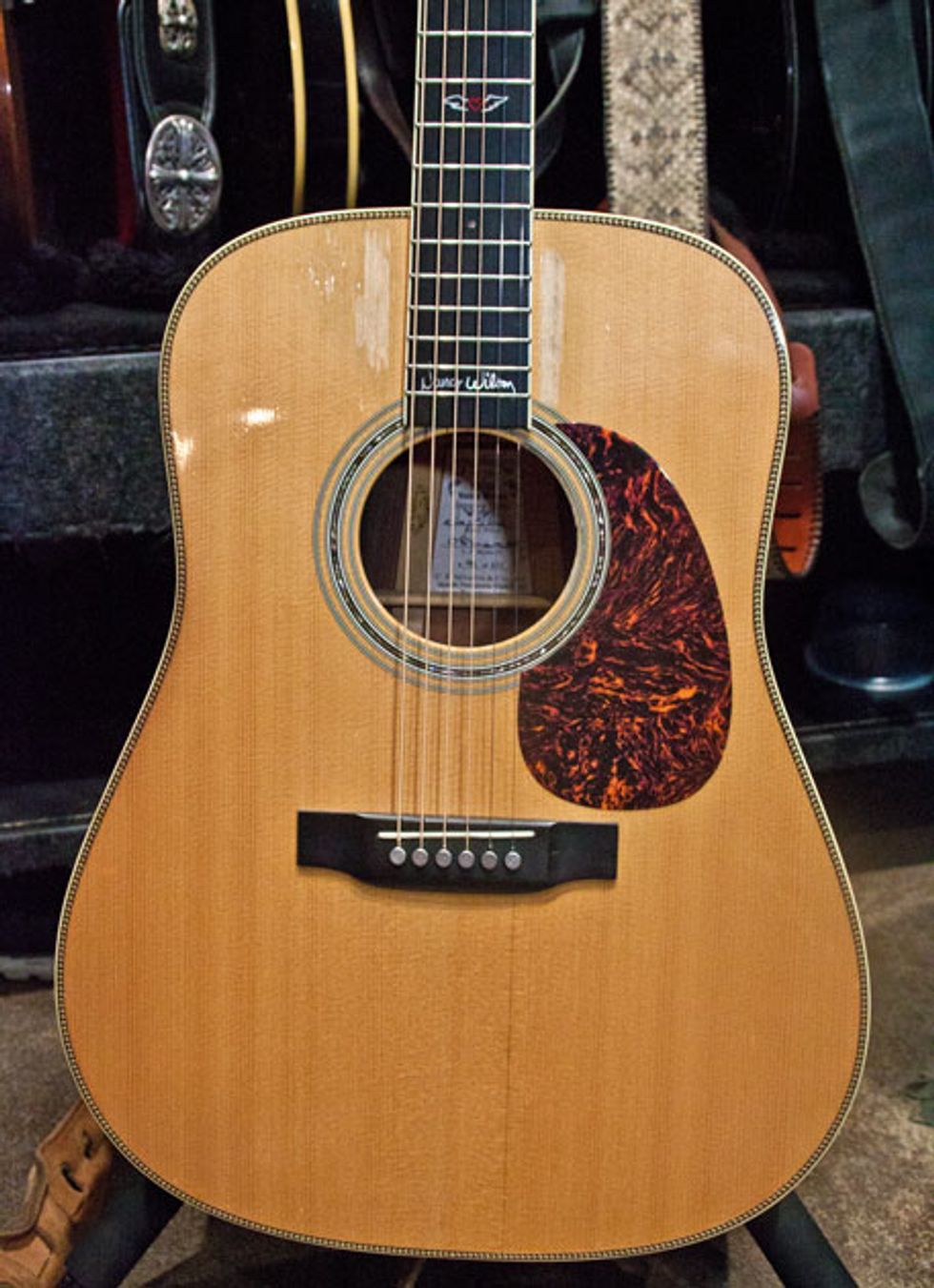
She also carries two Martin HD-35 Nancy Wilson signature dreads, as well as a Martin DCPA1 with a Fishman Aura system that she uses for “Alone.” All her acoustics (and Ann’s) use FU-Tone titanium bridge pins.
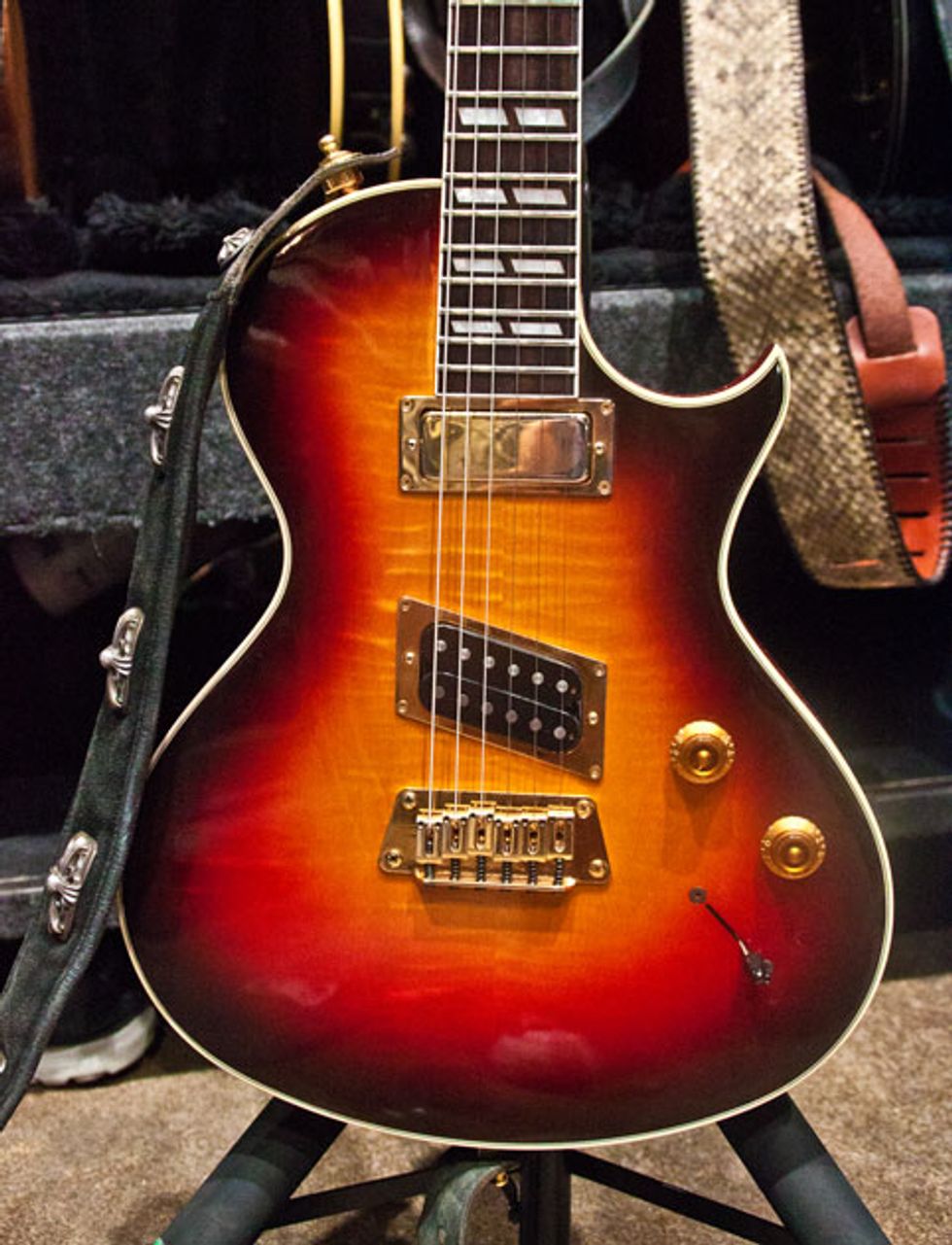
Nancy also brings three or four Gibson Nighthawks—which she co-designed with Gibson—in various tunings. She uses an early-’90s version for Led Zeppelin covers, and an F-tuned one for Robin Trower’s “Day of the Eagle.” She’s also road-testing a new Epiphone version of the Nighthawk with a prototype Trem King cam-based vibrato.
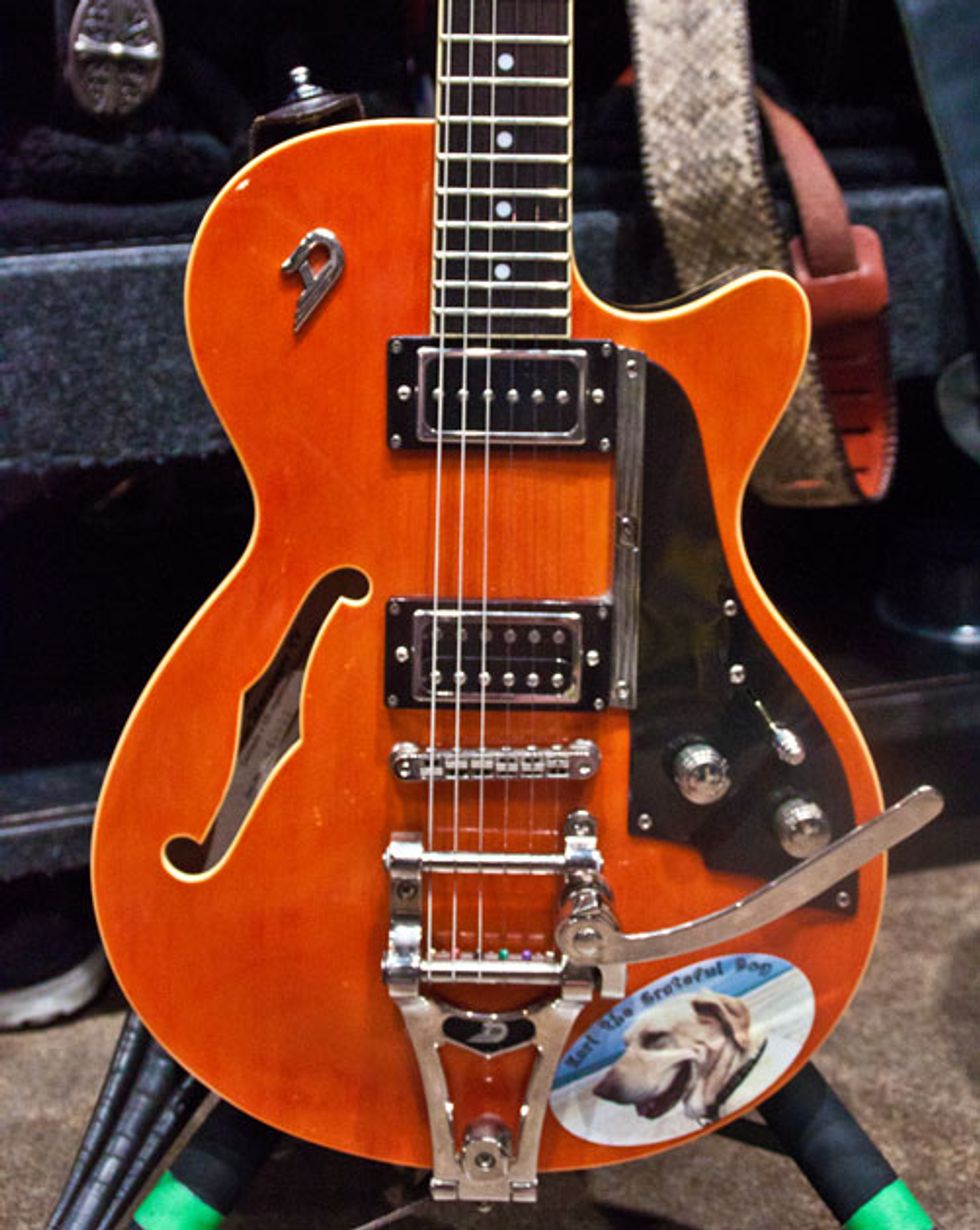
Nancy often borrows tech Jeff Ousley’s Duesenberg semi-hollowbody (given to him by Elvis Costello).
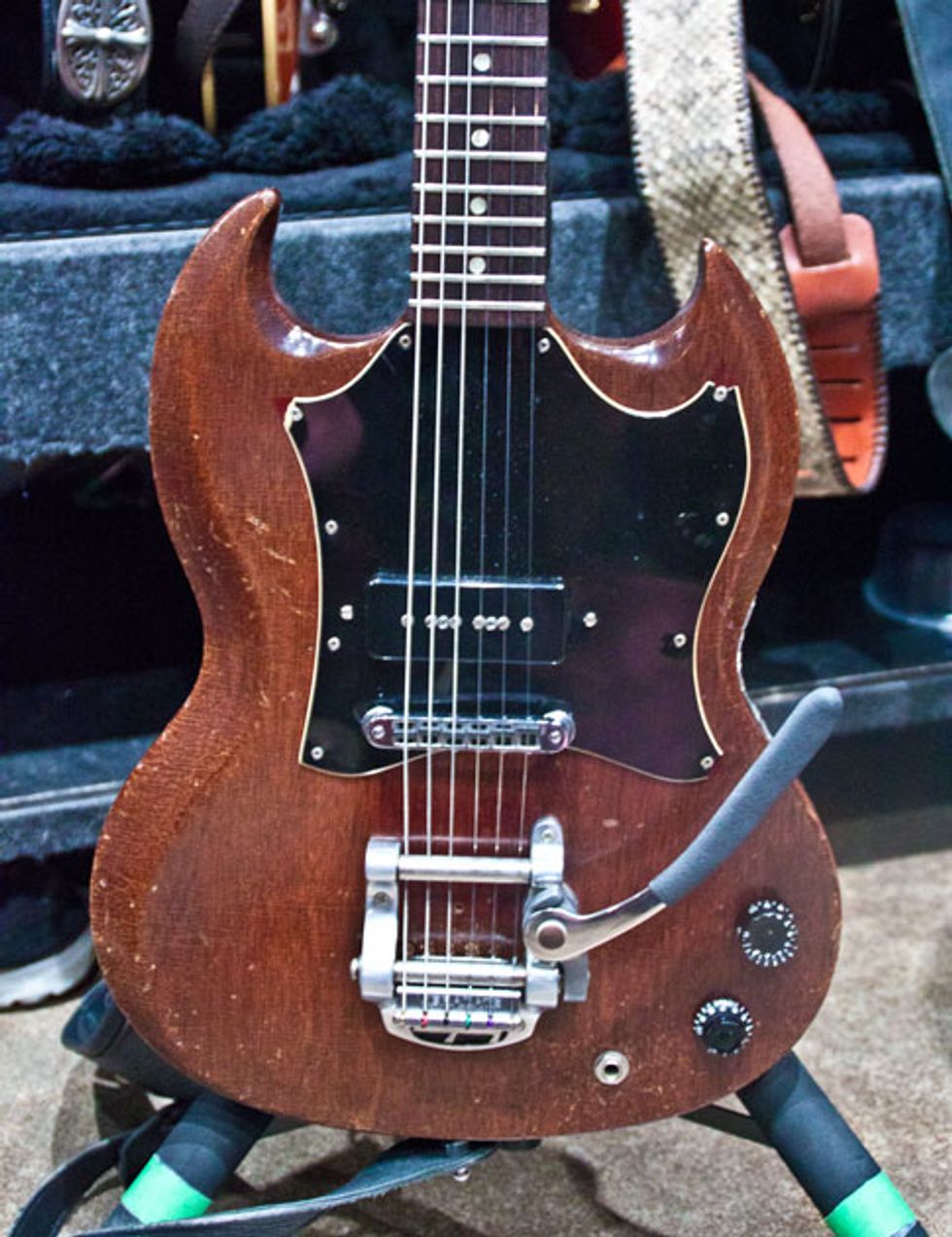
And her single-pickup, Bigsby-equipped ’68 Gibson SG is her go-to guitar for the smash hit “Barracuda.”
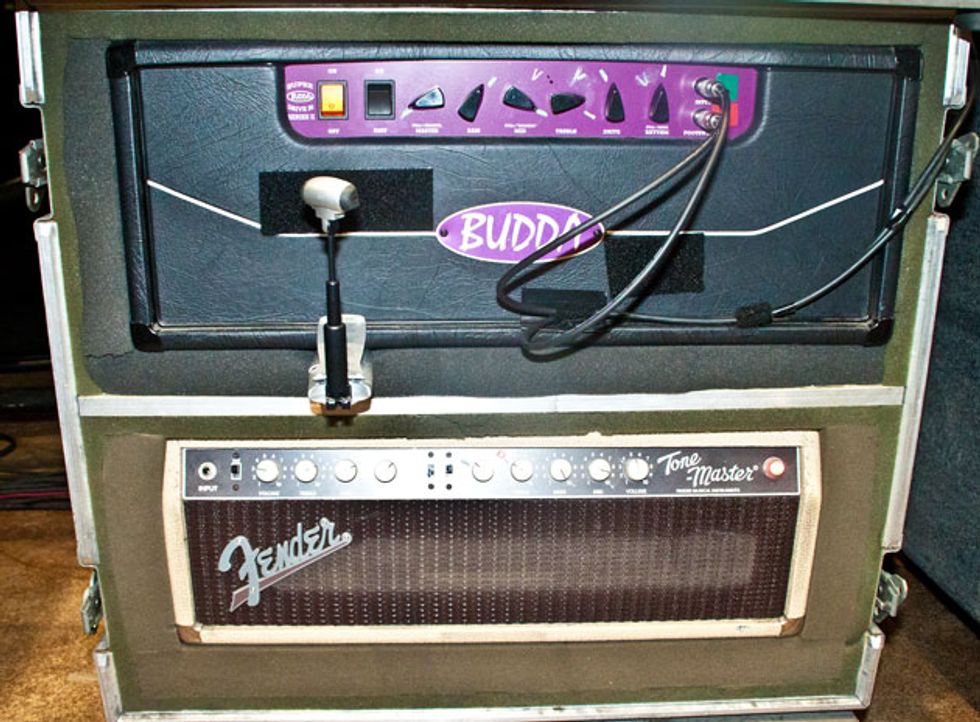
Like her pedalboard, Nancy’s amp rack resides offstage. A Peavey-era Budda Superdrive 30 II head is her main amp, and a Fender ToneMaster serves as a backup. Each head drives its own Orange 4x12 cab loaded with 30-watt Celestion speakers.
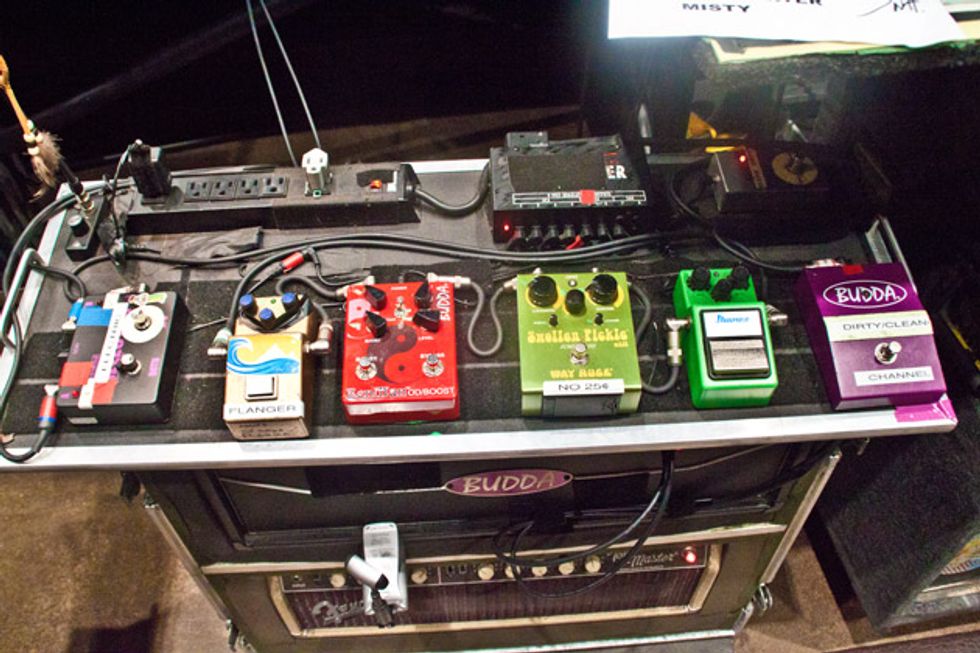
Ousley is in charge of both cable management and pedal switching for Nancy Wilson. Her offstage board starts with a Whirlwind A/B selector, an Ibanez TS9 Tube Screamer, a Way Huge Swollen Pickle, an ancient Ibanez flanger, and a Budda Zenman OD/Boost. A Voodoo Lab Pedal Power supplies the juice, and channel switcher pedals for each of Nancy’s heads round out the board.
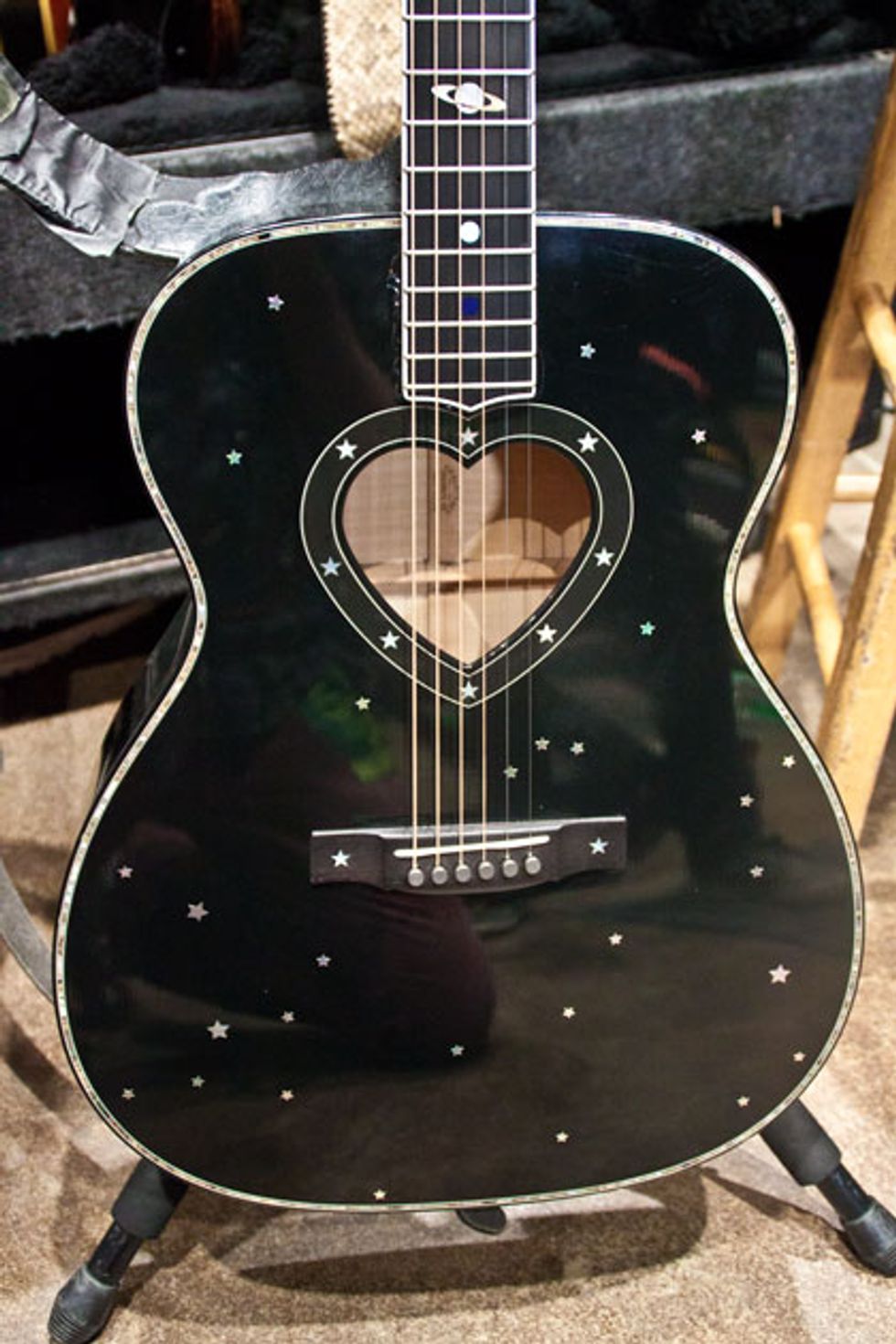
Ann Wilson uses a custom Martin with a heart-shaped soundhole and star-constellation inlays for “These Dreams” and “Dog & Butterfly.” Her backup acoustic is a graphite Rainsong with Fishman Prefix electronics.
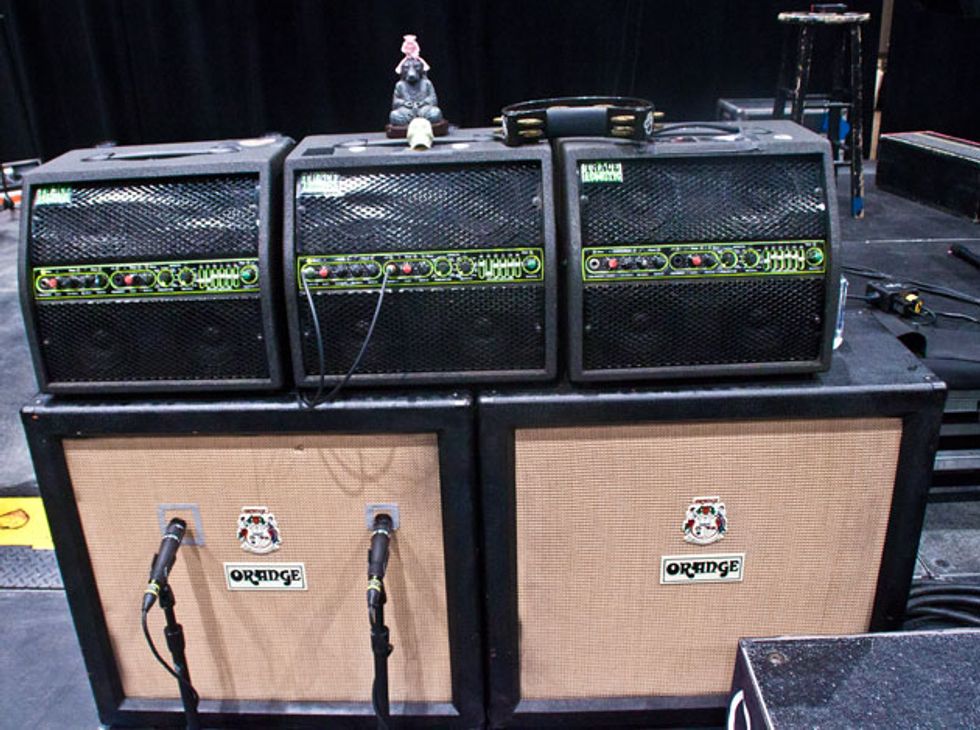
Ann perches her three Trace-Elliot TA 200 amps atop sister Nancy’s two onstage Orange cabs.
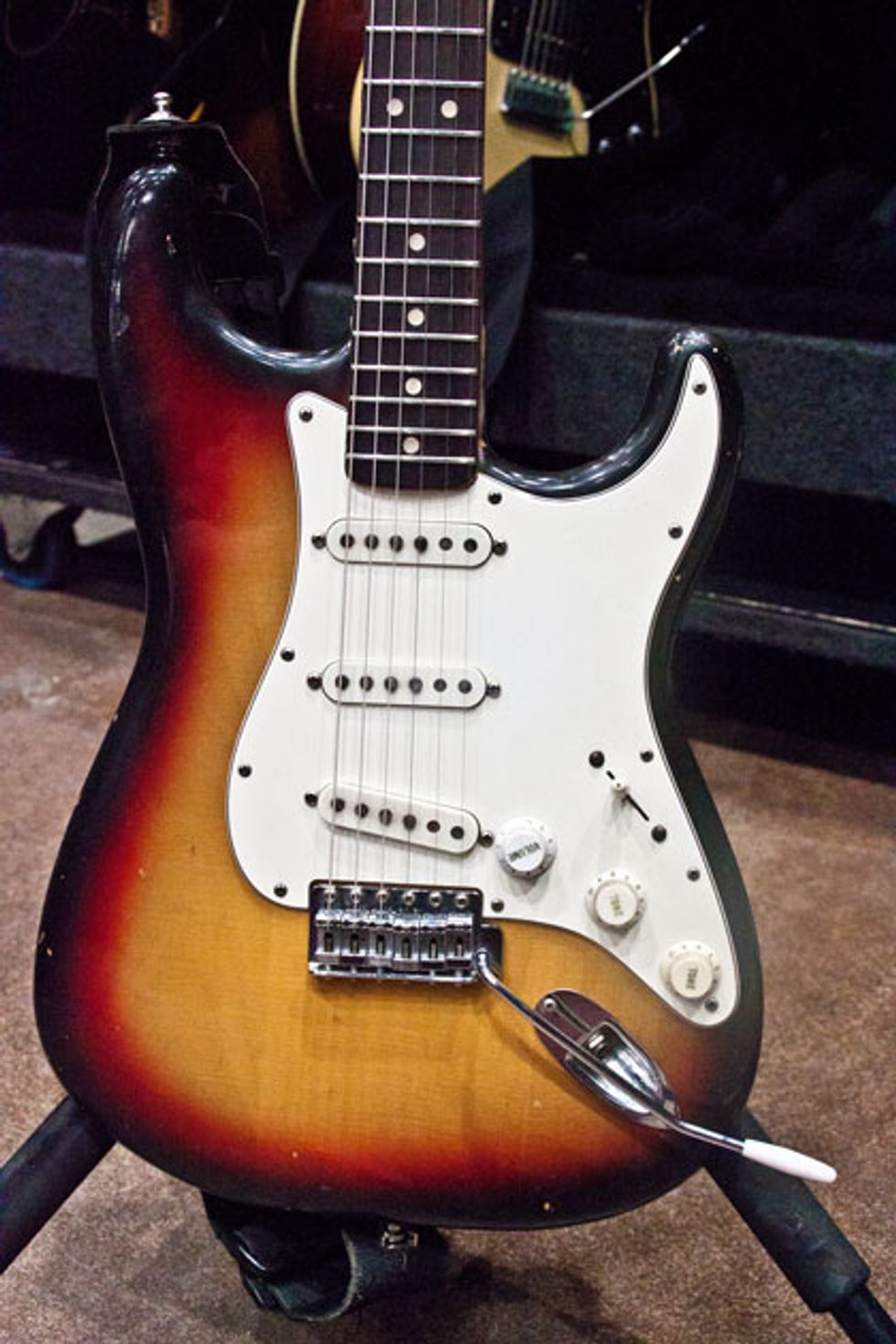
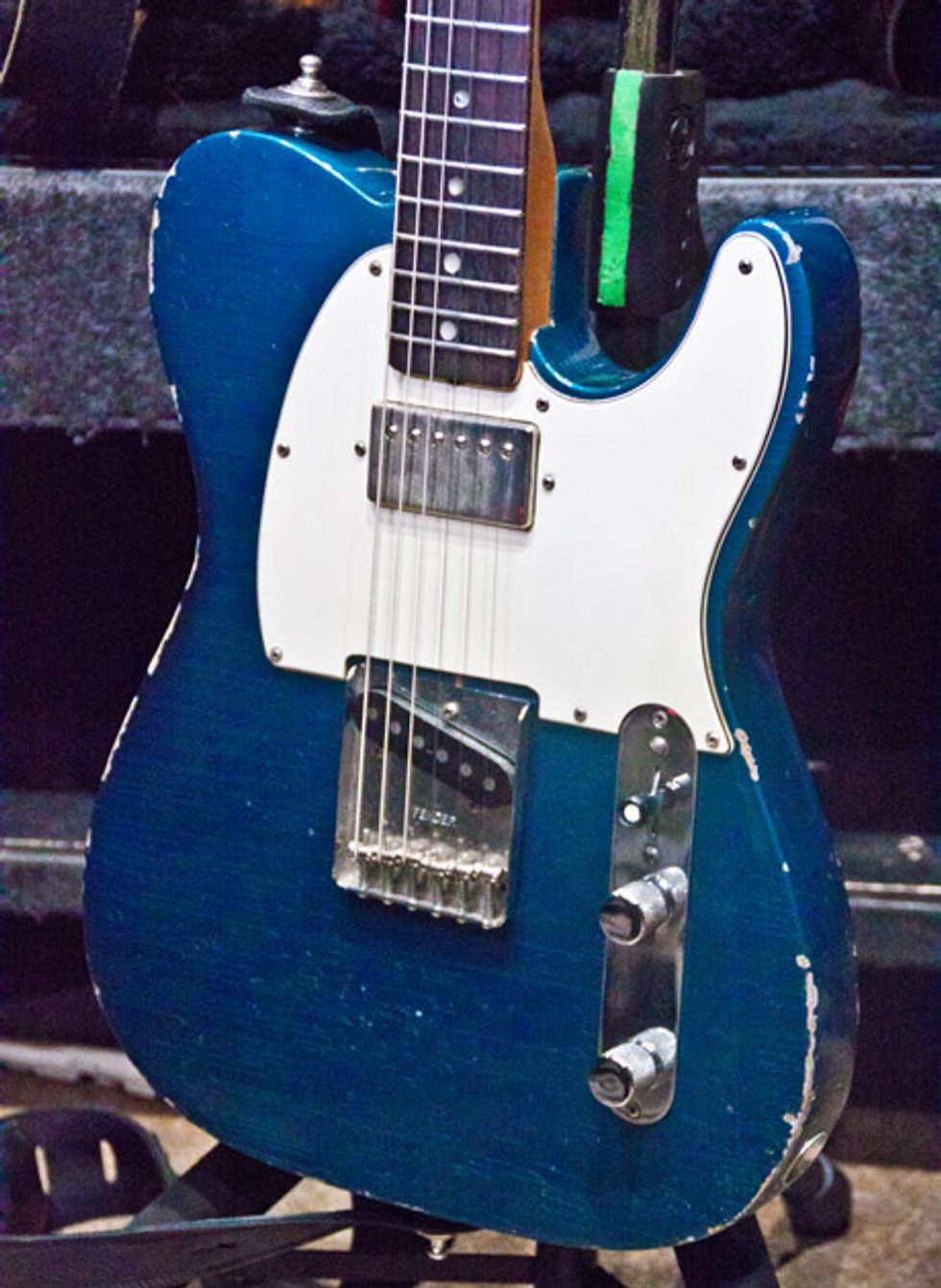
Lead guitarist Craig Bartock uses a variety of Fender and Fender-inspired instruments, including an Albert E. Custom S-style with Seymour Duncan pickups and a blend knob in place of a second tone control. He uses a Line 6 JTV-69S-US James Tyler Variax (via DI) for banjo sounds on “Steamboat Annie.” He plays a Jason Stockwell-built T-style strung with heavier .010 sets (he normally uses .009s) for the band’s frequent cover of Zeppelin’s “The Rain Song,” and uses a circa-’73 Fender Strat (shown here) with Sperzel locking tuners for “Magic Man” and to cover Trower’s “Day of the Eagle.”
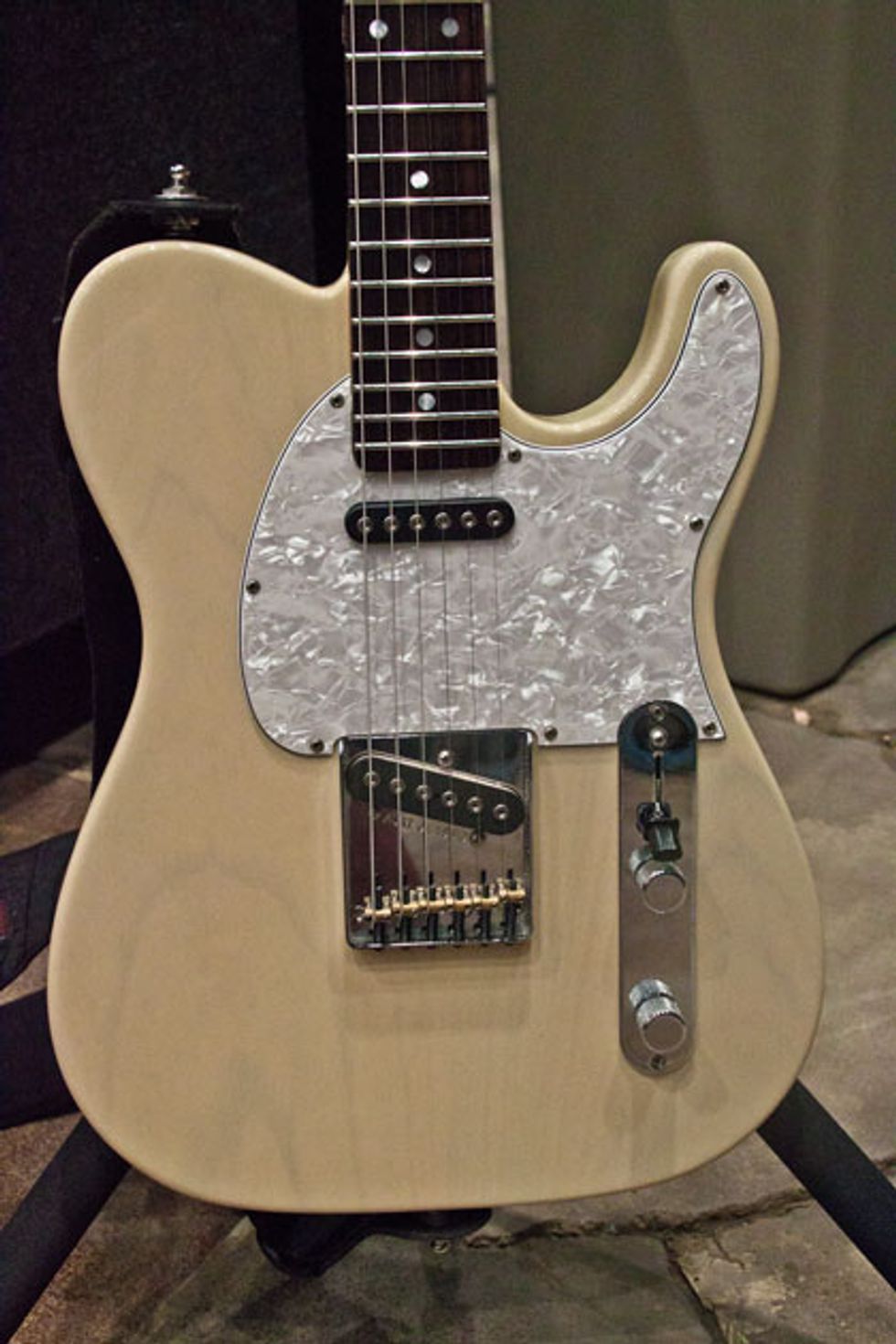
One of his favorite guitars is a circa-2011 G&L ASAT Classic (shown here). “It’s the perfect go-between a Gibson and a Fender,” he says. He also uses a Stockwell-built T-style with Duncan Designed P-90s and an S-style vibrato.
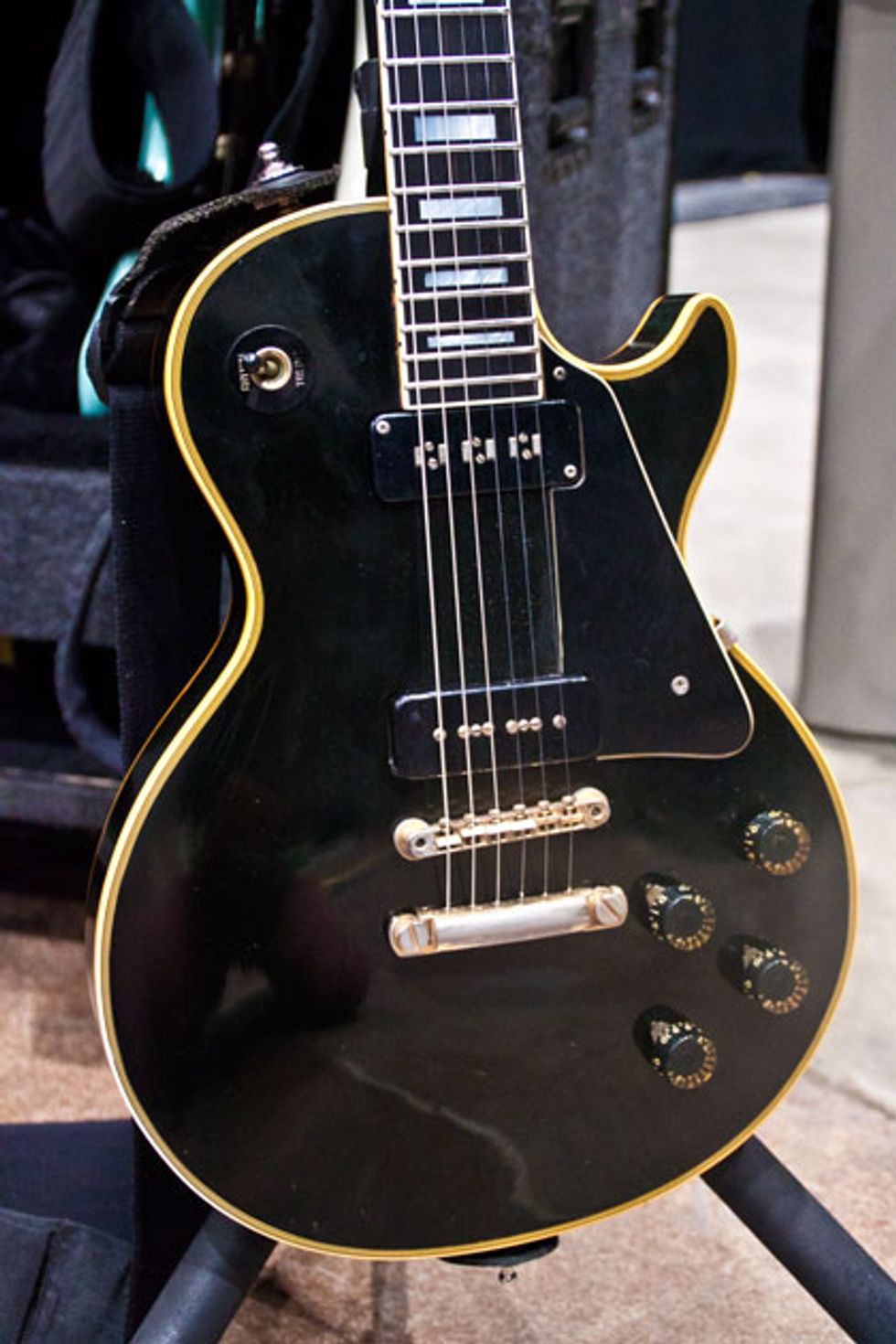
The oldest guitar that Bartock braves the road with on this tour is a limited-edition 1971 reissue of a Gibson 1955 Les Paul Custom—complete with original “staple” pickup in the neck position—that he uses for three Zep tunes in each night’s encore.
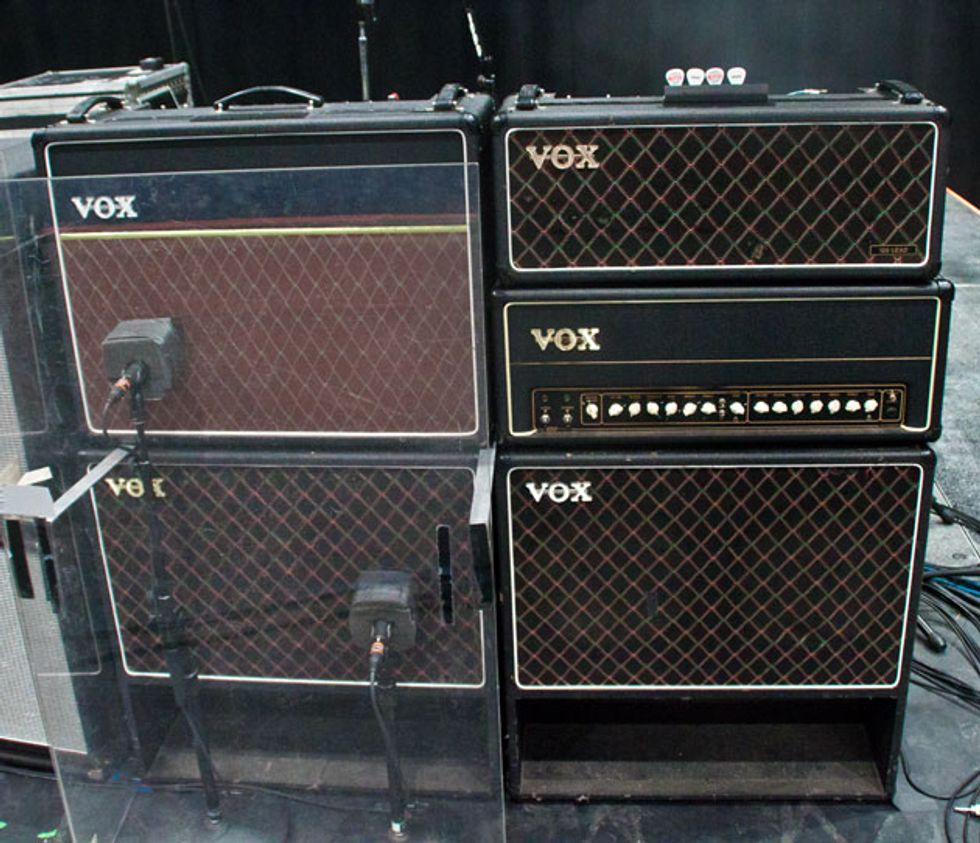
Bartock is a Vox guy through and through. He prefers a Rose Morris-era V125 head and matching ported 2x12 cab running in tandem with a circa-’95, British-built AC30 with Celestion Greenback speakers. For backup, he’s got a recent-vintage Vox AC50 and another ported 2x12 cab, as well as a VVT head.
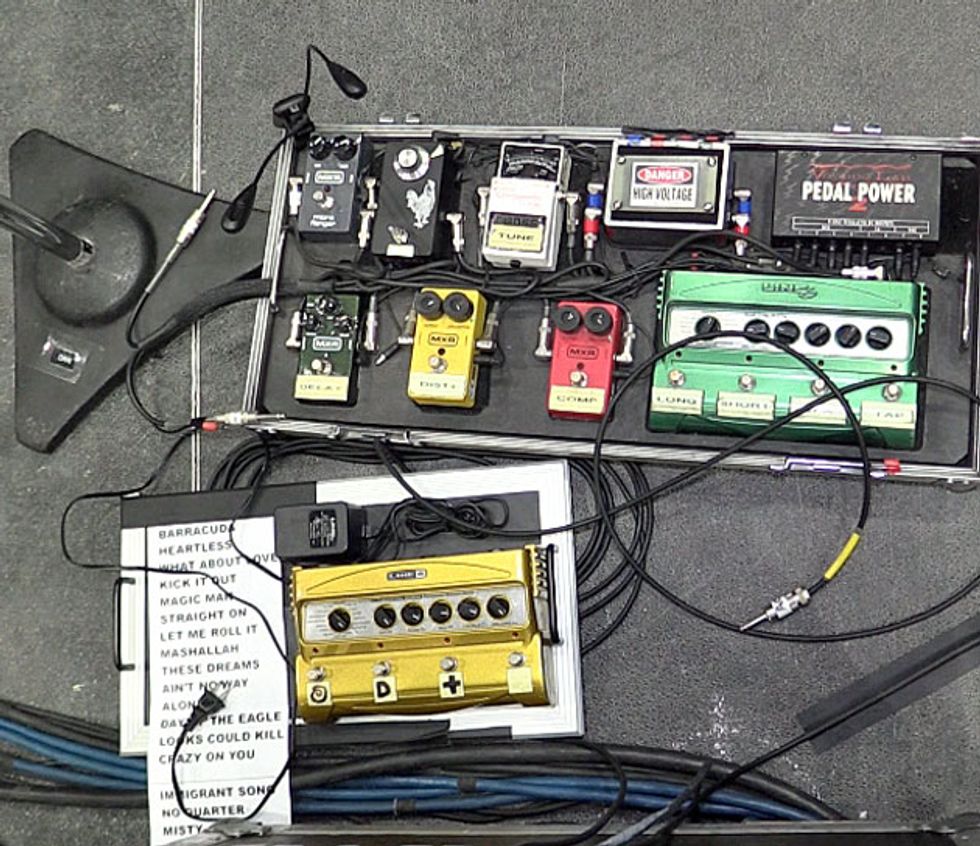
The stomp station at Bartock’s feet is relatively straightforward. A Voodoo Lab Pedal Power 2 drives a Boss TU-3 tuner, a custom, rooster-emblazoned boost pedal, multiple MXRs—a Micro Flanger, Dyna Comp, Carbon Copy, and Distortion+—and two Line 6 pedals, the DM4 Distortion Modeler and DL4 Delay Modeler.
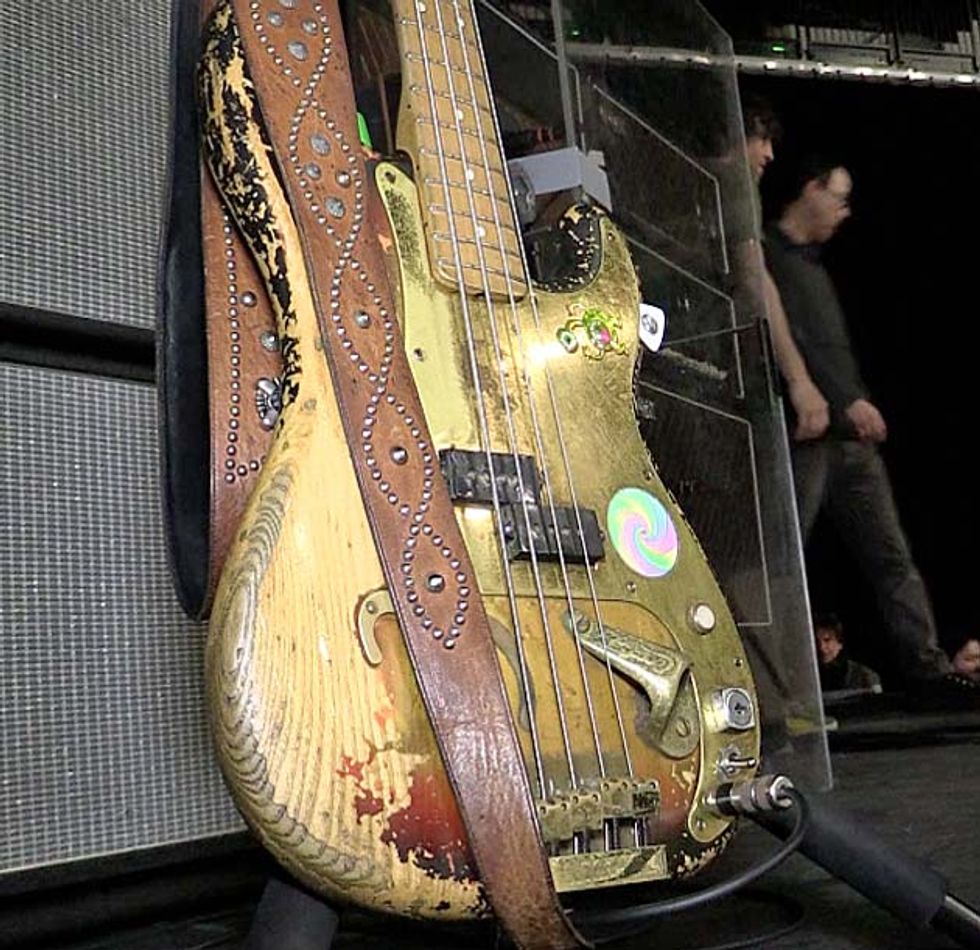
Heart’s low-end anchor for their current tour is session ace Dan Rothchild, who relies primarily on an early- to late-’70s Fender P bass that’s outfitted with a beefy, Badass-style Ibanez bridge, and an original pickup rewound by Rick Turner. Its coolest features, however, include a Coca-Cola bottle opener (from Rothchild’s underage days when friendly bartenders snuck him libations), a kill switch, and volume- and tone-control holes filled with a doorbell switch and what appears to be a soda-machine lock. His backup bass—a Bonneville Guitars J-style—is used for songs like “Dog & Butterfly.”
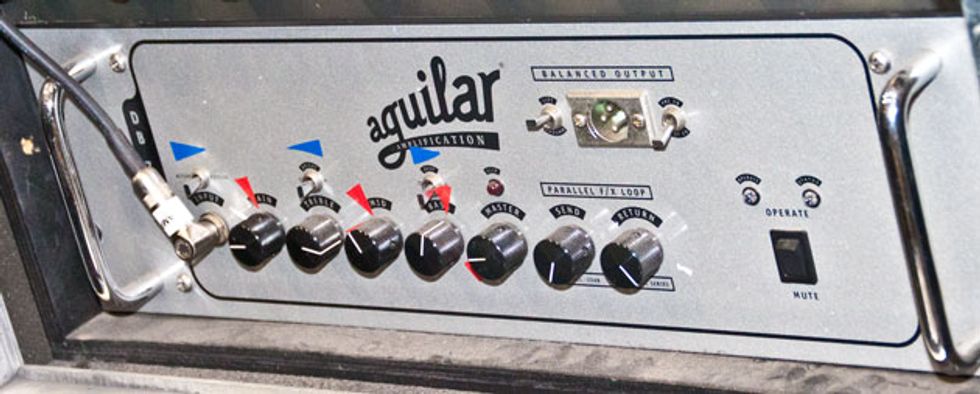
Rothchild’s main amp is an Aguilar DB750 head powering three Aguilar cabs—a 4x12, a 4x10, and a 1x15.
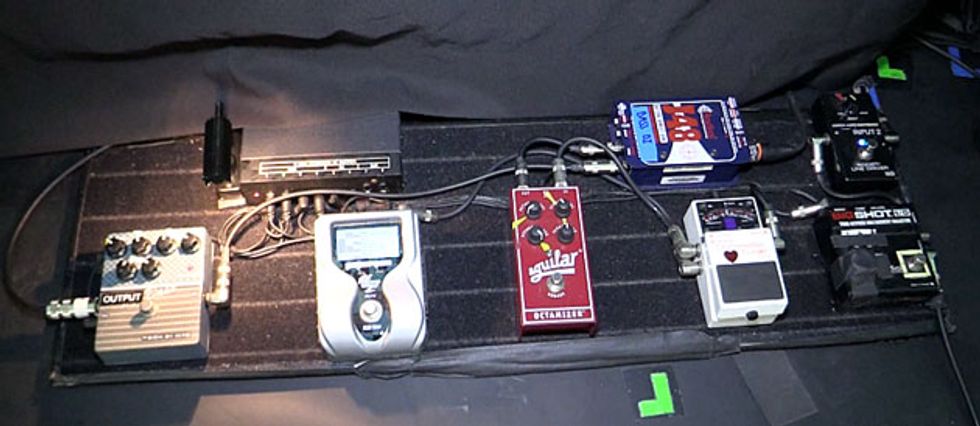
Most of Rothchild’s pedalboard is dedicated to switching between his two basses. He’s got a Radial J48 DI, as well as a Radial Big Shot A/B box that’s fed by his P bass, and either his backup bass or a Moog synth (used for Zep’s “No Quarter” and Heart’s “Heaven”). He also has a Custom Audio Electronics Boost/Line Driver to match output between basses, and two tuners—a Boss TU-3 for muting, and a Peterson StroboStomp 2 that remains active while letting signal through. Rothchild also has an Aguilar Octamizer and a Tech 21 VT Bass pedal. Everything’s powered by a Voodoo Lab brick.
Premier Guitar’s Shawn Hammond met with Ann and Nancy Wilson’s guitar tech, Jeff Ousley, lead guitarist Craig Bartock, and bassist Dan Rothchild before Heart’s show at the U.S. Cellular Center in Cedar Rapids, Iowa, on March 21, 2015. Ousley—who’s been maintaining the Wilson sisters’ gear (and making them mean cups of coffee) for more than 20 years—walked us through everything from Ann’s custom Martin acoustics to Nancy’s vintage SG and Tele, while Bartock and Rothchild shared their cool customized instruments.