
Long ago, in a distant music galaxy, high-gain electric guitar tones were recorded in a studio where a vicious maelstrom of electrified air particles smashed and collided with every square inch of surface in the live room. This was the room where the 100-watt amps were dimed for days with impunity. Outside the studio, recording your 100-watt head involved cringe-worthy negotiations with family, friends, neighbors, and the police. You either turned your amp up loud enough to make it behave like an amp, thereby irritating everyone within a three-house radius, or you turned it down to a modest “respectable street” volume, feeling the shame of knowing you sold out your tone for a roof over your head at the end of the day.
Modern guitarists have inherited a different problem. We now have amp sims, cab sims, modelers, IR loaders, captures, profiles, and enough virtual gear to make a 1970s arena-rock band look like the zombified jazz brunch gentlemen playing quietly in the corner of the community center just before the puppet show. From this plethora of choices, I’d like to focus on one that I feel is often obscured from the spotlight, yet contributes massively to your sound. I’m talking about the cabinet. Tighten up your belts, the Dojo is now open.
Here’s a great secret: The cabinet is not a footnote. We speak lovingly about plexis, tweeds, blackface combos, and modern high-gain titans, but the whole picture of a great recorded electric guitar tone is the amp and the speaker cabinet coupled with the right microphone. Proper attention placed on these three components is the main reason great guitar tone sounds like a polished record instead of a science project.
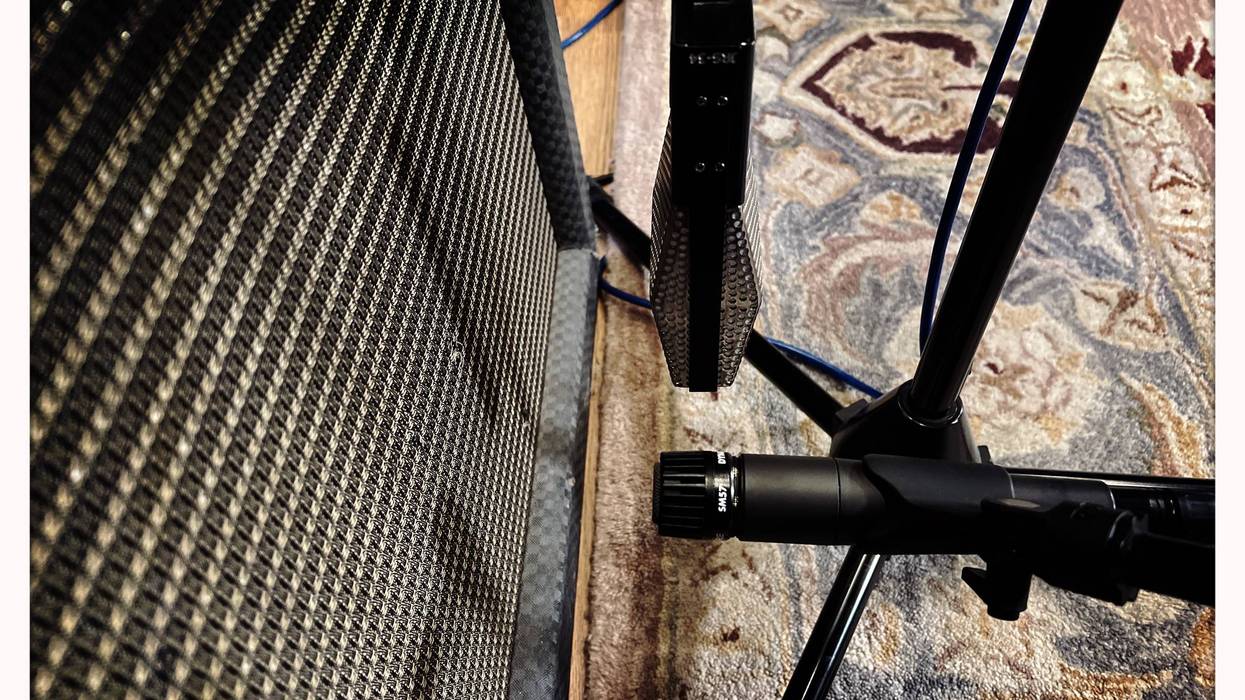
Ever heard a raw, distorted amp signal without a cabinet? To me it sounds like a duck call inside a blender—raspy, abrasive, all top-end frequencies. Awful. If you’re mic’ing your guitar amp old-school, spend the QT to learn your cabinet’s sweet spots—there will be many. Whether you have one, two, or four speakers in your cabinet, and whether the cabinet is open back, ported, or closed, it all collectively acts as a beautifully imperfect filter. It rolls off harsh top end, reshapes the resonant peaks, accentuates midrange, and adds bottom. The good news with today’s technology is that it’s never been easier to find and audition these parameters.
Digitally, amp sims and cab sims both use IRs (Impulse Responses). Unlike an amp sim, which models all the stages of the amplifier, a cab sim models the speaker(s), cabinet, microphone, mic position, preamp path, and sometimes room contribution. When you place an IR after an amp sim, you are essentially saying, “Take this virtual amp and play it through this captured cabinet/mic setup.”
"Ever heard a raw, distorted amp signal without a cabinet? To me it sounds like a duck call inside a blender—raspy, abrasive, all top-end frequencies."
Apply this real world formula: Find a sweet spot, place a mic, record, evaluate. You can achieve this same effect virtually, and while the speaker and cabinet IRs are often separated, they can feel more dramatic than changing amp IRs. This is the area worthy of spending significant time in search for your perfect tone. Changing the IRs from a 1x12 with a bright mic position to a darker 4x12 with a ribbon mic can easily alter the emotional nature of the track. A dense rock rhythm part may need less low end than you think. The bass guitar and kick drum typically already have property rights down there. A fizzy high-gain solo tone may not require more gain, but rather a darker cabinet, a different mic position, or a low-pass filter. A clean part that disappears in the track may not need more volume, just a cabinet with a stronger upper-mid IR fingerprint.
A little bit of hard-earned advice: The guitar sound that makes you grin when soloed may be too big, too wide, or too woolly in context of the song. That last sentence is worth taping to your studio wall: Soloed guitar tone and mix guitar tone are not always the same animal. So while you’re combing through endless combinations of speaker and cabinet IRs, remember to audition them both solo and in the mix to truly find the best one—and make your decision heavily weighted to what it sounds like in the mix!
Unless, of course, you’re making a solo rhythm-guitar record. You get my point. Until next time. Namaste.