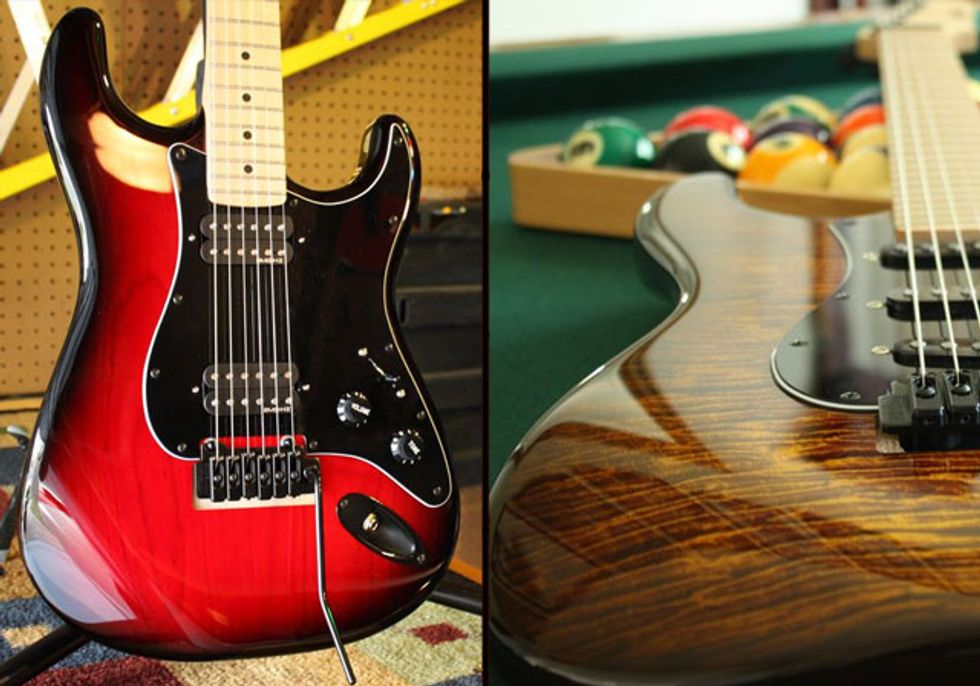
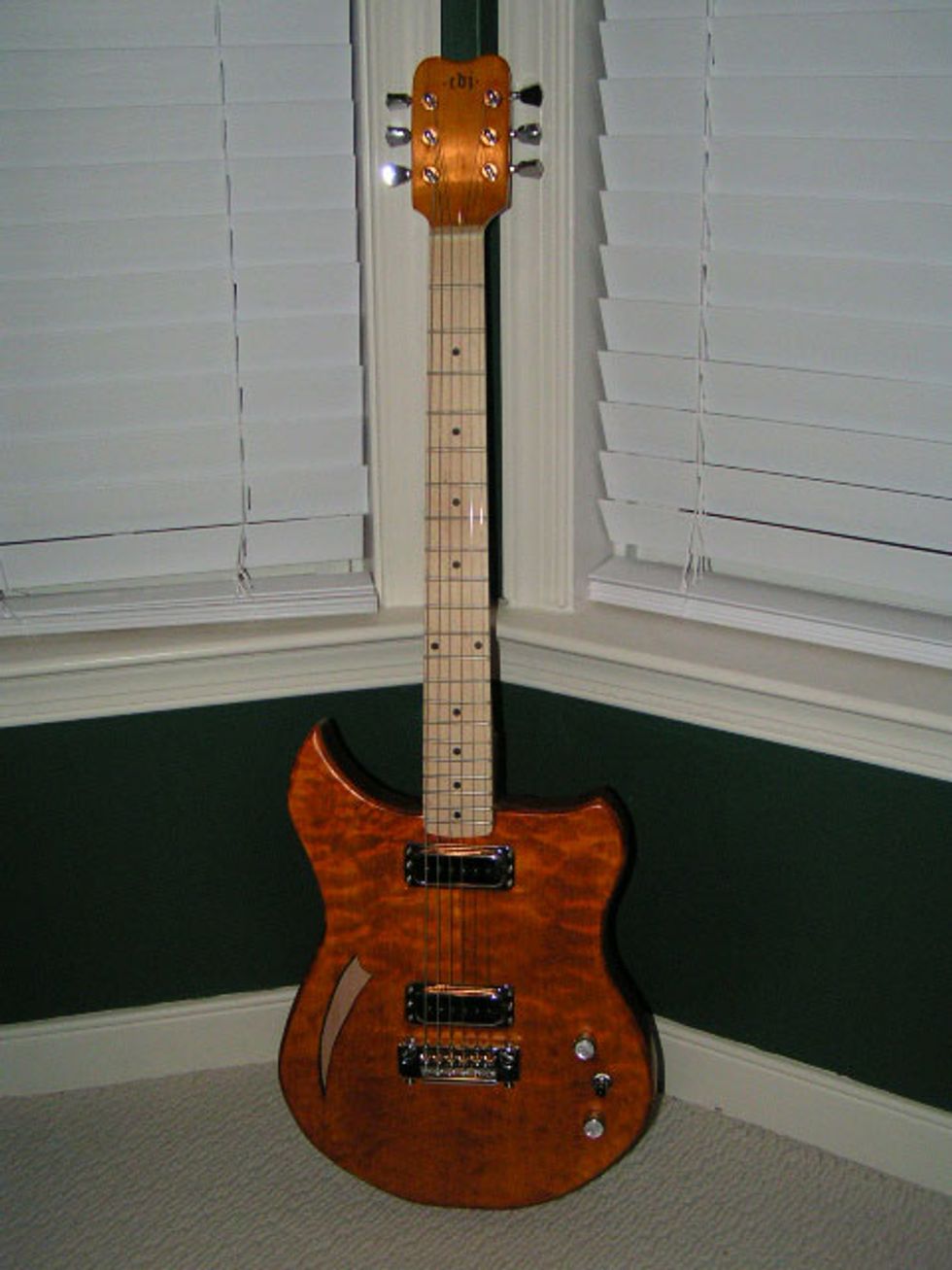
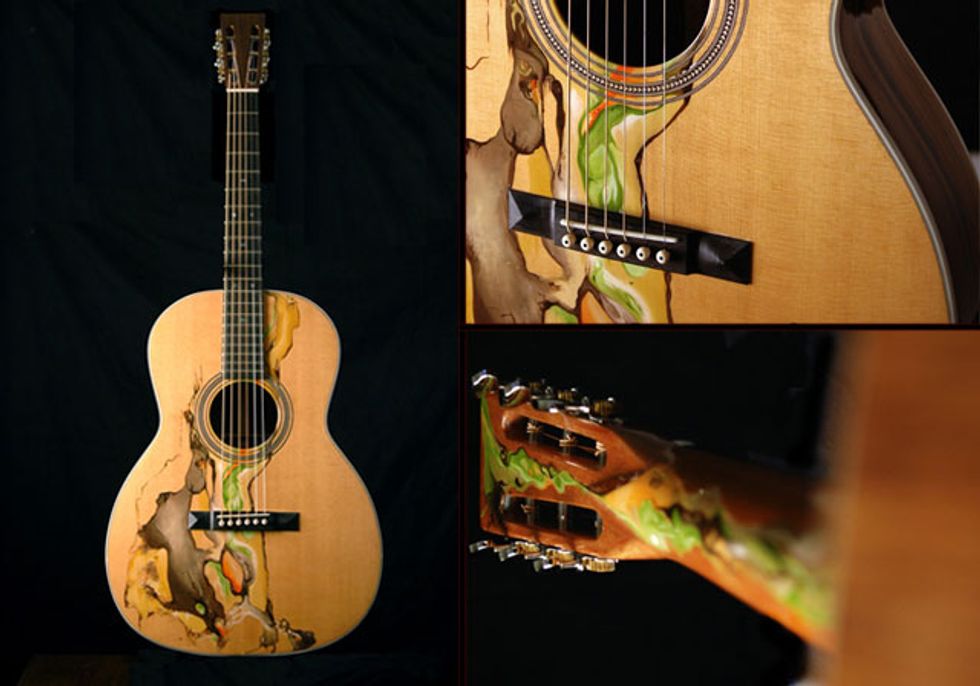
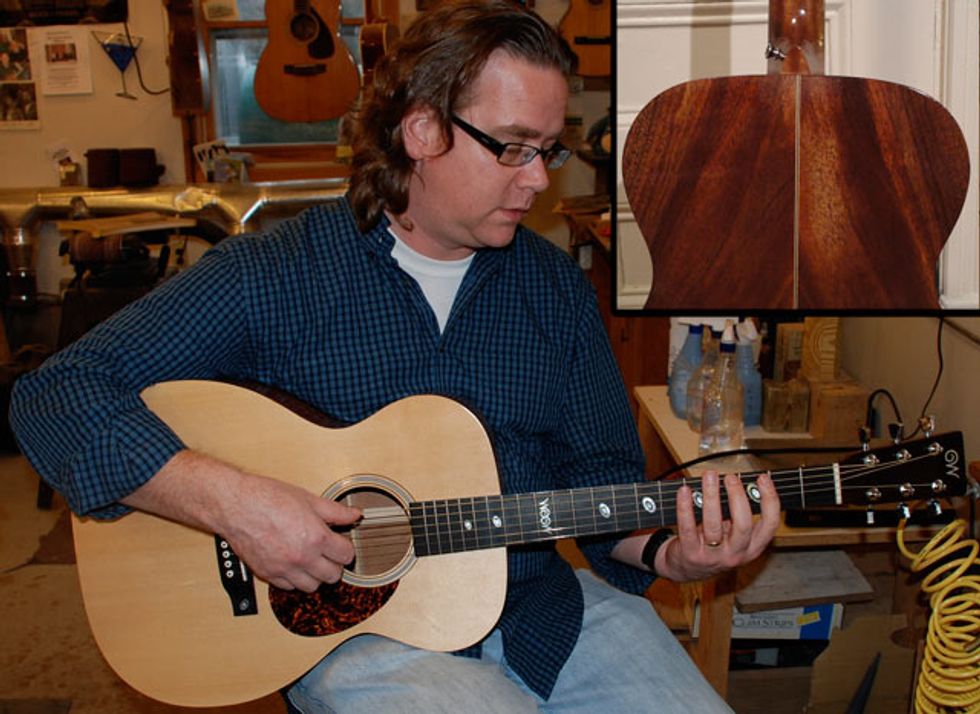
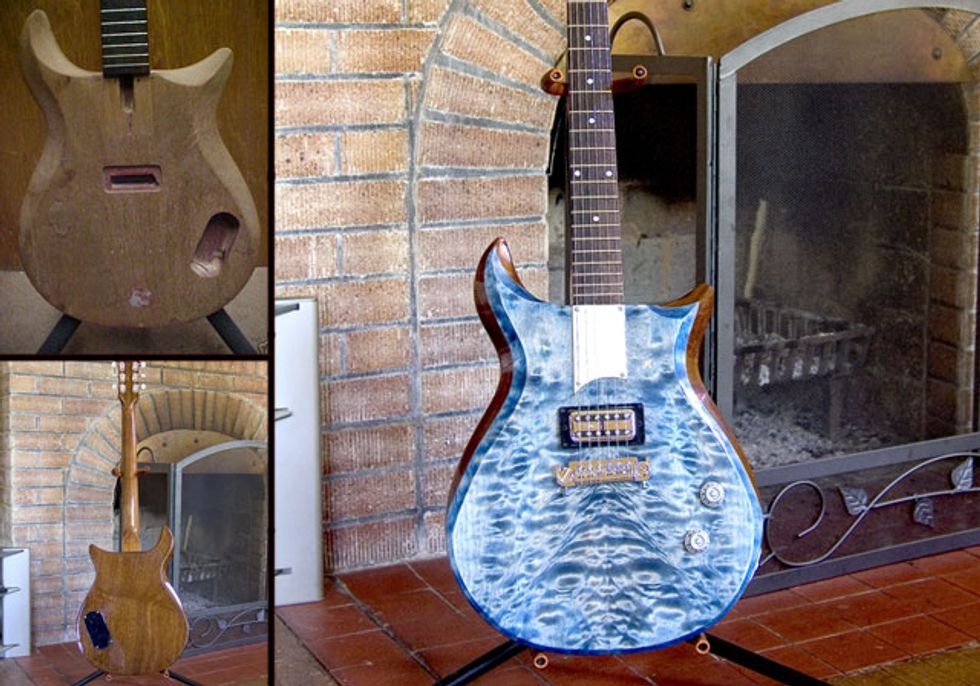
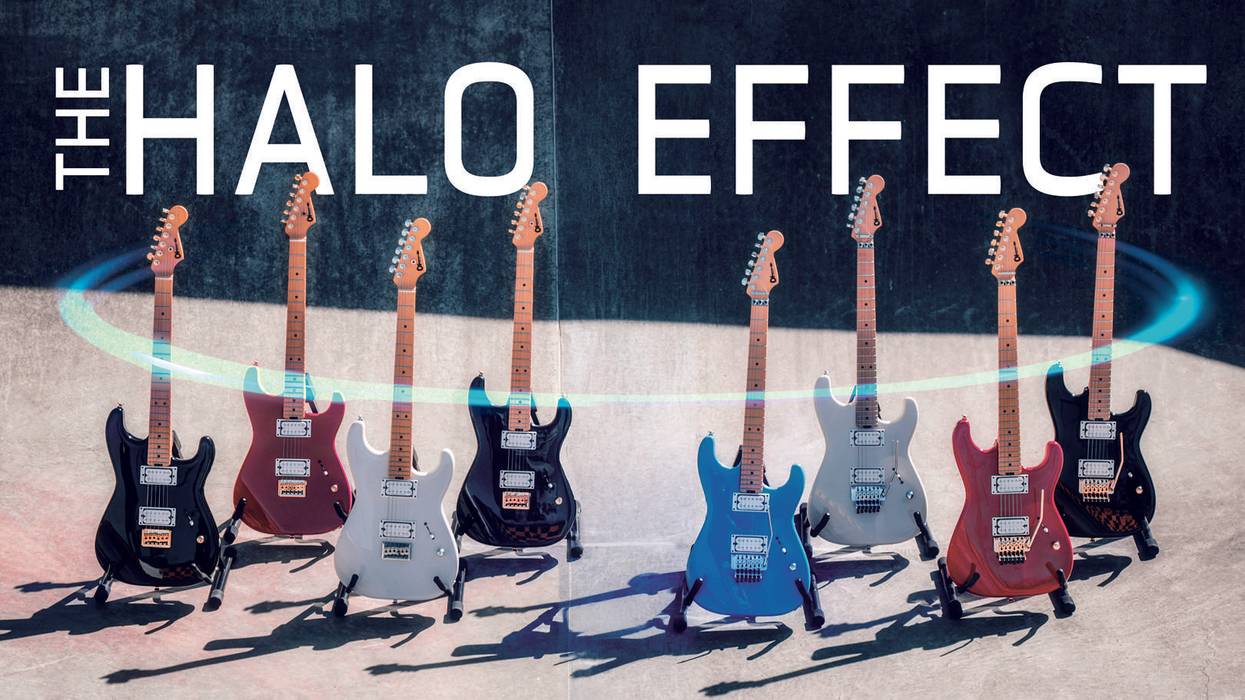
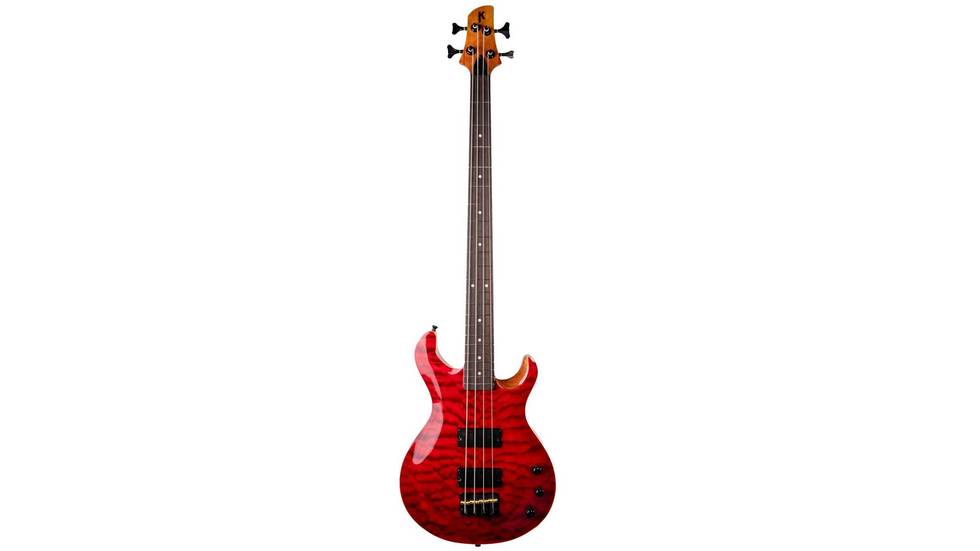
The superstrat was not born in a design studio. It was not shaped by a focus group, nor was it conceived as part of a grand plan to reinvent the electric guitar. It evolved because one player demanded more from the instrument than it had ever delivered before. When Eddie Van Halen assembled his now-legendary Frankenstrat, he wasn’t trying to create a new category of guitar. He was solving problems. He wanted an instrument that could survive aggressive tremolo abuse, deliver more power and thickness, and respond to the speed and articulation of the music he heard in his head. Every modification—hotter pickups, a flatter fingerboard radius, larger frets, a locking tremolo—brought the guitar closer to that vision.
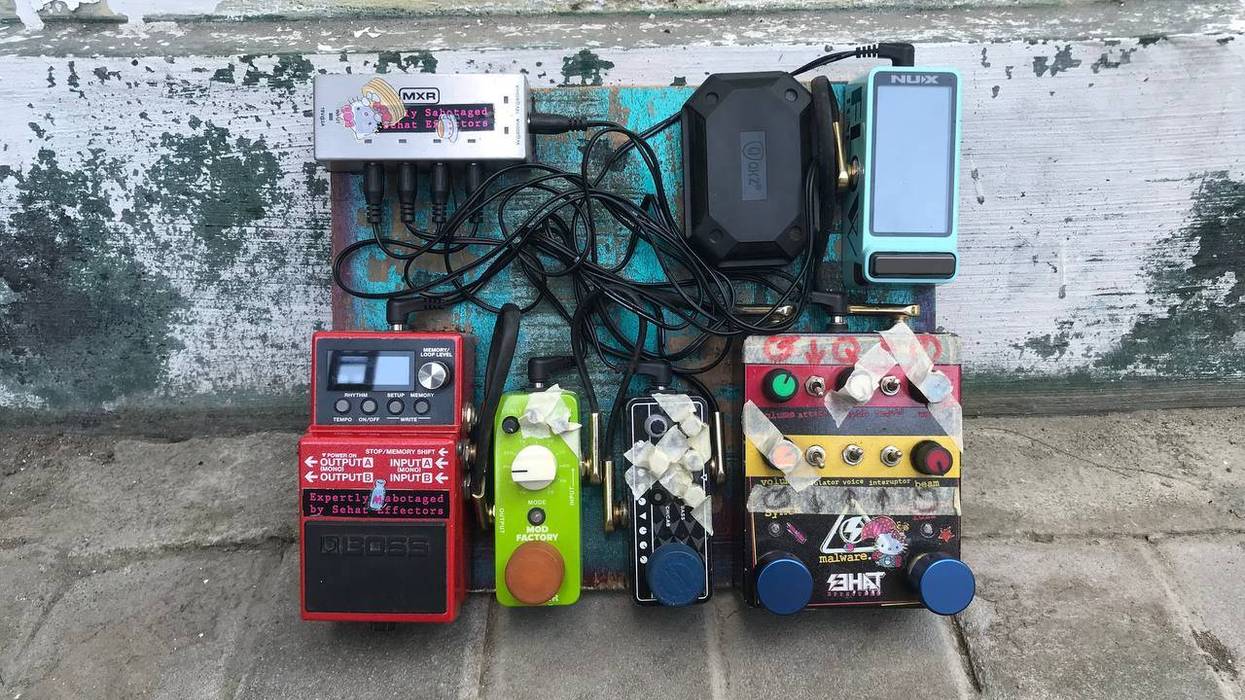
My touring pedalboard for small gigs. It starts with a NUX tuner with buffered or true bypass options. When I use active pickups, I switch it to true bypass. At the end, I always use a Boss pedal, which also has a buffer.
Photo by Putro Sehat
In Helmet front man Page Hamilton’s 2014 Rig Rundown, he highlighted the 12AX7-driven Fryette Valvulator Tube Buffer, stating, “That is a key piece of gear in my sound, always on my pedalboard.” For a precision-minded musician like Hamilton, a quality buffer can be a foundational part of the rig.
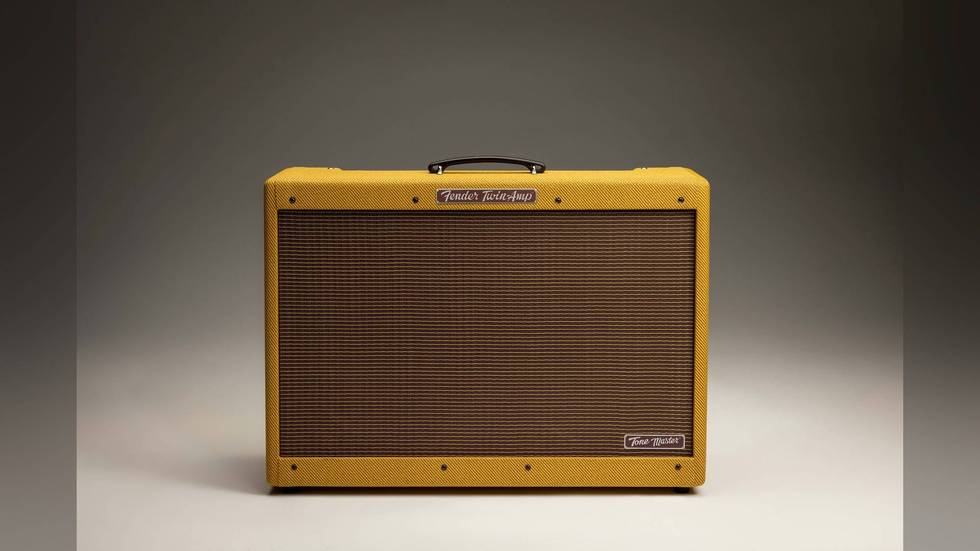
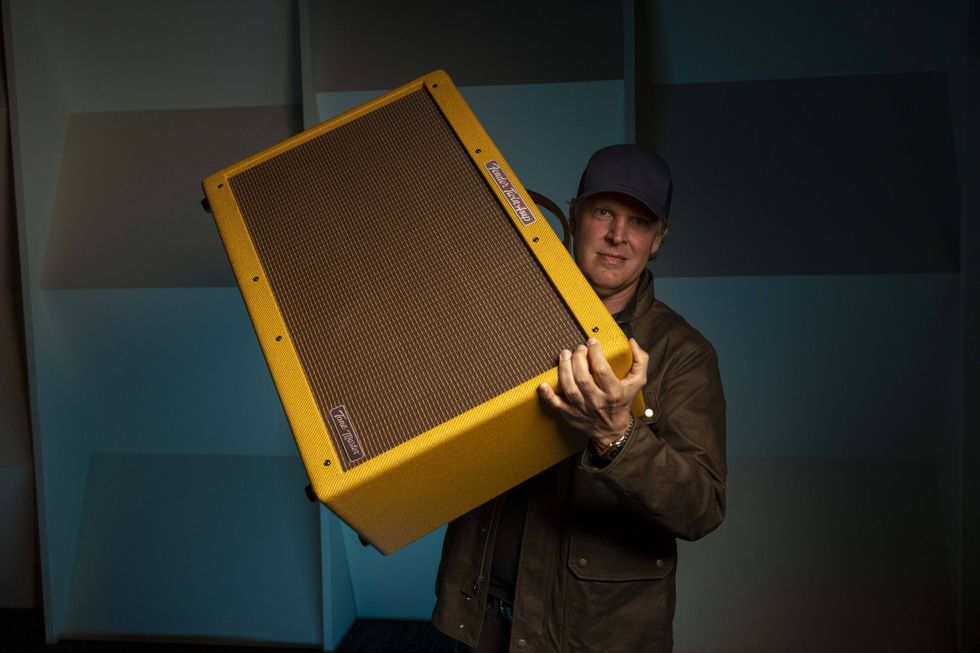
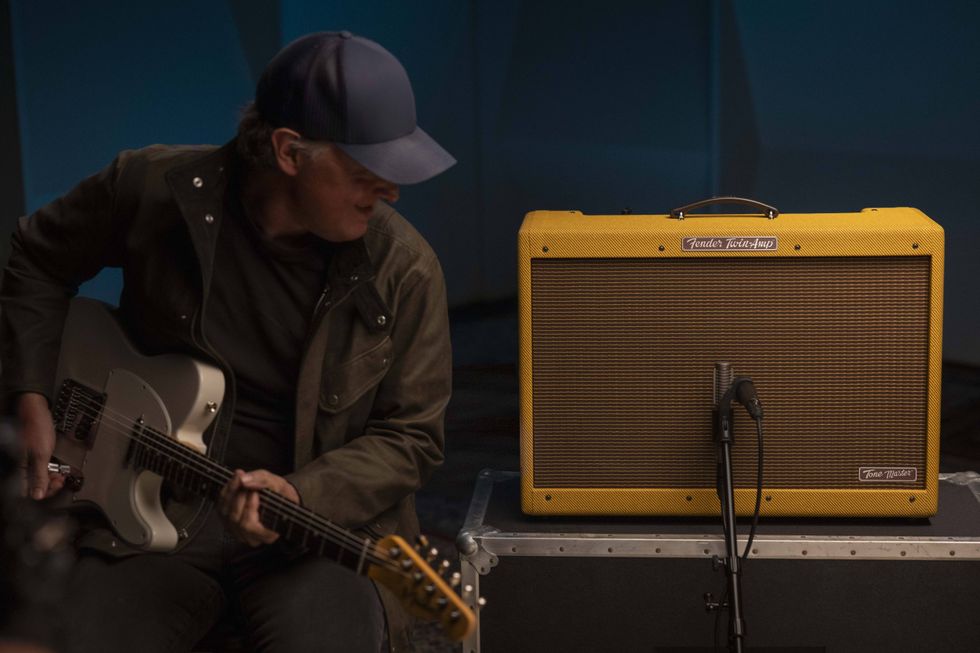
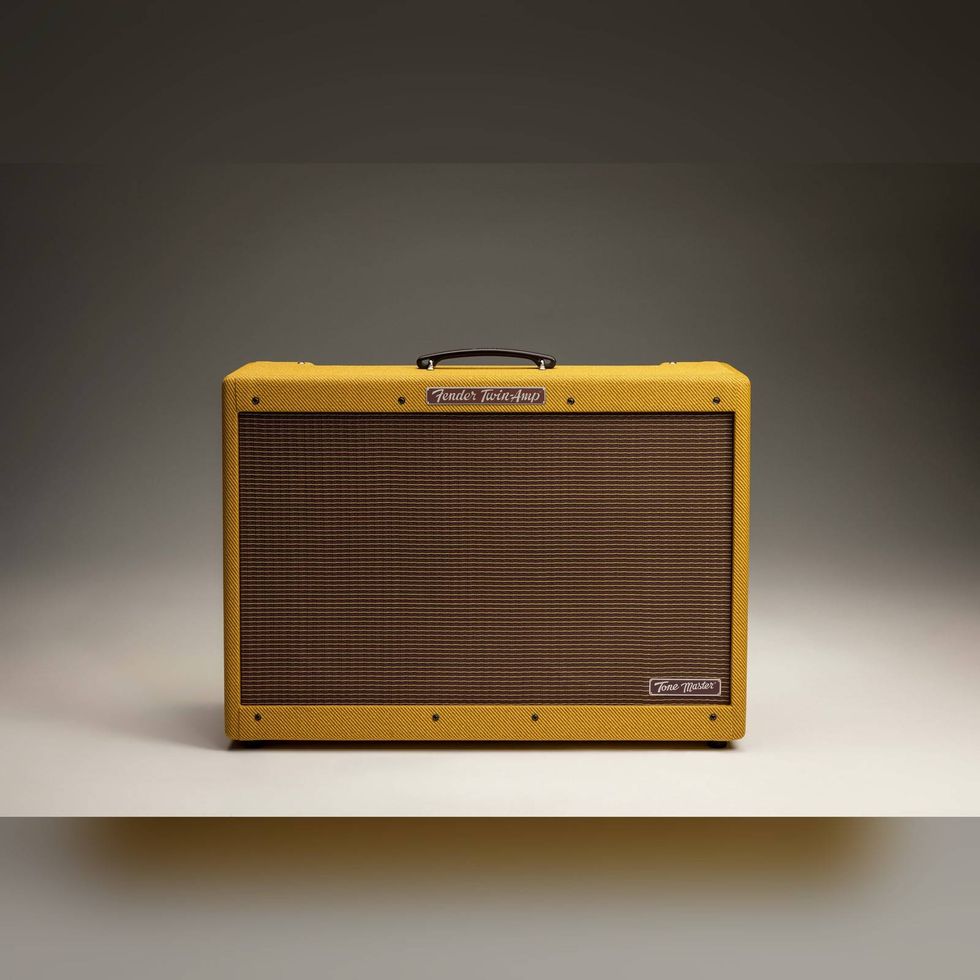
Fender has unveiled the Tone Master ’59 Twin-Amp JB Edition, the first signature amplifier in Fender’s Tone Master series, created in close collaboration with blues-rock guitarist and longtime Fender artist Joe Bonamassa. Inspired by Bonamassa’s prized late-’50s high-powered tweed Twin amps — a mainstay of his touring and studio rig — the new model brings the sound and response of his vintage originals together with the versatility and functionality of Fender’s modern Tone Master platform.
“I wanted to hate it,” said Joe Bonamassa. “We’re all in agreement that this amp was tighter, punchier, and better. I never thought I’d see in my lifetime the fact that I’d be sitting next to a digital amp. Sound makes you play. Sound inspires you to play. You just need to know how to unlock the sound you hear in your head and get it out.”
Powered by Fender’s Tone Master modeling technology, this signature amplifier combines the character of Bonamassa’s beloved vintage tube amps with the convenience and versatility of modern engineering. The 2x12” ‘59 Twin delivers crystalline cleans that transform into aggressive, distinctive overdrive when pushed into its sweet spot. A six-way power attenuator makes those tones accessible at bedroom-friendly volumes, while the amp can reach up to 85W for the stage. Celestion JB Neodymium Speakers deliver an expansive frequency range, and onboard controls including a vintage/tight switch, line output with level control, ground lift and three-way cabinet simulator let players further shape their tone.
Key Features Include:
Joe Bonamassa Signature Tone: Based on the legendary Fender 5F8-A "high-powered" tweed Twin circuit and voiced after Joe Bonamassa's own prized late-'50s amps, delivering bold cleans and rich, dynamic overdrive.
Dual Celestion JB Neodymium Speakers: Custom-designed lightweight 12" speakers capture the punch, warmth and articulation of Joe's touring rig while reducing overall weight.
Stage-to-Home Power Control: A rear-panel output selector provides full power plus five attenuated settings, making the iconic high-power tweed Twin tone accessible at any volume.
Premium Modern Performance: Features top-panel convolution spring reverb, an effects loop for time-based effects and a rear-panel "Vintage-Tight" switch for enhanced low-end response.
Studio-Ready Connectivity: Balanced XLR line out with three onboard cabinet impulse responses, plus fully customizable speaker IRs via the Tone Master IR Manager app for seamless recording and live performance.
Designed in collaboration with Joe Bonamassa. Full technical specifications are listed below.
With a career that began at 12 opening for B.B. King, Joe Bonamassa was destined for guitar greatness. Known affectionately as JoBo, he has since released 17 LPs and holds the world record for the most No. 1 blues albums. Beyond his storied career as a performer and collaborator, Bonamassa is also renowned for his extensive gear collection. Across his Los Angeles, Nashville and New York City headquarters, he has amassed a rare and sought-after assortment of vintage amplifiers, instruments and effects.
“Joe Bonamassa is one of the world’s foremost authorities on vintage amplifiers, and he knows these original Twins as well as anyone,” said Max Gutnik, Chief Product Officer, Fender Electronics & Digital. “For someone with Joe’s ears, experience and deep commitment to vintage tube amps to choose a digital Fender, and say it sounds even better than the original, is a real inflection point for our industry. It demonstrates just how far this technology has come and, more importantly, the extraordinary accuracy with which Fender can now recreate the sound, feel and response of our most iconic amplifiers. That’s what Tone Master is all about: preserving everything players love about these legendary amps while making them more useful for the way musicians play today.”
Fender’s Tone Master ’59 Twin-Amp JB Edition brings one of Bonamassa’s most relied-upon vintage Fender sounds to players in a format designed for the stage, studio and home. It carries a street price of $1,999.99 USD, £1,789 GBP, €2,099 EUR, $2,999 AUD, ¥308,000 JPY. For more information visit fender.com.
Fender
Tone Master ’59 Twin-Amp JB Edition
Fender has unveiled the Tone Master ’59 Twin-Amp JB Edition, the first signature amplifier in Fender’s Tone Master series, created in close collaboration with blues-rock guitarist and longtime Fender artist Joe Bonamassa. Inspired by Bonamassa’s prized late-’50s high-powered tweed Twin amps — a mainstay of his touring and studio rig — the new model brings the sound and response of his vintage originals together with the versatility and functionality of Fender’s modern Tone Master platform.
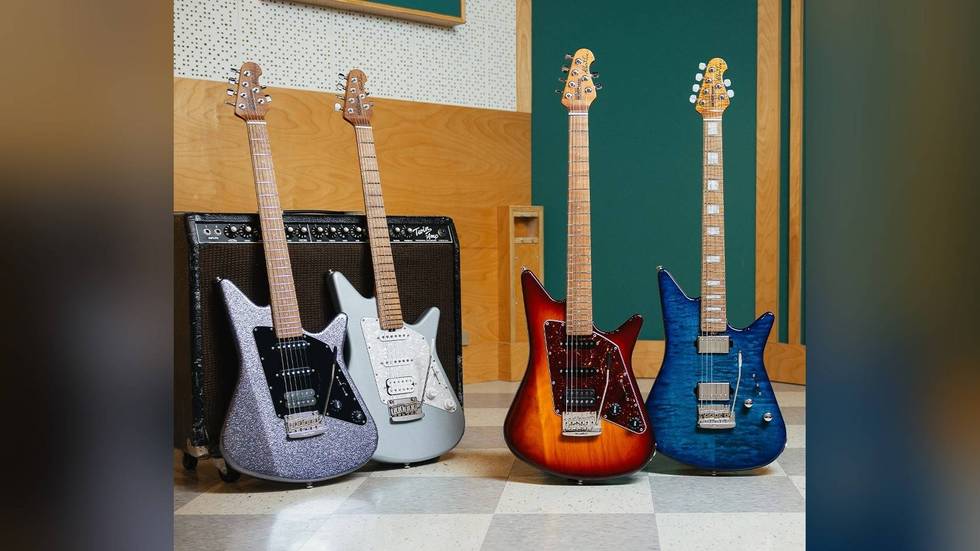
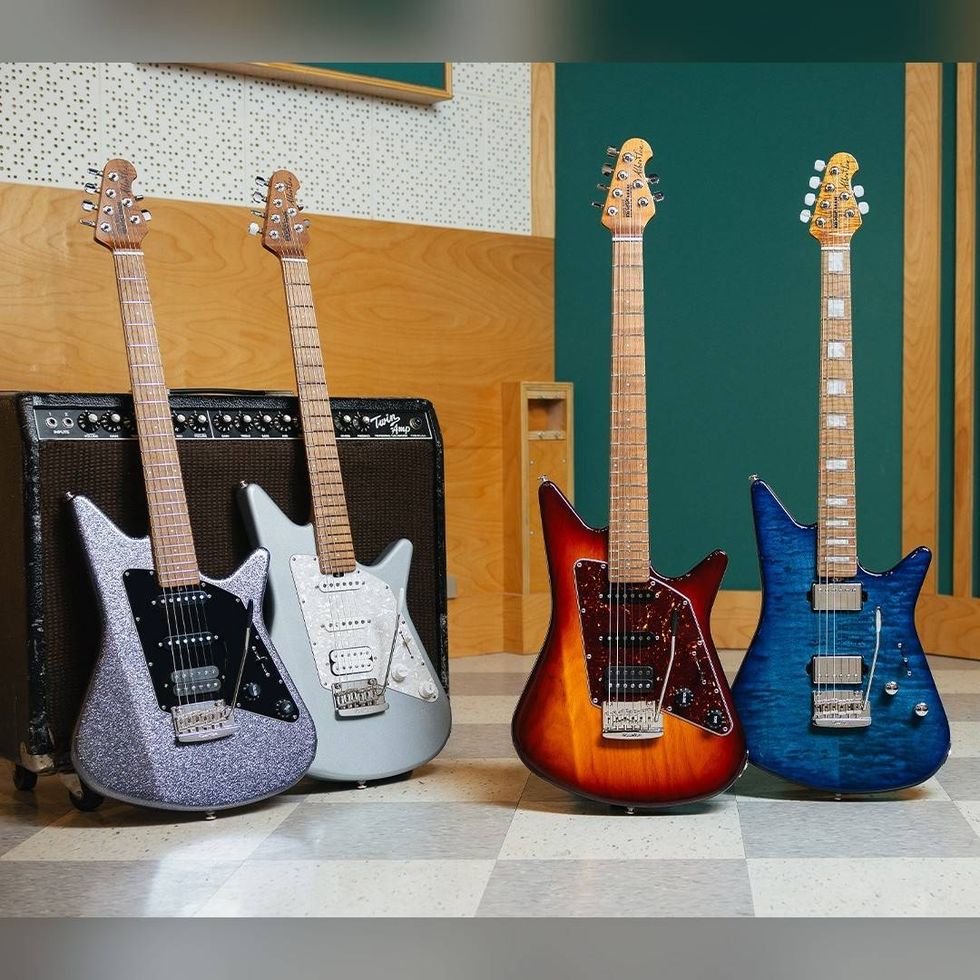
Ernie Ball Music Man has introduced two new takes on the Albert Lee guitar: the Albert Lee HSS, which pairs the model's distinctive body shape with a versatile HSS pickup configuration, and the Ball Family Reserve Albert Lee in Malibu Burst, limited to 75 instruments worldwide.
The Albert Lee HSS combines the distinctive Albert Lee body shape with a DiMarzio custom humbucker, first developed for the Music Man Axis, and Albert Lee's signature Seymour Duncan custom single-coil pickups. A Silent Circuit preamp reduces the 60-cycle hum associated with traditional single coils, while a 5-way selector with master volume and tone controls delivers everything from articulate, chiming cleans to full-bodied humbucker drive. An ash body in a high-gloss finish is paired with a roasted figured maple neck finished in gunstock oil and hand-rubbed wax, with 22 high-profile stainless steel frets on a 25-1/2" scale. White face dots and glow-in-the-dark side markers, a Music Man vintage tremolo, compensated nut, and Schaller M6-IND locking tuners round out a guitar built for players who need one instrument to cover it all. The Albert Lee HSS comes in three striking finishes: Firemist Silver, Honey Burst, and Cosmos Sparkle.
Albert Lee HSS Features:
DiMarzio custom humbucker + Albert Lee signature Seymour Duncan custom single coils
Silent Circuit preamp
Ash body with roasted figured maple neck
22 stainless steel frets
Music Man vintage tremolo and Schaller locking tuners
Strung with Custom RPS Slinkys (10–46)
The Albert Lee HSS is available for a street price of $3,299.
The Ball Family Reserve Albert Lee in Malibu Burst brings premium tonewoods and refined details to the Albert Lee platform. A figured maple top over an okoume body is finished in high-gloss Malibu Burst, paired with a roasted figured maple neck and fretboard in a hand-rubbed oil and wax finish. White pearl Atlante block inlays and glow-in-the-dark side dots give the fretboard a distinctive look, while custom-wound DiMarzio humbuckers—the same pickups found in the Axis—deliver rich, articulate tone through a 5-way selector and 500k volume and tone controls. A Music Man vintage tremolo, compensated nut, locking Schaller tuners, and 22 stainless steel frets on a 10" radius complete the package. Limited to just 75 instruments worldwide.
Ball Family Reserve Albert Lee Features:
Figured maple top on an okoume body in Malibu Burst
Roasted figured maple neck and fretboard
White pearl Atlante block inlays with glow-in-the-dark side dots
Custom-wound DiMarzio humbuckers
Music Man vintage tremolo and locking Schaller tuners
Limited to 75 instruments worldwide
The Ball Family Reserve Albert Lee is available for a street price of $3,799.
Ernie Ball Music Man
Albert Lee HSS
Ernie Ball Music Man has introduced two new takes on the Albert Lee guitar: the Albert Lee HSS, which pairs the model's distinctive body shape with a versatile HSS pickup configuration, and the Ball Family Reserve Albert Lee in Malibu Burst, limited to 75 instruments worldwide.
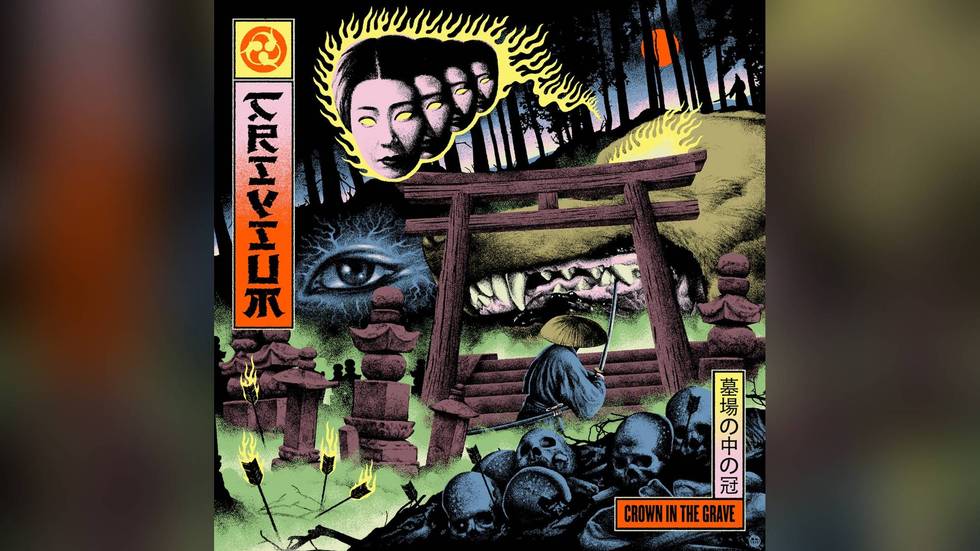
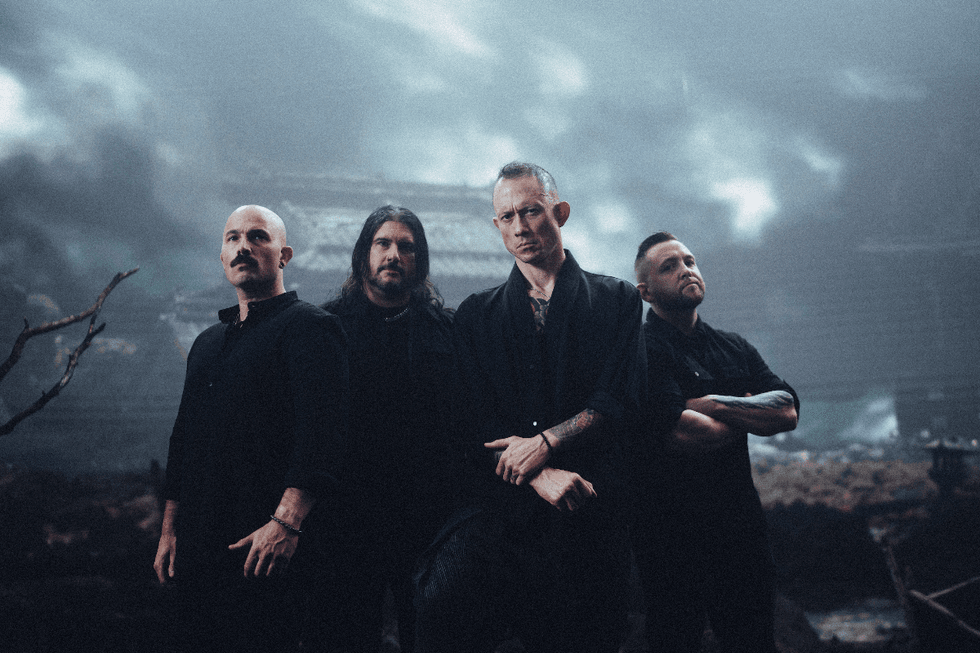
GRAMMY-nominated heavyweights Trivium—vocalist/guitarist Matthew K. Heafy; guitarist Corey Beaulieu; bassist Paolo Gregoletto; and drummer ALEX RÜDINGER—are thrilled to announce their new album Crown in the Grave. It arrives November 20 through Roadrunner Records. Pre-order it here.
Trivium today share the title track, which builds from a gradual progression of layered riffs into an explosive wall of metal, pairing crushing heaviness with the precision, melody, and technical firepower that have defined the band for more than two decades. The song is vintage Trivium—galloping riffs, robust solos, and battering ram percussion, seamlessly sewn together with three-tiered vocals. But like the rest of the album, it stays true to the band's signature sound, all the while pushing it further into new sonic terrain.
The accompanying, Japanese Noh theater-inspired, post-apocalyptic music video brings the album's artwork and themes into a smoke-filled dojo, where the main characters prepare for an impending showdown through a series of tense, atmospheric sequences. Drawing on the band's longtime passion for classic Japanese theater and martial arts, the visual captures the discipline, drama, and focused physicality at the heart of the song's storytelling.
Watch the video, directed by Pavel Trebukhin, here .
"Crown In The Grave is our eleventh record, and when you get this far into a career, it’s easy to rest on what you've already done—or to reinvent yourself just for the sake of it," says Gregoletto. "With this record, we wanted to find the space between those two things: Take everything we've learned and everything that makes Trivium what it is, but present it in ways we hadn't before."
He continues, "We also wanted the record to exist within its own world. That began with the title track, inspired by Akira Kurosawa's Throne of Blood, and led us deeper into Japanese horror and cinema from the '50s, '60s, and '70s. That influence grew into this darker, ghostly atmosphere that became a set of guardrails for the music, lyrics, artwork, and overall identity of the record."
The bassist finishes, "We built our studio so we could give ourselves the time and space to figure out exactly what an eleventh Trivium record should be, and Crown In The Grave is the answer we arrived at. It honors where we’ve been without living in the past, and pushes into new territory without abandoning what makes us Trivium. I think when you hear it, it'll somehow feel both new and like a return."
After over two decades in the spotlight, Trivium have realized their collective potential like never before. They have absorbed the wisdom gained through writing hundreds of songs, the experience derived from playing thousands of shows, and the fire maintained by never giving up and perfected their signature sound at the highest level. The riffs crunch and crack bones, solos burst into flames upon impact, screams bleed truth without filter, and towering hooks break through the clouds. This is Trivium confidently reborn as the beast they were meant to be.
"Facing yourself is the final quest," Heafy observes. "We had to do it as a band, and I had to do it in my personal life. I freed my mind from the constraints of being worried. I made a decision to just sing."
A perfect storm of mental health struggles, physical injuries, and intense anxiety brought him to a crossroads. Bravely, he chose to embrace therapy, found an appropriate medication regimen, and reframed his mindset. "I cleared the plate," the frontman admits. "I stopped trying to be safe and perfect at every show. Instead, I was actually enjoying the experience and living. If I messed up, it was okay because I'm human. With all of the changes Trivium went through, it's like a brand new band."
For the first time, the group crafted Crown In The Grave in their own creative hub and de facto clubhouse—The Hangar—in Orlando. Plus, they officially welcomed drummer Alex Rüdinger (Rüdi) in the studio. During 2015, the drummer nearly joined Trivium, but opted to focus on other endeavors. A decade later, he heeded the call. "It happened when it was meant to," Heafy declares. "Rüdi didn't just kill it on the drums; his contributions as a writer made a huge difference."
Reteaming with longtime producer Josh Wilbur [Korn, Lamb of God] and working with mixer Jacob Hansen [Volbeat, Amon Amarth] for the first time, the musicians rallied around a shared vision. "We took all of the elements of Trivium, honed in on them, and focused on writing songs with big riffs and big hooks,” notes Beaulieu. "We made the record we'd been dying to make. The late great Shaun Glass [Soil] was a big Trivium fan. He'd always say, "You guys don't cook the same meal.' Even though we use the same ingredients, we always make a new dish."
"Any band who has been around this long starts to ask: Where do we go from here?" says Gregoletto. "We decided to challenge ourselves to top everything we've done. We referenced a lot of '90s albums. If you look at The Black Album by Metallica, Countdown To Extinction by Megadeth, or Superunknown by Soundgarden, the choruses are so important, and the songs are relatable. That's what we strived for."
Thematically, Akira Kurosawa's Throne of Blood served as a north star. Gregoletto brought the film to the group’s attention. "Kurosawa took Macbeth and set it in a feudal Japan," the bassist elaborates. "There's minimal dialogue, yet the storyline is powerful. There are these haunting elements of being tempted by fate and this man's downfall."
Trivium will hit the road on November 5 in St. Petersburg, Florida and run through December 19 in Charlotte, North Carolina for a North American headline run with In Flames, Orbit Culture, Fit for an Autopsy, and Frozen Soul in tow. It is a truly stacked lineup that cannot and should not be missed. Get tickets here .
"This fall's Trivium tour is a huge one for us," the band declared upon announcing the tour earlier this year. "The lineup is stacked from top to bottom, and we're honored to have special guests In Flames, who not only influenced our early years but continue to prove time and again why they're one of the greatest metal bands of all time. With Orbit Culture, Fit For An Autopsy, and Frozen Soul rounding out the bill, we can't wait to get out there, kick off this next era of Trivium with Rudi behind the kit, and give you a taste of the new music we've been working on. We'll see you soon!"
Trivium ON TOUR: WITH IN FLAMES, ORBIT CULTURE, FIT FOR AN AUTOPSY, AND FROZEN SOUL:
11/5 — St. Petersburg, FL — Jannus Live
11/6 — Atlanta, GA — The Eastern
11/7 — Louisville, KY — Old Forester’s Paristown Hall
11/8 — Grand Rapids, MI — GLC Live at 20 Monroe
11/10 — Silver Spring, MD — The Fillmore
11/11 — New Haven, CT — College Street Music Hall
11/12 — New York, NY — Terminal 5
11/14 — Philadelphia, PA — Franklin Music Hall
11/15 — Worcester, MA — The Palladium
11/17 — Laval, QC — Place Bell
11/18 — Toronto, ON — GCT Theatre
11/20 — Royal Oak, MI — Royal Oak Music Theatre
11/21 — Chicago, IL — Aragon Ballroom
11/22 — Madison, WI — The Sylvee
11/24 — Nashville, TN — The Pinnacle
11/25 — Chesterfield, MO — The Factory at The District
11/27 — San Antonio, TX — Boeing Center at Tech Port
11/28 — Houston, TX — Bayou Music Center
11/29 — Dallas, TX — South Side Ballroom
12/2 — Phoenix, AZ — Arizona Financial Theatre
12/3 — Las Vegas, NV — The Pearl
12/4 — Inglewood, CA — YouTube Theater
12/5 — San Francisco, CA — The Masonic
12/7 — Penticton, BC — Penticton Trade & Convention Centre
12/8 — Vancouver, BC — Doug Mitchell Thunderbird Sports Centre
12/9 — Seattle, WA — Paramount Theatre
12/11 — Reno, NV — Grand Sierra Resort — Grand Theatre
12/13 — Denver, CO — Mission Ballroom
12/15 — Tulsa, OK — Tulsa Theatre
12/16 — Omaha, NE — Steelhouse
12/18 — Pittsburgh, PA — Citizen's Live at The Wylie