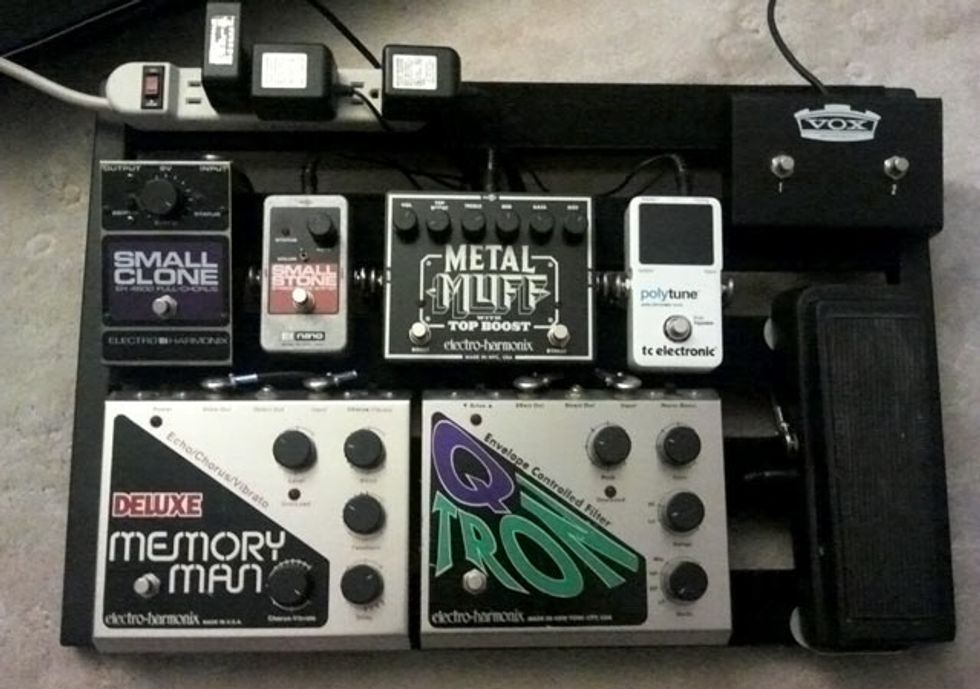
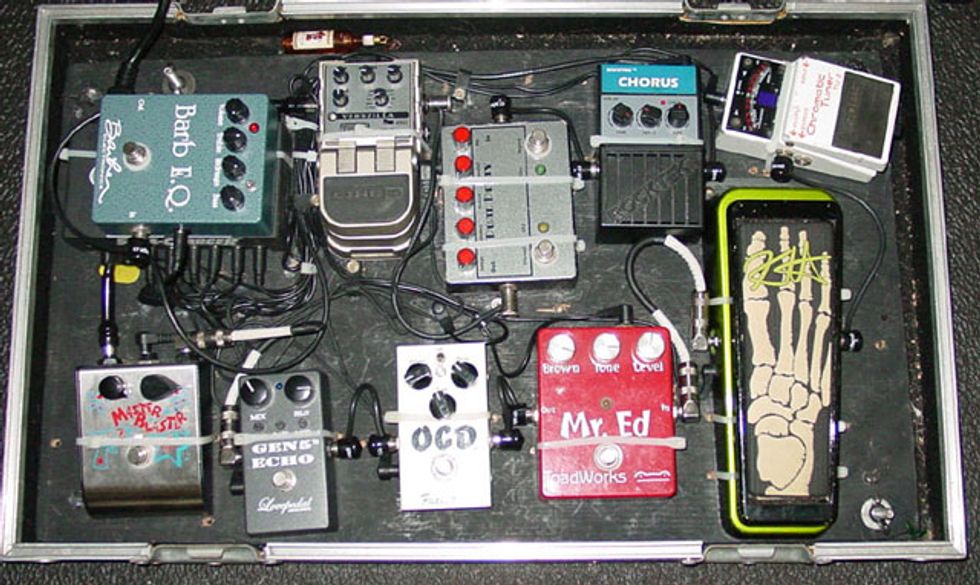
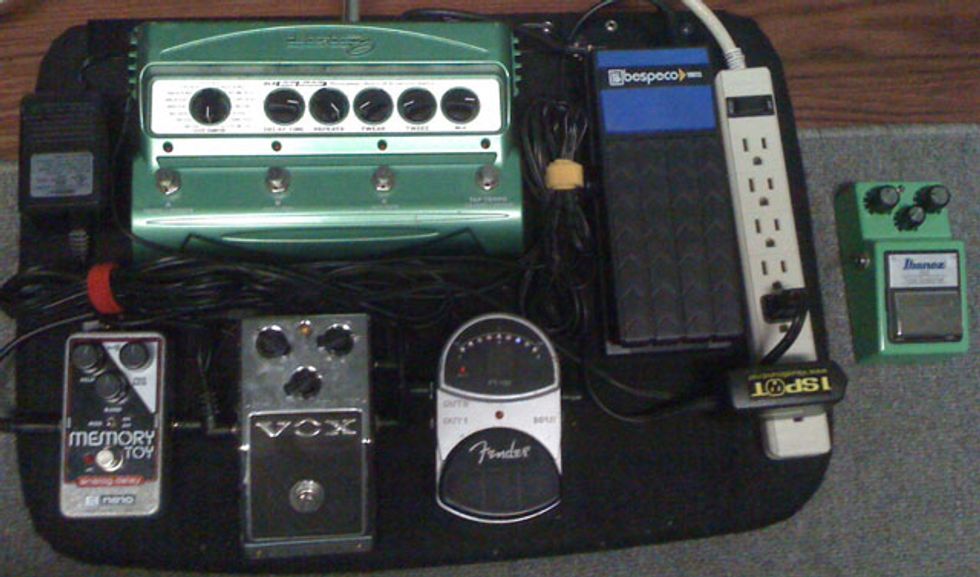
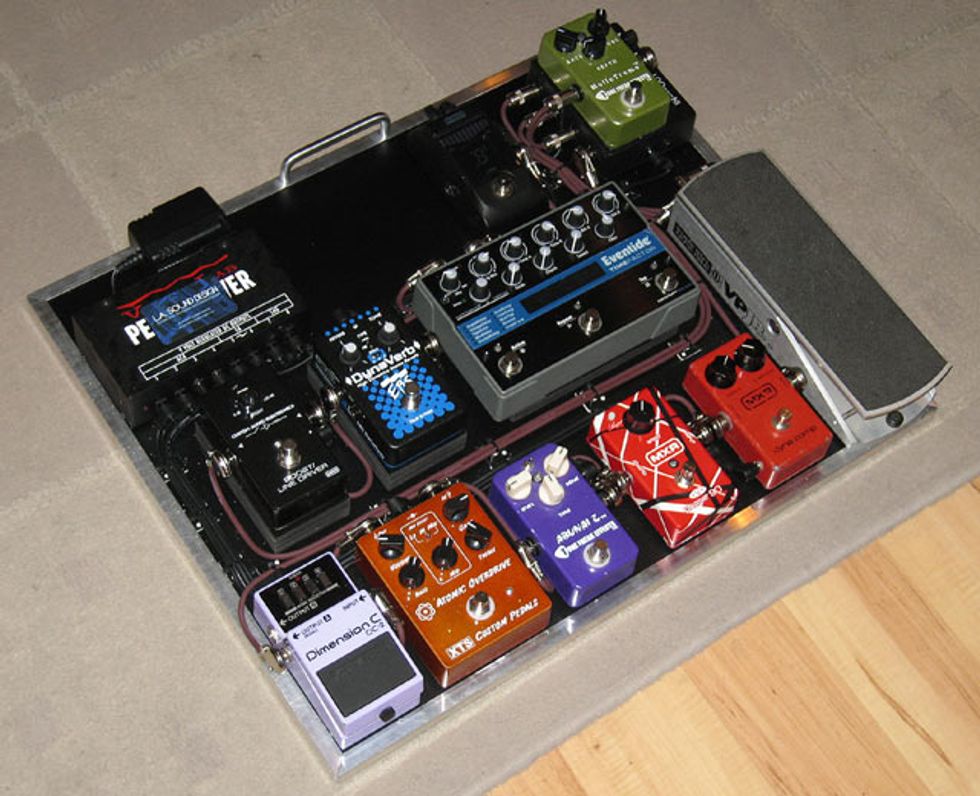
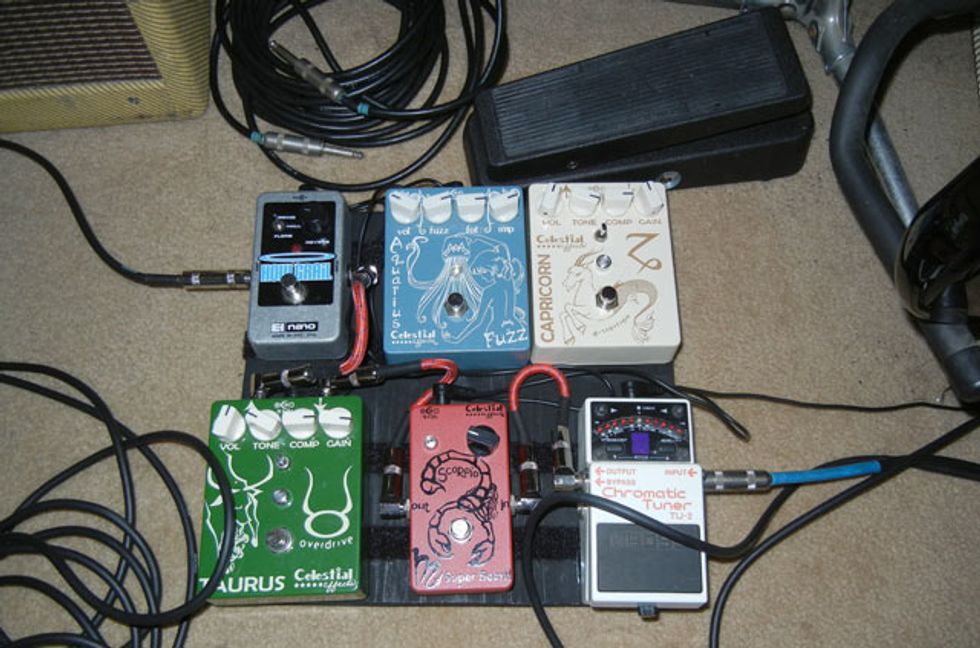
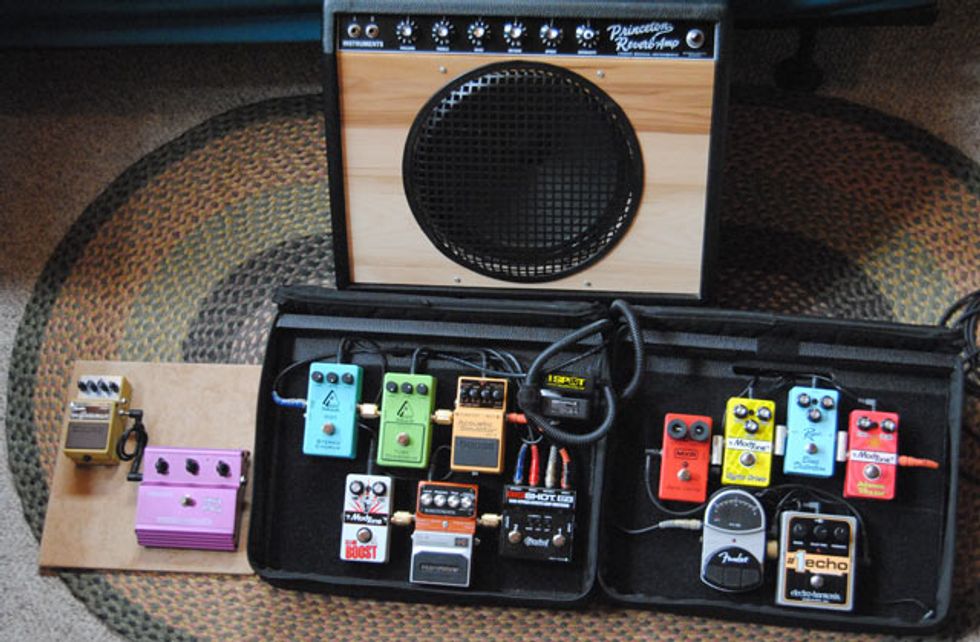
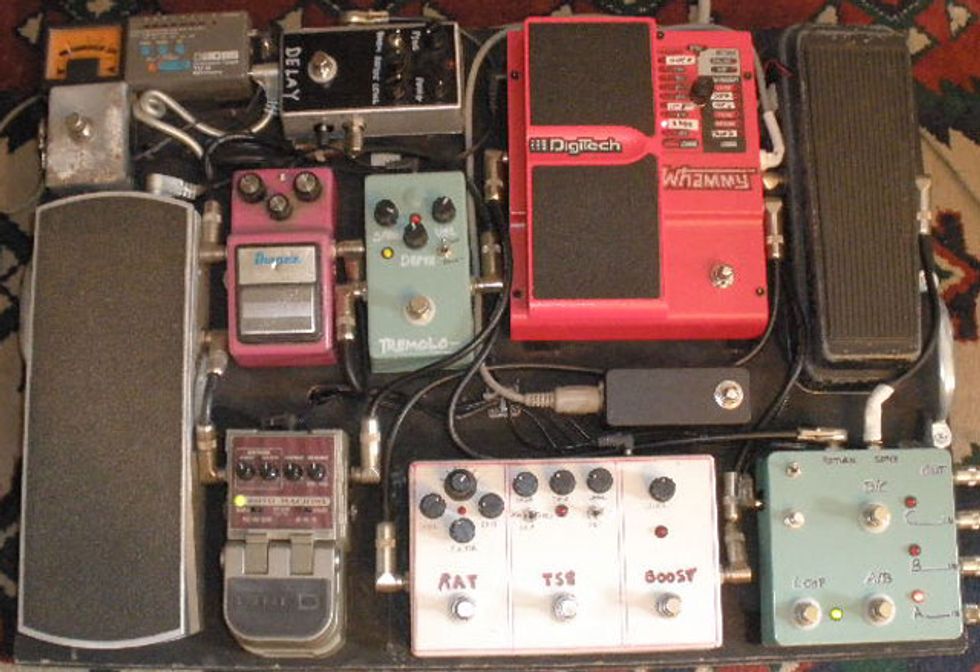
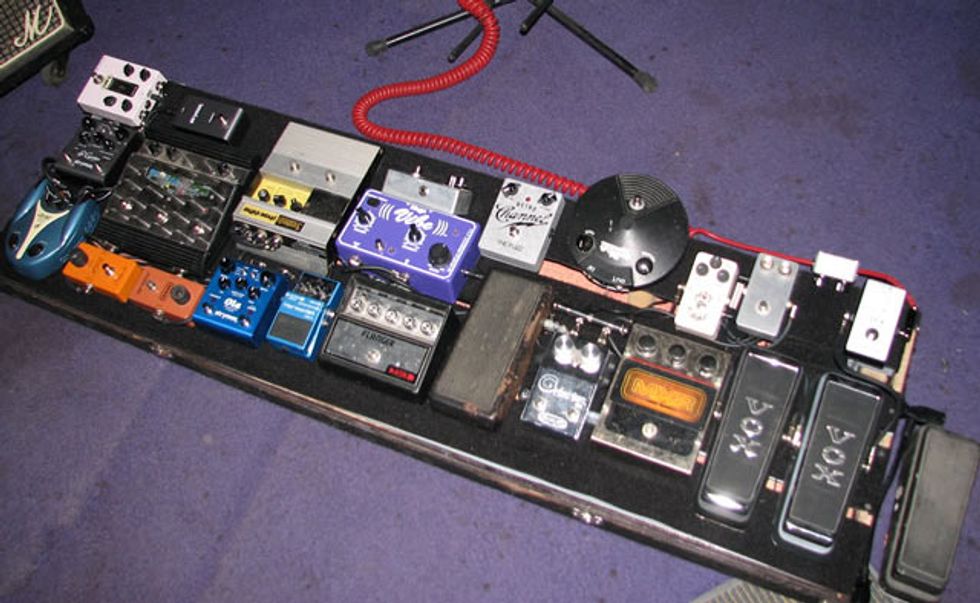
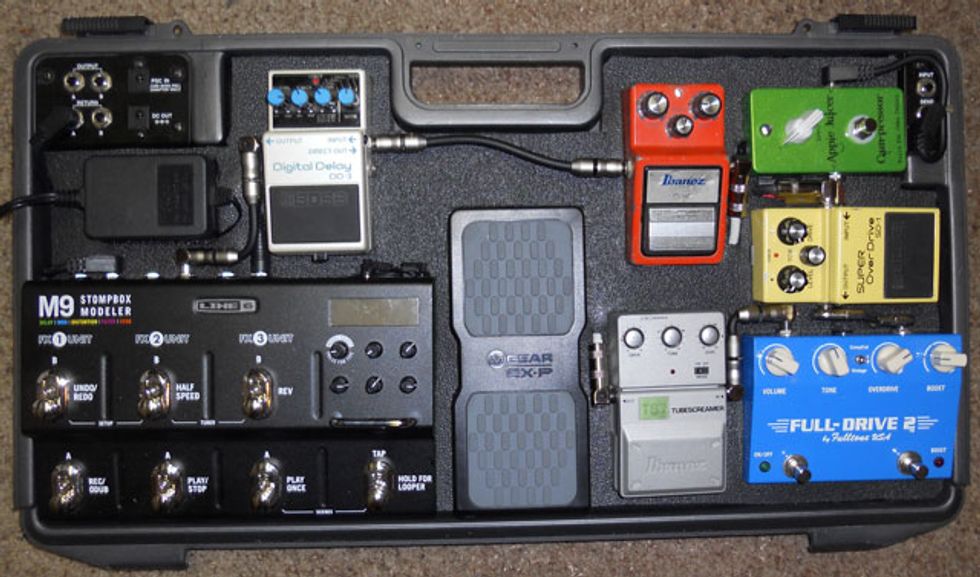
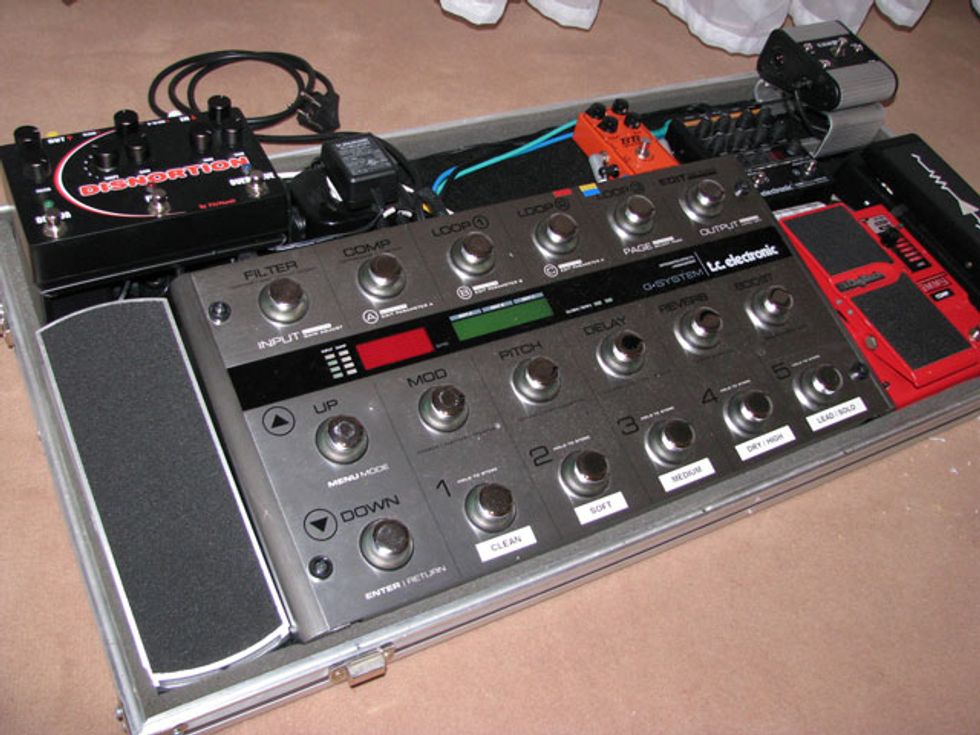
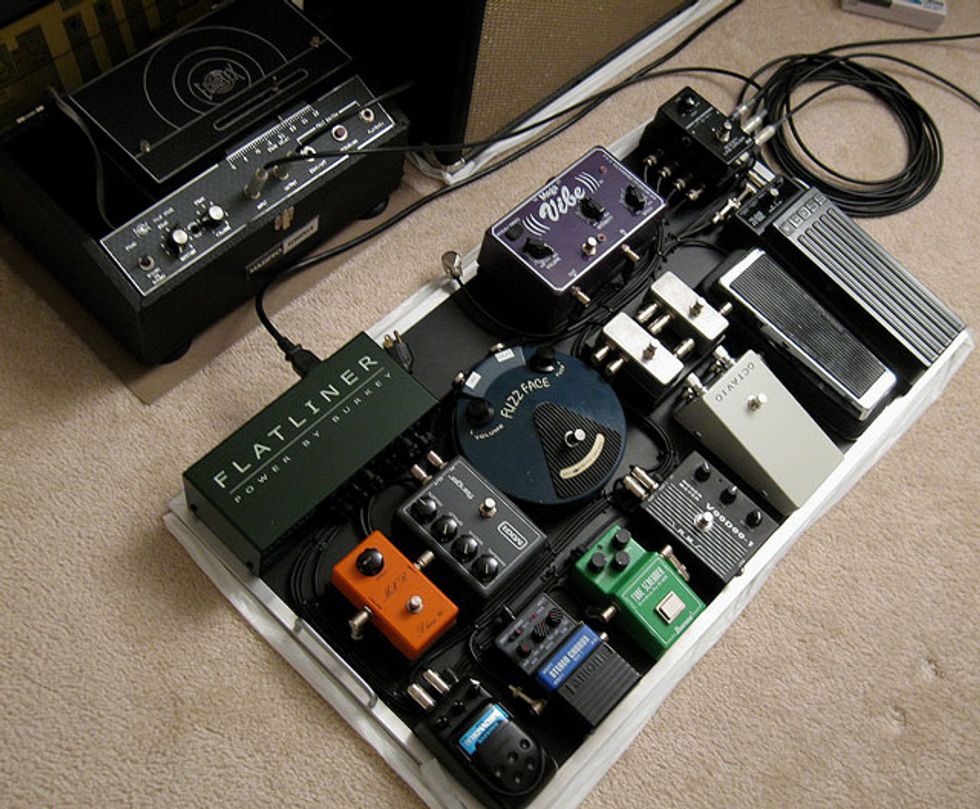
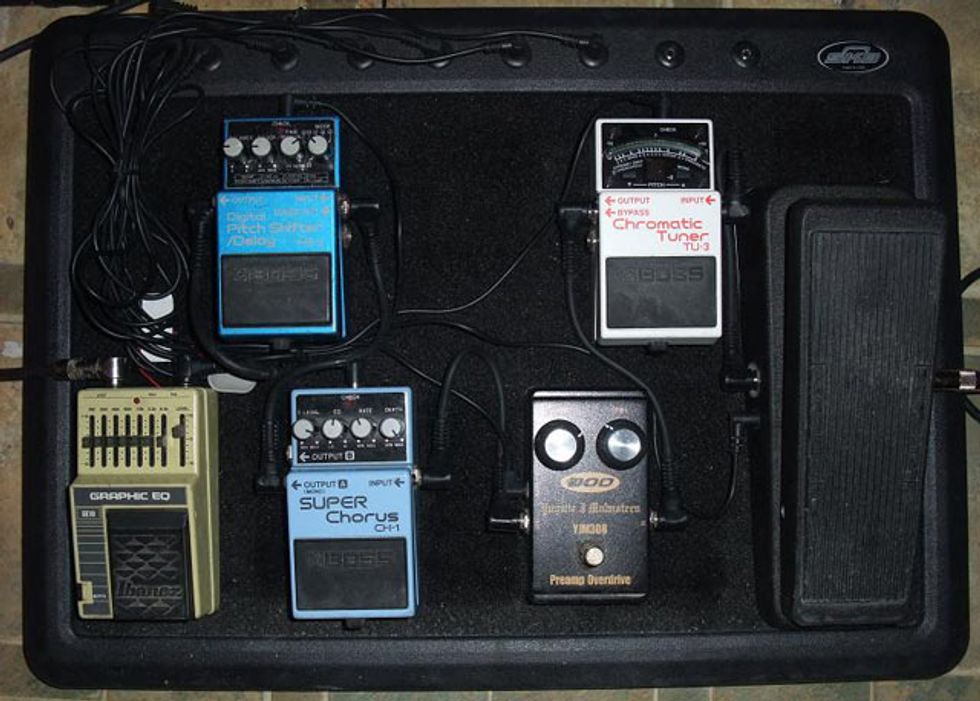
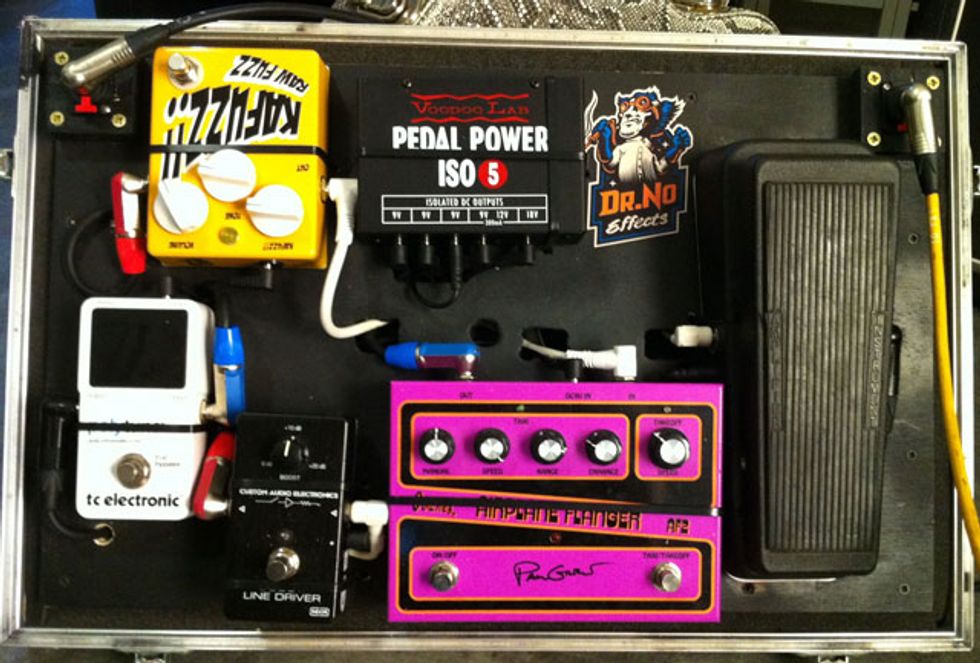
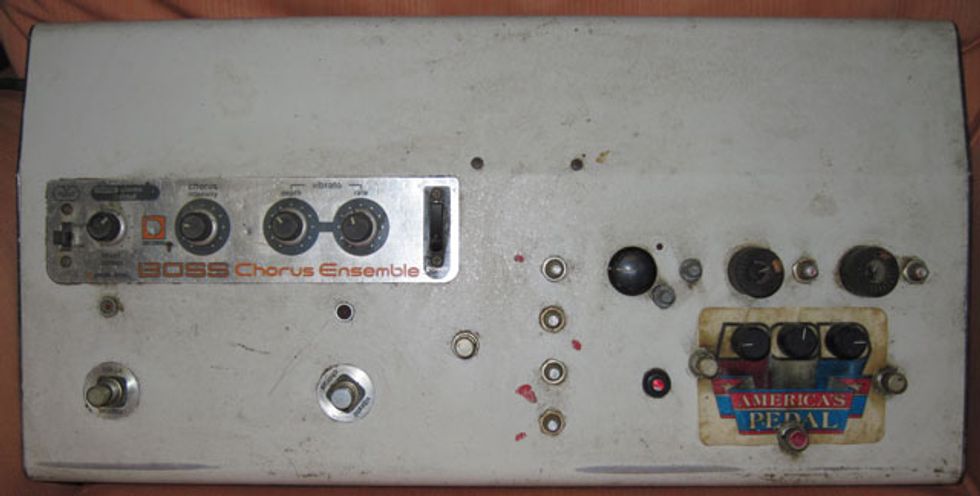
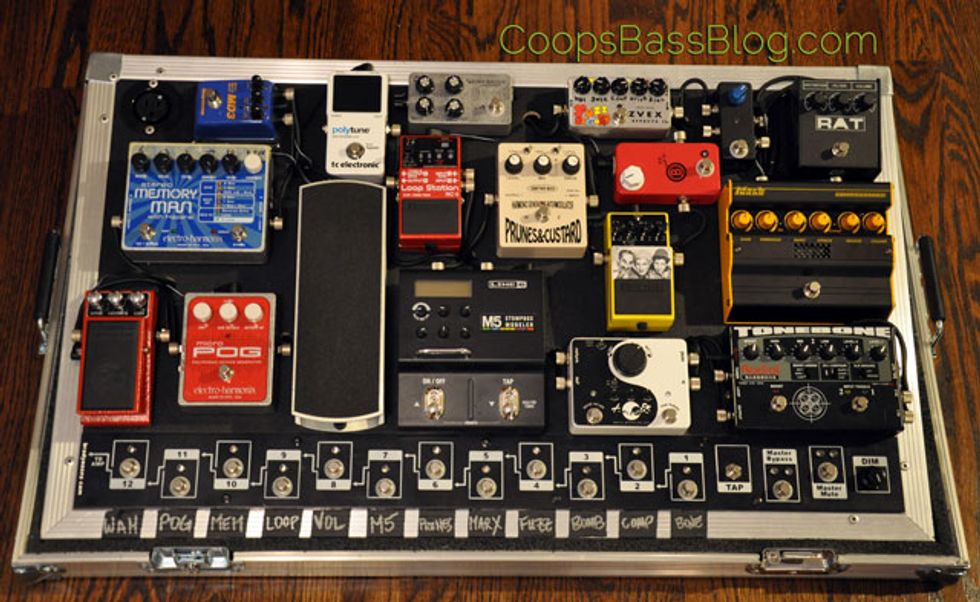
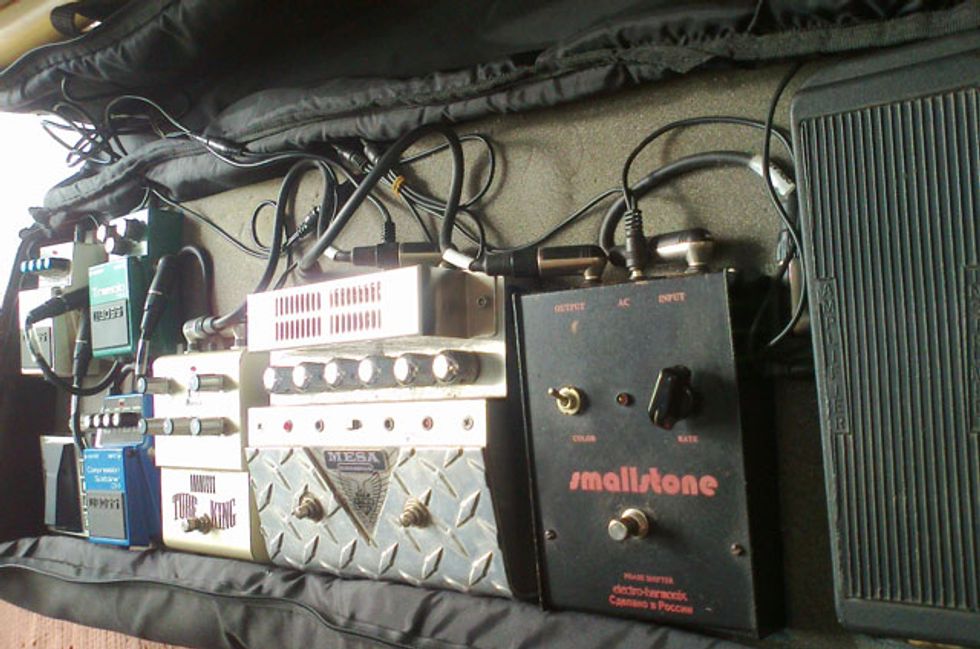
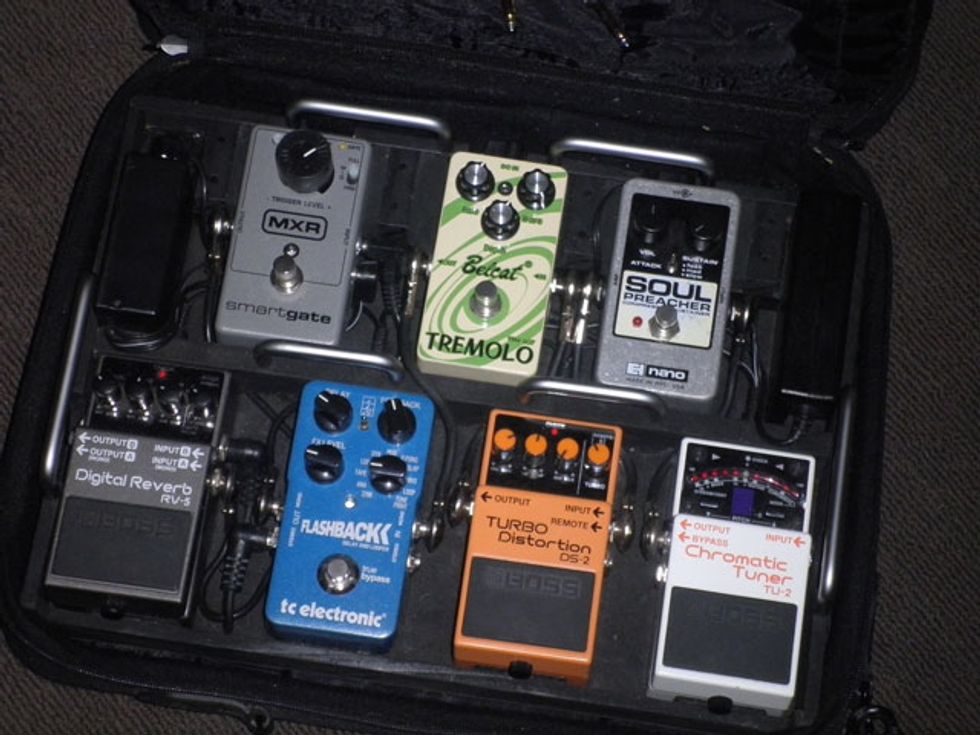
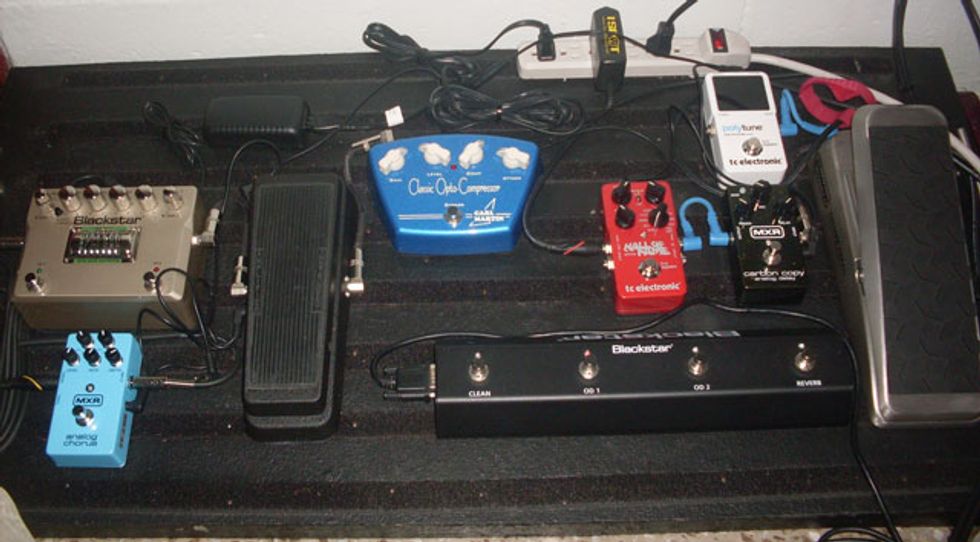
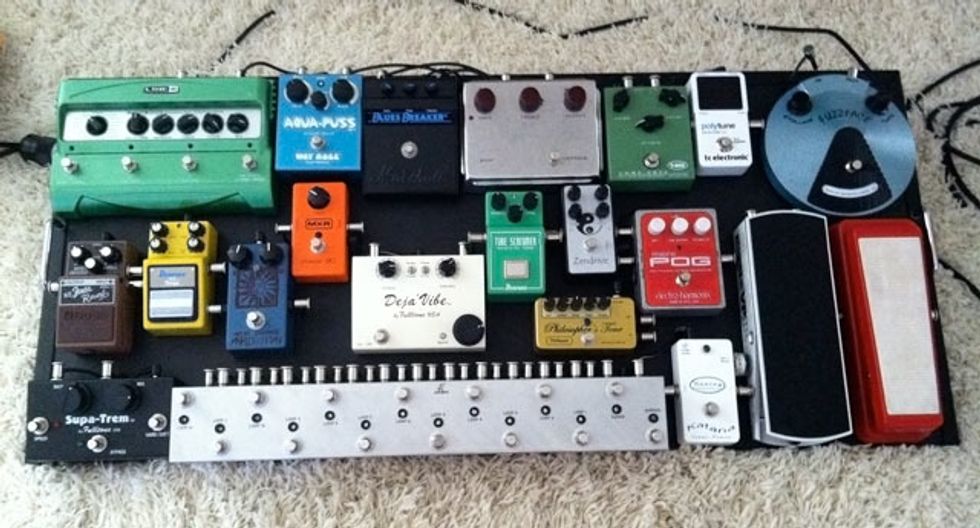
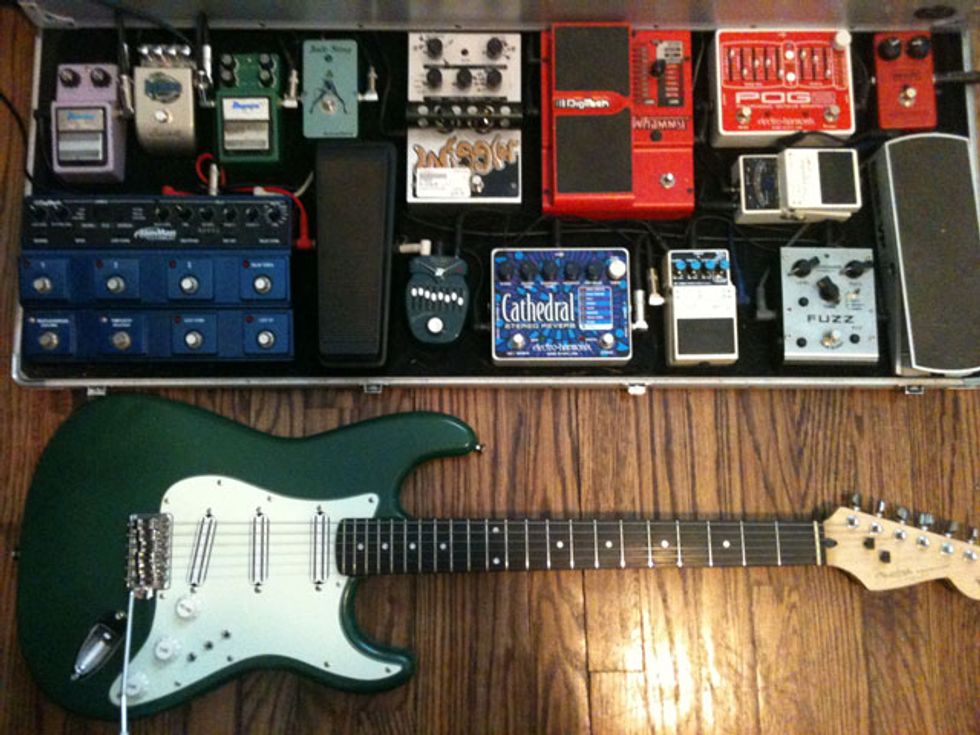
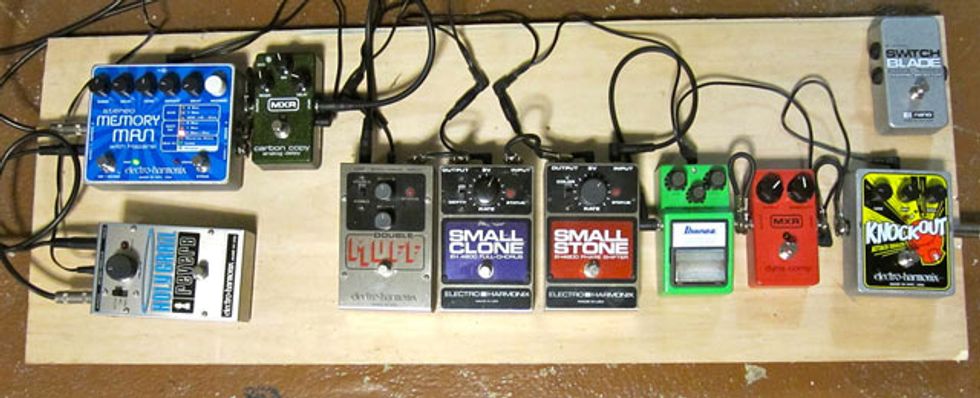
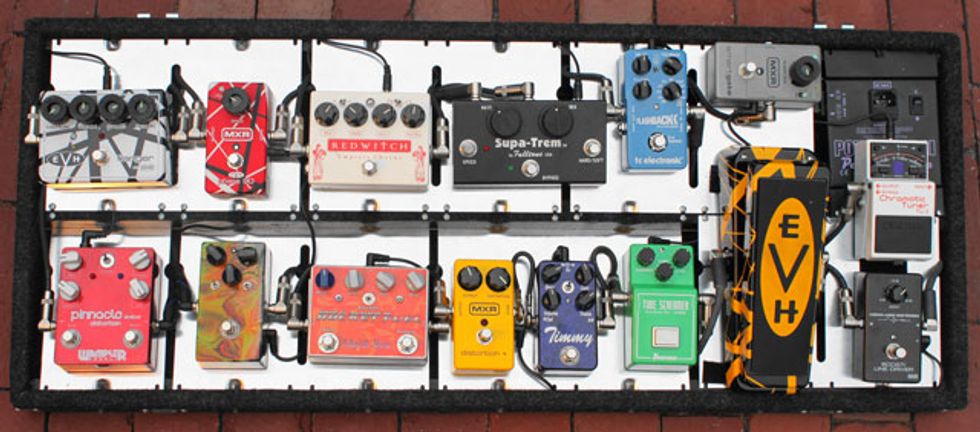
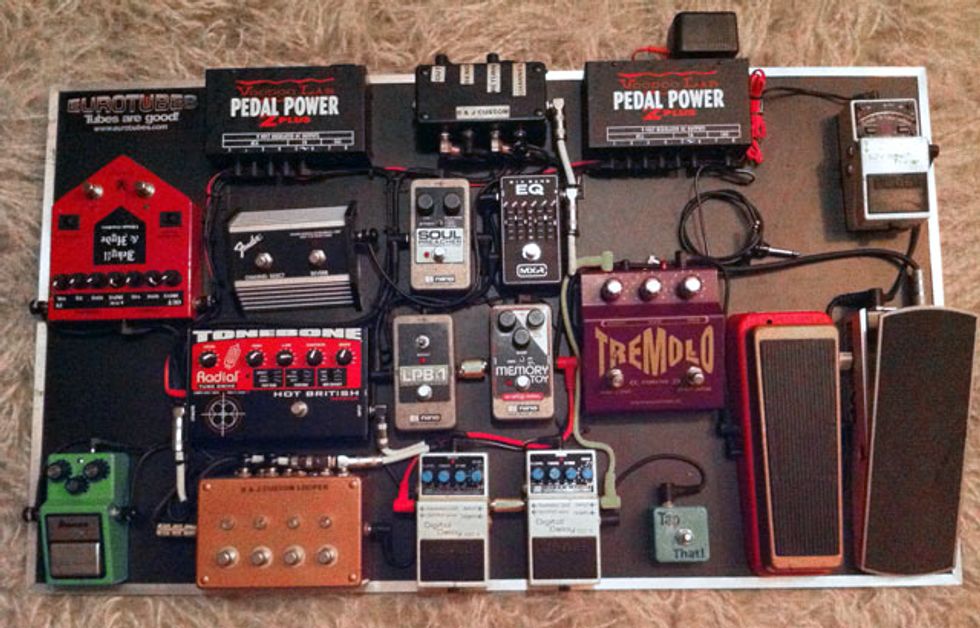
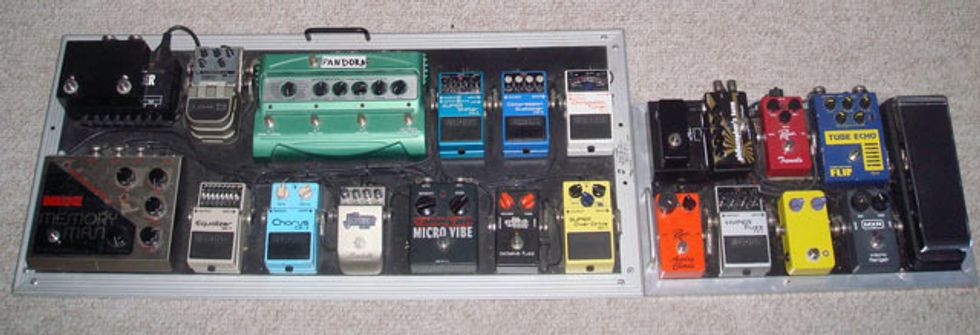
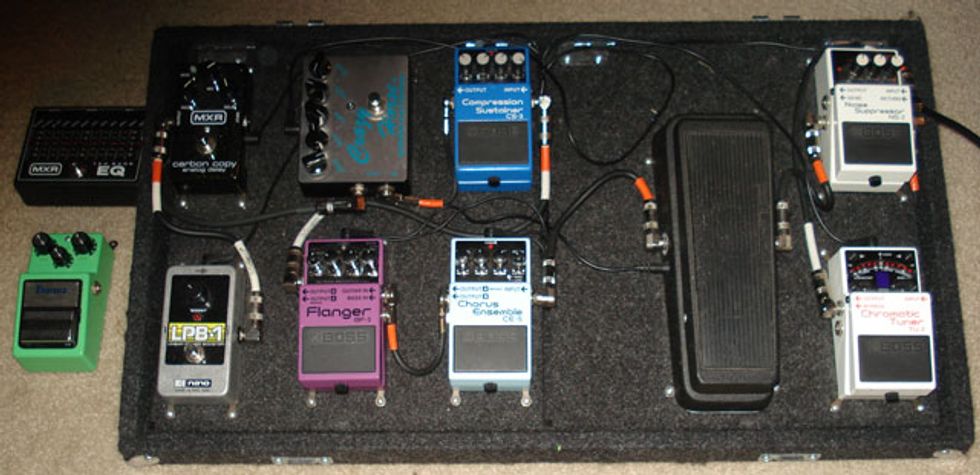
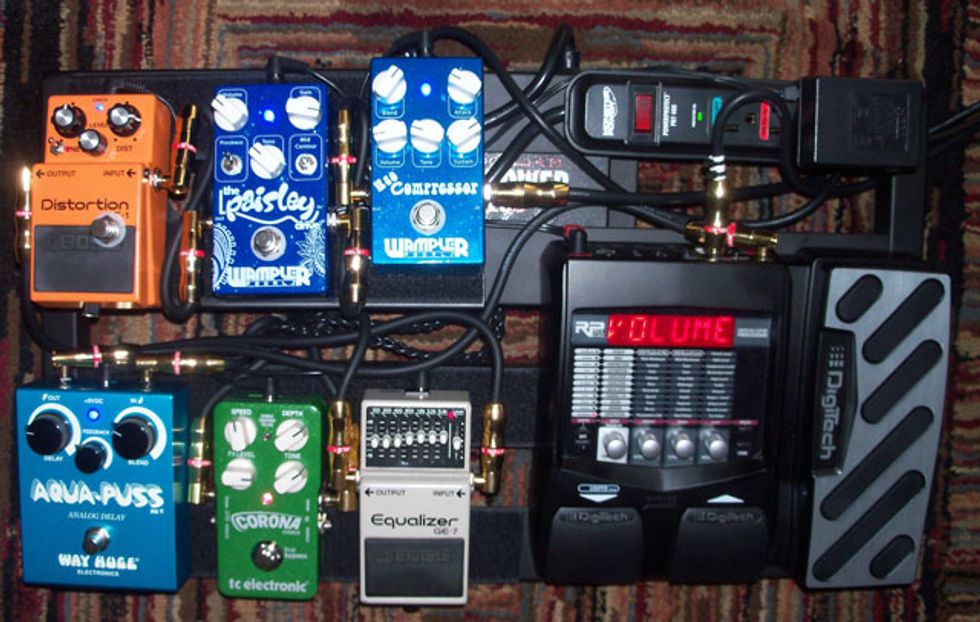
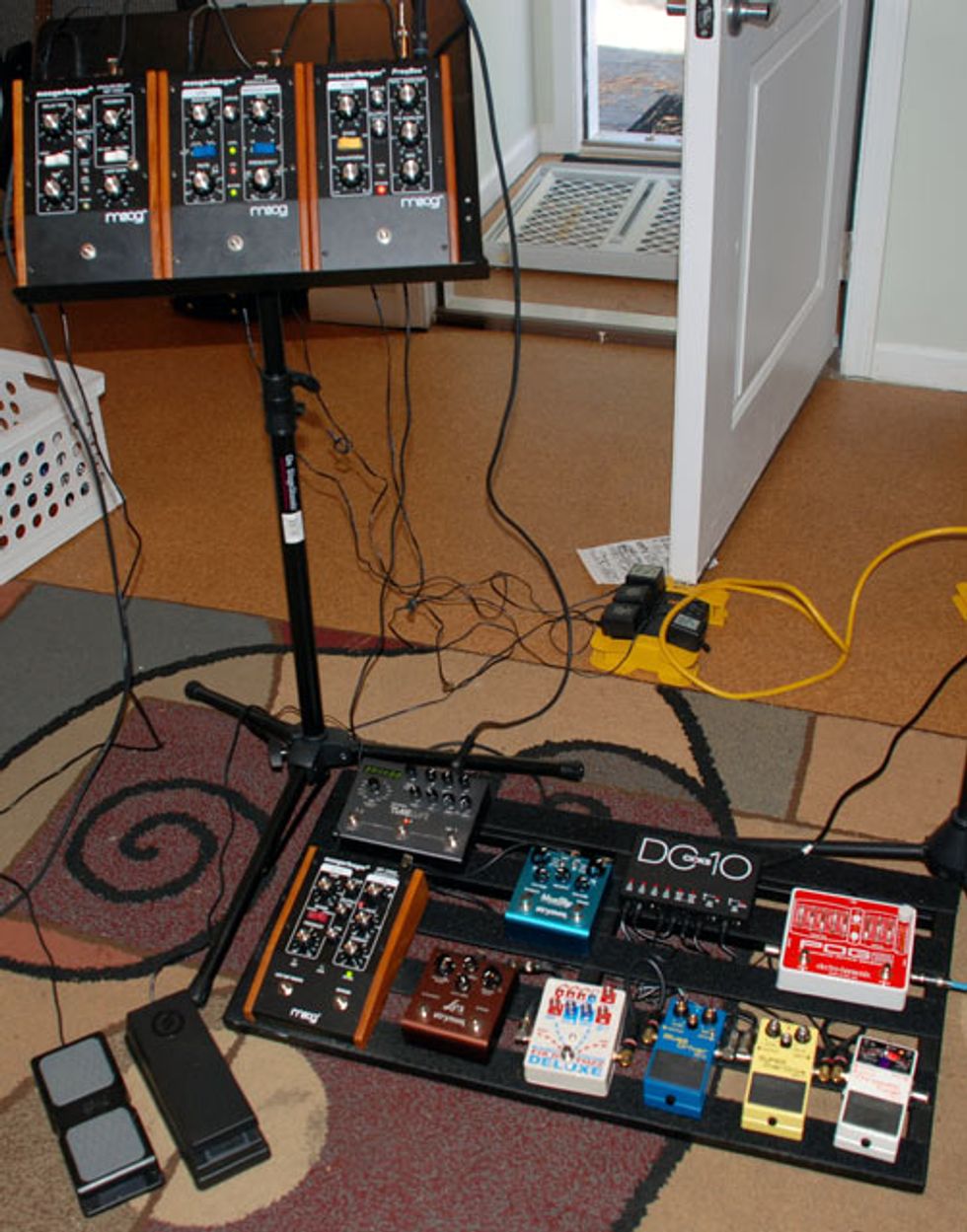
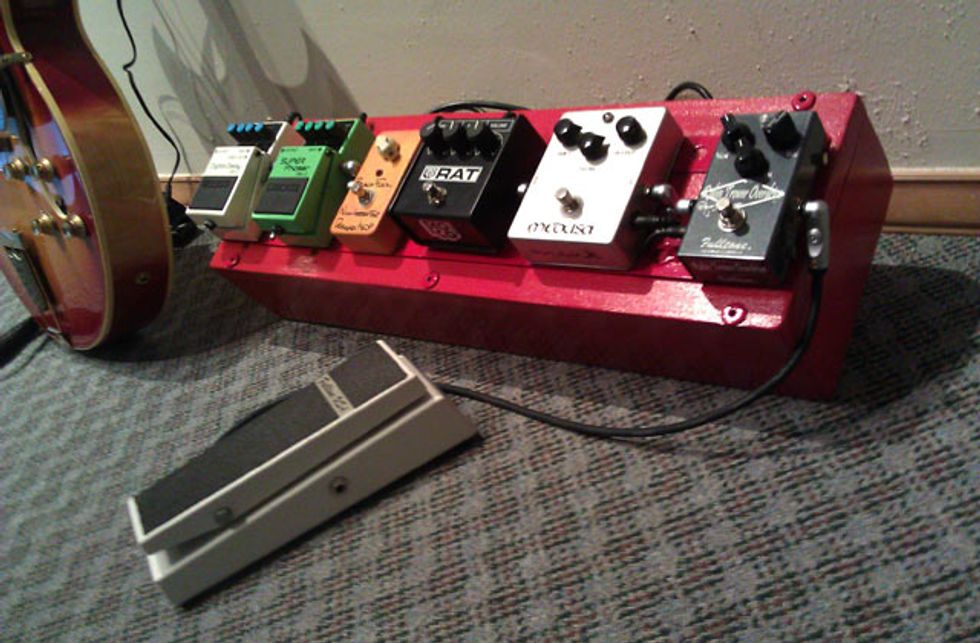
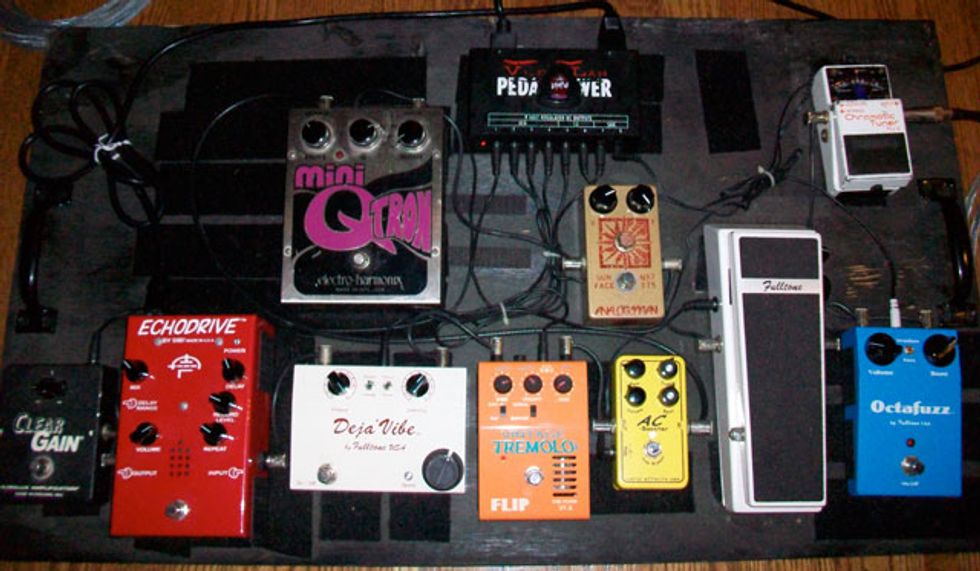
"Guerin plays rock, funk, and reggae with this pedalboard. It has a Dunlop Crybaby, TC Electronic PolyTune, Electro-Harmonix Q-Tron, Electro-Harmonix Metal Muff, Electro-Harmonix Deluxe Memory Man, Electro-Harmonix Small Stone, and an Electro-Harmonix Small Clone."
Ahead of Hayley Williams’ recent solo show at the Ryman Auditorium, PG’s Chris Kies linked up with bassist Joey Howard and guitarists Bryan Robert Jones and Logan MacKenzie (also of Paramore). Check out what gear they’re using to back up Williams in this new Rig Rundown. Brought to you by D’Addario.
GoldFender
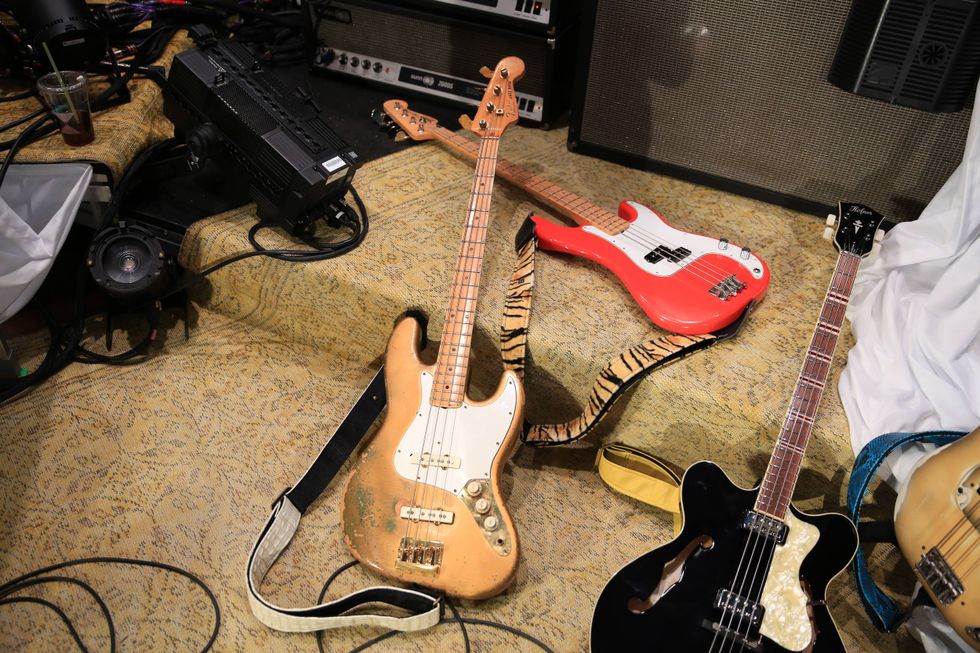
This all-original 1981 Fender Jazz bass is used for songs where Howard plays fingerstyle.
Pick it Up
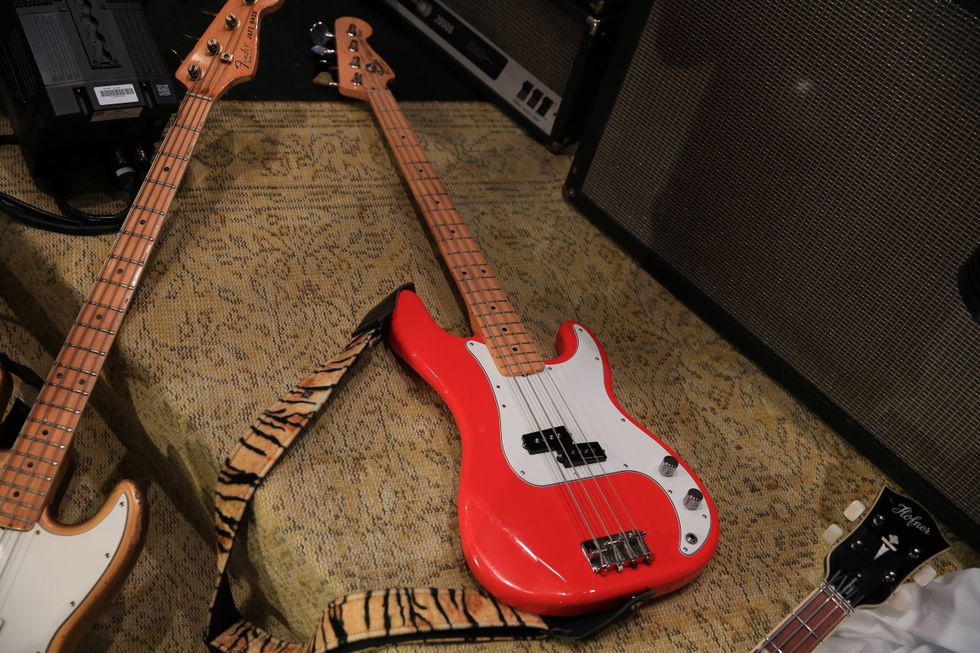
This Japan-made Fender P bass reissue comes out for heavier tunes, when Howard uses a pick.
Here Comes the Sunn
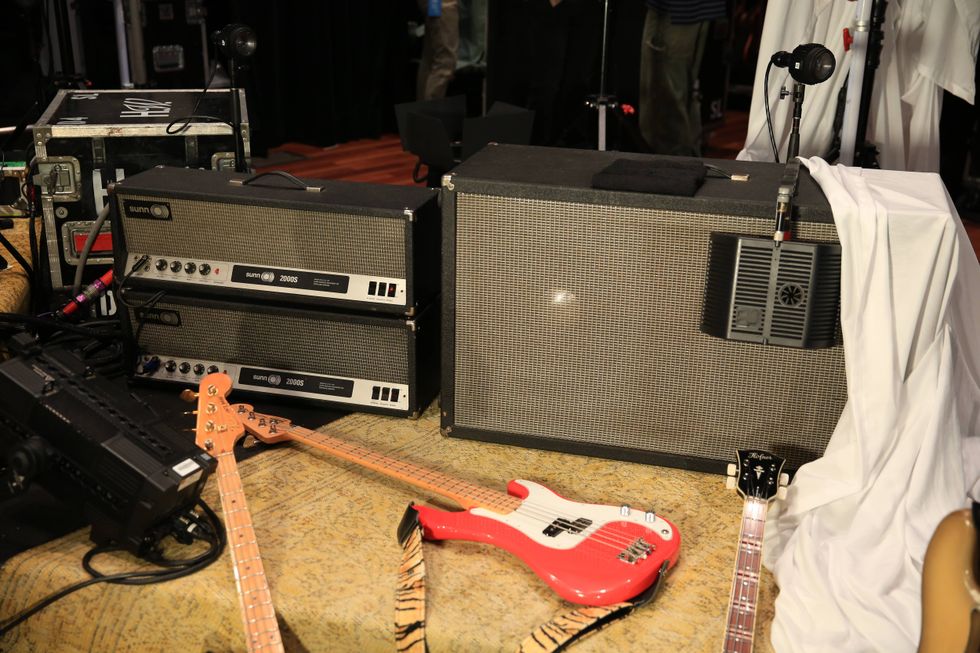
Howard’s stage sound comes from a pair of 1969 Sunn 2000S heads, paired with a 2x15″ speaker cabinet.
Joey Howard’s Pedalboard
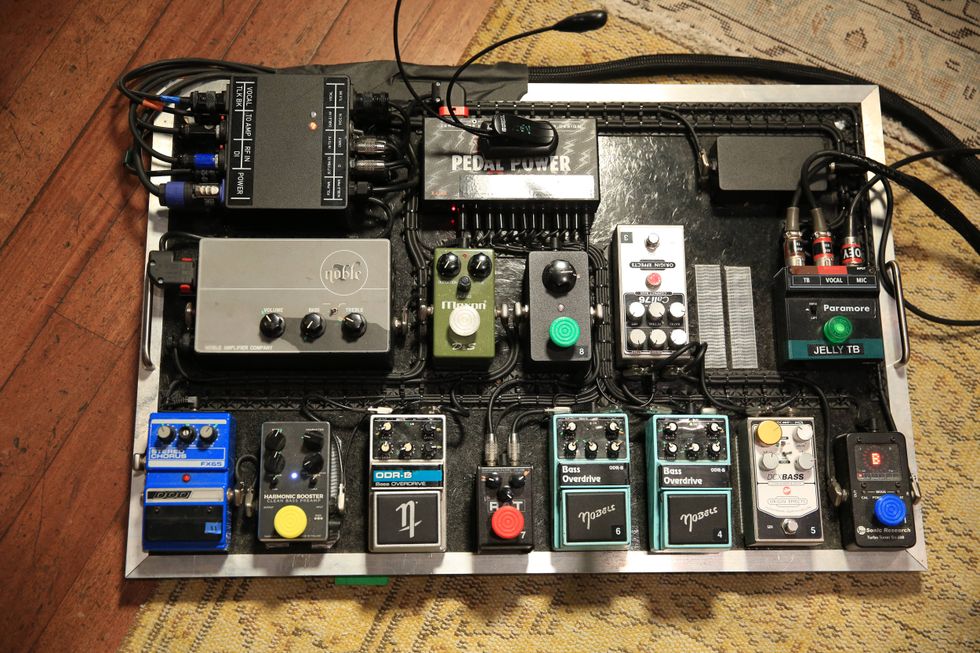
Howard’s bass board includes a Sonic Research Turbo Tuner ST-300, Origin Effects DCX Bass, a trio of Nobels ODR-B Bass Overdrives, Pro Co Lil’ RAT, Darkglass Harmonic Booster Clean Bass Preamp, DOD FX65, Origin Effects Cali76, Maxon D&S, and Noble Vacuum Tube Preamp and DI Box; a Voodoo Labs Pedal Power 2 Plus supplies the juice.
Pucker Up
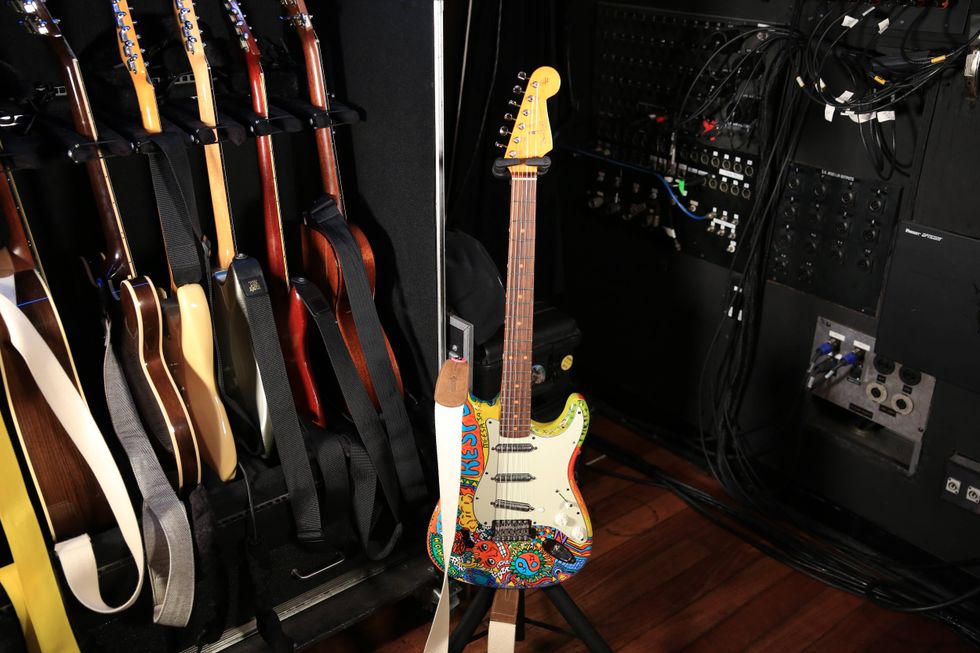
This modded Stratocaster, fitted with lipstick-style pickups, is Jones’ main workhorse.
Pancho and Lefty
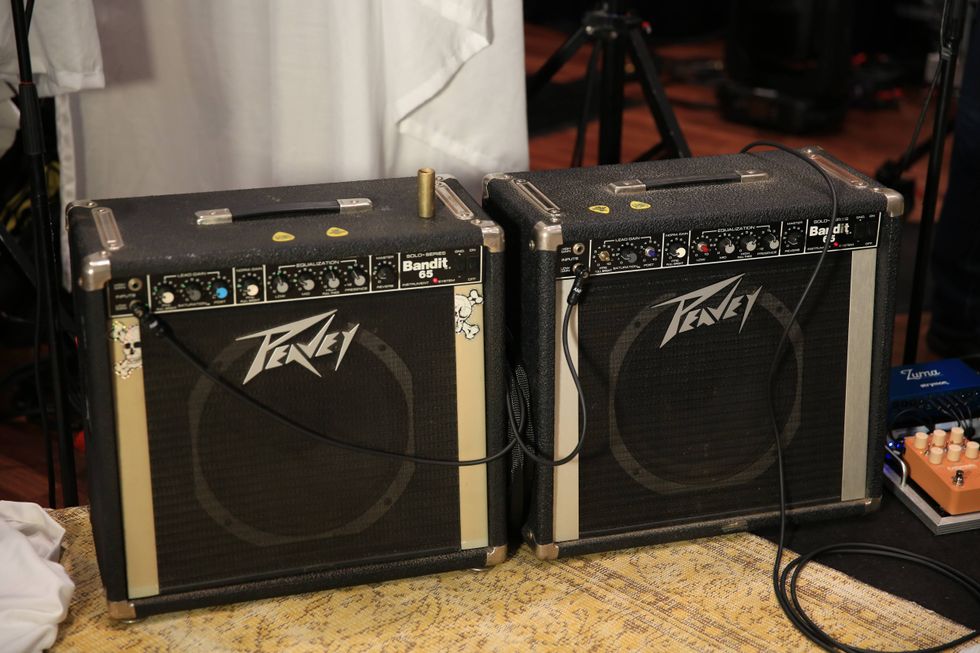
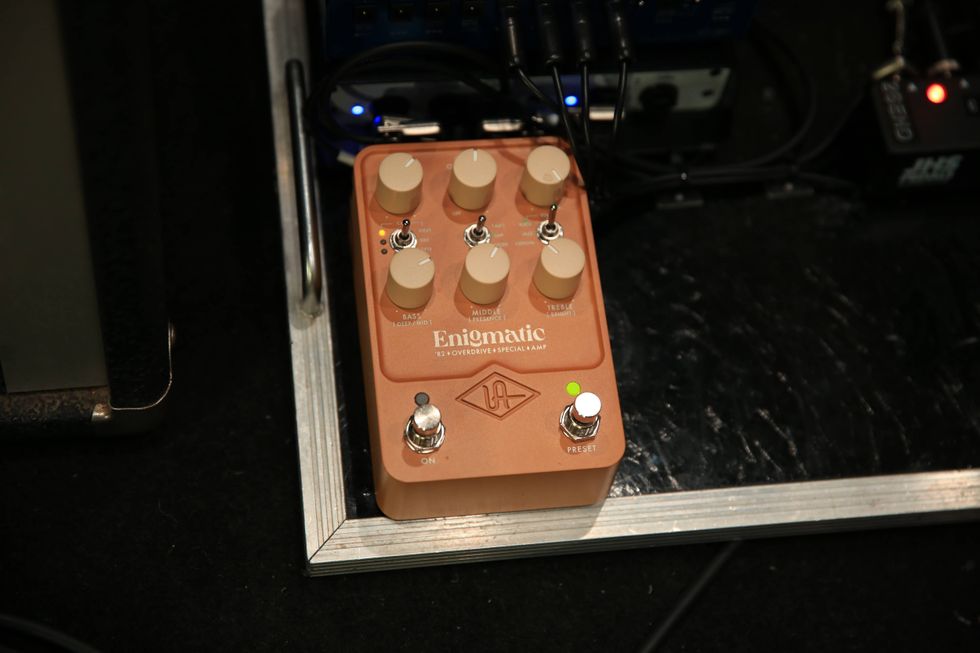
<p>Jones’ duo of Peavey Bandits are mostly on hand to complete the look, and for a bit of stage volume. His main sound comes from a <a href="https://www.uaudio.com/" target="_blank">Universal Audio</a> Enigmatic ’82 Special Overdrive pedal.</p>
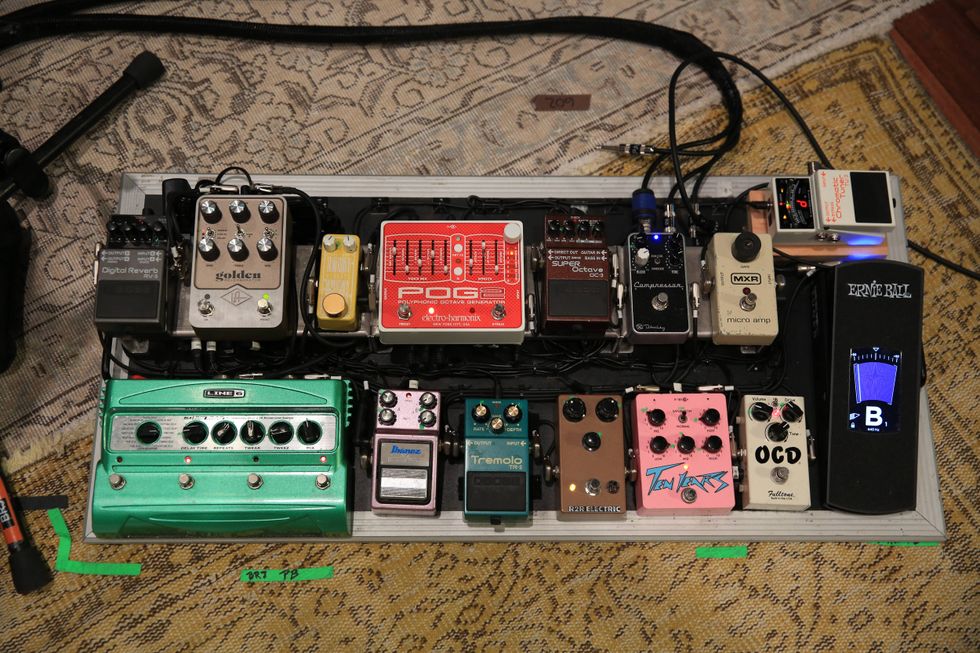
Brian Robert Jones’ Pedalboard
Jones’ board includes a Boss TU-3, Ernie Ball VPJR. Tuner, Fulltone OCD, Jason Moser Ten Years (is a Decade), R2R Electric fuzz, Boss TR-2, Ibanez BC-9, Line 6 DL-4, MXR Micro Amp, Keeley Compressor, Boss OC-3, Electro-Harmonix POG2, Malekko Vibrato, Universal Audio Golden Reverberator, and Boss RV-5.
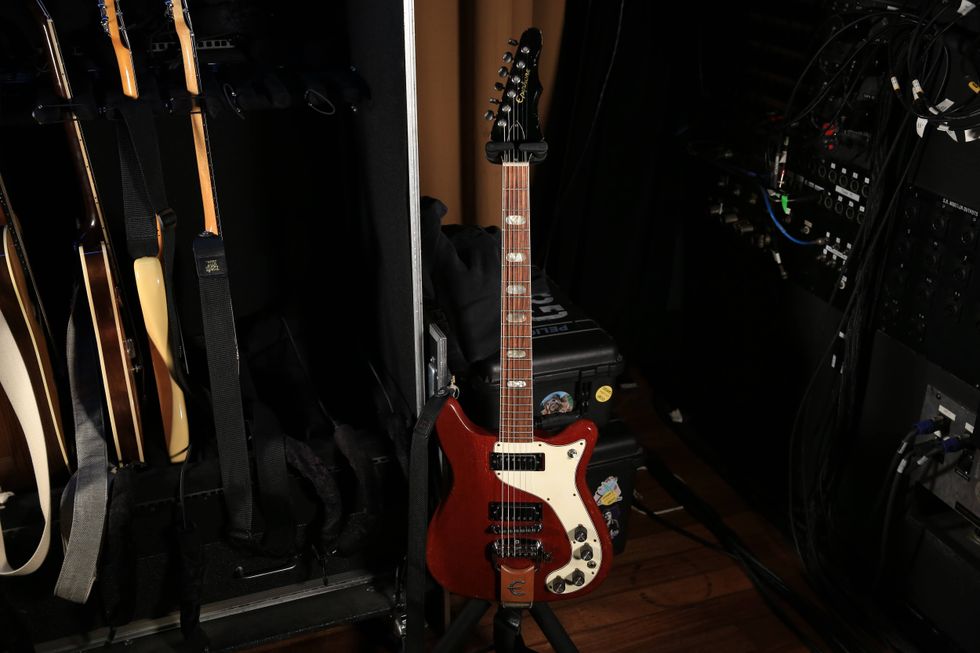
Crushing Crestwood
MacKenzie acquired this Epiphone Crestwood in Nashville in 2017, and while he’s had to treat it to a refret and have the neck reset, he still loves bringing it out on the road.
British Blues
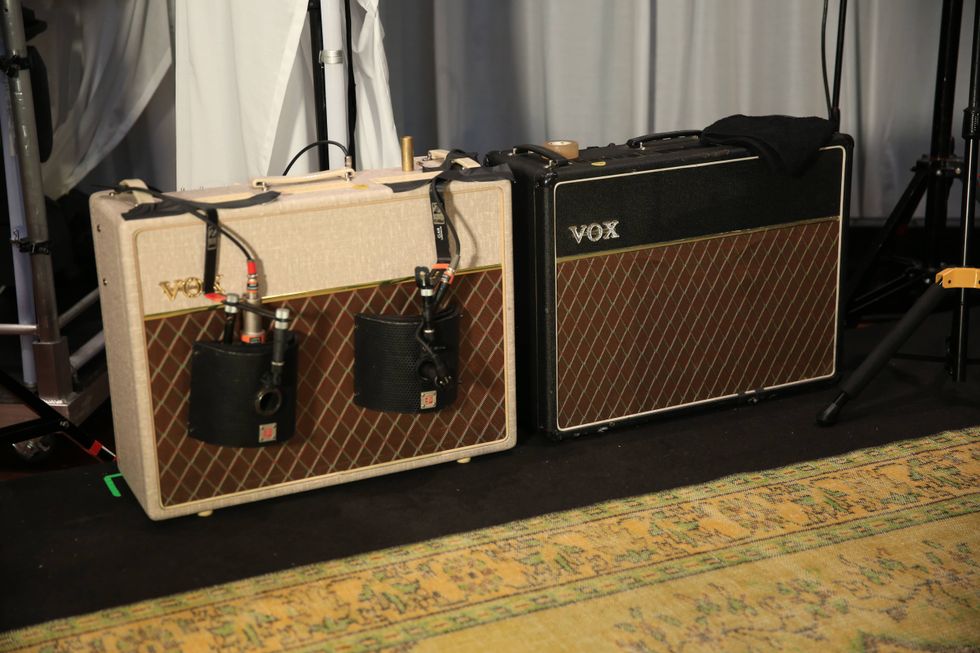
Mackenzie plays through Vox AC30s stocked with Celestion Alnico Blue speakers, a combo that provides him with a malleable pedal platform.
Logan MacKenzie’s Pedalboard
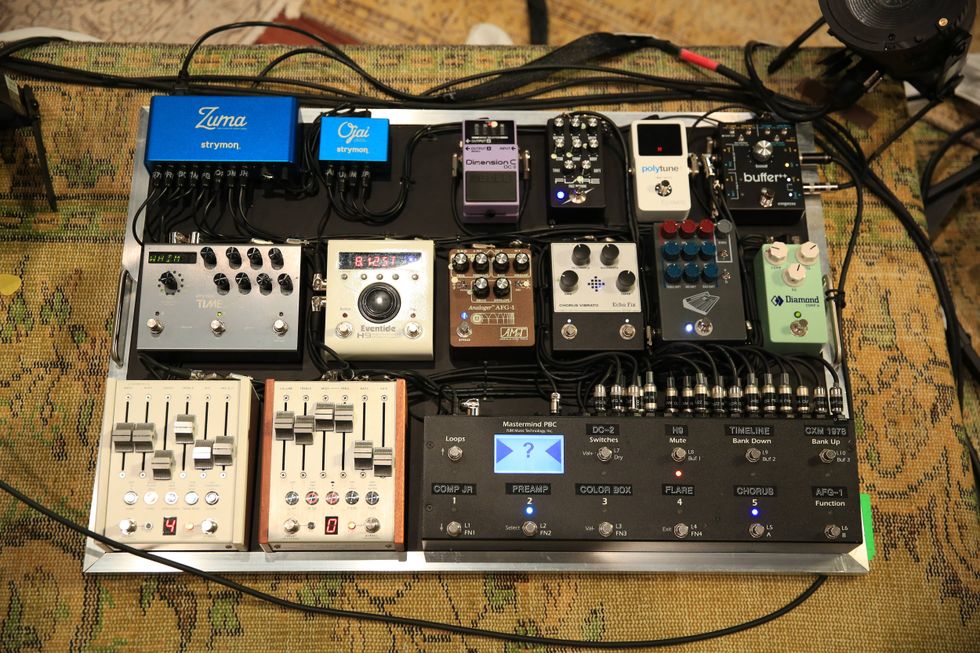
MacKenzie’s board is controlled with an RJM Technology Mastermind PBC, which handles all the pedals you see here: a Chase Bliss Automatone Preamp MkII and CXM 1978, Diamond Comp/EQ, Echo Fix EF-P3, JHS Colour Box, Asheville Music Tools AFG-1, Eventide H9, Strymon TimeLine, TC Electronic PolyTune 3, Aion FX Flare Fuzz Machine, Boss DC-2, and Empress Buffer. A Strymon Ojai and Zuma power the board.
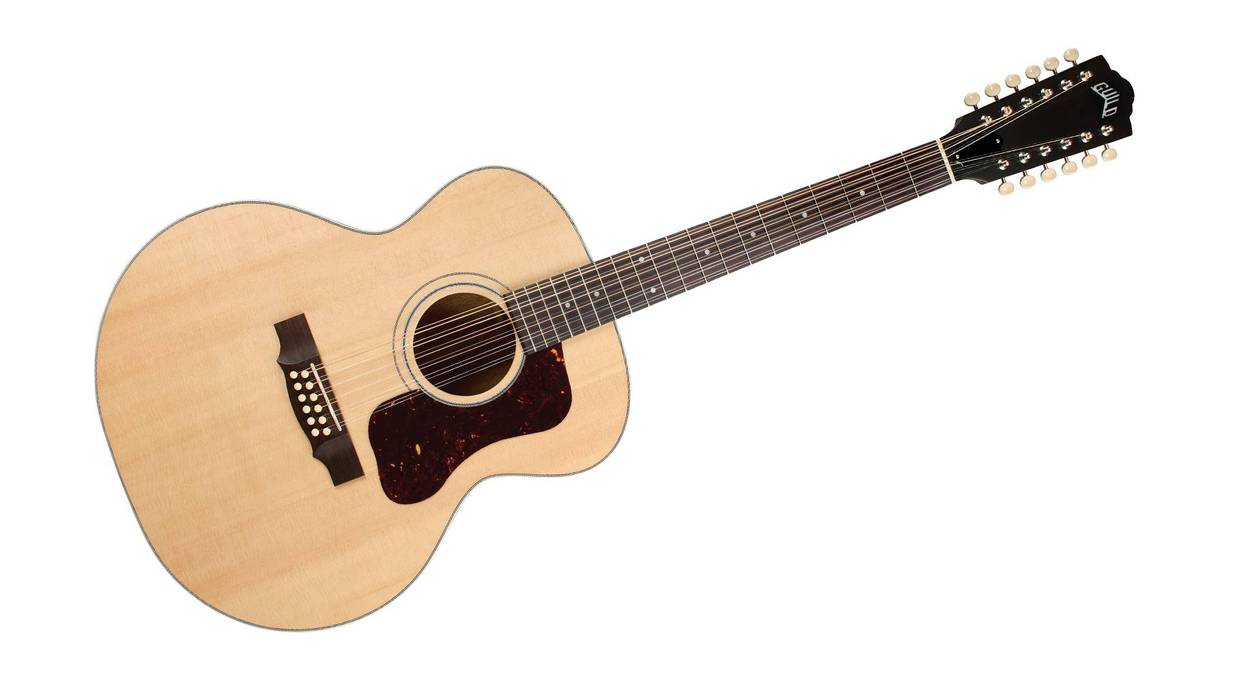
No matter what kind of guitarist you are—even if you never plan to own an acoustic 12-string—a session with a Guild F-series jumbo is an essential playing experience. It’s a guitar that you feel as much as you hear—both for its size and its rib-rattling resonance. 4 latest big 12-string, the F-412 reviewed here, deviates from the formula in a few ways. Most fundamentally, it has solid mahogany back and sides, rather than the maple or rosewood back and sides that are Guild F-series 12-string signatures. It also boasts a satin finish, which makes this U.S.-made F-412 a little more accessibly priced. But playing the F-412 is such an immersive sonic experience—and so easy on the hands—that you tend to think about little else. One rarely considers tonewoods and bank balances when they’re drowning in beautiful overtones.
12-String King
In the six decades since the first jumbo-bodied F-series 12-strings appeared, you could argue that no mass-produced acoustic 12-string has surpassed them in terms of tone or beauty. Taylor in particular built some excellent 12s, but the most iconic of these, the 855, beautiful as it is, always seemed like a respectful tip of the cap from Bob Taylor to Guild. Pete Townshend, Peter Buck, and Tim Buckley all made F-series 12-strings foundational parts of their recording and performing quivers—and really, what more do you need to know about a guitar’s qualifications and potential as a rhythm and song machine?
The F-412 has those same qualifications in abundance. But its knack for practically spilling songs from its soundhole starts with its playability. Few 12-strings are easy to handle compared to a 6-string. And if you’ve got smaller hands, the 1 7/8" nut width is no joke, nor is the 25mm neck thickness at the 9th fret. Yet as substantial as these dimensions are, the low action and lovely neck shaping assure that you’ll rarely feel you’re stretching too far or squeezing too hard to make a familiar chord shape. My wrist tendonitis had been acting up of late, and over the many hours I spent with this instrument I never felt as though I was exacerbating the issue. In fact, some of my most playable and slimmest-necked electrics gave me more problems. It’s just a very natural feeling instrument—something 12-strings don’t often manage to be. And the substance in the neck (reinforced by a single truss rod and two graphite support rods) gives the guitar great stability and the sense that you can really lean on it and dig into it with abandon. (It’s little wonder Mr. Townshend considers F-series 12-strings such reliable companions!)
The neck also feels fast—another quality uncommon in acoustic 12s. The guitar practically commanded me to delve into very hyperactive Johnny Marr/Townshend chording and arpeggiating up and down the length of the neck, and dashing from a first-position triad to a 12th-fret shape in a flash felt every bit as effortless and accurate as it would on my favorite 6-string 00.
In Bloom
If you’re lucky enough to have had multiple sessions with a classic maple- or rosewood-backed Guild F-series 12-string—or own one—you’ll notice real differences between those guitars and this mahogany-backed F-412’s tone profile. For starters, it’s less boomy than a maple or rosewood version. It’s definitely midrange forward, but not in a manner that is even remotely grating. Even under vigorous strumming attack, the mahogany seems to warm up the midrange and sand away sharp edges that would tip the tone into stridency. In this respect, the F-412 almost sounds like it has a built-in compressor and EQ.
There’s also headroom and dynamic range aplenty. Delicate fingerpicking does not suffer for having to move all that air in the jumbo body. Rather, the Guild responds to a light touch by highlighting detail and sparkling overtones. And if you should perversely, suddenly, switch gears to flailing Townshend rhythm mode, the F-412 doesn’t flinch. The detail remains, and to the extent there is blurring in the overtones the output retains the structure of a chord’s makeup. And though the F-412 might be discernibly more midrangey than its maple- or rosewood-backed counterparts, that doesn’t mean it won’t boom. In fact, one of the most pleasing and interesting parts of the F-412 playing experience is the way a relatively light touch on the sixth string will activate a big, blooming bass tone that you can contrast with bright, aggressively picked bell tones from the highest three. The F-412 is highly pianistic in this way, which is a very satisfying and alluring quality to have at your disposal when composing or performing.
Seamlessly Satin
Befitting a guitar with a $2,799 price tag, the F-412 is pretty much perfectly put together. That fast, easy playability we talked about? It’s the product of superb execution that spans beautiful rounding of the fretboard edges, flawless fret seating, and immaculately prepped and cut nut slots. The same attention to detail is apparent everywhere else, too. Perfectly sanded and shaped bracing? Superb finish? Check and check!
About that finish. No doubt some readers will take a pause to think about a $2,799 flattop with a satin finish. I know the feeling. But the reality is that the F-412’s price is very competitive with comparable U.S.-built 12-strings that, depending on your perspective, may have a lot less personality and musical potential. That $2,799 does not include the LR Baggs Element VTC electronics that appear on the F-412E, which will up the bill for the Standard to just about $3k. But again, cruise the catalogs of competitors, and you’ll find that the F-412’s price squares fairly with comparable instruments, to the extent such instruments exist. Satin finish or not, there are not a lot of U.S.-made jumbo 12-strings out there. This Guild is a star in a very narrow field, but a star nonetheless.
The Verdict
Acoustic 12-strings are not a priority for everyone. And a jumbo 12, which is truly an armful for a player of smaller stature, might, literally, be a poor fit. I’ll admit a bias for Guild F-series 12-strings, regardless of their practicality. I love the way they look and I’m intoxicated by the way they sound. But it’s easy to overstate the perceived impracticality of an instrument like this. If you’re a serious studio recordist or composer—pro or amateur—that likes to work with a broad palette, it’s hard to put a price on what a sweet-playing and unique sounding instrument like this can offer, especially if you’re into extending its utility via alternate tunings and recording methods.
Guild
F-412 Standard 12-string
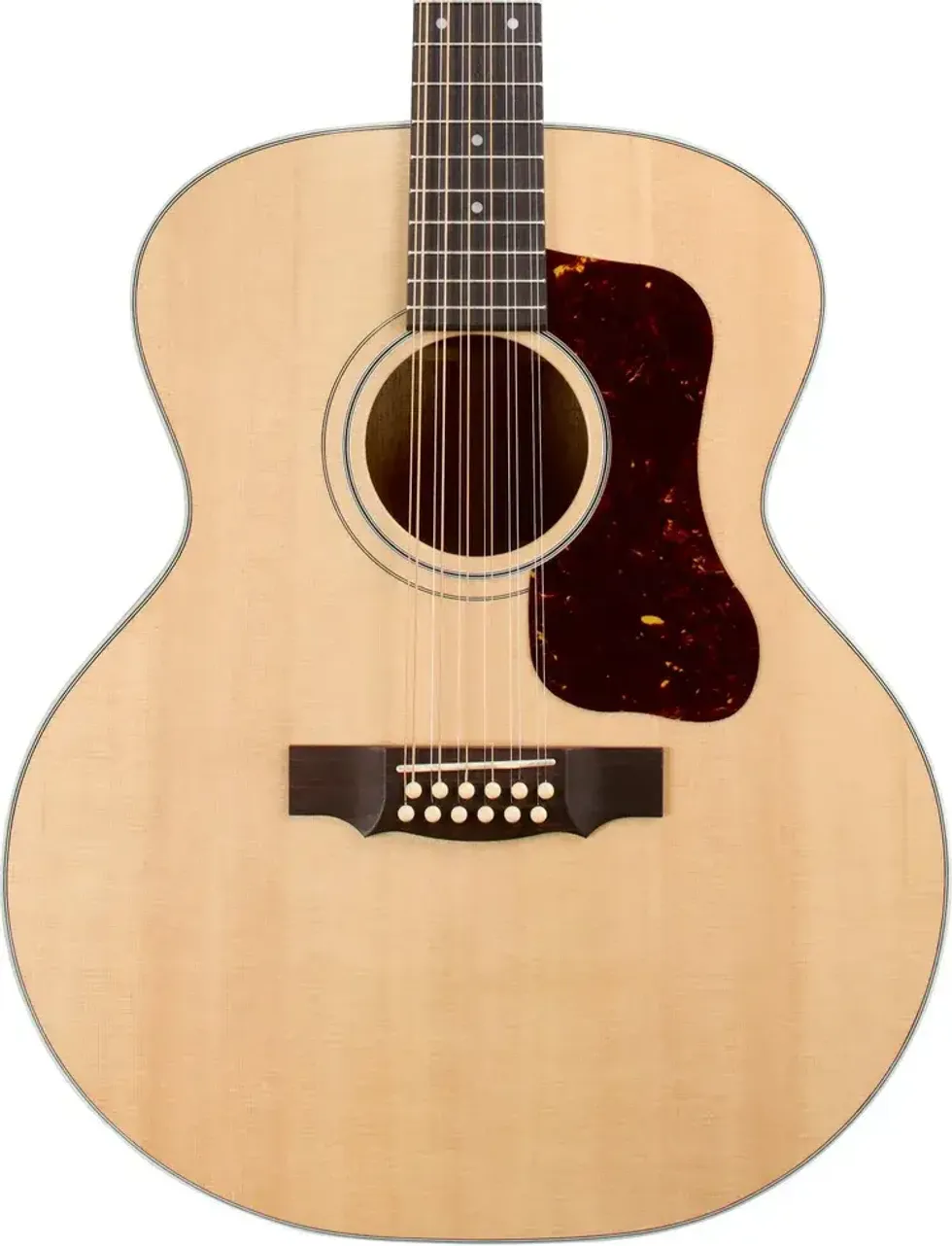
12-string Acoustic Guitar with Spruce Top, Mahogany Back and Sides, Mahogany Neck, and Rosewood Fingerboard - Natural
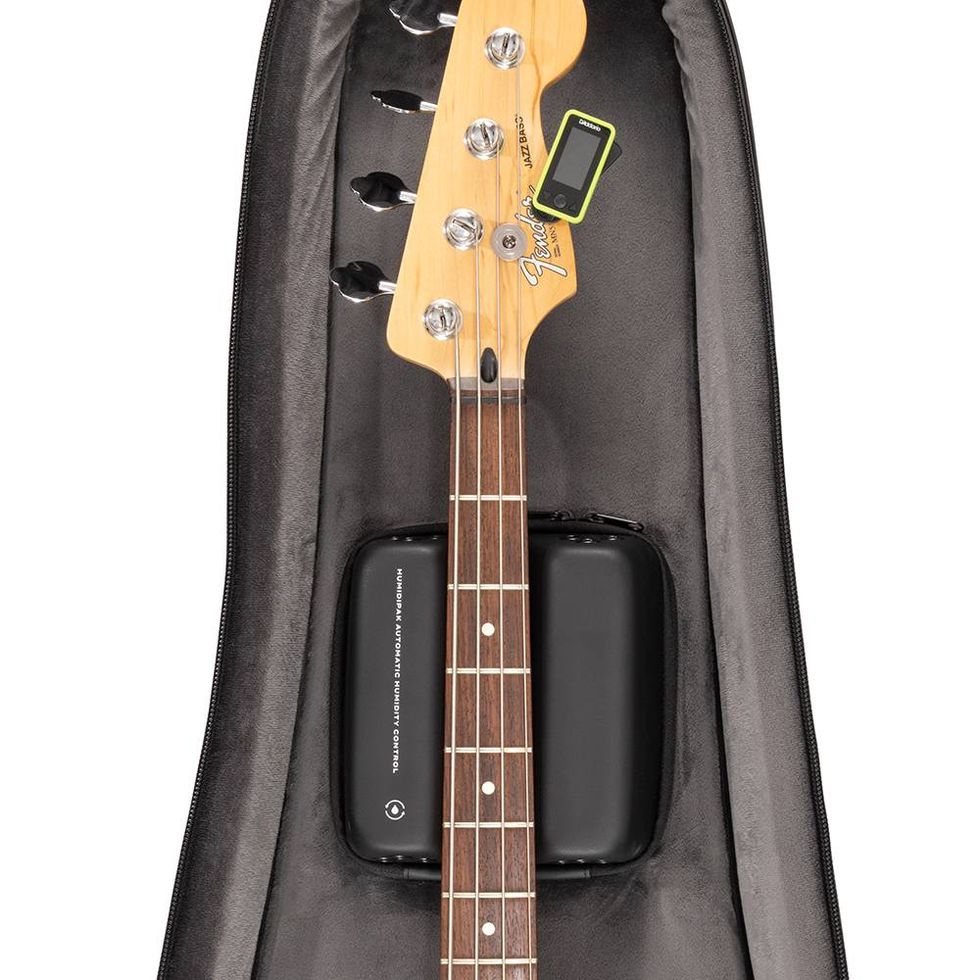
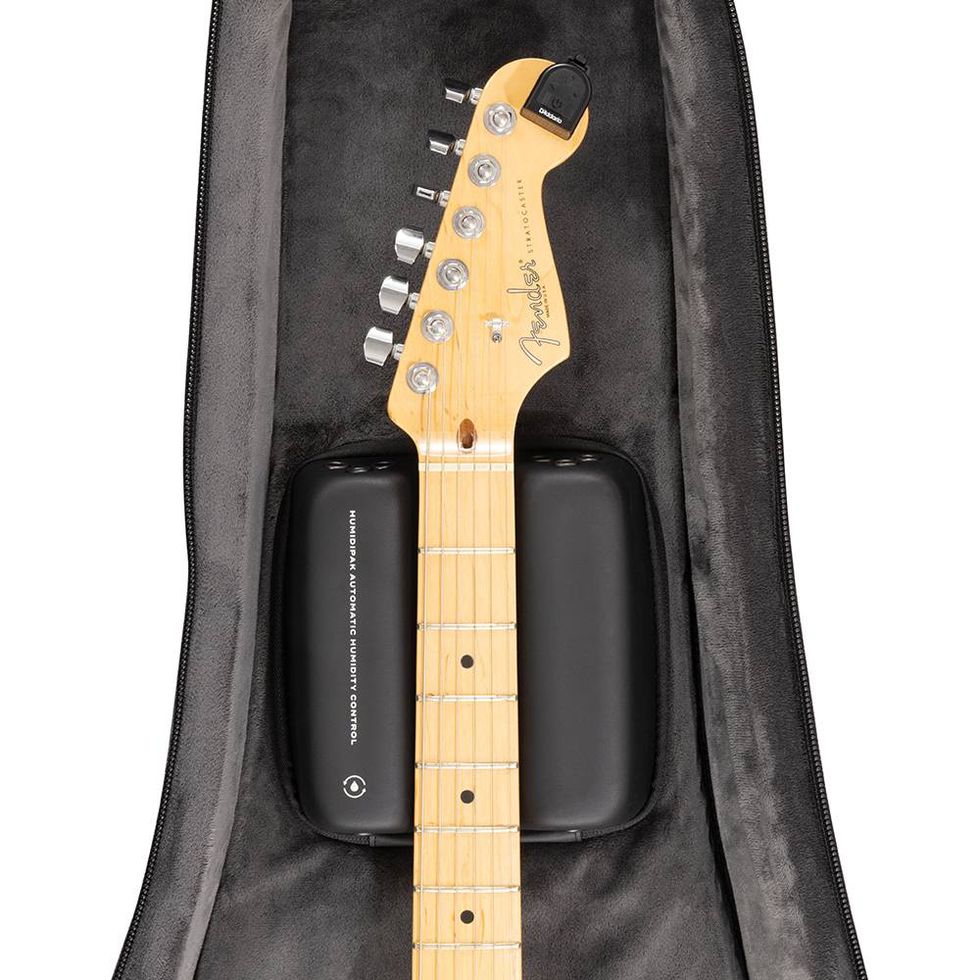
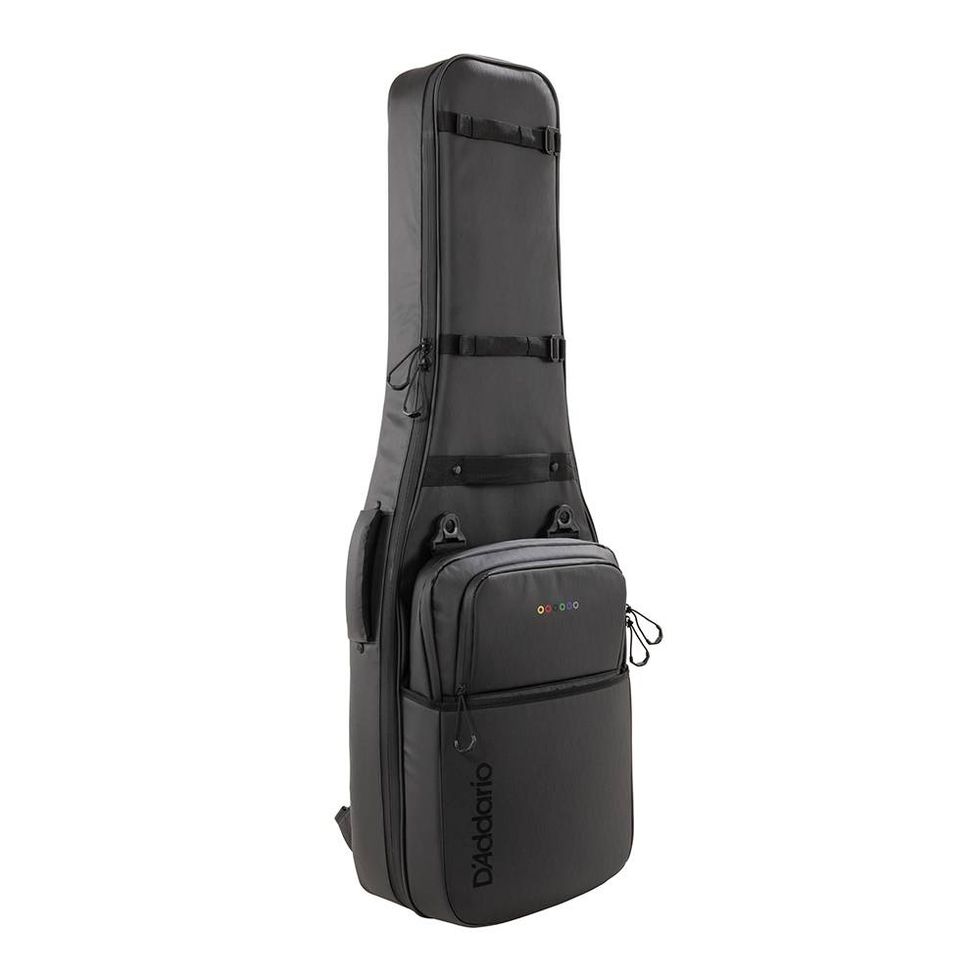
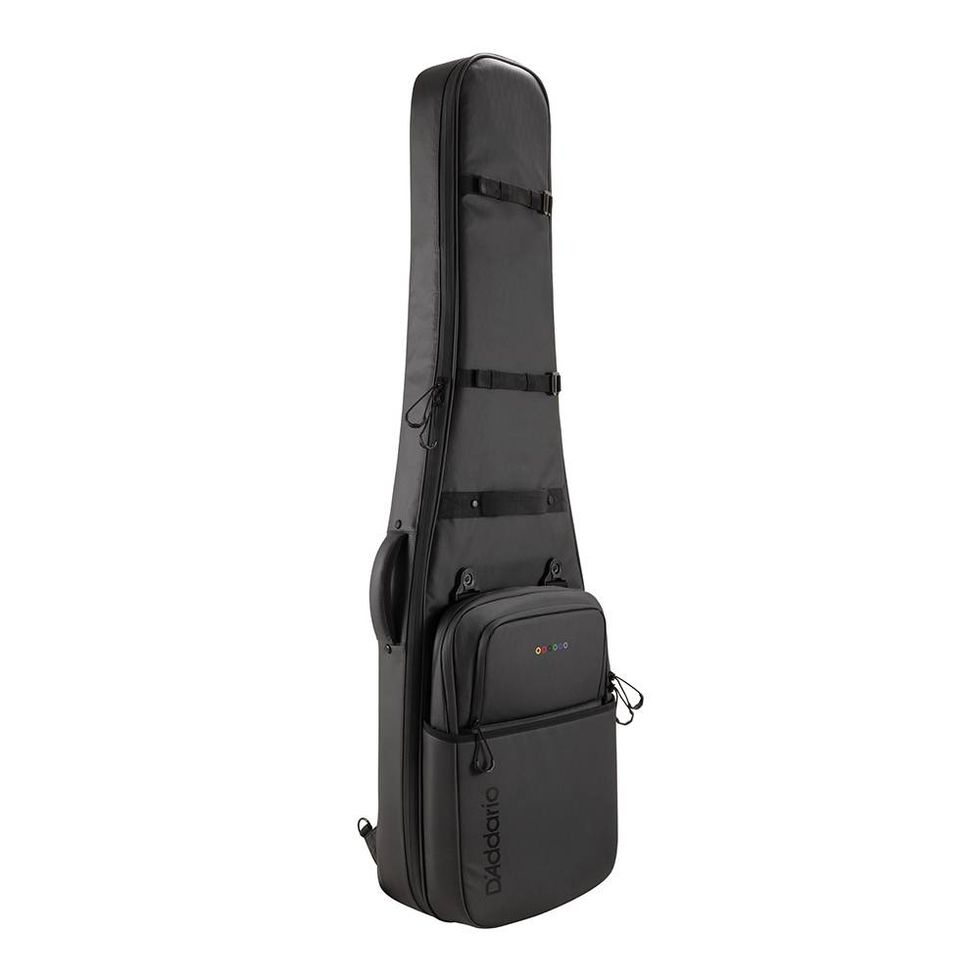
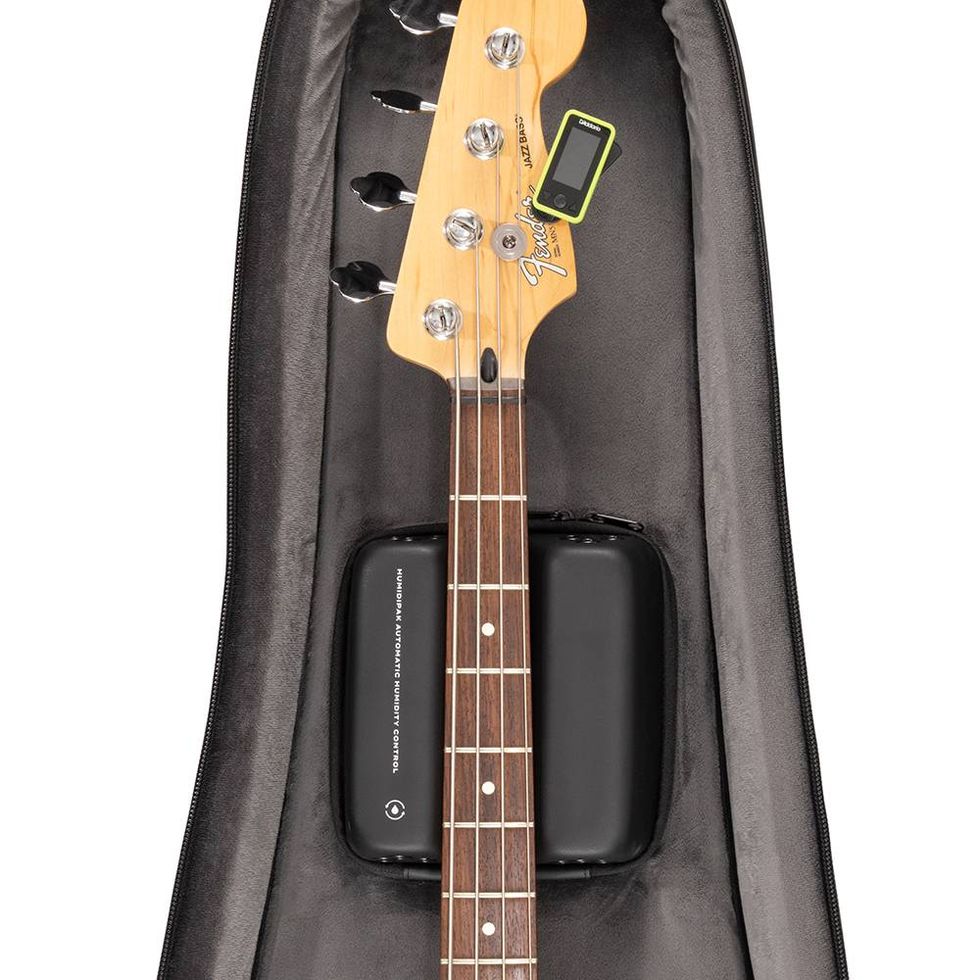
D'Addario has unveiled the all-new Backline Electric Guitar and Bass Cases: premium transport solutions designed to deliver instrument protection, user comfort, and accessory organization, all without the bulk of a traditional hard case.
Ideal for rehearsals, gigs, sessions, and travel, Backline Electric Guitar and Bass Cases are ruggedly built, with climate-smart tech and thoughtful storage features, in a single streamlined design that moves like a gig bag and weighs less than seven pounds. The detachable Breakaway Bag with Auto Lock security keeps accessories organized and close at hand so you can easily move essential gear to and from the stage, while water-resistant materials, reinforced construction, and shock-absorbing padding help protect instruments from just about anything a life on the road might throw at you.
At the center of the design is a Humidipak™ Climate-Control Neck Cradle, which houses integrated two-way humidity control to help keep guitars and basses performing at their best while in transit or storage, no matter what environment you’re playing in.
With balanced ergonomic straps, a cushioned back panel, and premium protection throughout, Backline Cases are built to go wherever musicians do.
Key Features
Rugged Water-Resistant Exterior: Coated diamond ripstop polyester is built to withstand the demands of travel, gigs, and everyday use.
Humidipak Climate-Control Neck Cradle: Patent-pending two-way humidity control helps keep your instrument in peak playing condition.
Plush Interior with Tear-Resistant Panels: Soft-touch protection where it matters, with added durability in high-wear areas.
Breakaway Bag with Auto Lock Security: Detachable accessory bag keeps essentials organized and securely attached.
Balanced, Ergonomic Straps & Cushioned Back Panel: Weighing less than seven pounds, they’re designed for comfortable carrying from the practice room to the stage.
The D'Addario Backline Electric Guitar and Bass Cases each carry a street price of $299.99. D’Addario’s Backline Acoustic Case will be coming later in 2026. For more information visit daddario.com.
D'Addario
Backline Electric Guitar and Bass Cases
June 11, 2026 -- D'Addario has unveiled the all-new Backline Electric Guitar and Bass Cases: premium transport solutions designed to deliver instrument protection, user comfort, and accessory organization, all without the bulk of a traditional hard case.
We are absolutely thrilled to welcome back slide guitar legend Derek Trucks for his second appearance on the show. In this episode, we dive deep into the Tedeski Trucks Band's incredible new album, Future Soul, and discuss what it was like shaking things up with versatile producer Mike Elizondo. Derek also shares wild behind-the-scenes stories from their epic 10-night residency at the Beacon Theatre, including surprise sit-ins from icons like Cyndi Lauper and Jaimoe.
Guitar nerds, you won't want to miss this part: Derek tells us what it was actually like to play Jerry Garcia's legendary "Tiger" guitar and Frank Zappa’s fast-playing "Baby Snakes" guitar live on stage. We also swap stories from the Sun, Sand and Soul Festival, explore the true meaning of musical mastery, and discuss the physical toll of his unique hand-playing style. Tune in for a masterclass on the guitar and an unforgettable hang!
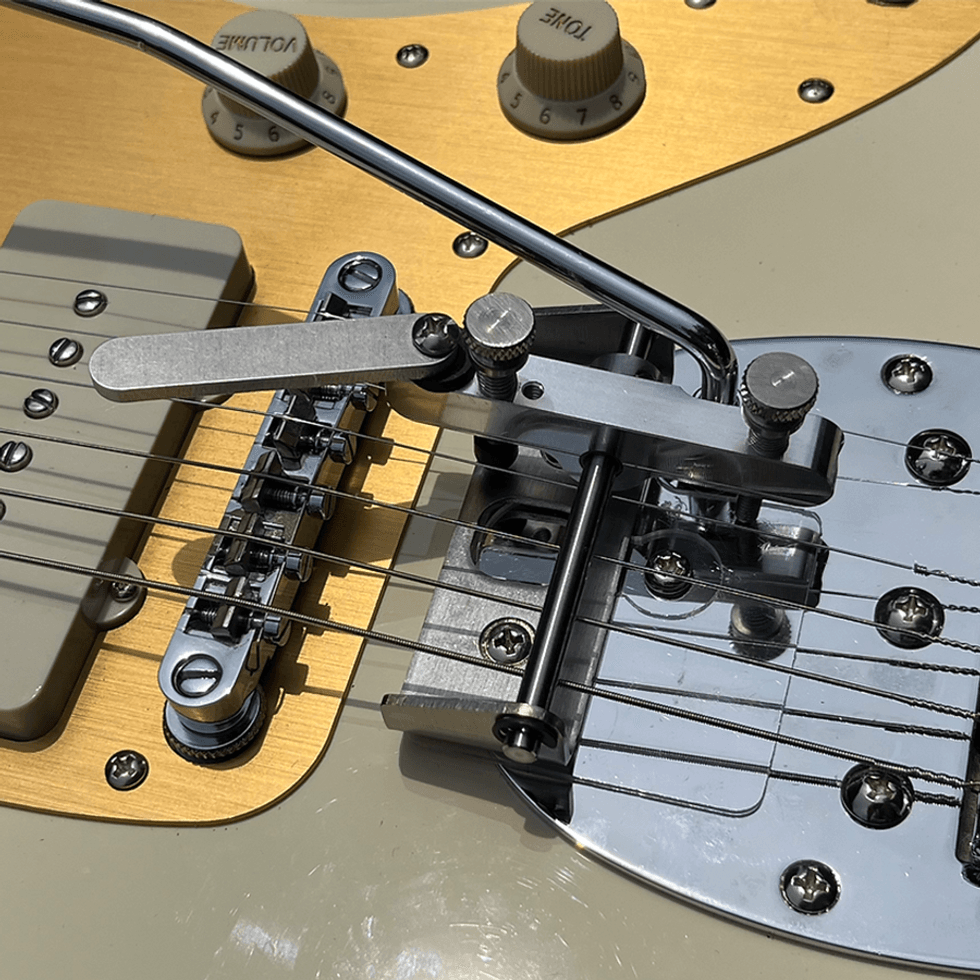
John Bohlinger puts the 3Bender SteelMaster through its paces on bass, a high-string, and an offset. This palm-bending device installs in minutes with no routing, plays nice with your whammy bar, and covers everything from ambient textures to pedal-steel country licks.
3Bender
SteelMaster
The SteelMaster™️ is a new string bender design that can be mounted to a JM Offset style guitar vibrato without the need for drilling any new mounting holes. It can be used on any string to add a smooth and in tune glissando to the music. The bender levers can also be stacked to move chord voicings by bending notes a half tone or full tone.
If you are searching for a no rout/no drill string bending option for your Stoptail G style guitar, reach out at info@3Bender.com. We may have a solution for you and the website is not updated just yet.