
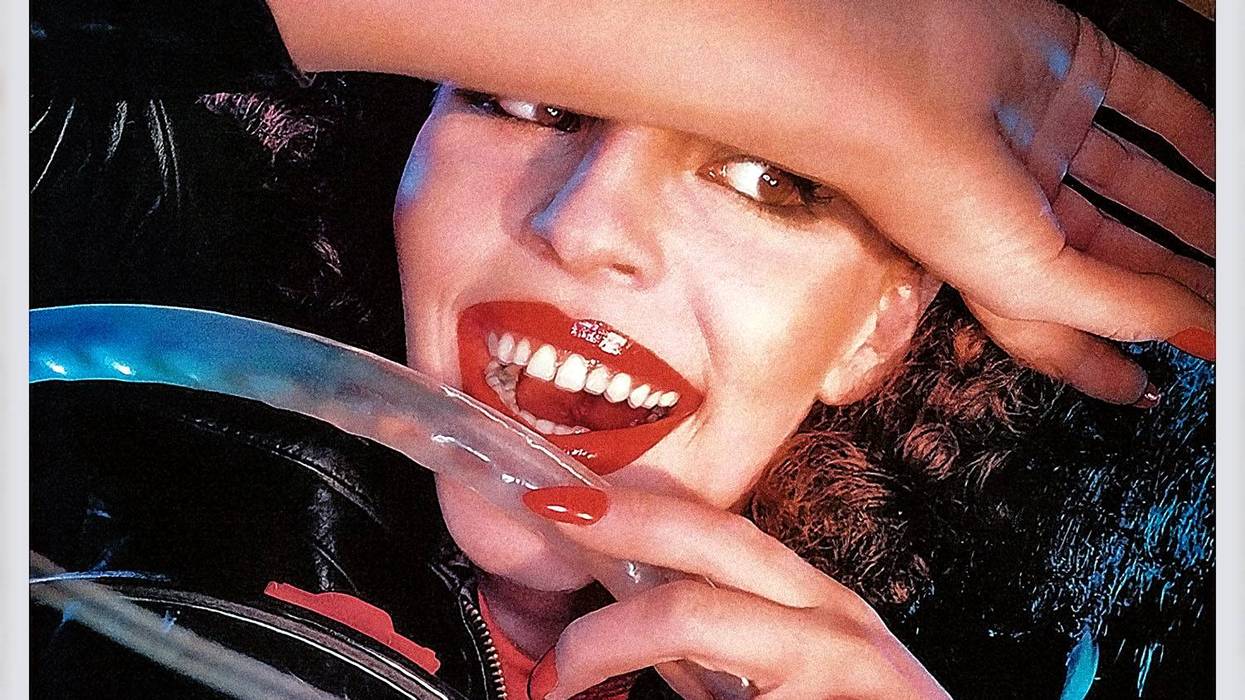
The Cars burst onto the national music scene in the late 1970s, capturing the attention of rock radio listeners when the demo of their now-classic “Just What I Needed” went what today we would call “viral.” In the 1980s, the band was also a constant presence on MTV. Like the uniqueness of the Cars’ music, with its quirky mix of pop, rock, and new wave, guitarist Elliot Easton’s playing defies labeling, his genre-hopping blend of rock, blues, jazz and rockabilly seamlessly knit together by his savvy and adventurous musical sense.
Easton’s classic solos and creative rhythm playing turned so many of the Cars’ songs into thrilling guitar adventures, without overshadowing them. Let’s see if we can decipher just how he did it.
Knowing Your Stuff
Easton attended Boston’s Berklee College of Music, where he studied guitar, arranging, and composition. While his peers were leaning heavily on Eric Clapton, Jeff Beck, and Jimmy Page, Easton—who is a big Clapton fan—also loves classic Telecaster players like James Burton, Steve Cropper, and Clarence White. Armed with the skills he learned at Berklee, Easton approached his solos from more of a jazz perspective, wending his way through the chord changes creatively, without relying on simply playing pentatonic licks in the song’s key. He deftly shows us how in his solo from the title track of 1981’s Shake It Up. It packs quite a wallop and is widely considered to be one of his best.
In the key of C, Ex. 1 illustrates how Easton nimbly navigates the chord change between Am and Bb, the bluesy b7 chord.
Ex. 1
Over Am, he plays a wicked lick based on the A blues scale (A–C–D–Eb–E–G). Now, he could have continued to use the same scale over the Bb chord. However, in bar two, Easton instead chooses to slide into a Bb triad (Bb–D–F) starting on the “and” of beat 1. He then tops things off with a tasty whole-step bend into D, the 3 of Bb.
Let’s see how we can apply Easton’s approach to create our own phrases. First, Ex. 2 shows how to play the three Bb triad shapes up and down the neck. (You’ll find these on any set of three adjacent strings, though the fingerings change slightly.)
Ex. 2
Now, we can create more Easton-inspired licks with the two new triad shapes. Ex. 3 begins with an A minor pentatonic (A–C–D–E–G) phrase in the eighth position, leading into the new Bb triad shape at the 10th position, and ending with a nod to Easton’s tasty final bend.
Ex. 3
For the Bb chord in measure two of Ex. 4, we lend a new bluesy touch on beat 2 by employing a half-step bend from Db to D, moving between the chord’s b3 and 3. This makes the lick sound less “clinical” and gives it some fire. Staying aware of these subtle elements will serve to add genuine personality to your playing. Easton’s is chock full.
Ex. 4
Expanding Your Horizons
Most mainstream rock guitarists of the 1970s and ’80s didn’t openly draw very much from disparate styles of music. As mentioned above, Easton was drawn to the pedal-steel-inspired playing of Clarence White, guitarist for the bluegrass group the Kentucky Colonels and the rock band the Byrds. He was also a fan of the Bakersfield sound, the offshoot of country music coming out of the California city, played by the likes of Merle Haggard and Buck Owens.
Easton notably pays homage to those styles in the Cars classic “My Best Friend’s Girl” from their 1978 self-titled debut. First, there’s his rhythm part in the chorus.
A boilerplate country guitar part of this variety would generally be played fingerstyle (or with hybrid picking) and include a Travis-picked bass line, as illustrated in Ex. 5. Note that it is traditionally played with a slight palm-mute on the lower three strings only.
Ex. 5
Let’s look at how Easton retrofits his part to make it just right for this song. Ex. 6 is based on what he plays in the chorus.
Ex. 6
Note how Easton omits the bass notes, which don’t quite jibe rhythmically with what bassist Benjamin Orr is playing. He also exclusively uses his pick, adding brightness to a part that is the star of the show here. (Note that the studio version is sped up, causing it to sound a half-step higher.)
In the second bar of his solo, Easton neatly slips in a Clarence White-style like (Ex. 7) that fits the song to a T.
Ex. 7
The opening dyad involves simultaneously executing two bends, one a half-step, the other a whole-step. To pull this off, it’s best not to think too much about it, as the 1st string has more tension than the 3rd, lending itself more easily to bending just a half-step. Lastly, to get that genuine country sound, play the dyad with your pick and middle finger. The rest of the phrase can be played the same way, though Easton chooses to use his pick.
Style with Substance
Easton’s penchant for colorful bends is also apparent in the title track of the Cars’ 1979 album, Candy-O. His solo enters like a freight train, fueled by achingly slow bends, which again include both the half- and whole-step variety. (He even repeats the phrase a couple of bars later.) Ex. 8 is both challenging and fun.
Ex. 8
An effective way to execute this phrase is to fret both strings with your 3rd finger, bending them downwards towards the floor. But be sure to use your 1st and 2nd fingers to help support the bend. Again, personality rules the day in Easton’s playing; his entrance here is deceptively simple and is both striking and unforgettable.
Part of the charm of Easton’s style is the imaginative way in which he constructs his parts, as in the pre-chorus of “Magic,” a hit from 1984’s Heartbeat City. Singer and guitarist Rik Ocasek’s song presents Easton with a standard VIm–IV–V–VIm chord progression, which in the key of A is F#m–D–E–F#m. Ex. 9 is based on the magic Easton conjures. It’s doubled by keyboardist Greg Hawkes’ synth for effect.
Ex. 9
Here, Easton takes a commonplace progression and creates an earworm of a part by allowing the open 1st and 2nd strings to ring through all of the chords. It’s a new hook we look forward to hearing as the section approaches, and, as is often the case, Easton’s guitar makes the song that much better.
In “Magic,” Easton again begins his solo in a unique and ear-catching way (Ex. 10). He simply plays one note over the entirety of the first three bars, continually re-striking it to propel it rhythmically. It couldn’t be simpler, as the note is A, the root of the key. But fueled by imagination, simplicity can create remarkably powerful statements.
Ex. 10
Easton has said he doesn’t improvise his solos, but instead works them out beforehand. Still, his playing is imbued with a sense of inspired spontaneity, as is the Cars’ music, some of which goes back almost 50 years. The hits still sound fresh, and, together with the deep cuts, they are a treasure of Easton’s guitar goodness.