Macy Gray, Lisa Loeb and Nita Strauss to be honored at the
2019 She Rocks Awards
The Women’s International Music Network presents 7th annual event celebrating
women in music on January 25, 2019 at the House of Blues Anaheim
The Women’s International Music Network (the WiMN) reveals Macy Gray, Lisa Loeb, and Nita Strauss as the first announced honorees at the upcoming 2019 She Rocks Awards. Recognizing women who stand out as role models in the music industry, the 7th annual live awards event will take place on Friday January 25, 2019, at 7:30 p.m. at the House of Blues in Anaheim, CA during the NAMM Show.
GRAMMY® Award winner Macy Gray is a singer, songwriter, producer and actress who started her career in 1999 with the hit song “I Try,” and has since gone on to sell more than 25 million albums globally. In September 2018, she brought her unmistakable rasp and soulful style to fans around the world with her critically well-received, tenth full-length album, RUBY. Her appearance in Training Day alongside Academy® Award winner Denzel Washington, has become an iconic hallmark.
Platinum-selling, GRAMMY® Award-winning artist Lisa Loeb is a singer-songwriter, producer, touring artist, author and philanthropist who started her career with the Number 1 hit song “Stay (I Missed You)” from the film Reality Bites, and was the first pop musician to have a Number 1 single while not signed to a recording contract. She also designs Lisa Loeb Eyewear, writes children's books, and supports non-profit causes. Lisa’s latest release, Lullaby Girl, is available exclusively from Amazon.
Currently on tour with Alice Cooper, acclaimed guitarist Nita Strauss has shared the stage with diverse artists including Jermaine Jackson and celebrated tribute band The Iron Maidens. Her skill and exuberant stage presence have earned her a stellar reputation and endorsements including Ibanez Guitars (she's the first female Ibanez signature artist with her own model), Marshall Amplification, DiMarzio pickups, and more. Nita's debut solo album, Controlled Chaos, launches on November 16, 2018.
More 2019 She Rocks Awards honorees will be announced soon.
Laura B. Whitmore, founder of the WiMN and co-producer of the She Rocks Awards, shares, “We are excited to honor these unique and super-talented women who are also true champions for women in music. We look forward to welcoming Macy, Lisa and Nita as our newest honorees.”
The She Rocks Awards pays tribute to women who display leadership and stand out within the music and audio industry, and is a premier event during the NAMM Show, bringing together industry professionals, music icons, artists, fans and the media. Past honorees of the She Rocks Awards include Melissa Etheridge, Pat Benatar, The B-52s, Colbie Caillat, Sheila E, Chaka Khan, Ronnie Spector, Orianthi, The Bangles, and many more, plus a collection of role models from all walks of the music and audio industries.
The 2019 She Rocks Awards will take place on Friday, January 25, 2019 at the House of Blues Anaheim at 7:30 p.m. This high-energy evening includes live music, awards and speeches, celebrity appearances, a fabulous silent auction, amazing gift bags and so much more! Tickets are now on sale, available in four tiers that include dinner and more. This event is open to the public; a NAMM Show badge is not required to attend the She Rocks Awards. Find out more and purchase tickets at sherocksawards.com.
The 2019 She Rocks Awards is sponsored by Gretsch, Sennheiser, PRS Guitars, Marshall Amplification, Seymour Duncan, Martin Guitar, Reverb.com, Roland, Rat Sound Systems, D’Angelico Guitars, Zildjian, Fishman, Guitar Center, Berklee Online, Gator Cases, Sabian, PreSonus, M.A.C Cosmetics, Paul Mitchell, The Music People, SoundGirls, On-Stage Stands, NAMM, 108 Rock Star Guitars, Future Publications, Guitar World, Guitar Player, Bass Player, Electronic Musician, Musicradar, Parademagazine, Guitar Girl Magazine, KVR Audio, Music-News.com, and more. For information regarding She Rocks Awards sponsorship opportunities, please contact info@thewimn.com.
Question:What do you wish you practiced more when you were younger?
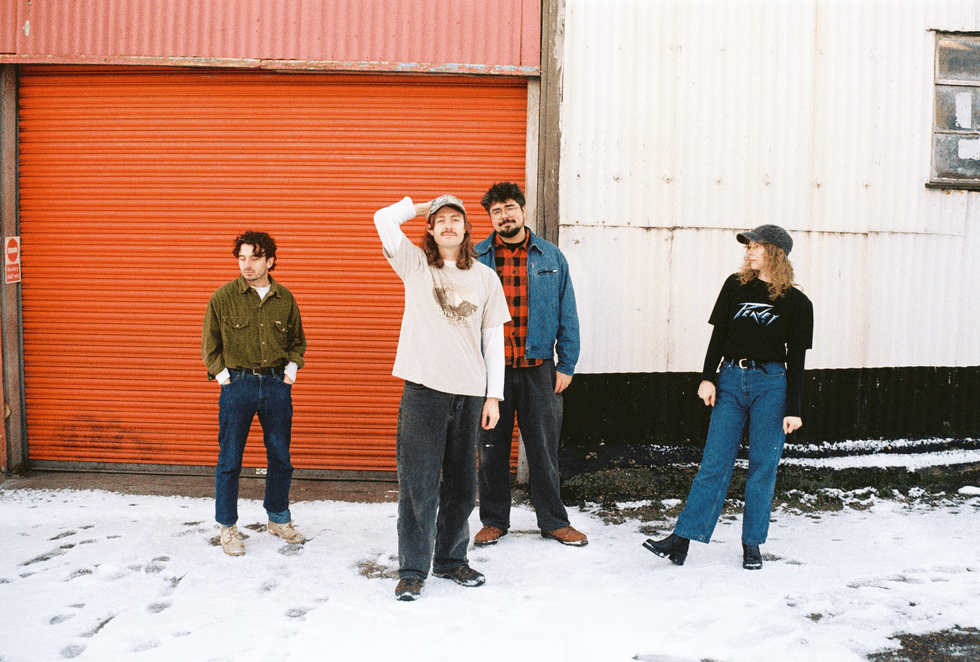
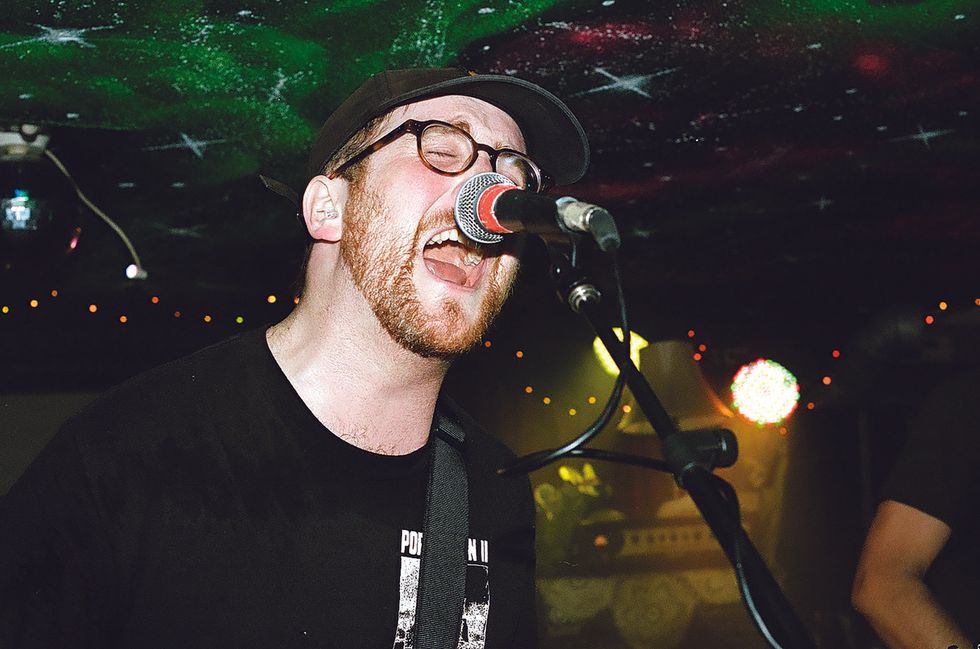
Patrick Turner (Brown Horse)
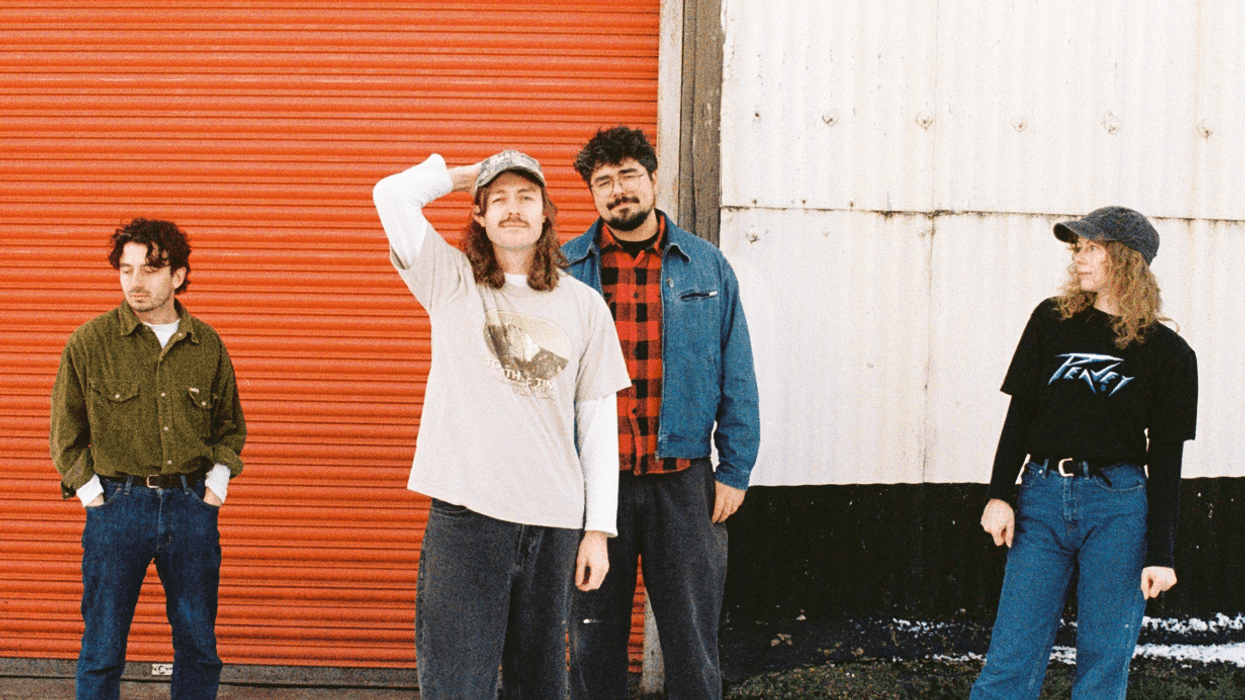
Patrick Turner, second from left, with his alt-country band Brown Horse. Their new record, Total Dive, arrives April 10 via Loose Music.
Patrick Turner, second from left, with his alt-country band Brown Horse. Their new record, Total Dive, arrives April 10 via Loose Music.
A: As a kid, I played bass for years before I ever picked up a 6-string. When I finally got hold of one, suddenly I found that I could sing over the top of a few chords and it would actually sound like a standalone song, and not just some accompanying part. With that discovery, any interest I’d had in practicing scales and working on my technique was completely blown out of the water. I kinda wish I’d managed to keep practicing that more technical stuff, but luckily I’ve surrounded myself with bandmates who did, and they’re more or less happy for me to keep on singing, chugging the chords, and faking it through the occasional guitar solo.
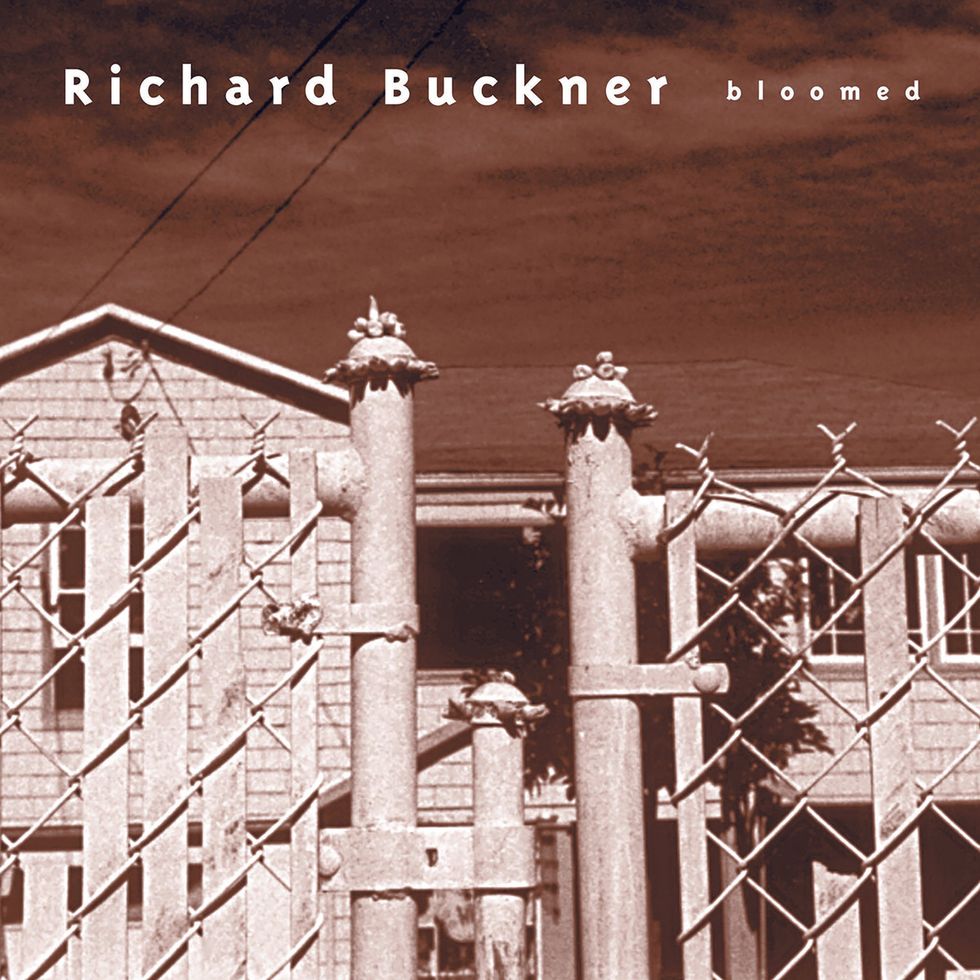
Obsession: I happened to see a folk duo called the Carrivick Sisters at a free, outdoor show in Norwich last summer, and they were playing these amazing dobro guitar parts. Now I’m into anything with dobro. Check out Lloyd Maines’ playing on Richard Buckner’s 1994 album, Bloomed.
Ward Powell, Reader
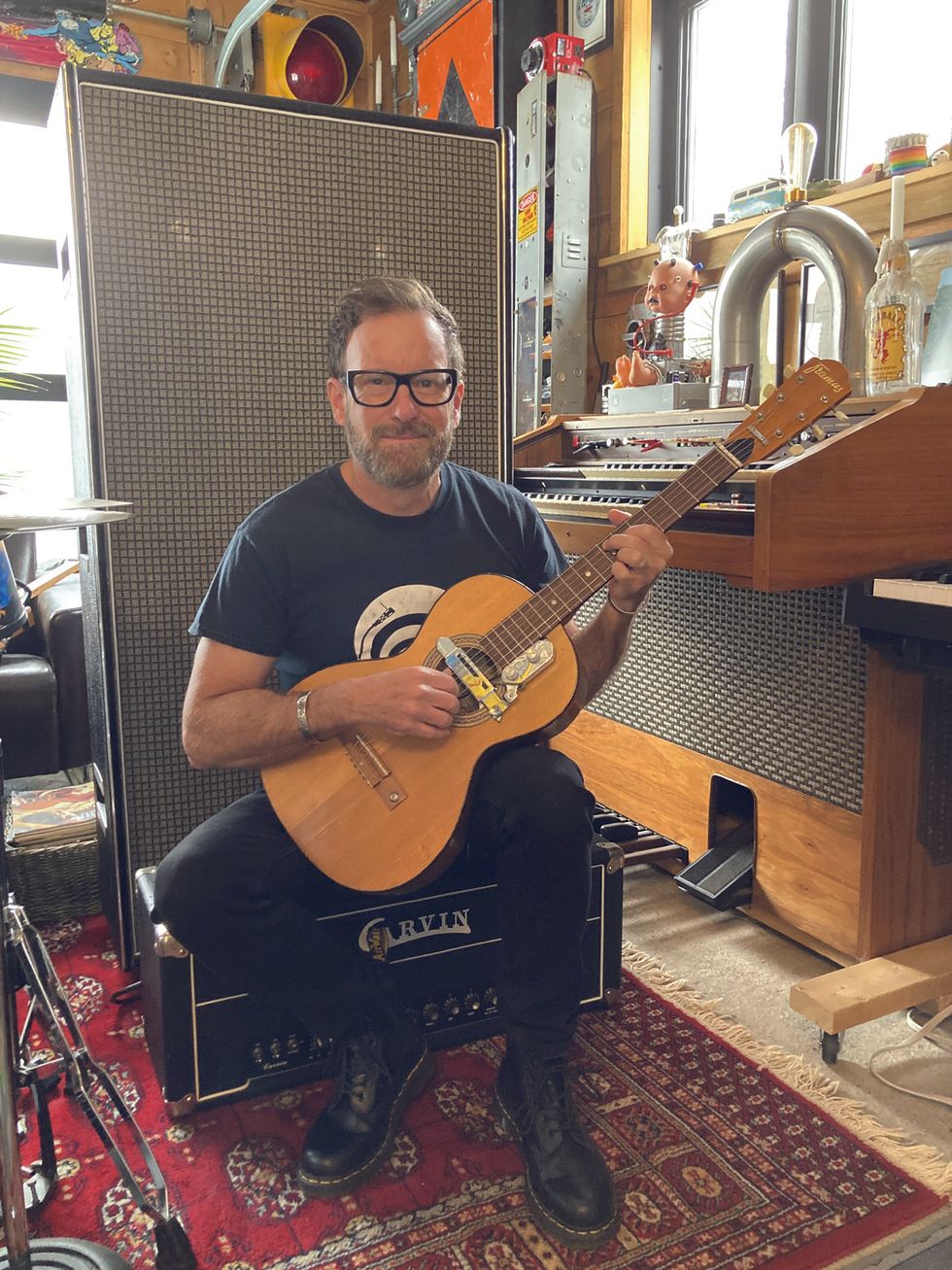
Reader Ward Powell, with a heavily modded Framus acoustic.
A: I wish I had focused more on songwriting and less on technique. I practiced endless scales and arpeggios, studied classical, and learned to read music for the entire fretboard. But I was so focused on the technical aspect of guitar and being a great soloist, that I spent far less time on songwriting. Now that I’m older and hopefully wiser, I realized that practising and creating aren’t the same thing. Music is art: It should be about the creation of something that expresses yourself, and if you’re lucky, other people will enjoy it, too. It’s never too late, so now my entire focus is on just creating, making up chords by using my ear, not trying to fit into a genre, and writing music for myself.
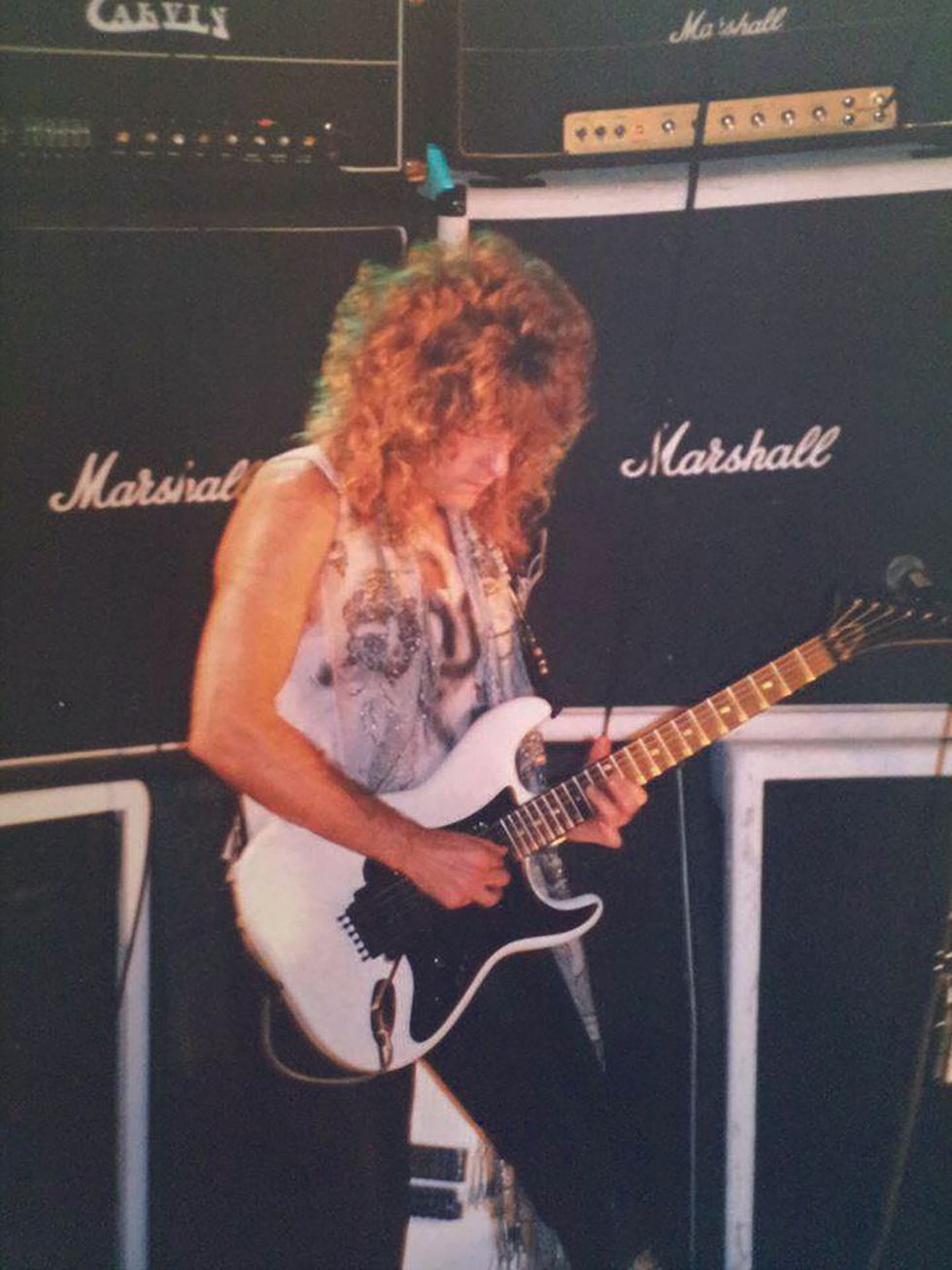
Powell in his EVH-worship days, looking every bit the ’80s guitar hero. The hair might be gone, but as you can see in the first picture, the Carvin’s still around.
Obsession: I have a couple. One, weirdly, is the ukulele. I bought one used on a whim for $20 and loved it. It’s just so fun to play and it seems to help improve my ear training. The other obsession is building guitars, and modding amps and pedals. That goes back to my EVH fanboy days. I had stopped for decades, but now I’m completely obsessed with it again.
Luke Ottenhof, Associate Editor
A: Joining the chorus of “scales and related stuff” in response to this question. All I wanted to do when I was younger was learn songs, and I developed a good ear thanks to that focus, but I completely neglected the more technical and theoretical sides of the instrument. Now, I find myself longing to stretch out on the guitar and find new and different sounds, but without the know-how to do so. I don’t necessarily regret all the time I spent figuring out how to play basic classic-rock tunes, but I do wish I’d had a more balanced practice diet.
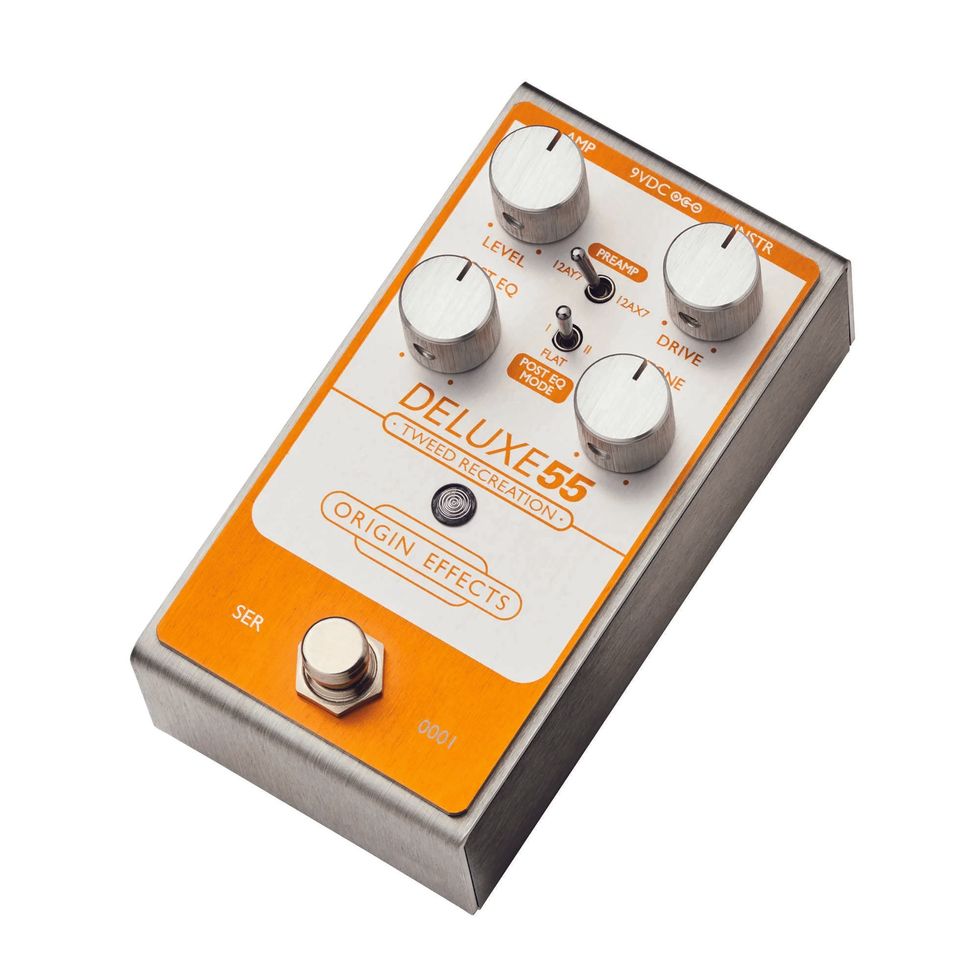
Obsession: The 5E3 Deluxe sound. I got a 1x15" clone combo a few months back and loved the tonal profile, so I picked up the Origin Effects Deluxe55 to run into my ’73 Super Reverb and effectively turn it into a 4x10" tweed Deluxe. It mellows out the icy highs and creates a nicely balanced EQ for nasty-ass distortion and fuzz.
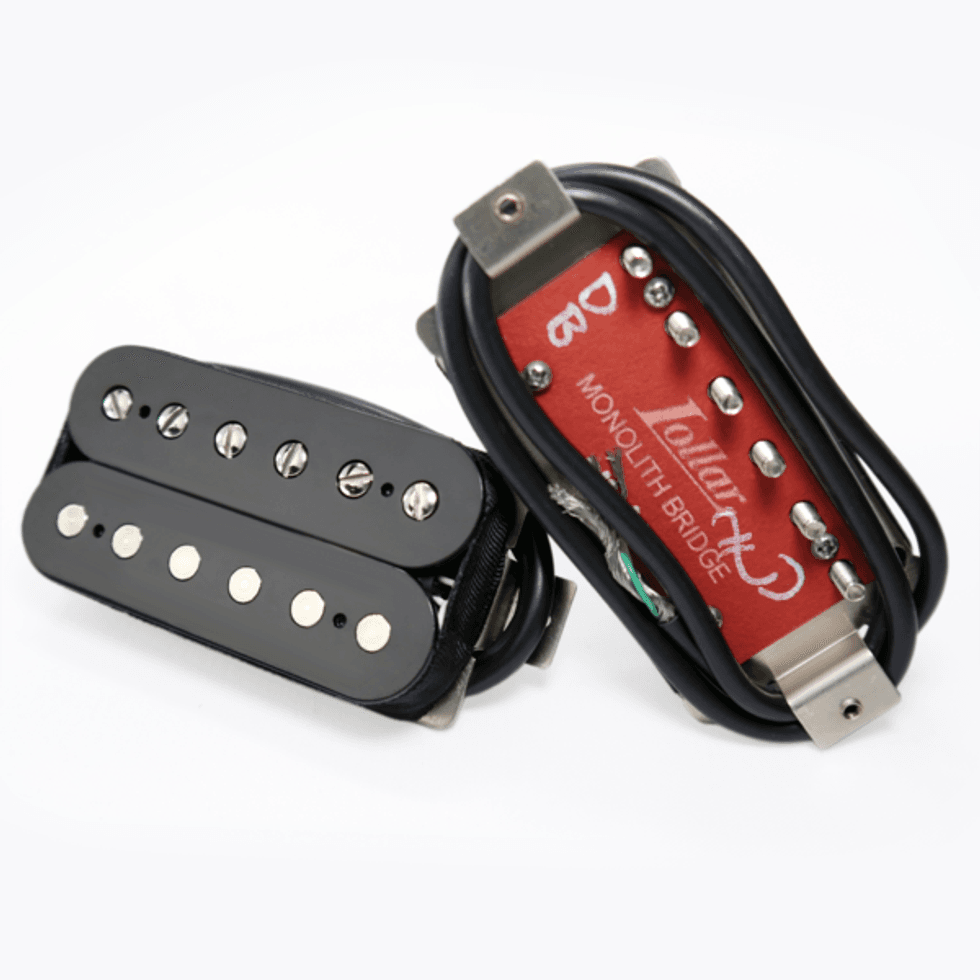
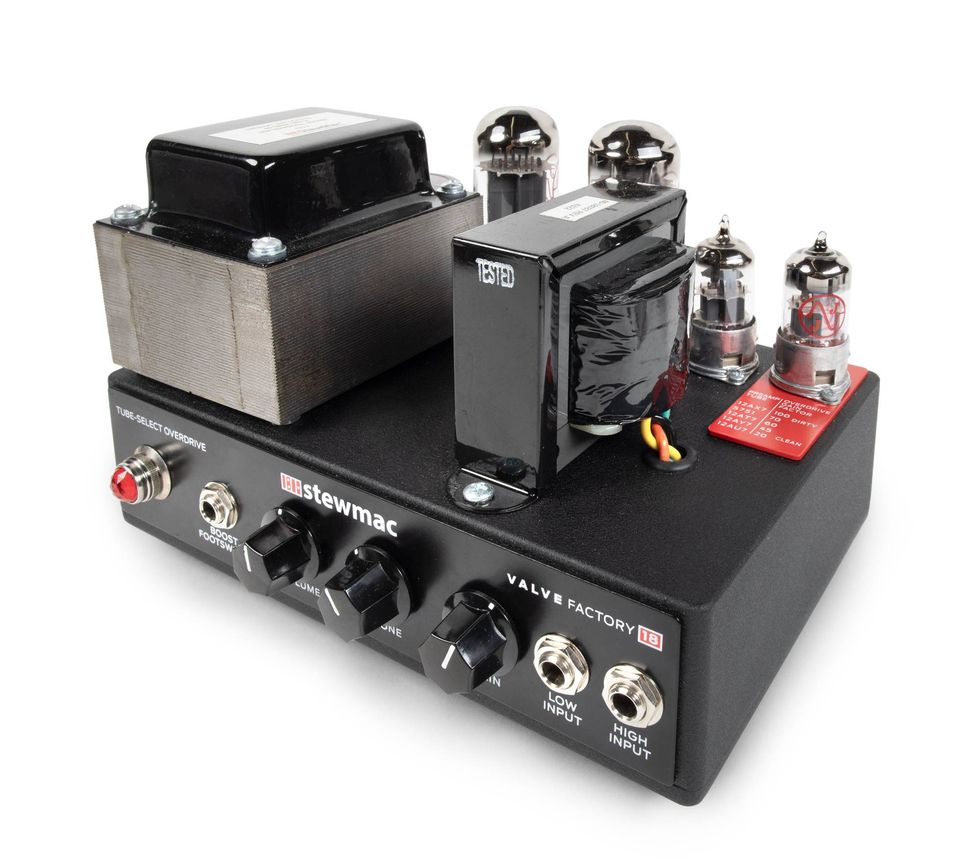
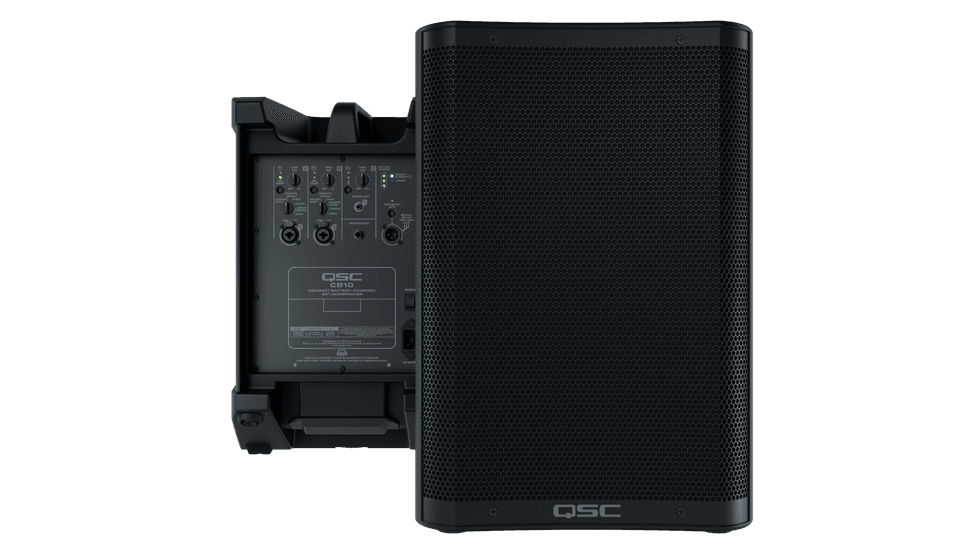
This month's Gear Radar roundup features Lollar's aggressive Monolith Humbuckers for extreme playing styles, the versatile QSC CB10 Compact Battery-Powered Loudspeaker perfect for gigging musicians and DJs, and the StewMac Valve Factory 18 Amp Kit, which makes building a classic American-inspired tube circuit safe and simple.
Lollar Pickups
Monolith Humbuckers
The new Lollar Monolith humbuckers are designed to meet the needs of modern players. The alnico 8 magnets offer aggressive attack, balanced compression, full body, and an articulate midrange that is well suited for extreme playing styles such as metal. Available for 6- and 7-string instruments with 4-conductor lead wires.
Whether you've soldered for years or have never touched a circuit in your life, StewMac's VF18 is designed to demystify the world of tube amplifiers. Step-by-step instructions walk you through the entire build safely and confidently. Inspired by classic circuits from the golden age of American tube amps!
CB10 Compact Battery-Powered LoudspeakerThe CB10 is a compact, battery-powered loudspeaker system offering unrivaled audio performance and versatility. It features a 10" LF driver, a 1" compression driver, and a 3-channel mixer for microphones, instruments, and Bluetooth streaming. Ideal for DJs, event professionals, and musicians, it offers easy plug-and-play operation and customization via the QSC Loudspeaker Control app.
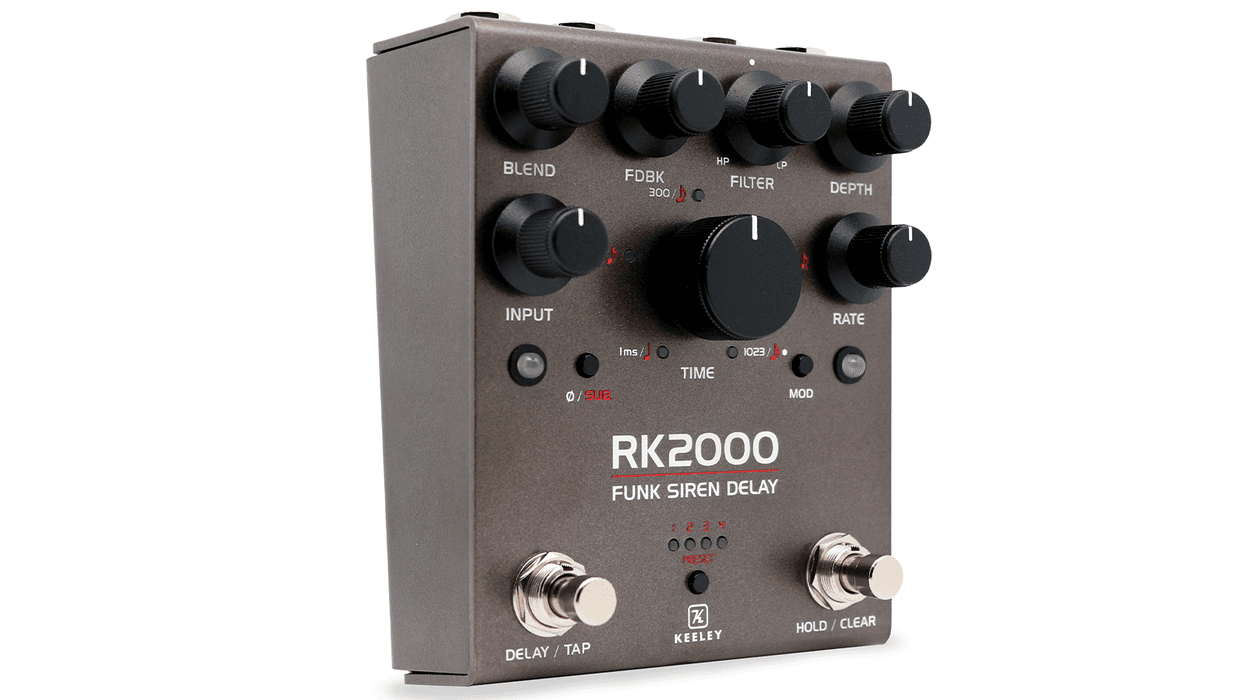
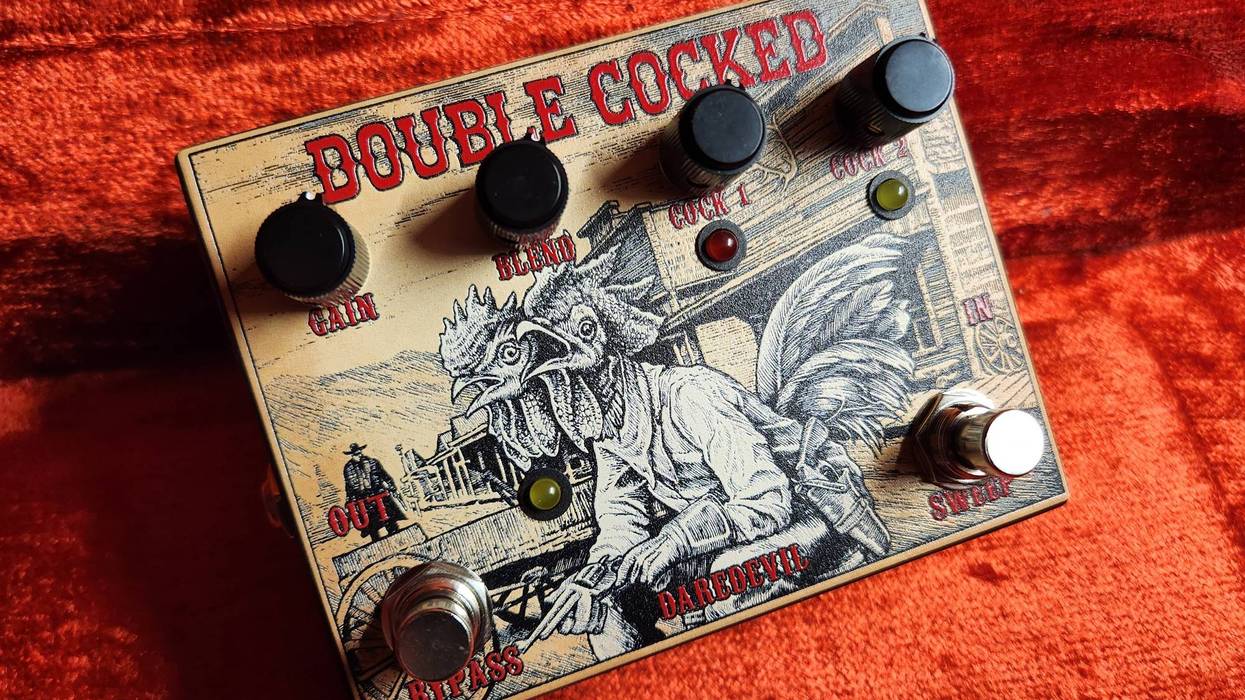
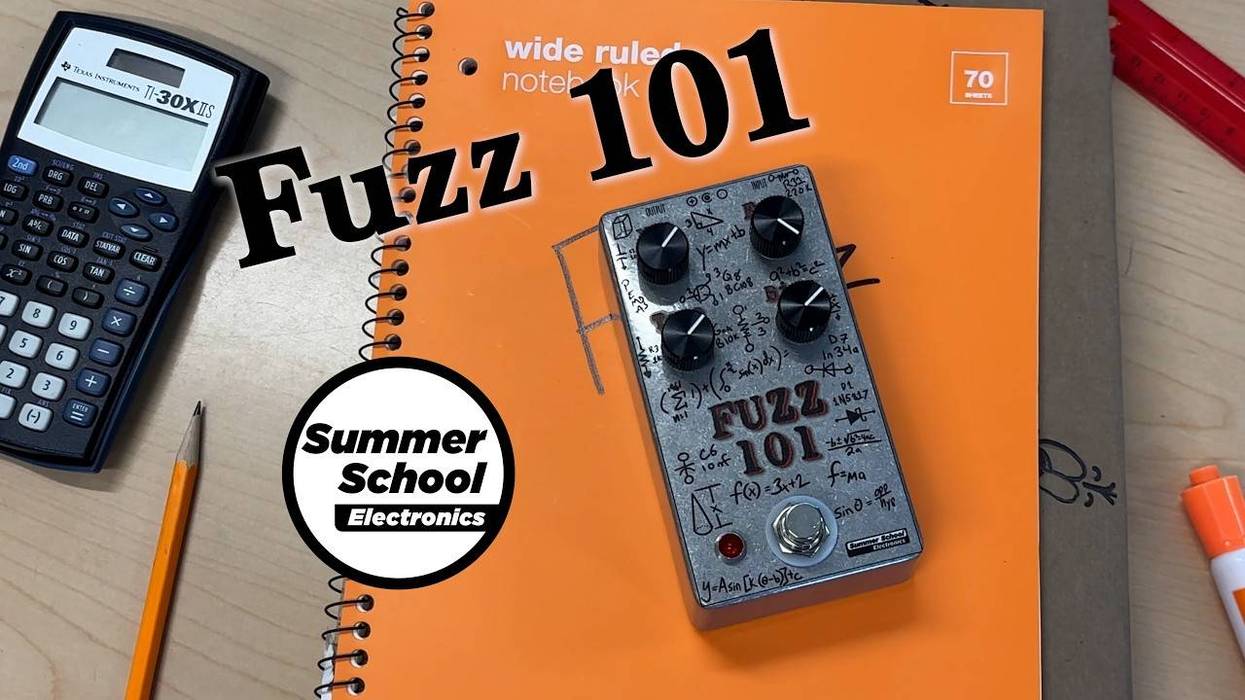
Summer School Electronics has launched its latest creation: theFuzz 101 pedal, a new take on a classic fuzz circuit.
After a year of releasing complex pedals – including modulation, spacey reverb, and a collaboration with Canada’s Supercool Pedals – Summer School Electronics gets back to basics in 2026 with Fuzz 101.
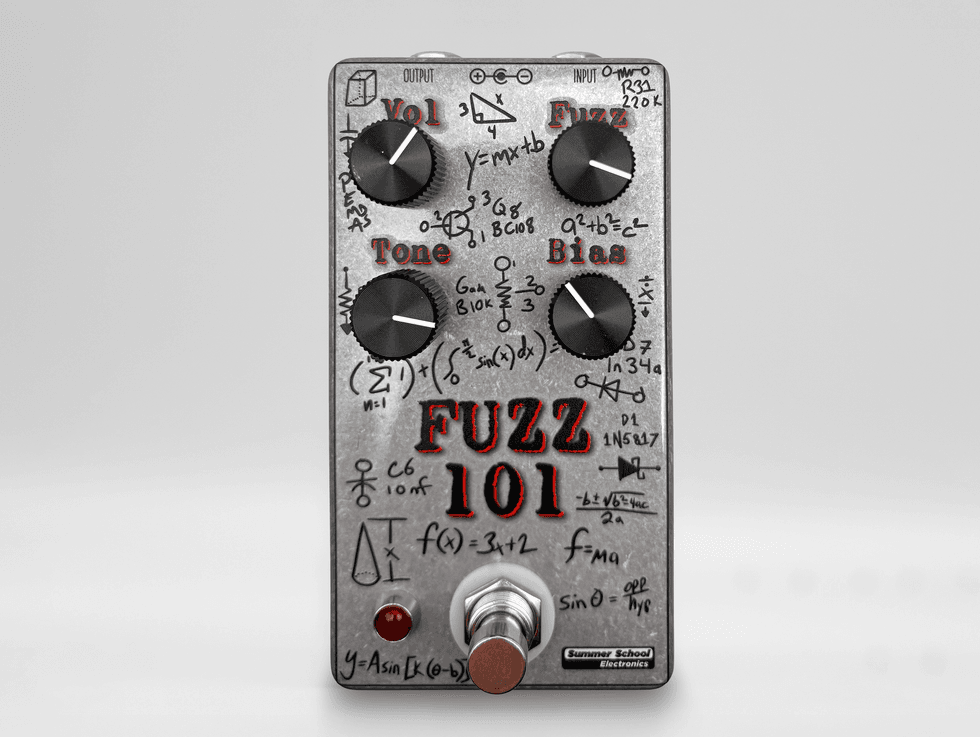
More than just a 2-transistor fuzz, Fuzz 101 includes a unique rat-inspired tone stack, a pair of BC108 transistors, and an external bias control. Together, they allow you to tap into a huge array of tones…everything from classic saturated sustained fuzz sounds to sputtering velcro chaos. Whether you’re new to fuzz, or are looking for a refresher on the basics, Fuzz 101 will inspire some new riffs (and much needed sonic chaos) in your life.
Each Fuzz 101 pedal offers the following features:
Volume,Fuzz, Bias and Tone controls
A unique tone stack based on a Rat filter control
External Bias control to dial in a variety of fuzz sounds.
Handbuilt in Syracuse, NY
9-volt operation with a stranded DC input.
Summer School Electronics’ Fuzz 101 carries a $164.99 street price. For more information visit summerschoolelectronics.com.
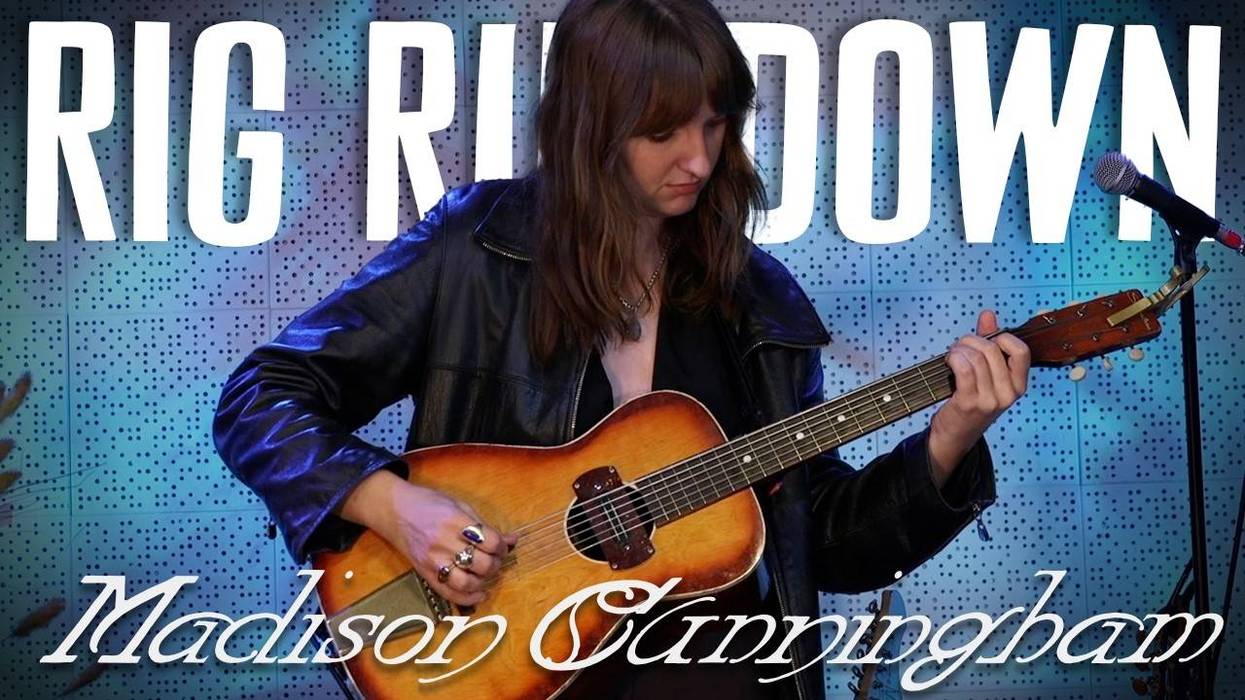
California singer-songwriter Madison Cunningham earned her first Grammy nomination in 2019, when she was just 23. A few years later, at 26, she won the Grammy for Best Folk Album, for her 2022 record, Revealer. Last year, she released her latest collection, Ace, her third with the storied label Verve Forecast.
Back in March, PG’s John Bohlinger met up with Cunningham for this new Rig Rundown at Third Man Records in Nashville, ahead of her show in the label’s Blue Room. Check it out!
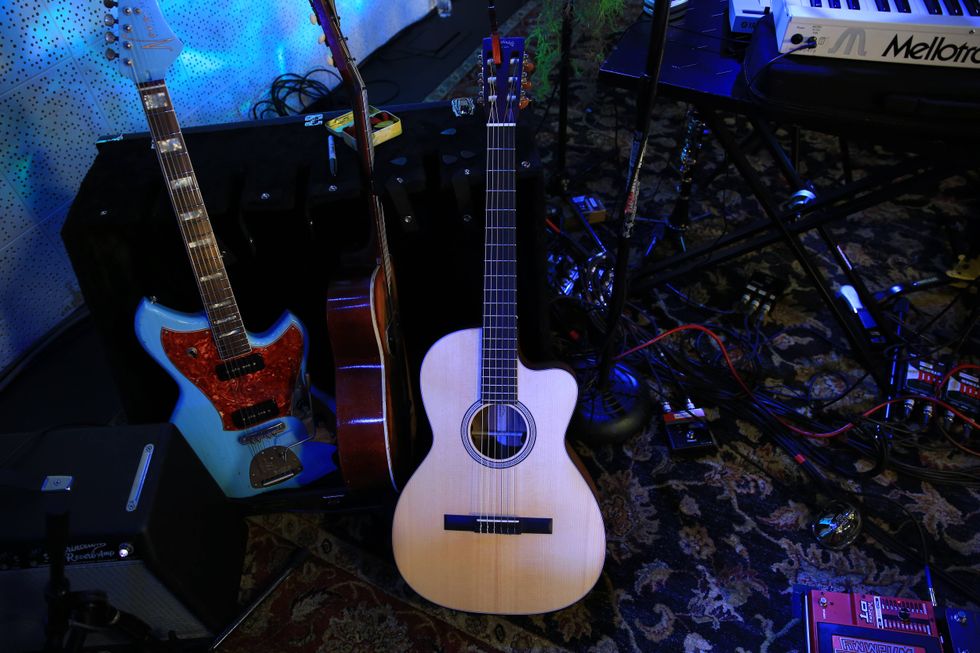
This Martin classical-style is Cunningham’s primary guitar. She uses a unique tuning (B–F#–C#–E–G#–B) that creates what she describes as a suspended-chord sound. Cunningham hasn’t changed a thing on this one—not even the strings.
Rubber Match
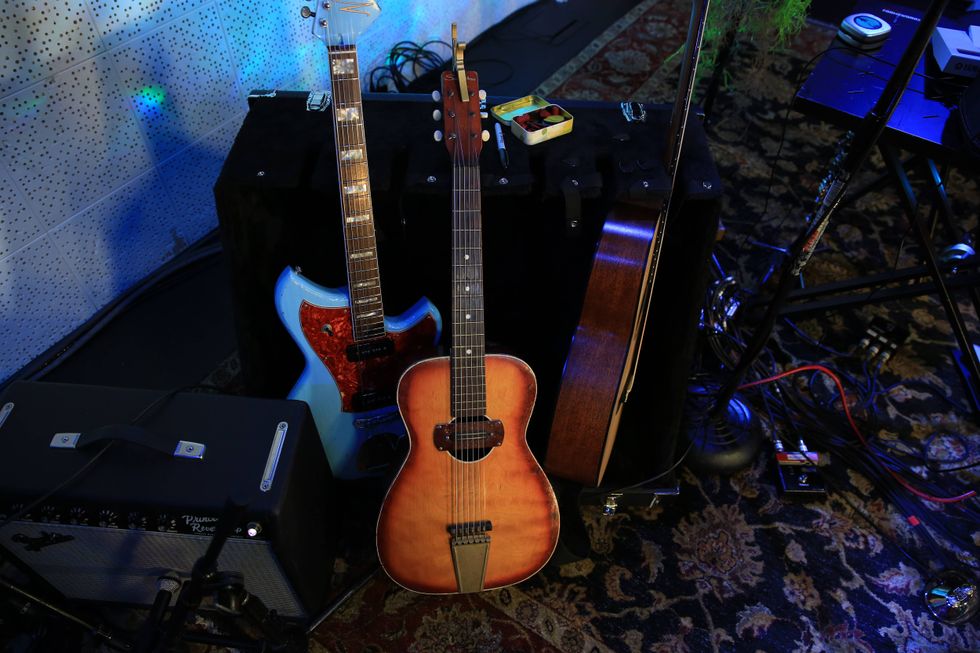
Cunningham’s friend and longtime collaborator Tyler Chester lent her this Silvertone acoustic, which had been fixed up with a rubber bridge and pickup by Reuben Cox of Old Style Guitar Shop in Los Angeles. After some time, Chester insisted that Cunningham keep it; he figured the guitar wanted her now. It’s strung up with flatwounds.
New Novo
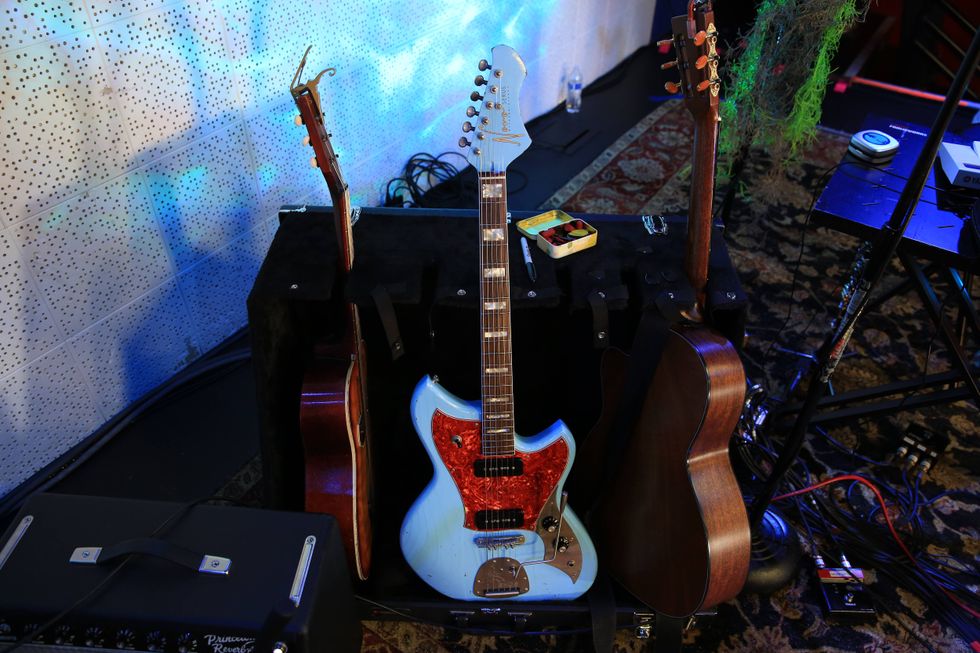
This Novo Serus, tuned to drop C, is brand new to Cunningham, who digs its similar-but-different take on the Jazzmaster design.
Grab and Go
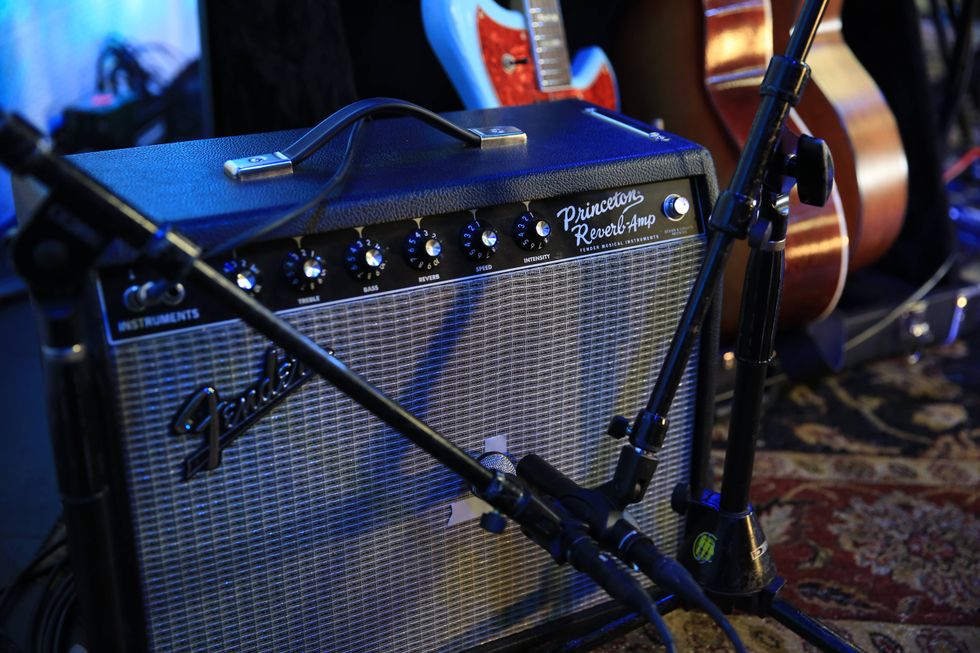
This Fender Princeton combo is Cunningham’s go-to for both studio and stage purposes.
Madison Cunningham’s Pedalboard
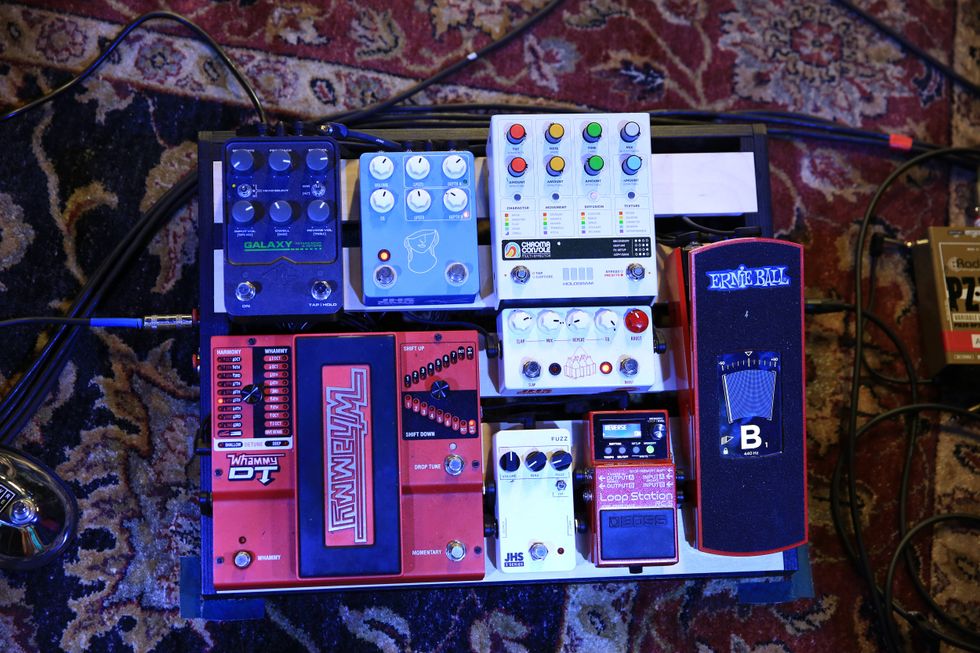
Cunningham’s board includes an Ernie Ball VPJR Tuner pedal, Boss RC-5 Loop Station, JHS Milkman, JHS 3 Series Fuzz, DigiTech Whammy, Hologram Chroma Console, Cunningham’s signature JHS Artificial Blonde, and Universal Audio Galaxy ’74 Tape Echo and Reverb.
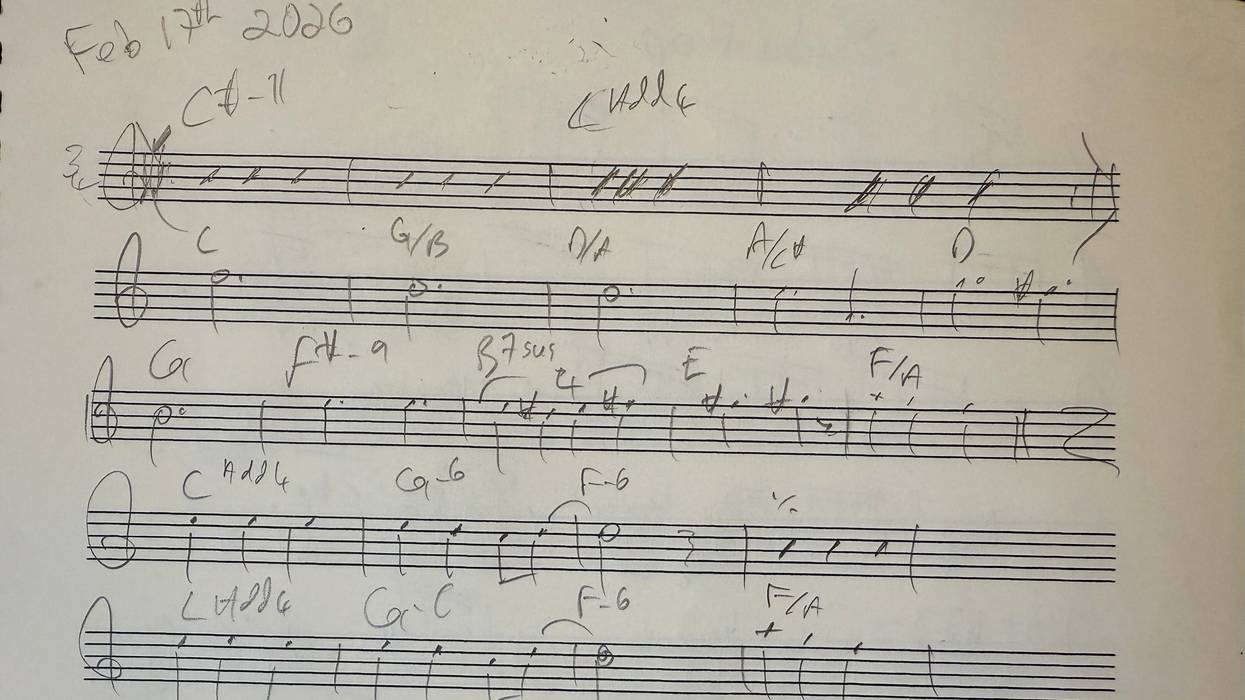
Is this how this song will come together on our columnist’s next record? Only time will tell.”
For as long as I can remember in my career as a musician, I’ve wanted to be an artist. Even though, like most teenage fans of music in the ’90s, I would pore over magazines, seeing the likes of Lee Sklar, Victor Wooten, and Pino Palladino playing on the biggest albums, with the greatest gear, and on the most intense tours, there was always something more that I wanted out of the music and out of the time I was investing in my instrument.
Fast forward to the year 2000, and music as a career is now a reality. I’m living in New York, hustling day and night to meet as many people as possible and put myself in as many different musical situations as I can. The thought of being a recording artist and having something to say was always the thing I admired in my heroes, and it was what I was starting to think about constantly in my early 20s as I practiced and wrote music all day and went to gigs and jam sessions until the early hours of the morning.
What I needed was a method for getting out of practice and writing mode and into recording and releasing mode. In the end, it happened totally by chance. I had struggled for a few years to make a record I was happy with and would be proud to release. In fact, I made four full-length records that, to this day, still sit on various forms of outdated media like tapes and ADATs. They have never seen the light of day and never will. I just couldn’t get to the end of the process, no matter what I tried.
“This ended up being the motivating element I had been missing all along: urgency.”
Then came 2004 and what would become my debut album, Mystery to Me. I started to set time limits for myself, restrictive frameworks for the process, and ultimately a release date for the album without any music being written. I also started to hire musicians and engineers and book studio time. This ended up being the motivating element I had been missing all along: urgency.
There was no way I was going to waste people’s time or burn an expensive studio session because I wasn’t prepared. And with the constraints on the process I had set myself—such as recording the album live in one take with a studio audience because I couldn’t afford multiple days of studio time—it started to focus the mind more than ever before.
I not only booked all the musicians and studio time, but I took a tour that started five days after the session. We rehearsed on Wednesday, tracked on Thursday, listened to the tracks on Friday, mixed the album Saturday, and mastered it on Sunday. On Monday, I got on a plane to Vienna to start a tour, and the CDs of the album showed up in Frankfurt 10 days later, ready to sell on the road.
Setting that urgency helped all the pieces fall into place and gave me no choice but to focus, enjoy the process, and make the most of the resources and personnel around me.
Now, we jump forward all the way to this month—I’m writing this in February of 2026—22 years later, and that process has continued to be my superpower. Yesterday, I booked the first of three shows that will be a series of live trio albums with three different bands we’re recording here in Los Angeles. For our first show I have the legendary Peter Erskine on drums and the incredibly unique voice of Nir Felder on guitar. I literally hung up the phone with Pete, picked up my bass, and started writing the first notes of music for the show. I’m sharing that sketch with you today so you’ll have a chance to look back in a few months and see if this idea made it onto the album as is, whether it got scrapped altogether, or if it perhaps morphed into something else.
The bottom line for me is that I can take this approach with almost anything I do. Having tried to do it the “traditional” way when I first started—with writing, arranging, then booking and recording—I know now that my strength lies in starting at the end and working backwards. And if there is ever any friction along the way, I always try to tell myself about the result rather than stress of the process. Knowing you’re going to have accomplished something—be it a recording, practicing a new lick, writing a song, booking a gig, or just spending more time with your instrument—telling yourself how good the result is going to feel is what gets you to the finish line with the lowest amount of stress.