From time to time, a pedal comes along that offers something special in a deceptively simple package. Due to the unassuming nature of these devices, the market sometimes overlooks them, ultimately leading to the pedals’ premature demise. In some instances, however, these pedals develop enough posthumous interest and respect to deserve a second look.
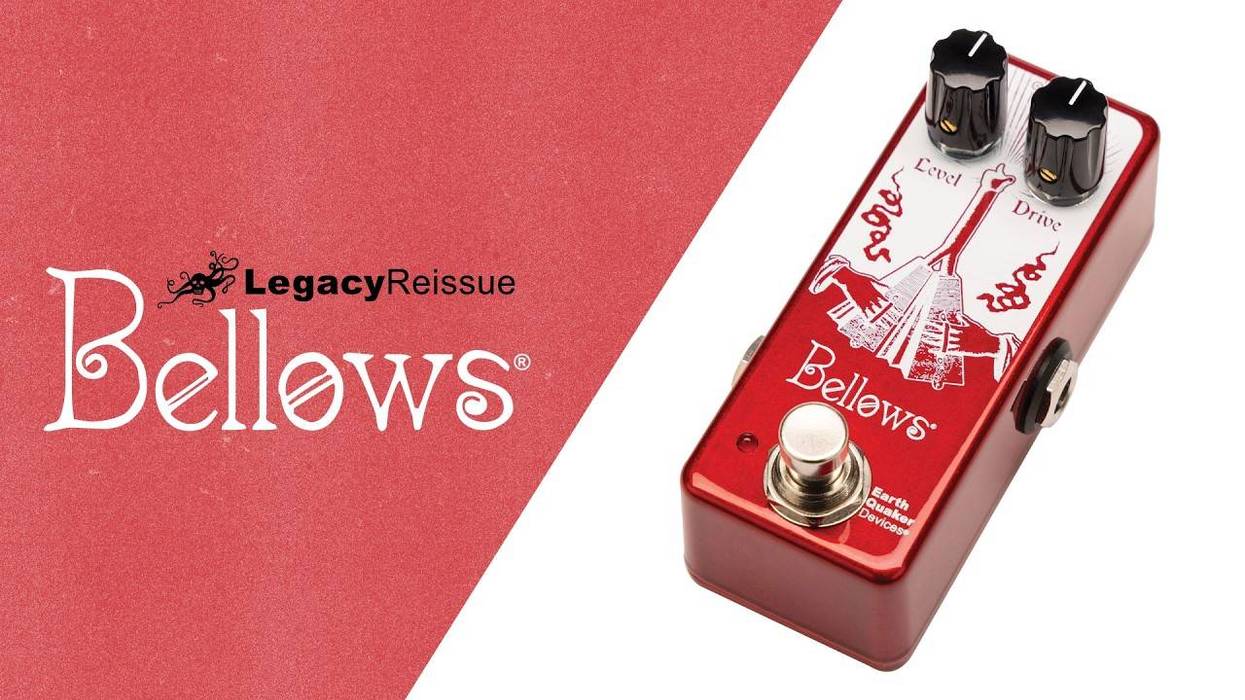
The Bellows Fuzz Driver from EarthQuaker Devices is one of those pedals—which is why today, seven years after the end of its original run, the tonal blacksmiths at EarthQuaker Devices have announced a special “Legacy Reissue” of Bellows, limited to only 1,000 units worldwide.
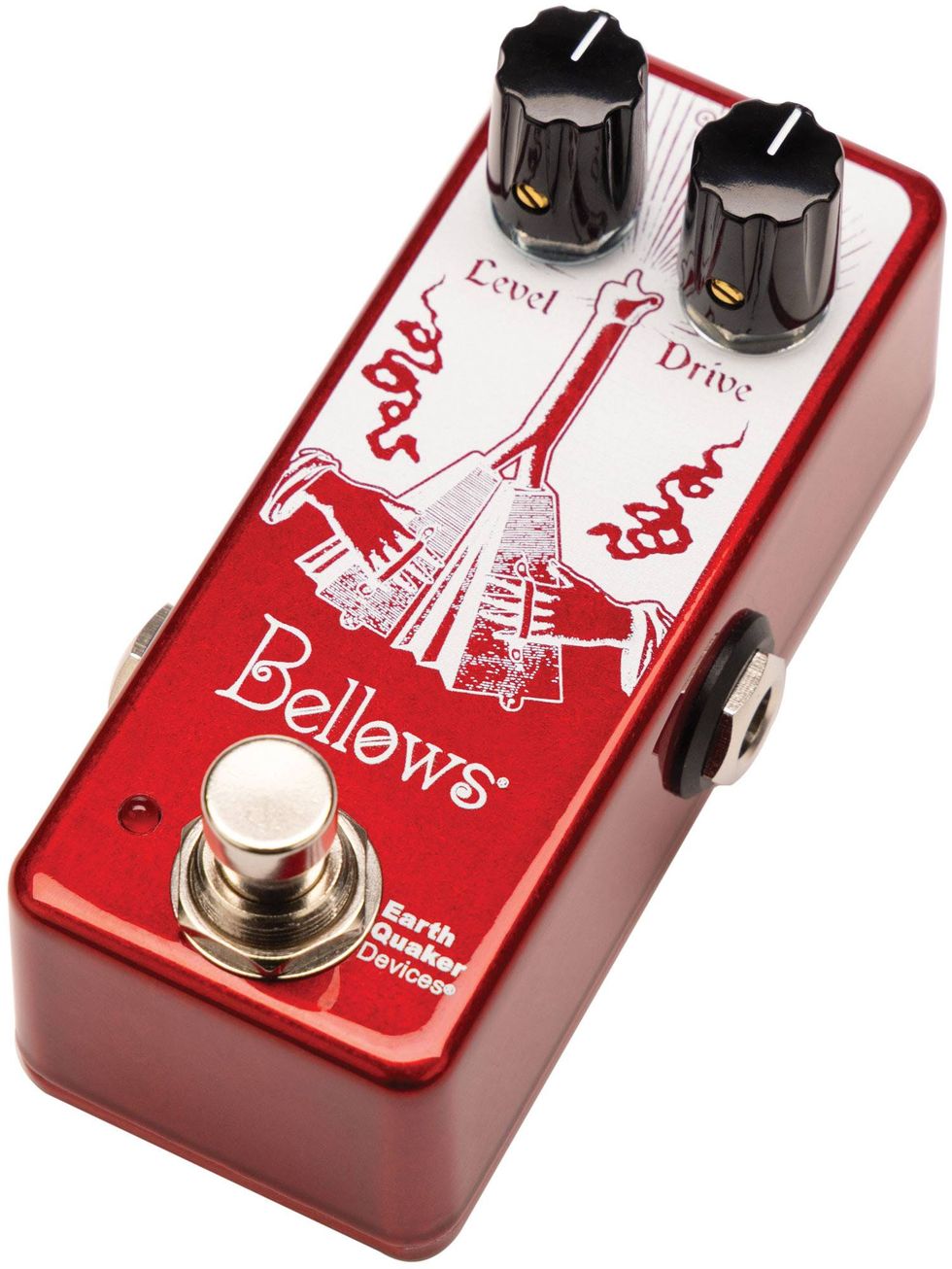
Upon its initial release at Winter NAMM 2016, Bellows was described as a back-to-basics, transistor-based dirt device that wasn’t modeled after anything in particular, beautifully straddling the line between amp-like grit and fuzzy saturation.
In an era when dirt pedals were becoming increasingly complex with multi-band EQs, clipping toggles, and internal dip switches, Bellows took a straightforward approach. Featuring just two knobs—Level and Drive—it offered plug-and-play immediacy that was highly responsive to the player’s volume knob and picking dynamics.
Since it was discontinued in 2019, Bellows has developed something of an underground following, not only among guitarists, but with bassists too. This is largely because the circuit leaves the full frequency response of the input signal entirely intact, eliminating the low-end scoop bassists commonly experience with fuzz circuits.
“I really wanted to have something simple in our line that had that blown out tweed edge but still had clarity and sustain and could also get into heavily saturated fuzz territory and the Bellows filled that void perfectly,” EarthQuaker Devices Founder & President Jamie Stillman said. “While I initially developed it for guitar, I feel like it really excels on bass. It retains the big bottom end and biting crunchy top end without overly accentuating or scooping the mids.”
The limited-edition Bellows features the same circuit as the original and captures virtually the entire history of rock and roll in one fun-sized enclosure.
The pedal’s Drive control is imbued with heaps of character. Similar to the volume control of a “non-master-volume” amp, the Drive determines how hard the signal hits the input. When set to lower levels, it offers an overdrive that is a little wider and grittier. When dimed, players are treated to full-on, fuzzed-out bliss. Between the two extremes exists a vibrant range of rich, saturated tones just waiting to be exploited.
Designed for guitarists, beloved by bassists, Bellows is an invaluable tool to have on hand for adding grit and grime to just about anything. Because it preserves the full frequency range of the original input signal, it’s ideal for organ, electric piano, synth, drums, vocals, harp, mouth harp—you name it!
The Bellows Legacy Reissue Limited Edition Fuzz Driver is limited to 1,000 units worldwide and is available now. The pedals are available to the US market exclusively through Sweetwater, and to the Canadian market through Long & McQuade. Customers outside of the US and Canada should check with their nearest authorized EarthQuaker Devices dealer for pricing and availability.
Each and every Bellows is made by a group of best friends and a robot with the most beautiful eyes you’ve ever seen in the City of Invention a.k.a. Akron, Ohio, USA.
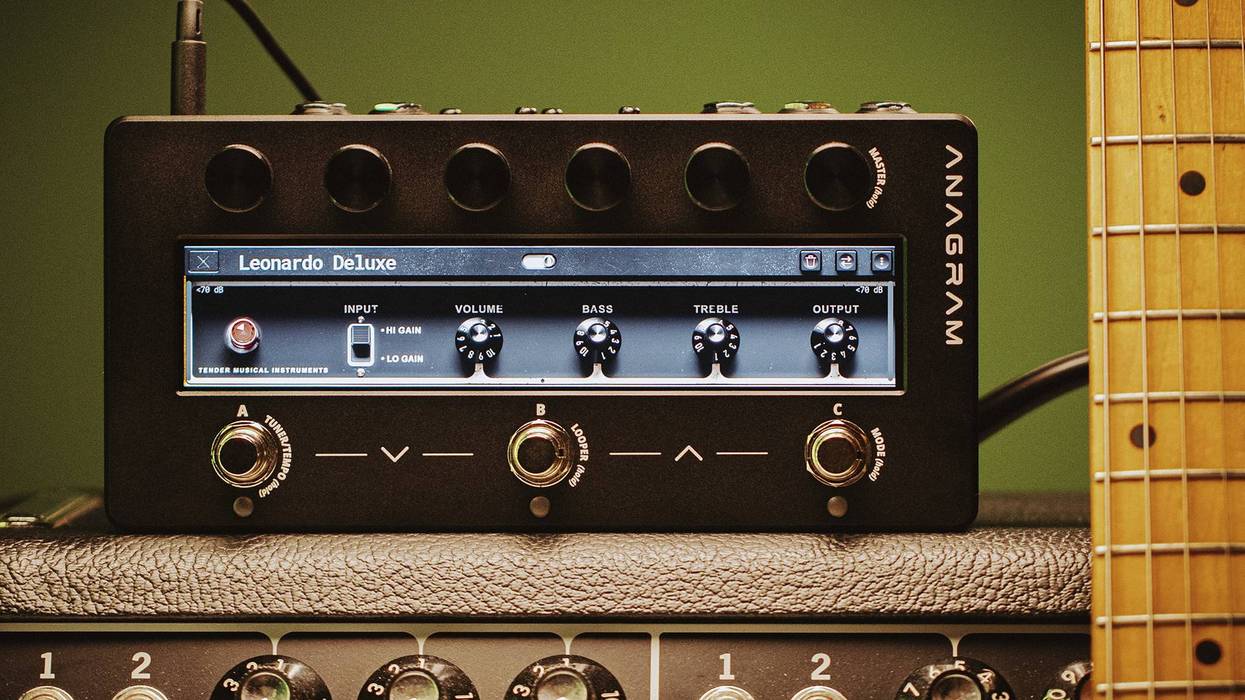
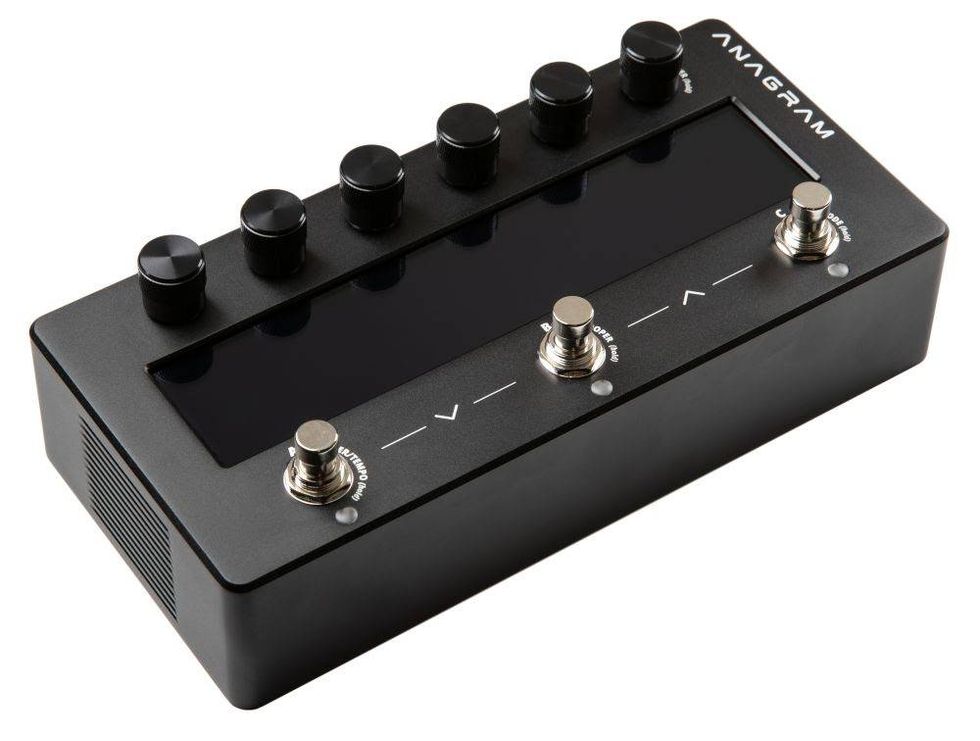
Darkglass announces the Anagram Guitar Essentials Limited Edition, an exclusive multi-effects processor and digital modeling platform developed in direct collaboration with leading music retailers Sweetwater and Andertons. Built as a one-time, limited production run, this special edition marks Anagram's first curated collection designed specifically for guitarists. By combining a tailored historical sound library with an open-architecture digital host, the release offers modern musicians, producers, and content creators a streamlined, future-proof solution for accessing foundational guitar tones directly out of the box.
At the core of the device is Anagram, which functions not merely as a standard multi-effects unit, but as a plugin-compatible platform open to third parties. The hardware is powered by KosmOS, an underlying operating system that allows new models, content, and capabilities to be delivered via updates long after launch. To maximize out-of-the-box versatility, Sweetwater and Andertons co-developed a built-in library of 15 total models, consisting of 12 legendary amplifiers and 3 iconic pedals that have defined electric guitar tone over the last century. This curated selection spans essential sonic profiles, including American clean, British crunch, high-gain icons, and boutique overdrive.
The system's digital architecture works as an open ecosystem via the Anagram Marketplace, removing traditional limits on signal chain expansion and tone-shaping flexibility. Beyond the included factory library, players and creators can browse a growing catalog of free and premium third-party content. The open platform allows music producers, sound engineers, musicians, and third-party developers to publish their own custom content, including plugins, modeling, and impulse responses (IRs)giving users the unique ability to install and try new software before buying to continuously expand their creative workflow.
Navigating the device is driven by a highly visual user interface where every individual amplifier and pedal model features its own exclusive, 3D-rendered graphical UI. Each digital interface is a detailed visual reconstruction of the original hardware, meticulously recreated to mirror the physical controls of the real units. This realistic visual approach allows players and engineers to adjust settings intuitively, mimicking the exact workflow of dialing in the classic analog counterparts. The physical hardware itself features a distinctive aesthetic exclusive to this limited edition, sporting a matte black chassis paired with shiny black knobs.
Built to bridge the gap between studio production and portable performance, the Anagram platform serves as a universal door to both factory and user-published digital assets. The unit's design streamlines the process of capturing high-quality guitar tracks, allowing engineers and creators to seamlessly integrate a massive library of software models into their tracking or mixing environments without requiring extensive outboard gear. For added portability and protection between sessions or live dates, the limited-edition package also includes a premium leather carrying case.
The Darkglass Anagram Guitar Essentials Limited Edition is a one-time, limited production run sold exclusively through Sweetwater and Andertons channels. Musicians, producers, and developers interested in exploring the ecosystem or browsing the expanded plugin library can find more information by visiting the official Anagram Marketplace at https://marketplace.anagram.shop/.
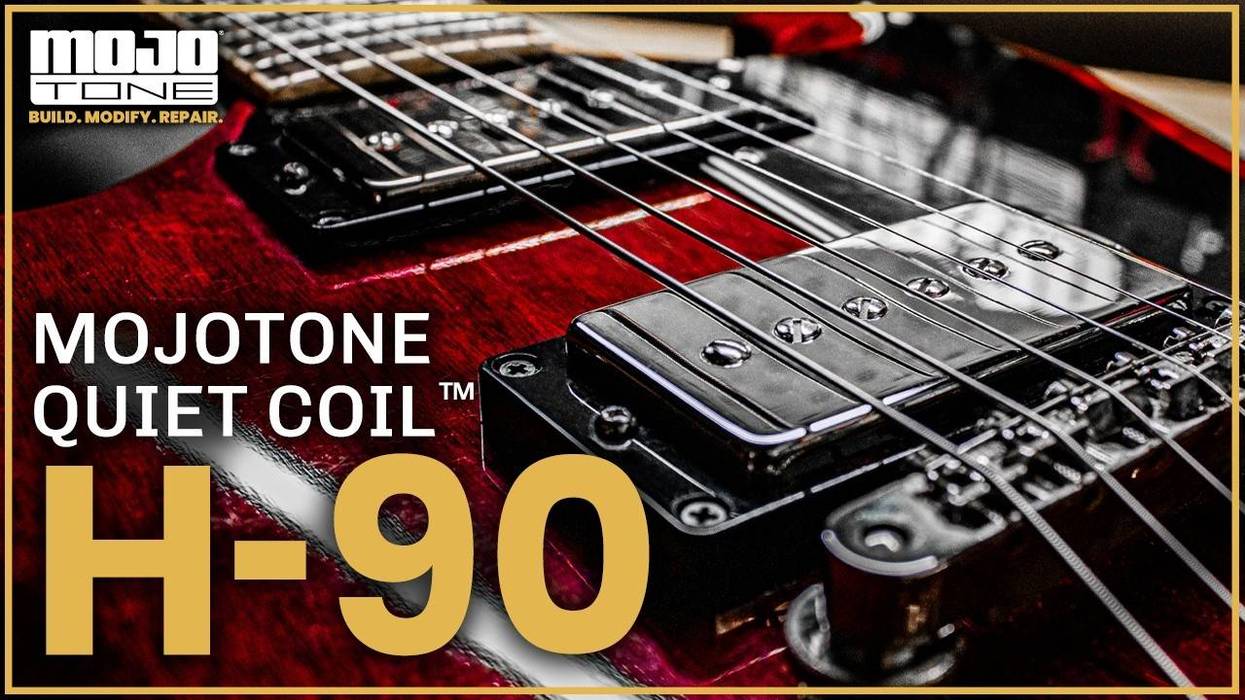
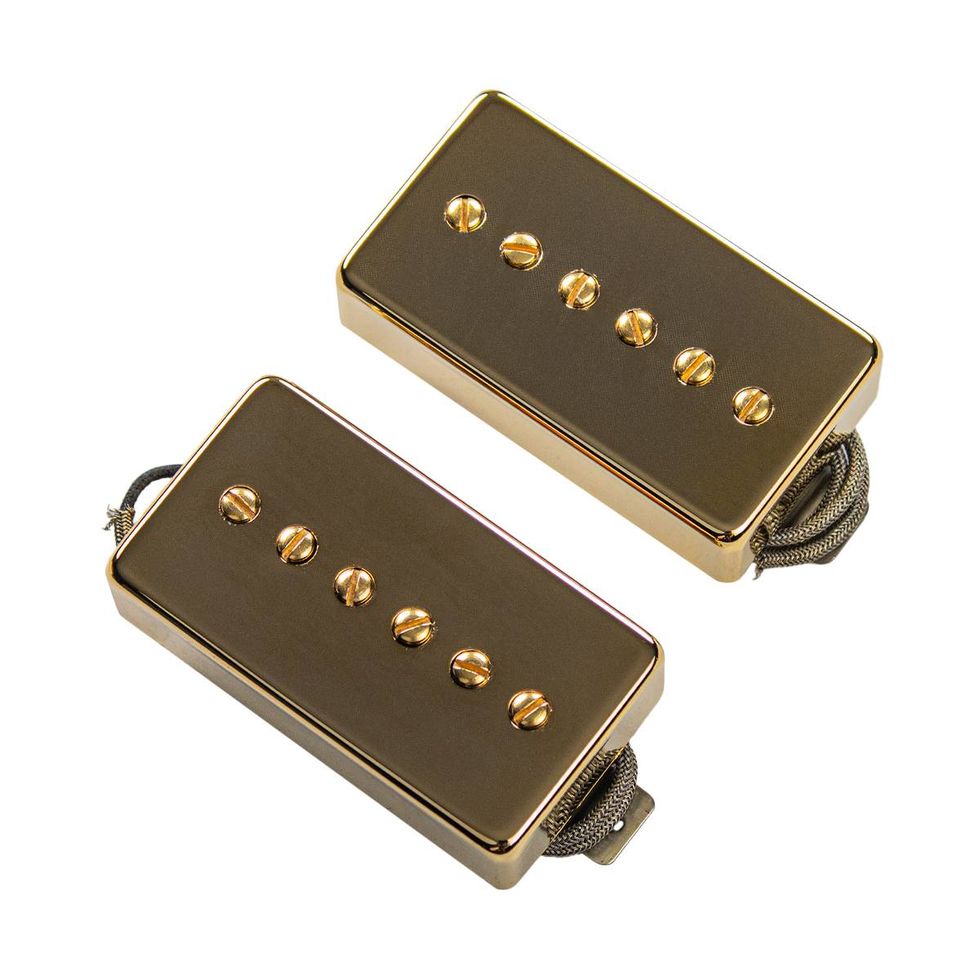
Mojotone has launched the Quiet Coil H-90, a humbucker-sized P-90 guitar pickup designed to deliver authentic P-90 tone without the noise.
Engineered to fit any standard humbucker route, the Quiet Coil H-90 gives players the ability to achieve the rich, dynamic character of a traditional P-90 without requiring permanent or invasive modifications to their guitar. Available in either nickel or gold covers, this drop-in solution opens the door for greater tonal flexibility while preserving the integrity of your instrument.
At the heart of the Quiet Coil H-90 is Mojotone's award-winning Quiet Coil technology, which eliminates 60-cycle hum while retaining the organic character, clarity, and responsiveness that have made the P-90 pickup a favorite among players for decades. The result is authentic single-coil tone with the reliability and noise-free performance demanded by today's musicians.
Featuring AlNiCo 5 magnets and using traditional style 2-conductor wiring, the Quiet Coil H-90 captures the tone of a classic P-90 pickup without the hum.
"The P-90 has long been one of the most expressive and versatile pickup designs ever created, but many players have been limited by routing requirements and unwanted noise," said Michael McWhorter, CEO of Mojotone. "We designed the Quiet Coil H-90 to remove those barriers. Players can now get true P-90 character in virtually any humbucker-equipped guitar with no modifications and no hum."
The Quiet Coil H-90 is available in two-pickup sets -- featuring matched bridge and neck – for a street price of $299.95 per set; and as singles with a street of $149.95 per pickup. For more information visit mojotone.com.
What makes “vintage,” vintage? Is it just a matter of time? Or does an instrument need some extra, sui generis quality to become a true marker of an era in our minds?
Photos courtesy of Joel’s Vintage Guitars.
There’s no hard or fast cutoff for “vintage” like the 100 years required for something to be a true “antique,” but a range of 30 years for clothing or other types of collectibles generally separates what’s vintage from that which is merely used. By that benchmark, the first PRS McCarty—released over 30 years ago, in 1994—is now a vintage guitar.
Keep in mind: In 1994, at the launch of Paul Reed Smith’s McCarty, the original Les Paul Bursts (built 1958–1960) were about as old to the McCarty as the McCarty is to us right now. The vintage guitar market was then, as it were, already heating up, with Bursts going for anywhere between $20,000 and $100,000. Today, first-year McCartys still trade in the four-digit thousands, while price tags for Bursts and other “properly” vintage electrics have grown dramatically.
And so we ask, does this particular first-year McCarty that we’ve selected for this edition of Vintage Vault—serial #17 out of the 100 built in 1994—truly belong in the vault?
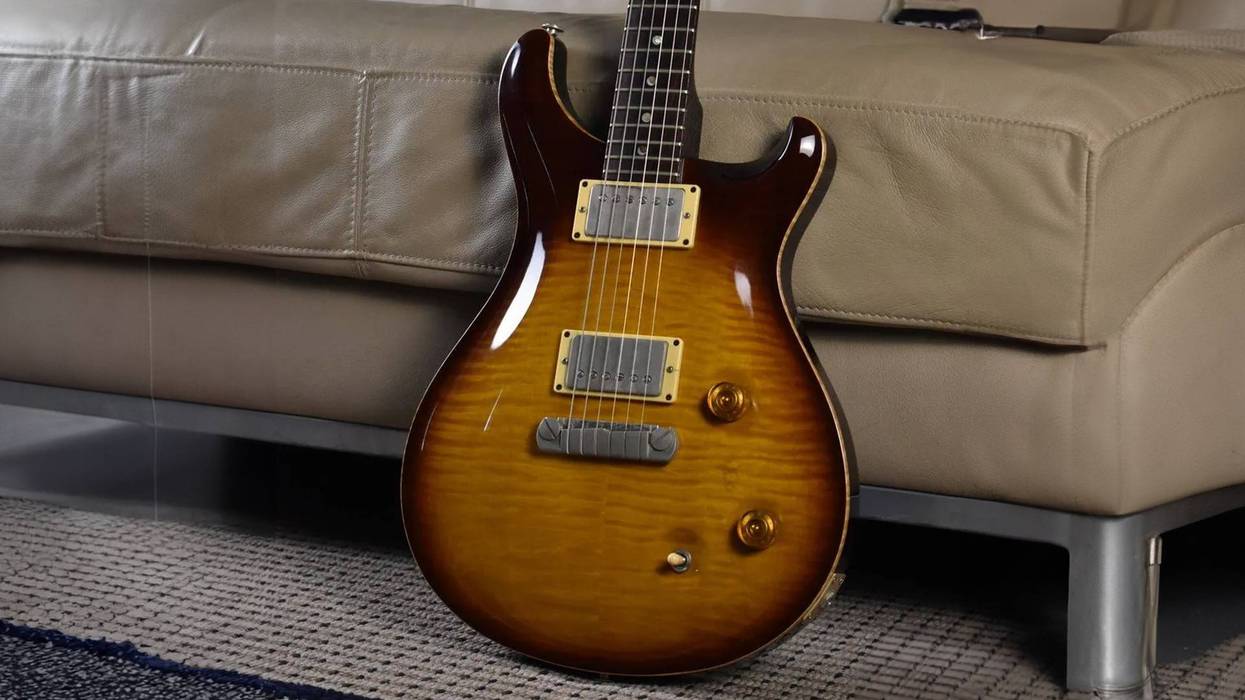
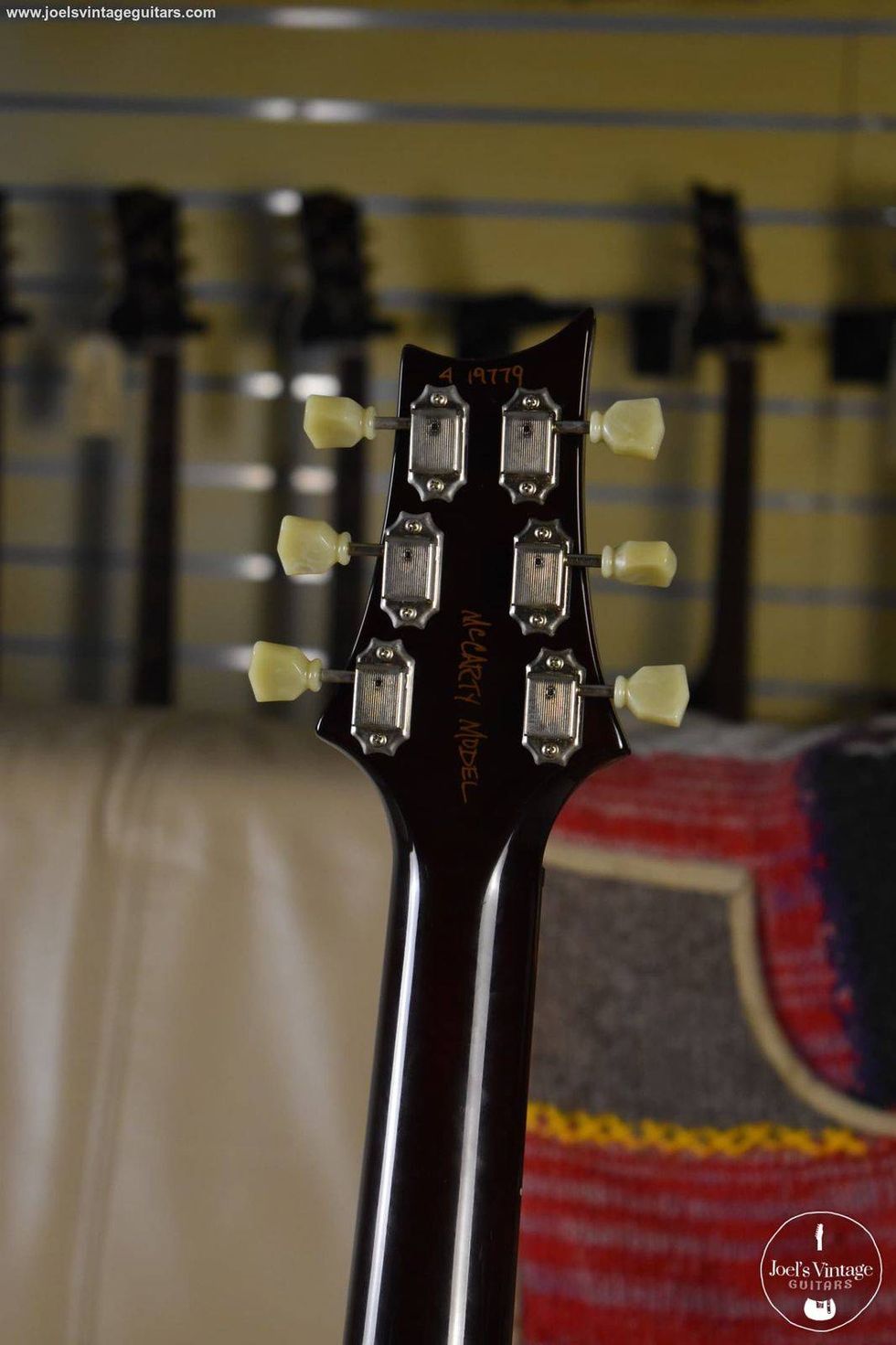
Up for sale now for about $8,500 via Reverb seller Joel's Vintage Guitars (no relation to this writer), this McCarty bears two autographs: Paul Reed Smith’s as part of the inlay headstock logo design, and Ted McCarty’s own on the guitar’s backplate.
While most of us here probably know the name, for those who don’t: Ted McCarty was the president of Gibson during the generally agreed “Golden Era” of the company, when classic guitars like the Les Paul, SG, and ES-335—and classic components like the Tune-O-Matic bridge and PAF humbucker—were born. He retired from Gibson in 1966.
Many years later, Paul Reed Smith himself kept seeing McCarty’s name on Gibson patents while diving into records at the U.S. Patent Office. While Smith knew McCarty’s work, at the time he didn’t know the name, nor did he realize just how instrumental McCarty was to Gibson’s most well known guitars and specs. But on patent after patent, listed as the inventor, his name kept popping up: “Ted McCarty, Kalamazoo, Michigan.”
Smith reached out to McCarty in 1986 and asked him to be a consultant for the fledgling PRS company. Paul wanted to know everything about how the most prized Gibsons were made during McCarty’s reign: “What kind of glue did he glue the frets in with?” Paul remembers asking. “How did they glue the tops on? How did they glue the necks in? How did they level the fingerboards? How did they dry the fingerboards, the necks?”
McCarty was not only forthcoming with his answers, but was thrilled to share his life’s work. “Nobody has asked me these questions in 30 years,” he told Smith, in Smith’s retelling. And did you catch that, reader? “In 30 years,” he said. Just about the length of time it takes for the next generation, in this case Paul Reed Smith’s, to reconsider what is old and unwanted versus what is vintage and desirable. Paul decided McCarty’s work was so valuable that he built a guitar model as tribute.
Photos courtesy of Joel’s Vintage Guitars.
The McCarty was offered as a vintage-style guitar, compared to PRS’ more modern-flavored Custom 24. In fact, its original inspiration came from guitarist David Grissom, who asked Smith to make a guitar that sounded like Duane Allman’s from At Fillmore East (which, as history would have it, was a ’59 Burst and a ’57 Goldtop).
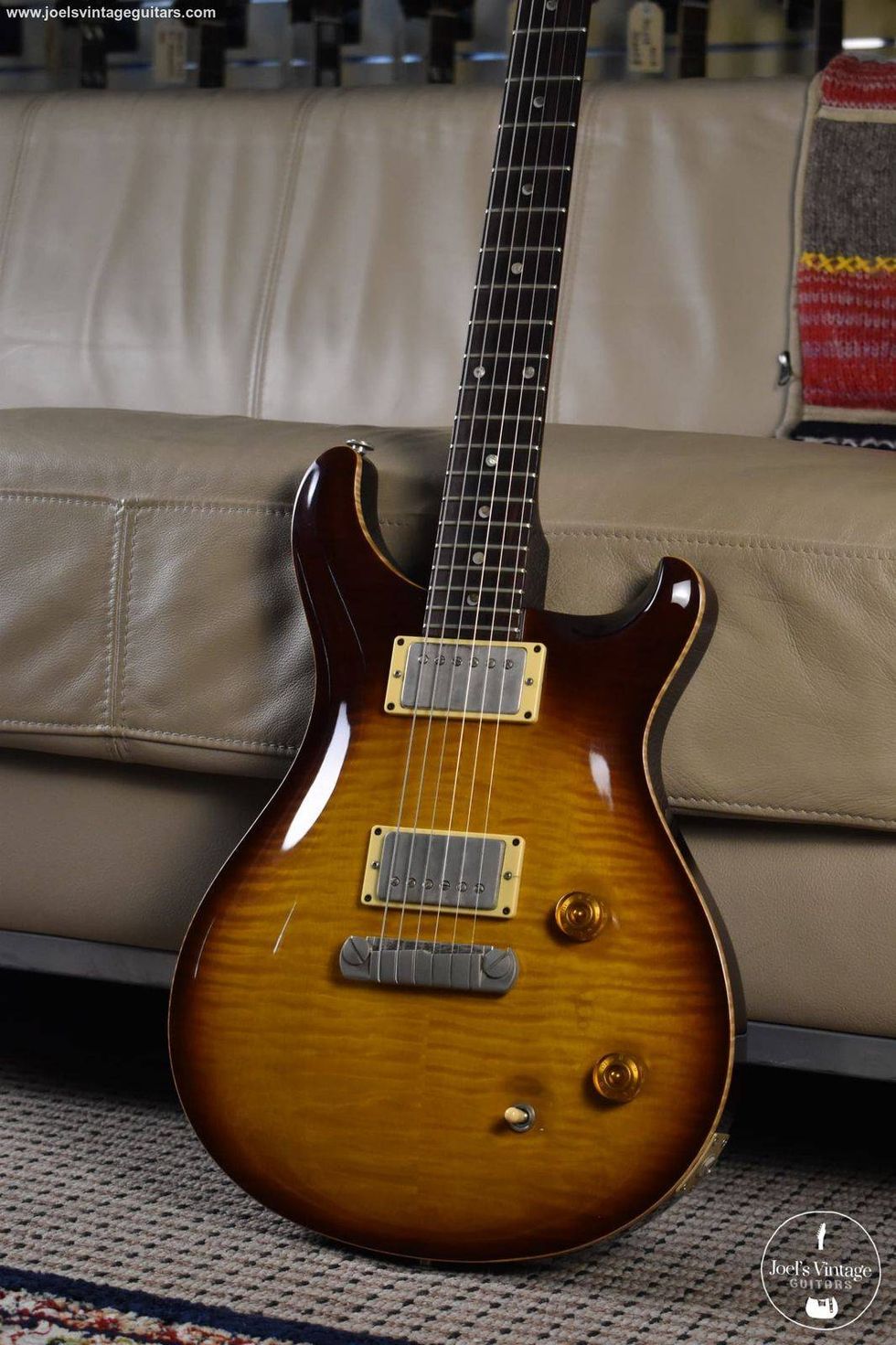
This ’94 McCarty nods to a Les Paul in many ways: It has a two-piece carved maple top with a tobacco burst finish over a mahogany body. It has a mahogany neck, rosewood fingerboard, 22 frets, two humbuckers, a wrap-around tailpiece … So far, so Les Paul.
But there are obvious differences, too, with the double-cutaway body being the most obvious. Runners-up are the single volume and single tone knobs. And the more subtle is the scale length: The McCarty’s is 25", in between Gibson’s standard 24.75" and Fender’s standard 25.5".
At over $8,000, if this McCarty sells it will be the most expensive first-year McCarty to sell on Reverb, though that’s plenty reasonable when compared to prices asked for vintage Gibsons and Fenders. (The most expensive ’94 McCarty sold on Reverb to date went for $4,400, paid four years ago for a higher serial number.)
Perhaps there’s a ceiling on what guitarists are willing to pay for a vintage PRS. Adjusted for inflation, the $8,500 price tag is just slightly above what its brand-new price would’ve been in 1994 dollars. But with the McCarty connection—and through him the connection to lineage of golden-era Gibson—perhaps we’re just at the start of a new vintage boom. Could buying an original McCarty for $8,000 today be as big of a steal as buying a burst LP for eight grand in the ’80s? Only time will tell.
Sources: PRS’ The Unforgotten Man: Ted McCarty and His Impact on Paul Reed Smith, Reverb’s Former Gibson Chief Ted McCarty on Tonewoods and the Problems of 'Top-Heavy' Management, Reverb listings and Price Guide sales data
Before the humbucker, before active electronics, before any of the boutique winding methods players argue about online, there was a coil of wire wrapped around a magnet. That simple design is still one of the most widely used pickup formats in the world. In this episode of Pickups Demystified, PG contributor @TomButwin traces single coils to their origins in the early 1930s and works through four formats that define the category today.
Seymour Duncan
Psychedelic Strat
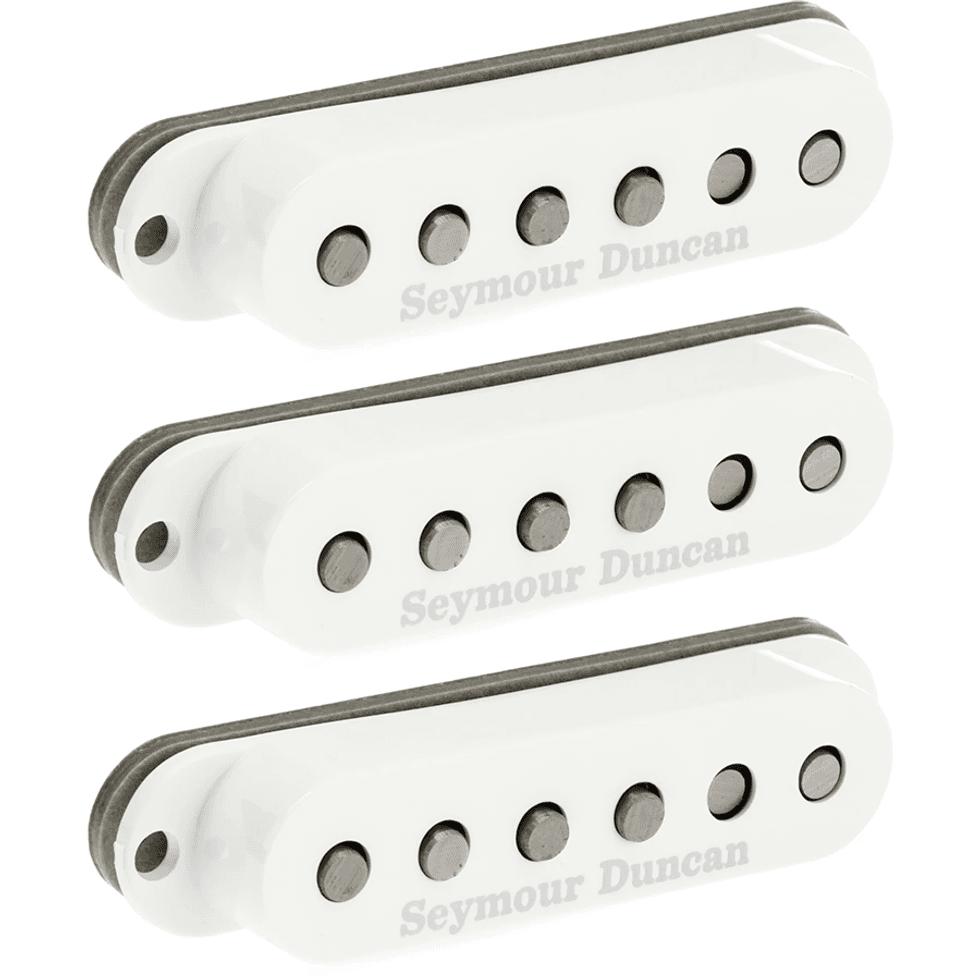
For those of us who aren’t able to own a late ‘60s Stratocaster, installing a set of our Psychedelic Strat pickups is the next best thing! These vintage voiced pickups have the signature psychedelic and paisley underground sound found in all of our favorite feedback and wah drenched extended solos.
Using traditional materials and period accurate wind, these Alnico 5 loaded pickups deliver unique depth and fullness to your sound. On the clean side, they deliver the desired scooped and glassy tones, and when you stomp on a fuzz, you’ll get tight and defined clarity in all positions.
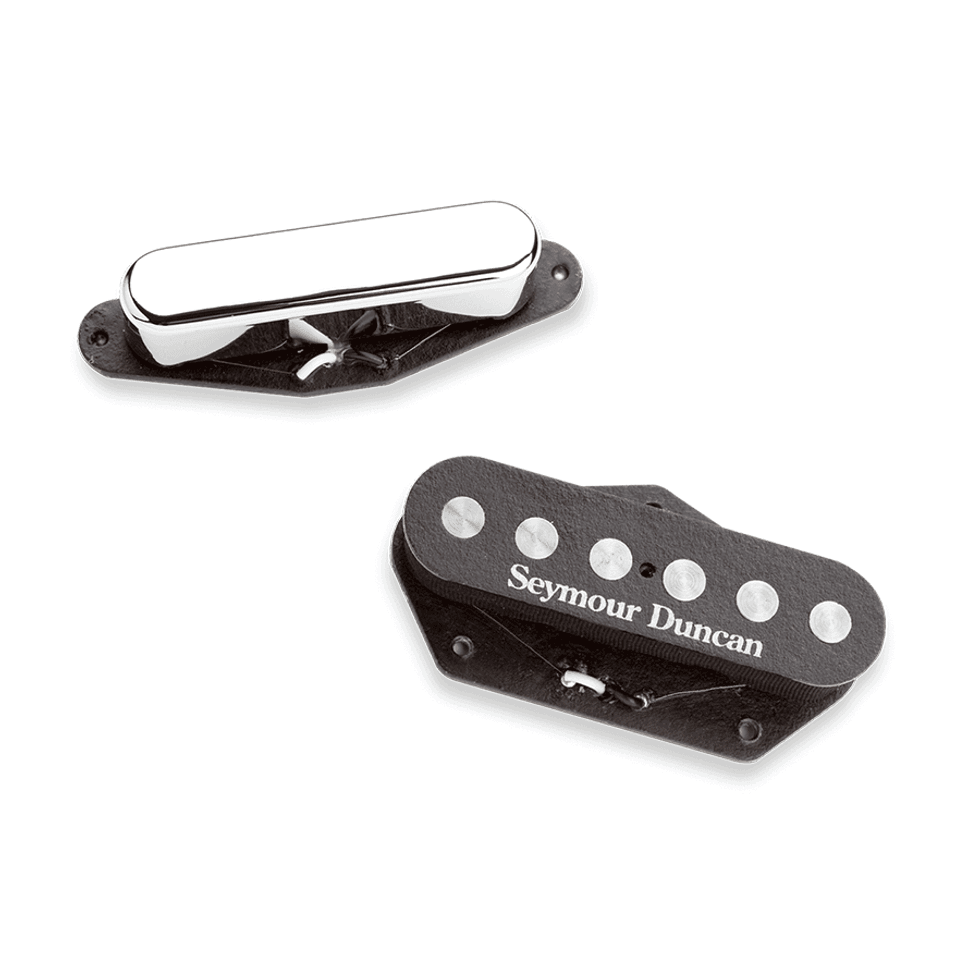
Power up your Telecaster with the upper midrange growl and drive of the Quarter Pound for Tele pickups. The Quarter Pound for Tele Rhythm’s custom overwound coil provides a powerful midrange that cuts through any mix without sounding bright or brash. This makes it a rhythm beast with huge sounding chords, and full, fat lead tones.
The Quarter Pound Tele Lead is our highest output Tele single coil. Its special high output coil, with hand polished ¼” diameter alnico 5 rod magnets, deliver a huge sound with an almost P90-like growl. Leads will jump out and sound fatter than ever, while chords will be rich with sparkly midrange harmonics. The perfect choice for Tele players who demand to be heard.
Both pickups are available in an optional tapped variation as well, allowing you to tap into both vintage and high output tonalities with a single Tele set. The Quarter Pound high output Tele pickups are hand built in Santa Barbara, CA using hand polished ¼” diameter alnico 5 rod magnets, and Forbon flatwork along with a traditional deep drawn chrome plated Telecaster cover for the neck. Wax potted for squeal free performance.
Mojotone is excited and honored to have worked with such a renowned luthier to develop our Rene Martinez "Texas" Strat® Pickups. These were developed to emulate that specific and unique "Texas Tone" which was inspired by the one and only SRV.
Greg Koch Gristle-Tone Signature Series Single Width 3-Pickup Set
Greg Koch channels the influence of legendary players like Hendrix, Vaughan, and Beck, blending blues, funk, and R&B with his own unique twist of grunge and grit. His signature “Gristle” tone is all about high energy, versatility, and a little bit of dirty fun—perfect for players who want a dynamic sound with character. With these pickups, you get that unmistakable blend of classic warmth and raw power, designed to fuel your playing with every note.
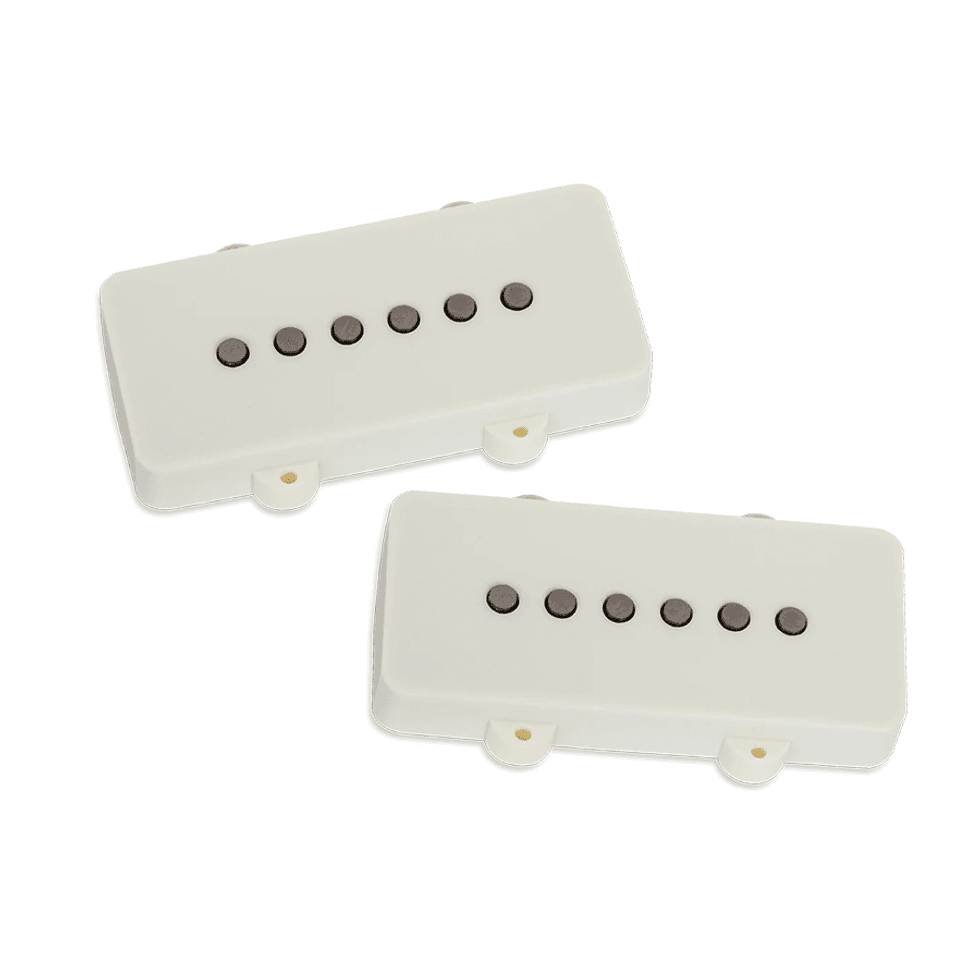
The Vintage Jazzmaster® Silencer is a noiseless pickup that retains the bright, punchy neck tone and tight, snappy bridge sound that defines the Jazzmaster®. Clean or overdriven, the Vintage Jazzmaster® Silencer’s vintage-voiced tone is perfect for shimmering indie textures, surf-inspired riffs, and modern pedal-driven explorations. No more hum holding you back—just the pure, classic Jazzmaster® tone you love.