

In the spring of 2020, I found myself quarantined in Nashville, staring at screens for too many hours, with TikTok feeding me an endless scroll of protests, police confrontations, and cities on edge. Meanwhile, right here in Music City, protesters smashed windows along Lower Broadway and set fires near the state Capitol. It felt surreal, chaotic, and unpredictable. The entire world was wondering: What’s going on?
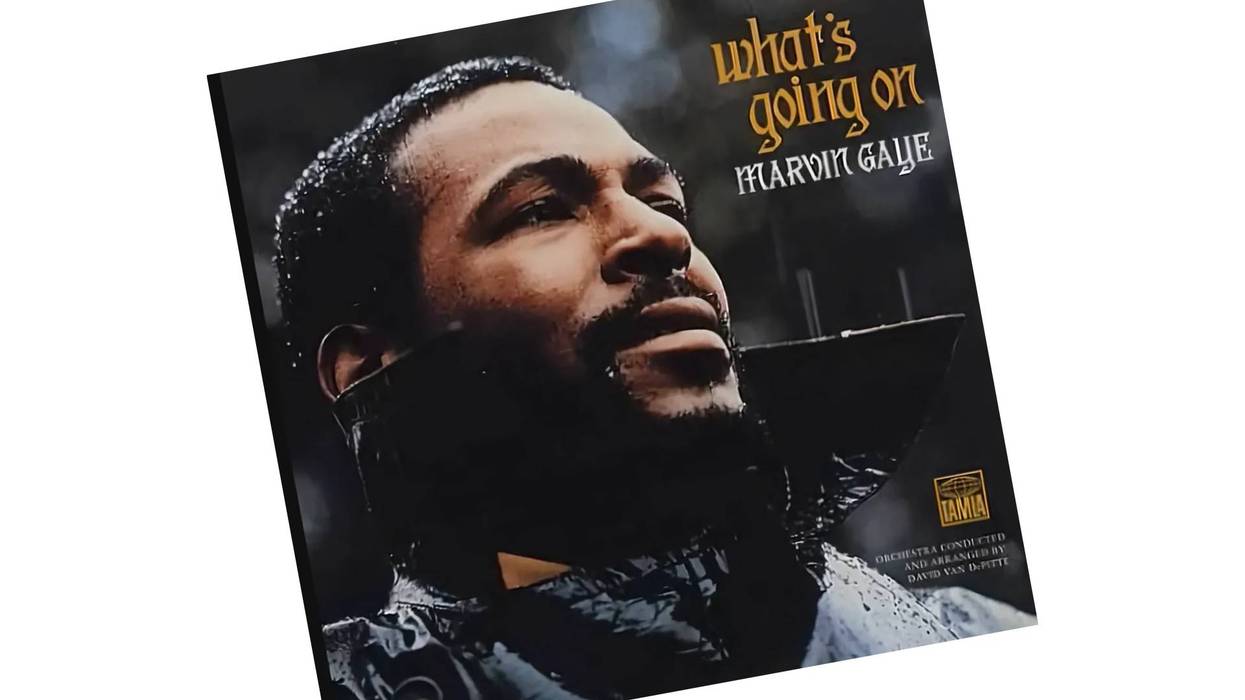
During that time, I rewatched the documentary Standing in the Shadows of Motown. It occurred to me that our current chaos hit exactly half a century after Marvin Gaye captured the same bewilderment in his landmark 1971 single and album. Recorded in the summer of 1970 at Motown’s Hitsville U.S.A. in Detroit, What’s Going On emerged from a man who’d grown weary of the polished pop machine.
Before this, Marvin Gaye was the ideal Motown product: handsome, polite, safe. Hits like “How Sweet It Is (To Be Loved by You),” “Ain’t That Peculiar,” and “I Heard It Through the Grapevine” made him a star. But by 1969, depression had sidelined him. He stopped touring. His brother Frankie returned from Vietnam with haunting stories of war’s toll. Detroit’s streets boiled with police brutality and unrest. Singing only love songs started feeling dishonest.
The spark came on May 15, 1969, when Four Tops member Renaldo “Obie” Benson witnessed police attacking anti-war protesters at Berkeley’s People’s Park on “Bloody Thursday.” Shaken, Benson wondered aloud, “What’s going on here?” Why send kids overseas to die? Why beat them in the streets at home? Back in Detroit, he collaborated with songwriter Al Cleveland on a tune inspired by those questions. Benson pitched it as a love song—about love and understanding—but his bandmates dismissed it as protest. Benson insisted: “I’m not protesting. I want to know what’s going on.”
Motown in the ’60s was a hit factory modeled on Detroit’s auto plants. Berry Gordy ran it with iron discipline: Songwriters cranked out material, producers cut poppy versions, and weekly quality-control meetings decided releases. The goal was to make Black music that white America would embrace—no politics, no anger, no “inside” references. Songs focused on love, heartbreak, dancing—emotional ground that was safe enough to cross racial lines. The Funk Brothers delivered grooves that ruled dance floors with tight time driven with a ubiquitous tambourine, two drummers, and James Jamerson’s funky bass lines. Albums were a collection of singles and filler.
Marvin Gaye thought this song would not fly under the constraints of Gordy, so he booked a late-night session with a core of trusted Funk Brothers—including Jamerson, who, legend has it, was so drunk he had to lay on his back to play, reading charts upside down. Jamerson’s line never really repeats; instead, he weaves chromatic passing tones into a jazz-influenced swing that rarely hits the tonic and never loses the pocket.
“Marvin Gaye’s masterpiece endures because it refuses rage for its own sake.”
The whole vibe of the sessions feels loose, spontaneous, alive. This wasn’t assembly-line Motown; it was personal, socially conscious, adventurous. The song doesn’t shout protest. It asks questions: about war’s human cost, community violence, poverty, ecology. “Mother, mother, there’s too many of you crying / Brother, brother, there’s far too many of you dying.” The refrain—“You know we’ve got to find a way to bring some lovin’ here today”—pleads for compassion without condemnation. Marvin invites reflection, empathy, unity.
When Gaye presented it to Berry Gordy, Gordy called it “the worst thing I ever heard.” It was too political, uncommercial, poorly structured, sonically weird, very un-Motown. Marvin, leveraging his star power, essentially went on strike and refused to record anymore until they released the song. Gordy relented for a single release, expecting it to fail, after which Gaye would fall back in line. Instead, the song soared to No. 2 on the Billboard Hot 100, and No. 1 on the R&B chart. The public connected. Gordy greenlit the full album, shifting Motown toward artist-driven, thematic works. It paved the way for Stevie Wonder’s creative control and proved personal vision could sell.
Now, the question—what’s going on?—feels eerily fresh to me. I’m by nature an optimistic person, and I suspect Marvin Gaye was as well. Otherwise, he would not have jeopardized a wildly successful career to make a statement for change. Marvin Gaye’s masterpiece endures because it refuses rage for its own sake. It calls for love amid chaos, understanding across fractures. “War is not the answer / Only love can conquer hate.” In 1971, it challenged Vietnam and domestic strife. Today, it speaks to endless cycles of conflict, brutality, and disconnection.
Marvin Gaye risked everything to say something true. The result wasn’t just a hit; it was a mirror. Sometimes the most revolutionary act is refusing to look away.