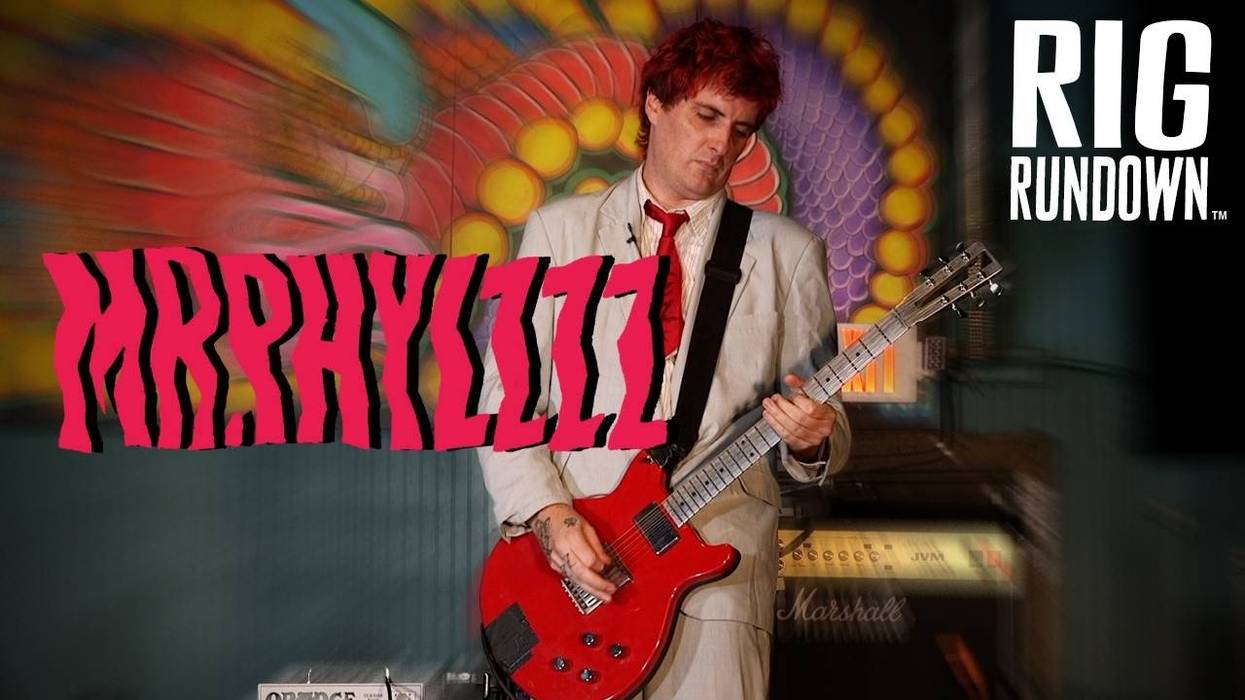
The country legend’s bandmates bring a range of low- to high-end gear to Nashville’s Basement East.
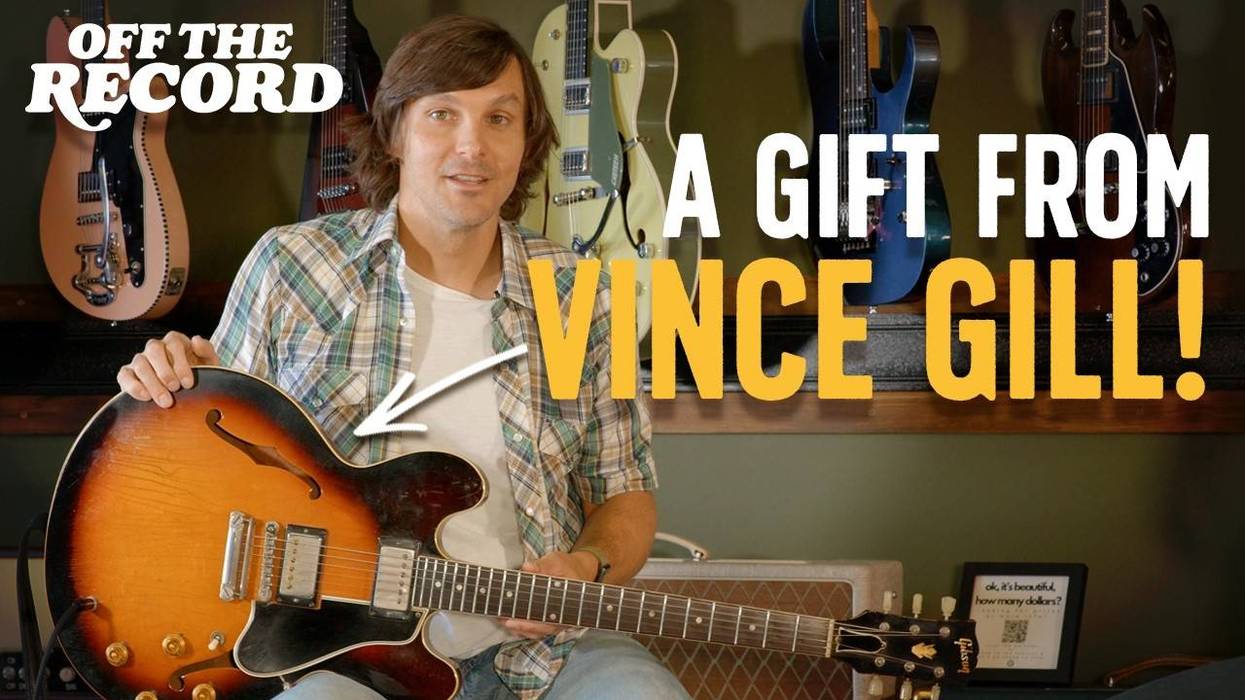
Ahead of Lucinda Williams’ fundraiser show on December 15 at Nashville’s Basement East, PG’s John Bohlinger spent some time with guitarists Marc Ford and Doug Pettibone, and bassist David Sutton, at the venue for this special holiday Rig Rundown. Tune in for all the goods, and check out the highlights below!
Pettibone plucked this off the wall of a guitar shop in Philly to demo an amp and ended up walking out with it. Its Seymour Duncan pickups are coil-split, and Pettibone gets some good, old-timey Gretsch tones out of it. Plus, after having a load of gear stolen on tour a while back, Pettibone prefers to bring out less precious instruments.
Tok-ibson
Pettibone snagged this Japan-made ES-335 knockoff, built by Tokai, while touring Australia earlier this year.
A Jewel of a Pedal Steel
Pettibone’s main pedal steel is this 1999 Emmons, which he ordered brand-new when he was playing with Jewel.
Fender Friends
Pettibone runs the Emmons pedal steel through a ’64 Fender Twin Reverb, with a ’70s JBL 15" speaker. A Strymon El Capistan adds delay, if desired. His 6-strings run into a ’68 Fender Deluxe Reverb, loaded with a Celestion Greenback speaker.
Doug Pettibone’s Pedalboard
Pettibone runs a Sarno Earth Drive, Durham Electronics Crazy Horse, Keeley-modded Boss BD-2, Boss TR-2, Mad Professor Silver Spring Reverb, and a Catalinbread Belle Epoch. A Strymon Zuma powers them.
Thou Shalt Not Covet
After “coveting” it for a long while, Ford borrowed this humbucker-equipped 6-string from Bill Asher, and after a bit of time with it, decided that he couldn’t give it back—even though he has an Asher signature model.
Nashing of Teeth
Ford was on the hunt for a Telecaster with a maple neck, and snagged this Nash T-style just a few weeks before this Rundown.
Hurtling Through Space
This custom Satellite amp has two 10" speakers and pumps out roughly 20 to 25 watts.
Marc Ford’s Pedalboard
On his board, Ford runs a D’Addario tuner, BMF Effects Marc F’n Ford and Ge Spot, Analog Man Sun Face, Satellite Fogcutter, White Amp Emulator, and Jonny Two Bags, a Catalinbread Belle Epoch Deluxe, MXR Phase 45, and Analog Man ARDX20.
Ghost of Christmas Past
There’s a lot of history in this picture. The P-bass on the right was a gift that Sutton received on Christmas morning when he was 16. The body is the only original part left, and he strings it with La Bella flatwounds. On the left is an old Kay/Kraftsman bass, which he plays with old roundwounds strings. Sutton has owned the Ampeg SVT and cab, at rear, since he was 18.
David Sutton’s Pedalboard
At his feet, Sutton runs a TC Electronic PolyTune, Radial Loopbone Master Loop Controller, Boss TR-2, SansAmp Bass Driver DI, and ACT Entertainment Panic Button, all powered by a Voodoo Lab Pedal Power 2 Plus.
Slash’s tone is often regarded in gear circles like buried treasure—elusive, highly coveted, and shrouded in the mystique of modified vintage Marshalls and “Holy Grail” '59 Les Pauls. For most aspiring players, achieving that sound feels unattainable due to the specificity of the gear and the level of precision required to capture his Appetite for Destruction-era tone. In the first installment of a new video series, Blueprints, PG contributor Tom Butwin demonstrates that the "blueprint" isn't a locked vault; it’s a set of principles you can follow using modern, accessible tools.
Epiphone
IGC 1957 Les Paul Goldtop Reissue, Double Gold
An Inspired by Gibson Custom reissue of the classic humbucker-equipped ’57 Goldtop –
1957 was the year that the Les Paul™, as most players think of it today, truly came into its own. It was the first full year that it had Patent Applied For humbucker™ pickups installed. The humbuckers, along with the ABR-1 Tune-O-Matic™ bridge and Stop Bar tailpiece that first appeared on a Les Paul with the introduction of the Les Paul Custom in late 1953 and on the Goldtop in late 1955, were defining features that many players still prefer over the earlier models that had a wraparound bridge/tailpiece and P-90 pickups and made the Les Paul into a true fire-breathing rock icon. Now, Epiphone, in collaboration with Gibson Custom, is very proud to introduce the 1957 Les Paul Goldtop Reissue, a stunningly authentic Inspired by Gibson Custom reissue of those early humbucker-equipped Les Paul Goldtops that delivers vintage Les Paul looks and performance at an accessible price. The 1957 Les Paul Goldtop Reissue isn’t just a guitar; it’s a bridge to a symphony of possibilities, willing and ready to help you make your own mark on music history.
What sets the Problem Solver apart is its thoughtful array of features, carefully curated to empower your creativity. The AGE switch lets you tailor your tone stack to different eras – whether you crave the cutting-edge brilliance of 1963, the aggressive bite of 1966, the mid-heavy roar of 1981, or the warmth of 2023, it's all at your fingertips.
The Mid Boost switch elevates your highs and mids, ensuring your solos cut through the mix with unparalleled clarity. The Depth control allows you sculpt the low-end frequencies. And the revamped EQ controls provide a logical, intuitive layout, ensuring that you can sculpt your sound effortlessly, straight out of the box.
In the end, the Problem Solver Amplifier isn't just an homage to the past—it's a celebration of timeless tone, reimagined for the demands of today's musicians. Join us on this journey and discover a new era of sonic possibilities. Plug in, play, and let the music do the talking – the Problem Solver has arrived.
The Slash Octave Fuzz combines searing fuzz with a sub octave grow and an array of controls for fine-tuning your sinister sound.
This pedal can be powered by a 9-volt battery, a Dunlop ECB003 9-volt adapter, or the DC Brick™, Iso-Brick™, and Mini Iso-Brick™ power supplies (not included).
Limited-Edition Slash Signature Strings Set .011-.048
Ernie Ball introduces a limited-edition set of custom-wound Slash signature Slinky strings. Slash’s signature string sets are the culmination of over three decades of Slash and Ernie Ball’s ongoing pursuit to create strings that provide more durability and tuning stability without sacrificing tone or feel. These sets consist of Slash's preferred 11-48 gauge Slinkys wound with Paradigm core wire and plasma-enhanced nickel-plated steel wrap wire, while the Paradigm plain strings are constructed with a heavier brass wire reinforcement at each of the ball ends for better tuning stability and strength. These limited-edition string sets are highly collectible and conveniently packaged in a three-pack embossed tin for easy storage.
The groundbreaking DC7 has a one-inch (25,4mm) profile and weighs 1.1 pound (500 grams) thanks to the pure 2-stage switch-mode technology inside. The profile may be low but the power ratings are certainly not – the DC7 puts out a maximum of 48W and allows the user to connect multiple high-current effects such as devices from Effectrode, Line 6 and Eventide without noise of any kind.
SOL is the ultimate solution for bringing life to a small to medium-sized pedalboard setup, especially if you are using power-hungry pedals. SOL is the smallest mains-powered switch-mode power supply we make at CIOKS (no wall-warts here) and the no-frills design plus massive power will leave you free to focus on your creative spark.
This is it — the granddaddy of Pedalboard series. The MONO Pedalboard Large is a pro-sized and -featured pedal solution that won't weigh you down in size or cost. The Pedalboard Large is cut from a single piece of anodized aluminum for superior strength, light weight, and an elegant textured surface. Cutouts along the surface hide pedal jumpers and power cables for a streamlined, professional look. Rubber feet on the bottom absorb shock and prevent the Pedalboard Large from sliding across hard surfaces as you stomp.
Built for musicians chasing studio-grade clarity, the MONO Studio Instrument Cable delivers pure tone and zero compromise. Inside, 150 strands of 0.08 mm oxygen-free copper give you detailed highs, tight lows, and everything in between. Precision insulation keeps your signal clean from the first take to the final mix.
The Blondie co-founder talks early Stratocasters, fingerpicking punk riffs, CBGBs-era New York, and the cultural truth of electric guitars.
Chris Stein of Blondie joins the Axe Lords for a deep conversation about tone, technique, and the guitars that shaped Blondie’s sound from their early years at CBGBs to today. The Rock & Roll Hall of Famer also explains why he dislikes relic guitars, how he came to his very un-punk fingerpicking picking technique and reveals that some of the band’s most iconic “synth” sounds were actually produced by guitars. A thoughtful, opinionated, and unrelentingly wise-cracking look at creativity by a punk and new wave legend who Dave says is basically his best friend. Make sure to stick around through the end of the episode for a deep dive into the design and build of Cindy’s D&D guitar.
PG contributor Tom Butwin demos the new Fishman Fluence Acoustic multivoice pickups, breaking down the nondestructive design, dual-voice control, and three distinct models built for everything from solo fingerstyle to full-band stages.
Fishman
FLUENCE ACOUSTIC: ROCK ICON
All eras of rock have leveraged the driving sound of an acoustic guitar for depth and counterpoint. The Rock Icon delivers punch and clarity, with a killer second voice that sits above the mix.
Voice 1: Solos and clean picking. Dynamic and forward.
Voice 2: Vintage-inspired, riff-centric voicing. This is the acoustic tone that created legends.
When all eyes are on you, the Spotlight is there to help you shine. Its two voices provide warmth and articulation, making it well-suited for the solo artist or small ensemble.
Voice 1: Sweet and mellow, perfect for vocal accompaniment and more intimate arrangements.
Voice 2: Articulate and clear for solos or breaks, whether picking or playing fingerstyle.
The Nashville Legend’s two voices provide you with ultimate versatility, ideal for flatpicking or fingerstyle whether performing on stages big or small.
Voice 1: Forward, clear, and articulate. A natural, well-balanced tone.
Voice 2: Up-front, percussive, round, and clear. Great for cutting through the mix.
The Aqueous Chorus is our take on the best of both worlds — vintage bucket brigade character andmodern watery tones” says Chris Van Tassel. Chris continues, “We wanted a chorus that didn’t just soundgood, but felt good to play. With added controls for EQ and gain makeup, it gives players a huge palette ofsounds from subtle vibe textures to full-on rotating speaker effects, vintage and modern chorus soundsthanks to its tilt EQ.”
Aqueous Chorus Features:
Vintage to modern chorus tones with Tilt EQ shaping (wet signal only)
Preamp section for gain makeup and added feel not typically found in modulation pedals
Mix control blends chorus and vibe modes, with vibe-only in the last 1/4 rotation
Depth and Speed controls for subtle movement to extreme modulation
Rotary-style sounds and lush modulation effects are available with creative settings
Built with rugged construction and vintage-inspired looks Specifications:
9VDC Negative Tip Power (no internal battery option)
28mA Current Draw
The Aqueous Chorus will be available November 6th, 2025 via select dealers for $229.99
J Rockett Audio Designs
Aqueous Chorus
With the Aqueous, J. Rockett applies its penchant for pedals that blend modern functionality with vintage charm to the world of chorus effects. Its stylish, handbuilt design provides a diverse palette of both classic and contemporary shimmers, with a 5-control layout for effortless tweakability. The Aqueous bridges the gap between vintage BBD-style effects and modern textures, featuring controls for Speed and Depth, along with a Tilt EQ that adjusts the overall tonal balance. A built-in Preamp sets the level, making it highly popular among Sweetwater guitarists by maintaining signal strength and adding a unique character to the overall tone. Designed for balance and accuracy, the Aqueous is a versatile chorus at home on any pedalboard.