Premier Guitar features affiliate links to help support our content. We may earn a commission on any affiliated purchases.
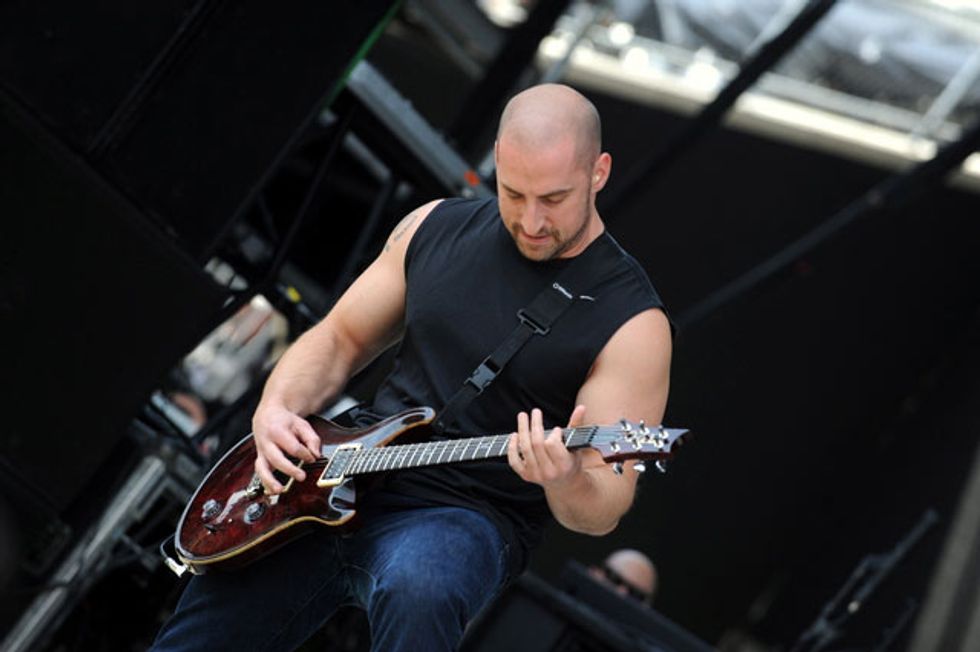
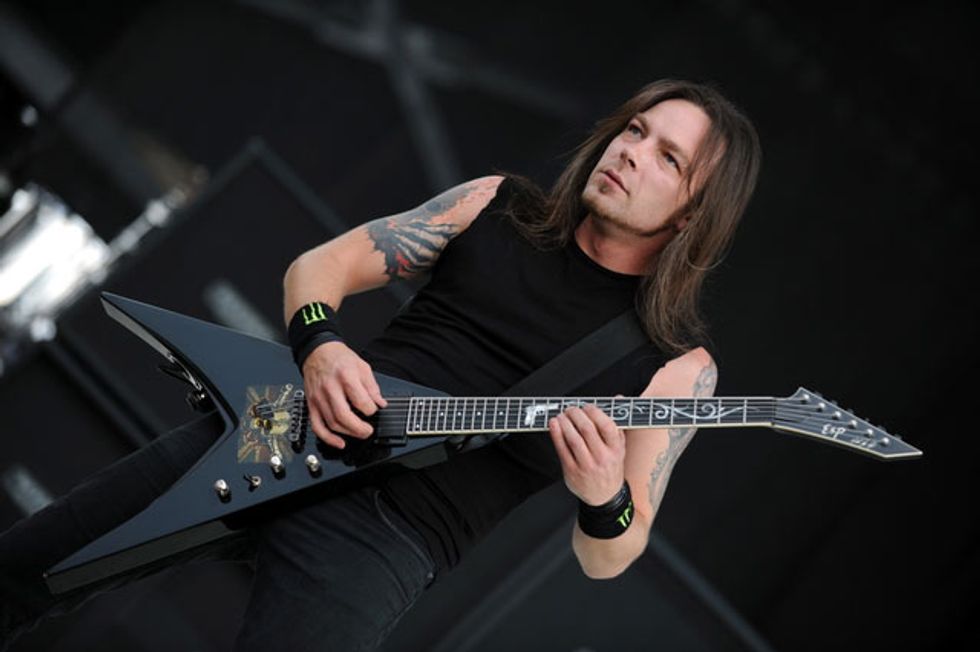
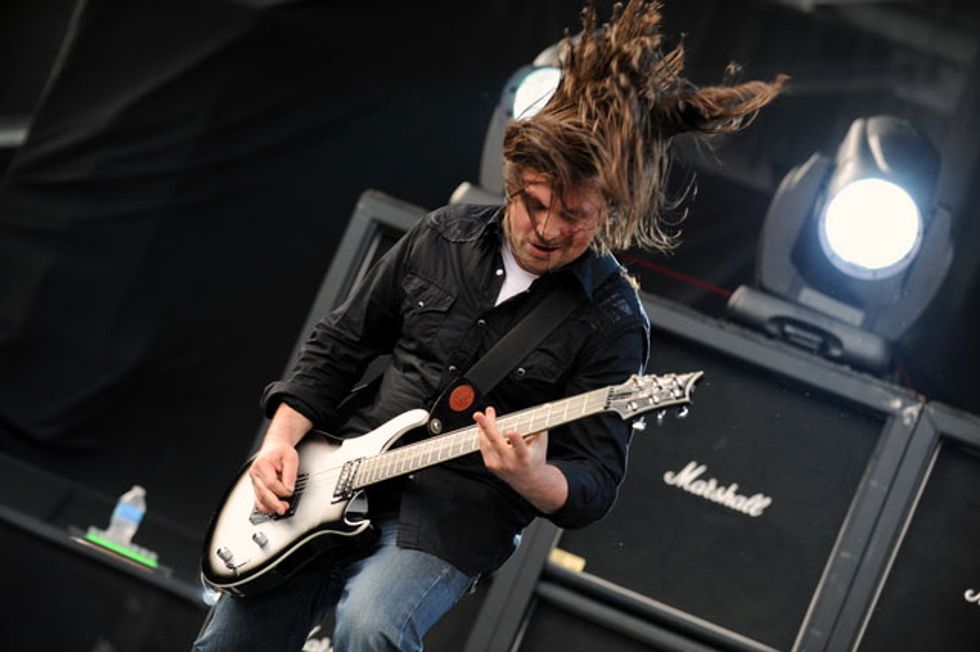
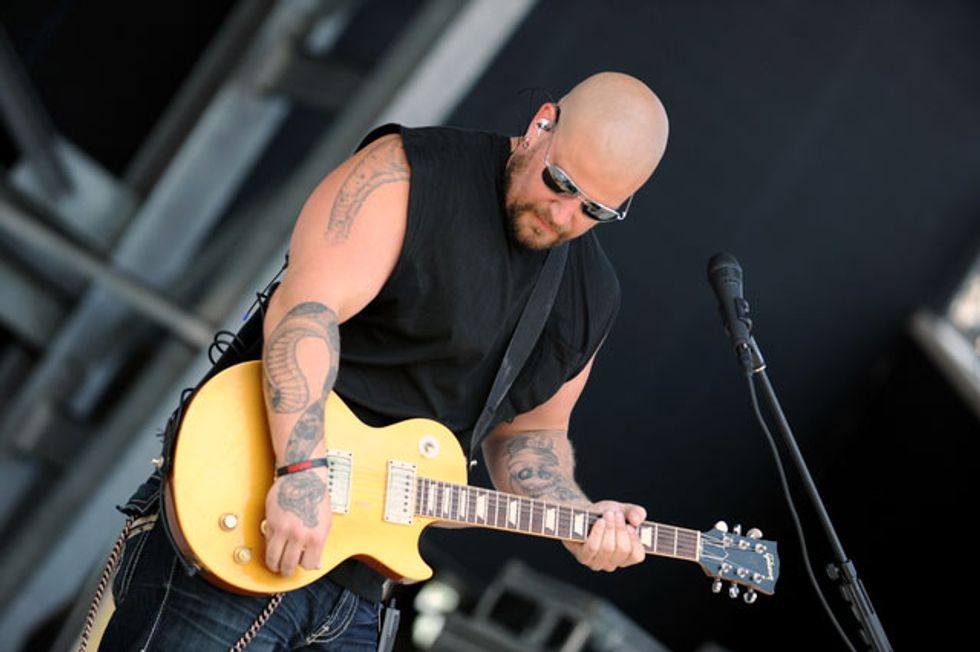
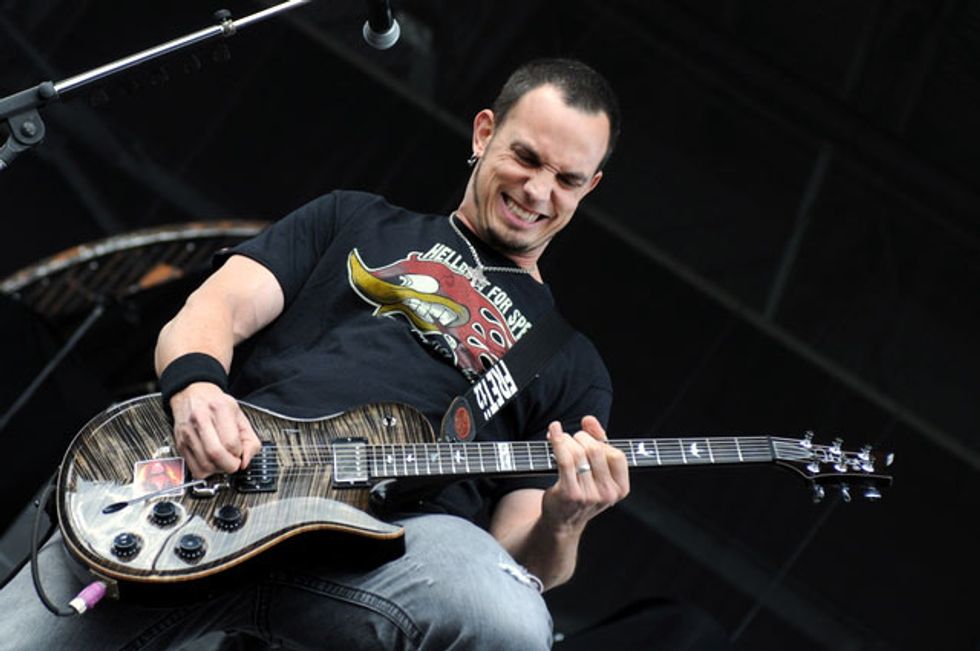
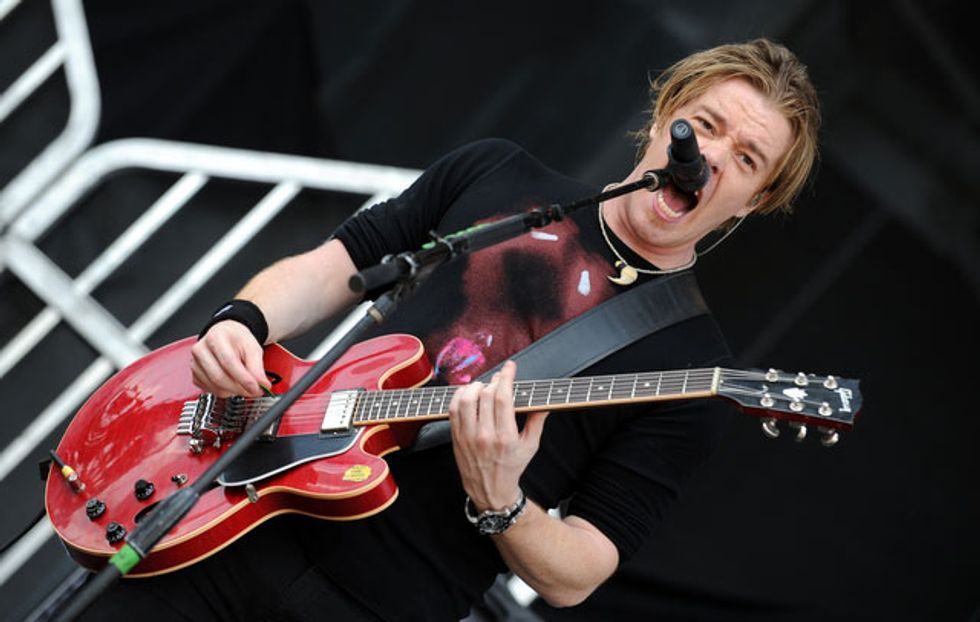
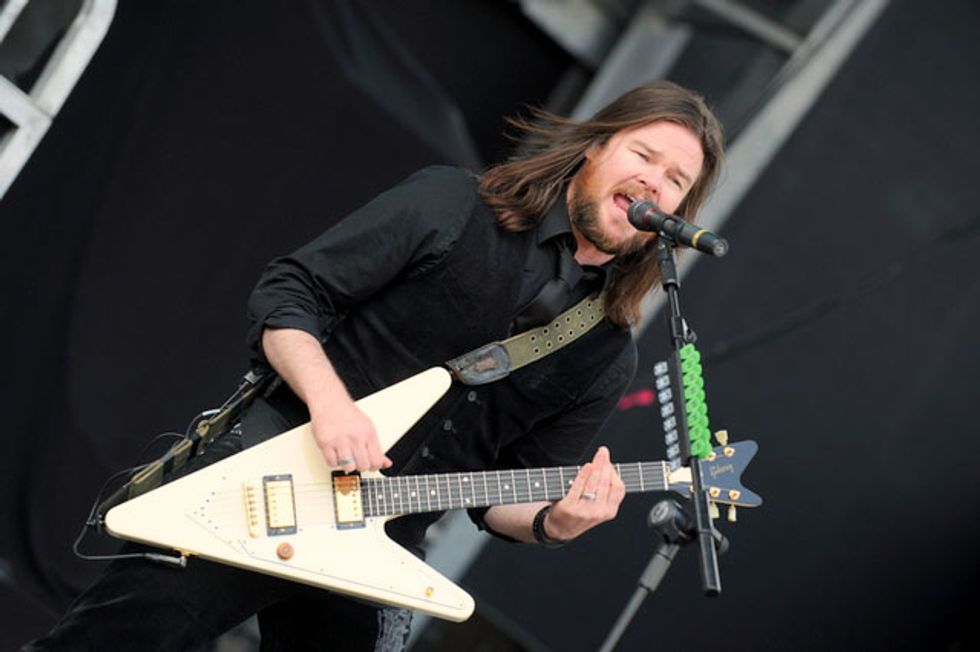
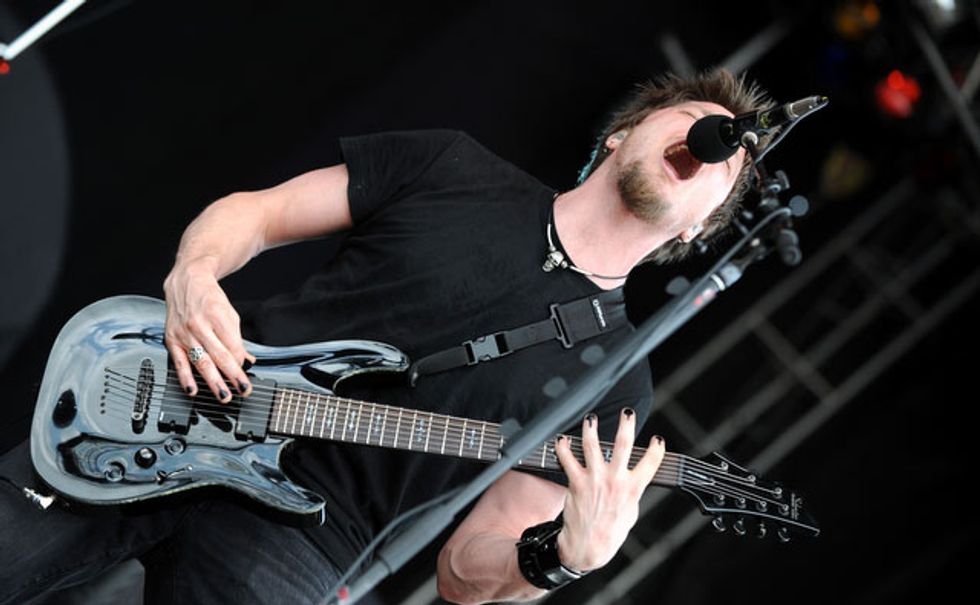
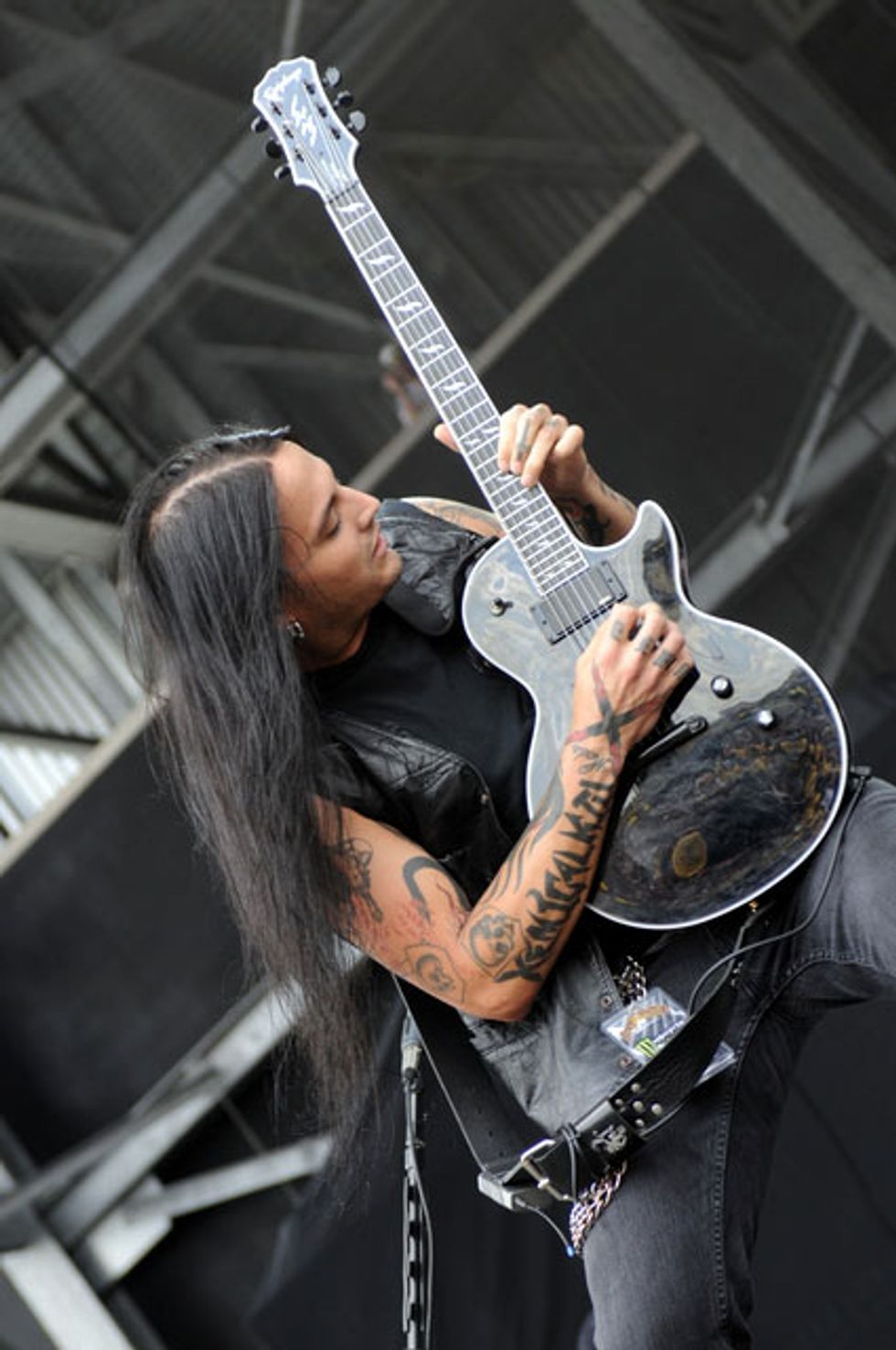
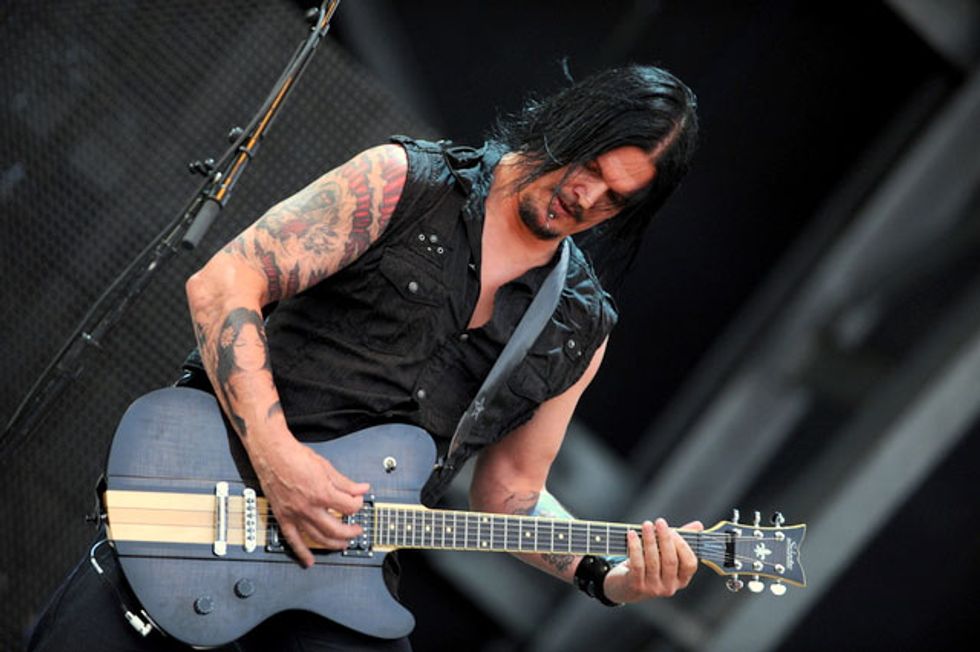
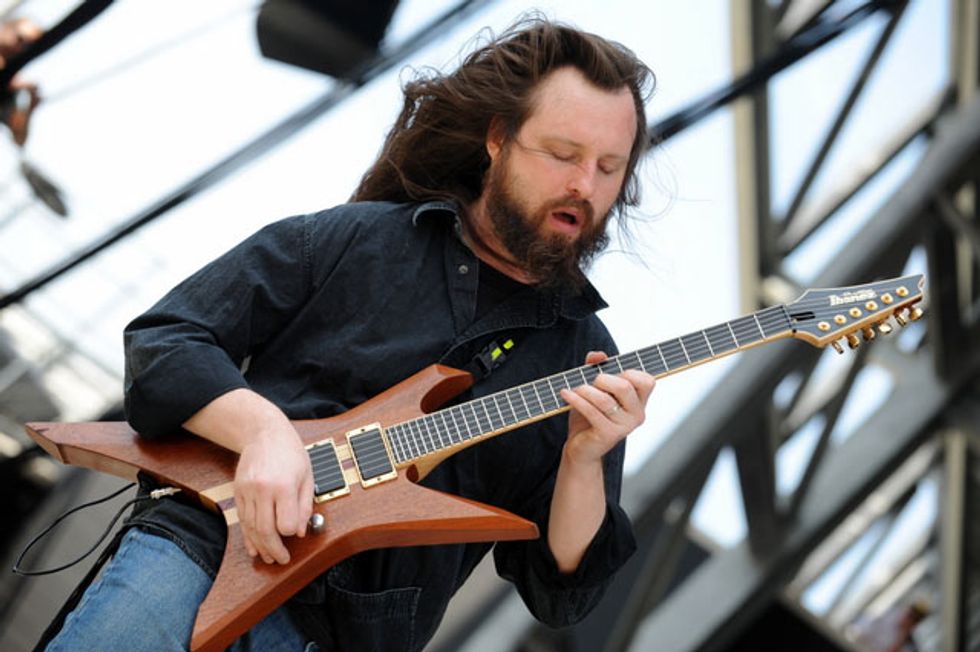
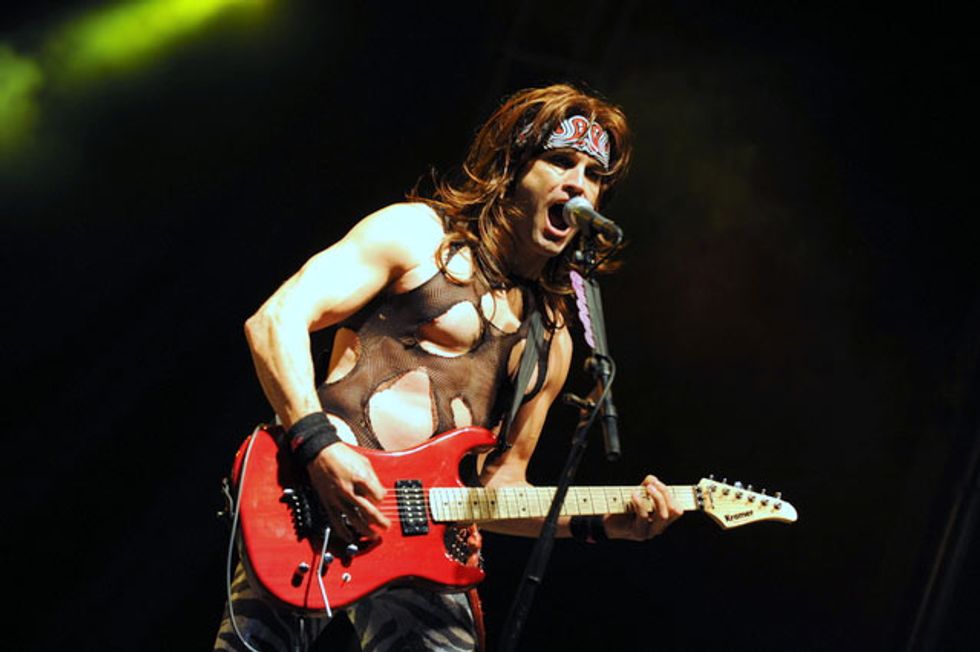
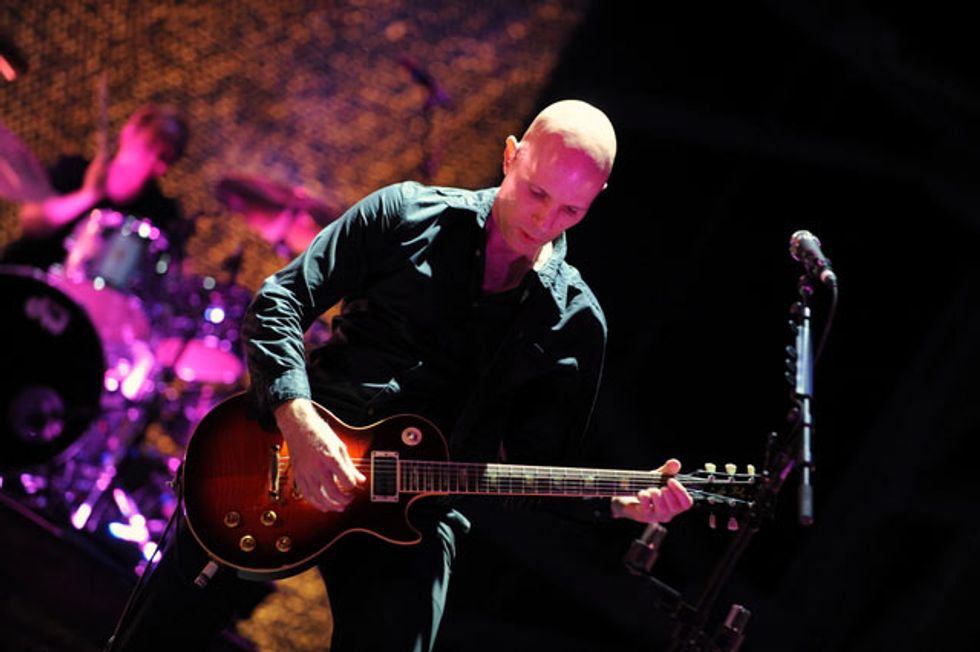
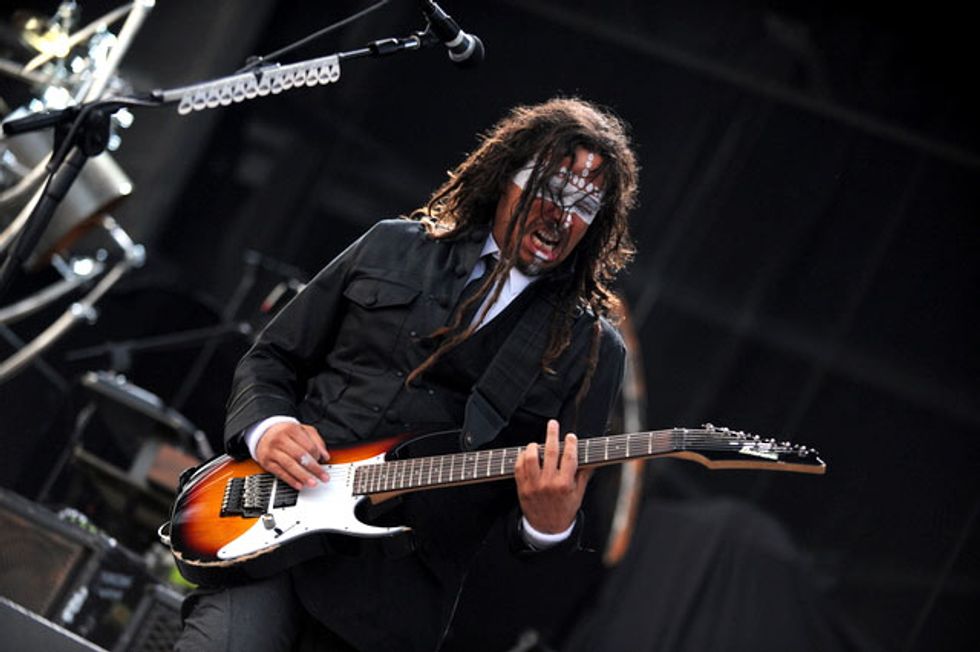
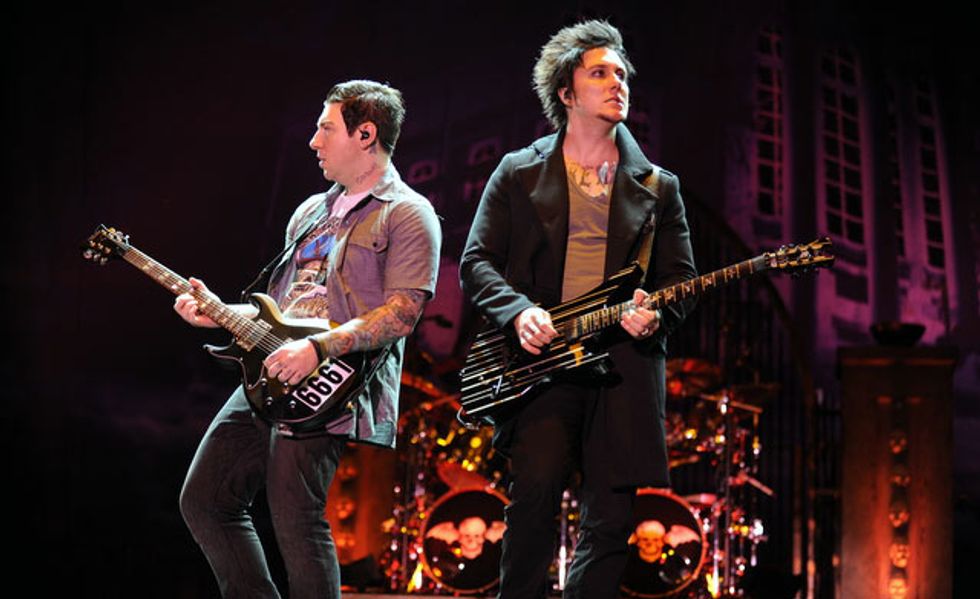
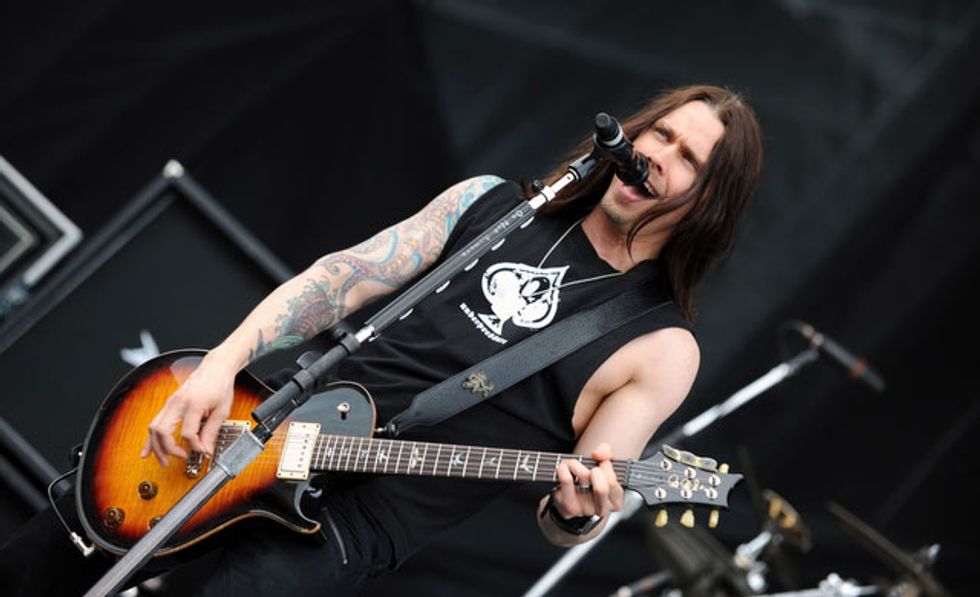
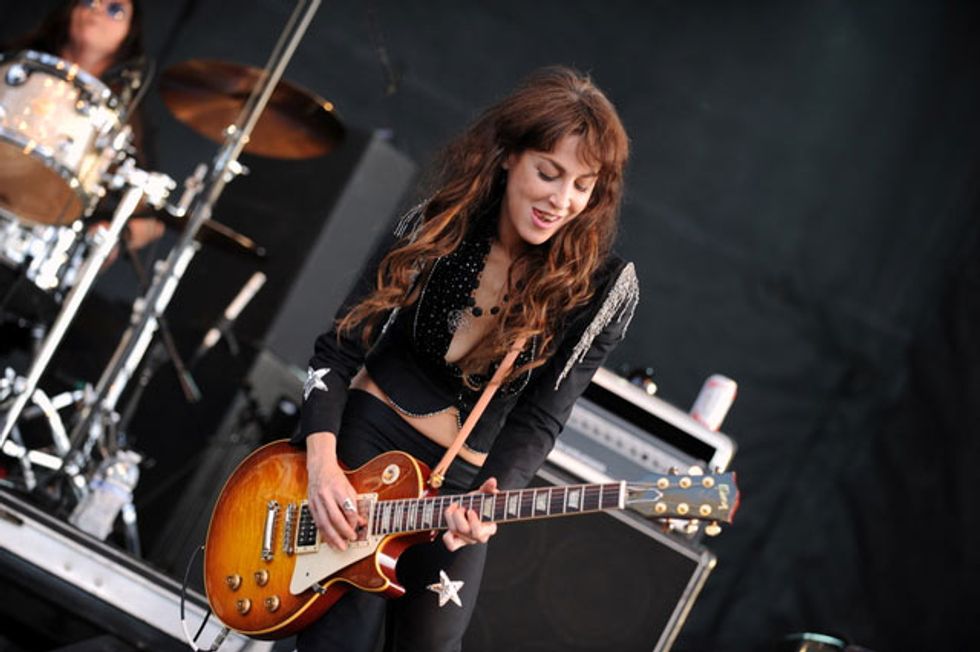
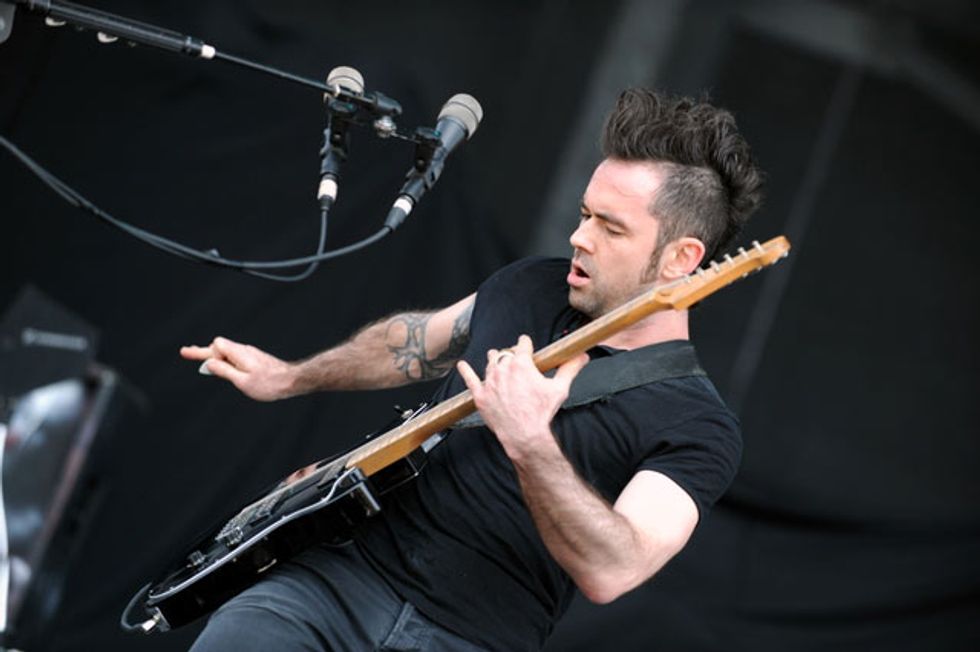
GALLERY: Rock on the Range 2011
See some of today''s biggest rock guitarists and the axes they used for this year''s festival, including Mark Tremonti, Zakk Wylde, Synyster Gates & Zacky Vengeance, and more.
Associate Editor Rich Osweiler started playing guitar at the tender age of 8, but over the years bass has become his main instrument. Prior to joining Premier Guitar, Rich worked at Acoustic Guitar for 10 years as associate publisher and director of marketing. He loves all types of music—from gypsy jazz to lo-fi and grindcore—provided the genre name isn’t preceded by the “contemporary” tag. Outside of music, Rich enjoys travel, skiing, woodworking, coaching baseball, and being a dad. He lives in Marin County with his 10-year-old daughter and their dog, Kiko.
A few months ago we reviewed theGigahearts Hyper Soup, a mindfully executed, UK-built Shin-Ei Superfuzz /Boss FZ-2 Hyperfuzz mutant that impressed with its performance, high quality, and, especially in light of those two factors, price. The recently released Mashed Voltaire Deluxe earns accolades on the same counts. And like the Hyper Soup, the Mashed Voltaire Deluxe design is rooted in a fuzz of some renown—the Electro-Harmonix Big Muff.
But the Mashed Voltaire Deluxe is a Big Muff in the same way beef bourguignon is just a few cuts of tough meat. With a filter section that can offer detailed EQ shaping, preamp control, and high- and low-gain modes, the MVD can move from Big Muff tones to mid-gain drive associated with RAT or Distortion + voices. It also features a “starve” mode that approximates low-battery voltage but can be shaped to create a wide variety of crispy fried lo-fi fuzz. There are fuzz sounds by the multitude here, which makes the MVD an exceptional bargain.
The Mighty Muff—Exploded and Expanded
As the Deluxe in the name suggests, this is not Gigahearts’ first bash at this circuit. But the first iteration wasn’t a simple Big Muff copy either. It came with the saturation control—a feature included here that reshaped the basic fuzz voice profoundly. It also featured the starve switch and the variable voltage knob that stars here. Those two additions to a traditional Muff circuit yield many extra colors. But when combined with the filter resonance and frequency controls, the low, high, and band-pass filter EQ section, and the preamp control here blow the Big Muff envelope wide open.
How you view the MVD’s utility might depend on your relationship with the keep-it-simple-stupid concept. In the strictest sense, the MVD is not simple. The knobs are sensitive and the controls are highly interactive, so you don’t have to fiddle much to end up in a tone zone much different than the one you were in two seconds earlier. A less patient user could get lost in the weeds pretty easily—or end up beat down by option fatigue.
Though the MVD doesn’t respond to guitar volume attenuation in a dirty-to-chiming-clean, Fuzz Face kind of way, backing off the gas still opens up many additional colors.
On the other hand, it doesn’t take a ton of homework to decipher the MVD’s workings. The pedal’s big vocabulary will be super useful to composition-, arrangement-, and mix-minded players and studio hounds. Its ability to carve very specific variations on a distortion theme makes creating counterweight to a booming bass, a wide drum image, or another guitar track satisfying and intuitive. The MVD also rewards a roll-the-dice-and-see approach when you need something, anything other than your same old distortion recipe.
Candy Fuzz Candide
Where does one start to describe the MVD’s range of tone moods? Well, it’s Muffy at its foundation, that’s for sure—big, weighty, loud, and assertive. But it only takes a few twists of the rangy EQ controls to turn that sound on its head. With the three filters wide open the pedal is predictably titanic and hot. But max the high-pass filter, dial the low and band-pass filters way back, add expiring-battery voltage levels via the starve switch, and cool it on the preamp, and the MVD could be a primitive, 2-transistor, 1966-vintage fuzz.
Together, modest settings for all three filters can sound warm and rich, and then made warmer or gnarlier with a shift in frequency or change in resonance. Switch the gain toggle to high and the same setup becomes even bigger, and much more aggressive. I suppose a clever mathematician could calculate the tone permutations made possible by this control array. But it seemed pretty close to infinite to me.
Though the MVD doesn’t respond to guitar volume attenuation in a dirty-to-chiming-clean, Fuzz Face kind of way, backing off the gas still opens up many more colors. If your guitar has pots with a smooth, long taper, you can widen the MVD’s palette even more. This is especially true with single-coils, and the thickness of humbuckers leaves you with less headroom. But I’m guessing the big, blooming sounds of an SG and the Mashed Voltaire will be consolation enough for a compromise in dynamics. Similarly, it’s at home with Marshall-style circuits or clean Fender-derived ones. Each amp style can coax countless tone variations from the MVD.
If the Mashed Voltaire Deluxe is intriguing as a more expansive Big Muff, it definitely impresses as a kind of greatest hits album. To my ear, the pedal’s essence leans more toward early Big Muffs like the triangle and ram’s head. I heard hints of Colorsound’s big, open, less clipped and compressed Big Muff variant, the Supa Fuzz. Perfect approximations of a Sovtek Big Muff’s thick and complex harmonic makeup were more elusive for me, but I would not be surprised if they were in there somewhere and I didn’t manage to uncover them. You come to assume that the MVD can deliver whatever fuzz tone you imagine.
The Verdict
Though it bets big on the patience and adventuring spirit of possible users, Gigahearts is doing something very cool here, at a fair price. If you get nervous in the absence of presets, the Mashed Voltaire Deluxe’s dense interactivity could cause panic attacks. And you’ll have to be fairly fearless or very confident to move through a wide cross-section of MVD’s voices onstage. But if you’re excited by a palette that moves beyond primary colors, you might blissfully disappear into the web of fuzz sounds the Mashed Voltaire Deluxe can weave.
Crazy Tube Circuits announces the release of Triptychon, a fully analog, three-part gain system designed to recreate the way classic fuzz tones were originally built.
Built around the concept of the triptych, Triptychon brings together three independent yet interconnected tone engines. Inspired by classic recording techniques, where fuzzes and treble boosters were driven into already pushed amplifiers, it restores this interaction for modern-day rigs, where most players rely on clean platforms and pedal-based gain structures.
Triptychon features a 4-voice fuzz panel inspired by iconic designs, a dual-voice boost and upper octave fuzz panel for harmonic expansion, and an amp-like drive panel that recreates the feel and response of a pushed amplifier.
At its heart, a custom six metal-can silicon transistor design delivers true germanium-like tone, feel, and cleanup response, without the instability associated with traditional germanium circuits. Assignable or independent effect switching and dedicated switchable anti-buffer circuits ensure consistent performance across a wide range of setups.
Triptychon is designed and hand-built in Athens, Greece.
Joe Pernice never would have written “It Got Away From Me,” a haunting orchestral-folk ballad from his new album, Sunny, I Was Wrong, if one of the baseball players he coached hadn’t casually tossed out that hooky turn of phrase during a game. By extension, he also never would have collaborated with Jimmy Webb, one of his “all-time songwriting idols,” who plays tasteful piano on the tune. “A kid dropped an infield pop-up,” he tells Premier Guitar. “And as he ran by during the change of innings, I said as a teaching moment, ‘Hey, what happened out there?’ He goes, ‘I don’t know, coach. It just got away from me.’ I was like, ‘Oh, my god.’ I sat down in the dugout and wrote that title in my phone. I was like, ‘That’s a hook I hadn’t known, and there’s a lot of possibility with a line like that.’”
Turns out, you have to be open in order for the gods to gift you a great song—even in such unlikely places. That seems to be a mantra for Pernice, the singer-songwriter best known for his work with the alt-country act Scud Mountain Boys and the long-running indie-pop outfit the Pernice Brothers. He leaves guitars in almost every room of his Toronto home (not the bathroom—yet), picking them up for a meditative strum in case inspiration strikes. He might start a song and whittle away at it for a few years, finally finding the perfect pathway into a melody or lyric. You have to let the song present itself. That seems to be another mantra for Pernice—and that process has never been more apparent than on the gorgeous Sunny, his proper solo debut following a pair of pandemic-era home recordings.
“I go digging,” the Massachusetts native says, breaking down his delicate blend of the literal and abstract. “I’m often trying to learn something about myself, and what I have learned how to do over time is to relax. Before, I’d think, ‘You’re being untrue to this. Blah, blah, blah.’ But if you’re trying to write the most evocative song you can, you have no choice but to try other things. I think I learned that from writing books—you sometimes have to abandon your true story for the better story.”


The way Pernice tells it, an essential part of Sunny’s story is, once again, America’s pastime.

“For years, I coached baseball,” he says. “I had a kid, and I decided I wasn’t going to tour as much. Even though music was always there, for years it wasn’t my main focus. It was being a decent parent and spending time with my kid while he still wanted to spend time with me. When they get to a certain age, they don’t want to spend time with their old man. I get it. He became a freak for baseball and played high-level ball for years, and I got roped into coaching. I think my time away from focusing so hard on music just brought me back to it—I started to get my time back when my son was a certain age, and I think I’d learned a bunch of stuff. I know it sounds clichéd, but I was a different person.”
Photo by Colleen Nicholson
Joe Pernice’s Gear
Guitars
Martin D-15M w/ Fishman Matrix pickup (light strings, detuned one whole step)
Godin-made La Patrie nylon-string w/ Fishman Matrix pickup (detuned one whole step)
Early 1970s Gibson Blue Ridge w/ Fishman Matrix pickup (detuned a whole step, guitar is highly modified with a custom bridge, nut, Grover tuners, and re-bracing)
Pernice says he became more “chill” as a songwriter, realizing the most ambitious idea isn’t always the best one. So much of his past work, including the Pernice Brothers’ acclaimed 1998 debut, Overcome by Happiness,is defined by clever, classic pop craftsmanship: how the chords and melodies and harmonies unfurl in ways both surprising and instantly satisfying. But with Sunny, I Was Wrong, he wanted to get out of his own head.
“I decided, ‘It doesn’t have to always be so complex,’” he says. “‘You don’t have to always have a middle-eight with a key change. You don’t have to over-produce stuff.’ That opened up a lot of possibilities. I might have been more accepting of songs that were not so complex where, at another point, I might have thought, ‘That’s not original’ or ‘That’s not good.’ I think having been a parent and going through all the shit that involves, good and bad, I was open to being changed. Now I really don’t care. More than ever, I’m just in it for myself.”
Here, with this “solo” branding, he’s also in it by himself—or, at least, largely without the services of the Pernice Brothers (his brother Bob sings on the peaceful title track, and Patrick Berkery plays drums amid the blissful folk-rock sway of “If You Go Back to California”). “Kind of without making a big deal about it, I think my old band is over,” he says. “I can’t really see myself doing a record as Pernice Brothers anymore. I can’t say it will never happen, but I think that’s run its course.”
“I think one of the hardest things to achieve with a record is a sound, a vibe.”
That decision had nothing to do with musicianship. It mostly came down to geography. Since his bandmates are “scattered all over the world,” he says, “it was nearly impossible to get people [together] to record, let alone rehearse a few times to get a sense of the songs.” And with Sunny, Pernice wasn’t interested in remote recording. He wanted the intimate feel of a band playing in real time. “I think one of the hardest things to achieve with a record is a sound, a vibe. There are different ways to get that, but in this situation, I wanted all the people in the same room.”
An opportunity presented itself—once again, in a roundabout way—through family. Pernice’s son, now 20, went to school with the daughter of Barenaked Ladies bassist Jim Creeggan, and the two musicians became friends. “I met Jim not through music but through the school community,” he says. “Jim’s wife has a nonprofit organization and raises money for different causes. Jim has a world-class recording studio, and a few years back he said, ‘My wife is doing a fundraiser. Would you come play a few songs, and I’ll back you up?’” Creeggan suggested they play as a trio, joined by pianist Mike Evin. That lineup sparked something in Pernice: “I always knew Jim was a great player, but that fundraiser put it in the back of my mind. I also knew I was going to use [Mike] because his style spoke to me—it was exactly what I was thinking.”
They all teamed up at Creeggan’s studio, with their core lineup rounded out by drummer Mike Belitsky, best known as a member of Canadian indie-rock band the Sadies. They instantly found a chemistry, reflecting the vast and “vibrant” musical community in Toronto. “I know more musicians here than when I lived in New York City,” Pernice notes. “We started messing around, and it was like, ‘Holy smokes, this sounds really good. We’re getting a thing that I can’t get remotely.’ Before you know it, you’re like, ‘Oh, this is an entirely different project.’”
“I’m often trying to learn something about myself,” Pernice says, “and what I have learned how to do over time is to relax.”
Photo by Glen Quinn
They achieved exactly what he initially sought: a warm, unfussy, live-ensemble sound with minimal punch-ins. And the actual compositions reflect that energy: melancholy and graceful, full of introspective and imagistic lyrics, dominated sonically by acoustic strumming, adorned with occasional accoutrement like moaning slide guitar (the gentle “I’d Rather Look Away”) and past-sunset pedal-steel. The most notable addition is an airy vocal harmony from Aimee Mann, who adds a touch of elegance to “Deep Into the Dawn.”
“No exaggeration—as soon as I started singing the melody, I started thinking about Aimee Mann,” he says. “I think I have 19 or 20 albums. That single recording is my favorite of any I’ve ever done because it happened exactly as I hoped. I wouldn’t change a thing. To my ear, that one just had it all.”
“I don’t think I used a pick on a single song. It’s all thumb and strummed with my fingers.”
Pernice also has no regrets about the album’s soothing acoustic-guitar sound. “I think it’s just perfect,” he says. “I don’t think I used a pick on a single song. It’s all thumb and strummed with my fingers. We tried to use my nylon-string, but it was just too dark. Jim said, ‘Hey, Ed [Robertson, from Barenaked Ladies] has this no-name, small-body, parlor-size, steel-string acoustic. I’ve used this before. It sounds great. Wanna try it?’ We did, and we were like, ‘Holy shit, it sounds incredible!’ I said to Jim, ‘Will Ed sell this?’ He said, ‘Absolutely not, because I’ve already tried to buy it.’ It’s some ’80s knockoff that just sounds fantastic. I do not exaggerate when I say I couldn’t tell you what brand the guitar is—not only because I’m a luddite, but also because it was nothing of note.”
It’s not that Pernice doesn’t value quality guitars—it’s more that he’s open to any instrument that sounds and feels inspiring, regardless of the brand on the headstock. His collection runs the gamut: a Martin D-15, a Godin nylon-string, and a “weird one-off Gibson” with a Martin top that he got from a friend at a guitar-electronics company. (“It was never meant for human consumption,” he says. “But I’ve consumed it.”)
Photo by Colleen Nicholson
Another notable piece: a Gibson Blue Ridge with a bolt-on bridge and a fascinating backstory. “In 1978, there was a big blizzard in Massachusetts—it was a state of emergency. There was like four feet of snow. My brother, as a teenager, was hired with his buddies to shovel snow for a week. My late cousin worked in a place called the Record Garage in Cambridge, and they sold guitars, too. He called my brother and said, ‘I have this Gibson that turns out to have been owned by Billy West of Ren & Stimpy fame.’ My brother bought that guitar. I was a bike racer as a teenager and into my early 20s, and at one point I traded a 1987 Cannondale bicycle for the Gibson, and I still have it. I wrote a million songs on that guitar—probably more on that than anything. I learned how to play on that guitar.”
“The lucky thing for me is that picking up a guitar and strumming is a super-attractive event.”
Guitar-wise, nothing much has changed for Pernice in the many years since. He surrounds himself with 6-strings, makes a habit out of strumming around on them, and waits for that a-ha moment. His batting average is clearly excellent, but it’s all about putting in the reps: One ordinary day, he wound up writing five songs, four of which were “keepers” and two of which (“Peace in Our Home,” “Force Feed the Fire”) ultimately made it onto Sunny, I Was Wrong. “The lucky thing for me is that picking up a guitar and strumming is a super-attractive event,” he says. “I don’t have to make myself do it. It’s instant gratification.”
Pernice’s new album is his debut solo studio effort.
It also leads to surreal moments he still can’t wrap his brain around, like working with Webb on “It Got Away From Me.” After that baseball player planted the initial seed of inspiration, Pernice fleshed out the full song—including a lyrical reference to the Webb-penned 1967 orchestral-pop smash “MacArthur Park.” Pernice sent the track to friend and Webb collaborator Pete Mancini, hoping he’d play it for the maestro himself. He did—and then wound up playing on the piece. “I’m a huge fan,” he says. “He’s like a Beatle to me.”
When he thinks about the journey that song took—from a kid’s casual remark to collaborating with an all-time hero—it makes him realize how strange and beautiful songwriting can be.
“I remember writing that song at my kitchen table,” he says. “I was probably sitting with a cup of coffee in the morning in my underwear. It goes from an idea, to a finished song, to a recording, to having one of your songwriting idols playing on it—and now I’m talking about it to you, a guy I’ve never met. That came from a kid saying something on a baseball field! That kind of stuff always blows my mind: ‘That’s so weird. It came out of nothing.’”
When it comes to bass playing, there’s a fine line between intensity and relaxation. Many situations demand this of us as musicians, but it doesn’t always come naturally, or right away. There are many external factors that can prevent us from being truly in the moment, and that’s what I find myself being challenged by right now on tour in Japan for a couple of nights playing with Steve Smith’s Vital Information.
We all have our own thoughts that are unassociated with the music we’re playing—our daily lives that we take to the stage, the practice room, or the studio. If it’s a low-stress day, those things can generally be set aside for the duration of the performance, and perhaps easily drawn upon to provide confidence in your abilities in the moment. Thoughts like, “I’m having a good day, I feel good in my life, so I feel good onstage, and I can let that come out in the music.”
But if there’s some external doubt or stress in your day, it’s amazing how quickly that can manifest in your playing without you realizing it. You might be digging in too hard, squeezing the neck of the bass a little more than normal, or simply having trouble focusing on the music. All of that stress can add up quickly, and I find it tends to snowball over the course of a show. The more difficult it is to relax, the more tension you carry, and the worse shape you’re in by the end of the gig.
I think it’s important to understand that there are so many levels to this, and it’s quite likely that, for the most part, you might be able to carry all that tension without the audience or even your fellow band members noticing. I used to think about that side of the equation much more: “I wonder if anyone notices.” Or, “Phew! I was feeling rough today, and I think I got away with it tonight.”
“If there is some external doubt or stress in your day, it’s amazing how quickly that can manifest in your playing without you realizing it.”
Those thoughts were more present toward the beginning and the middle of my career, but the place I’ve been able to get to more recently—perhaps the past 10 years or so—is thinking about the potentially positive effects of being truly in control of that side of my brain during a performance.
When I started to realize that, though people might not notice if I was having a bad night—unless I did something crazy and really screwed up—they really noticed when I was having a good night. The connection to the audience from a relaxed and lucid place, free of the stresses of the rest of the day, is a place I aspire to be more often.
So now we arrive here in Tokyo, to the present-day part of our little stress-management career narrative, and I’m dealing with more stress right now than I would like. It’s unfortunately completely unavoidable and not something I can choose to ignore. But I can start to draw upon many years of experience when it comes to letting go of that stress onstage.
The music we’re playing is not simple, and requires a high level of concentration, and I find that concentration is the first thing that gets disrupted by a stressful day before a show. There is one positive in that the need for heightened concentration can take processing power away from the part of the brain that is stressing out about life. The flip side of that is when you know the music so well your brain has far more capacity to think while you play. I had one of those gigs in Los Angeles before I left on tour, and it was one of the most challenging live performances I’ve ever had to give. I knew every note inside out, and had known the musicians around me for almost 30 years, so my brain had a field day and went wild with thoughts while I was playing.
I knew I couldn’t do that again in Japan, and was asking my therapist for calming techniques before the gig. She had me slowly outline the shape of an infinity symbol, which activates something called the vestibular system: a part of the inner ear that provides the brain with information about spatial orientation and balance. It’s been amazing to do this for a couple of minutes before going onstage, and I can literally feel my foundation and mental balance flooding back to me in that moment. It has given me increased confidence while facing a challenging few days far from home, far from family, and far from all the comforts of everyday life that normally make it a little easier for me to do my job.
Darkglass® Electronics announces the launch of the Anagram Marketplace, a significant expansion of its Anagram™ bass platform introducing a growing ecosystem of third-party plugins and tools. Designed to extend the capabilities of Anagram beyond its original feature set, the Anagram Marketplace enables users to access, share, and integrate new sounds and processing tools while opening the platform to trusted developers, engineers, producers, and sound designers. By bridging the gap between studio-based workflows and real-world performance environments, the Anagram Marketplace positions Anagram as an evolving platform shaped by its user community.
Think of it like an App Store. Building on Anagram’s core processing architecture, including its hexacore processor and 32-bit/48kHz audio engine, the Anagram Marketplace expands the system’s functional scope by enabling support for external plugins that were previously limited to desktop environments. At the time of launch, the Anagram Marketplace has already partnered with some established plug-in developers like Nembrini Audio, Bogren Digital, and DoGood Sounds.
The Anagram Marketplace complements Anagram’s existing blocks-based architecture, where users can construct signal chains in series or parallel configurations. With the addition of partner-developed plugins and processing blocks, users gain access to an expanding library of tools that can be incorporated into their existing signal paths. This approach extends the platform’s flexibility over time, allowing workflows and signal chains to evolve as new tools and ideas are introduced.
From a user experience perspective, the Anagram Marketplace integrates into the broader Anagram ecosystem, where its high-resolution touch display and control modes - Preset, Scene, and Stomp -continue to provide direct access to signal chains and parameter control. As new plugins and blocks become available, users can incorporate them into familiar control structures without disrupting established workflows, supporting a streamlined approach to exploration and implementation.
The introduction of the Anagram Marketplace also reinforces Anagram’s integration with the wider Darkglass ecosystem. Alongside access to partner-created plugins, Darkglass will continue to deliver free software updates, including new blocks, features, and ongoing performance improvements. Together, these updates and the Anagram Marketplace ecosystem create a platform that continuously expands, ensuring users have access to new tools and capabilities without requiring added hardware.
In practical use, the Anagram Marketplace enables musicians, producers, and content creators to extend their setups with new processing tools while keeping a consistent workflow across studio, rehearsal, and live environments. By enabling access to a broader range of plugins and community-driven development, the platform supports faster iteration, expanded creative options, and a more connected approach to sound design and performance.
The Anagram Marketplace is available now to Anagram users. For more information, visit www.darkglass.com.