Premier Guitar features affiliate links to help support our content. We may earn a commission on any affiliated purchases.
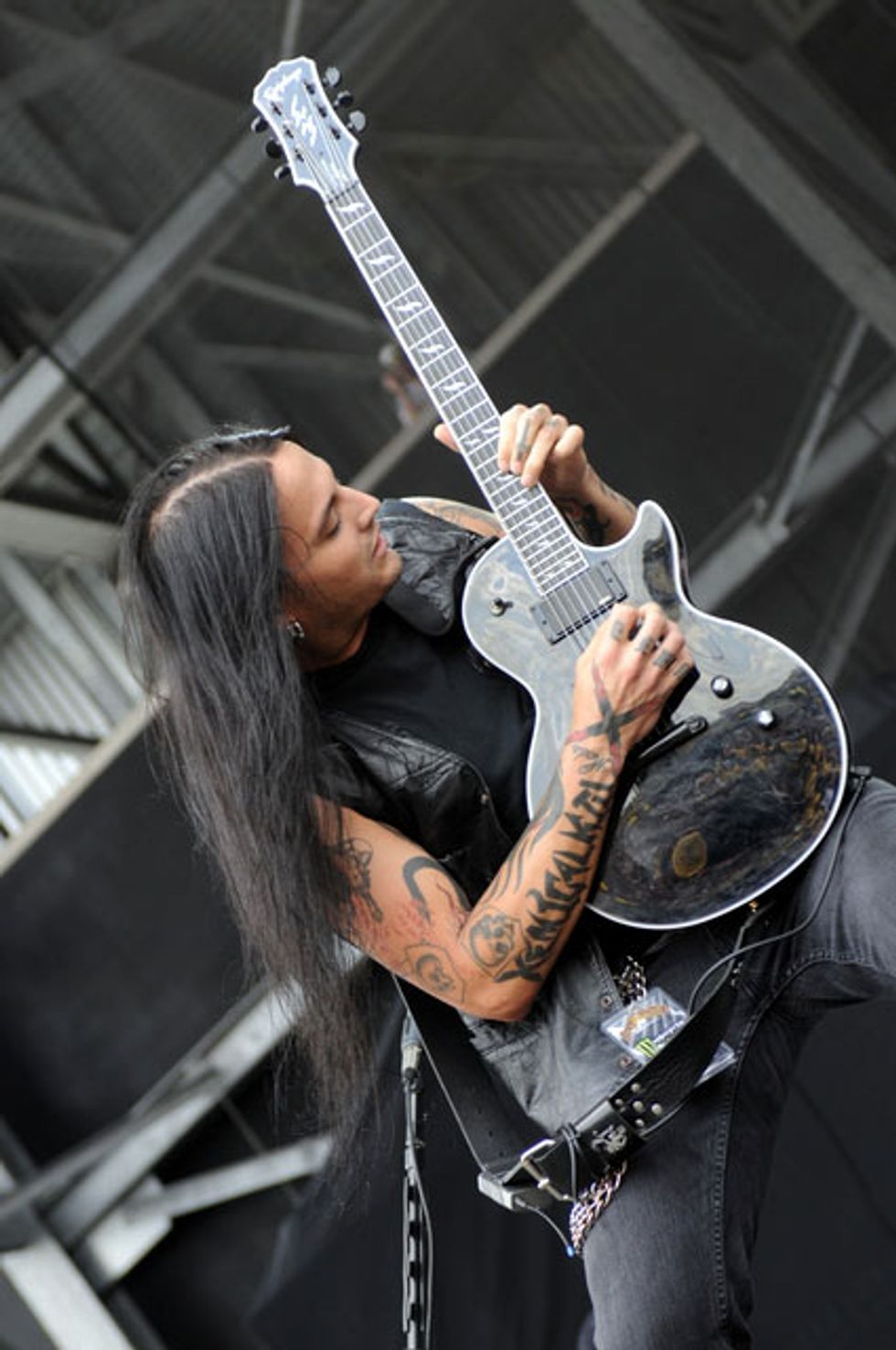
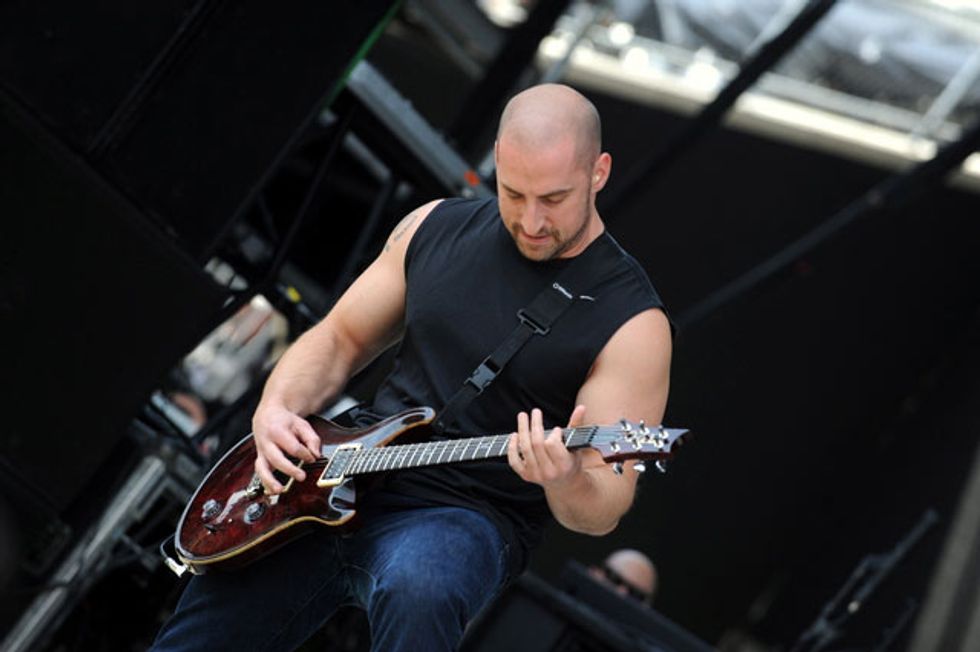
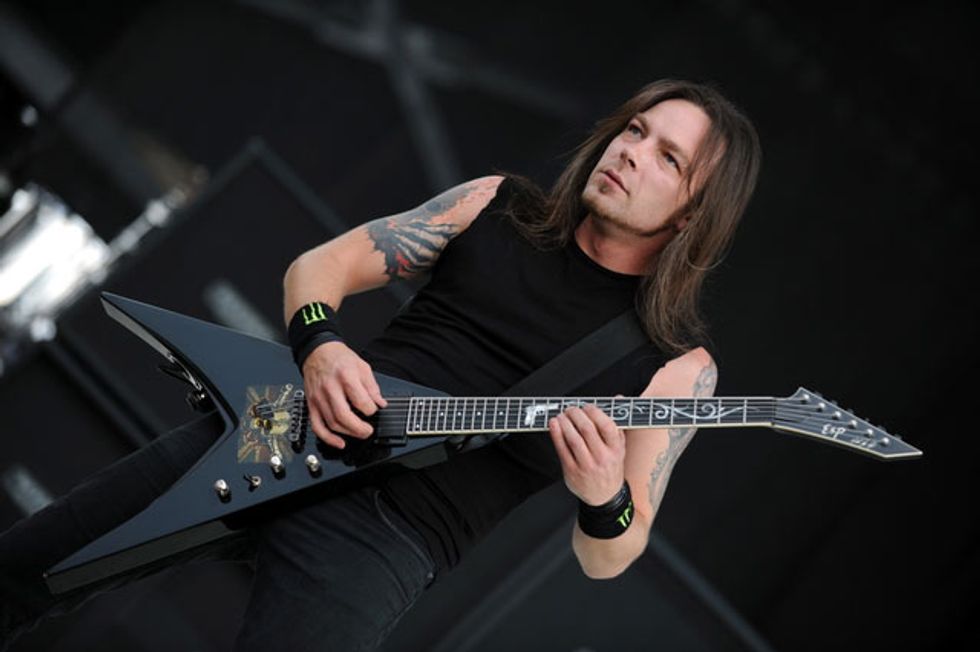
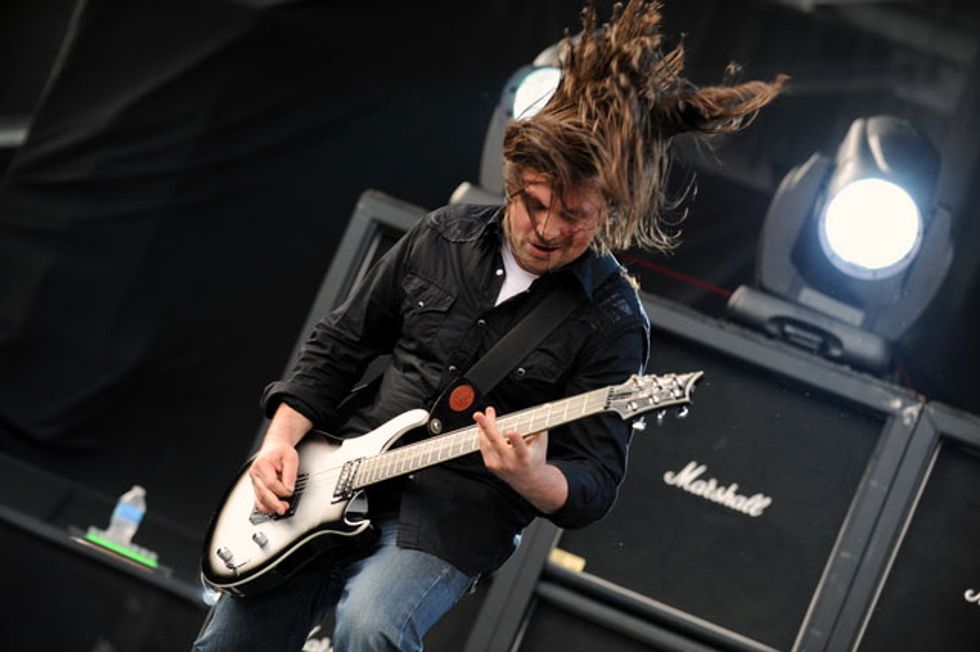
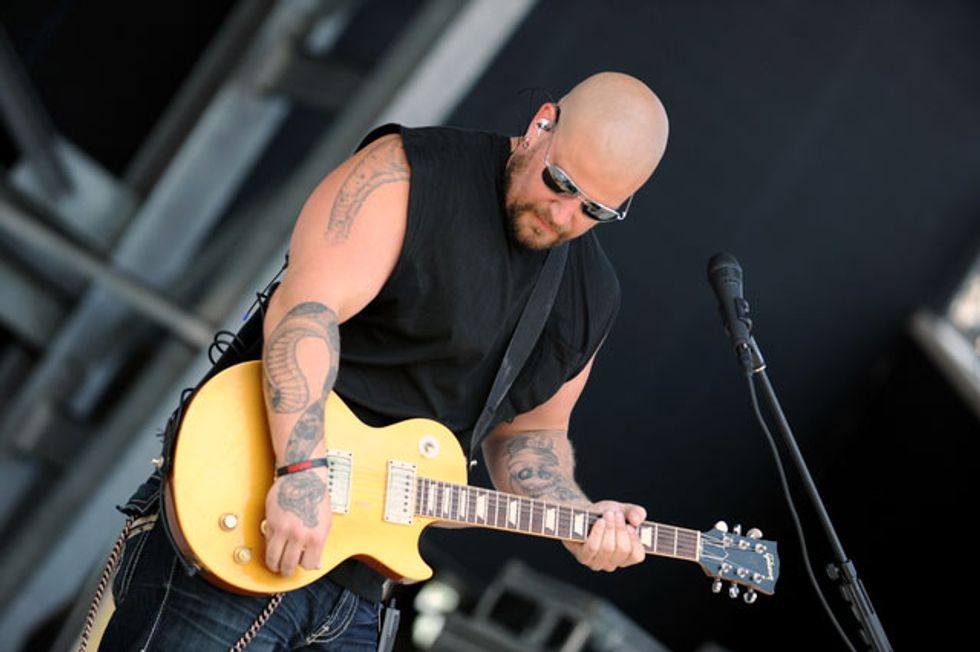
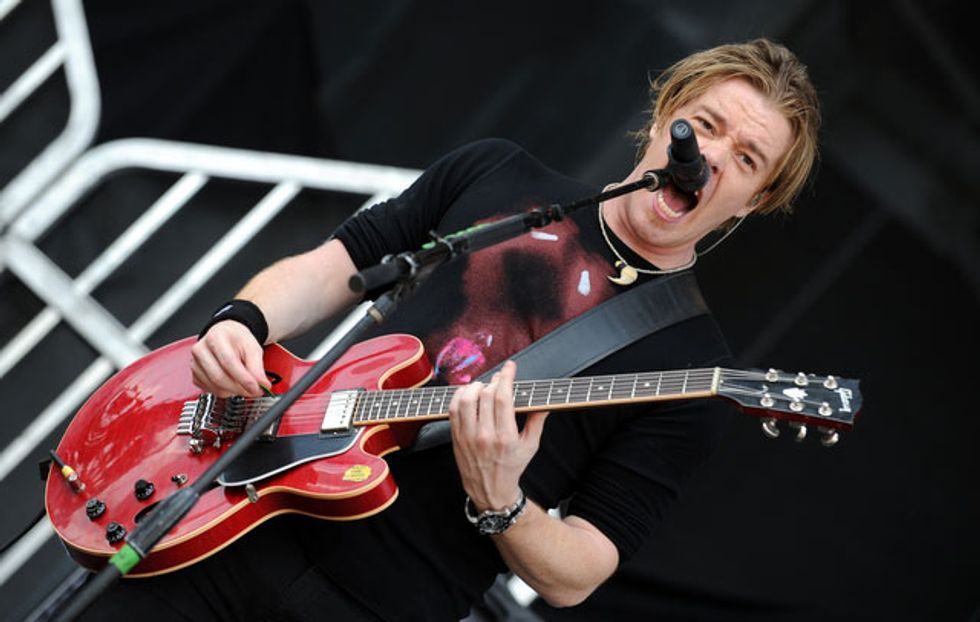
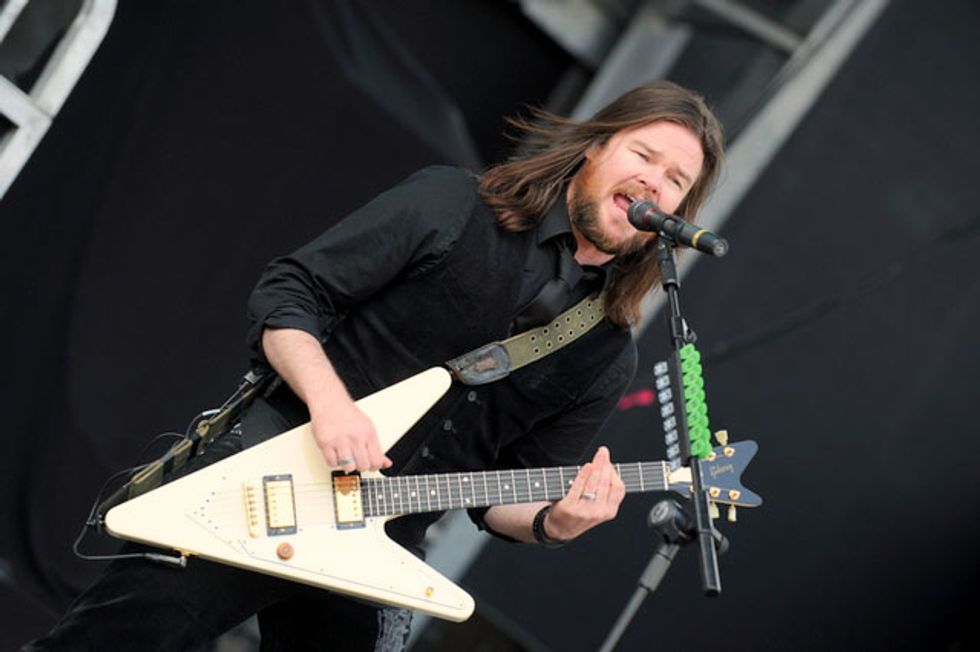
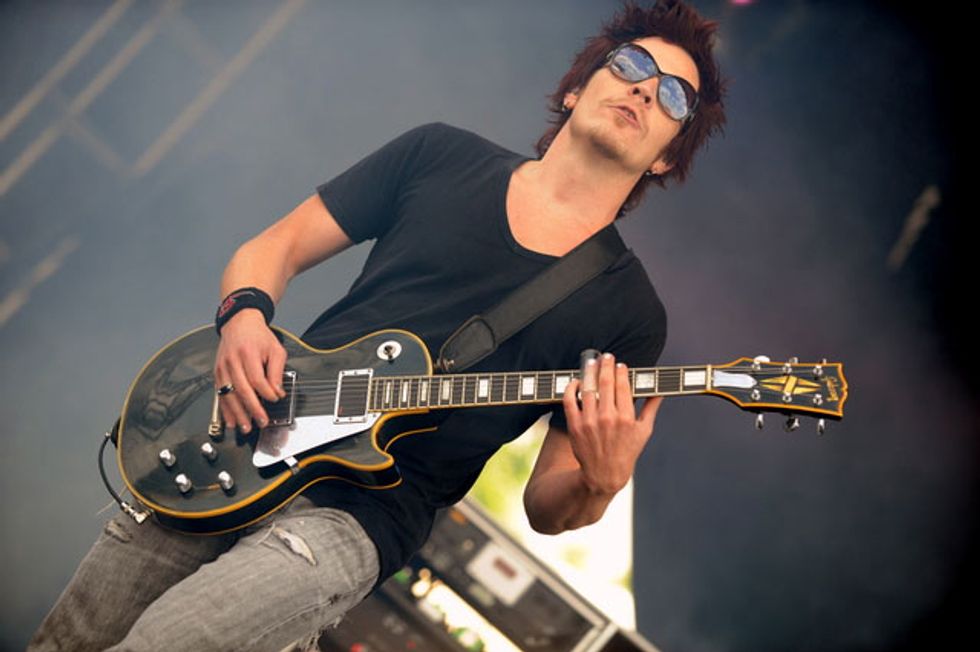
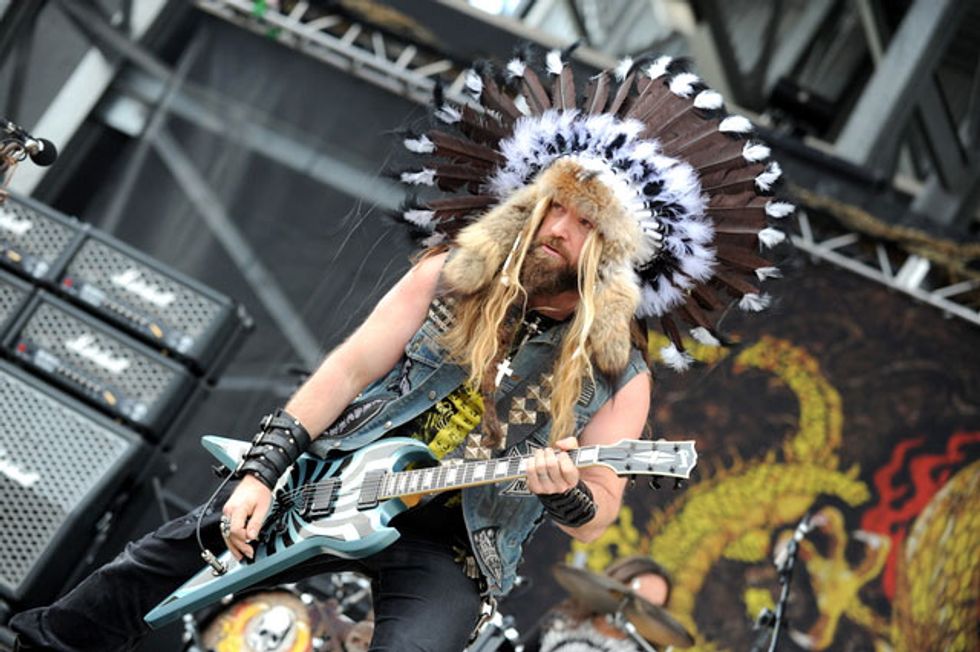
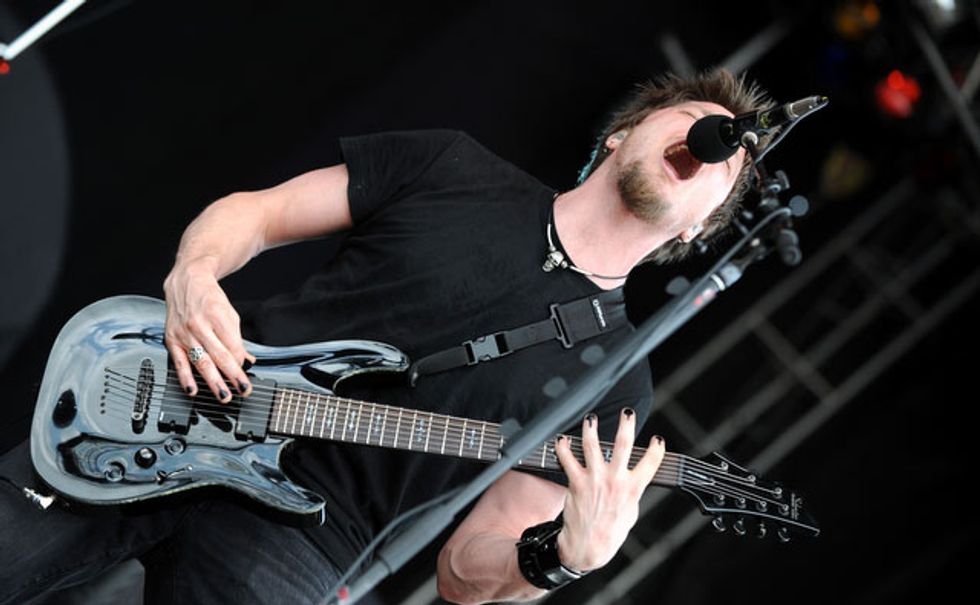
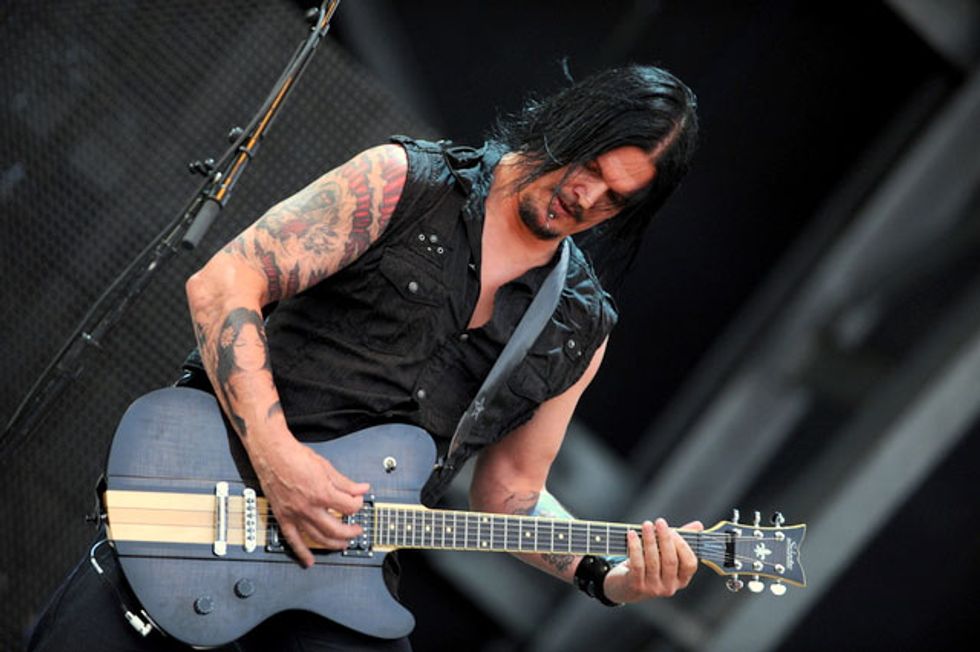
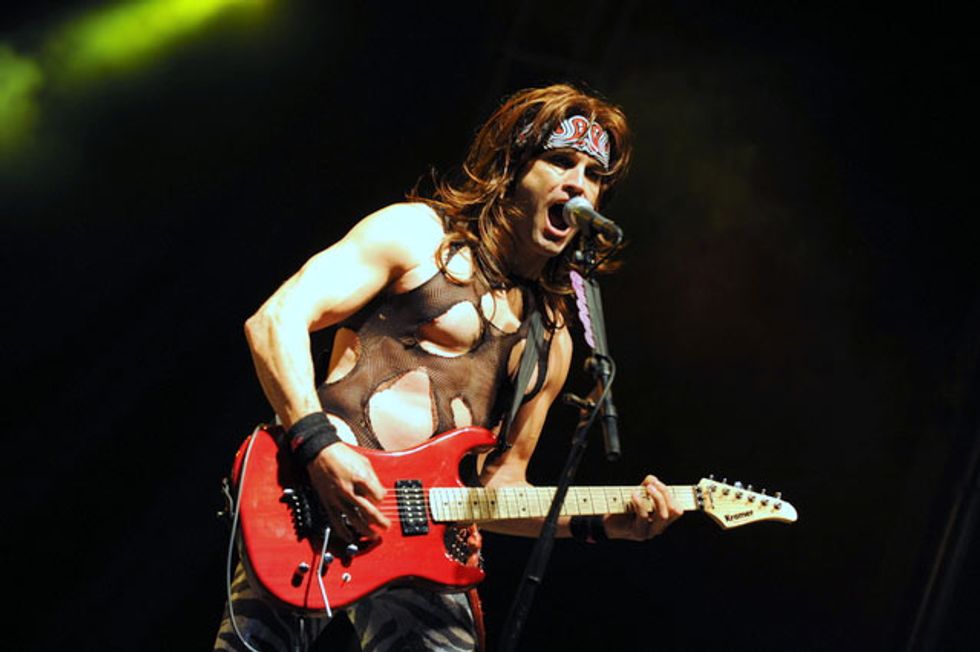
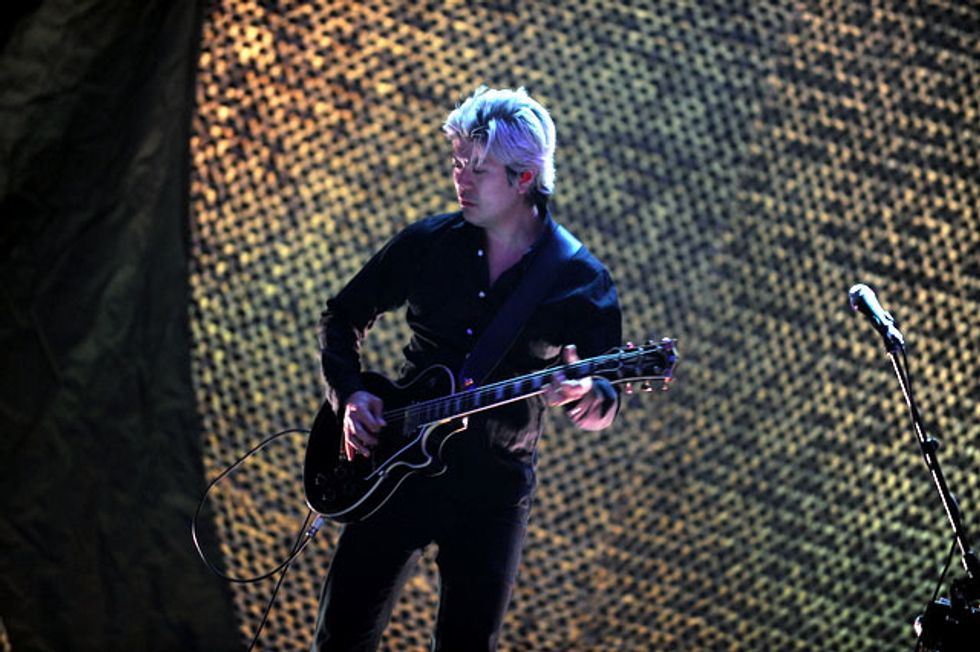
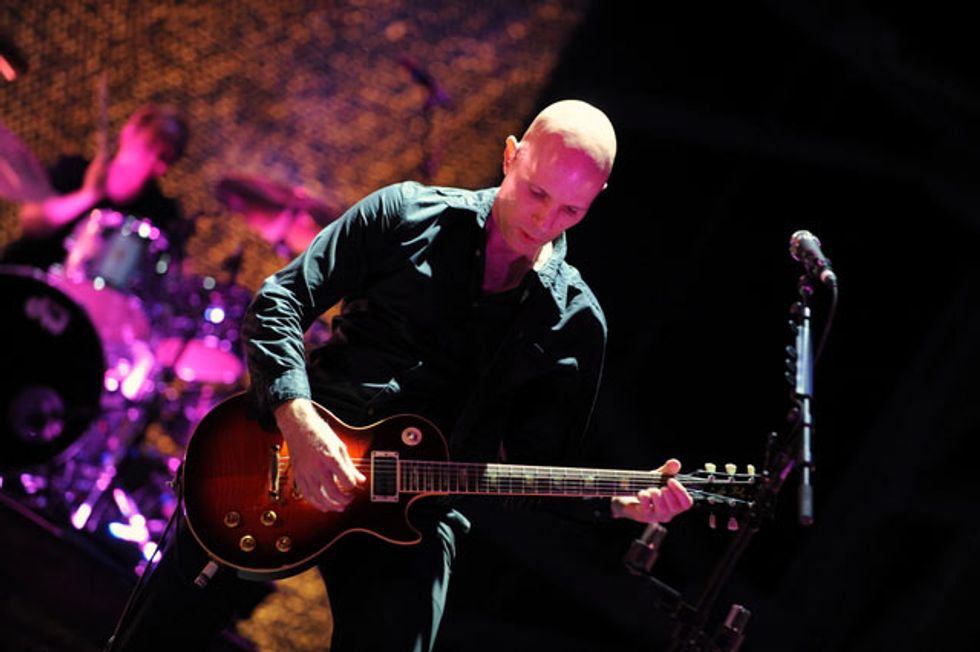
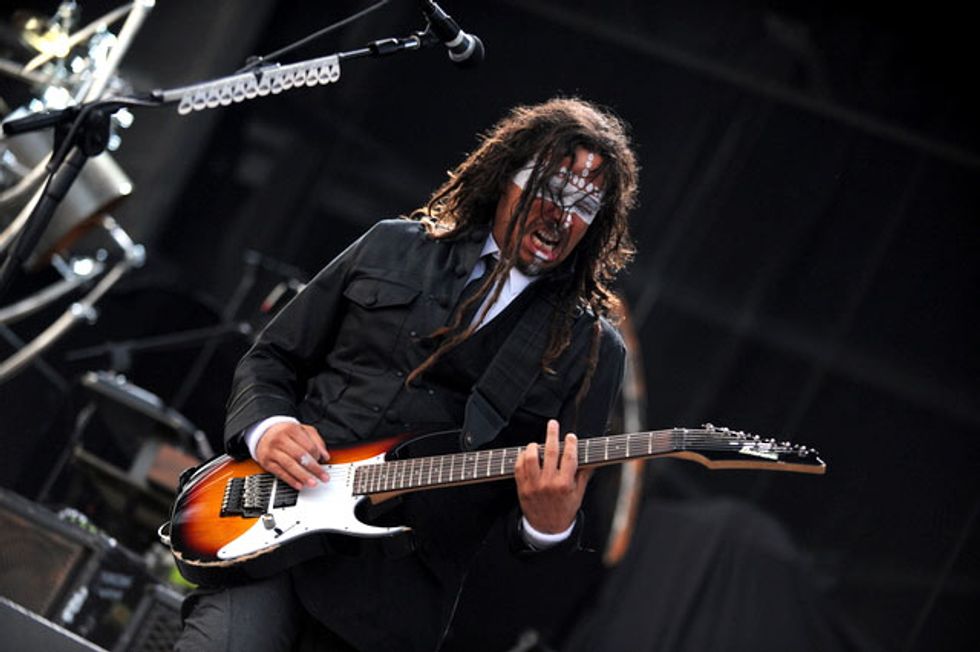
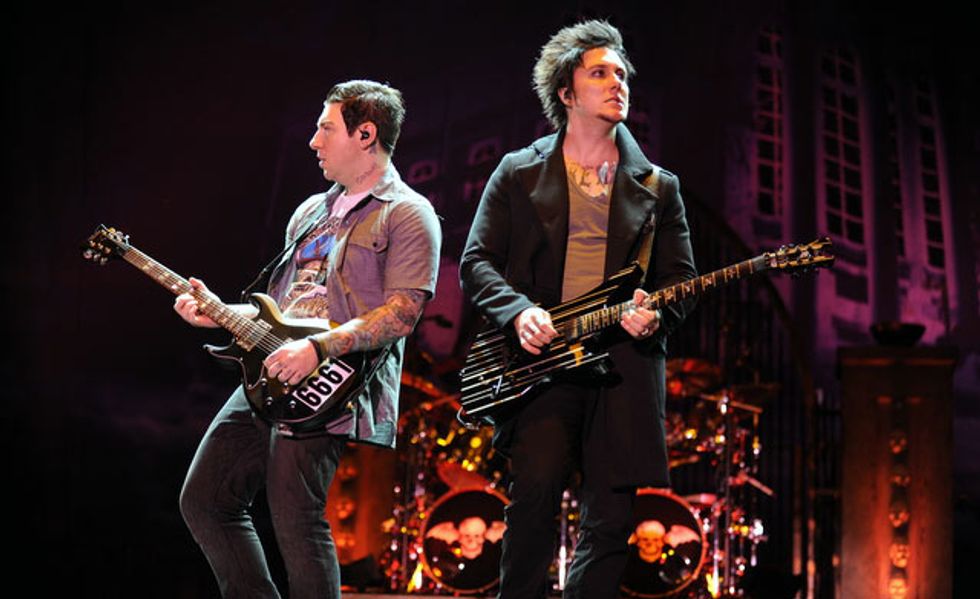
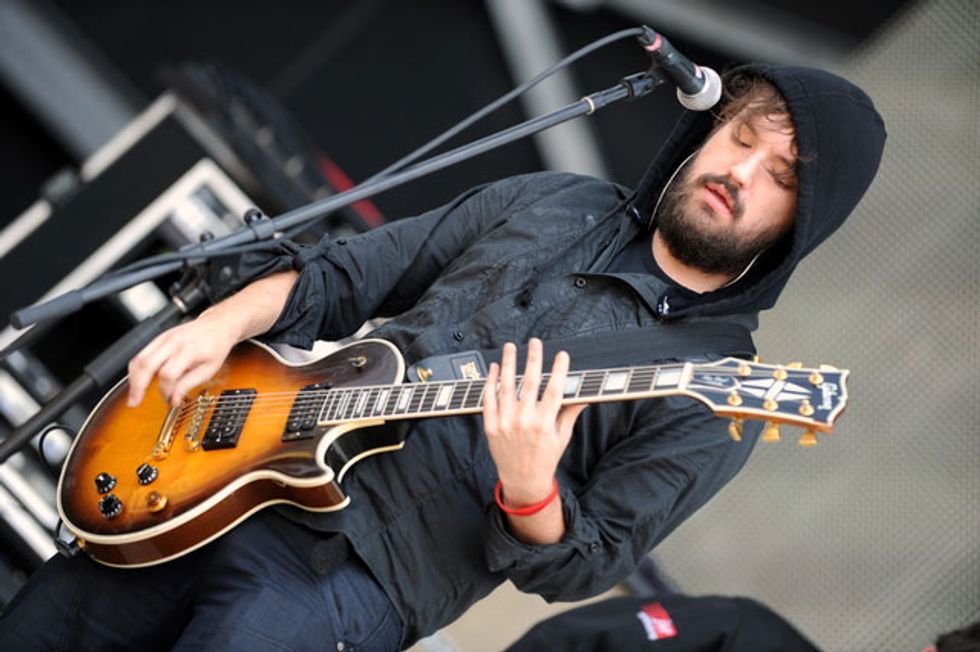
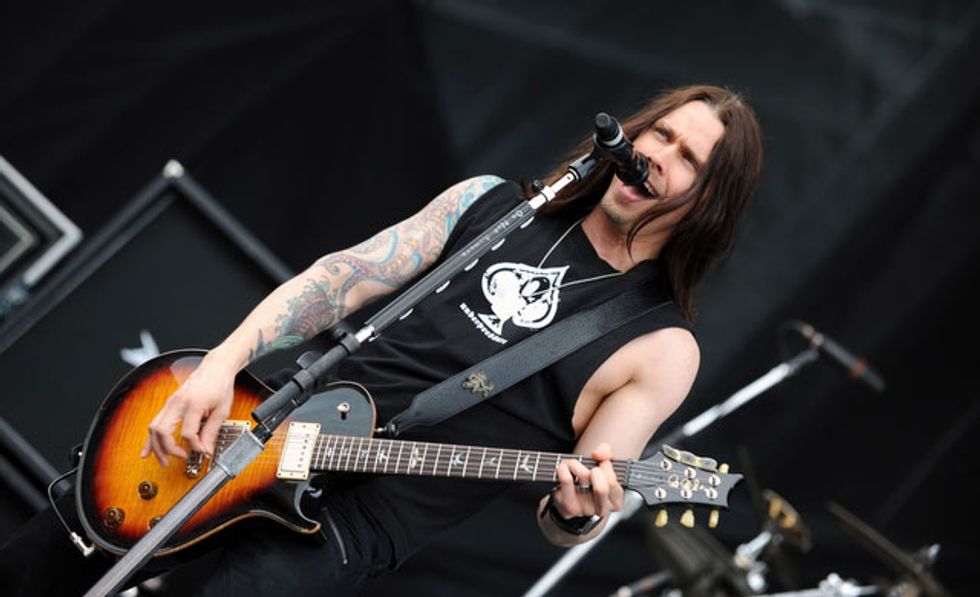
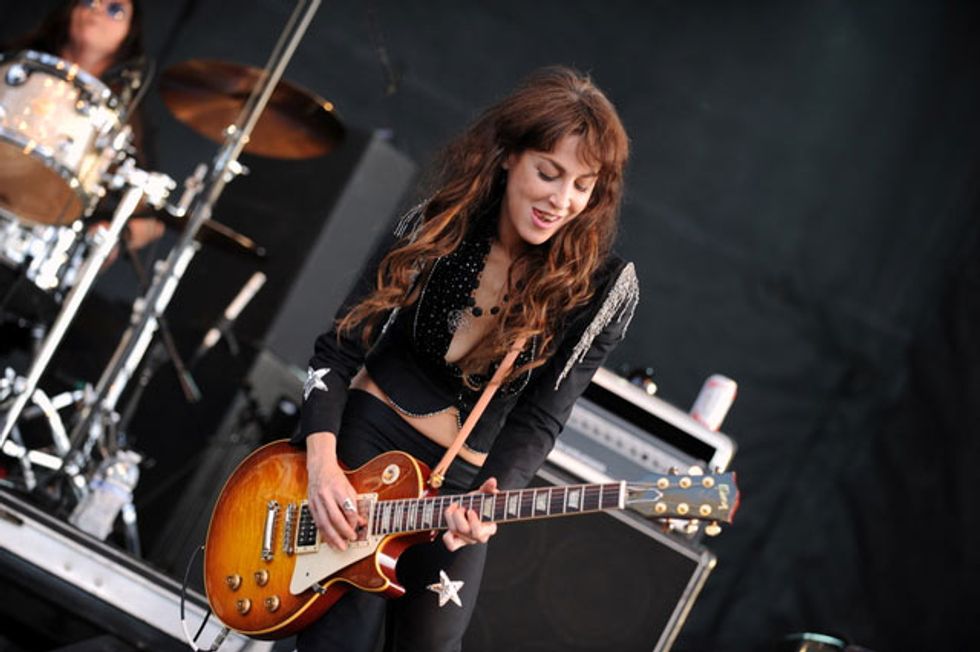
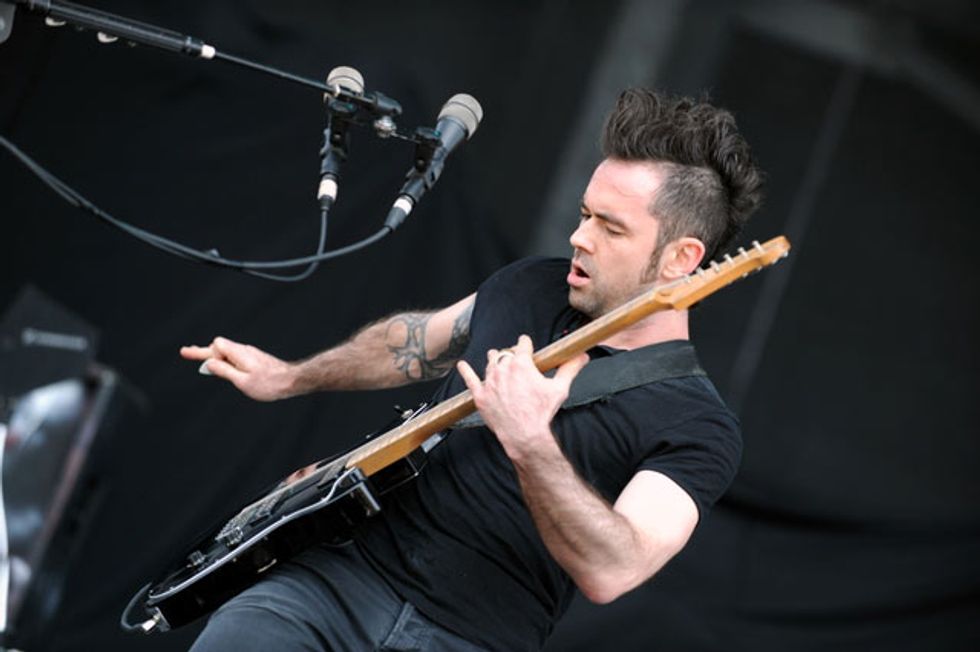
GALLERY: Rock on the Range 2011
See some of today''s biggest rock guitarists and the axes they used for this year''s festival, including Mark Tremonti, Zakk Wylde, Synyster Gates & Zacky Vengeance, and more.
Associate Editor Rich Osweiler started playing guitar at the tender age of 8, but over the years bass has become his main instrument. Prior to joining Premier Guitar, Rich worked at Acoustic Guitar for 10 years as associate publisher and director of marketing. He loves all types of music—from gypsy jazz to lo-fi and grindcore—provided the genre name isn’t preceded by the “contemporary” tag. Outside of music, Rich enjoys travel, skiing, woodworking, coaching baseball, and being a dad. He lives in Marin County with his 10-year-old daughter and their dog, Kiko.
If I’ve progressed as a musician over the past decade, it probably has less to do with learning new things and more with learning to get out of my own head.
Like all of you, I’ve spent a large amount of time on guitar. Copying riffs, learning songs, studying chord voicings, practicing, listening … that all adds up to more time than I’ve spent on anything else. Totally disproportionate, and totally worth it.
Still, despite all the practice, learning, and playing, sometimes I play well, and sometimes I sound like Koko the ape banging on Flea’s bass—only with less confidence. Which reminds me of something Coco Montoya told me while we were filming his Rig Rundown: “Sometimes you get Coco, sometimes you get caca.” Relatable, right?
Strangely enough, the book Zen in the Art of Archery by Eugen Herrigel has made me a better guitar player, and probably a better person. To condense its 112 dry-ish pages: Kyūdō, (from Japanese kyū = bow, dō = way/path), is a traditional Japanese martial art that blends precise archery technique with Zen Buddhist philosophy. It emphasizes mind mastery far more than simply hitting the target—it’s a meditative discipline for cultivating inner calm, focus, self-awareness, and spiritual harmony.
There are obvious parallels to playing music. The archer cannot “think” the arrow into the target, and the player cannot force great phrasing by willpower alone; both have to build a body/mind routine that lets expression emerge naturally. That makes Kyūdō a perfect metaphor for performing: you train the body and quiet the mind, allowing the music to unfold with minimal self-sabotage. It’s not a shortcut, but rather a lifelong discipline of self-cultivation.
A key Kyūdō principle is shin-zen-bi (“truth-goodness-beauty”). It describes shooting with complete sincerity (truth), a centered, positive spirit (goodness), and natural grace (beauty). Executed with pure intention and zero ego, the act itself becomes spiritually resonant—even if the arrow physically misses.
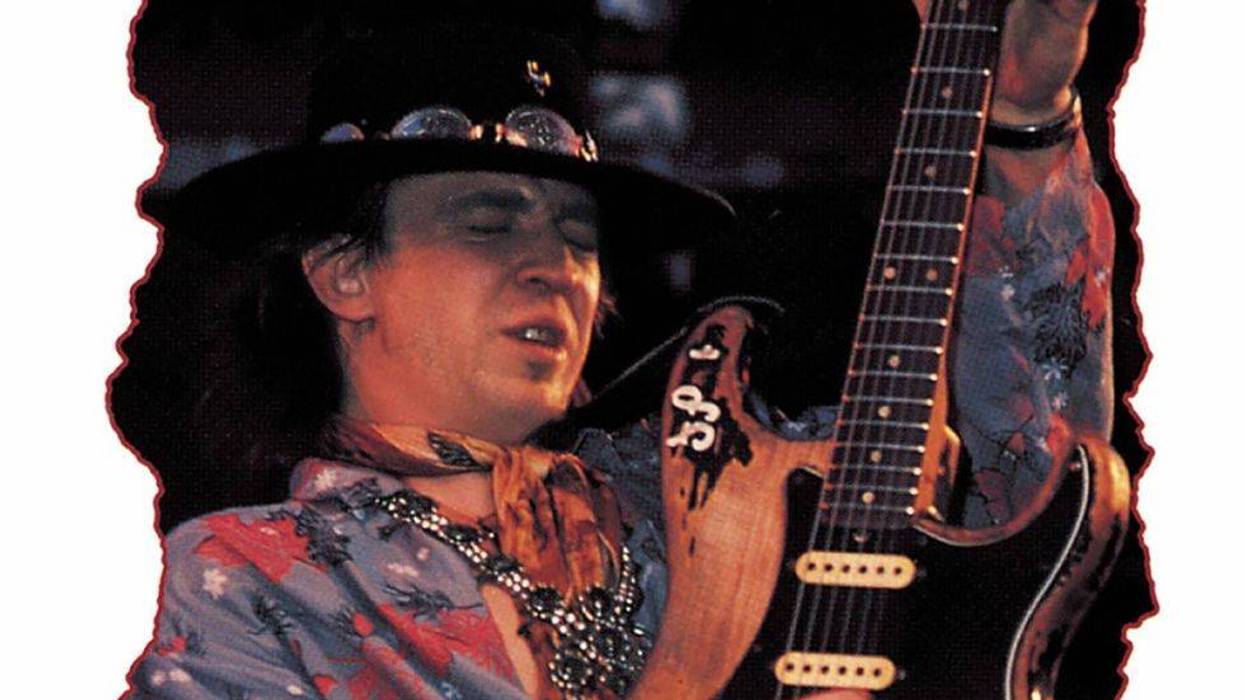
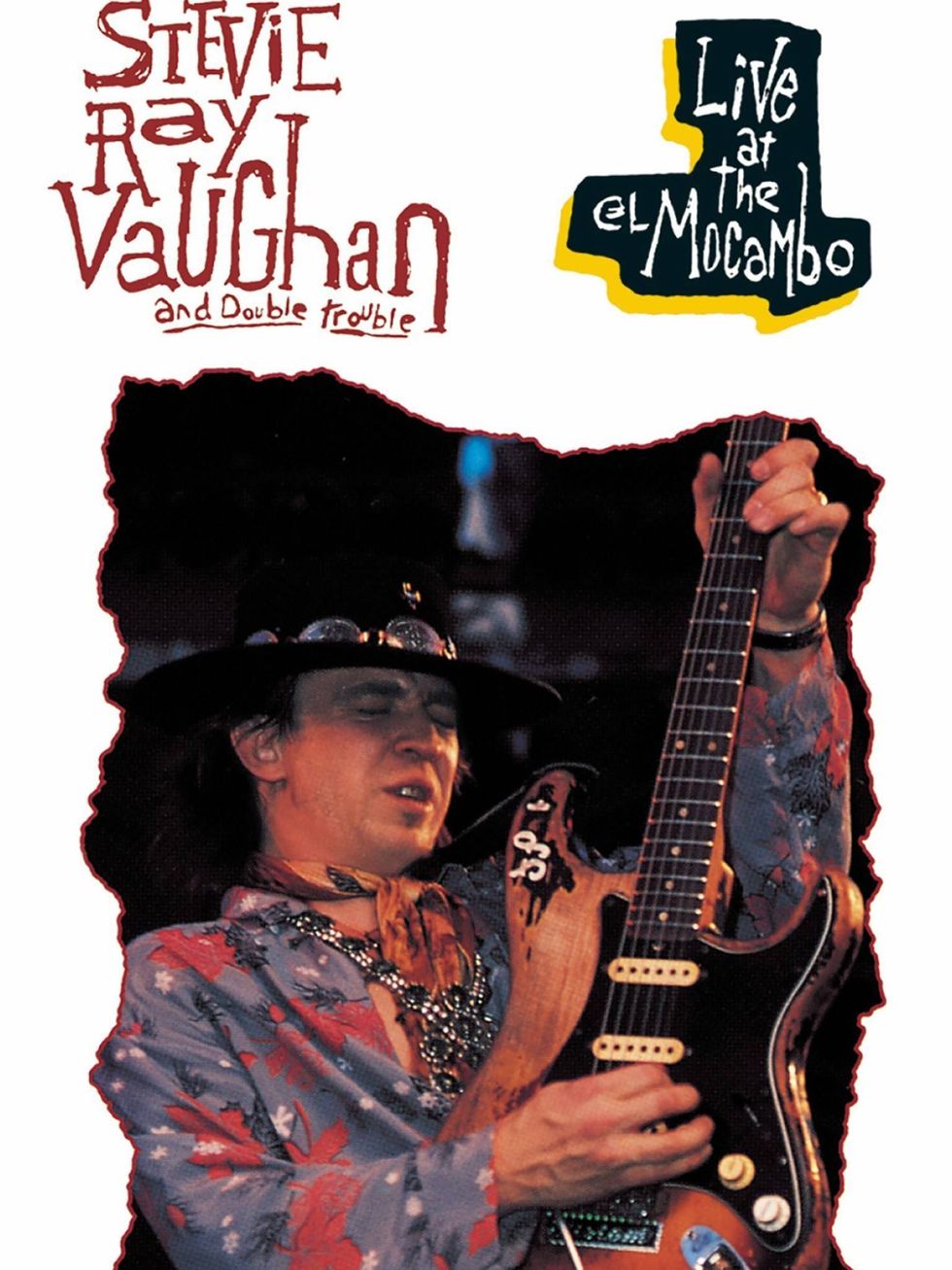
Watch Stevie Ray Vaughan’s performance of “Lenny” from Live at the El Mocambo. SRV sits on the side of the stage, cig dangling, sweat cascading, eyes shut in total immersion. Stevie and his wife Lenora “Lenny” Bailey were intensely intertwined, but their loving relationship was volatile, ultimately undone by their crippling drug problems. Close your eyes during the track and you hear Steive’s working out this intense emotional journey on the battered 1965 Stratocaster that Lenny gave him. It starts like a sweet conversation, then turns into an angry argument, and then returns to that sweet, sad melody—like when your anger runs out of steam and you cry yourself to sleep. That performance is totally shin-zen-bi.
SRV achieves what Zen archers call Mu-shin (“no-mind,” or “empty mind”): A state of complete presence without distraction, attachment, doubt, fear, or overthinking. The archer lets go of the self, becoming one with the bow, arrow, and moment. This allows effortless, intuitive action. When you’re that good, your technique gets so deep it looks like meditation.
Another vital teaching is the paradox of non-striving. True mastery emerges not by forcing the hit but by releasing tension, ego, and over-deliberate aiming. The arrow flies correctly when the mind empties and the body acts naturally. In guitar terms, obsessing over perfection breeds tension and mechanical playing. Great players and great archers alike learn to stop forcing the moment and trust their training. That’s the effortlessness you see in amazing musicians.
Kyūdō encourages letting go of ego. I agree that your ego is not your amigo—however, one could argue that the ego can fuel the drive to push yourself and boundaries. SRV, Hendrix, Van Halen, Les Paul … all were humble, even self-deprecating. But there was a part of each of their personalities that was fueled by having something to prove. This led each to push himself—and also musical boundaries—in order to bring the music to a place it had never been. They played like their lives depended on it. Ego can help drive you, but ultimately, it breeds comparison, self-doubt, and stiffness. In Kyūdō and music, the true target isn’t the external result—the bullseye or the flawless solo—but the internal state: flow, presence, and transcendence. That’s where the deepest rewards lie.
If you know me, you know that beneath my thin facade of a Zen hippie cowboy, I am a dumpster fire of anxiety, self doubt, and overthinking, with a propensity for getting so worked up emotionally that I have trouble breathing. That’s why this has been so beneficial. Now when a performance turns into a trainwreck, I have the tools to undergo a mindfulness check-in, stop focusing on what could go wrong, and try to calm my mind.
It’s not fundamentally about hitting the bullseye; it’s about mastering the mind. Each shot (or each improvised solo) teaches you more about yourself than the target ever could. Strip away distractions, quiet the chatter, and let expression emerge.
The next time you strap on your instrument, think like the archer: train hard, release striving, and trust the process. In both music and Kyūdō, the real target is the state you enter, not just the result you get.
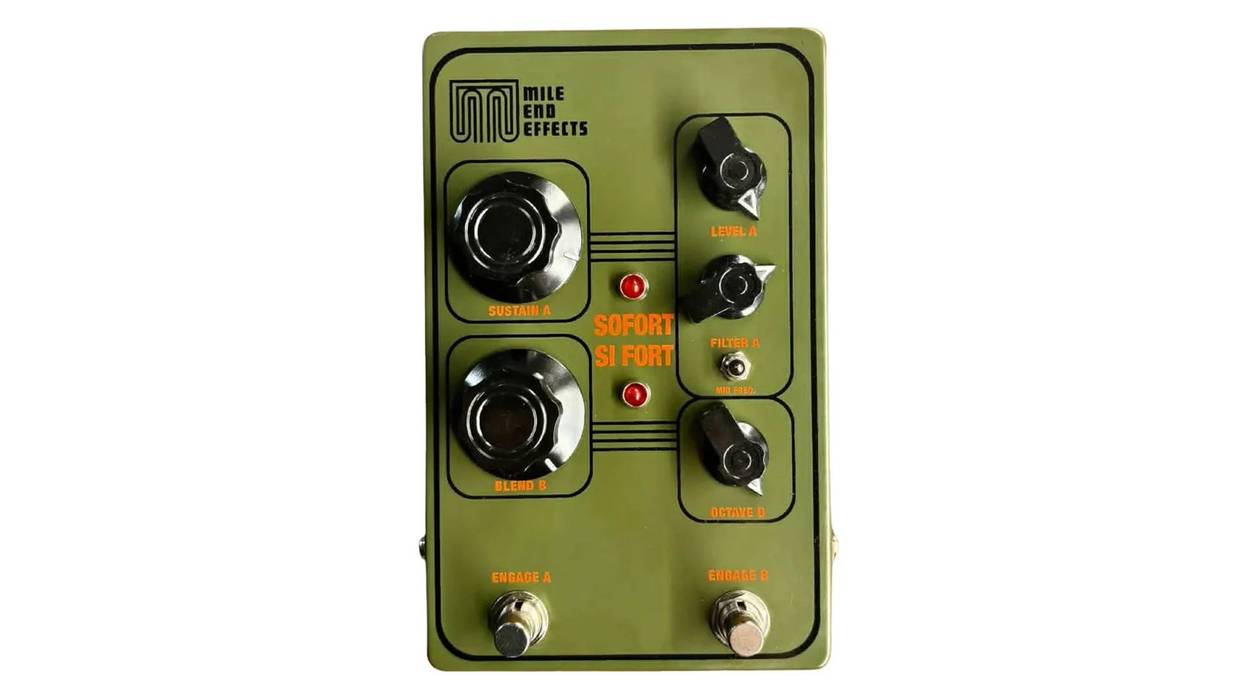
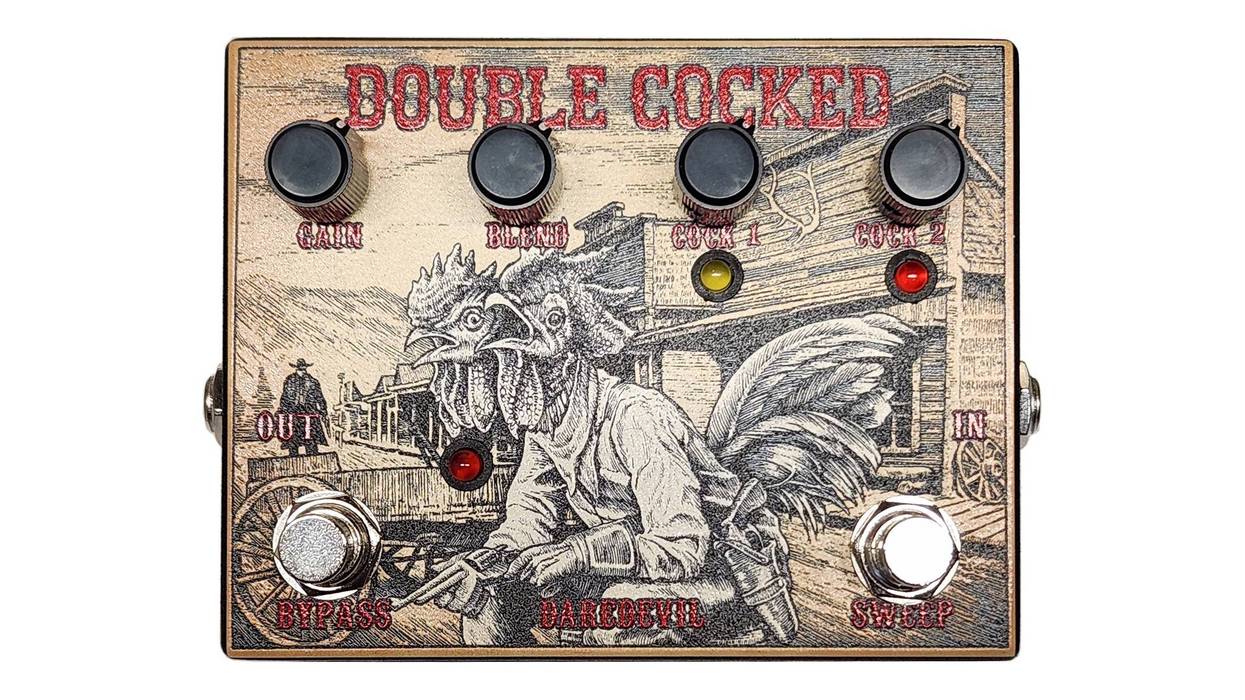
A lot of players spin magic and craft signature tones from a cocked wah. (For those that don’t know, the cocked wah sound is that honking, mid-rangey, filtered tone that you get when you park a wah pedal at a specific angle and leave it there to do its dirty work.) Frank Zappa did it. Mick Ronson did it. So did Michael Schenker. And for the last decade, Matt Pike of High on Fire and Sleep—a man whose entire tone philosophy seems to be “louder, and also weirder”—used various versions of Daredevil’s Atomic Cocked circuit to do that job.
Tucked onto Pike’s board, which is otherwise anchored around crushing sustain and volume that could reasonably be classified as a structural hazard, the new Double Cocked does specialized work. But it’s impressively powerful by itself. The Double Cocked evolved out of Daredevil’s Atomic Cocked, but the functional mission is the same. It’s essentially a wah filter with two fixed, foot-switchable filters. Each filter sweeps a wah-like frequency range and can be set anywhere along that curve. So, you get two cocked-wah personalities, living in one pedal, ready to alternate between traditional rhythm and lead voices—or much less conventional combinations—all without crouching down to twist a knob mid-riff or searching through the sweep of a wah.
Food for Filters
Were the Double Cocked simply two filters, the pedal would be tons of fun. But here, the filters feed into a gain stage that adds dirt and a genuinely useful boost for solos. A FET boost follower does additional post-filter heavy lifting, which makes the Double Cocked plenty powerful without any assist from fuzz, distortion, or a giant stack. A blend knob at the center lets you dial in exactly how much filtered wah signal gets folded into that boosted output, which can be anything from a subtle EQ nudge to what Daredevil describes (quite accurately) as fully saturated Ronson, Schenker, or Slayer-adjacent territory. It may sound simple, but the Double Cocked adds real character and range. You can use it to add subtle peakiness to a solo, or to sound like you’re actively trying to injure your amplifier.
“You can use it to add subtle peakiness to a solo, or to sound like you’re actively trying to injure your amplifier.”
In the most practical terms, the thing that separates a fixed-filter from a regular wah is control. There’s no rocking, potentially floppy pedal to manage. Nor is there the risk of your foot drifting off the sweet spot mid-song. You dial in your voicing once, then just stomp to engage. For riff-heavy, drop-tuned, high-gain playing—Matt Pike’s whole world, basically—that’s a real advantage. But it’s an asset in traditional verse-solo rock environments, too. You can set up a rhythm/verse tone with a unique, musical mid-forward texture that cuts, and have instant access to a second flavor for solos—no scrambling required. As you can imagine, the possible filter combinations and contrasts can be much stranger, too. Incidentally, each unit is signed, numbered, and dated by Pike himself—a nice touch that transforms the pedal into a piece of memorabilia with a very practical purpose.
The Verdict
Though you have to be open to the possibilities of filter sounds to hear the potential of the Double Cocked, it can be full of surprises. It doesn’t exactly chase maximum versatility. And it’s definitely a tool built for a very specific job, and a musician with very particular tastes. But it does that job with real character, and impressive, unexpected musical range. This pedal could live and prosper in musical environments well outside those associated with Matt Pike’s heaviness. But if your tastes, and your rig, are optimized for sludge, doom, or stoner-rock realms—or even just old-school hard rock with a mean streak—this pedal will feel like it was built with you in mind. Because, frankly, it was.
Ashdown has announced that the company’s products will be exclusively available across the USA through Guitar Center and Musician’s Friend. The new distribution arrangement marks a watershed for the British company as it aims to build a larger following in America.
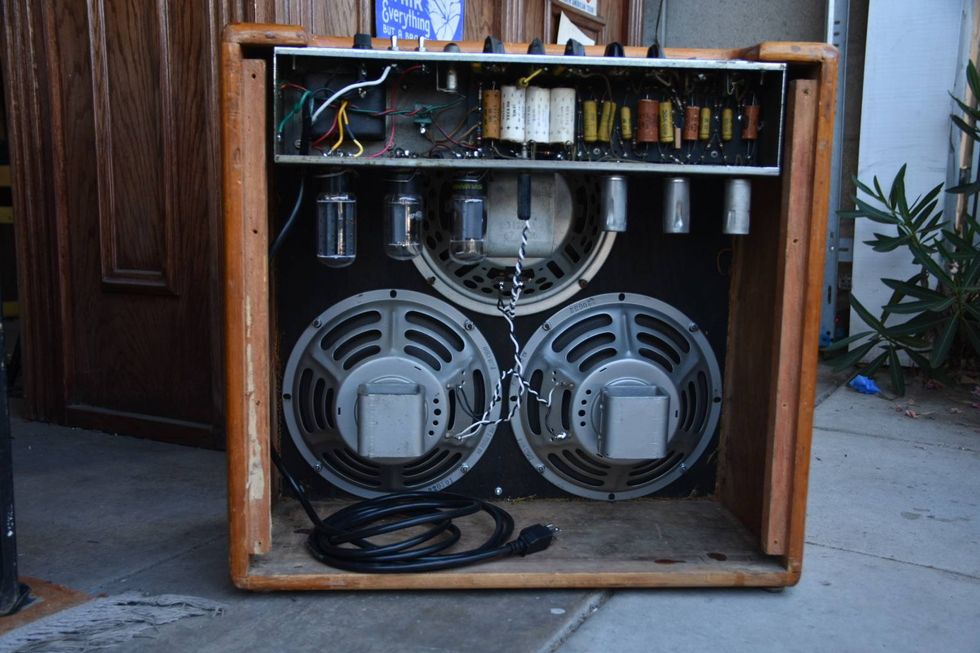
I’m always thrilled to see a tweed Fender amp come across my bench. During the tweed era, Fender was producing some of their most dynamic amplifiers, which are still heavily sought after today. Most of the time, I have the pleasure of working on the more common tweed Champs and Deluxes. This month, I was lucky to have a rarer 1958 tweed Bandmaster on the bench for a full restoration.
The Bandmaster was introduced in 1953 as the 5C7. This was during the “wide panel” cabinet era, which quickly shifted to the narrow panel cabinets a few years later. The wide panel 5C7 housed one 15" speaker, while the 5E7 narrow panel Bandmaster housed a total of three 10" speakers. The amp pumps out roughly 25-30 watts of power, and with a ton of natural distortion through the trio of speakers, this amp is one of the more unique of the Fender tweeds.
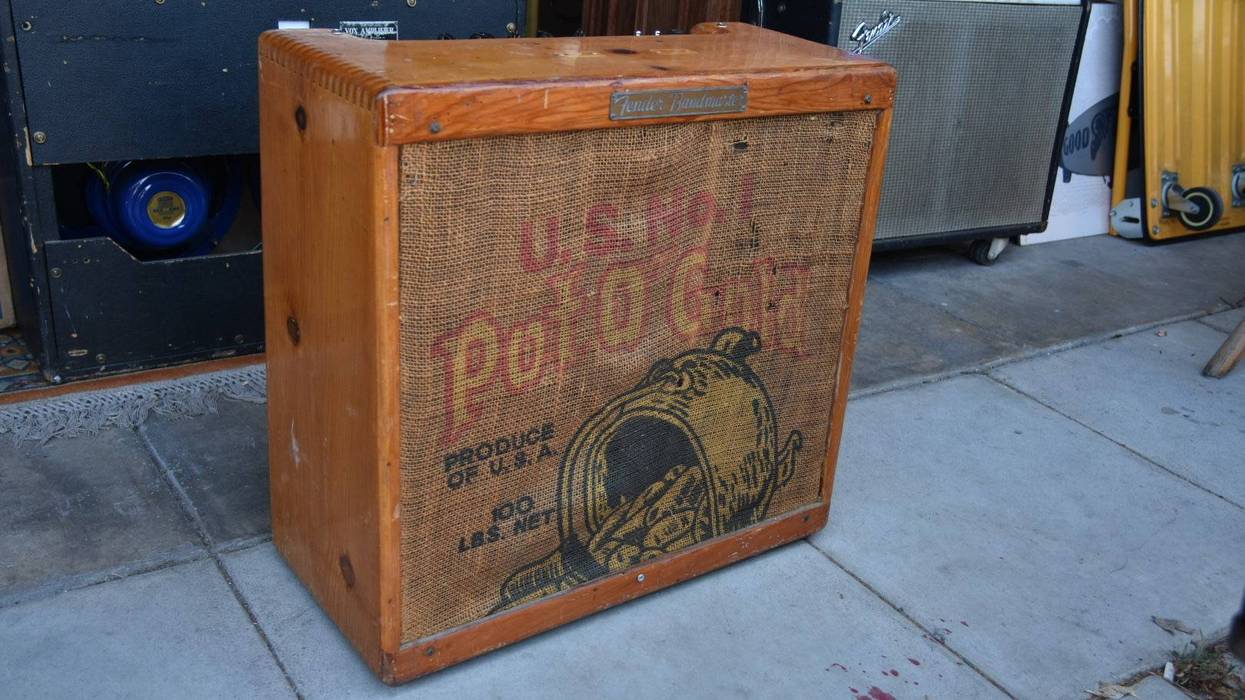
The Bandmaster was brought into the shop by a father who wanted to restore the amp for his daughter to use. Aesthetically, this amp is one of a kind. The cabinet had been previously stripped of its tweed, and now sports a beautiful exposed wood finish. The grill cloth had been replaced with an old burlap “Pot O Gold” potato sack, which gives the amp some very unique character.
The circuitry in this amp had been mostly untouched. Exposure to the elements left the chassis very dirty, with many broken wires and cracked solder joints. I knew that I would be replacing all of the electrolytic capacitors, which is necessary for an amp of this age. With tweed amps, I like to install the new capacitors inside the old cardboard covers to preserve the original aesthetics. There is nothing like removing the back panel of a tweed amp and seeing those ’50s-era colors and textures.
“This Bandmaster simply oozes soul, and zaps life into the guitar.”
With this amp, it was very important for me to clean out the chassis. So much dust and debris was covering the circuitry and tube sockets, which could certainly cause some safety or overheating issues. With the large electrolytics out of the way, I was able to really get in there and remove as much dirt as possible. This is where the air compressor and shop vac come in handy! Once the chassis was clean, I went through and re-soldered every connection. The fresh, shiny solder joints will help the amp function more reliably than with the dull, cracking joints.
After this first round of work, I installed a grounded 3-prong power cable. The amp was now safe to actually turn on and test. Immediately, I noticed the power and standby switches were sticking and needed to be replaced. I installed new toggle switches and the amp fired right up. Once I confirmed that everything was working properly, I let the amp run for a while to listen for any noise issues. Miraculously, I did not hear any pops, crackles, or hum, which means the restoration is almost complete!
The final circuit check comes down to the coupling capacitors. In this amp, we have beautiful yellow Astron capacitors with green writing. All of these capacitors are original, and in order to leave them all in, I need to make sure they’re still healthy. Some of these capacitors are part of the tone stack, which shapes the guitar signal by blocking or passing specific frequencies. The other coupling capacitors pass the guitar signal from one gain stage to the other. Often these capacitors connect to the plates of the preamp tubes, where signal from one stage has just been amplified. There is a high DC voltage applied to the plates of the preamp tubes, which is necessary to power the tube. We don’t, however, want that high voltage to travel through the coupling capacitor and into the rest of the signal path.
I go through the schematic and check any coupling capacitor that connects to a high voltage point. I confirm the high DC voltage on one side of the cap with my multimeter, and then check the DC voltage on the other side. The goal is to see close to 0 VDC, but sometimes the capacitors will break down and begin to leak the DC voltage into that signal path. If I see more than 1 or 2 volts on the other side of that cap, I may opt to replace it. Sometimes that leaked voltage will cause noise or scratchy controls. In the case of the potato sack amp, I was able to leave all of those yellow Astrons original.
This amp sounded so sweet. I had never played through a tweed Bandmaster before, so this was a treat for me. There was so much natural growl and lively touch response, but without being too loud. There’s no surprise that this amp was favored by guitar players such as Joe Walsh and Pete Townsend. This Bandmaster simply oozes soul, and zaps life into the guitar.
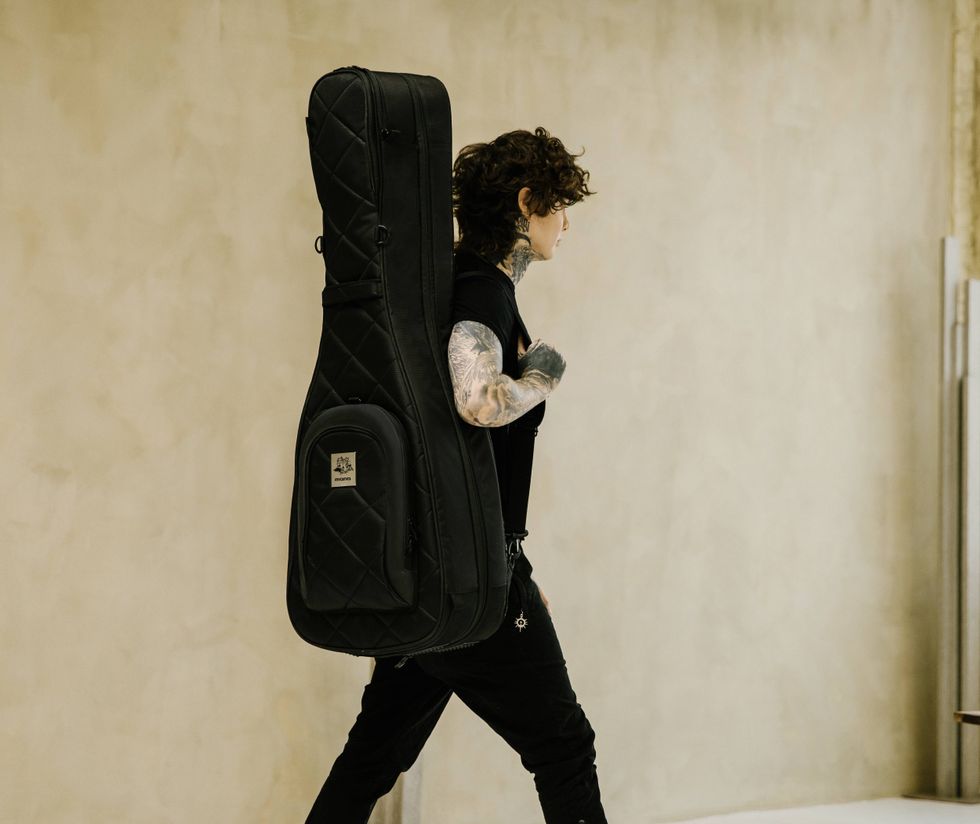
MONO has introduced the MONO x Tim Henson M80 Limited-Edition Classic Dual Electric Guitar Case, marking MONO’s first-ever artist collaboration.
Designed in collaboration with Polyphia guitarist and virtuoso Tim Henson, the limited-edition case brings together MONO’s design-led philosophy with Henson’s creative perspective. Developed over months of prototyping, from initial concepts to the final build, it reflects a shared commitment to purposeful design and uncompromising functionality.
MONO x Tim Henson M80 Classic Dual Electric Guitar Case features include:
Built on MONO's patented dual protection design, the case safely carries two guitars within a single streamlined profile.
A distinctive square-patterned front panel is paired with a custom off-white plush interior for a refined visual statement.
A specially incorporated front handle provides greater control and versatility when carrying the case.
A custom Polyphia metal badge adds a signature detail unique to the collaboration.
Durable, water-resistant Sharkskin™ exterior provides reliable protection for travel and touring.
A reinforced steel-riveted webbing handle offers lasting strength, comfort and durability.
MONO’s patented Headlock® neck suspension system securely supports and protects both instruments while in transit.
Beyond his distinctive approach to guitar, Henson has a deep appreciation for design and aesthetics, making him a natural collaborator for MONO. A longtime MONO user alongside his band Polyphia, he has relied on MONO gear throughout his career, making this collaboration a meeting of MONO's industry-leading approach to instrument protection and one of the most innovative guitarists of his generation.
Launching alongside Polyphia’s latest single, “Power in the Blood”, the campaign follows a day in the life of Henson, carrying his Ibanez nylon-string and electric guitars in the MONO x Tim Henson M80 Classic Dual Guitar Case. Henson shares why he partnered with MONO to create his signature case, the thinking behind the features he selected, and how his creative vision shaped the final product.
"I’ve been using MONO gear for years, so I’m very happy to have gotten the opportunity to make my own version of the M80 Classic Dual,“ said Tim Henson. “I’m constantly switching between my electric and nylon-string signature guitars, so having one case that carries both and looks exactly the way I want it to is perfect."
The MONO x Tim Henson M80 Classic Dual Electric Guitar Case carries a street price of US $399.99. To learn more visit: timhenson.monocreators.com.