Ahead of Hayley Williams’ recent solo show at the Ryman Auditorium, PG’s Chris Kies linked up with bassist Joey Howard and guitarists Bryan Robert Jones and Logan MacKenzie (also of Paramore). Check out what gear they’re using to back up Williams in this new Rig Rundown. Brought to you by D’Addario.
GoldFender
This all-original 1981 Fender Jazz bass is used for songs where Howard plays fingerstyle.
Pick it Up
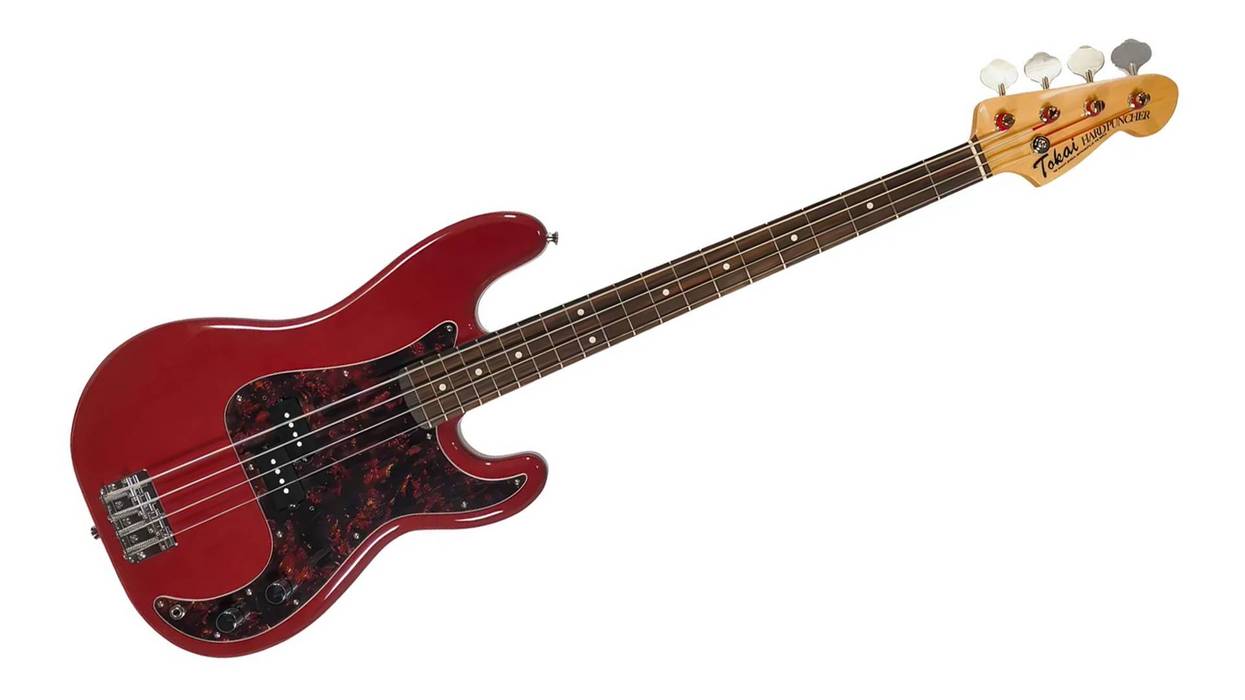
This Japan-made Fender P bass reissue comes out for heavier tunes, when Howard uses a pick.
Here Comes the Sunn
Howard’s stage sound comes from a pair of 1969 Sunn 2000S heads, paired with a 2x15″ speaker cabinet.
Joey Howard’s Pedalboard
Howard’s bass board includes a Sonic Research Turbo Tuner ST-300, Origin Effects DCX Bass, a trio of Nobels ODR-B Bass Overdrives, Pro Co Lil’ RAT, Darkglass Harmonic Booster Clean Bass Preamp, DOD FX65, Origin Effects Cali76, Maxon D&S, and Noble Vacuum Tube Preamp and DI Box; a Voodoo Labs Pedal Power 2 Plus supplies the juice.
Pucker Up
This modded Stratocaster, fitted with lipstick-style pickups, is Jones’ main workhorse.
Pancho and Lefty
<p>Jones’ duo of Peavey Bandits are mostly on hand to complete the look, and for a bit of stage volume. His main sound comes from a <a href="https://www.uaudio.com/" target="_blank">Universal Audio</a> Enigmatic ’82 Special Overdrive pedal.</p>
Brian Robert Jones’ Pedalboard
Jones’ board includes a Boss TU-3, Ernie Ball VPJR. Tuner, Fulltone OCD, Jason Moser Ten Years (is a Decade), R2R Electric fuzz, Boss TR-2, Ibanez BC-9, Line 6 DL-4, MXR Micro Amp, Keeley Compressor, Boss OC-3, Electro-Harmonix POG2, Malekko Vibrato, Universal Audio Golden Reverberator, and Boss RV-5.
Crushing Crestwood
MacKenzie acquired this Epiphone Crestwood in Nashville in 2017, and while he’s had to treat it to a refret and have the neck reset, he still loves bringing it out on the road.
British Blues
Mackenzie plays through Vox AC30s stocked with Celestion Alnico Blue speakers, a combo that provides him with a malleable pedal platform.
Logan MacKenzie’s Pedalboard
MacKenzie’s board is controlled with an RJM Technology Mastermind PBC, which handles all the pedals you see here: a Chase Bliss Automatone Preamp MkII and CXM 1978, Diamond Comp/EQ, Echo Fix EF-P3, JHS Colour Box, Asheville Music Tools AFG-1, Eventide H9, Strymon TimeLine, TC Electronic PolyTune 3, Aion FX Flare Fuzz Machine, Boss DC-2, and Empress Buffer. A Strymon Ojai and Zuma power the board.
John Bohlinger puts the 3Bender SteelMaster through its paces on bass, a high-string, and an offset. This palm-bending device installs in minutes with no routing, plays nice with your whammy bar, and covers everything from ambient textures to pedal-steel country licks.
3Bender
SteelMaster
The SteelMaster™️ is a new string bender design that can be mounted to a JM Offset style guitar vibrato without the need for drilling any new mounting holes. It can be used on any string to add a smooth and in tune glissando to the music. The bender levers can also be stacked to move chord voicings by bending notes a half tone or full tone.
If you are searching for a no rout/no drill string bending option for your Stoptail G style guitar, reach out at info@3Bender.com. We may have a solution for you and the website is not updated just yet.
Gibson's 100th anniversary is the occasion for a contemporary twist on a flattop beloved by Dylan, fingerstylists, and country blues pickers.
The Gibson L-00 was developed in the early 1930s and has been an industry standard small-bodied guitar for decades. These smaller Gibsons deliver a tonality that is best described in Gibson’s 1934 catalog as a sound of “perfect balance.” The smaller-bodied L-Series guitars, often referred to as parlor guitars since they were frequently played in living/sitting rooms or “parlors” of homes, have remained popular ever since.
Gibson
L-00 Century 12-Fret
The Gibson Century Collection is the company’s love letter to 100 years of flat-top guitar building, and this L-00 Century 12-Fret represents one of the design's earliest renderings. Maintaining its original spruce-topped mahogany tone and iconic parlor-bodied punch made famous by countless blues players throughout history, this L-00’s song is a timeless treasure that fingerstyle players will adore. Its unique 12-frets-to-the-body design channels the layouts of the earliest L-00s, shaped with a dedicated SlimTaper 12-Fret neck profile and sleek rosewood fingerboard for enhanced command that today's players will appreciate. From head to toe, the L-00 Century 12-Fret exudes classic ’30s style with a vintage pickguard, a double-bound body, Golden Age tuners, a sloped-rectangle closed-slot rosewood bridge, and a historic Gibson script logo on the headstock. The cherry on top is a Century Collection tweed hardshell case, allowing you to carry the L-00 Century 12-Fret with a matching charm and to let everyone know that you roll old-school!
The Gibson L-00 was developed in the early 1930s and has been an industry standard small-bodied guitar for decades. These smaller Gibsons deliver a tonality that is best described in Gibson’s 1934 catalog as a sound of “perfect balance.” The smaller-bodied L-Series guitars, often referred to as parlor guitars since they were frequently played in living/sitting rooms or “parlors” of homes, have remained popular ever since.
Now, Gibson is proud to introduce a new version of this legendary model: the L-00 Century 12-Fret. It retains many of the classic features that players love about the modern L-00, but features a 12-fret neck-to-body joint instead of the standard 14-fret joint. Why is this important? With a 12-fret neck joint, the neck is shorter and the position of the bridge plate is relocated, which places it further from the body’s waist and closer to the center of the widest area of the body, where it can drive the top more efficiently, making the guitar more comfortable to hold and play and resulting in a tone that is warm, punchy, and resonant and that responds ideally to the dynamics of fingerstyle players and players with a lighter picking attack.
While this is not the first L-00 to feature a 12-fret neck, such models have previously been limited to the earliest vintage L-00 flat-top models from the early 1930s and occasional limited-run models, making them relatively rare compared to their 14-fret cousins and harder to find. Now, the rich tone of a parlor guitar with a 12-fret neck is available to all in the form of the Gibson L-00 Century 12-Fret. Part of the new Century Collection celebrating 100 Years of Gibson Flat-Tops, it features a mahogany body with a Sitka spruce top, with single ply cream top and back binding outlining the body’s perimeter.
The mahogany neck has an easy-playing SlimTaper 12-Fret profile and attaches to the body at the 12th fret with a compound dovetail neck-to-body joint, fastened with hot hide glue, just like all Gibson acoustic models. The rosewood fretboard is equipped with 19 standard frets and adorned with simple mother-of-pearl dot inlays.
The headstock is outfitted with open-back Golden Age strap tuners with cream buttons and features an early-1900s Gibson script logo decal for a vintage-inspired touch. Another vintage-inspired detail is the sloped rectangle closed-slot rosewood bridge. The nut and saddle of the L-00 Century 12-Fret are bone, while the bridge pins are TUSQ. The L-00 Century 12-Fret has a classic Gibson L-00-style pickguard and features a hand-sprayed satin nitrocellulose lacquer finish.
It comes packed in a premium Century Collection tweed hardshell case and is available in both right and left-handed versions. Pick up a L-00 Century 12-Fret today and experience the sweet tone of a 12-fret neck Gibson parlor acoustic for yourself.
Known for his shredding ways, Paul Gilbert shows PG host John Bohlinger his robust musical vocabulary that hinges on hummable melodies and creative chord progressions. Oh, and then there's the whole thing where he wrote his latest album, WROC,around George Washington’s Rules of Civility and Decent Behaviour In Company and Conversation. Another impressive attribbute of Gilbert's is impeccable music intellect recall for songs and lyrics. He claims to have stolen most of what he knows and plays, but we think that's just humility. Enjoy the conversation, camaraderie, and jams with PG and JB!
Jared James Nichols has a few calling cards: his mane of total-rockstar hair, his giant steel-toed boots, and his sweet, stinging Gibson-plus-Marshall shredding. He just released his latest record, Louder than Fate, which landed him on the cover of Premier Guitar’s June issue.
PG’s Chris Kies met up with Nichols at Gym 5 in Nashville to get a look at his revamped, pared-down rig, based around a classic recipe: Gibson guitars, Marshall stacks, and a couple of stomps to push those elements to the edge.
These four electrics are Nichols’ mainstays. The 2025 Gibson Futura, second from the right, has been modded with Seymour Duncan Antiquity pickups and a custom black pickguard. To its left sits a 1952 Les Paul nicknamed “Dorothy,” Nichols’ favorite axe, which has survived a tornado and will be with him for life.
Also on the roster are Nichols’ signature Epiphone “Blues Power” Les Paul Custom (far left), with a Seymour Duncan Silencer JJN P-90B that gets rid of hum, and a Gibson Made to Measure Les Paul (far right), with a Custom Bucker and another Silencer JJN P-90B, intended to recreate Nichols’ ’54 Les Paul nicknamed “Old Red.”
Nichols uses DR Strings Veritas sets (.010–.049).
Stacks on Stacks
Nichols runs two Marshall 1959 modified heads through Marshall 1960 4x12 cabs, with Celestion GT-75 speakers. One is set for higher treble response, and the other favors bass presence.
Jared James Nichols’ Pedalboard
Nichols’ stomp setup is simple as can be: Along with a Klon Centaur and an Ibanez TS808 Tube Screamer, he carries a Seymour Duncan Pickup Booster Mini, a TC Electronic PolyTune 3, and a Whirlwind Selector A/B Box to switch between amp heads.