


I hate to be the bearer of bad news, but we all missed out on a phenomenal bargain. Just a few weeks ago, Larry Cragg (a vintage amp and guitar expert, and Neil Young’s longtime tech) sold a 1963 D-28 for $396,000. Man, you’ve got to jump on those eBay bargains as soon as they’re posted!
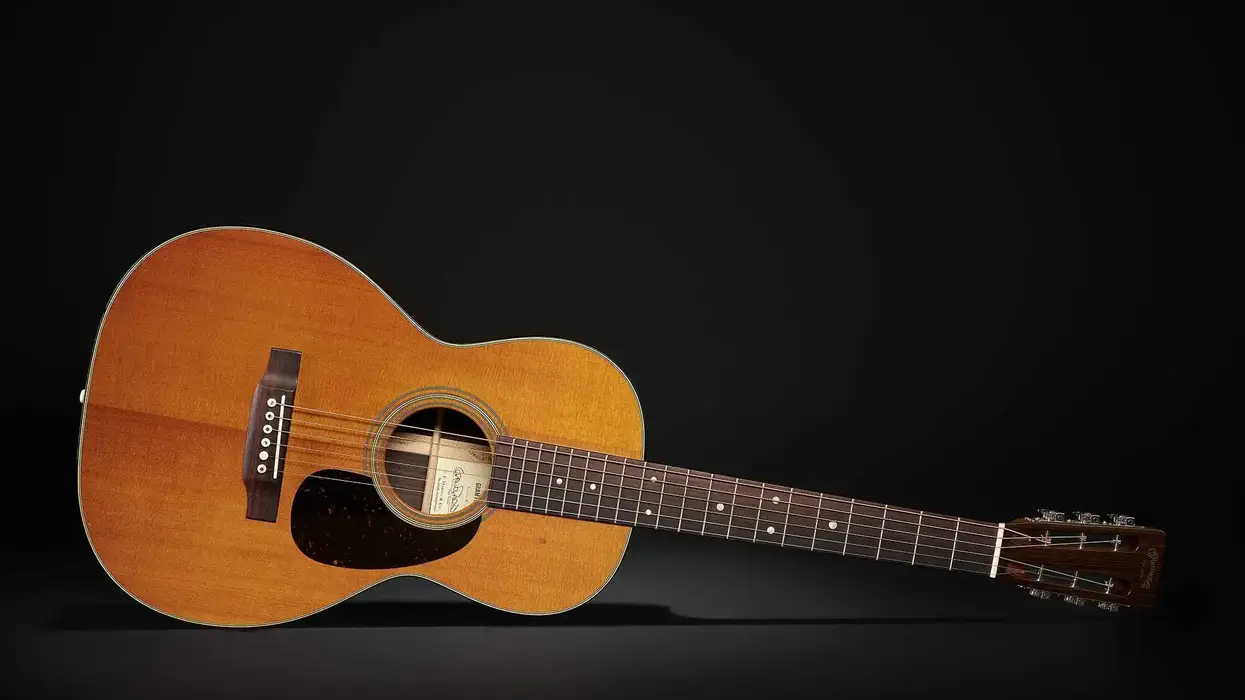
This particular instrument is the one Bob Dylan played at George Harrison’s 1971 Bangladesh benefit concert. Cragg bought it 40 years ago for $500, so he made just short of an 80,000 percent profit. Chances are you won’t see a similar return from a new D-28. But at least you’ll get a damn fine guitar.
An American Classic
Guitars don’t get much more iconic than the D-28. Past users include Hank Williams, Johnny Cash, the Beatles, and that Canadian guy that Cragg works for. So reviewing a D-28 feels a little bit like rating the Statue of Liberty. (“She’s okay, I guess, but what’s with the weird hat?”)
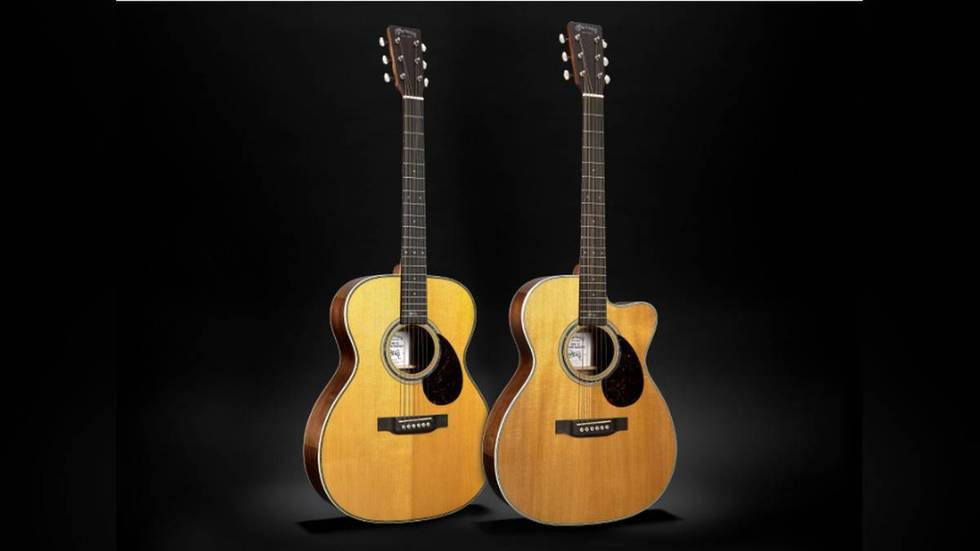
But not all D-28s are identical. The 1950s and ’60s models used by so many of the era’s country, folk, and rock artists differ from pre-WWII models. And now, the D-28 (2017) blends details from both pre- and post-War models, while introducing a couple of modern updates. (And yes, the parenthetical 2017 is part of the model name.)
Echoes of the Past
The 2017’s cosmetics mimic an old guitar. The lacquer finish has added toner to ape the appearance of aged nitrocellulose. Similarly, the back and top binding has a yellowed faux-antique look. The celluloid pickguard does a convincing impersonation of tortoise shell. The open-backed tuners are another nice retro touch. Mind you, we’re not talking vulgar “antiquing”—it’s a subtle and classy look.
Another historic detail is more structural: The bracing pattern is 3/4" closer to the neck than on models from recent decades. (This “forward shifted” design was introduced in the ’40s, but abandoned in the early ’60s.) According to Martin’s Scott Follweiler, “This forward-shifting alters the harmonic profile by losing a bit of fundamental focus of the X-brace protecting the bridge area. Moving it further away from the bridge adds some sonic complexity.” (More on this in a moment.)
Tapered for Today
The other key revision is a new neck profile. The width at the nut is 1 3/4", as opposed to 1 11/16" on standard-model D-28s. That extra 1/16" might not sound like a big deal, but you can definitely feel it. It’s the same width as on Martin’s OM models, which are favored by many fingerstyle players. Also, the neck’s taper is slightly more parallel than on a standard D-28, so the neck is a bit less flared near the top of the fretboard. Players who tend to cover the neck’s entire range are likely to dig this modified profile.
Beautiful Build
The workmanship on current Martin guitars is so consistently excellent that it’s almost boring to discuss. The binding around the guitar’s perimeter is immaculate, as is the inlaid back stripe. The low, narrow frets are installed with uniform perfection. The grain of the Sitka spruce top and East Indian rosewood back and sides is even and attractive. The bone nut is perfect. The review model played magnificently right out of the case. Total snooze fest, right?
Ratings
Pros:Excellent materials and workmanship. Magnificent tones. Equally great for picking and plucking. A fine recording guitar.
Cons:
None.
Tones:

Playability:
Build/Design:
Value:


Street:
$2,629

Martin D-28 (2017)
martinguitar.com
So let’s talk tone. For decades, I’ve been one of those players who prefer smaller 0-series guitars for recording work—especially anything involving bass and drums. Those guitars tend to have less low-range boominess than large-bodied instruments, making them easier to insinuate into a mix without intrusive EQ.
But a few hours recording this D-28 made me question those assumptions. Sure, it has more bass impact than smaller guitars. But the 2017’s low end is sculpted like a gym rat’s torso. Nothing floppy, nothing sloppy—it's firm in all the right places.
Nature’s Squeeze
That low-end focus owes much to the guitar’s remarkable natural compression. I mean that literally—at times it feels as if you’re plugged into a high-end compressor/limiter. The dynamic range is phenomenal. You can wail on the 2017 without overwhelming any specific frequency. This is truly a whisper-to-scream instrument. You won’t find many flattops with greater touch sensitivity.
I can’t claim to hear massive tonal differences due to the forward-shifted bracing. There are so many other variables on a factory-fresh guitar with bright new bronze strings! But I can attest that the 2017’s animated and complex highs are glorious.
The guitar is also extraordinarily comfortable. The string spacing is ideal for fingerstyle playing, but bashing out cowboy chords with a pick feels and sounds just as good. Plucked or strummed, the guitar boasts crystalline note definition and excellent string-to-string separation. Despite the low action, it’s damn hard to make the strings buzz if you have even semi-decent technique. The neck’s matte finish strikes a cool compromise between traction and mobility. Are there any dead spots or imbalances between registers? Of course not—don’t be silly.
The Verdict
D-28 (2017) is a superb-sounding instrument with taut, sculpted lows and complex, glistening highs. Its dynamic range and response are extraordinary. Lively harmonic animation and gorgeous natural compression make it a fine recording guitar—microphones love this thing. The price is fair, given the workmanship, materials, and stellar tones. I can’t say that this modified D-28 sounds “better” than Martin’s identically priced standard model. Any differences are matters of taste, not quality. I recommend auditioning both, trusting your ears, hands, and heart.