Rebecca Dirks graduated from the University of Iowa with degrees in journalism and art, and joined Premier Guitar as an intern in 2007. She lives in the Iowa City area with her husband, two giant dogs, and more cats than are appropriate to mention. When not petsitting, she enjoys challenging herself in the kitchen, watching the Packers dominate, and discovering new music or rediscovering old favorites.
Chris Kies has degrees in Journalism and History from the University of Iowa and has been with PG dating back to his days as an intern in 2007. He's now the multimedia manager maintaining the website and social media accounts, coordinating Rig Rundown shoots (also hosting and/or filming them) and occasionally writing an artist feature. Other than that, he enjoys non-guitar-related hobbies.
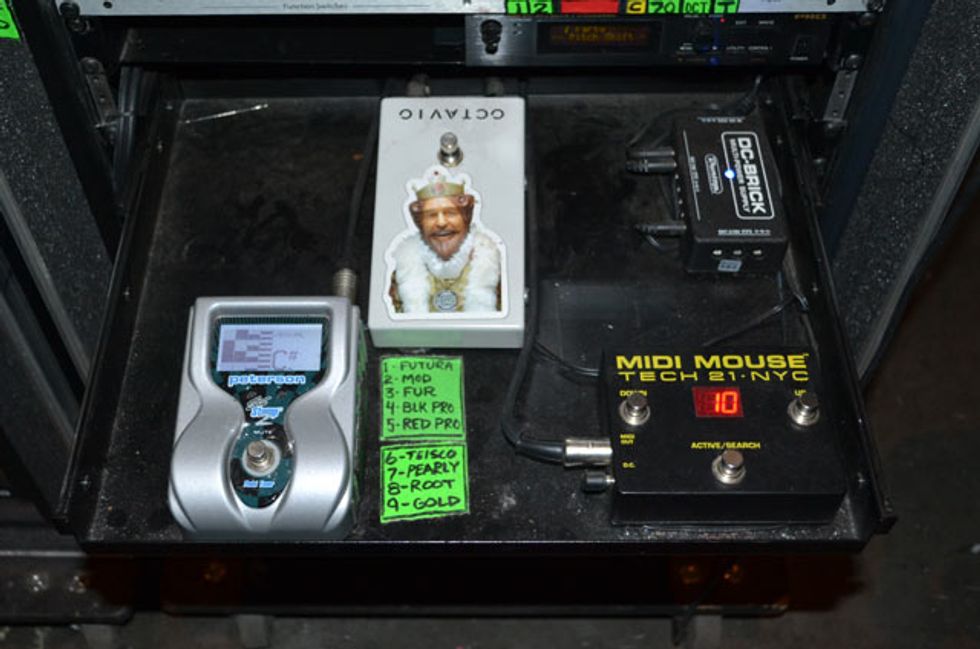
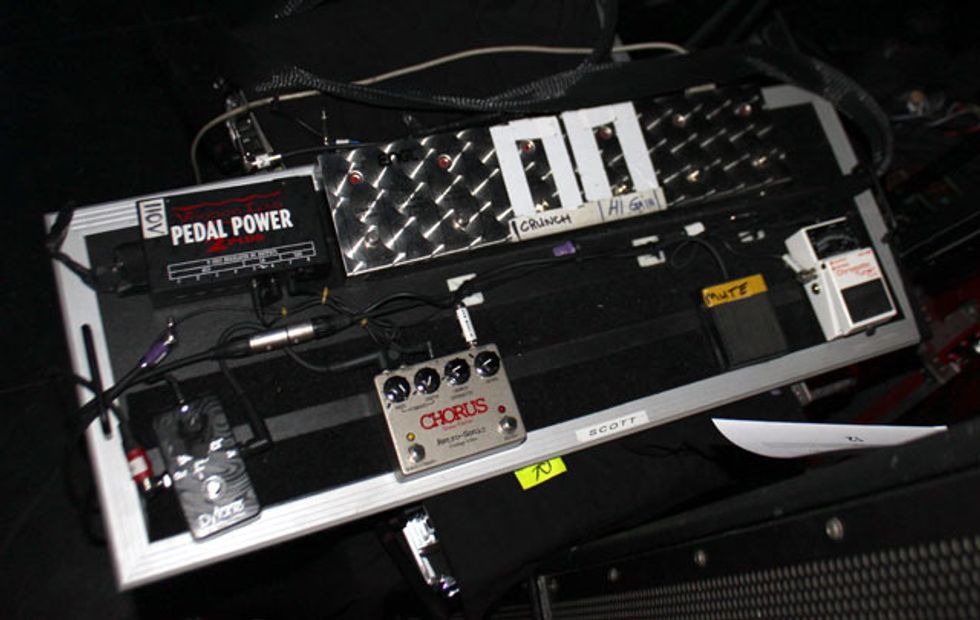
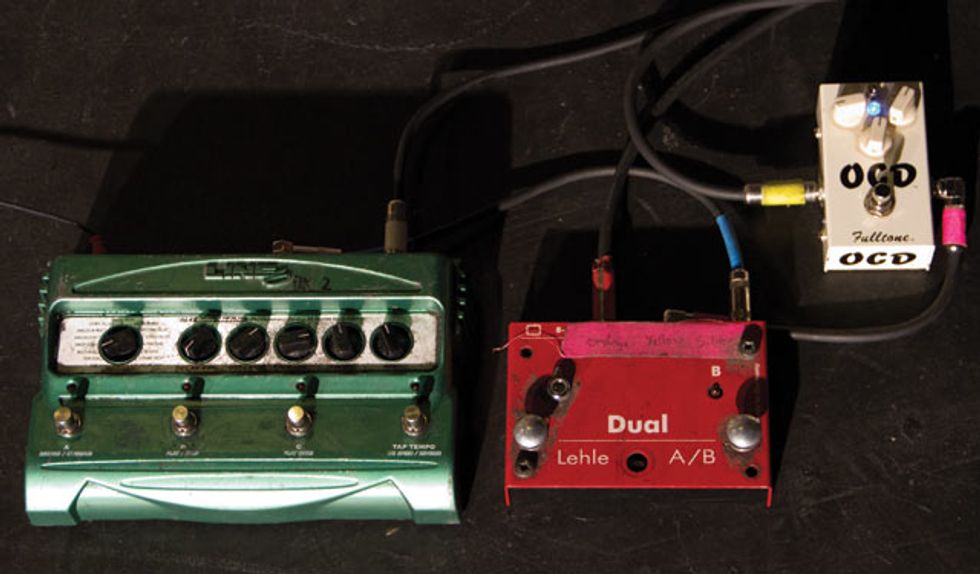
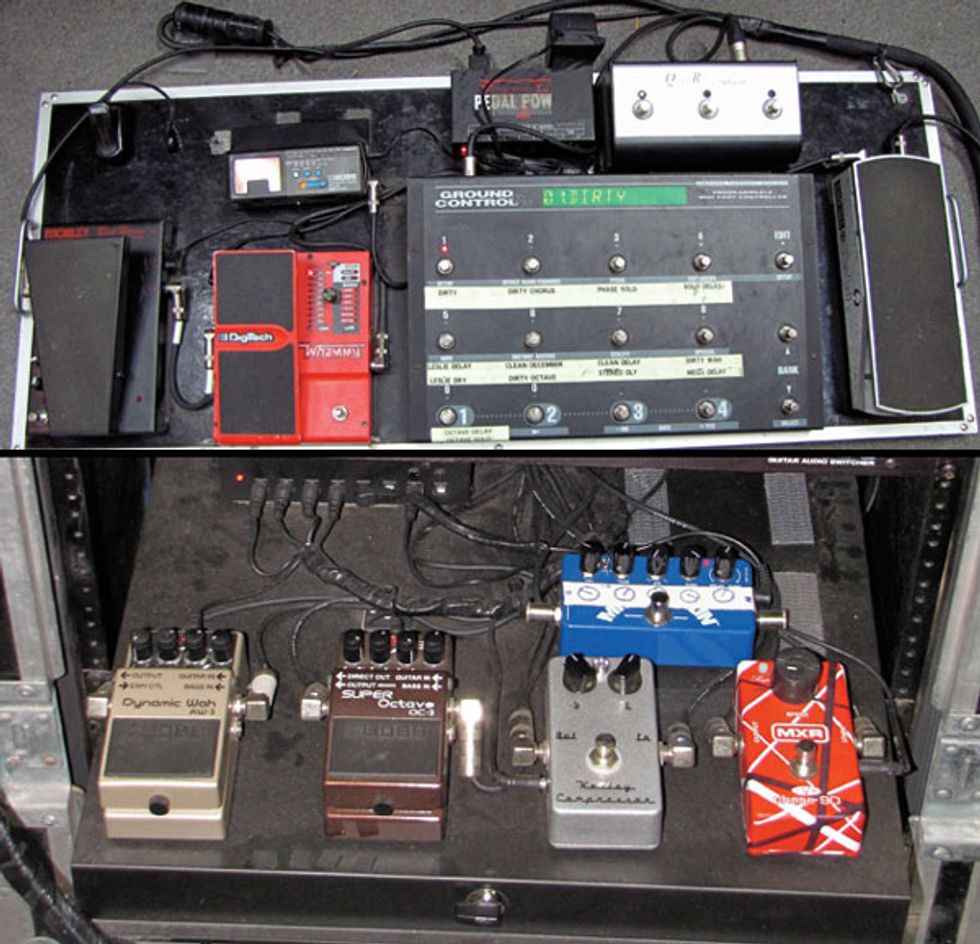
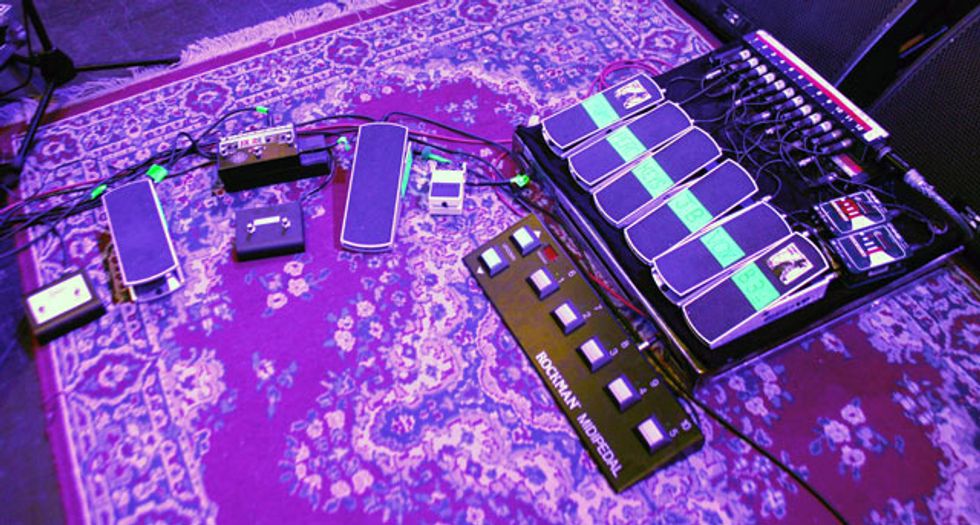
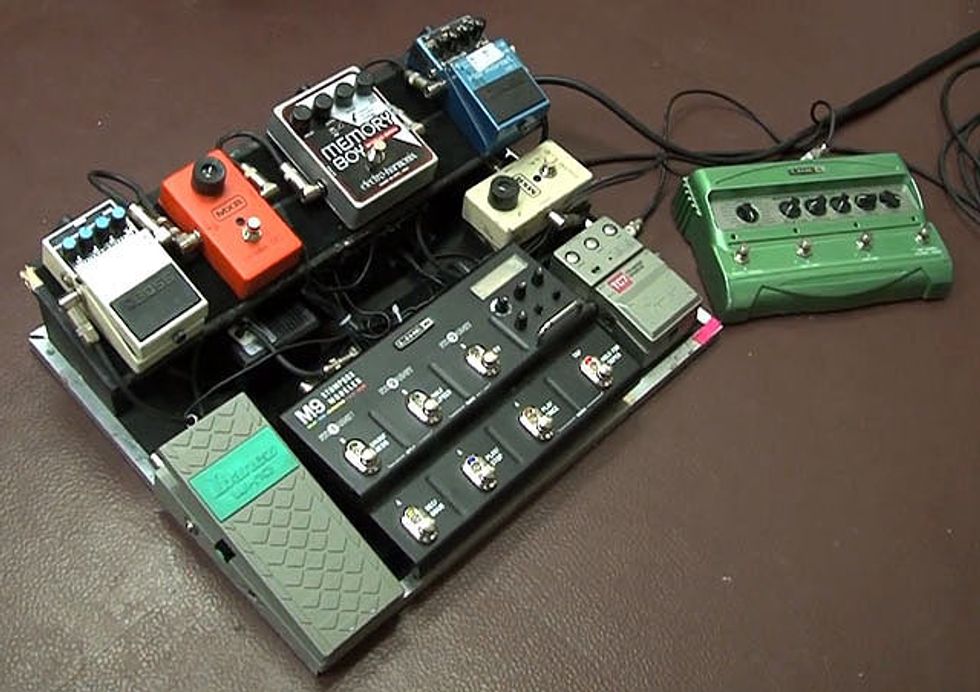
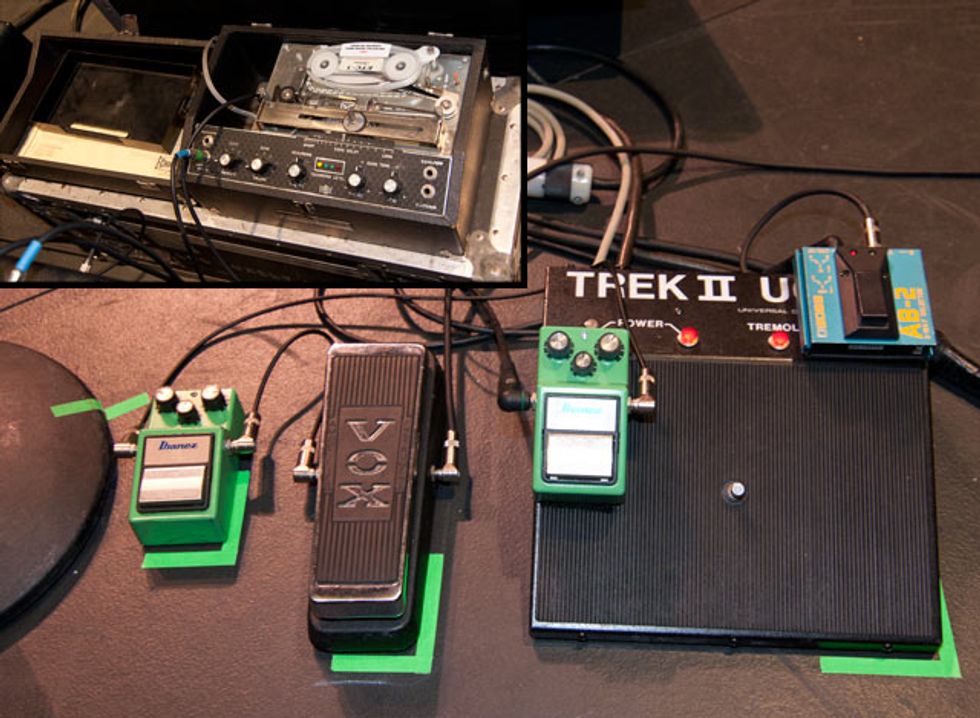
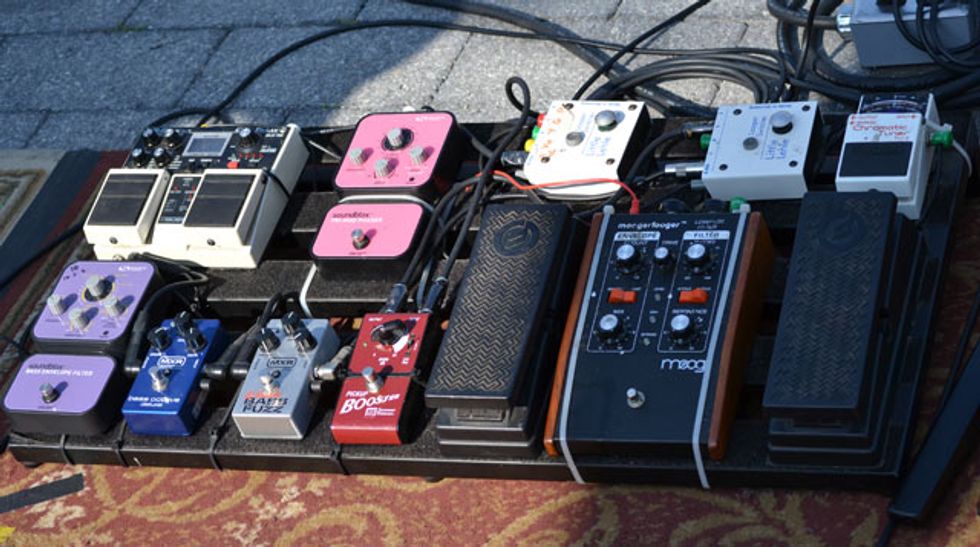
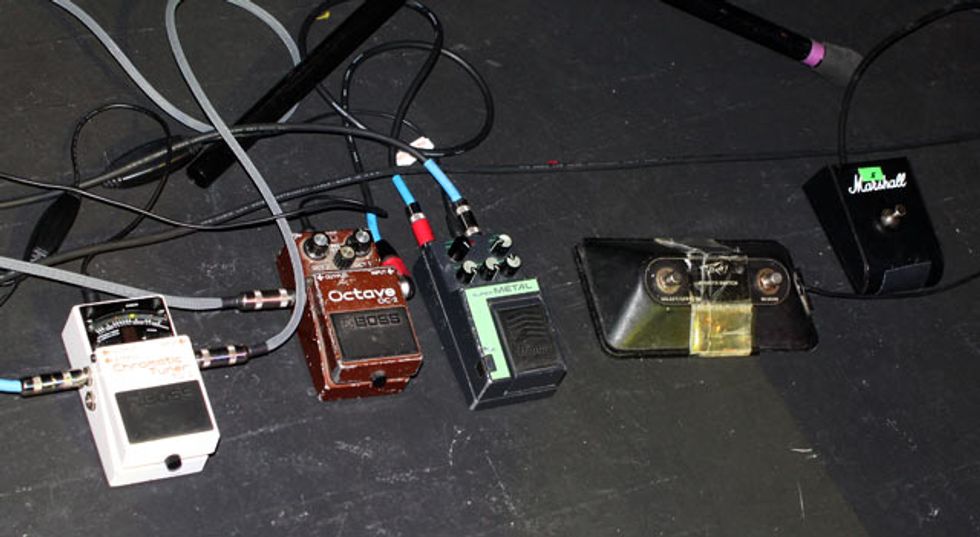
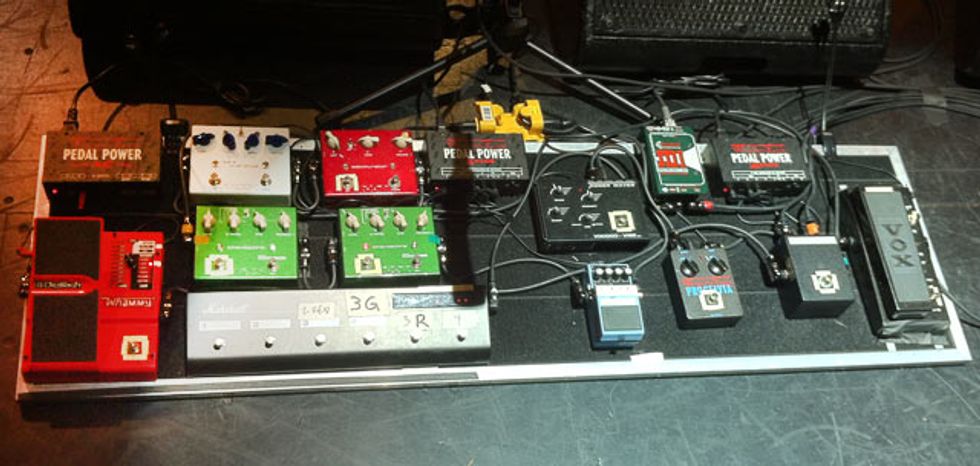
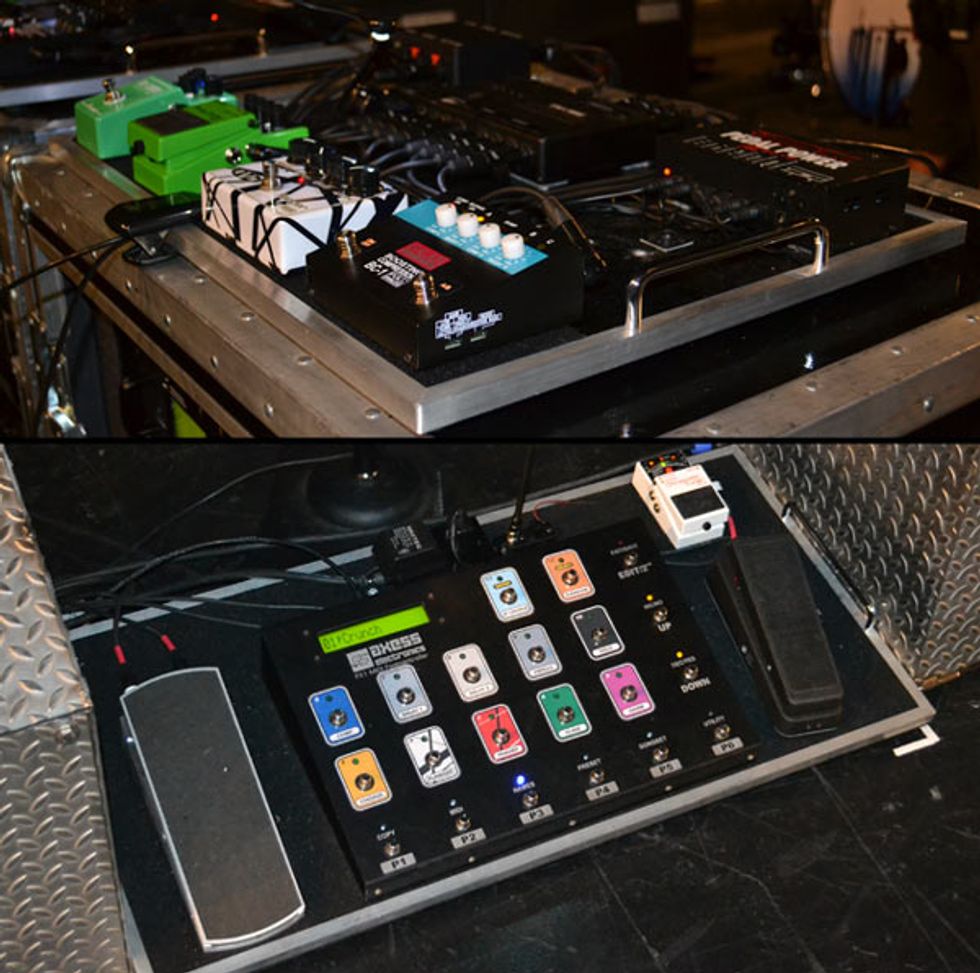
"Gibbons keeps it simple for his pedalsяa Peterson Strobo Stomp tuner, Dunlop Jimi Hendrix Octavio, and a Tech 21 NYC Midi Mouse, used to switch between programs that match the EQ of each of his guitars to his рPearly Gatesс Les Paul."
Whenever I’m asked a question about learning, it’s almost always followed by an inquiry as to how long that thing might take to learn. Ultimately, the student wants to know exactly how much they should practice, and when they should expect to see results.
We’ve talked about expectations versus reality before in this column, so I won’t go into too much detail about how I perceive my practice time. But in short, I try to have no expectations and instead enjoy the process of doing the work until the skill comes to me naturally.
But the question still stands: How much should we practice? Would you feel good if I said an hour a day will fix everything you’re having trouble with? Would you be shocked if I said 20 minutes a day beats almost all other practice plans? Would you take a photo of this column and share it on social media, telling everyone that I’m a lunatic because I said I used to practice 8–12 hours a day when I was younger?
The truth is, those three approaches all work. At least, they have all worked for me. I have been through periods of my life where one hour a day felt fantastic, because I was touring and recording so much that I really just needed maintenance and small chunks of time to make tiny adjustments to my playing. When I became a father, 20 minutes felt almost impossible to maintain because I was delirious from lack of sleep and couldn’t concentrate on my granola at breakfast, nevermind in-depth explorations of new musical ideas for hours on end. And when I was in my teens, and literally every aspect of the bass and of music was new to me, 10 hours a day felt like it was never going to be enough to get to where I wanted to be.
The older I get, however, the more my approach has shifted to be in line with some of the non-musical things in my life. At 46 years old, for instance, I’m very aware of how I want to live the last decades of my life. I want to live happy, mobile, pain- and injury-free, and have a sharp and active mind that lets me be present with my family and friends. That requires consistency in nutrition and training now, to help mitigate the less-than-optimal circumstances you often associate with old age: falls, brittle bones, disease, and disability in general.
“When I became a father, 20 minutes felt almost impossible to maintain because I was delirious from lack of sleep and couldn’t concentrate on my granola at breakfast, nevermind in-depth explorations of new musical ideas for hours on end.”
Much like the balanced nutrient intake and resistance and cardiovascular training required to build and maintain lean muscle mass, flexibility, and stability for a high quality of life in my later years, I’m finding some parallels in my musical pursuits. Whereas the goal in my teenage years was to be able to attain the dizzying technical prowess of my heroes, that doesn’t last and doesn’t mean as much later in life—especially when you simply don’t have the physical ability to play that way anymore.
I’m moving more towards strengthening a rock-solid foundation of musical language that allows me to express myself far more effectively than some flashy solo on a gig no one is going to remember. It allows me to write more creatively, record more often, and create a body of work with some meaning to it, far beyond the pyrotechnics of technique that we see plastered all over the internet these days.
And this is where we come to exactly what that takes—the answer to the age-old question of how long we should practice each day.
The answer is to set yourself a goal that you’re actually going to stick to. Much like cutting down on sugar in your diet or alcohol consumption: Can you cut both of those things out cold turkey, or do you need something more realistic that you’ll actually stick to? Six days of eating clean and a cheat day on the weekend? There are obviously dozens of ways to approach any aspect of lifestyle or music practice goals, but keep asking yourself what is realistic for you, what will you stick to, and you will be on your way to a far happier time with your instrument right away.
I find that once the pressure is off, and I’m not constantly telling myself I suck because I didn’t hit the six-hour mark in the practice room, my playing blooms in places I was least expecting it. Although the practice journal, recording yourself and listening back, and planning what you need to work on are important, I always try to not think about yesterday or worry about tomorrow. I can only work on what’s right here in front of me today, and that simplifies and improves the trajectory of my playing.
Whenever I’m asked a question about learning, it’s almost always followed by an inquiry as to how long that thing might take to learn. Ultimately, the student wants to know exactly how much they should practice, and when they should expect to see results.
We’ve talked about expectations versus reality before in this column, so I won’t go into too much detail about how I perceive my practice time. But in short, I try to have no expectations and instead enjoy the process of doing the work until the skill comes to me naturally.
But the question still stands: How much should we practice? Would you feel good if I said an hour a day will fix everything you’re having trouble with? Would you be shocked if I said 20 minutes a day beats almost all other practice plans? Would you take a photo of this column and share it on social media, telling everyone that I’m a lunatic because I said I used to practice 8–12 hours a day when I was younger?
The truth is, those three approaches all work. At least, they have all worked for me. I have been through periods of my life where one hour a day felt fantastic, because I was touring and recording so much that I really just needed maintenance and small chunks of time to make tiny adjustments to my playing. When I became a father, 20 minutes felt almost impossible to maintain because I was delirious from lack of sleep and couldn’t concentrate on my granola at breakfast, nevermind in-depth explorations of new musical ideas for hours on end. And when I was in my teens, and literally every aspect of the bass and of music was new to me, 10 hours a day felt like it was never going to be enough to get to where I wanted to be.
The older I get, however, the more my approach has shifted to be in line with some of the non-musical things in my life. At 46 years old, for instance, I’m very aware of how I want to live the last decades of my life. I want to live happy, mobile, pain- and injury-free, and have a sharp and active mind that lets me be present with my family and friends. That requires consistency in nutrition and training now, to help mitigate the less-than-optimal circumstances you often associate with old age: falls, brittle bones, disease, and disability in general.
“When I became a father, 20 minutes felt almost impossible to maintain because I was delirious from lack of sleep and couldn’t concentrate on my granola at breakfast, nevermind in-depth explorations of new musical ideas for hours on end.”
Much like the balanced nutrient intake and resistance and cardiovascular training required to build and maintain lean muscle mass, flexibility, and stability for a high quality of life in my later years, I’m finding some parallels in my musical pursuits. Whereas the goal in my teenage years was to be able to attain the dizzying technical prowess of my heroes, that doesn’t last and doesn’t mean as much later in life—especially when you simply don’t have the physical ability to play that way anymore.
I’m moving more towards strengthening a rock-solid foundation of musical language that allows me to express myself far more effectively than some flashy solo on a gig no one is going to remember. It allows me to write more creatively, record more often, and create a body of work with some meaning to it, far beyond the pyrotechnics of technique that we see plastered all over the internet these days.
And this is where we come to exactly what that takes—the answer to the age-old question of how long we should practice each day.
The answer is to set yourself a goal that you’re actually going to stick to. Much like cutting down on sugar in your diet or alcohol consumption: Can you cut both of those things out cold turkey, or do you need something more realistic that you’ll actually stick to? Six days of eating clean and a cheat day on the weekend? There are obviously dozens of ways to approach any aspect of lifestyle or music practice goals, but keep asking yourself what is realistic for you, what will you stick to, and you will be on your way to a far happier time with your instrument right away.
I find that once the pressure is off, and I’m not constantly telling myself I suck because I didn’t hit the six-hour mark in the practice room, my playing blooms in places I was least expecting it. Although the practice journal, recording yourself and listening back, and planning what you need to work on are important, I always try to not think about yesterday or worry about tomorrow. I can only work on what’s right here in front of me today, and that simplifies and improves the trajectory of my playing.
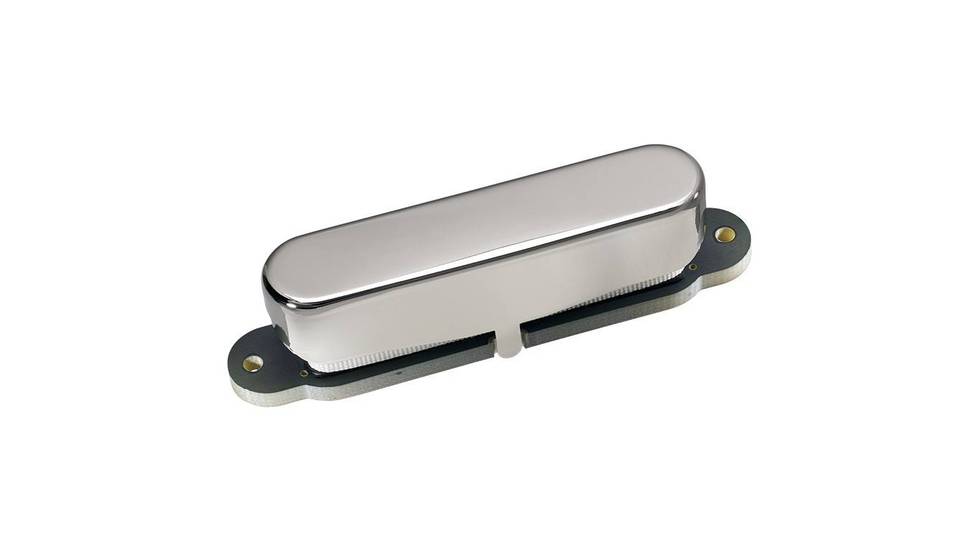
RhPf Electronics has introduced the Tri-Hormonic Phalanx, an overdrive which allows you to decide which frequencies stay clean and which ones clip.
Using a MOSFET-based circuit and soft-clipping overdrive, the Tri-Hormonic Phalanx reacts very naturally to pick attack and guitar volume knob changes. Its tone-shaping design splits the signal into lows, mids, and highs, processes each band independently, then blends them back together with dedicated level control. This approach gives players something most drives cannot offer: the ability to assign saturation per frequency while keeping the overall loudness completely consistent.
With the Tri-Hormonic Phalanx you can shape your tone to achieve clean low tones with no mud, creamy, focused mids pushed into breakup, and snappy highs that cut without harshness -- or any other combination you desire.
Features include:
Triple-band parallel signal paths for lows, mids, and highs
Independent Gain (cream colored knob) and volume Level controls (black knob) for each band, labeled IGF-1 (Bass), GH (Mid), and ACTH (Treble)
Soft-clipping MOSFET stages for organic, amp-like harmonic response
Can be used as full-spectrum clean boost or band-targeted saturation
Powered by external 9v DC supply, center-negative, no battery compartment
True bypass on/off switching
Built in Switzerland
Where traditional drives treat the signal as one block, the Phalanx isolates the fundamental regions of the guitar and lets players shape them independently. This means the lows can stay clean and full, the mids can be pushed into focused breakup, and the highs can be driven into crisp harmonic lift without harshness.
Beyond its technical design, the Phalanx carries a personal tribute to the medical condition acromegaly, quietly raising awareness through the IGF-1 (Bass), GH (Mid), and ACTH (Treble) labels that define its identity.
Tri-Hormonic Phalanx carries a street price of $179 and is available at select retailers and directly from RhPf Electronics.
Powerhouse rock icons Guns N’ Roses have returned today with two brand new singles. Marking their first new music release since 2023, “Nothin’” and “Atlas” find the long-running band still at the height of their powers, showcasing two different sides of their personality. “Atlas” is GNR in full surging rock mode, while “Nothin’” grows more introspective over floaty keys and an emotive guitar.
Both songs are available today via Interscope Records.
Guns N’ Roses have steadily been releasing new material in recent years in conjunction with their sold-out tours across the globe. Following 2023’s “The General” and “Perhaps,” “Atlas” and “Nothin’” join as vital additions to setlists otherwise featuring all the classic hits and deep cut fan favorites from GNR’s early catalogue. On December 12th, “Nothin’” and “Atlas” will be available for pre-order on 7” vinyl, a Guns N’ Roses store exclusive cassette and a Japan exclusive SHM-CD. To pre-order, or for more information, please click HERE.
Most recently, Guns N’ Roses announced they will hit the road in the spring and summer of 2026 (please see dates below) on a world tour that will see the band visit Mexico and Brazil before headlining additional EU markets as well as stadiums across the US and Canada. The tour will include a special performance at LA’s Rose Bowl, marking a historic return to the venue for the first time in over 30 years. This 2026 tour follows on the heels of a sprawling 2025 world tour that saw the band make their long-awaited return to Europe, the Middle East, Asia, and Latin America.
Tickets are available at gunsnroses.com. In North America, the tour will also offer a variety of different VIP packages and experiences for fans to take their concert experience to the next level. Packages vary but include premium tickets, behind-the-scenes tour, invitation to the pre-show VIP Lounge, limited edition merch & more. VIP package contents vary based on the offer selected. For more information, visit vipnation.com.
Cropper performing at a "Guitar Greats" concert at the Capitol Theatre in Passaic, New Jersey, on November 3, 1984.
Ebet Roberts
On December 3, 2025, the night before we heard the news of Steve Cropper’s passing, my wife and I were jamming to a simple loop. Distracted, at one point I strayed into a noodle that wasn’t doing my wife or the song any favors. Then a voice spoke loudly in my head: “Booker T. and the M.G.’s, you idiot! Cropper! Now!” In a shot I was off the noodle bus and back on track.
That voice, it seems, sat at the shoulder of many guitarists. Such was the reach and influence of a musician that could be hookmeister, bedrock, silk, switchblade, or the lonely cry at the root of a heartbreaking melody. Cropper’s signature, however, was his economy and restraint—much of which was reinforced by his keen producer’s ear. Keith Richards, one of the kings of rhythm and timing, was once asked what he thought of Cropper. Richards, who can spiel when moved, was reduced to two words: “Perfect, man.” And truly, it’s hard to find a moment in Cropper’s body of work as rhythm guitarist, lead ace, and producer that isn’t, by some measure, impeccable.
Steve Cropper was born on October 21, 1941, in rural Dora, MO. But before he was 10, his family moved to Memphis. Like any open-minded, musically inclined individual with access to a radio in that time and place, Cropper found a feast for the ears in Memphis in the 1950s—blues, gospel, rhythm and blues, country, and the rockabilly percolations bubbling up from Sun Records.
Cropper was playing guitar by the time he was 14. And his influences around that time tell much about the sum that would become the Cropper style. From jazz giant Tal Farlow he learned how to dance around a melody with precision. From Chet Atkins, he took a sense for how chord melody and the twang and pop of an electric guitar could work together. Chuck Berry opened his ears to the power of relentless, uptempo, driving rhythm. And Jimmy Reed taught him the ways of deriving swing from skeletal, haunting simplicity.
By the time he was 20, Cropper had joined forces, along with future Booker T. and the M.G.’s bassist Donald “Duck” Dunn, in an instrumental band that evolved into the Mar-Keys, which hit number 3 with “Last Night,” a release on Memphis-based Satellite Records. Within a few years, Satellite became Stax, and on the strength of the Carla Thomas single “Cause I Love You,” entered a distribution deal with Atlantic Records. Stax’s agreement with Atlantic meant product and hits had to keep coming. And that effort was facilitated by Stax’s in-house band, which featured Cropper, drummer Al Jackson Jr., and bassist Lewis Steinberg. That trio, with organist Booker T. Jones, further boosted Stax’s fortune and profile, when an impromptu jam intended as a B-side became “Green Onions”
Though “Green Onions” showcases the awesome collective strength of Booker T. and the M.G.’s as a mighty groove machine, Cropper’s contributions to the track included a lock-step doubling of Lewis Steinberg’s bass, a horn section-style stab on the one, and a lead that is the essence of economy and attitude, reflecting Ike Turner or Johnny Guitar Watson’s fiery r&b fretwork. Cropper, in fact, provided much of the tune’s dynamics. The song may have legitimized Stax. But it also cemented Booker T. and the M.G.’s reputation as a band’s band, revered by surf and garage bands on the West Coast, soul and r&b artists working in the South and on the East Coast, and perhaps most notably, the bands that would soon make up the British Invasion.
Had the M.G.’s left behind “Green Onions” alone, they would have been legendary. But the band, and Cropper, in particular, would go on to make Stax one of the most vital and important labels of the 1960s, and he would lend a hand in nourishing the careers of some of some of soul music’s most titanic figures.
Cropper ultimately became the front-line producer at Stax and their subsidiary Volt. And his production style mirrored his approach to guitar. It was lean, hard-hitting, dripping with groove, but also spacious enough to make room for the awesome voices that passed through Stax’s Memphis studios. Cropper’s production was so powerful and full of sinewy punch that it practically tormented British artists who struggled to find Stax’s potency in their own studios. At one point the Beatles were slated to work with Cropper on the LP that eventually became Revolver. That didn’t pan out, but Cropper’s production, recording, and performing prowess would still touch millions of people through hits from Sam and Dave, Carla Thomas, Wilson Pickett, Eddie Floyd, and, most monumentally, Otis Redding, who co-authored “(Sittin’ On) the Dock of the Bay” with Cropper (who also adorns the yearning track with pearls of subtle guitar shading that virtually define the instrument’s role in soul balladry).
Cropper didn’t stop working after Stax’s hits dried up. He continued to produce records and play sessions, and reached millions more playing himself in the Blues Brothers film. He toured—once again with the M.G.’s—backing Neil Young at the height of Young’s volcanic reawakening in the 1990s. Cropper was, generally speaking, a quiet, gentlemanly guy, quite happy to deliver the goods in relative anonymity as sparks flew around him—qualities evident in essential performance films like Shake! Otis Live at Monterey and footage from the Stax tour of Europe in 1967. And improbably, perhaps, in light of his reserve, Cropper’s music and his impeccable touch as a guitarist and producer is everywhere where people listen. His legacy and influence are matched by few.