
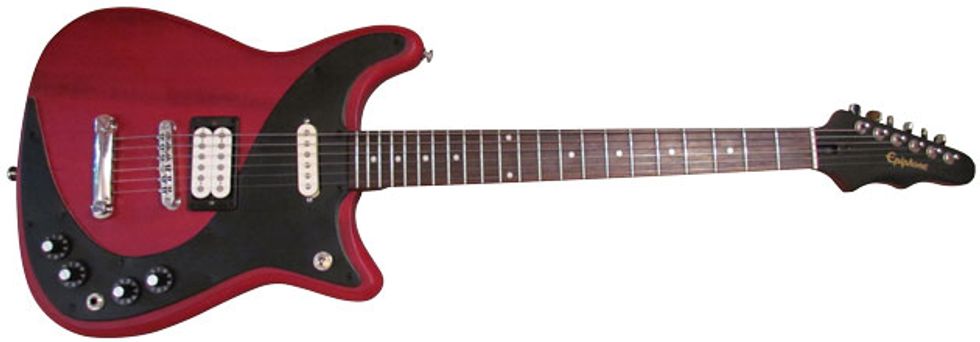

In my younger days, I used to have an old Epiphone Wilshire from the ’60s. What I remember most about it was how far up the neck I could play. The action was great and fretting was effortless all the way to the 22nd fret—far better than my Les Paul Special or SG. But at the time I was going through a Tele and Strat period and couldn’t bond with the mini-humbucker pickups, so I sold it. That’s something I’ve regretted for years.
Luckily, a few years ago Epiphone started reissuing these guitars again as the “1966 Worn Wilshire.” The “worn” part means it only has a very light layer of finish applied, which gives the body and neck a satin feel. That’s another plus in my book because a lot of players, myself included, notice that heavy finish or paint seems to kill tone.
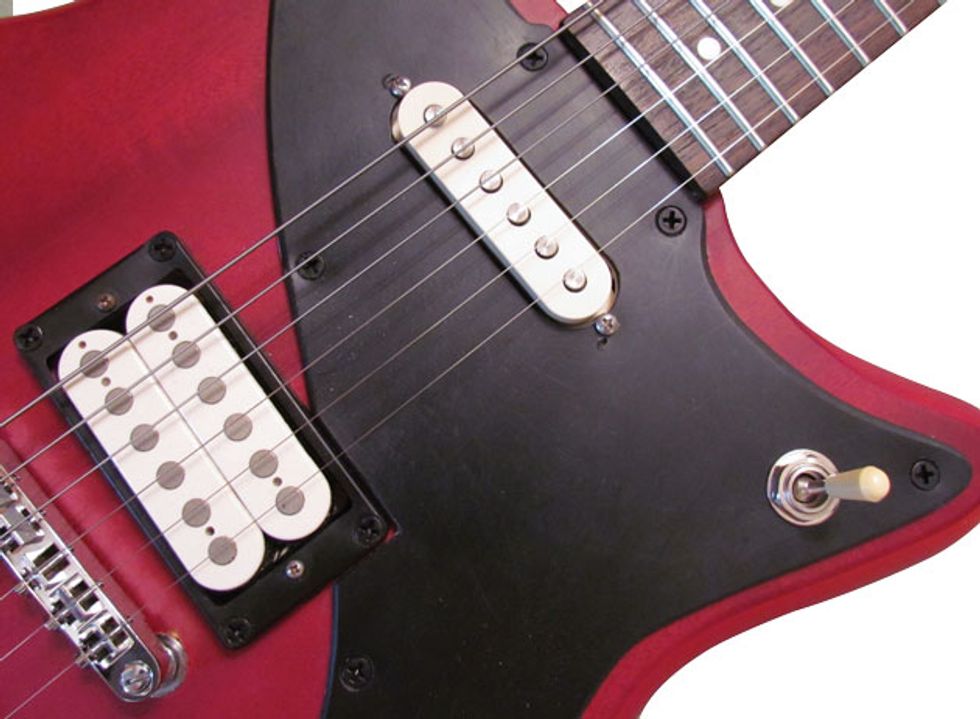
Photo 2
I’d been tracking several of the reissues on the ’Bay for a while when this one popped up (Photo 1). The seller had modified it by taking out the two mini-humbuckers and replacing them with a Strat-style single-coil in the neck position and a full size humbucker in the bridge (Photo 2).
Well, if I wanted to modify a Wilshire, that’s exactly what I’d do too: The single-coil keeps the neck tones nice and snappy, while the bridge humbucker sounds bigger and more in your face than the mini ’buckers. The seller had also crafted another pickguard to accommodate the new pickups, and it looked like a decent job. That guitar had me at hello.
I tracked the auction and ended up winning the guitar for $165, plus $24 shipping. Used stock versions generally sell in the $225-$300 range, so this was not a bad deal, and well within bottom-feeder territory for a guitar of this caliber.
While doing my research, I discovered the neck joint is the Achilles Heel on these models. I’ve seen many with broken or cracked necks for sale as-is all over eBay, and the damage is typically due to shipping mishaps. After my guitar arrived, I carefully inspected it and was glad to see there were no cracks or breaks in the neck, or damage to the critical joint (Photo 3). This was a relief because it was shipped without a case, but the seller was smart and double-boxed it well.
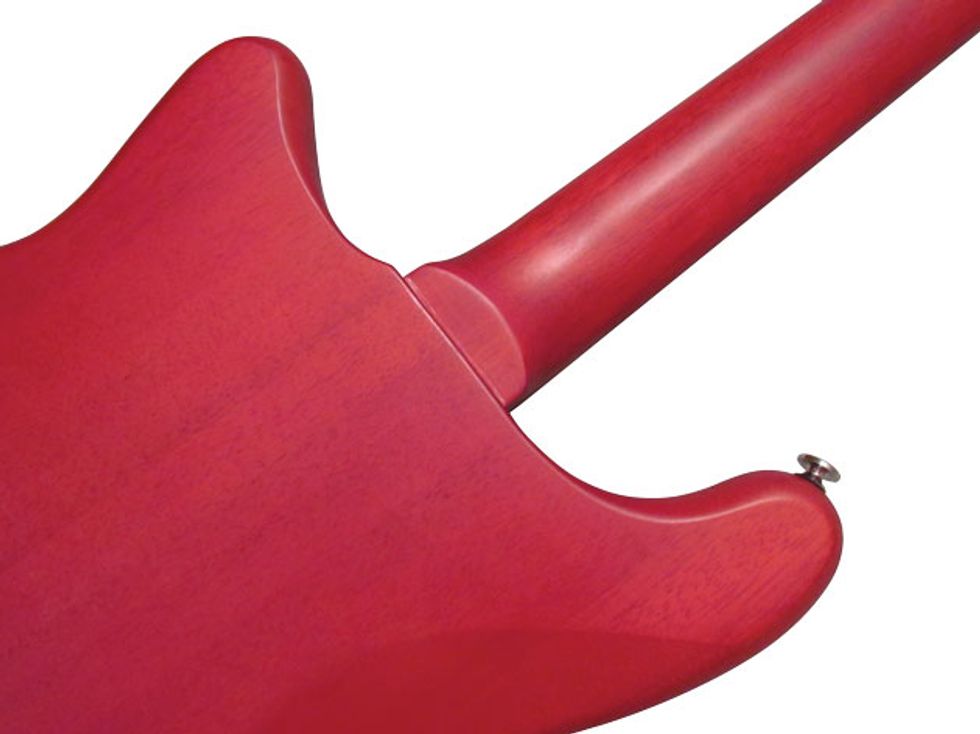
Photo 3
So how does it sound? Not bad. The neck pickup is bright and sassy, while the bridge bucker is big and bold without being mushy.
Bottom Feeder Tip #384: Sometimes you may find a guitar that has been modified in a good way. The price will usually be lower than one that’s stock, and someone else has done all the work. It’s a win-win.
I figure down the road I can always replace the current pickups with better quality ones because the guitar can now accept standard-size Strat and humbucker pickups. But to my ears it sounds just fine, and it’s a keeper for now. By the way, original 1960s Epi Wilshires sell for between $3,000 and $5,000 today. Whoa!