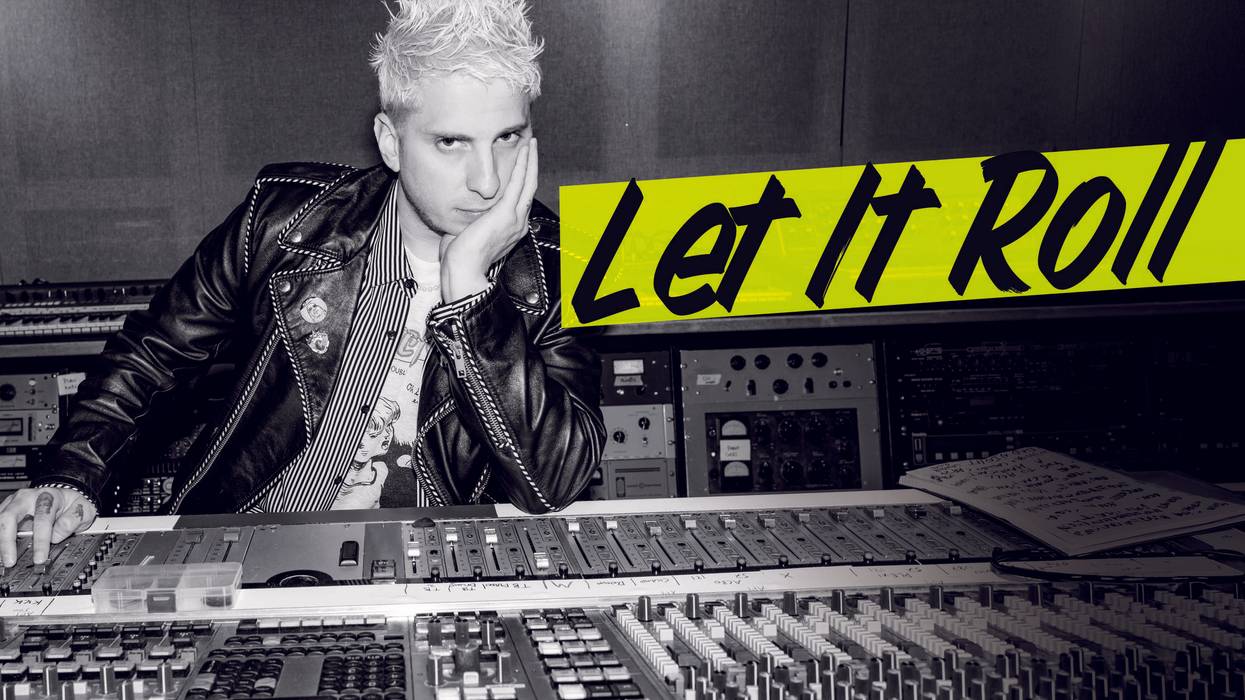
Ask Andrew Watt about the most important moment of any session and he’ll tell you it’s the first playback. The artist—and it could be the Rolling Stones, Pearl Jam, Paul McCartney, Elton John, Lady Gaga—tracks something, anything, the first thing they put down that day, and then everyone walks back into the control room, and somebody presses play. “That’s when you’re either granted the keys to the kingdom,” Watt says, “or it sounds like shit and everyone wants to kill you.” It is, as Watt says, a results-based business. So if the band comes back in and hears the drums slamming and the guitars loud and separated on each side and the rhythm section sounding strong, they know everything’s safe. All they have to do is play.
Watt is 35 years old and at this point he has made enough records with enough of the people who taught the rest of us how rock and roll is supposed to sound—Mick and Keith, Ozzy, Iggy, Eddie Vedder, and now Paul McCartney—that the first playback is something close to a working philosophy. What he’s after isn’t accuracy, but rather the thing happening in the room, the push and pull between musicians listening to each other in real time. The run of rock records he’s produced in the past several years—Ozzy’s Ordinary Man and Patient Number 9, Vedder’s Earthling, Iggy Pop’s Every Loser, Pearl Jam’s Dark Matter, the Rolling Stones’ Hackney Diamonds, and now the new Stones album, Foreign Tongues, and McCartney’s The Boys of Dungeon Lane—sound the way they sound for the same reasons. They were tracked live, by musicians playing as musicians. They are not made to a click. They are not polished to within an inch of their lives. They preserve the human imperfection that gets compressed and quantized out of most modern records—the speeding up and slowing down, the moments where one player is following another, the unexpected slips or sounds between phrases.
Watt and McCartney get down to bass-ics.
Photo courtesy of Andrew Watt
A “Beatles” album and a Stones album in the same year, this year, made by the same producer. “It’s insane,” Watt says. The two records are very different. Foreign Tongues was tracked at Metropolis Studios in London in one continuous month, with another month of overdubs, whereas the previous Stones album had been made in scattered three- and four-week blocks across multiple cities. “This album was recorded live on the floor, the band looking at each other,” Watt says. “The weave that everyone loves so much is what happens in real time when Ronnie is reacting to what Keith is playing.”
Watt’s working method on the new record was to keep the tape rolling. Rather than stopping between takes, they’d run the same song for an hour with pauses in between, so the band wouldn’t feel like they were doing takes. They’d just be playing. “I felt like it was a really cool, non-pressured way to work with the guys,” Watt says. He’d pick up a talkback mic when he needed to call a cue—chorus, back to the top, ride out the outro—but mostly left the band alone. “It’s not like, ‘Hey Ron, will you play off Keith more?’” he says. “You don’t need to tell him. He actually doesn’t do anything else but that. That’s what they do. So it’s just making sure it’s all captured and recorded, so that all the best moments are there.”
“I was freaking out—a Beatle coming to my house!”
The Boys of Dungeon Lane, by contrast, took five years. McCartney works on his own clock, and he and Watt hadn’t even meant to make a record—following Watt’s Producer of the Year win at the 2021 Grammys, the two camps had connected, which resulted in McCartney coming over to Watt’s for a cup of tea. But Watt knew something was missing. “In the middle of the night, the night before, I was freaking the fuck out—a Beatle coming to my house!” he recalls. “I’m a lefty, but I play [guitar] righty. And I woke up thinking, I don’t have any lefty guitars.” The next morning, he sent his assistant out to round up a slew of McCartney-specific instruments—a Hofner, an Epiphone Texan, a Martin, a Casino, a 335, and a Rickenbacker—“all lefty,” he says. Sitting with Watt later that day, McCartney mentioned offhand that you could write a song out of anything. “Oh, but you don’t have a lefty guitar,” Paul remarked. “And I was like, I actually do,” Watt recalls. From there, McCartney played a chord that needed resolving, and a song started. Five years on, they have an album, made in sessions of a couple weeks at a time, a few times a year. “You follow Paul wherever he wants to go,” Watt says. “If he wants to make a couple of songs, you make a couple of songs. And then when he says, ‘I think we have an album,’ you turn it into an album.”
Trading Les Paul licks with Slash
Photo by Danny Clinch
The McCartney record is, as the last one was, almost entirely Paul. He plays nearly everything himself—Hofner, Epiphone Texan, Martin D-28 (“Paul has all of his Beatles gear, so that’s what he always uses,” Watt says), and a left-handed Pelham Blue version of Dave Grohl’s signature Gibson DG-335 that Grohl gave him, the thickness of which Paul loved enough that he worked it onto a few tracks. Watt got pulled in for occasional guitar, using his ’66 Telecaster, ’59 ES-355, and Les Paul Custom SG, among others.
McCartney, in Watt’s estimation, is one of three musicians who can do everything at the level of a hundred percenter: write, play every instrument, engineer, produce, mix. The other two, in his eyes, are Stevie Wonder and Prince. What McCartney has taught him, beyond the obvious, is mostly about how he approaches arrangement—vocal harmonies against the piano, inversions that change underneath the same melody, bass put on last in full takes after everything else is in place. Watt has a tape-loop machine now, the same model Paul has, because Paul showed him how to make tape loops the way the Beatles had made them on “Tomorrow Never Knows,” and then helped him find a machine of his own. “He’s like my professor,” Watt says.
“They hired a producer. So produce.”
The amp Watt reached for repeatedly on the Stones and McCartney records—as well as on Pearl Jam’s Dark Matter, and on essentially everything else he’s recorded in the last several years—is a Dumble-modified 1958 Fender high-powered tweed Twin. The original tweed Twin is, as Watt puts it, “the loudest thing you’ve ever heard in your life”—too loud for a stage, never mind a control room. Sometime near the end of his life, Alexander Dumble, who passed away in 2022, pulled a high-powered tweed Twin out of its enclosure, kept the original combo cab separate so Watt could mic it in an iso booth, “and did all his magic stuff to both the head and the cab,” Watt says. He believes his Dumble is among the last amps the builder ever constructed. And it’s just about perfect. “Crank it all the way, and you don’t need a pedal—it’s overdrive city,” Watt says. “Down low, it’s really spanky Fender clean. It can sound like a Marshall. It can sound like a Twin. It can sound like anything. It’s so dynamic.”
For the new Stones sessions, Keith Richards’ rig was built around three of his Fenders—a Champ, a modified Harvard nicknamed “One Love,” and a Twin, supplemented by Watt’s Dumble-modded Twin. Ronnie Wood mostly played through a Bandmaster, with the Twin and an old Marshall pulled in occasionally. Watt would maybe crank the Champ for more bite, or the One Love for clarity, but, he says, “for me, it’s max three amps, and knowing where your main sound is coming from.”
Onstage with Eddie Vedder at New Jersey Performing Arts Center, 2022
Photo by Danny Clinch
Guitar-wise, Pierre, Keith’s longtime tech, handled whatever instruments were in Richards’ arsenal. Whatever wasn’t, Watt supplied. For the new record, Watt brought a 1969 Ampeg Dan Armstrong, the see-through lucite model Keith played on the Stones’ ’69 tour for “Midnight Rambler,” and Keith used it for a couple of days. He brought a Firebird, too. “We wanted a guitar that had a big chord thing that was different from a Fender or another Gibson,” Watt says. “The Firebird is thicker, but cuts through.”
And then there’s Watt’s own. A few of his favorites: a 1959 Gibson ES-355 (“It just sounds unbelievable”). A 1961 Les Paul Custom SG, factory black with three pickups, that Gibson has tried to buy from him multiple times. “It’s one of two that were ever written down, and that serial number’s in the factory,” Watt says. A 1958 Strat, and a ’59 in Fiesta Red. A 1960 Les Paul. On the acoustic side, a 1962 Hummingbird that’s a “perfect recording guitar,” and a 1962 Gibson Everly Brothers signed—and previously owned—by Phil Everly. A Hofner and a 1958 Fender Precision for bass. As for pedals: a 1960s Univox Super-Fuzz is Watt’s “forever favorite,” and is all over the McCartney record and less on the Stones one. He also has an affinity for the MXR Phase 90—“set it really slow,” Watt says, “and it sounds like Some Girls.”
Watt is a player first. He grew up in Great Neck, on Long Island, about 30 minutes outside Manhattan. He started on bass at 11, the night a guitarist in a pit band at his cousin’s middle-school play handed him an instrument at intermission. “He showed me how to play it,” Watt says. “‘[Smells Like] Teen Spirit.’ One-one-one-one, four-four-four-four. And I could play.” The next two songs he learned were the Red Hot Chili Peppers’ “Under the Bridge” and the Police’s “Roxanne.” “I remember being 11 years old and I was sitting in my house, and I just knew,” he says. “That was it. It was my calling.”
“If Jagger’s not dancing, we’ve got a problem.”
Through his teens and twenties, he tried to make the band thing happen. There were high school bands, then a run on the New York club scene as a solo artist, then a 2013 stint in the power trio California Breed with Glenn Hughes and Jason Bonham, then his own 2015 EP, Ghost in My Head, which got him as far as opening slots for Jane’s Addiction and the Cult and a stretch of touring in vans.
Around the same time, he took a guitar gig backing the pop singer Cody Simpson—a tour that landed him on bills opening for Justin Bieber. Watt and Bieber struck up a friendship at soundcheck, which led to Watt co-writing and producing songs for him, including “Let Me Love You”—Bieber’s 2016 collaboration with DJ Snake, which hit No. 4 on the Hot 100 and pulled Watt into the pop production world. Hits with Camila Cabello, Selena Gomez, Shawn Mendes, 5 Seconds of Summer, Post Malone, and others followed. Then came a night at the Rainbow Bar & Grill in L.A. with Malone, where Post purchased a picture of Ozzy Osbourne off the wall and Watt told him those two should do a song together. That became Malone’s “Take What You Want,” featuring Ozzy and Travis Scott. Watt served as co-writer and -producer, and afterward, Osbourne turned around and suggested he and Watt make a whole record together. That effort, Ordinary Man, was Ozzy’s first studio album in a decade, and Watt’s door into rock production.
Watt recalls that, as a kid, he used to stand at Pearl Jam shows at Nassau Coliseum “holding up a sign that said ‘Let me play the ‘Alive’ guitar solo.’” Fifteen years on he is in fact playing the “Alive” solo, with Pearl Jam, who hired him to produce their last album. He collaborated with Vedder on his 2022 solo album, and then joined his touring band, the Earthlings, to play the songs onstage with him. Understanding the music from inside is, he says, the actual job. “If you don’t understand what your musicians are playing, you can’t possibly add layers. You’re just guessing.” Watt is relatively young, but the old cliché of being born in the wrong time, which used to weigh on him, doesn’t anymore. “Now I think I was born in the perfect time,” he says. “Because I grew up around so many different types of music. And my work allows me to be working in all different genres. It keeps you interested and excited and feeling great.”
Photo by Getty Images
In the past few years he’s co-written, played on, and produced blockbuster songs and albums for Miley Cyrus, Lady Gaga, Bruno Mars, Elton John, Brandi Carlile, Dua Lipa, and others. But through all of it, guitar is the thing that holds him the most. “I’ll always be a guitar and bass player,” he says. “When I go to work something out, or understand how a song works, or write a riff or come up with something, the first thing I’m always grabbing is a guitar. It’s my comfort zone. It’s the language that I speak. Sometimes I’m playing funky and I have to remember my Nile [Rodgers] inversions, and other times I’ve gotta think blues. Then other times I wanna do something that feels like Depeche Mode. It’s different guitar, different styles, all the time.”
One lesson Watt took from Ozzy, and there were many, is that the producer’s job is to have opinions. When Watt was hesitant to tell Slash what to play during a guest solo on Ordinary Man, Ozzy’s reply was simple: “Fucking tell him what you want him to play! You’re Andrew Watt!” Ozzy passed away this year—“I think about him every day,” Watt says—but his lessons remain. “You go through every moment you’re sitting there with Keith Richards, and you’re like, ‘Why am I gonna suggest an idea? The guy wrote all our favorite riffs,’” Watt says. “But he wants the ideas. He wants you there. They hired a producer. So produce.”
And so when Paul is at the piano working out harmonies, or Keith and Ronnie are weaving through the same riff for the fifth time, or Eddie is feeling out a vocal, Watt is in the room—listening, suggesting, sometimes reaching for the 355 or the Les Paul SG to put down a part that’s missing. He loves the music as a fan, plays it as a musician, hears it as a producer. And he’s always after the magic.
At the very least, Jagger has to be dancing.
“If Jagger’s not dancing,” Watt says, “we’ve got a problem.”
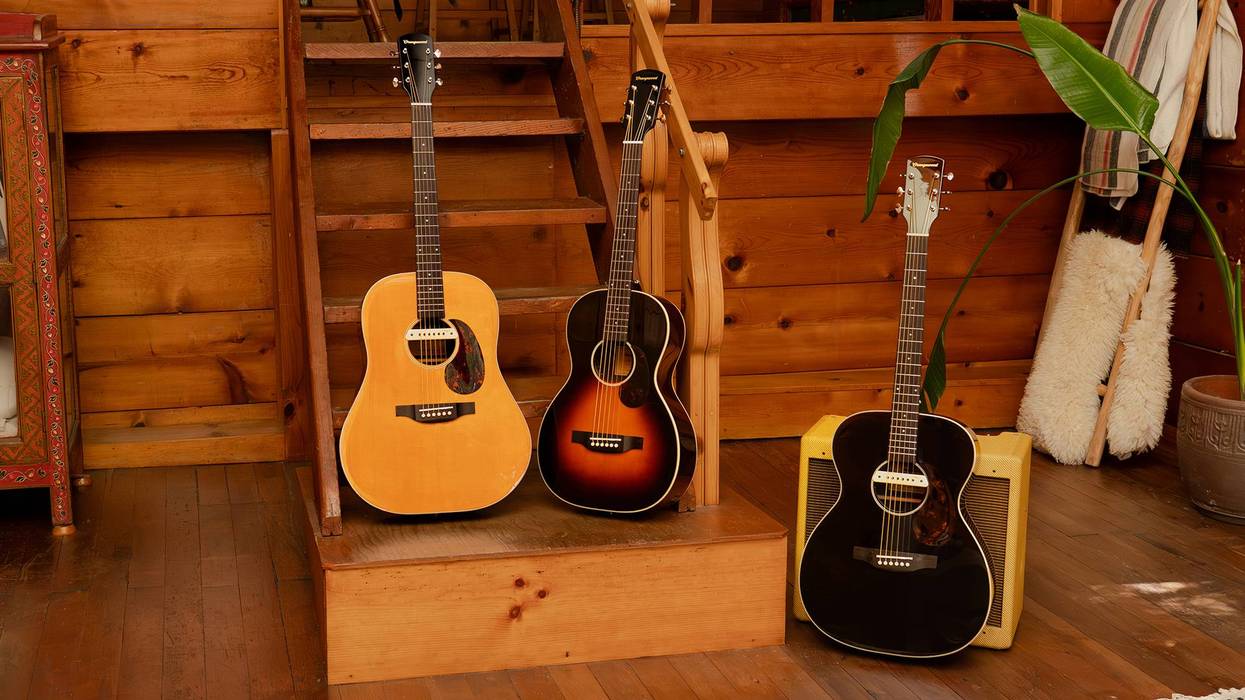
Orangewood announced today the Melrose Retro Collection, a new lineup of acoustic guitars built around three of the most enduring body shapes in acoustic music. The collection introduces three models—Dylan Retro (slope-shoulder dreadnought), Nash Retro (parlor), and Brooklyn Retro (grand concert).
Rather than treating these designs as nostalgia exercises, Orangewood focused on what has made these classic body shapes so enduring, refining them through the brand’s approach to design, setup, and performance. Across the collection, new appointments include a redesigned retro-style headstock with a straighter profile, a classic-inspired bridge, open-gear tuners, and upgraded pickup systems by LR Baggs. Each model features a solid spruce top with a high-gloss sheen finish. Ease of playability was a top priority, with streamlined electronics and simplified truss rod access for straightforward maintenance and adjustment.
“The dreadnought, parlor, and grand concert have carried songs for decades,” said Eddie Park, Orangewood Co-founder. “We weren’t interested in nostalgia for its own sake, or in adding modern features that overcomplicate the instrument. The goal was something more grounded—taking familiar forms, refining what already works, and pairing them with the features today’s players actually need. Accessible guitars made for players right here, right now.”
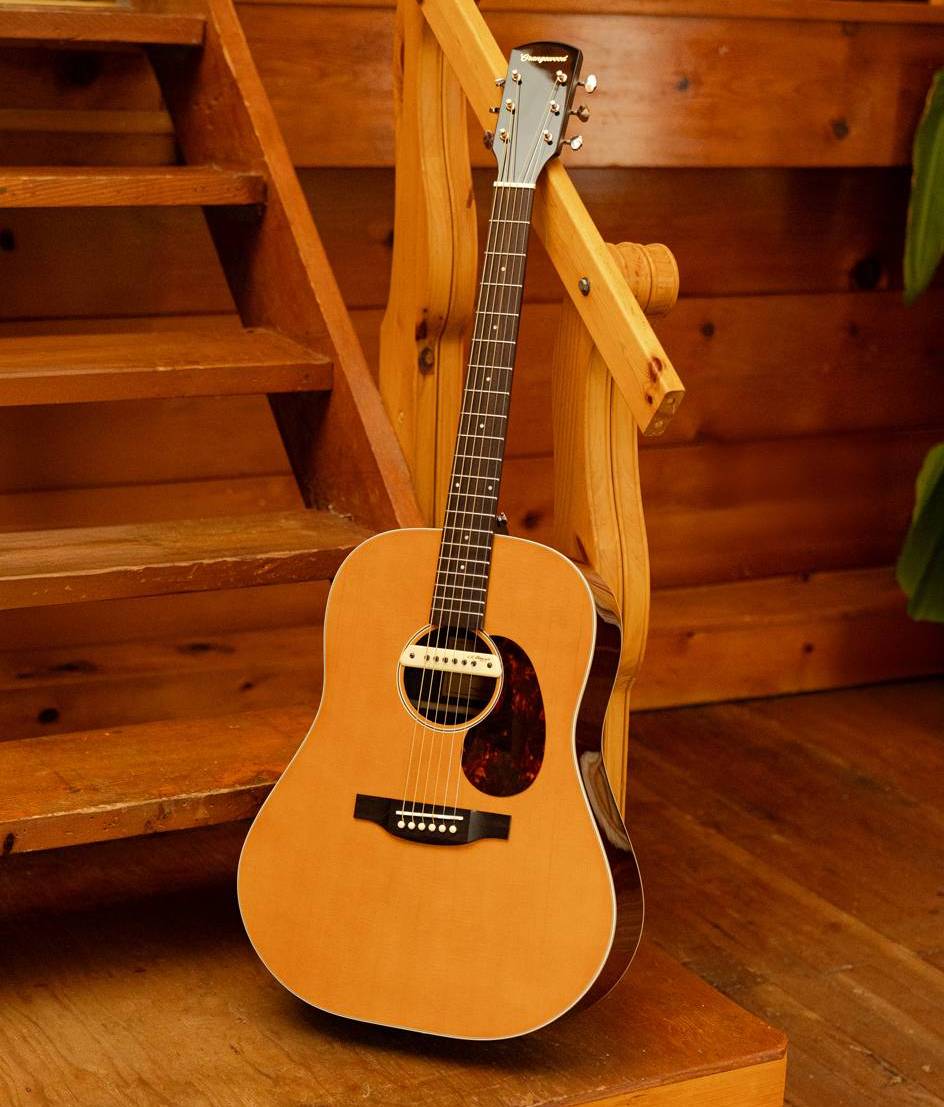
Dylan Retro
Orangewood’s take on the slope-shoulder dreadnought, the Dylan Retro combines a solid spruce top with a stained finish that reveals a warm, honeyed character beneath a rich gloss. An LR Baggs M1 passive soundhole pickup delivers a natural and dynamic amplified tone without requiring a battery or onboard preamp.
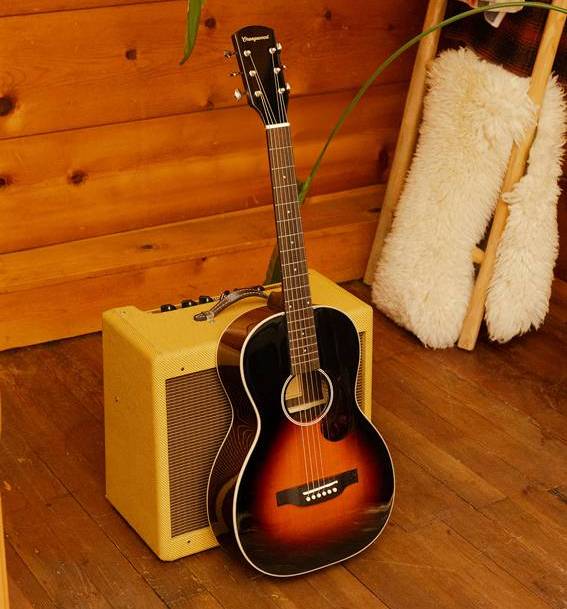
Nash Retro
A parlor guitar built for players who prefer a more intimate acoustic voice. The Nash Retro features a 12-fret neck joint that enhances warmth and resonance, along with a comfortable C-shaped neck that creates an inviting playing experience. Equipped with a custom-voiced LR Baggs Element Bronze VTC pickup system.
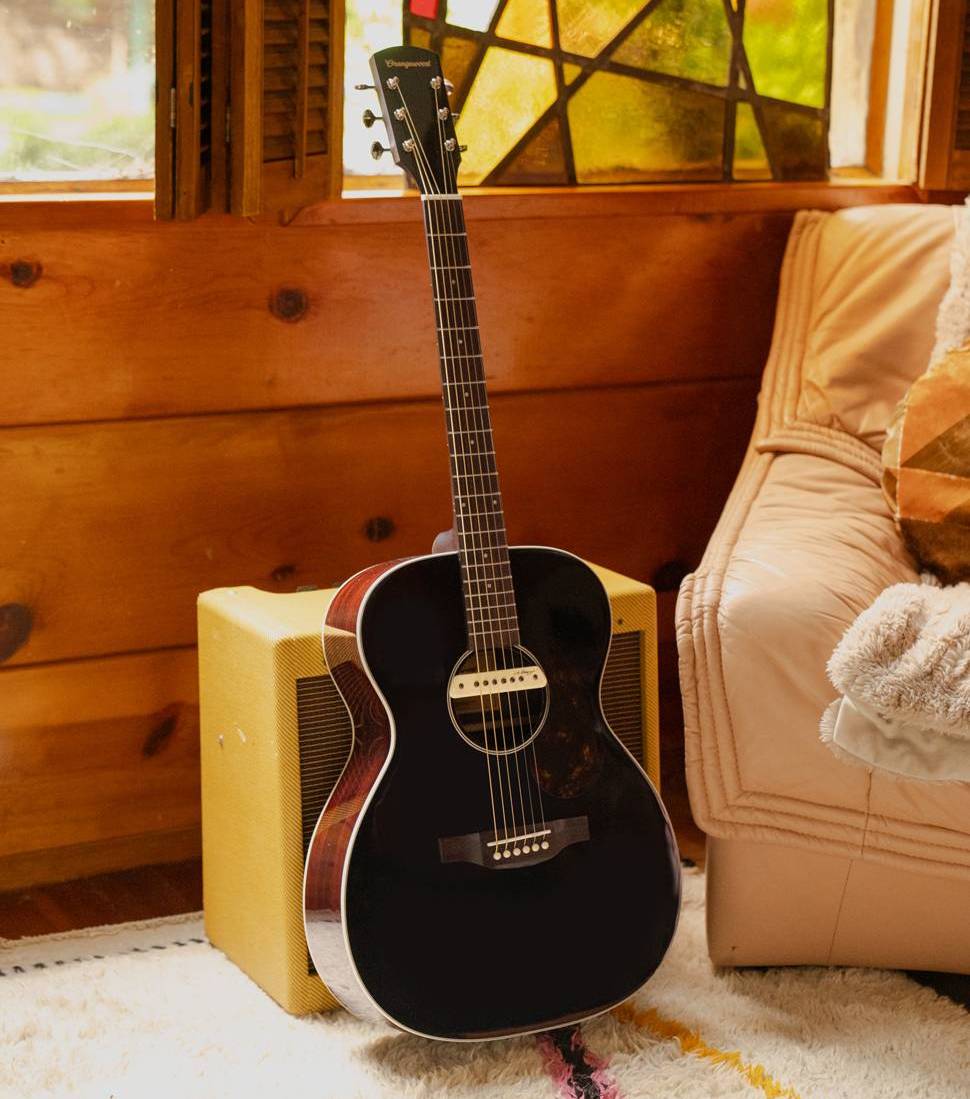
Brooklyn Retro
The Brooklyn Retro brings the balance and versatility of a grand concert body shape to the collection. Equipped with the LR Baggs M1 passive soundhole pickup for natural, dynamic amplified response.
Starting at $545, every guitar in the Melrose Retro Collection includes a gig bag and is professionally set up by Orangewood’s in-house technicians before shipping. The collection is available now exclusively at orangewoodguitars.com/collections/melrose-retro-collection.
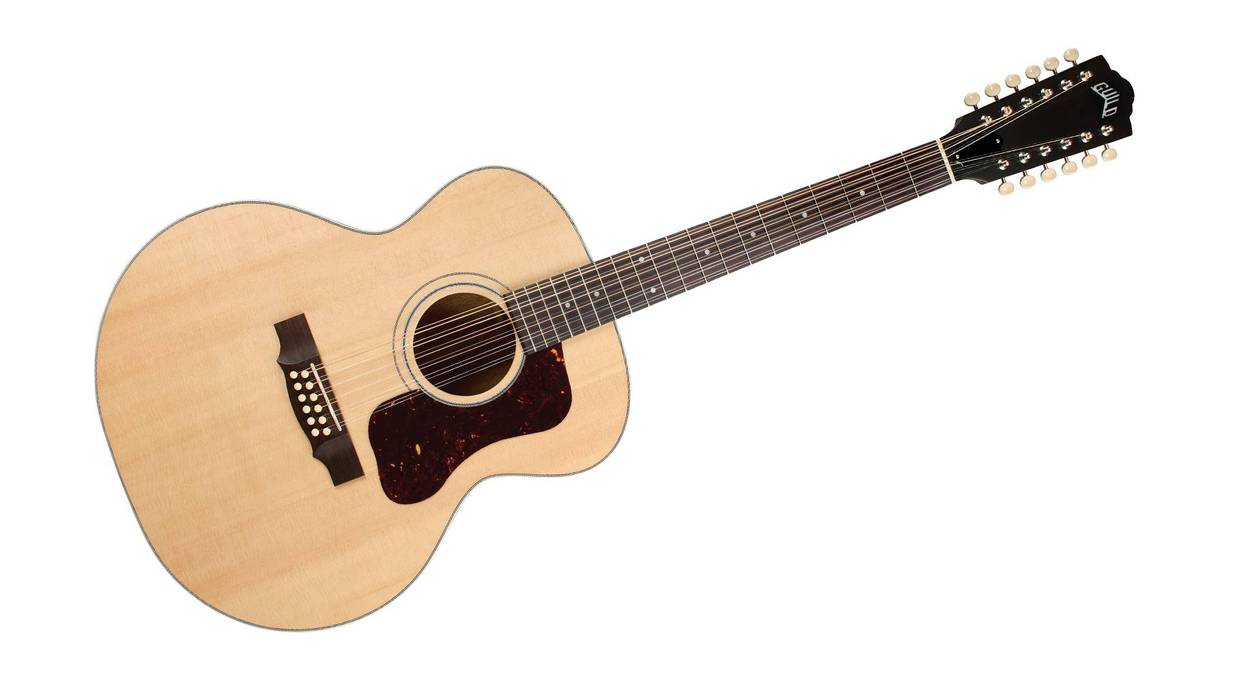
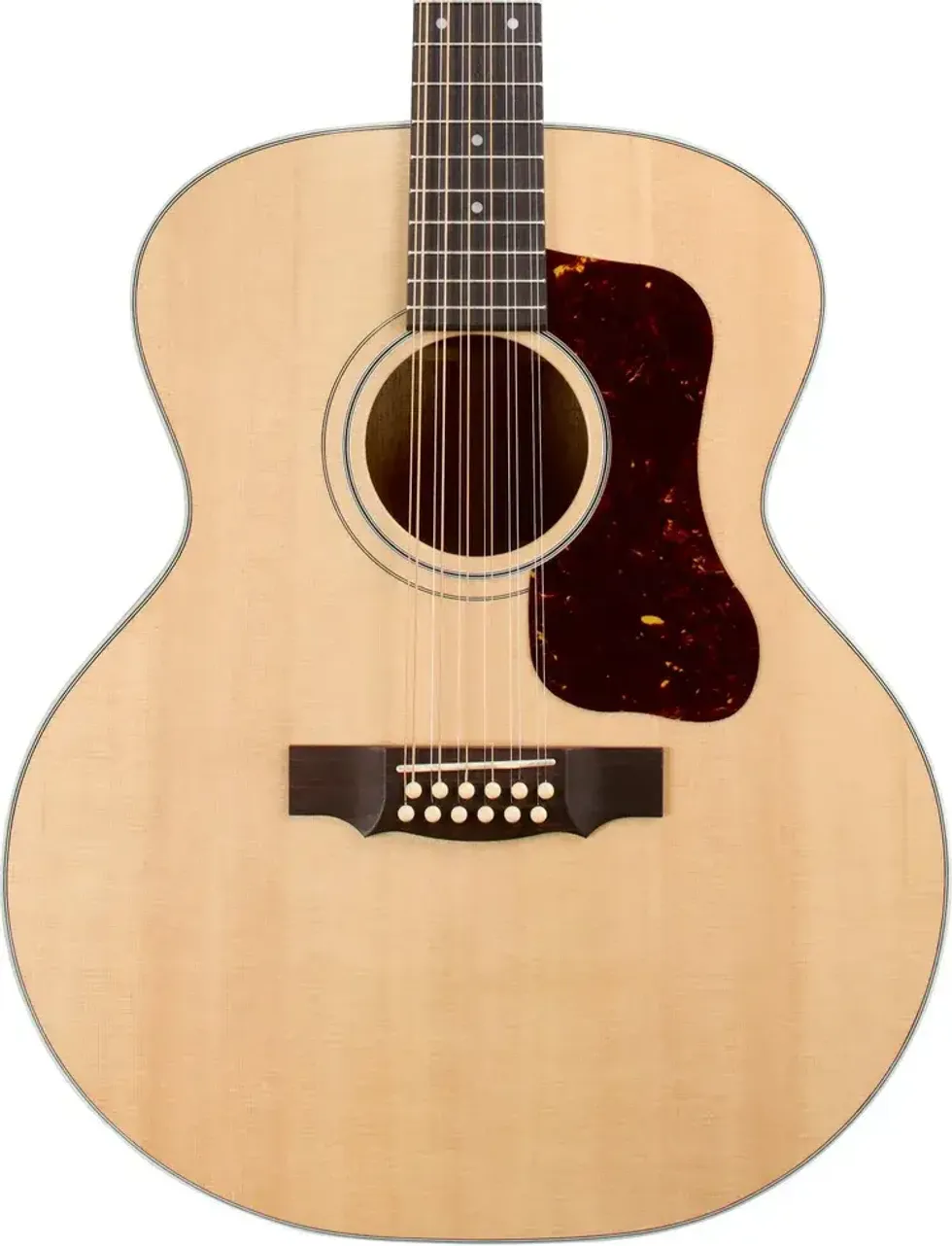
No matter what kind of guitarist you are—even if you never plan to own an acoustic 12-string—a session with a Guild F-series jumbo is an essential playing experience. It’s a guitar that you feel as much as you hear—both for its size and its rib-rattling resonance. 4 latest big 12-string, the F-412 reviewed here, deviates from the formula in a few ways. Most fundamentally, it has solid mahogany back and sides, rather than the maple or rosewood back and sides that are Guild F-series 12-string signatures. It also boasts a satin finish, which makes this U.S.-made F-412 a little more accessibly priced. But playing the F-412 is such an immersive sonic experience—and so easy on the hands—that you tend to think about little else. One rarely considers tonewoods and bank balances when they’re drowning in beautiful overtones.
12-String King
In the six decades since the first jumbo-bodied F-series 12-strings appeared, you could argue that no mass-produced acoustic 12-string has surpassed them in terms of tone or beauty. Taylor in particular built some excellent 12s, but the most iconic of these, the 855, beautiful as it is, always seemed like a respectful tip of the cap from Bob Taylor to Guild. Pete Townshend, Peter Buck, and Tim Buckley all made F-series 12-strings foundational parts of their recording and performing quivers—and really, what more do you need to know about a guitar’s qualifications and potential as a rhythm and song machine?
The F-412 has those same qualifications in abundance. But its knack for practically spilling songs from its soundhole starts with its playability. Few 12-strings are easy to handle compared to a 6-string. And if you’ve got smaller hands, the 1 7/8" nut width is no joke, nor is the 25mm neck thickness at the 9th fret. Yet as substantial as these dimensions are, the low action and lovely neck shaping assure that you’ll rarely feel you’re stretching too far or squeezing too hard to make a familiar chord shape. My wrist tendonitis had been acting up of late, and over the many hours I spent with this instrument I never felt as though I was exacerbating the issue. In fact, some of my most playable and slimmest-necked electrics gave me more problems. It’s just a very natural feeling instrument—something 12-strings don’t often manage to be. And the substance in the neck (reinforced by a single truss rod and two graphite support rods) gives the guitar great stability and the sense that you can really lean on it and dig into it with abandon. (It’s little wonder Mr. Townshend considers F-series 12-strings such reliable companions!)
The neck also feels fast—another quality uncommon in acoustic 12s. The guitar practically commanded me to delve into very hyperactive Johnny Marr/Townshend chording and arpeggiating up and down the length of the neck, and dashing from a first-position triad to a 12th-fret shape in a flash felt every bit as effortless and accurate as it would on my favorite 6-string 00.
In Bloom
If you’re lucky enough to have had multiple sessions with a classic maple- or rosewood-backed Guild F-series 12-string—or own one—you’ll notice real differences between those guitars and this mahogany-backed F-412’s tone profile. For starters, it’s less boomy than a maple or rosewood version. It’s definitely midrange forward, but not in a manner that is even remotely grating. Even under vigorous strumming attack, the mahogany seems to warm up the midrange and sand away sharp edges that would tip the tone into stridency. In this respect, the F-412 almost sounds like it has a built-in compressor and EQ.
There’s also headroom and dynamic range aplenty. Delicate fingerpicking does not suffer for having to move all that air in the jumbo body. Rather, the Guild responds to a light touch by highlighting detail and sparkling overtones. And if you should perversely, suddenly, switch gears to flailing Townshend rhythm mode, the F-412 doesn’t flinch. The detail remains, and to the extent there is blurring in the overtones the output retains the structure of a chord’s makeup. And though the F-412 might be discernibly more midrangey than its maple- or rosewood-backed counterparts, that doesn’t mean it won’t boom. In fact, one of the most pleasing and interesting parts of the F-412 playing experience is the way a relatively light touch on the sixth string will activate a big, blooming bass tone that you can contrast with bright, aggressively picked bell tones from the highest three. The F-412 is highly pianistic in this way, which is a very satisfying and alluring quality to have at your disposal when composing or performing.
Seamlessly Satin
Befitting a guitar with a $2,799 price tag, the F-412 is pretty much perfectly put together. That fast, easy playability we talked about? It’s the product of superb execution that spans beautiful rounding of the fretboard edges, flawless fret seating, and immaculately prepped and cut nut slots. The same attention to detail is apparent everywhere else, too. Perfectly sanded and shaped bracing? Superb finish? Check and check!
About that finish. No doubt some readers will take a pause to think about a $2,799 flattop with a satin finish. I know the feeling. But the reality is that the F-412’s price is very competitive with comparable U.S.-built 12-strings that, depending on your perspective, may have a lot less personality and musical potential. That $2,799 does not include the LR Baggs Element VTC electronics that appear on the F-412E, which will up the bill for the Standard to just about $3k. But again, cruise the catalogs of competitors, and you’ll find that the F-412’s price squares fairly with comparable instruments, to the extent such instruments exist. Satin finish or not, there are not a lot of U.S.-made jumbo 12-strings out there. This Guild is a star in a very narrow field, but a star nonetheless.
The Verdict
Acoustic 12-strings are not a priority for everyone. And a jumbo 12, which is truly an armful for a player of smaller stature, might, literally, be a poor fit. I’ll admit a bias for Guild F-series 12-strings, regardless of their practicality. I love the way they look and I’m intoxicated by the way they sound. But it’s easy to overstate the perceived impracticality of an instrument like this. If you’re a serious studio recordist or composer—pro or amateur—that likes to work with a broad palette, it’s hard to put a price on what a sweet-playing and unique sounding instrument like this can offer, especially if you’re into extending its utility via alternate tunings and recording methods.
Guild
F-412 Standard 12-string
12-string Acoustic Guitar with Spruce Top, Mahogany Back and Sides, Mahogany Neck, and Rosewood Fingerboard - Natural
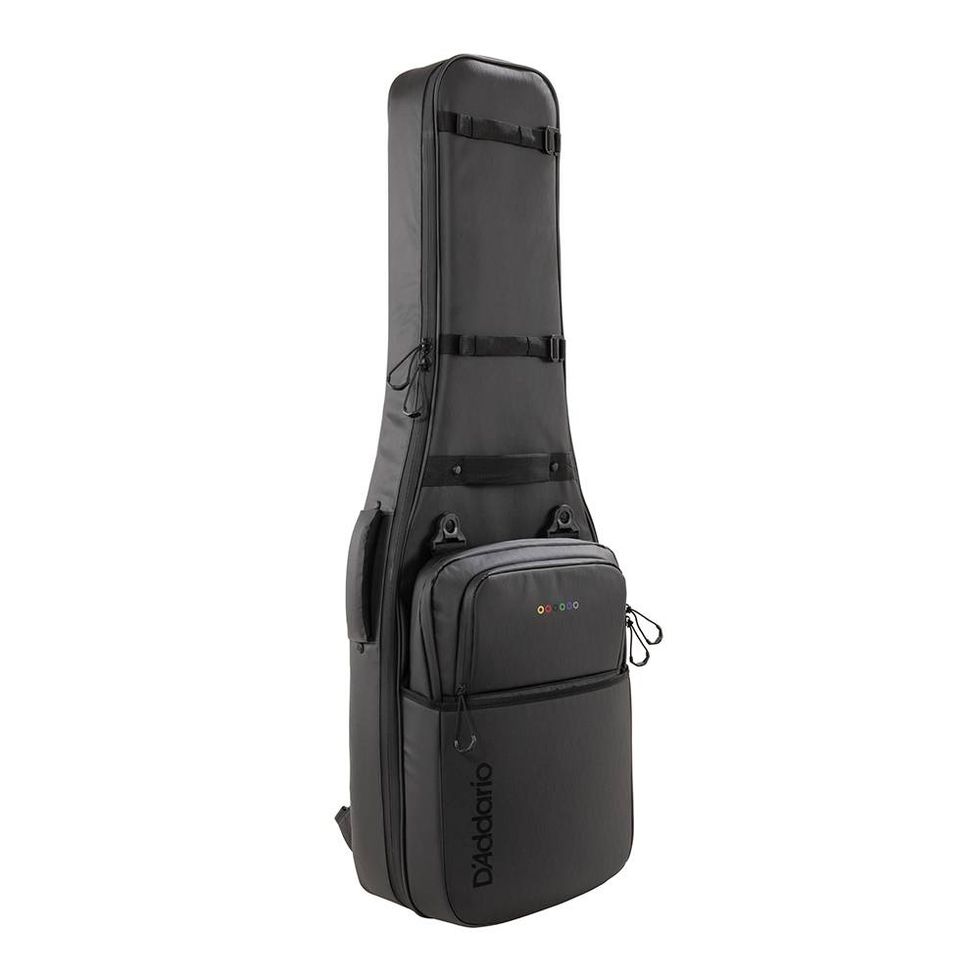
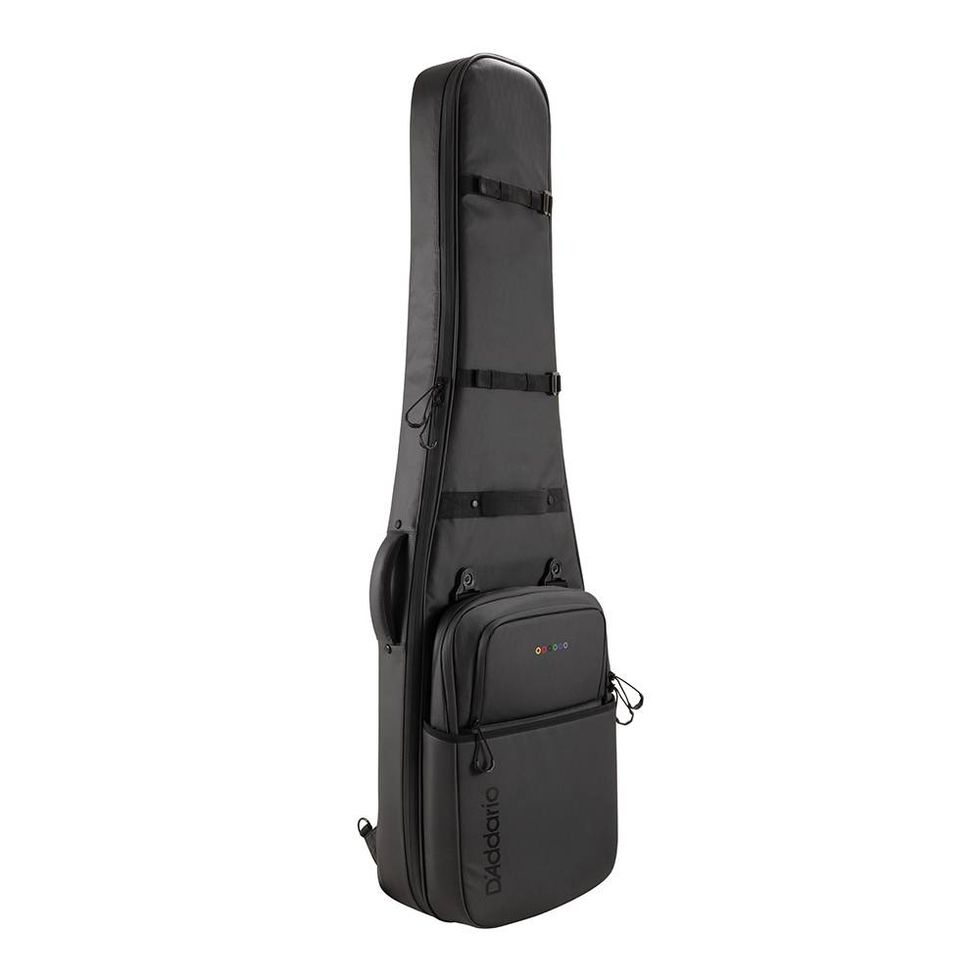
D'Addario has unveiled the all-new Backline Electric Guitar and Bass Cases: premium transport solutions designed to deliver instrument protection, user comfort, and accessory organization, all without the bulk of a traditional hard case.
Ideal for rehearsals, gigs, sessions, and travel, Backline Electric Guitar and Bass Cases are ruggedly built, with climate-smart tech and thoughtful storage features, in a single streamlined design that moves like a gig bag and weighs less than seven pounds. The detachable Breakaway Bag with Auto Lock security keeps accessories organized and close at hand so you can easily move essential gear to and from the stage, while water-resistant materials, reinforced construction, and shock-absorbing padding help protect instruments from just about anything a life on the road might throw at you.
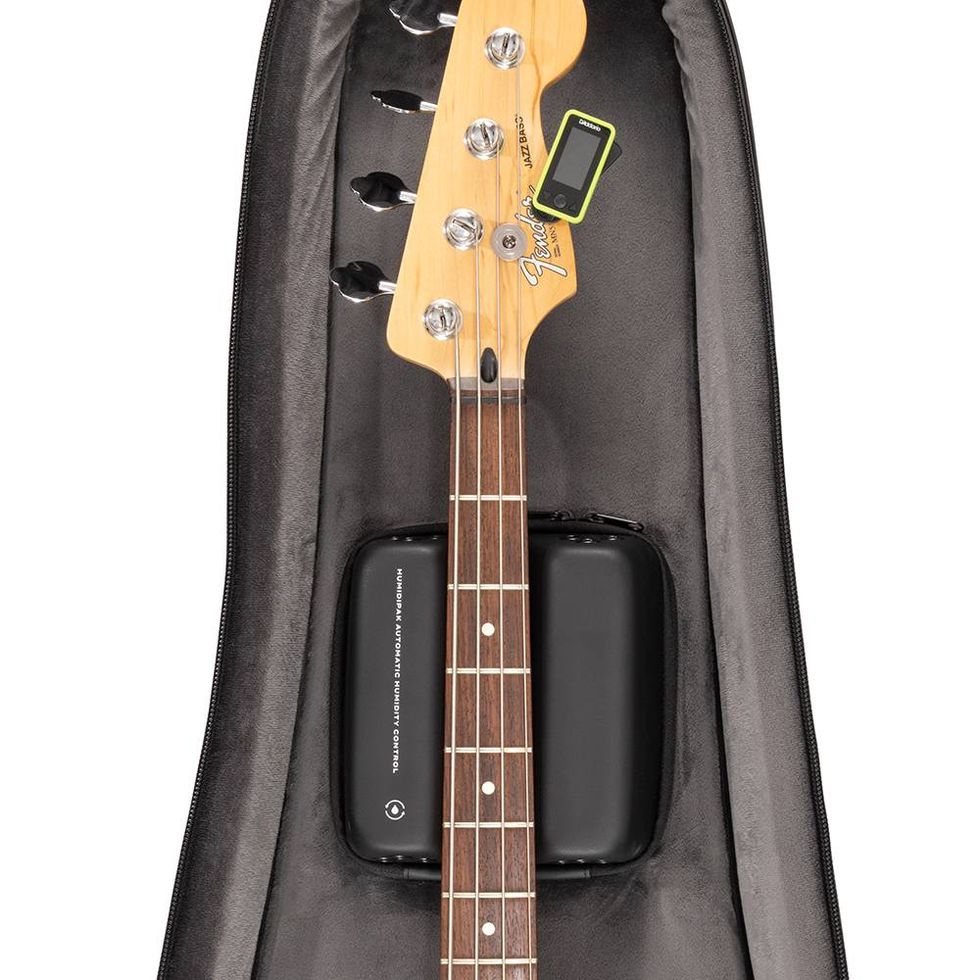
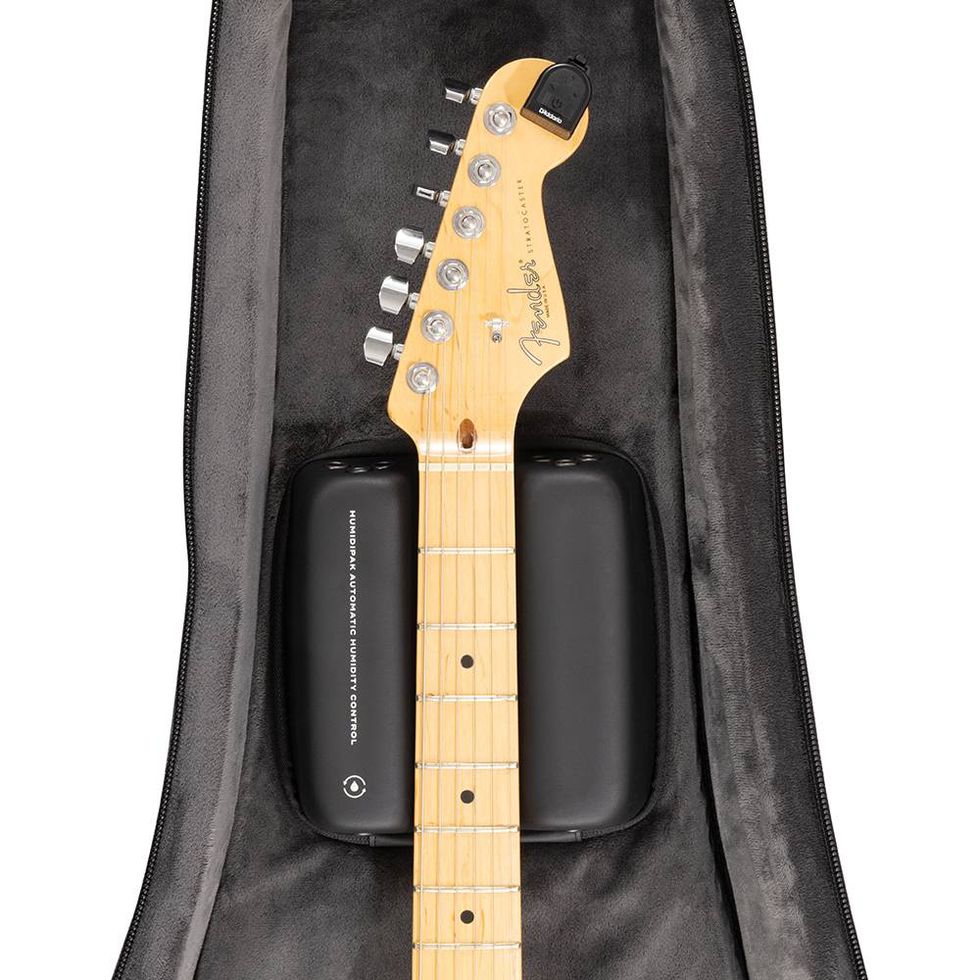
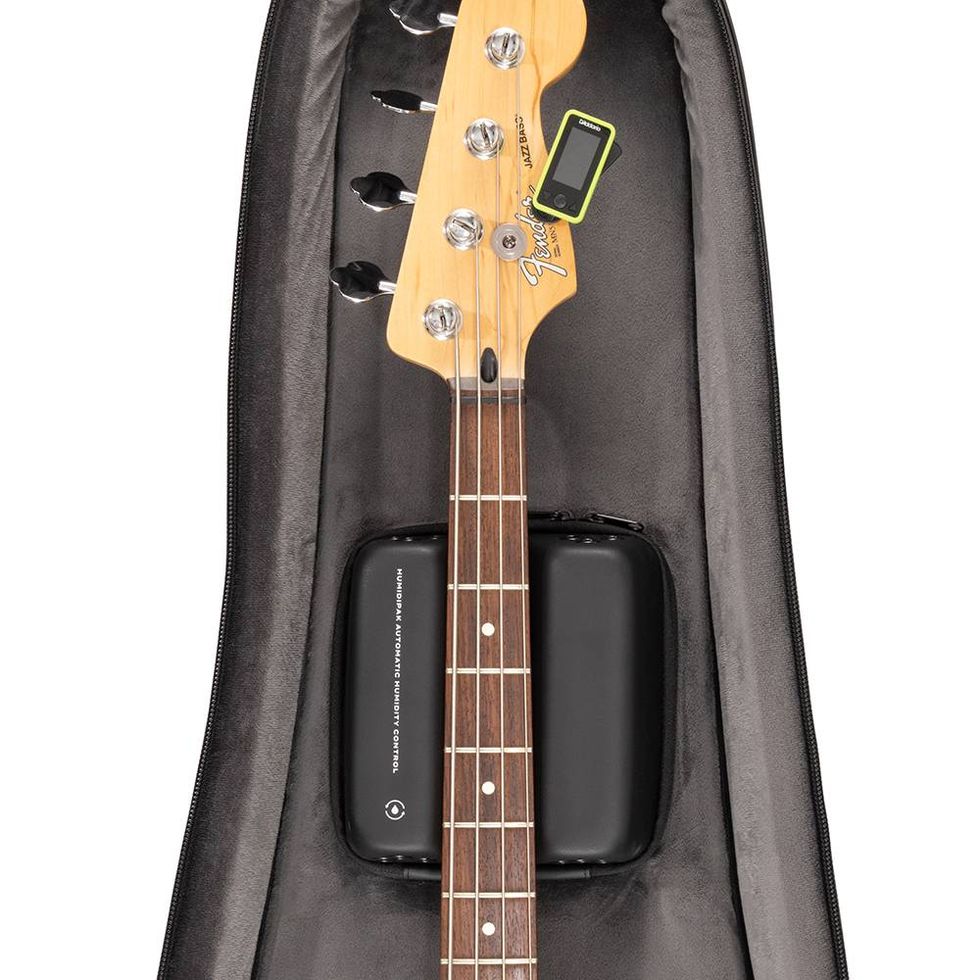
At the center of the design is a Humidipak™ Climate-Control Neck Cradle, which houses integrated two-way humidity control to help keep guitars and basses performing at their best while in transit or storage, no matter what environment you’re playing in.
With balanced ergonomic straps, a cushioned back panel, and premium protection throughout, Backline Cases are built to go wherever musicians do.
Key Features
Rugged Water-Resistant Exterior: Coated diamond ripstop polyester is built to withstand the demands of travel, gigs, and everyday use.
Humidipak Climate-Control Neck Cradle: Patent-pending two-way humidity control helps keep your instrument in peak playing condition.
Plush Interior with Tear-Resistant Panels: Soft-touch protection where it matters, with added durability in high-wear areas.
Breakaway Bag with Auto Lock Security: Detachable accessory bag keeps essentials organized and securely attached.
Balanced, Ergonomic Straps & Cushioned Back Panel: Weighing less than seven pounds, they’re designed for comfortable carrying from the practice room to the stage.
The D'Addario Backline Electric Guitar and Bass Cases each carry a street price of $299.99. D’Addario’s Backline Acoustic Case will be coming later in 2026. For more information visit daddario.com.
D'Addario
Backline Electric Guitar and Bass Cases
June 11, 2026 -- D'Addario has unveiled the all-new Backline Electric Guitar and Bass Cases: premium transport solutions designed to deliver instrument protection, user comfort, and accessory organization, all without the bulk of a traditional hard case.
We are absolutely thrilled to welcome back slide guitar legend Derek Trucks for his second appearance on the show. In this episode, we dive deep into the Tedeski Trucks Band's incredible new album, Future Soul, and discuss what it was like shaking things up with versatile producer Mike Elizondo. Derek also shares wild behind-the-scenes stories from their epic 10-night residency at the Beacon Theatre, including surprise sit-ins from icons like Cyndi Lauper and Jaimoe.
Guitar nerds, you won't want to miss this part: Derek tells us what it was actually like to play Jerry Garcia's legendary "Tiger" guitar and Frank Zappa’s fast-playing "Baby Snakes" guitar live on stage. We also swap stories from the Sun, Sand and Soul Festival, explore the true meaning of musical mastery, and discuss the physical toll of his unique hand-playing style. Tune in for a masterclass on the guitar and an unforgettable hang!