

The history of the bolt-on guitar neck joint is often told as a Leo Fender story, but it’s really about how replaceability and modularity came to the guitar sphere. Despite that, beneath every argument about sustain and resonance lies a deeper question: what kind of object is a guitar supposed to be?
For centuries, the answer seemed obvious. Long before the electric guitar existed, stringed instruments were built around the assumption that neck and body belonged together. Violins, cellos, lutes, and classical guitars employed mortise-and-tenon or dovetail joints secured with hide glue, creating an intimate union between the instrument’s major structural (and tone producing) components. Early steel-string acoustics and carved archtops inherited this tradition without question. The glued neck was not merely a construction method; it was part of an entire philosophy of instrument making. A guitar was conceived as a singular object, born whole and expected to age as such. Even the cast aluminum Rickenbacker “Frying Pan” from 1932 was a single piece, taking the concept to the max.
In that world, repair itself reinforced the idea. Neck resets and delicate joint work were accepted rites of passage in an instrument’s life. A neck might be removed, but only through a skilled and somewhat invasive process. The relationship between neck and body resembled marriage more than assembly—with all the benefits and arguments.
Then came Leo Fender.
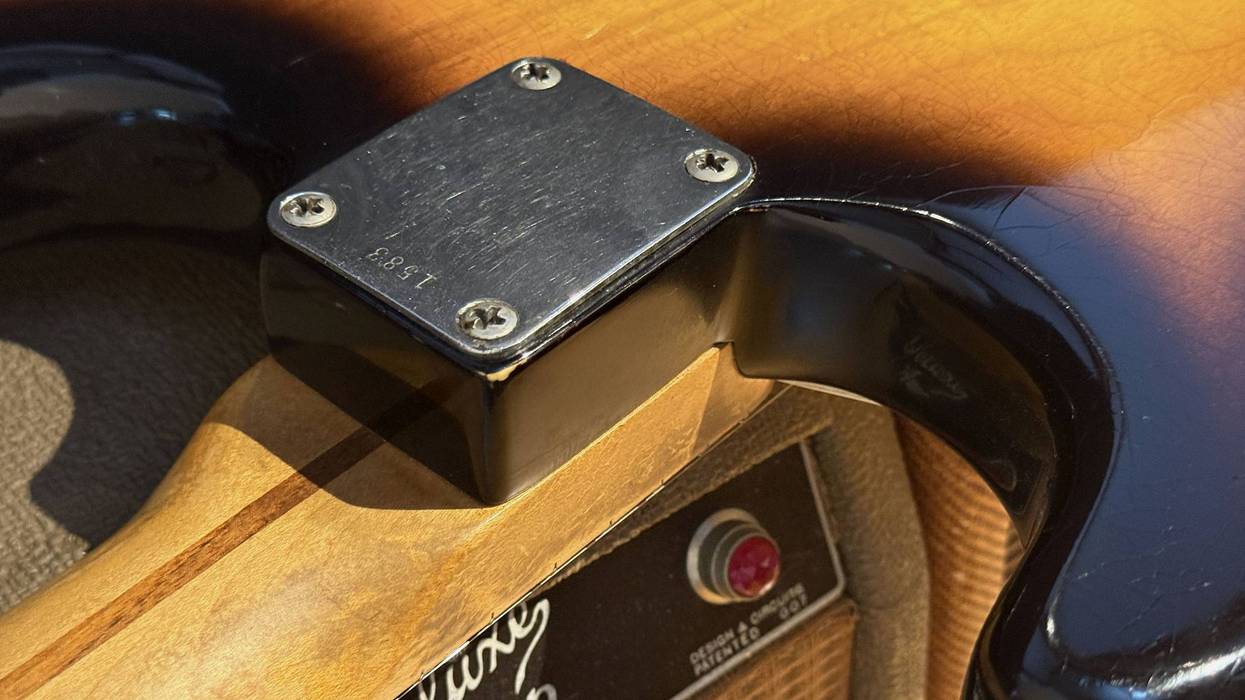
To be clear, guitars with screw or bolt-on necks had been marketed as early as the 1920s. The Stromberg‑Voisinet/Kay Kraft archtops from the 1930s even featured adjustable neck pitch. But when Fender introduced the Telecaster, it introduced a radically different understanding of guitar manufacturing. It was not conceived as an acoustic ideal. It emerged from the practical logic of Detroit industry. Bodies and necks could be fabricated separately, finished separately, inventoried separately, and united at the final stage of production. Repairs became simpler and cheaper. Variability became manageable. Most importantly, the neck ceased to be a permanent partner and became a module. This conceptual shift is difficult to overstate. Fender transformed one of the guitar’s defining structural elements into a replaceable component. Four screws and a neck pocket accomplished what centuries of instrument-making tradition had never contemplated.
The industry soon divided into two distinct cultural camps. Bolt-on instruments became associated with practicality, clarity, and twang. Elsewhere, companies like Gibson, Gretsch, Guild, and Rickenbacker doubled down on set-neck construction. There, the fixed neck remained a symbol of continuity with violin-making traditions, craftsmanship, and legitimacy. Over time, these manufacturing decisions hardened into mythology. But whether or not the physical reality justified such certainty is debatable, the cultural meanings endured and became codified.
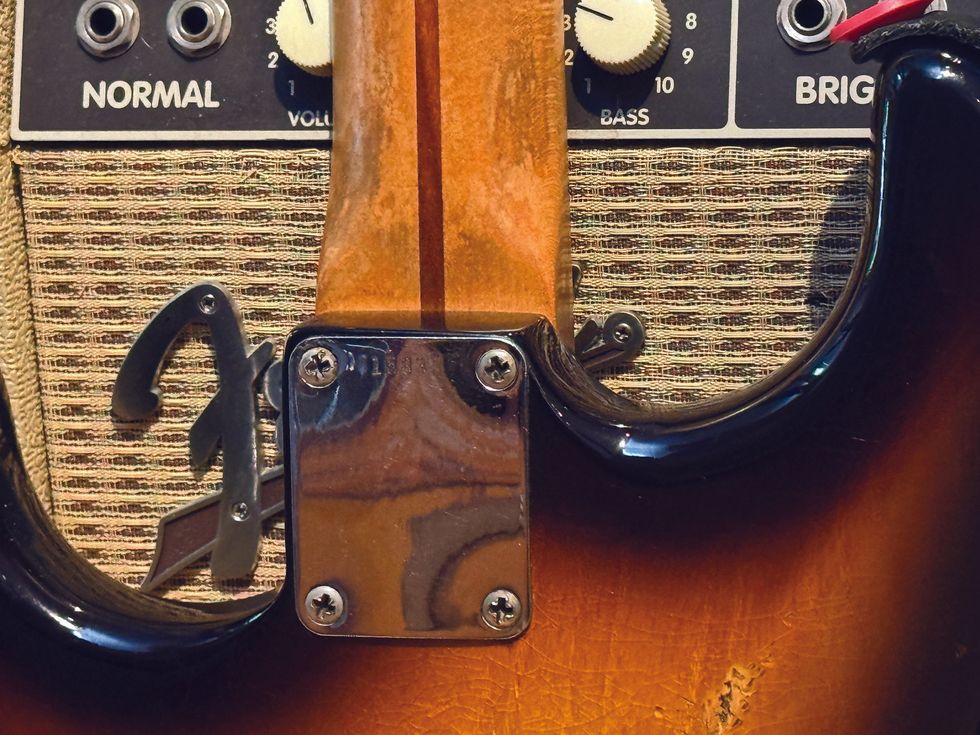
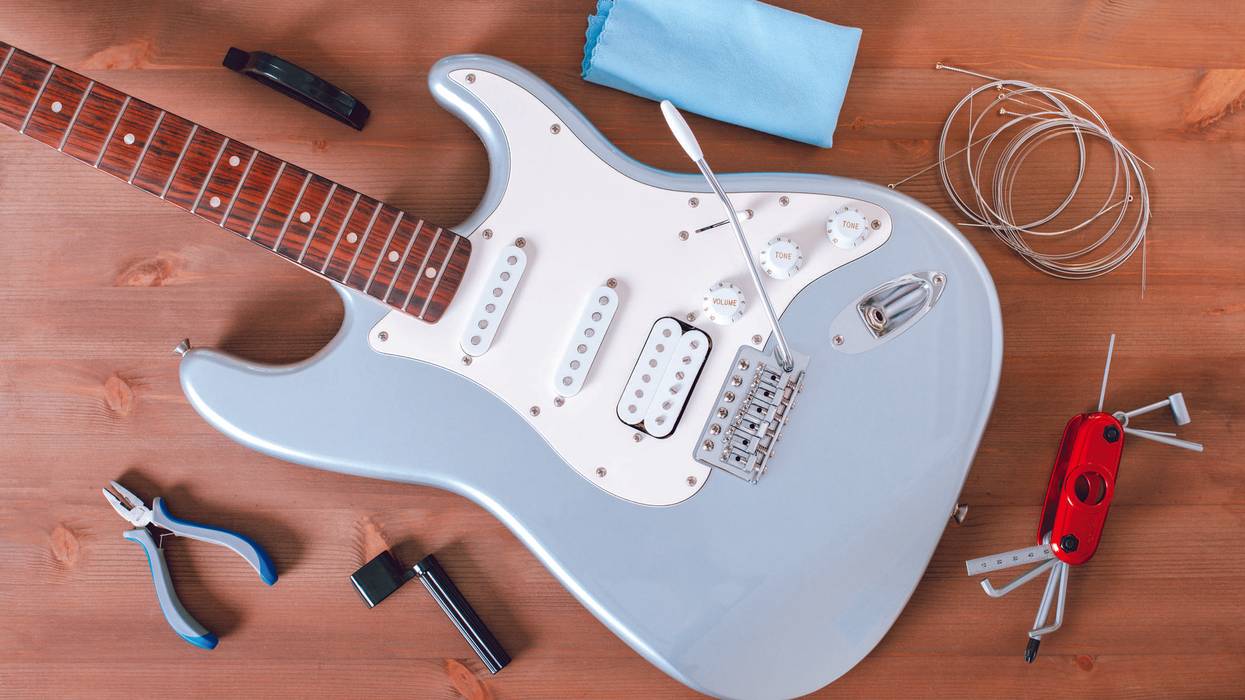
As decades passed, both approaches have evolved. Early bolt-ons were bluntly functional: flat pockets, wood screws, and steel neck plates. Still, builders set about refining the concept. CNC machining produced neck pockets of remarkable precision. Sculpted heels softened the once-abrupt transition between neck and body. Machine screws threaded into metal inserts pushed mechanical consistency beyond what Leo Fender (and vintage purists) felt necessary.
Set-neck construction has evolved as well. Traditional dovetails have given way in many production environments to more standardized mortise-and-tenon joints. Technology brought unprecedented consistency to neck angles and joint geometry. As both systems matured, many of the practical differences narrowed. A well-executed bolt-on could feel seamless. A precisely fitted set-neck could be astonishingly consistent. The old assumptions survive largely because they have become part of guitar culture itself.
Repair reveals the deepest distinction. A bolt-on remains fundamentally serviceable. Neck replacements, profile changes, and even scale-length experiments can be relatively straightforward. A set-neck guitar, meanwhile, remains committed to permanence—its repairs are often more invasive, and potentially more expensive.
Existing in the background of this long-standing debate is the neck-through design, the logical endpoint of continuity. Here, the neck is no longer attached to the body in the traditional way. It becomes part of the body, extending uninterrupted beneath the bridge and pickups. Utilized by makers like Rickenbacker, and later embraced by builders in the 1970s and 1980s, neck-through construction represents maximum integration and minimum modularity. If the bolt-on celebrates replaceability, the neck-through celebrates unity. Heaven help you if you need repairs.
Seen from this perspective, neck joints might not be categories, but points along a spectrum. At one end lies serviceability, at the other lies permanence. Today, no approach occupies a higher evolutionary rung. Each method is also at the mercy of a hundred other decisions a builder must make. So, the choice is rarely about quality or sound alone. Instead, the construction choice reflects a builder’s (and therefore the player’s) assumptions about identity, maintenance, sound, and the relationship between parts and the whole. In this subjective battle, where do you stand, and why?