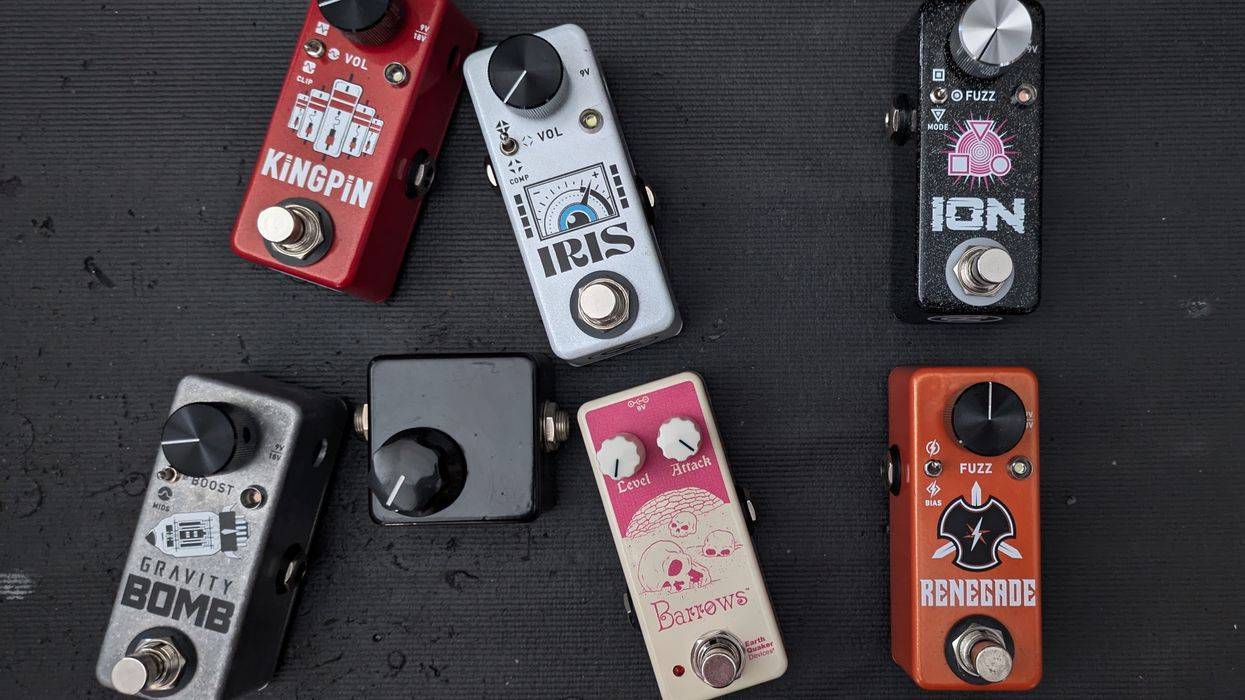

In the pulse of modern musical creativity, a familiar technological current is rising again: onboard effects. At NAMM 2026, leading guitar and gear manufacturers reintroduced the idea of integrating effects directly into the instrument itself. To seasoned eyes, it feels less like a revelation and more like a chapter reopened. What we’re witnessing is a recurring tension—between innovation that promises convenience and the historical cycle that has repeatedly challenged mass adoption.
That’s our point of departure: Are today’s onboard effects headed for a different ending than their predecessors, or are we simply watching another determined attempt to discover the electric guitar’s most ideal form?
The Core of Integration: Accessibility and Definition
Why does onboard processing keep resurfacing as an oasis in the gear desert? The answer rests on two straightforward pillars: practicality and accessibility.
For some players, stacks of stompboxes and tangled cables are not romantic—they’re logistical friction that distract from the music itself. Integrating effects directly into the guitar offers an all-in-one solution, shortening the gear chain and simplifying the ritual. Second, knobs embedded in the body allow players to shape parameters on the fly, without stepping on a pedal or shifting position.
Historical Echoes: Innovation on Repeat
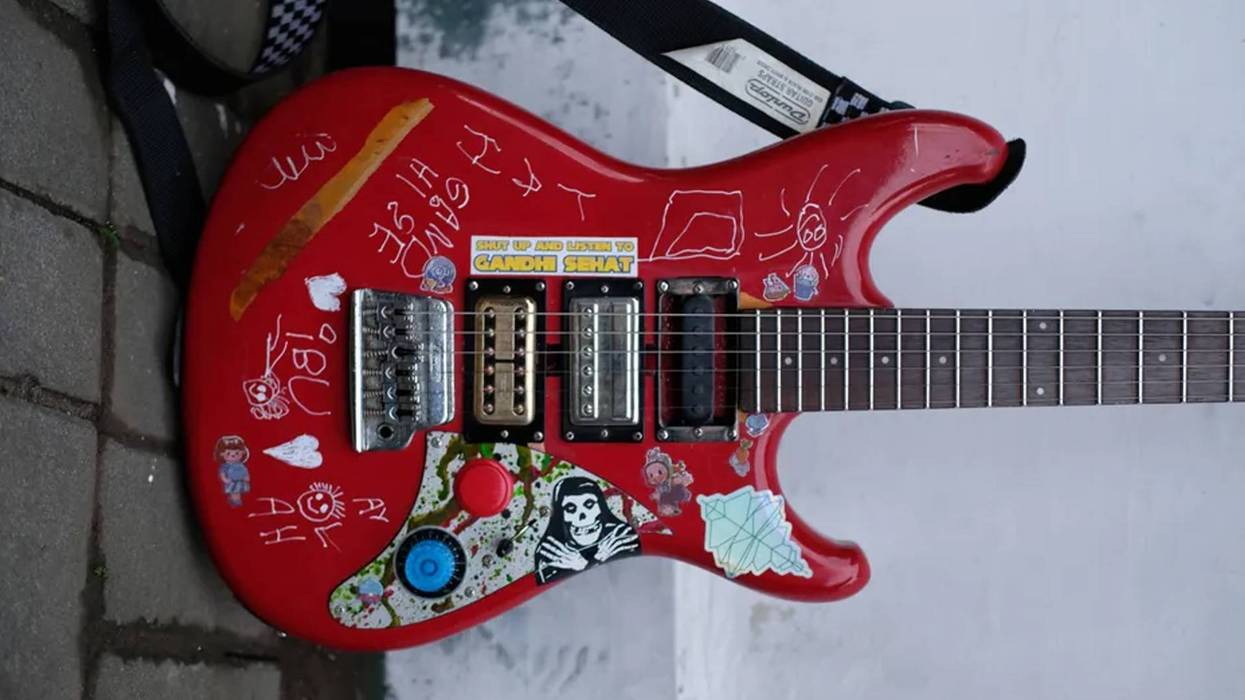
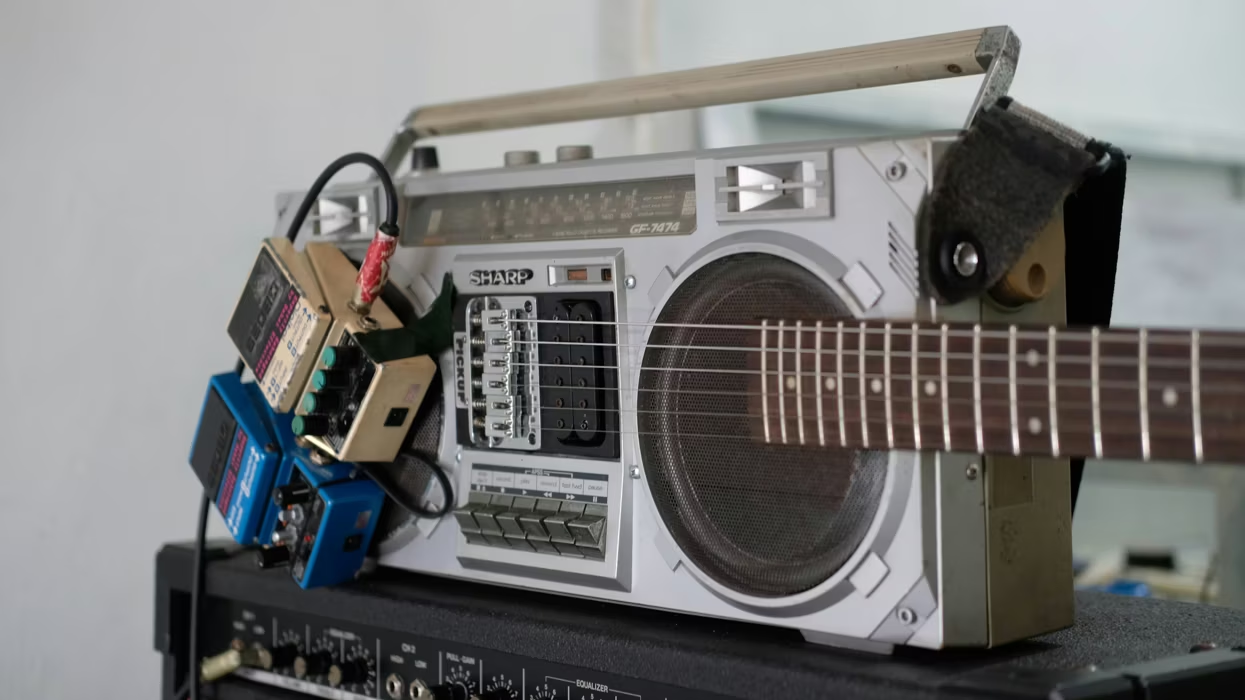
In the early experimental era, boundary-breaking examples of onboard effects appeared with unapologetic honesty. In the 1980s, Devo’s Mark Mothersbaugh famously taped a Boss DS-1 directly onto his guitar. It was crude, but conceptually pure. In the 2000s, Muse guitarist Matthew Bellamy worked with Manson to embed a Fuzz Factory and MIDI pad controller into his instruments. On sci-fi surf-punk stages, Man or Astro-man? turned bass guitars into canvases for drum pad modules. These were functional manifestos with little concern for cosmetic subtlety.
Major manufacturers have also taken serious swings. Roland, Casio, Gibson, and Mooer have all released guitars with internal effects. Their narratives differed, their technologies evolved, but the underlying belief was consistent: Integration has a market.
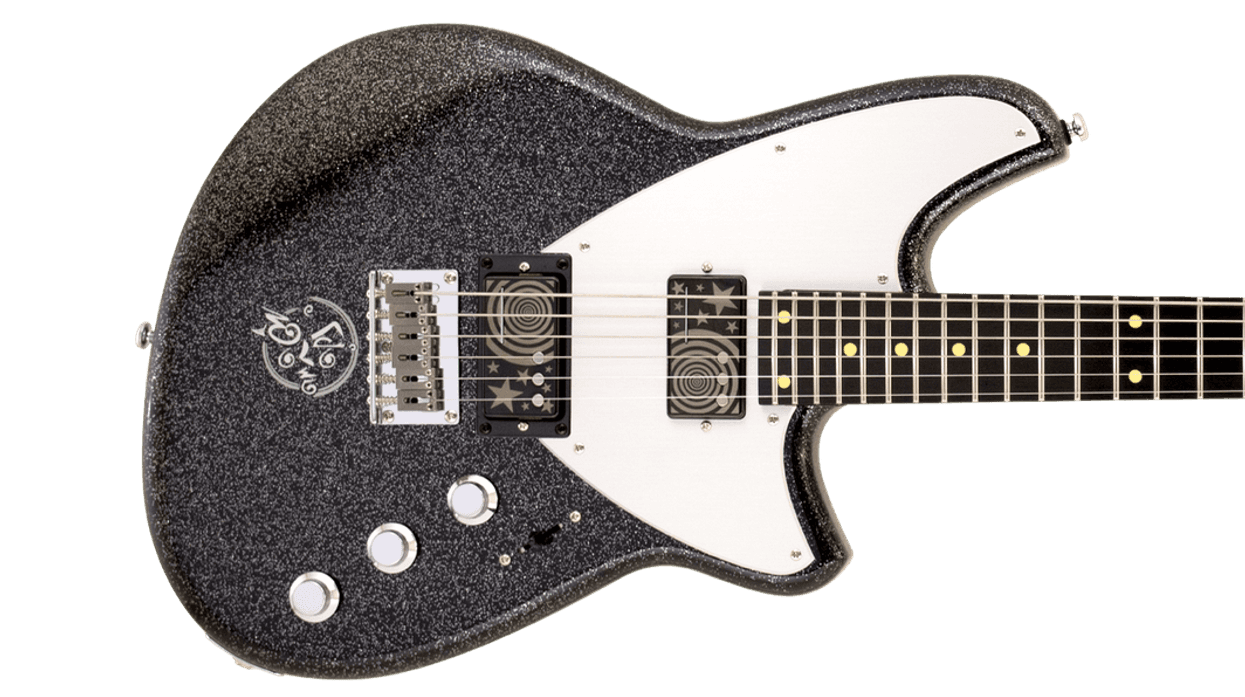
Today, the torch is carried by boutique builders such as Blitz Guitar and Shark Guitars, alongside larger players like Mooer and Strandberg. The emphasis has shifted from gimmickry to genuine value propositions—sound quality, utility, and build integrity.
And yet, history offers a sober reminder. Despite repeated attempts from the 1980s through the 2020s, onboard effects have not triggered widespread adoption. This is not a failure of manufacturers. It is a question left unanswered: What was missing from previous formulas?
Conceptual Boundaries and Functional Truths
Innovation often creates blurry terminology. In reality, electronic integration inside guitars is nothing new. Acoustic preamps and onboard EQ systems are, functionally speaking, onboard effects. Sustainer pickup modules alter electromagnetic feedback to extend string vibration. Active pickups require power and internal circuitry to amplify the signal. Their purpose is not “effect” in the traditional sense, yet their circuitry undeniably shapes tonal character in ways passive pickups do not.
“In the 1980s, Devo’s Mark Mothersbaugh famously taped a Boss DS-1 directly onto his guitar.”
The modern iteration of onboard effects must transcend definitional silos. It must prove itself as the most functional and compelling integration available. I still remember how bold the Gibson Firebird X felt—a futuristic leap that ultimately ended under a tractor. History can be unforgiving.
Between Sacred Tradition and the Future
Today’s onboard movement represents a declaration of optimism. It is a wager by manufacturers and luthiers willing to ask whether musicians are ready to see their instruments not as untouchable artifacts, but as adaptive platforms.
The challenge remains the same one Roland faced in the 1980s: deliver functional advantages that decisively outweigh psychological resistance to tradition. If modern builders can offer studio-grade sound, update flexibility, and, above all, uncompromising reliability, history may finally lean in their favor.
The electric guitar is more than wood, strings, and pickups. It is an extension of expression—sentimental, personal, almost agricultural in its intimacy, like a farmer’s hoe serving as an extension of the will to work and survive. If onboard effects can deliver expression that is faster, more direct, and more personal, they may cease to be a recurring trend and instead become an evolution that finds its path to mass adoption.
This is the chapter unfolding before us. Whether innovation finally prevails—or the electric guitar remains too sacred to alter—depends not on nostalgia, but on execution.