Introduced in 1951, the FenderTelecaster changed the course of music with a design that was bold in its simplicity. Unlike anything that came before it, the Telecaster was built from the ground up around the needs of working musicians — Leo Fender famously sought direct feedback from the players themselves, shaping every detail of the instrument around what artists actually wanted. The result was a guitar built with everything a player needed, unlocking a new level of expression. Its cutting tone, unmistakable silhouette, and workhorse reliability quickly made it the instrument of choice for artists across genres.
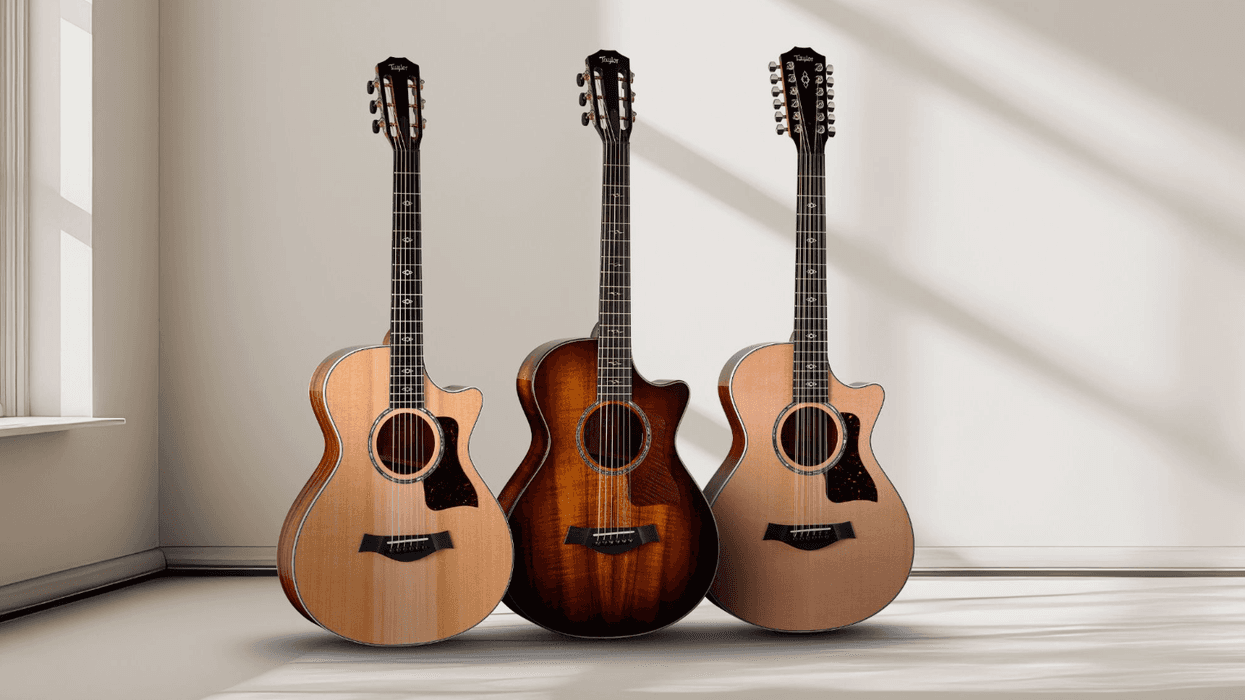
75th Anniversary American Ultra II Telecaster - The pinnacle of Telecaster evolution featuring a stunning Liquid Gold finish, ebony compound radius fingerboard, and advanced pickup system with dual S-1 switches. Combines 75th Anniversary Noiseless Single-Coil and Fastlane humbucker for unprecedented tonal versatility without hum.
Nashville guitarist Jack Ruch has made a name for himself on YouTube and Instagram, where he shares lessons and instructional videos that help guitarists take their playing to the next level. But he can be found performing all the time on stages around Music City, too, and back in March, he appeared at 3rd and Lindsley. That’s where PG’s John Bohlinger caught up with him for this Rig Rundown, which covers Ruch’s tasteful, tone-ful live rig. We’ve summarized the highlights below, but tune in to the video for all the details and sound samples.
Ruch depends on this trio out on the road. The 1963 Gibson ES-335 is his favorite, and his main instrument. It features original nylon saddles, which he says help mellow the brightness of the neck pickup (where he spends most of his playing time).
To its left is a Danocaster T-Style, built by Dan Strain in West Nashville specifically to look like Robben Ford’s Telecaster. It’s used for “Tele things,” and features ThroBak pickups, providing a neutral, versatile sound. Again, the neck pickup is Ruch’s home turf.
On the right is Ruch’s Historic Makeovers Les Paul, which he acquired earlier this year at Historic Makeovers, just north of Orlando, Florida. This LP was modified with a Brazilian rosewood fretboard and a reshaped neck. Ruch ordered it online without playing it, and so far, he couldn’t be happier with the decision.
All of Ruch’s guitars have D’Addario NYXL strings (.010–.046).
Dynamic Duo
Ruch runs a classic combination of a Fender Princeton Reverb (circa 1966, Ruch believes) and a boutique clone of a Fender tweed Deluxe, built by Lazy J in England. The Princeton has an old 10" Eminence speaker, and the Lazy J has a Celestion Blue. Both are set for clean rhythm tones.
Jack Ruch’s Pedalboard
Ruch’s tidy board was assembled by the gurus at Nashville’s XAct Tone Solutions. It includes a TC Electronic PolyTune 2 Noir, Analog Man King of Tone, Vemuram Budi-G, Analog Man Boss TR-2, Strymon Brigadier, and Catalinbread Topanga.
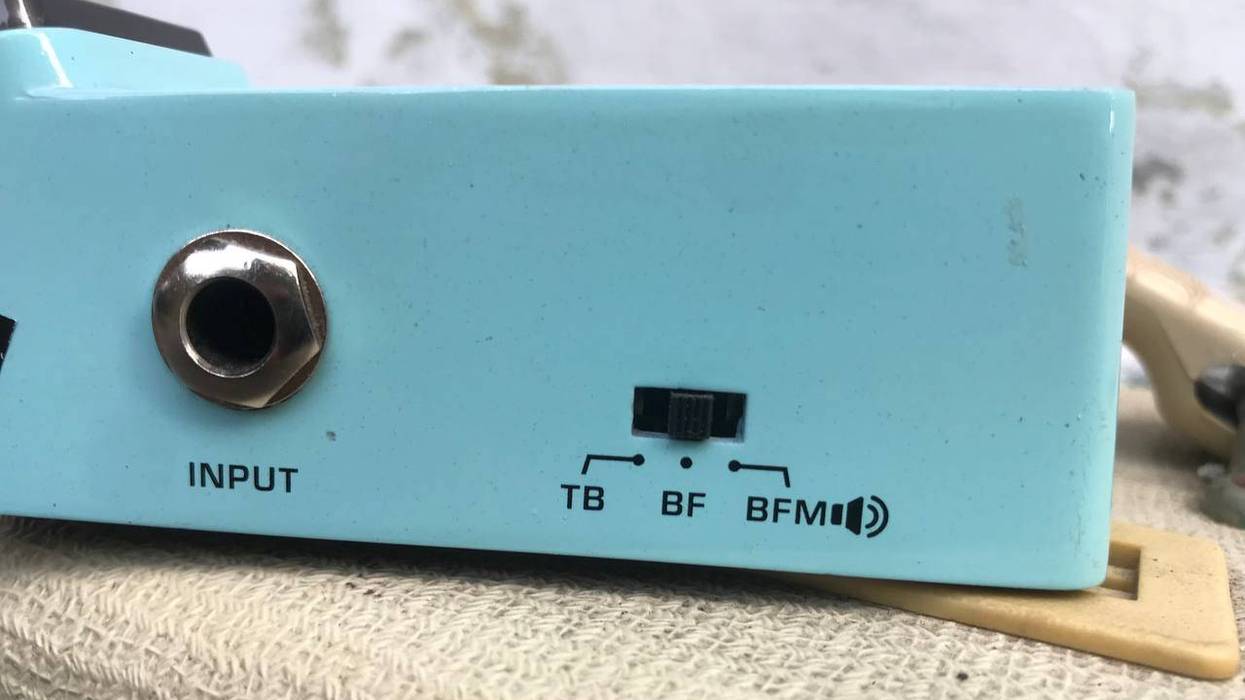
Pathways brings tremolo and reverb together in one compact pedal designed to feel great the moment you plug in. From spring reverb twang and classic amp tremolo to wider, more spacious textures, Pathways delivers sounds players reach for again and again - organic, musical, and easy to dial in.
An amp as versatile as it is powerful, with clean tones that are just as compelling as its high-gain roar.
Orange’s calling-card is, in the minds of many, a thick, coppery, and compressed high-gain roar. But for an amp that kicks this hard, the OR60 excels at translating the tonal qualities of a guitar with refinement and balance, and it’s a more subtle and nuanced creature than you might expect. In this respect, it’s much more like a late-'70s Marshall JMP with pre-gain than a hot-rodded Soldano or Bogner. The OR60 ably covers tones ranging from funky when clean to absolutely feral when cranked. And while the single-channel configuration suggests a narrow voice, there’s a massive range of timbres to explore—from chimey to chunky to charging-rhino, and all points in between.
Literal weight aside, the 43-pound OR60 is a heavy hitter that’s not mere high-octane hype. It doesn’t just sound good—it sounds vivid. Real. True. Three-dimensional. If it were an album mix, you might say it has terrific “imaging.” Even at the kind of high gain settings where Orange excels, it grabs onto the essence of your favorite axe without compromising it—a quality that defines most great classic amps. The OR60 is happy doing all this loudly, and no one is going to mistake the amp for a studio-specific low-watt boutique head or a Swiss Army knife modeling unit. Even through a modest Orange PPC212V 2x12 cabinet, this tangerine titan’s 60 watts of twin-6L6 power throw around the kind of sonic weight you’d expect from a 50- or 100-watt half-stack. Still, it has a great clean-to-dirty range.
Orange
OR60-V3 60-watt Amplifier Head
60W, 1-channel Tube Guitar Amp Head with Power Scaling, Bright Switch, Presence and Resonance Controls, FX Loop, and Volume Footswitch
California singer-songwriter Madison Cunningham earned her first Grammy nomination in 2019, when she was just 23. A few years later, at 26, she won the Grammy for Best Folk Album, for her 2022 record, Revealer. Last year, she released her latest collection, Ace, her third with the storied label Verve Forecast.
Back in March, PG’s John Bohlinger met up with Cunningham for this new Rig Rundown at Third Man Records in Nashville, ahead of her show in the label’s Blue Room. Check it out!
This Martin classical-style is Cunningham’s primary guitar. She uses a unique tuning (B–F#–C#–E–G#–B) that creates what she describes as a suspended-chord sound. Cunningham hasn’t changed a thing on this one—not even the strings.
Rubber Match
Cunningham’s friend and longtime collaborator Tyler Chester lent her this Silvertone acoustic, which had been fixed up with a rubber bridge and pickup by Reuben Cox of Old Style Guitar Shop in Los Angeles. After some time, Chester insisted that Cunningham keep it; he figured the guitar wanted her now. It’s strung up with flatwounds.
New Novo
This Novo Serus, tuned to drop C, is brand new to Cunningham, who digs its similar-but-different take on the Jazzmaster design.
Grab and Go
This Fender Princeton combo is Cunningham’s go-to for both studio and stage purposes.
Madison Cunningham’s Pedalboard
Cunningham’s board includes an Ernie Ball VPJR Tuner pedal, Boss RC-5 Loop Station, JHS Milkman, JHS 3 Series Fuzz, DigiTech Whammy, Hologram Chroma Console, Cunningham’s signature JHS Artificial Blonde, and Universal Audio Galaxy ’74 Tape Echo and Reverb.