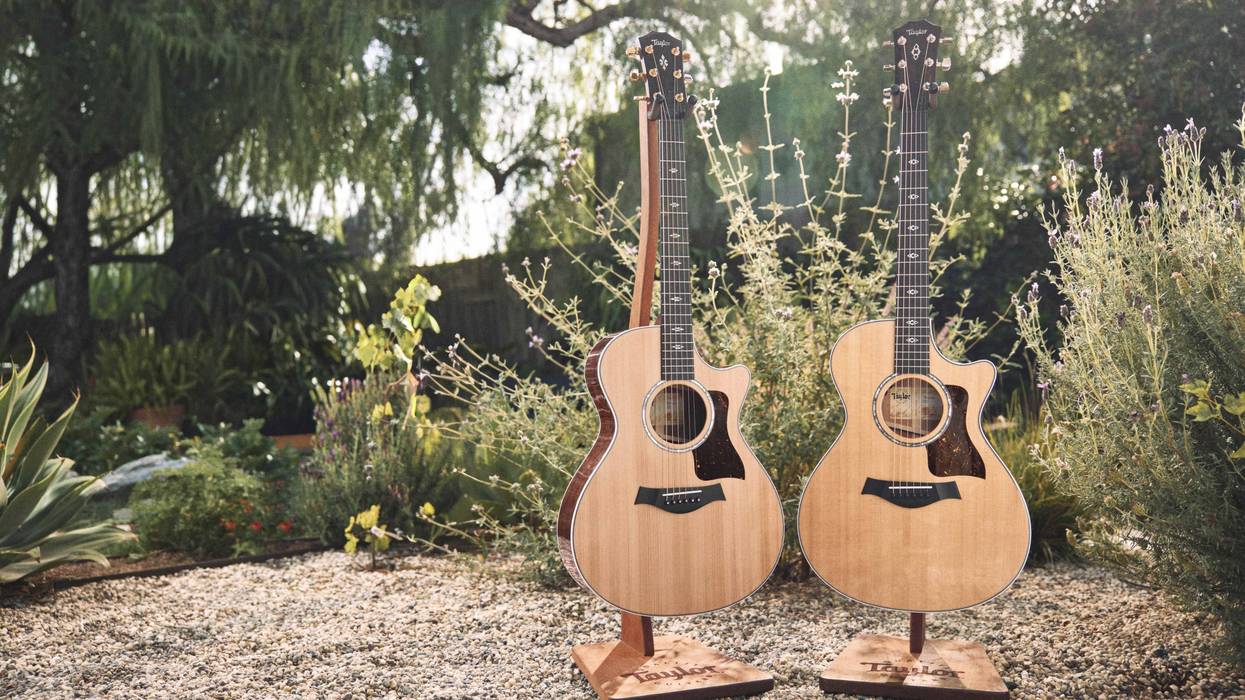
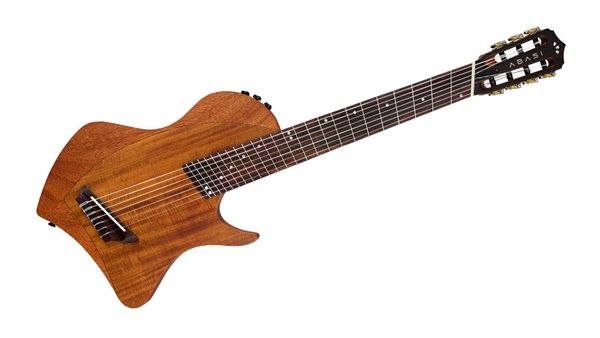
If owning a 7-string, nylon/classical, multi-scale, fanned-fret acoustic-electric guitar was not on your dance card for this year, you’re not alone. At first glance, the unusual Córdoba/Abasi Concepts Stage 7 doesn’t scream “essential gear.” In spite of the demonstrable refinements 7-strings deliver in string tension and intonation, fanned-fret multi-scale guitars remain a curiosity for most players. And despite a long history in classical music and modern jazz—from Spanish legend Narciso Yepes to Bay Area jazz god Charlie Hunter—extended-range guitars in 2026 are most likely to show up in the hands of nu-metal, progressive metal, and djent bands not widely known for their sensitive renditions of “Romanza.”
Setting the Stage
Nylon-string guitars are probably not what most electric players reach for given the choice—even among those of us with some classical training. Of course, most of us are not Tosin Abasi or Javier Reyes, the twin virtuosos behind Animals as Leaders, who have pushed the technical boundaries of fusion, funk-rock, and metal on 7- and 8-string guitars for two decades. Abasi Concepts, the company Tosin co-founded in 2017, is re-thinking 6-, 7-, and 8-string guitar design in a similarly adventurous way.
The seeds of the Stage 7 are clearly visible in Abasi electric models like the EMI, Legion, and, of course, the flagship Larada—on whose body design the Stage 7 is based. Even with its chambered mahogany body, spruce top, and attractive acacia wood veneer, the Stage 7 is still just 1.62" thick—thinner than an ES-335—so despite its oval topside soundhole, it’s more an electric than an acoustic guitar. But really, that’s the point. Abasi himself has explained that the Stage 7 is designed to enable 7-string electric players to perform with plectrum or hybrid-picking on nylon without needing to adjust to either the wider string spacing or limited access to upper frets typically found on traditional classical guitars. Unlike most classical guitars, the Stage 7’s carved set-neck joint offers easy access to all 24 frets. The C-shaped mahogany neck’s 16-22" compound radius and rosewood fingerboard feels relatively organic for scales and chords in all positions.Fanning the Flames
Though a primary purpose of multi-scale design is to maintain equal string tension for that fat low-B string and the high-E, the Stage 7’s initially intimidating fanned-fret design turns out to be far more playable, and far easier to adjust to, than you’d think. We often think of traditional right-angle frets as more intuitive, but it’s undeniable that the wrist and fingers of our fretting hand want to turn out slightly at both extremes of the fretboard, with a more up-and-down posture in the center. As I played the Stage 7, I became aware that despite the atypical fret fanning, my actual fingerings and spread weren’t much different than they are on a traditional neck, and were arguably more naturally aligned. Adjusting to the 7-string format—typically tuned B-E-A-D-G-B-E— after years as a 6-string player may actually be the bigger challenge for traditional electric and acoustic players.
Grooming the Pups
As an acoustic instrument, the Stage 7 is not especially resonant. But that is a deliberate design move meant to fight feedback in amplified situations. That could be an issue for many classical players, but Córdoba added a Fishman Stage pickup system, blending an under-saddle piezo pickup with sensors that capture body resonance as well as tapping and other percussive techniques. (You can blend those sources via the body blend control located on the Stage 7’s upper bout, next to its volume and EQ controls.) Nylon strings are particularly susceptible to piezo quack, but I found it less prominent in the Stage 7’s output than on some other acoustic-electric nylon-string guitars I’ve played. Still, the Stage 7’s Fishman piezo benefits mightily from a warm analog preamp, light compression, and darker-toned reverbs.
The Verdict
While it’s certainly not the world’s first 7-string “classical” guitar—brands like Ortega, Thomann, Ibanez, and Córdoba themselves have been making them for years—the Córdoba/Abasi Stage 7 could bring many more 7-string electric players into the nylon-string world. Its fanned-fret, multi-scale neck requires a period of adjustment, and sure, 6-string stalwarts will encounter a significant learning curve when it comes to reaping the harmonic potential of seven strings, so you should consider the playability score on a sliding scale depending on your comfort and experience. Still, the recent Stage 7 performance videos from Abasi Concepts, featuring Abasi’s remarkable hybrid-picked hammer-ons and Reyes’ more traditional rest-stroke counterpoint, make the case: For those who commit to mastering it, the Abasi Concepts Stage 7 promises access to intensely fascinating musical terrain.