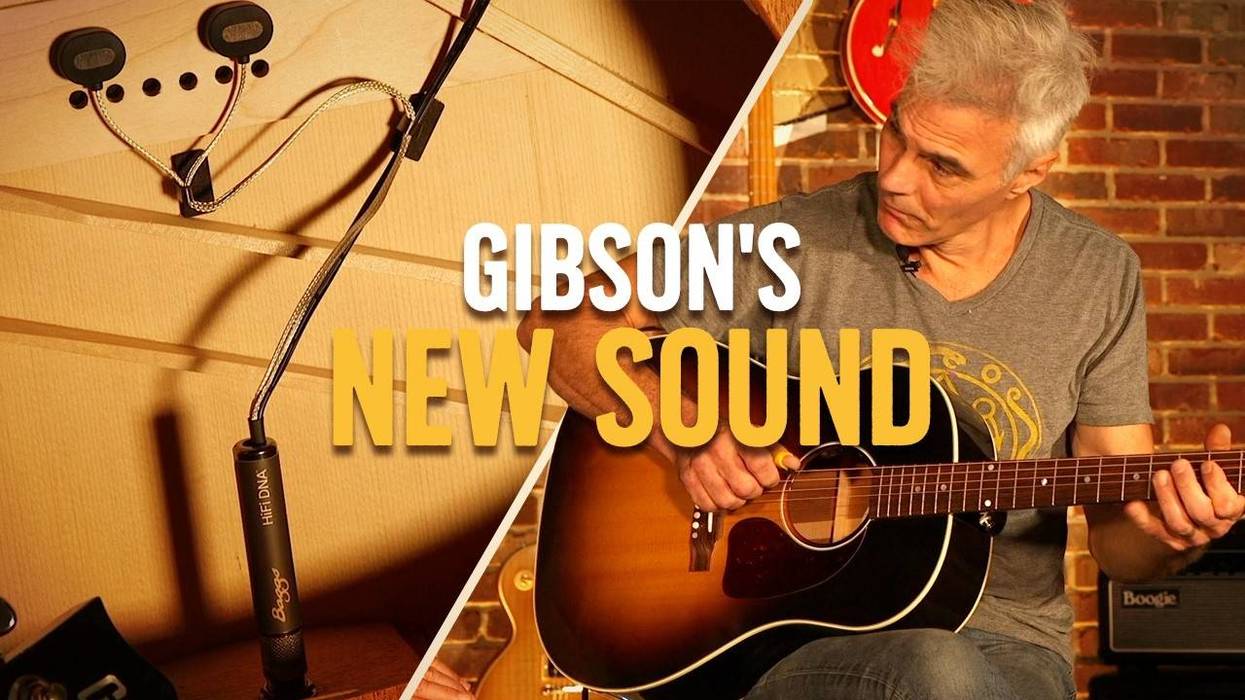
Slash’s tone is often regarded in gear circles like buried treasure—elusive, highly coveted, and shrouded in the mystique of modified vintage Marshalls and “Holy Grail” '59 Les Pauls. For most aspiring players, achieving that sound feels unattainable due to the specificity of the gear and the level of precision required to capture his Appetite for Destruction-era tone. In the first installment of a new video series, Blueprints, PG contributor Tom Butwin demonstrates that the "blueprint" isn't a locked vault; it’s a set of principles you can follow using modern, accessible tools.
Epiphone
IGC 1957 Les Paul Goldtop Reissue, Double Gold
An Inspired by Gibson Custom reissue of the classic humbucker-equipped ’57 Goldtop –
1957 was the year that the Les Paul™, as most players think of it today, truly came into its own. It was the first full year that it had Patent Applied For humbucker™ pickups installed. The humbuckers, along with the ABR-1 Tune-O-Matic™ bridge and Stop Bar tailpiece that first appeared on a Les Paul with the introduction of the Les Paul Custom in late 1953 and on the Goldtop in late 1955, were defining features that many players still prefer over the earlier models that had a wraparound bridge/tailpiece and P-90 pickups and made the Les Paul into a true fire-breathing rock icon. Now, Epiphone, in collaboration with Gibson Custom, is very proud to introduce the 1957 Les Paul Goldtop Reissue, a stunningly authentic Inspired by Gibson Custom reissue of those early humbucker-equipped Les Paul Goldtops that delivers vintage Les Paul looks and performance at an accessible price. The 1957 Les Paul Goldtop Reissue isn’t just a guitar; it’s a bridge to a symphony of possibilities, willing and ready to help you make your own mark on music history.
What sets the Problem Solver apart is its thoughtful array of features, carefully curated to empower your creativity. The AGE switch lets you tailor your tone stack to different eras – whether you crave the cutting-edge brilliance of 1963, the aggressive bite of 1966, the mid-heavy roar of 1981, or the warmth of 2023, it's all at your fingertips.
The Mid Boost switch elevates your highs and mids, ensuring your solos cut through the mix with unparalleled clarity. The Depth control allows you sculpt the low-end frequencies. And the revamped EQ controls provide a logical, intuitive layout, ensuring that you can sculpt your sound effortlessly, straight out of the box.
In the end, the Problem Solver Amplifier isn't just an homage to the past—it's a celebration of timeless tone, reimagined for the demands of today's musicians. Join us on this journey and discover a new era of sonic possibilities. Plug in, play, and let the music do the talking – the Problem Solver has arrived.
The Slash Octave Fuzz combines searing fuzz with a sub octave grow and an array of controls for fine-tuning your sinister sound.
This pedal can be powered by a 9-volt battery, a Dunlop ECB003 9-volt adapter, or the DC Brick™, Iso-Brick™, and Mini Iso-Brick™ power supplies (not included).
Limited-Edition Slash Signature Strings Set .011-.048
Ernie Ball introduces a limited-edition set of custom-wound Slash signature Slinky strings. Slash’s signature string sets are the culmination of over three decades of Slash and Ernie Ball’s ongoing pursuit to create strings that provide more durability and tuning stability without sacrificing tone or feel. These sets consist of Slash's preferred 11-48 gauge Slinkys wound with Paradigm core wire and plasma-enhanced nickel-plated steel wrap wire, while the Paradigm plain strings are constructed with a heavier brass wire reinforcement at each of the ball ends for better tuning stability and strength. These limited-edition string sets are highly collectible and conveniently packaged in a three-pack embossed tin for easy storage.
The groundbreaking DC7 has a one-inch (25,4mm) profile and weighs 1.1 pound (500 grams) thanks to the pure 2-stage switch-mode technology inside. The profile may be low but the power ratings are certainly not – the DC7 puts out a maximum of 48W and allows the user to connect multiple high-current effects such as devices from Effectrode, Line 6 and Eventide without noise of any kind.
SOL is the ultimate solution for bringing life to a small to medium-sized pedalboard setup, especially if you are using power-hungry pedals. SOL is the smallest mains-powered switch-mode power supply we make at CIOKS (no wall-warts here) and the no-frills design plus massive power will leave you free to focus on your creative spark.
This is it — the granddaddy of Pedalboard series. The MONO Pedalboard Large is a pro-sized and -featured pedal solution that won't weigh you down in size or cost. The Pedalboard Large is cut from a single piece of anodized aluminum for superior strength, light weight, and an elegant textured surface. Cutouts along the surface hide pedal jumpers and power cables for a streamlined, professional look. Rubber feet on the bottom absorb shock and prevent the Pedalboard Large from sliding across hard surfaces as you stomp.
Built for musicians chasing studio-grade clarity, the MONO Studio Instrument Cable delivers pure tone and zero compromise. Inside, 150 strands of 0.08 mm oxygen-free copper give you detailed highs, tight lows, and everything in between. Precision insulation keeps your signal clean from the first take to the final mix.
The Blondie co-founder talks early Stratocasters, fingerpicking punk riffs, CBGBs-era New York, and the cultural truth of electric guitars.
Chris Stein of Blondie joins the Axe Lords for a deep conversation about tone, technique, and the guitars that shaped Blondie’s sound from their early years at CBGBs to today. The Rock & Roll Hall of Famer also explains why he dislikes relic guitars, how he came to his very un-punk fingerpicking picking technique and reveals that some of the band’s most iconic “synth” sounds were actually produced by guitars. A thoughtful, opinionated, and unrelentingly wise-cracking look at creativity by a punk and new wave legend who Dave says is basically his best friend. Make sure to stick around through the end of the episode for a deep dive into the design and build of Cindy’s D&D guitar.
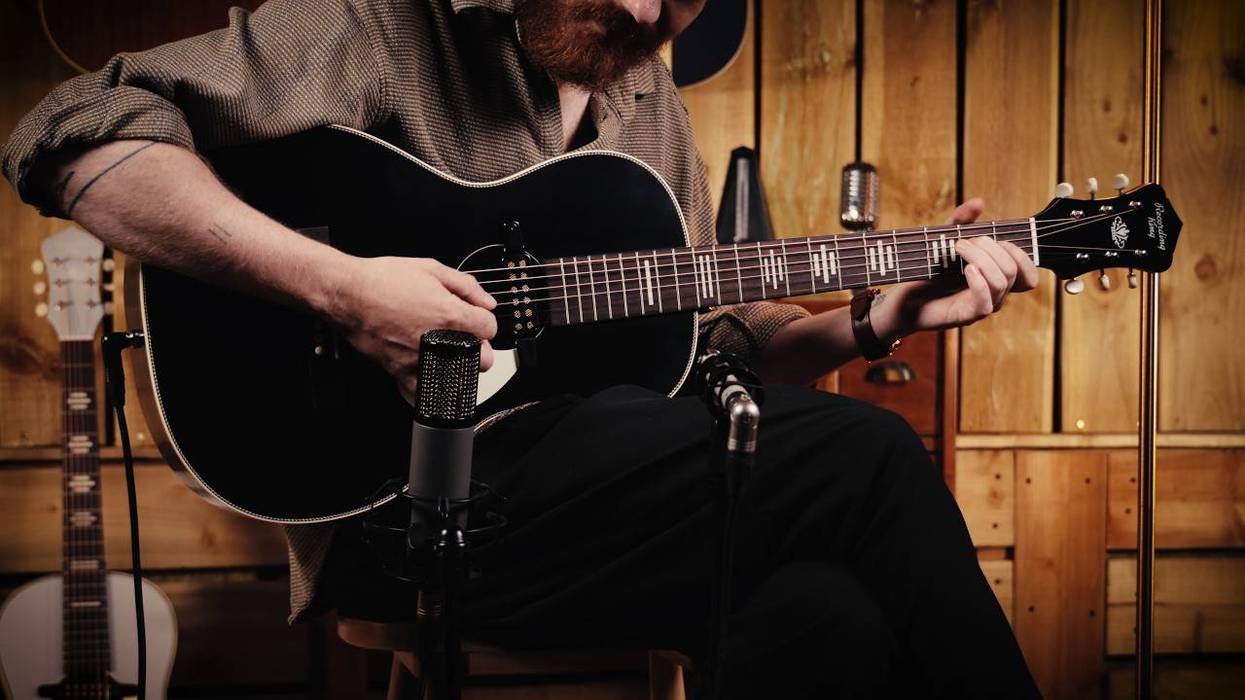
PG contributor Tom Butwin demos the new Fishman Fluence Acoustic multivoice pickups, breaking down the nondestructive design, dual-voice control, and three distinct models built for everything from solo fingerstyle to full-band stages.
Fishman
FLUENCE ACOUSTIC: ROCK ICON
All eras of rock have leveraged the driving sound of an acoustic guitar for depth and counterpoint. The Rock Icon delivers punch and clarity, with a killer second voice that sits above the mix.
Voice 1: Solos and clean picking. Dynamic and forward.
Voice 2: Vintage-inspired, riff-centric voicing. This is the acoustic tone that created legends.
When all eyes are on you, the Spotlight is there to help you shine. Its two voices provide warmth and articulation, making it well-suited for the solo artist or small ensemble.
Voice 1: Sweet and mellow, perfect for vocal accompaniment and more intimate arrangements.
Voice 2: Articulate and clear for solos or breaks, whether picking or playing fingerstyle.
The Nashville Legend’s two voices provide you with ultimate versatility, ideal for flatpicking or fingerstyle whether performing on stages big or small.
Voice 1: Forward, clear, and articulate. A natural, well-balanced tone.
Voice 2: Up-front, percussive, round, and clear. Great for cutting through the mix.
Andy Timmons' own one-stop reverb shop gets expansive with spring, plate, and more ethereal sounds.
Developed in collaboration with Andy Timmons, the NOCTURNE showcases a brand new reverb space based on our unique Halo delay algorithm. From subtle ambience to cinematic space, the NOCTURNE allows players to create that same expressive, touch-sensitive bloom that trails effortlessly behind every note, without the cross-talk rom echoes.
The NOCTURNE pedal gives you three new reverb modes — Nocturne, Spring, and Plate — each designed to be the guitar and amp’s perfect companion. The Plate reverb is based on our extensive analysis and modeling of the stereo tube plate reverb that was in Austin City Limits studio since the mid-1970s. The Nocturne’s Spring reverb features our finest sounds based on both stand alone reverb tanks and tube amplifier combos. The simple four-knob layout of Tone, Level, Decay, and Modulation makes it easy to shape each gorgeous reverb space. Each reverb mode can be made a preset so you can store your favorite sounds. Alt features include our first pre-delay time control, allowing you to create slapback echo effects.
The NOCTURNE offers a flexible signal path with True or Buffered Bypass, Expression Pedal control, Remote Switching, and MIDI compatibility for up to 72 presets. Whether you’re running mono or stereo, wet/dry, or full wet for parallel rigs, the NOCTURNE adapts easily to any setup. Built on Keeley’s award-winning Core architecture, every component and line of code is tuned to make this reverb feel musical and alive. Operation is easy with the Nocturne – if the indicator LED is blue then it's 'wysiwyg'; the knobs set the tone or level of each reverb mode. If the LED is red, each reverb is a favorite or preset, where you can save the settings for each reverb mode.
Keeley
Nocturne Reverb Pedal
The Keeley Nocturne reverb pedal introduces a new chapter in the collection of effects developed alongside legendary guitarist Andy Timmons. This versatile reverb pedal provides a wide range of sonic ambience, operating in three modes: Keeley-famous Spring reverb, studio-inspired Plate, and, of course, the immersive Nocturne reverb, derived from Keeley’s unique HALO delay algorithm. Featuring four main control knobs for extensive sonic shaping — Tone, Decay, Level, and Modulation — Nocturne is also equipped with HPF and Pre-Delay alt controls, mono/stereo capabilities, and a host of control jacks for expression pedal control, remote switching, and MIDI compatibility for accessing up to 72 recallable presets. Whether you're seeking the springy bounce of standalone tanks, a vintage sound inspired by the world-famous Austin City Limits Studio stereo tube plate, or the ethereal wash that inspired the pedal's name, the Nocturne delivers pure reverb bliss.
Back in August, at Cory Wong’s Syncopated Summer Camp in Nashville, Wong hosted a late-night interview and hang session with Italian guitar hero Matteo Mancuso. If you weren’t there, you’re in luck: This week’s episode of Wong Notes features that exclusive rendezvous in its entirety, recorded live in front of an audience of camp attendees.Mancuso unearths his roots on the guitar, from starting on the electric guitar to learning Deep Purple, Led Zeppelin, and Jimi Hendrix while using his father’s finger-picking style. “Later on, I discovered about the pick, but I was too lazy to start again,” says Mancuso, who shouts out other fingerstyle players like Wes Montgomery and Django Reinhardt.
Mancuso credits his unique playing vocabulary to his atypical approach to the instrument, which meant he had to “find some solutions to some technical problems” that he encountered while learning to play. What kind of warm-ups does he turn to when he wants to get his fingers and brain moving? Mancuso has a few thoughts, but it all has to be “goal-oriented.”
Mancuso and Wong, both veteran bandleaders at this point, swap advice and techniques on heading your own band, arranging, and writing, plus scores of other obscure tricks of the trade. Tune in and listen to get the goods.