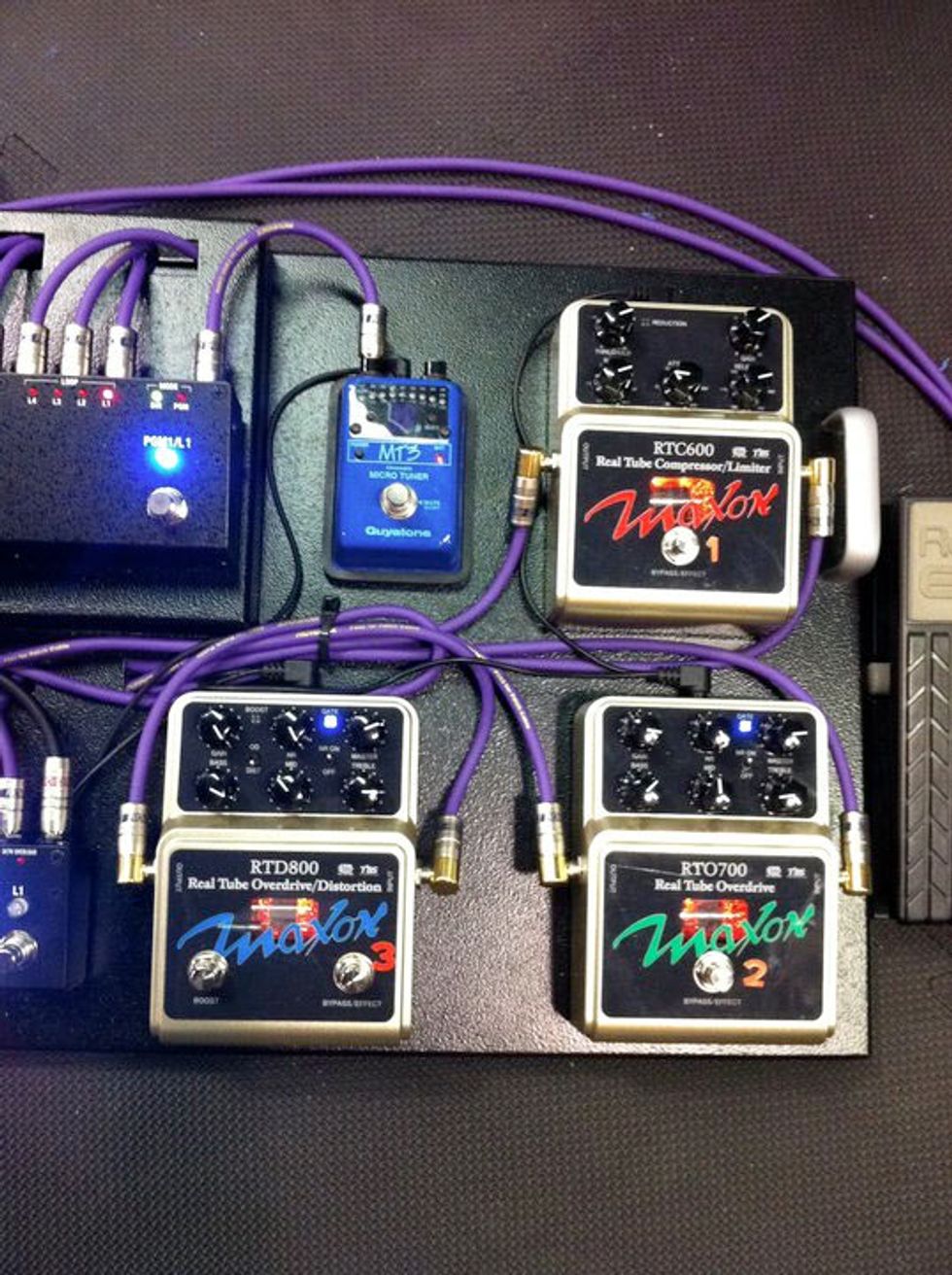
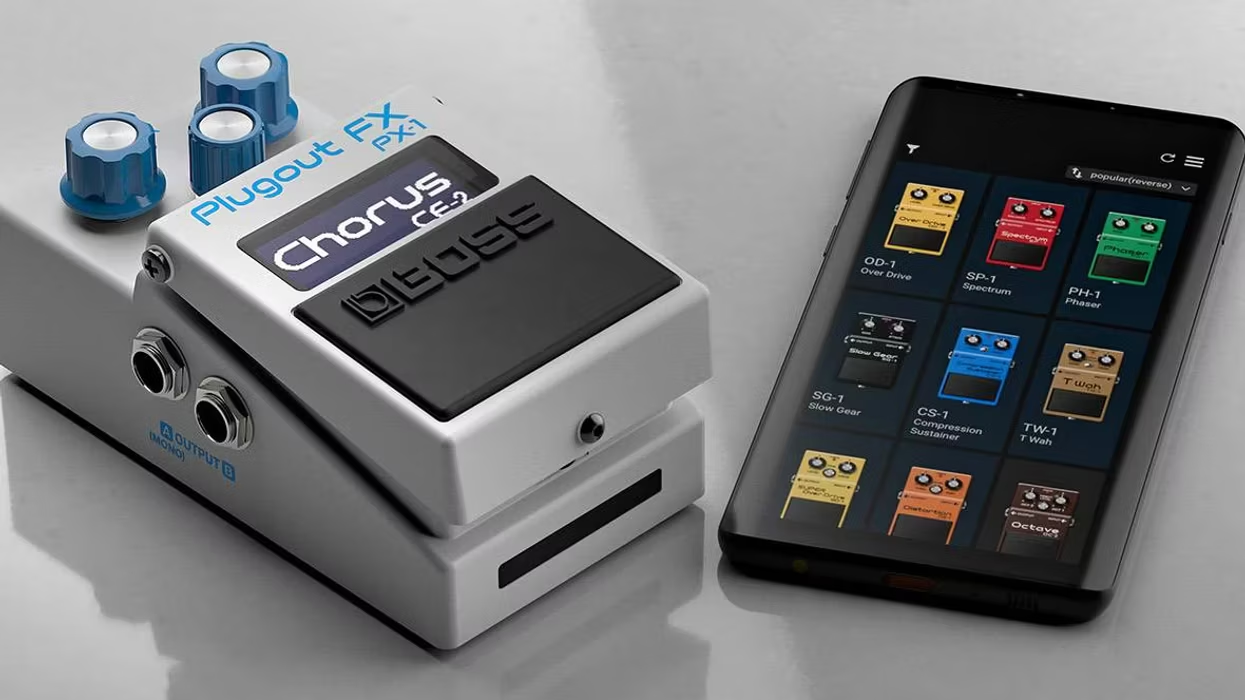
Add more effects to the PX-1 with Model Pass purchases within the BOSS Effect Loader app. New effects can be loaded into the pedal's eight user locations, and many more will be available over time.
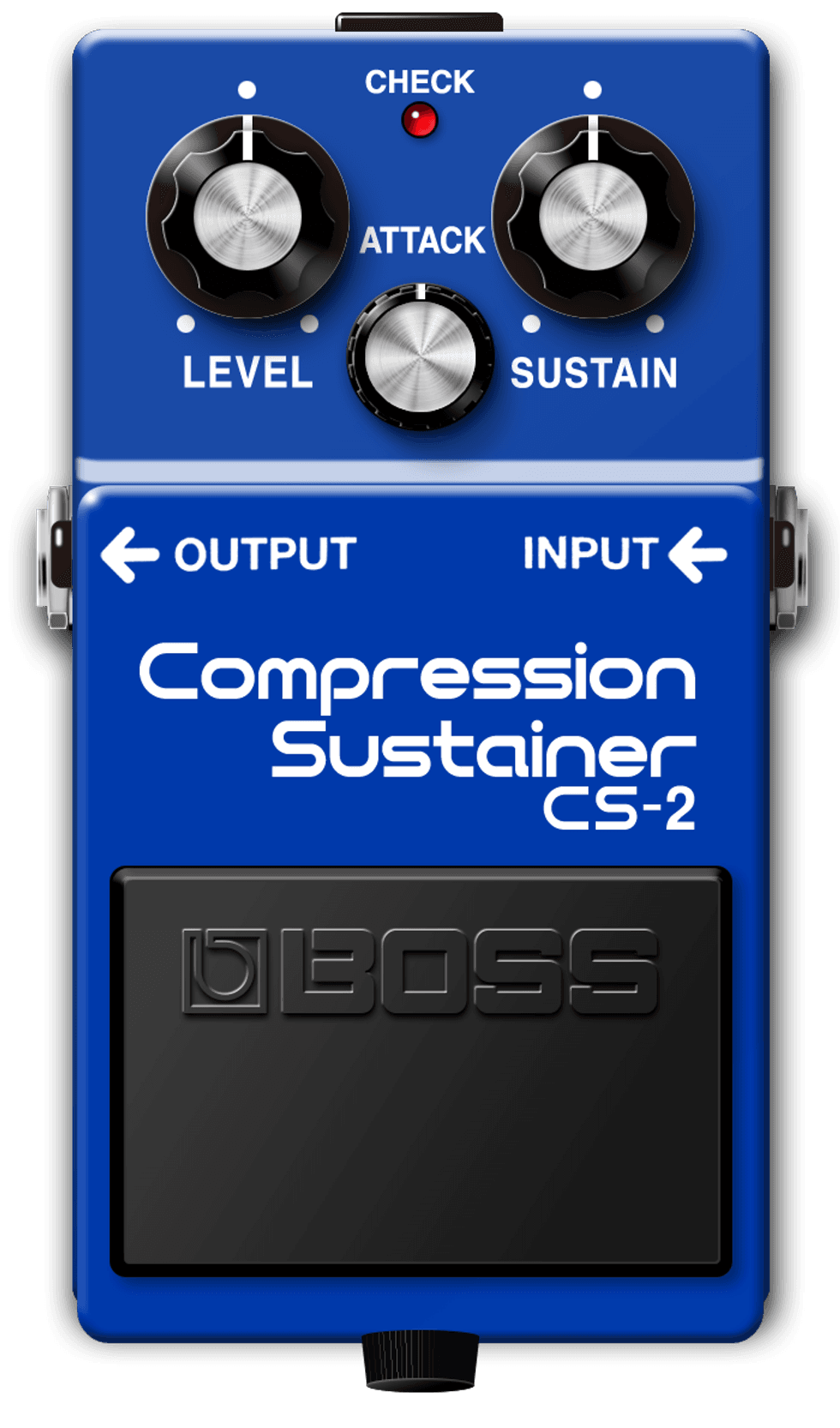
This update adds three timeless BOSS effects models: the PW-2 Power Driver, XT-2 Xtortion, and the CS-2 Compression Sustainer.
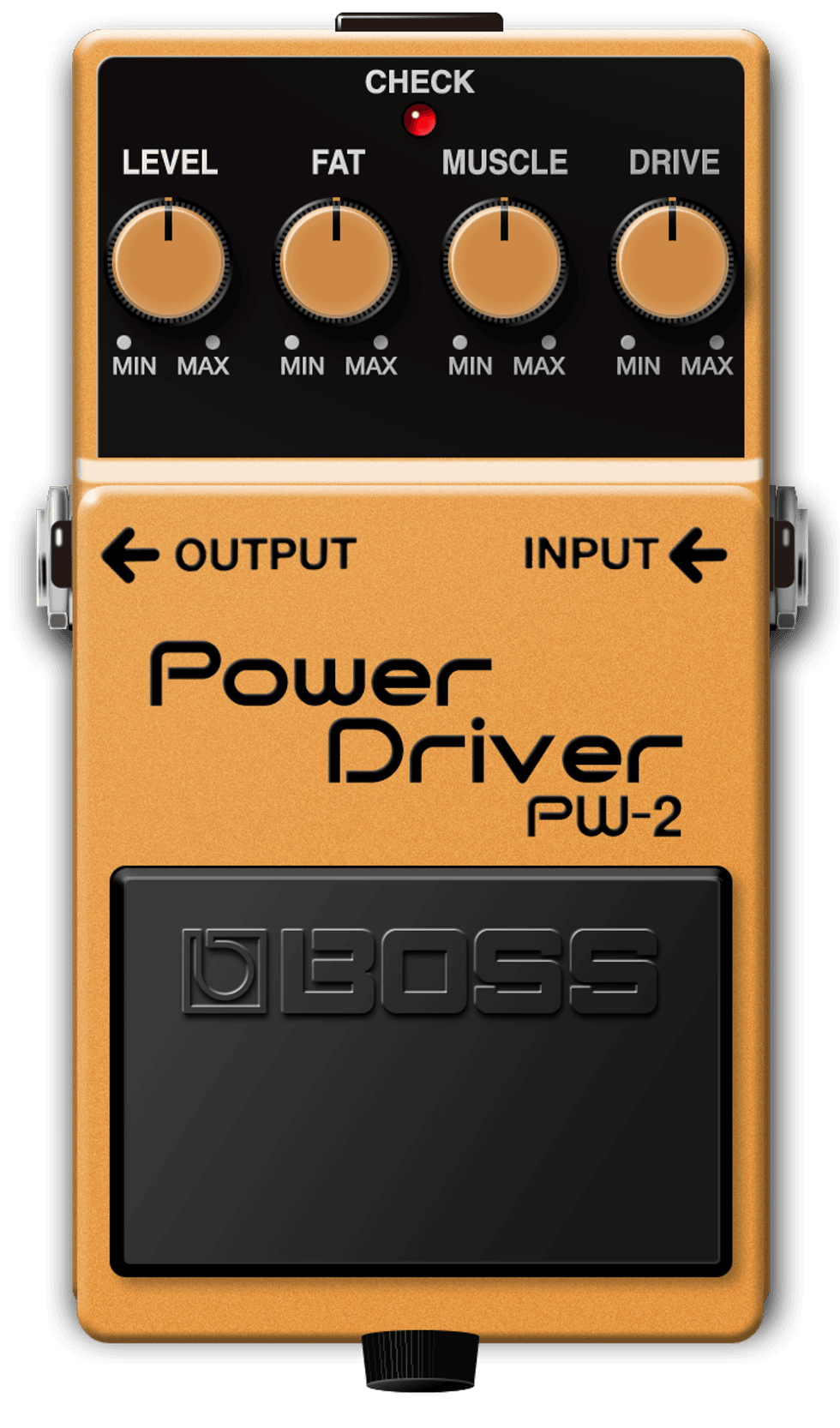
PW-2 Power Driver
The PW-2 delivers gritty, rough-grained distortion that works in many musical settings. Combine with a high-gain amp for a wall of sound, or use a lower-gain setup for refined crunch. Start with the Fat and Muscle controls at minimum, then raise them for the desired low and mid-frequency character.
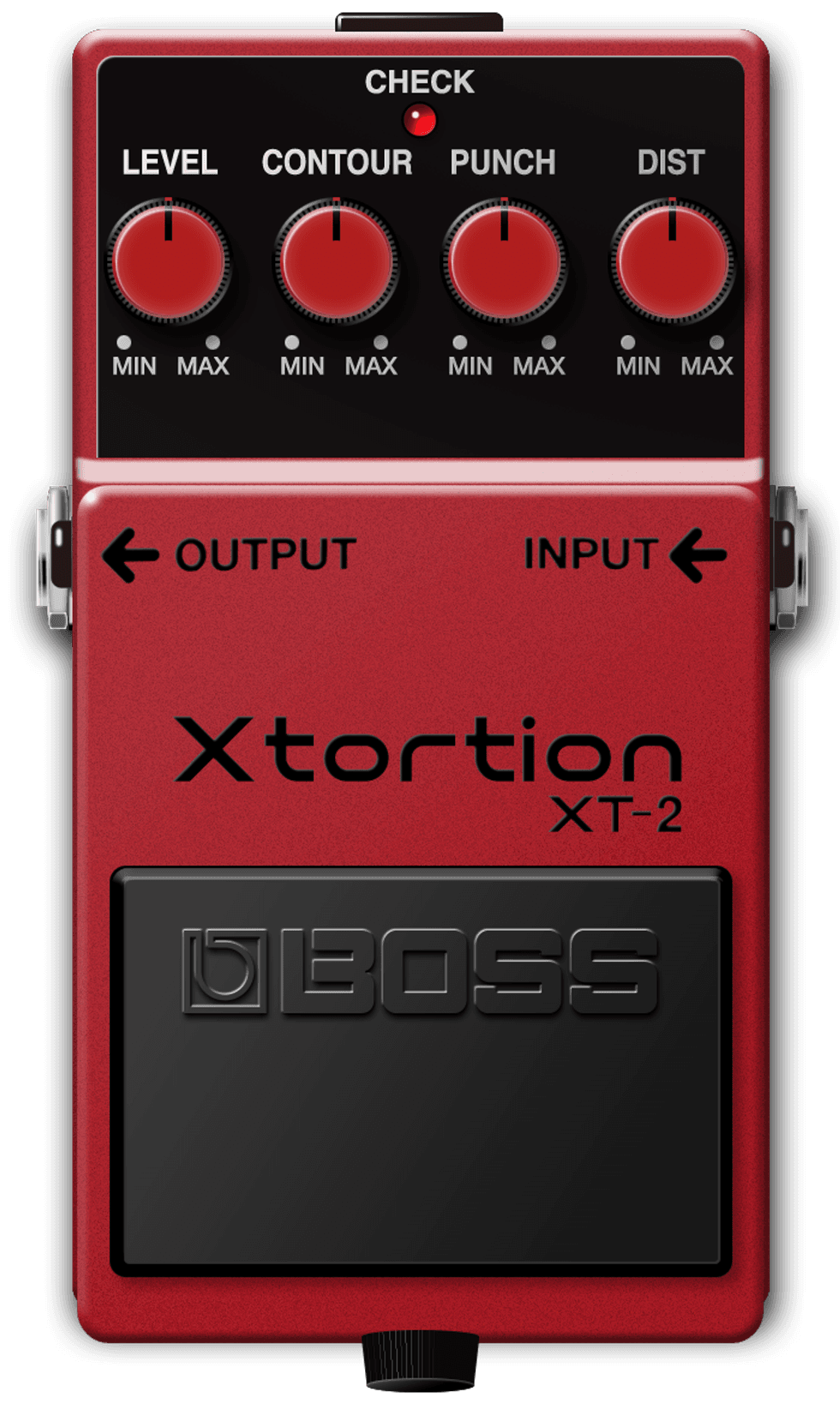
XT-2 Xtortion
The XT-2 is designed for bold distortion with maximum tone shaping. Even with the cleanest amps, it produces thick, solid gain with a commanding presence. Contour and Punch unlock a huge range of midrange control. Create massive tones with scooped mids for heavy riffs. Or boost focus and trim girth to slice through dense mixes.
CS-2 Compression Sustainer
While the CS-1 used an optical detector circuit, the next-generation CS-2 introduced a VCA for faster response. The compression is more versatile, enhanced by subtle distortion in the VCA circuitry that adds natural richness and character. Use the Attack knob to adjust the response to suit your personal touch and different music styles.
TRY BEFORE YOU BUY
Before committing to a Model Pass, users can try out effects with demo versions that introduce a small audio gap every 30 seconds.
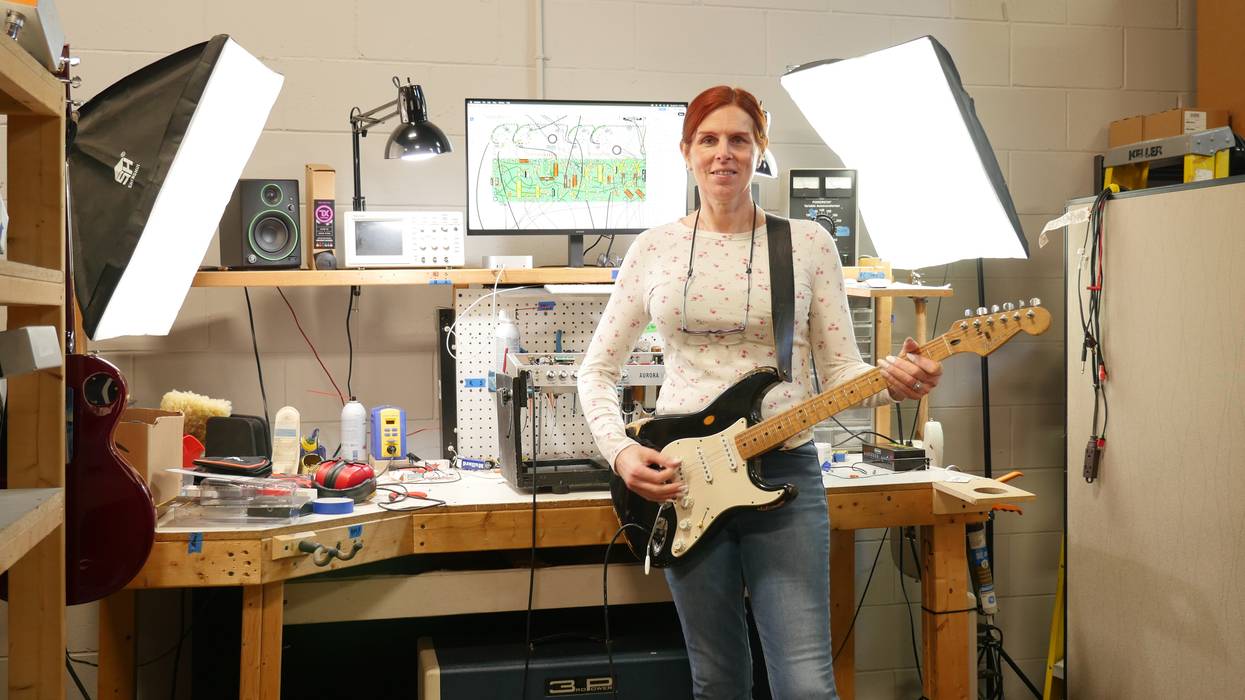
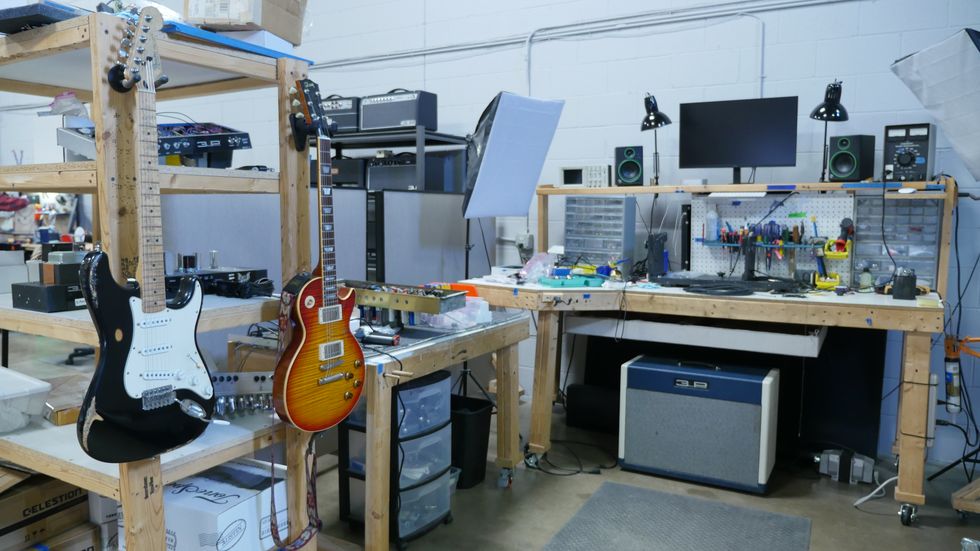
Scott play-testing an amp at her workbench, the same setup she’s had since she started building. It came with her to Minnesota from Nashville.
Dylana Nova Scott caught the music bug early—as in, toddler early—when her mother took her to the Seattle Pop Festival in 1969. “It was my mom’s birthday, and this was her present to herself,” Scott recalls. “I saw Led Zeppelin and the Doors. I got to see Bo Diddley way up close. He played on a flatbed truck, and I sat on it with my feet dangling to the music. He looked down and pointed at me as he played. I’ll never forget it.”
She laughs. “After that, I was pretty much done with nursery rhymes.”
It wasn’t long before Scott began strumming on acoustic guitars and ukuleles. If music wasn’t in her blood, she picked it up by osmosis. Her mother, a fashion designer, got her start making clothes for musicians in Seattle during the late ’60s and early ’70s. “She made leather pants for musicians,” Scott says. “I was around that and it all seemed quite natural. There was music and fashion, and the two things went together. I attribute everything I do to my upbringing. It’s just the way the molecules and emotions came together for me.”
She remembers trying to teach herself one of her favorite songs, Bob Dylan’s “If Not for You”—only she didn’t know it was a Dylan song. “I first heard George Harrison’s version, and then I heard Olivia Newton-John’s cover of the song,” Scott says. “I loved them both. I didn’t know what slide guitar was, but there was that sound on the records. I held an acoustic guitar on my lap and I would slide a nickel up and down on the frets. I figured out that I could move the coin around on the G and B strings to get that wailing sound. Nobody taught me how to do it. I just picked it up by ear.”
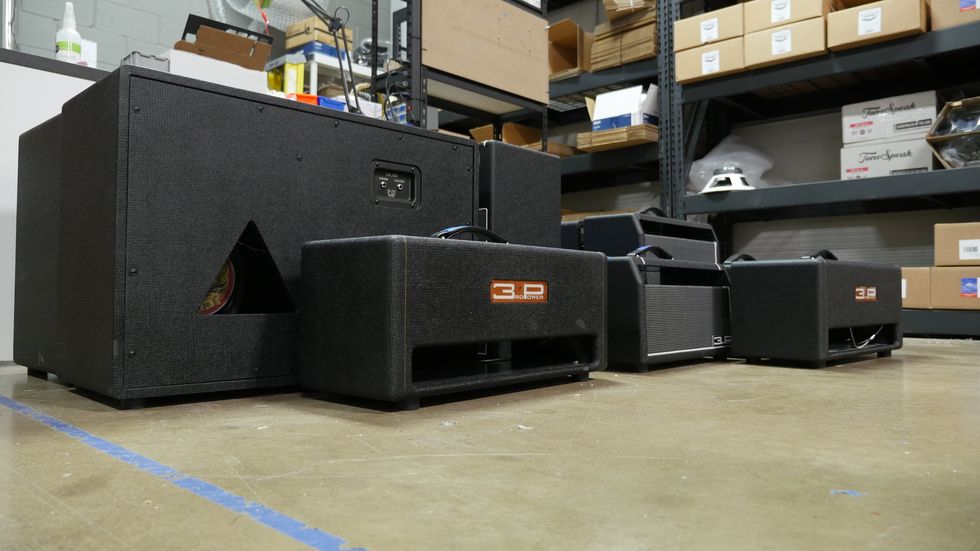
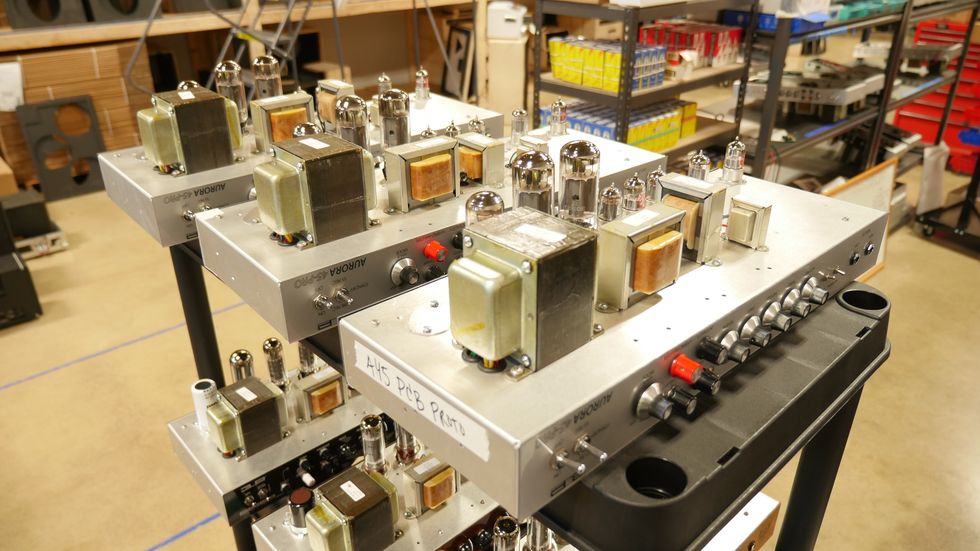
Empty head and cab enclosures that have been prepped before the actual amplifier gets installed.
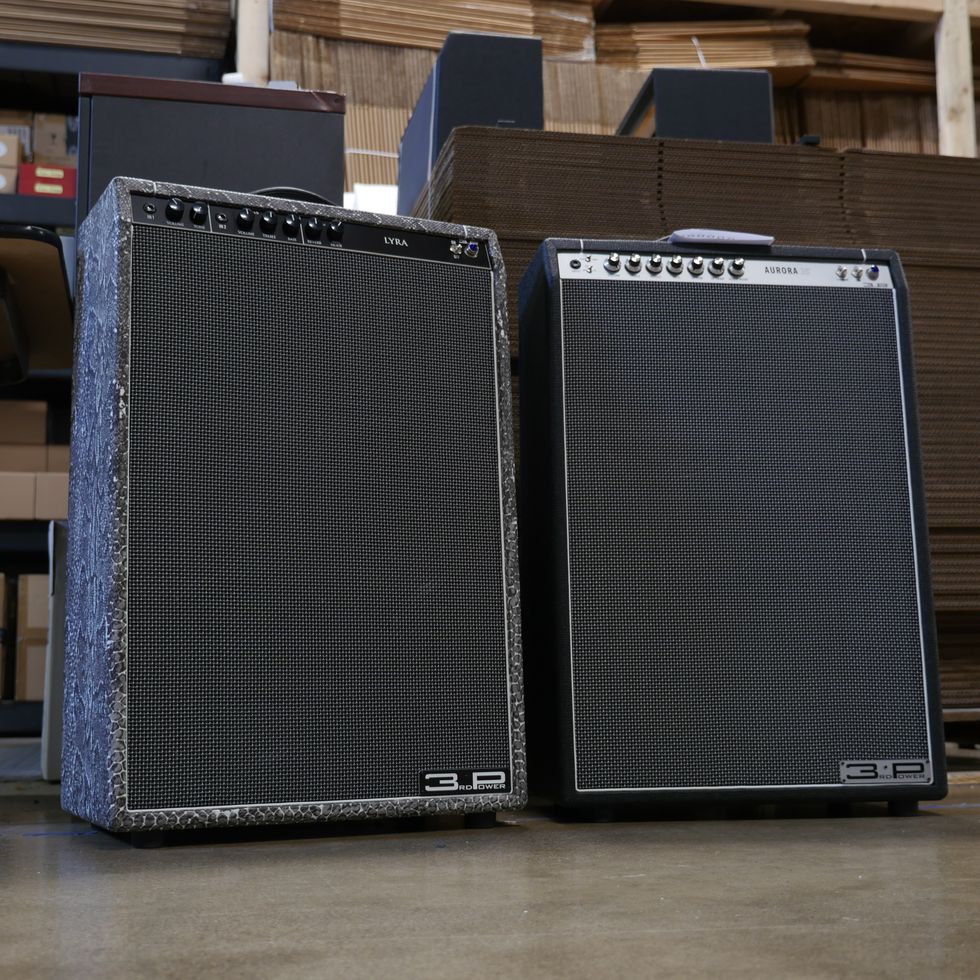
Two Highline series combos (l-r): A Lyra 3x10 with custom tolex, and an Aurora 35 2x12.
By the age of 12, Scott was playing a Les Paul copy and had gravitated to hard rock and metal—Kiss, Aerosmith, Blue Oyster Cult, Sabbath, Rush, Van Halen, Nazareth, and AC/DC were on repeat in her bedroom. “Playing guitar was all I wanted to do,” she says. “I’d look at my posters on the wall and think, ‘That’ll be me someday. I’ll be Ace Frehley.’” Problem was, her little Harmony combo amp wasn’t exactly the stuff of arena fantasies. As luck would have it, the solution was right next door. “Our neighbor had this giant cardboard box that hadn’t been crushed up yet,” she says. “So I took it and brought it into the house and cut out a space for a speaker. Then I tore apart my Harmony amp—removing the speaker and chassis—and mounted them both to the cardboard. I made myself a stack. It was great.”
Hearing Randy Rhoads was a revelation. “His sound, his technique, his look … It’s hard to describe, but he was this ray of hope for me,” she says. “I immersed myself in everything I could find, read, or listen to that had anything to do with Randy. He just changed everything for me.”
Another breakthrough came during the summer of 1980, when Scott spent upwards of eight hours a day practicing on her first “real” guitar, an O’Hagan Flying V. “It had a neck-thru body and a wood grain finish. I loved that guitar,” she says. “I showed up to ninth grade with my Flying V and never looked back. I was already on my way to a glorious career.”
“I’d look at my posters on the wall and think, ‘That’ll be me someday. I’ll be Ace Frehley.’”
It would still take some doing. Living with her mother and stepdad in Northern California, Scott got word that a local power metal band, Vicious Rumors, was looking for a guitar player. “I got the phone number of the bass player, and I kept calling him and calling him. This was back when you had to actually dial the phone,” she recalls. “They auditioned guitar players for a good six months and went through everybody. Finally, I wore them down.”
Scott’s first studio recording with Vicious Rumors, “One-Way Ticket,” was featured on Shrapnel Records’ compilation album, U.S. Metal Vol. IV—Unsung Guitar Heroes. But her tenure with the band was brief—next, she joined the Bay Area glam metal outfit Vain, led by lead singer Davy Vain. The group’s debut album, No Respect, was released in 1989 and received positive notices, but as they were readying a follow-up, they were dropped by their label, Island Records. “This was right when Nirvana came out, and the entire musical landscape was shifting away from hair metal and glam,” Scott says.
An attempt at putting together a band with Davy Vain and former Guns N’ Roses drummer Steven Adler failed to take hold, but Scott had powerful advocates in her corner. Longtime music executive Katrina Sirdofsky—whom Scott had known since she was 17—and her business partner Tim Collins, famed manager of Aerosmith, believed strongly in her talent and helped position her for an audition to replace Zakk Wylde in Ozzy Osbourne’s band. She recalls, “Katrina said, ‘You grew up loving Ozzy and worshipping Randy. Is this something for you?’ I said, ‘My chops are good to go. If you get me an audition, I’ll let it rip!’”
Production manager Paul doing the final play test on a new Aurora 45 model.
Scott’s shred-tastic demo was good enough to get her in a room with Ozzy’s band, and she showed up to the audition in a flashy guitar-god outfit that included gold leather bell bottoms. Which, in hindsight, might have been a mistake. “I was skinny as a rail, so I probably reminded them of Randy, and the bell bottoms were more like Zakk,” Scott says. “After two songs, Sharon called me over. We had a pleasant conversation, but it was like, ‘This isn’t going to work. Thank you for coming.’ Sharon recognized that I had talent and wished me luck. It was an amazing experience.”
While continuing to perform (she would rejoin Vain from 1993 to ’94, then again in 2000), Scott shifted her focus to sound design, working at Sennheiser, Neumann, X2 Digital Wireless, and Line 6. But something was eating away at her: “The sound of the guitar was getting tame,” she says. “People were telling guitarists, ‘Can you turn it down a bit? Your treble’s a bit harsh.’ Things weren’t sounding dangerous. The guitar was sounding convenient. There was no energy. The fire that Edward Van Halen brought to music was cooling down. I said to myself, ‘I’ve got to make it sound dangerous again.’”
“Things weren’t sounding dangerous. The guitar was sounding convenient.”
In 2009, she moved to Nashville and started her own amplification company, 3rd Power—so named for the “evil Ozzy-Black Sabbath tritone” that spans three whole tones, but also for what she calls the “three elements of a perfect performance: tone, attitude, and technique.” Her first amp, the HLH Series (that stands for “health, love, and happiness”), made good on Scott’s goal of delivering “studio-quality, aggressive hard rock tones; expressive and emotional, with all the shades of gain, from a great plexi sound to Eddie’s ‘brown’ sound.”
The amp was an immediate success, embraced by artists such as Richie Sambora, Neal Schon, and Steve Miller. “Steve Miller toured with an HLH 100 and three of my triangle cabinets in 2009,” Scott says. “I was incredibly proud of that.”
About those triangle cabinets: Scott introduced the HLH Series 312 180-watt speaker with the idea that its unconventional design would dramatically reduce standing waves and internal reflections. “This was a real departure from regular 412s,” she says. “Because there were no parallel walls, we could greatly reduce the enclosure’s internal reflections. I also put bass traps in the corners to minimize phase cancellation. The whole thing worked really well.”
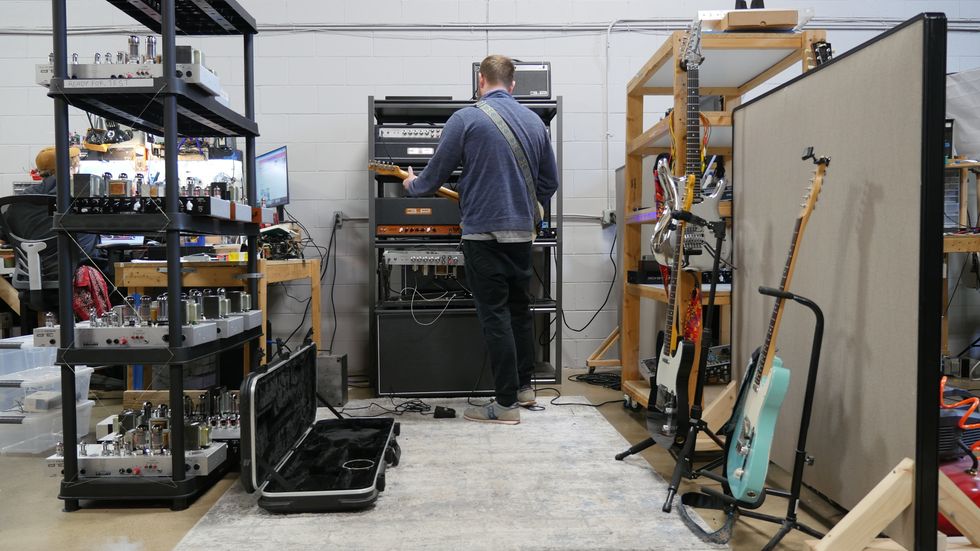
Amps waiting for their final play test
Funnily enough, the 312 speakers had their origin from when Scott would doodle on notebooks in high school. “I had one of those Pee-Chee folders that had an illustration of a baseball star and a tennis player on it,” she says. “I turned the tennis guy into Paul Stanley, and I made his tennis racket a Flying V. I drew a full pyramid stack of 312 amps. I knew that was going to be my backline someday.”
Following the success of the original 312 speakers, 3rd Power soon introduced the Switchback 312 cabinet, which used a similar triangular internal chamber within a rectangular housing.
Working in her garage with only one part-time assistant, Scott turned out more amps. The American Dream, a two-amps-in-one package, brought together the vintage 1960s sounds of a brown-panel and black-panel Deluxe. Likewise, the British Dream offered an AC on channel one and a plexi trip on channel two. The Kitchen Sink simulated iconic American chime (Fender-style) and British crunch (AC/plexi-style) in one unit, and it produced progeny: the Clean Sink and Dirty Sink grab-n-go models. The Dream Weaver paid homage to Fender and Marshall, while the Dual Citizen served as a tribute to Fender and Vox. Another “clean to mean” gem, the Citizen Gain, further refined Scott’s penchant for blending American clean tones and English grit. (A key feature of Scott’s amps, the patented HybridMASTER technology, maintains the guitar’s tone no matter what volume is chosen.)
“I’ve had so many opportunities that few people have been given. I’ve toured the world and have played with the biggest of the biggest. I’ve never given up the dream. I’m actually living it.”
Despite her company’s burgeoning success (amps were flying out the door as fast as they could be made, with guitarists like Joe Walsh, Vince Gill, and Tom Bukovac singing their praises), Scott was still confronting an internal struggle she had carried for much of her life. “I thought everybody felt that way,” she says. Over time, that weight became impossible to ignore, and Scott ultimately sought therapy, reflection, and deeper understanding. And so, as she turned 50, she transitioned from Jamie Scott to Dylana Nova Scott. Becoming who she is was a realization that had perhaps always been somewhere in her mind, even when she didn’t fully understand it.
“Certainly, as a kid, I didn’t know,” she says. “But music, and especially guitar, gave me a place where I could express parts of myself I didn’t yet understand. What stood out to me when I discovered Randy Rhoads was that here was somebody everybody admired who was powerful, expressive, and visually unique. He showed me that music could be a place for individuality, beauty, and freedom. I thought, ‘If I get good on the guitar, maybe I can truly be myself,’ whatever that meant at the time.”
Three years ago, Scott was still working in her Nashville garage when her phone rang. The ID on her cell phone read Joe Satriani, and she just assumed it was a prank. Only it wasn’t—the guitarist was about to begin the Best of Both Worlds tour with Sammy Hagar, Michael Anthony, and drummer Kenny Aronoff, and he was looking to replicate Eddie Van Halen’s 1986 Live Without a Net-era Van Halen sound. Satriani had asked friends if they knew who could tackle such an assignment, and Scott’s name was top of the list. Hours of conversations between Satch and Scott resulted in a collaboration, the Dragon DRGN 100—a roaring, vintage-sounding head equipped with modern, functional versatility.
“I told Joe, ‘Once I make the head, you can’t go plugging it into any old cabinet,’” Scott says. “Joe said, ‘Okay, make me something.’ I got him on tour with a quad-chambered 4x12, with bass traps and studio absorption treatment. What comes out of my cabinets is a cohesive wave—a true fader-up sound. I loaded his 412s with [Celestion] G12T-75s on top—he likes them because they never blow up—paired with [ToneSpeak] Manchester 1290s on the bottom.”
Scott’s workstation
The results were so impressive that Steve Vai, after hearing the cabinets night after night on tour, ordered a stereo pair for himself. Loaded with Celestion Vintage 30s, Vai has toured with them ever since.
Satriani has continued to tour with five 100-watt DRGN heads, and he’s been known to warm up backstage on a 25-watt model. “When he goes onstage, his fingers are already prepped for the way the Dragon responds,” Scott says.
After spending the last 17 years in Nashville, Scott recently packed up and moved to Minneapolis to better accommodate the growing requests for 3rd Power products. “Stevie Renner of Stevie’s Guitars.net called me and we met for dinner,” Scott says. “We talked and I met his crew, and I was amazed at their level of intelligence and integrity. I got to know everybody, and we decided to join forces.”
At the same time, Scott’s days of gigging are far from behind her. She points to a couple of guitars in a corner—a 1981 Charvel and a Gibson Custom 1967 Flying V reissue. “The Flying V keeps me grounded, but I don’t play it live,” she says. In another week, she’ll hook up with Vain to join Black Label Society, Night Ranger, the Darkness, Queensryche, Lita Ford, and a host of other performers on the Monsters of Rock Cruise.
The prospect of hitting the high seas and cranking up one of her DRGN 100s makes her eyes dance. “I’ve had so many opportunities that few people have been given,” she says. “I’ve toured the world and have played with the biggest of the biggest. I’ve never given up the dream. I’m actually living it.”
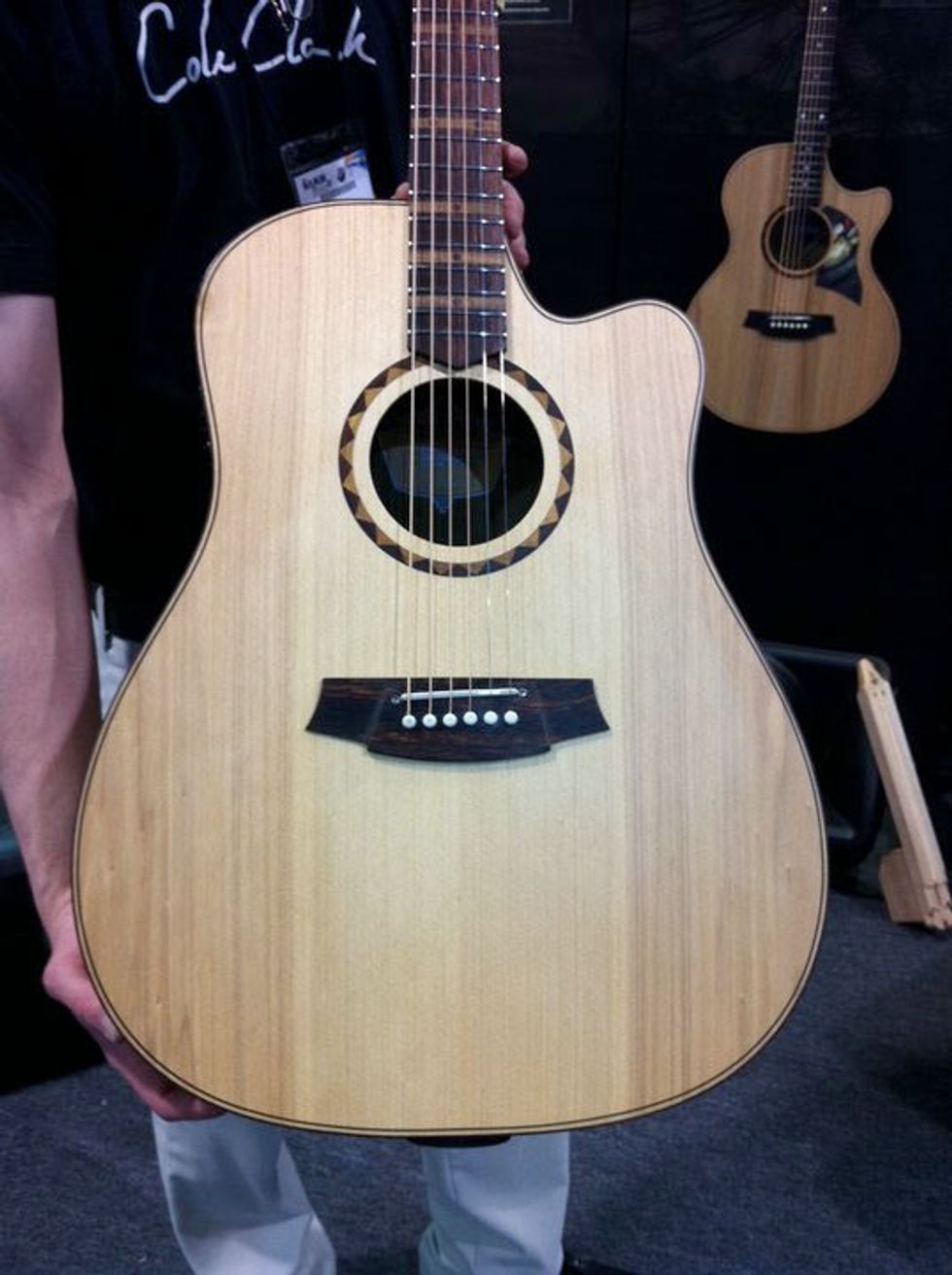
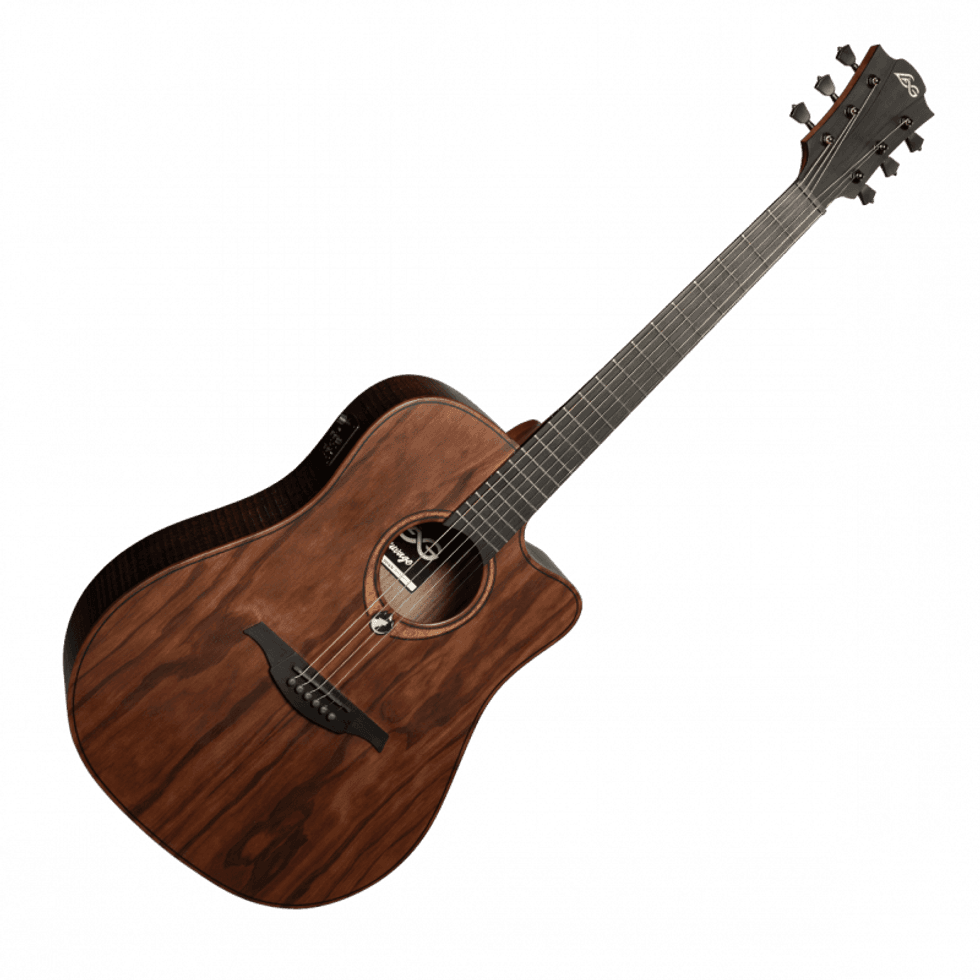
What happens when revolutionary environmental stewardship meets iconic French guitar design? You get the Lâg Sauvage-DCE. Crafted with certified BrankoWood and featuring an advanced StageLag preamp system, this guitar sounds as incredible as it is kind to the planet.
The Lag Sauvage-DCE represents the culmination of design innovation and environmental stewardship. Its dreadnought cutaway shape delivers a robust sound and comfortable playing experience, amplified by the sophisticated StageLag preamp system, and beautifully complemented by the consistent aesthetics and craftsmanship that define Lag Guitars.
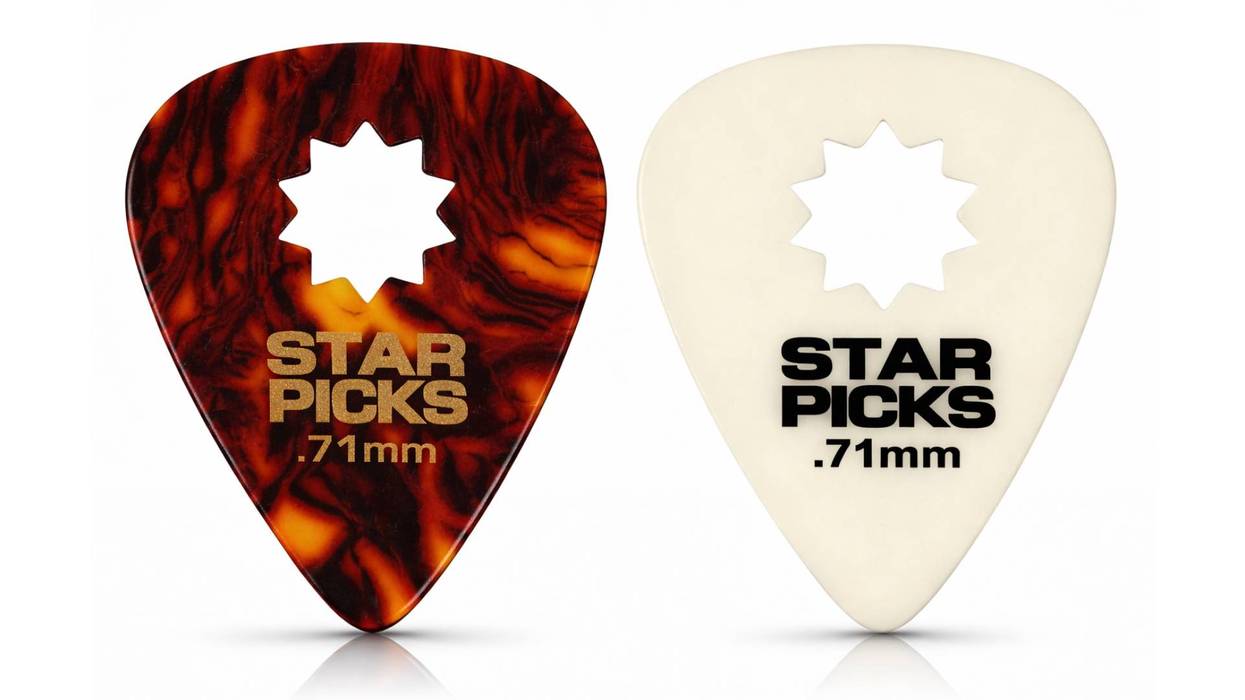
Star Picks is excited to reintroduce its fan-favorite Limited Edition Celluloid Pick Line, returning by popular demand for players who love classic feel with standout performance.
Star Picks is excited to reintroduce its fan-favorite Limited Edition Celluloid Pick Line, returning by popular demand for players who love classic feel with standout performance.
Available in Thin (.46mm), Medium (.71mm), and Heavy (.96mm), the line comes in two unique styles:
Classic Tortoise Shell – vintage feel
Glow in the Dark – perfect for gigs when the lights are dim
Crafted from premium celluloid, these picks deliver smooth response, excellent grip, and dynamic tone. The signature star-shaped design enhances control and precision for any playing style.
Available now in blister packs of 12.
Grab a pack at your local retailer or online before they’re gone.
“It has to be more about the music than about myself.”
Jimmy “Scratch” James is explaining his approach to guitar from his home in Seattle. It’s one of several conversations we have over a few weeks, on FaceTime and by phone. “I play the guitar like a drum,” he adds, “and even though he was a bass player, not a guitar player, I think about [legendary Motown bassist] James Jamerson a lot.”
“Nobody ever forced older music on me,” he continues. “But that old music—James Brown, Wilson Pickett, Sly Stone—it’s like being at your grandma’s table, and she serves you food that sticks to your ribs. You can go to a drive-through, and that food may look good, but it’s not gonna stick to your ribs the way your grandmother’s food is gonna do. That’s what it’s like listening to those old records.”
It’s been almost a quarter century since the retro-soul movement took root, with record labels like Daptone, Colemine, and Big Crown bringing artists like Sharon Jones, Charles Bradley, and Lee Fields to listeners’ ears; sounds first pioneered more than 60 years ago in places like Memphis, Muscle Shoals, and Detroit. But Jimmy James is a modern-day part of that revival.
Soul and funk place a strong emphasis on the ensemble rather than the individual, so it’s rare for a guitar player to stand out within those genres. But two instrumental bands out of Seattle, True Loves and Parlor Greens, have provided breakout space for James, who may be the retro-soul scene’s first guitar hero. Indeed, the nickname “Scratch” is a reference to rhythm guitar players of the past who brought a percussive beat to their fretwork—musicians like Nile Rodgers of Chic and, before him, Jimmy Nolen of James Brown’s band.
“I gave myself that nickname as an homage to them,” James explains, “But people just call me Jimmy.”
The difference between Parlor Greens and True Loves, Jimmy explains during a call on a rare day off from gigging, “is like the difference between Motown and Stax.” I’ve asked him why he needs two full-time bands. “In the True Loves, we have a horn section, so it’s more groovy that way, like a pop thing. Parlor Greens is an organ trio, and since there are only three of us, I naturally have more sonic space there. I’ve been with True Loves longer, but I love the two bands equally.”
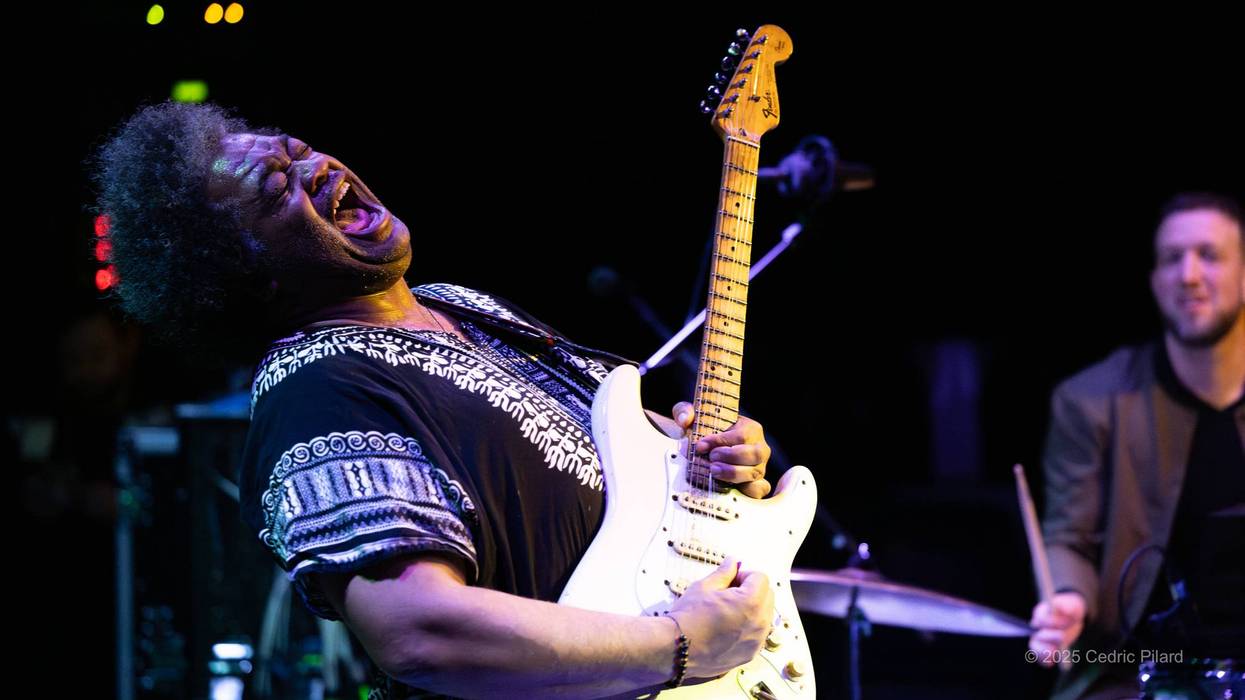
James, now 45, is a double threat on guitar. He’s a rhythm player who “scratches” deep in the pocket of the groove but who’s also able to explode into psychedelic lead-guitar thunder reminiscent of his fellow Seattleite, Jimi Hendrix, who was a big influence on him.
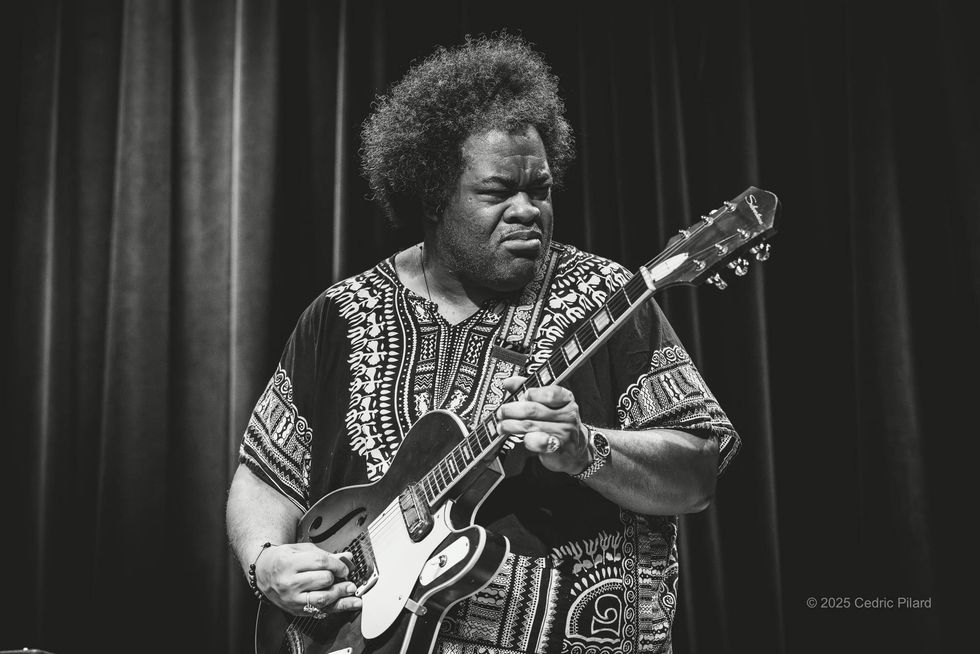
James’ go-to vintage Silvertone has its stock single-coil gold-foil pickup in the neck position and an old Epiphone humbucker in the bridge.
Photo by Cedric Pilard
“The thing I love about Hendrix,” James tells me, “and also jazz guys like John Coltrane, Louis Armstrong, and Charlie Parker, is they took risks. I remember Hendrix once, in 1969, went on The Dick Cavett Show and said, ‘The reason I make mistakes is because I’m trying new things.’ I respected him, and he represented freedom to me. They all tried new things. But Hendrix was always expanding. Every time I heard him, I felt like I was going into another dimension, another galaxy.”
“That old music, it’s like being at your grandma’s table, and she serves you food that sticks to your ribs.”
It was during middle school that James’ late older sister first played “Purple Haze” for him. “Let me tell you, that scared me—I never heard anything like it,” James remembers. “I thought it was heavy metal at the time, because my sister was listening to a lot of Metallica then. So I thought Hendrix was current at that time. Of course, I later found out.”
A native of the Holly Park section of South Seattle, James has no spouse or children. He lives to play, and he walks the earth with four ghosts looking over his shoulder.
“My family is all gone—my grandmother, my mother, and my two sisters,” he explains. “They were Leola, Marie, Regina, and Chelsea. They were all musicians, and they all had a profound impact on me. My grandmother was a singer and a championship jitterbugger. My mother was a vocalist, and she sang in a local group called the Champelles. This was the mid ’60s. They opened up for Johnnie Taylor, Solomon Burke, and the Sweet Inspirations. That group had Whitney Houston’s mother, Cissy, in it. My oldest sister, Regina, she was a pianist and flutist. The younger of my sisters, Chelsea, was a drummer, and she played in a band in Seattle in the ’90s called Tribal Therapy. Chelsea used to say to me, ‘Pocket and tempo are everything. Stay out of the way and play the part that fits the song.’
“They’re all gone now,” James says wistfully. “Everything I do is still for them, and it always will be. I started out as a drummer, around the sixth grade, because that’s what my sister played. But then I heard Motown guitar lines like ‘My Girl,’ which was played by Robert White. And I heard Eddie Willis playing the guitar line on ‘I Second That Emotion,’ and I loved that. My mom helped me move the drums that I had over to a friend’s house so we could play. He was playing guitar, but we swapped instruments, and as soon as I started playing some open notes, fooling around on the guitar, I realized that that’s what I was into.”
James’ mother bought him an acoustic guitar in those early days. “I started picking things up off of records, Chuck Berry, B.B. King, Muddy Waters, John Lee Hooker,” he recalls. “But I also liked folk music. And I liked soul. The first rhythm and blues thing I learned how to play was ‘Mustang Sally.’ Then, in high school, I was in the band, and most high school bands play jazz, but we were more into Kool & the Gang and James Brown. And I couldn’t read music. The horns could read music, but we just had to pick it up and figure out which notes went together.
“I remember one time I got a bad grade, and my mother took my guitar away. Man, I whimpered, and I cried, and later she told me, ‘That’s when I knew how badly you wanted to play, you never moped like that over anything else.’ I just could not think of anything else; I just wanted to play guitar. I felt safe in the music, I just knew I wanted to play.”
On the road today, James totes two main axes. One is a 1964 red Silvertone that he picked up about 16 years ago at Georgetown Music in Seattle. It has a stock single-coil gold-foil pickup in the neck position, but the bridge pickup is an old Epiphonehumbucker that was installed when Seattle luthier Chris Lomba was rehabbing the guitar.
“We bought that instrument from some guy, really for parts,” Lomba recalls on the phone. At the time, Lomba was the resident luthier and guitar tech at Georgetown, where James was a frequent customer. “I remember pulling things out of the scrap pile and just putting it together for Jimmy. And we put in new frets and a new bridge,” Lomba remembers. “The Epiphone pickup in the bridge position was just something we had lying around, like a spare. The amazing thing about that Silvertone is really how much he loves it. Jimmy believes in that guitar 100 percent, and he’s always concerned about its well being.”
“I don’t really mess around with pedals, because I like the sound of the guitar just how it is.”
James’ other go-to axe is a 1995 Mexico-built Squier Stratocaster that his mother purchased for him. Resources in the family were stretched thin, and his mom worked overtime six days a week to make sure her son got the instrument.
“She didn’t need to do that; it was hard for us financially. But we went to a place called American Music so that I could get some fresh strings for another guitar, and I was eyeing that Stratocaster in the store and trying to play it cool; I didn’t want her to notice how much I was looking at it,” James recalls. “Finally, she said to me, ‘You really want that guitar, don’t you? Go ahead and put it up on the counter, you never ask me for nothing. I’ll figure it out.’ I miss my mother; she’s been gone for four years now. I named that Stratocaster ‘Bessie’ for my favorite blues singer, Bessie Smith.”
I ask James how he’s processed so much loss in his life, and he tells me, “I just play through it. I wish they were here. I wish they could see what I’ve done and where I’ve gone around the world to play my guitar. We were all close through music. And playing music is the closest I’ll be to them.”
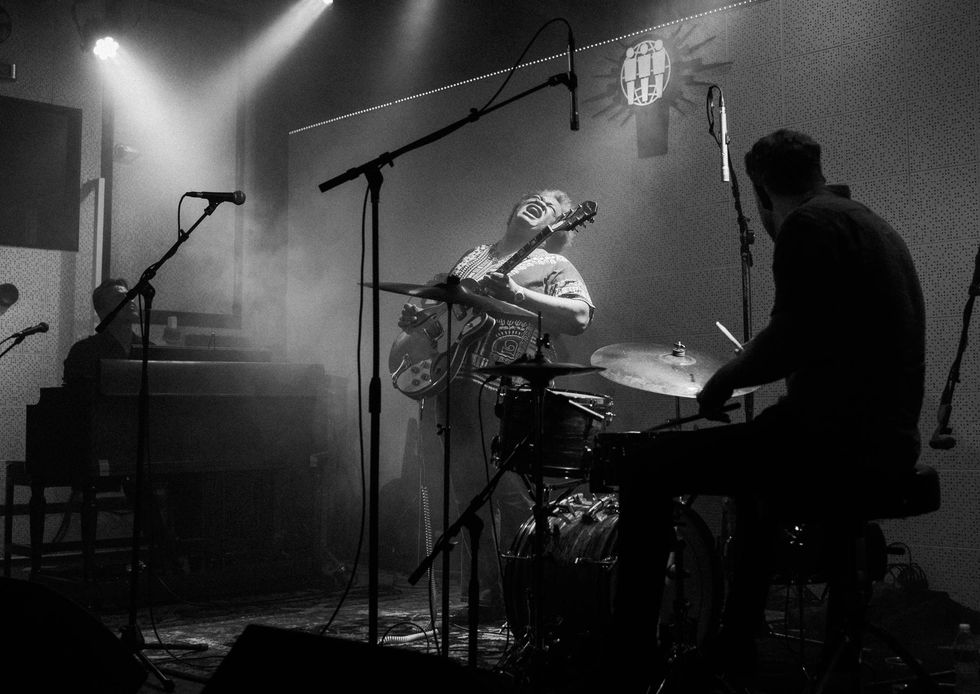
Watching Jimmy James play through it is to experience an artist conjure his apparitions; it’s a guitar seance onstage. His solos flow as though he’s lighting candles to illuminate a spectral pathway back to the here and now for his lost family. When Jimmy James opens that door, his facial expression becomes otherworldly—his jaw drops agape, silently mouthing the notes ringing through his pickups as he frets them. His wailing, full-step bends soar towards the heavens. He’s playing for his ghosts.
Jimmy James live with the Parlor Greens, featuring organist Adam Scone and drummer Tim Carmen.
Photo by Mitch LaGrow
James is precise and articulate, tending to pick each note, avoiding hammer-ons and pull-offs unless the solo cries out for it. His tone is clean and stompbox-free; his guitar cable runs straight to his amp. When he is ready to open this ethereal portal in a solo, he strides over to the amplifier and quickly flips an overdrive switch. It’s all the crunch he needs.
“I don’t really mess around with pedals,” James explains. “Sometimes, if it’s a very powerful amp and there’s too much headroom for it to break up, I’ll put something in front of it. But very rarely, because I like the sound of the guitar just how it is.”
Parlor Greens recently dropped a new record, Emeralds. The last track, “Queen of My Heart,” is James' homage to his late mother. The recording contains the last words she ever spoke to him, in a video selfie sent to his phone shortly before she passed. His guitar leads cry out in an emotional letting-go, a projection of the hurt in Jimmy James’ soul.
“James Jamerson once told his son, ‘If you don’t feel it, don’t play it,’” James relates to me. “That’s how I approach it. Oscar Wilde said something, too: ‘You can only be yourself, because everyone else is taken.’ That’s what it is. If you take Jimi Hendrix’s guitar and hand it to B.B. King, and you take B.B.’s guitar and put it on Jimi Hendrix, they are still gonna sound like themselves. And my mother instilled that in me. She’d tell me, ‘Have a sound! When you hear a Motown track, you know it’s Motown before the words even hit.’”
I comment to Jimmy that, for a 45-year-old man, a guy who grew up in Seattle during the peak of grunge, his spirit feels pretty old. He explains that listening to that classic music from the ’60s and ’70s is what shaped him.
“When I was young, I would hear things like Johnnie Taylor’s ‘Who’s Makin’ Love,’ or ‘California Dreamin’’ by the Mamas & the Papas,” James reminisces. “Musically and lyrically, all that stuff spoke to me. My friends didn’t get it. They’d say, ‘Why are you listening to that grandparents' music?’ But I loved the lyrics and how there was a story to be told. And when you think about the blues, it’s the foundation. So it all felt grounded to me; that older stuff has a deep conviction to it. You can listen to it and know that they worked very hard, and it came from deep within.
“Sometimes I do feel like I was born at the wrong time. But after my mother passed, I had a dream. I came to her, and I said, ‘Mom, what’s the point of my living? Why can’t I be with you all? We could be a family again. And in this dream, she said to me, ‘Don’t be anxious for nothing, baby. You got better things coming your way. Just you wait.’ And she always had that wisdom. Music can change a lot of things.”