
Every superstrat alive today owes back rent to a guy who never set out to start a movement. Wayne Charvel opened a guitar repair shop in Azusa, California in 1974—fixing amps, routing pickup cavities, selling parts to whoever wandered in—and one of those people who wandered in was a young Eddie Van Halen, shopping for a spare neck and body to bolt together into something the world hadn’t invented a name for yet.
Charvel gave him the parts. Eddie provided the paint, the tape, and a place in rock history. And by the time the shop relocated to San Dimas and Charvel passed ownership on to Grover Jackson, a template that inspired countless shredders was set. San Dimas became ground zero for a whole musical genre. Warren DeMartini, George Lynch, and Jake E. Lee all eventually became part of that story. And the new American Neo-Classic Style 1 feels like a refined version of an instrument that might have passed through their hands back then.
The Neo-Classic name used for this model is apt. Though it uses some of the most appealing fundamental parts of the San Dimas formula, including an alder body and a 1-piece quartersawn maple neck reproduced from an actual 1980 blueprint, there’s a lot of ground-up rethink at work here too.
Wring That Neck
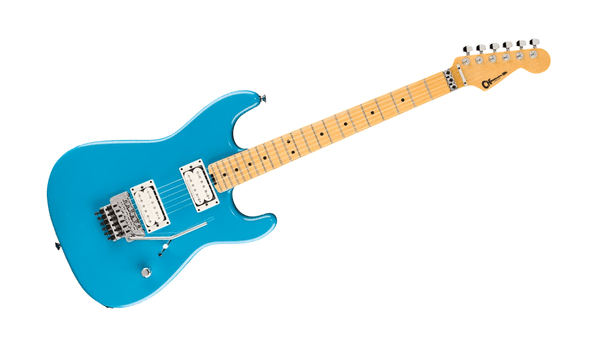
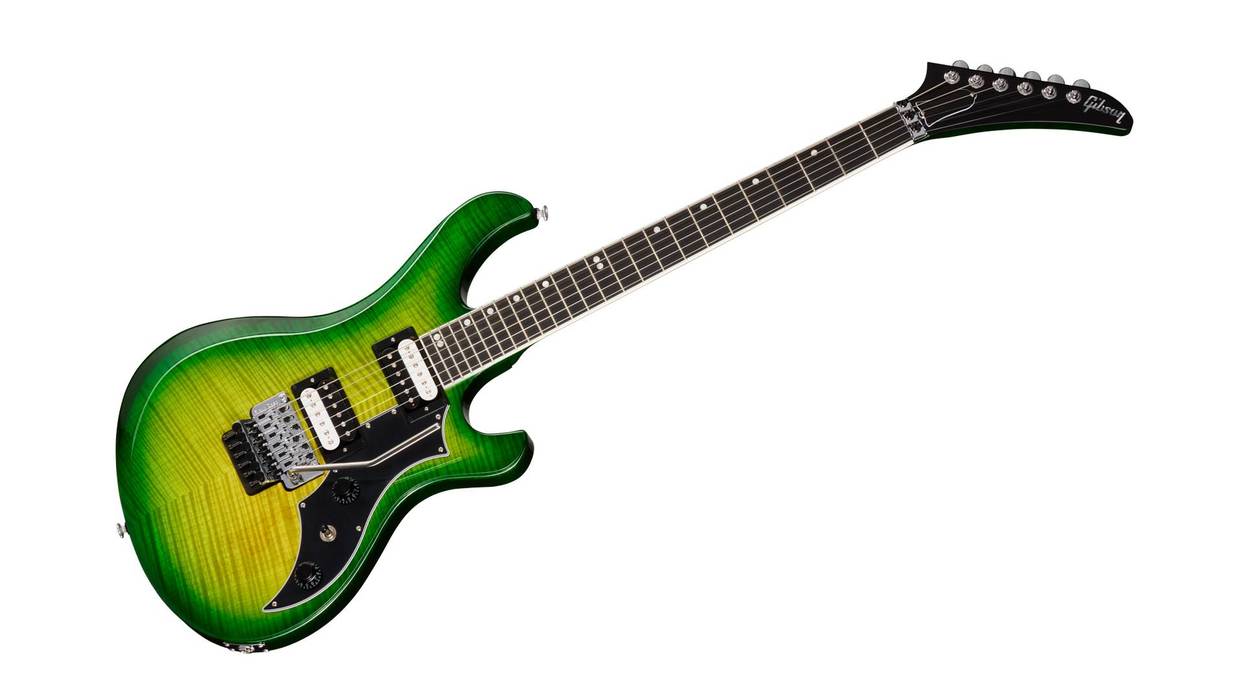
You could make the case that that groovy neck on this guitar makes the whole package worth the high-end $2,799 price. It’s quartersawn maple and cut to 1980 specs, but it’s also reinforced with graphite so it holds pitch better than an original ever could. Stainless jumbo frets sit atop a 12"-16" compound-radius board that is tight and curvaceous near the nut for easier chording and opens up dramatically past the 12th fret for unhindered, whammy-assisted bending. The neck does a great job of splitting the difference between true vintage character and modern manufacturing sensibilities. You feel the classic San Dimas shape that so many players fell for, but neck-dive and tuning headaches are not really an issue here.
Charvel went with a custom Seymour Duncan JB/‘59 pickup pairing, which gives this distinctly modern instrument both vintage and modern accents. The ‘59 in the neck position is creamy and responds to dirty-to-clean dynamics beautifully. The JB at the bridge is the workhorse half of the duo. Most notably, it’s hot enough to push a cranked amp to distortion without collapsing into mud, which is precisely why it’s been the go-to bridge pickup for three generations of players seeking high output without sacrificing definition. (I mean, is there a better heavy rock pickup than a JB?)
You feel the classic San Dimas shape that so many players fell for, but neck-dive and tuning headaches are not really an issue here.
The five-position blade switch can move between full humbucking bridge, full humbucking neck, two humbuckers together, and two split-coil voicings that deliver genuinely useful out-of-phase, single-coil-like quack. You obviously don’t get a perfect Stratocaster impersonation, but the two split-coil settings are a welcome bit of extra color all the same. And between the very different voices in the two humbuckers, the split-coil tones, and clever use of the guitar’s master volume (there is no tone control), you can cover a wide range of articulate clean sounds and full-throttle lead tones. The Floyd Rose 1000 Series double-locking tremolo is another critical part of this guitar’s identity and function. It’s stable, dive-bombs without drama, and returns to pitch reliably enough that it just might disappear from your consciousness between uses.
Testing, Testing, 1, 2, 3
I ran the San Dimas through familiar Marshall JCM800 and Fender Deluxe Reverb models on my Helix to see how sweet the ‘59 neck pickup sounds with nothing to hide behind. Through the cranked-up Marshall model, the JB barks, compresses just enough to sustain a bend into next week, and stays articulate even under fast tapping runs into pinch harmonics. With the Deluxe Reverb model set up clean and the guitar volume rolled back, the ‘59 blooms with woody midrange complexity that had me transfixed with chord-melody voicings. That was proof enough for me that this isn’t a one-trick shredder.
The design refinement also showed in how seamlessly the neck and vibrato facilitated legato and whammy-driven phrasing. The compound radius means that full step-and-a-half bends don’t fret out, which is a big deal when you start stacking big bends against Floyd dives. That’s one technique this guitar seems built for: pull the bar down, catch it coming back up with a pre-bent note already under your fingers, and let the flattened upper-register radius help you land the bend cleanly instead of choking against the fret crown. Pair that capability with the Floyd’s rock-solid return-to-pitch performance and an aggressive dive-and-bend vocabulary becomes practical in performance. This guitar doesn’t merely tolerate that style; it welcomes it.
The Verdict
At $2,799, this guitar is a real investment. But you’re paying for a quartersawn neck cut to 45-year-old specs, a Floyd that behaves reliably, and fabulous-sounding pickups chosen thoughtfully and with intent. For a player who wants a real San Dimas experience rather than a modernized suggestion of it, this beautiful fusion of new manufacturing and 1980 feel is like an extra-reliable time machine that won’t go out of tune!
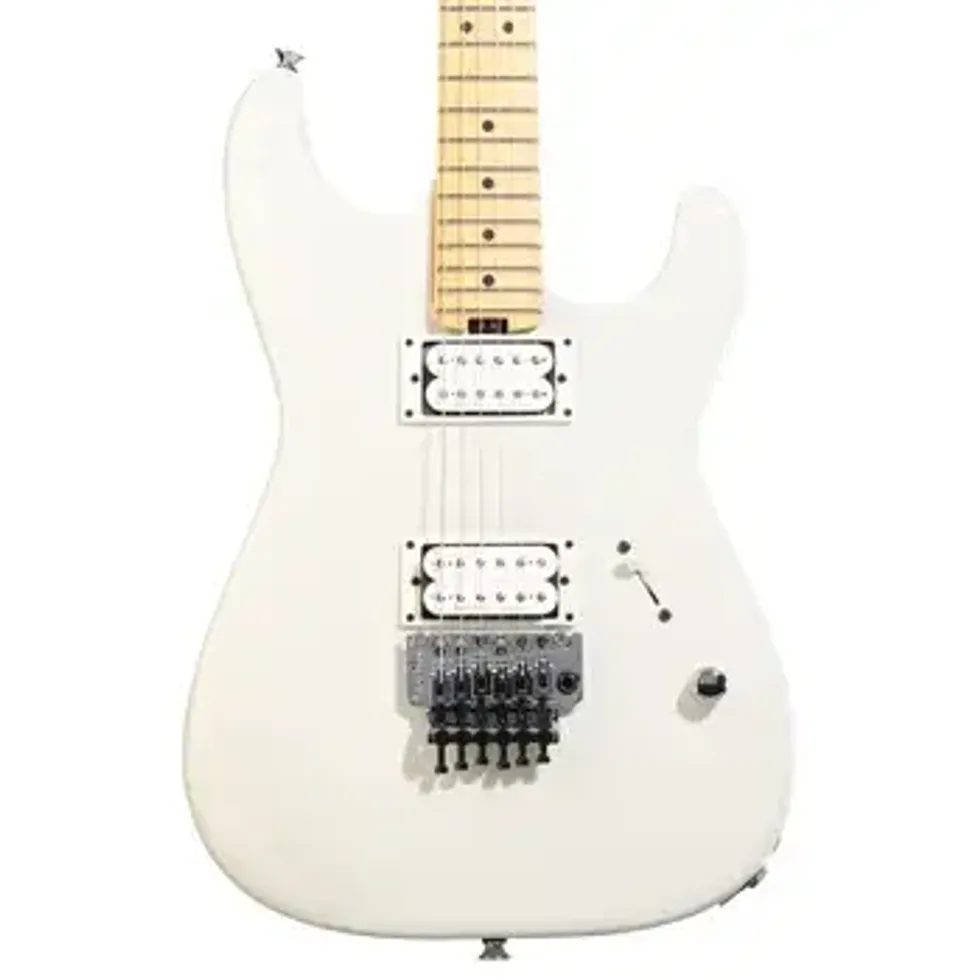
American Neo-Classic San Dimas Style 1
Solidbody Electric Guitar with Alder Body, Maple Neck, Maple Fingerboard, 2 Humbucking Pickups, and Floyd Rose Tremolo


![Rig Rundown: The Black Crowes’ Rich Robinson [2026]](https://www.premierguitar.com/media-library/youtube.jpg?id=66952027&width=1245&height=700&quality=70&coordinates=0%2C0%2C0%2C0)