
When Mike Campbell talks about how Tom Petty and the Heartbreakers finally came together in Los Angeles in late 1975, there’s a word he keeps coming back to: magic.
“The songs showed up, and the sound showed up, and the band vibe showed up, kind of like magic, all at once,” he tells Premier Guitar over Zoom.
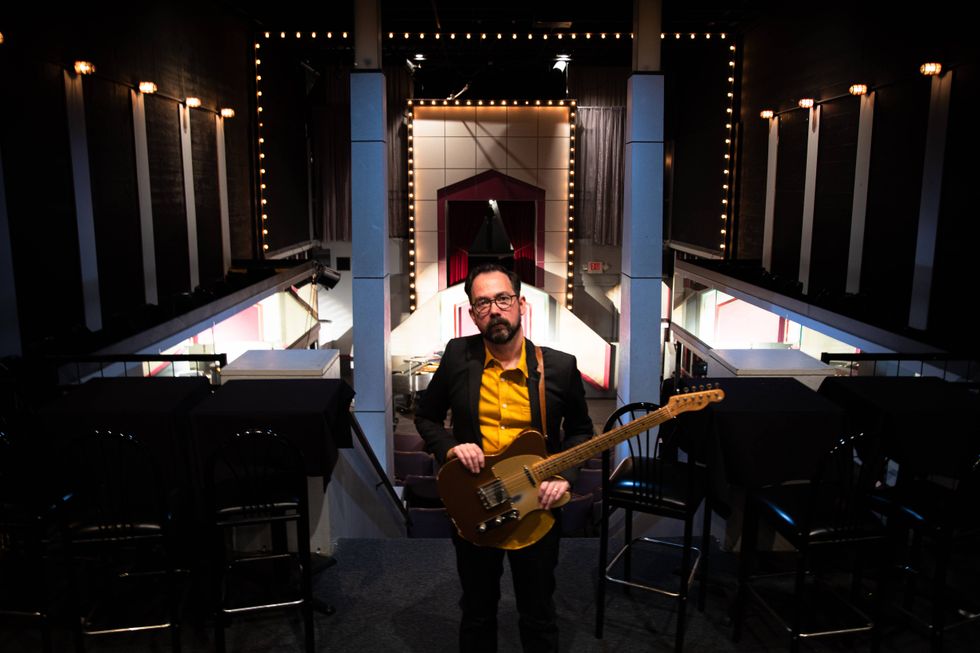
It’s the same word he uses for his partnership with Petty, which began in Gainesville, Florida, in 1970 and lasted until the singer’s death in 2017. Another way to put it? “It was destiny, whatever you wanna call it, that we crossed paths when we did,” he says. And it’s the word he uses for the Gibson Les Paul goldtop and 1950 Fender Broadcaster he brought home from a music store on the same day, right around the time the Heartbreakers formed. “Both of those guitars are magic,” he says. “That’s the Heartbreakers sound.”
But there were more practical forces at work too. For one thing, Campbell traded in the band’s PA to get those two axes. “We weren’t using it,” he says, by way of defense. “But I knew we needed [the guitars] in the studio.” He laughs. “And of course, Tom forgave me later.” Another thing: The ringing guitar figure in “American Girl” that many listeners assume is a 12-string? It’s not. “That’s me trying to sound like it on my Broadcaster, because we didn’t have one,” Campbell says.
Those stories, and plenty more like them, are at the heart of Origins 1971–1978, a new box set that traces the band from its Gainesville roots and formative years in Mudcrutch (a sort of proto-TP&TH, with Petty, Campbell, and keyboardist Benmont Tench) through its first two albums. There are new remixes, from the original multitracks, of 1976’s Tom Petty and the Heartbreakers and 1978’s You’re Gonna Get It!, courtesy of longtime Petty engineer Ryan Ulyate; more than a dozen archival recordings from Mudcrutch, solo Petty, and the early Heartbreakers, spread across two collections, No Sleep Til L.A. and The Cut Out Bin; a scorching 1977 set recorded live at the Record Plant studio in Sausalito, CA; and, on video, the band’s 1978 appearance on the BBC’s Old Grey Whistle Test.
The collection was conceived by Petty’s daughter Adria Petty, who serves as the creative director of Petty Legacy. She says the search for unreleased material took about two years. The criteria was simple: “Does it tell an important part of the musical story?” Adria explains. What made the final cut, she continues, “is a series of wonderful discoveries of standalone tracks that are showing a songwriter sometimes fully formed and sometimes emerging.”
For Campbell, going through it all was “a bittersweet look back.” For Tench, it was something of a revelation. “We didn’t really quite know what we were doing, and I think that’s a lot of the beauty of those early records. But you can hear us figuring it out.”
Campbell agrees. “We were still pretty green,” he says. “From Florida out to L.A., there was the Mudcrutch saga, and then once the Heartbreakers coalesced, everything came together, after several years of scuffling around. We felt like we finally had something worthwhile.”
“The songs showed up, and the sound showed up, and the band vibe showed up, kind of like magic, all at once.” —Mike Campbell
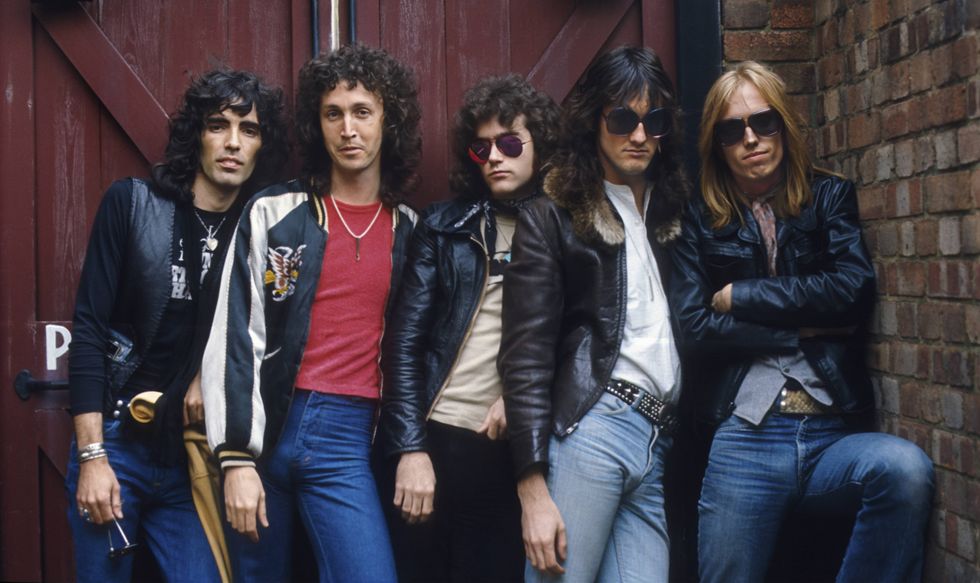
The original Tom Petty and the Heartbreakers (l-r): Bassist Ron Blair, guitarist Mike Campbell, keyboardist Benmont Tench, drummer Stan Lynch, Petty
Photo by Red SlaterCampbell came into Mudcrutch through his roommate, drummer Randall Marsh, and from the start he recognized that Petty, then the band’s bassist and lead singer, was on another level. “He was writing fully formed songs already,” Campbell says. “I was beginning to dabble in the writing, and I thought, ‘Here’s a guy who’s already a few steps ahead of me. I can learn from him, and maybe I can help him realize his songs.’”
Their roles as guitarists were established just as quickly. “When Tom would write a song, he typically would be strumming a rhythm, setting up the chords and the feel, and I would just add to that what I thought would help it,” Campbell says. “That’s the way we always worked. He was mostly rhythm, and I was coming up with bits to go around his rhythm. It was just an immediate affinity—I do this, and you do that, and it works. By luck, I guess.”
Tench, a judge’s son from “the other side of town,” as Campbell puts it, started out as a fan. “Mudcrutch was like my first crush,” Tench says. “I was a fan who went to every gig I could.” Eventually the band realized he played piano and asked him to bring his Wurlitzer to a show. “As soon as he started playing with us, we knew we had to keep him in the band,” Campbell says. “He knew all the chords, and he could play up and down the keyboard like a master. Tom and I had more of a gypsy approach to the music. So he was our musical guru in a way.”
Mudcrutch eventually signed with Denny Cordell’s Shelter Records and spent the better part of 1974 and ’75 recording in L.A. and at Shelter’s studio in Tulsa, without ever finishing an album. When their lone single, “Depot Street” (included here on No Sleep Til L.A.), went nowhere, Cordell dropped the band and kept Petty on as a solo artist, with Campbell as his sideman. Then, late in 1975, Tench booked some free overnight studio time to demo his own songs, with Campbell and three more Gainesville transplants—among them bassist Ron Blair and drummer Stan Lynch—backing him. Petty came down to watch. Within weeks, Cordell had signed the new band on the condition that Petty’s name was out front.
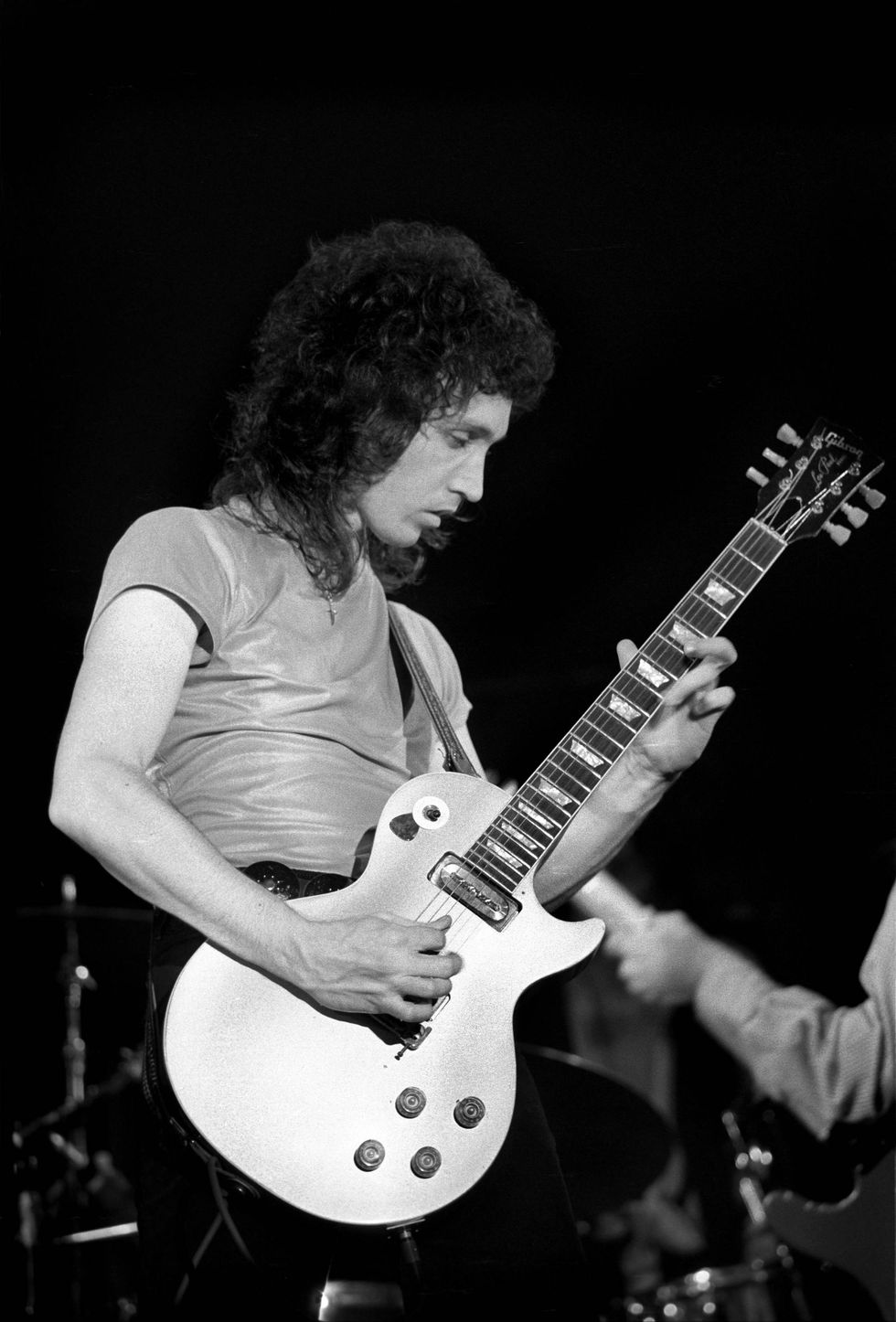
Campbell onstage with the P-90-equipped Les Paul goldtop at the Bottom Line in New York City, November 19, 1977.
Photo by Ebet Roberts“We all ended up in the same room,” Campbell says, “and it was like, boom. Like we’d known each other forever. We all had the same musical DNA, so to speak, and there was this spontaneous excitement—we have a band; we understand each other; we have a thing that’s special to us, and a brotherhood. But at the same time, I think something happened in Tom, and to an extent in me, with the songs. They just started coming out. I guess it was the inspiration of having a band. We couldn’t wait to play new songs for them.”
For Blair, who hadn’t been in Mudcrutch, it felt like the start of something entirely new. “I thought we were totally inventing something,” he says. “It’s a brand new combination of people, and we get together and create this incredible music that Tom started catering to. He would write things knowing that we could play this stuff.”
Origins has given him a different perspective. “I didn’t realize till really just this year, with all the releases of Tom’s earlier stuff from before I even met him, what a champion he was—a champion of the songwriting craft and the singing,” Blair says. “So I’ve had to humble myself a little. I threw in my part to make the Heartbreakers what they were, but Tom was just a comet traveling through the universe, and we kind of hooked onto that and changed the trajectory a little. It was already headed down the road, fully formed.”
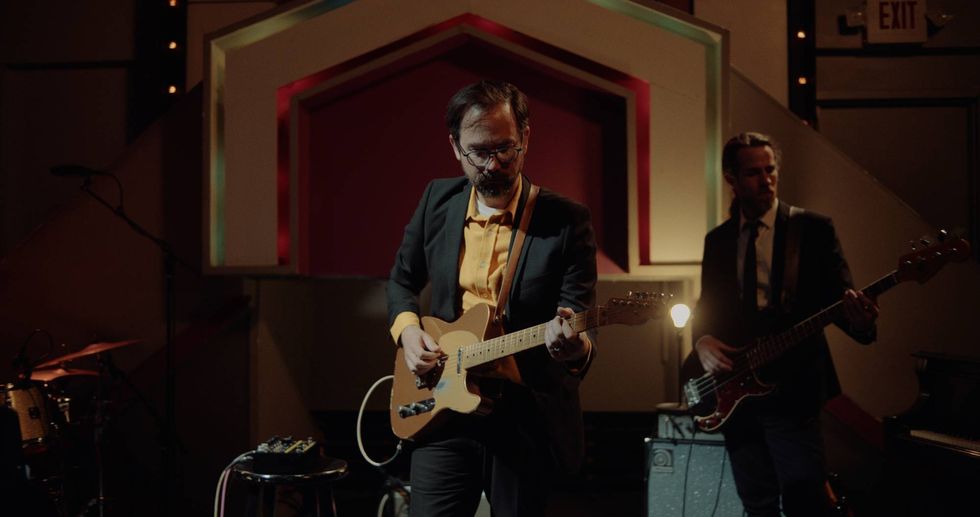
Listen to the Heartbreakers material on Origins, particularly the remixed first two albums, and the guitar sound is basically courtesy of three instruments: the Broadcaster, the Les Paul, and a ’64 Stratocaster that Campbell handed off to Petty when the latter switched from bass to rhythm guitar. “The Les Paul was great for sustain and thicker tones,” Campbell says—you can hear it on first album cuts like “Strangered in the Night” and “Fooled Again (I Don’t Like It)”—“and the Broadcaster [“Breakdown,” “American Girl”] had the chime and the ring that fit with Tom’s Strat.”
“We didn’t really quite know what we were doing, and I think that’s a lot of the beauty of those early records. But you can hear us figuring it out.” —Benmont Tench
The Les Paul also had a quirk you can see in the Whistle Test footage: Its P-90s were missing their covers, leaving the coils exposed. Campbell assumed it was by design. “I was so naive. I thought they were custom pickups,” he says. “I found out later they were proper P-90s, just with the covers off.”
As for amps? In the studio, both guitarists ran through a Fender Tweed Deluxe and Super Six Reverb, the latter of which was “kind of bright,” Campbell says. “But we used that as well as the Tweed, which we got at a club in Florida, and that I still use when I’m recording. That was pretty much what Tom and I played through.”
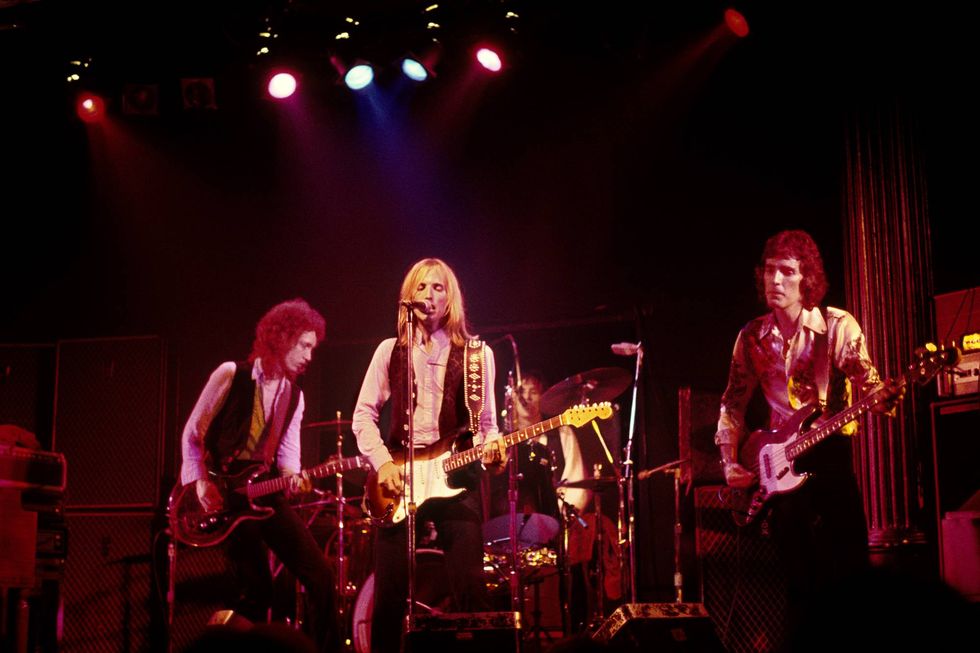
Campbell, Petty, and Blair onstage at the Bottom Line, November 19, 1977.
Photo by Ebet RobertsAs players, Campbell continues, “I always seemed to find parts that seemed to be what he was looking for, and that made me feel like I was contributing to making the song better. I didn’t work too many things out before I recorded them. I liked the spontaneity of an accident.”
Indeed, as Blair puts it, the approach on those early records was “akin to the Clash—just get in there and bang it out. Do something cool.” And their producer, Denny Cordell, encouraged it. “He was more of a guru,” Campbell says. “He was not musically minded, per se, technically, but he knew what a good song was, and he knew how it should feel, and he knew how to build confidence in us.” Campbell adds that, to this day, the self-titled debut remains his favorite Heartbreakers album. “You can feel the kinetic energy of discovery as we’re becoming a band and we’re getting the songs and we’re starting to find our sound,” he says. “I can hear the excitement of, ‘Wow, we might be good. This is a good song. Let’s bring in another one.’”
And according to Tench, it was all about the songs. “Tom kept bringing in songs of that quality throughout his life, until the very end,” he says. “It would’ve been easy to take for granted that every song we were going to get was going to be that quality. Because when Mudcrutch broke up and I looked around for bands to play in, I auditioned for tons of bands in L.A., and they were bloody awful. There were no songs as good as the ones Tom had been writing. The songs were fantastic, but also the band was the right band for him.”
This past September, the surviving original Heartbreakers reunited at the Americana Honors & Awards at Nashville’s Ryman Auditorium. With Chris Stapleton on vocals, Campbell, Tench, Blair, and Lynch performed together for the first time since the band’s 2002 Rock and Roll Hall of Fame induction. They opened with “American Girl,” and “immediately, a wave of feelings just came over me,” Campbell says. “I looked out and I could feel Tom’s energy. So in a way it was kind of sad, but at the same time, I felt, ‘This is good. He would’ve liked this.’”
“Tom was just a comet traveling through the universe, and we kind of hooked onto that and changed the trajectory a little.” —Ron Blair”
From there, they kicked into another debut album classic, “Breakdown.” “When Stan started the beat, and we slipped into that, it was like, ‘Okay, I’m home. I am completely home. This is how this goes,’” Tench recalls.
But as special as that moment was, Campbell tempers expectations about more performances. “To be honest with you, without Tom, I don’t really see the point,” he says. “I love the guys, and it’s a great band, but it was a great band with him. My gut feeling is that if we all show up and start playing, it’s like, ‘Well, where’s the guy? Where’s the leader? Where’s the juice that makes this whole thing work?’”
“Tom was the engine,” Tench says. “You can’t plug in a new engine.”
That doesn’t mean they can’t enjoy what’s already there. For Blair, Origins has been a chance to hear it all with fresh ears. “If I walk into Home Depot and I hear ‘American Girl’ or something, it just brings back, ‘Oh, my god, the hardest song to ever mix,’” he says. “There must have been four or five of us around the board. But Ryan [Ulyate]’s remix just sounds so freaking amazing. I was going, ‘This stuff sounds way better than I remember it.’
“So I’m getting to relive it in a different way,” he continues. “I’m getting untraumatized by all the dilemmas of making it, and I’m trying to look at it like I’ve just discovered it. And it’s kind of blowing my mind. I mean, how do you plan for 50 years ahead? To be in a band and have it still going on, and we can still play… that’s a miracle.”
“It’s a great American dream story,” Adria adds. “Tom had to find the humility of, ‘Okay, I’m gonna go get signed,’ and then go, ‘Yeah, but I need my hometown guys to do this right.’ And that’s what he did. It’s a quintessential story, and it’s a true one.”