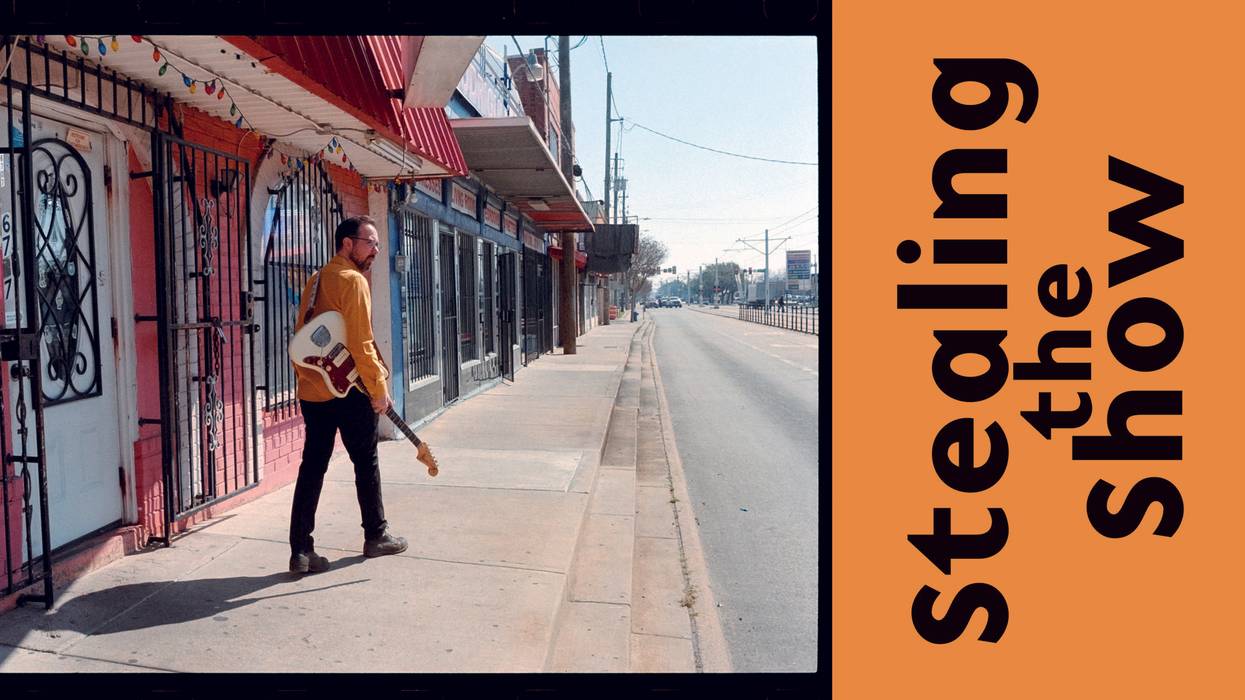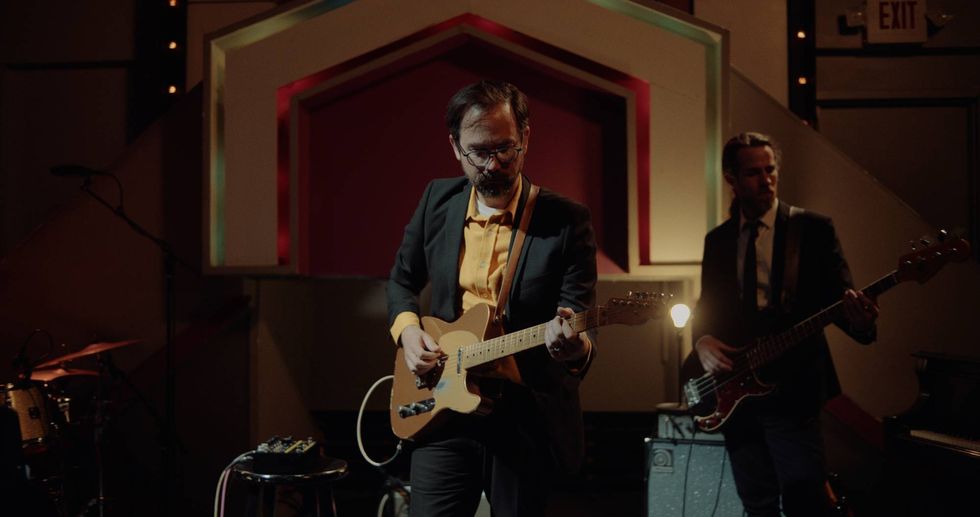



A key credit on Buddy Miller’s new album reads, simply, “Made by Buddy Miller,” not “produced.”
“I like to keep expectations low,“ he jokes. But, of course, that’s entirely impossible given Miller’s blue-ribbon history. He’s served as an inventive foil for bandleaders like Robert Plant and Alison Krauss, Emmylou Harris, Jim Lauderdale, and Patty Griffin. He’s stacked up production credits with Plant, his wife and frequent musical partner Julie Miller, and a slew of others, including Griffin, Solomon Burke, Richard Thompson, the Wood Brothers, Allison Moorer, and the War and Treaty. Plus, Miller has one of the most interesting guitar approaches in Nashville—a mix of outside and inside playing that has become his signature.
Another complication for his humility—which is very real—is that the just-released Buddy Miller is his first solo album in 15 years, which merits plenty of attention.
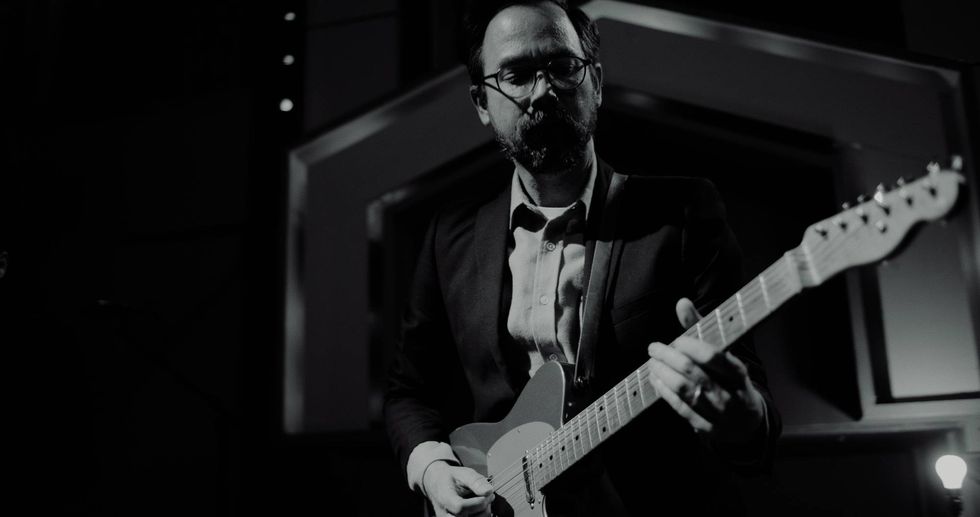
Miller's guitar opens the record like Jimmy Page plucking his way into “Black Dog”—worrying a single note. As the song, “As Long As I Have You,” unfurls, his reverb-attired tones get looser and louder as they work to the solo, a blend of stuttering and soaring phrases that would sound as at home on a Marc Ribot album as they do on this country stomper. It’s a bared-teeth strategy that often colors the spunkier side of Miller’s playing, harnessing the timeless power of reverb and vibrato, balancing tastefulness and wild, ragged, emotional expression.
But guitar’s only half the enchilada.
If Buddy Miller were a character in Jules Verne’s novel Journey to the Center of the Earth—which he certainly is not—he’d be Professor Lidenbrock, the learned geologist who figures out how to unlock the deepest secrets of the planet. But Buddy is a different breed of spelunker—an omnivorous song miner who knows where the gems are and how to drill into their core to reveal their brightest colors.
“Robert [Plant] told me he never considered Led Zeppelin a blues band. He said they were avant-garde. I get that.”
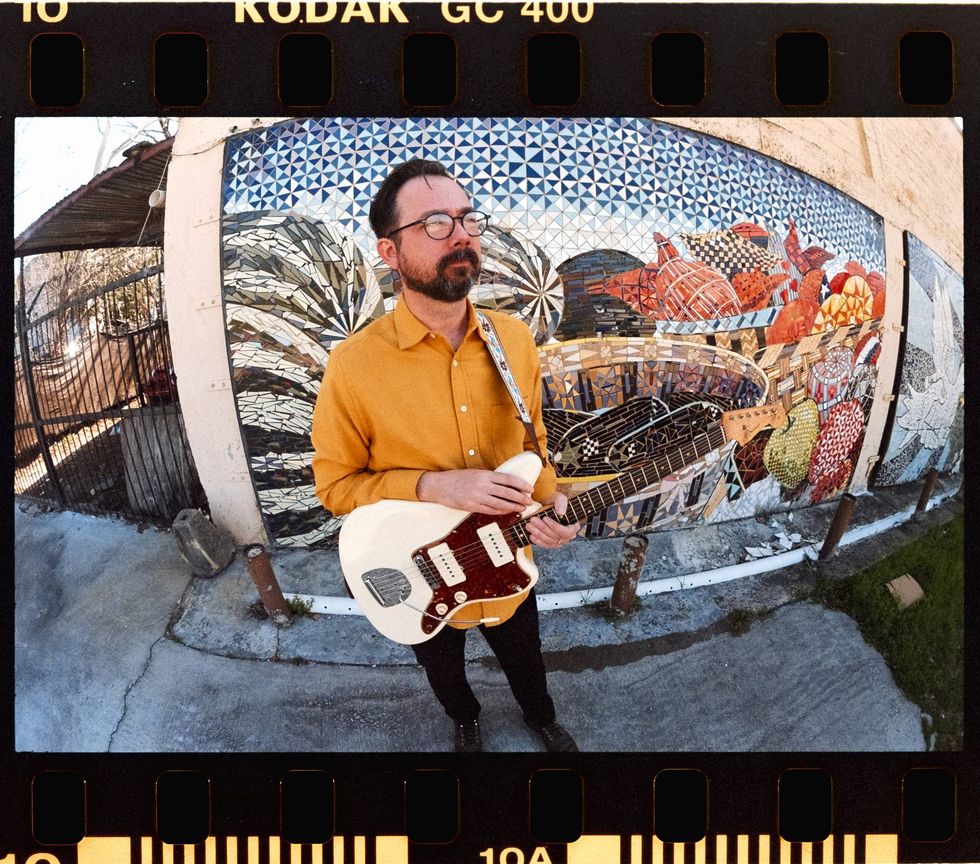
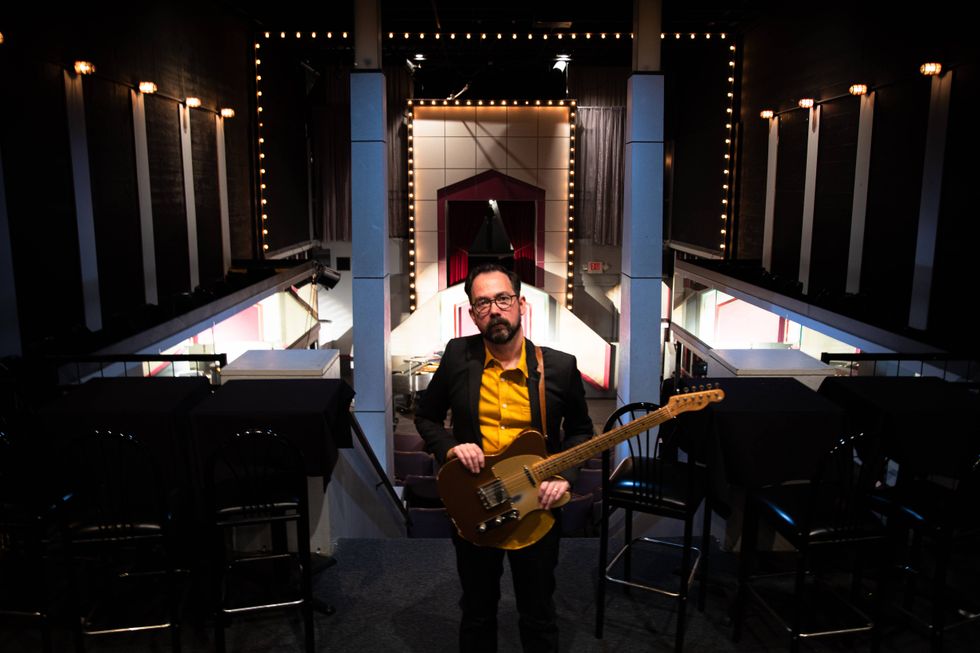
Chopping into the dozen aural geodes on Buddy Miller, the crystals—particularly of country and soul music and the points where they intersect—are revealed. “As Long As I Have You,” for example, was originally a 1964 hit by the r&b singer Garnet Mimms. Folk icon Jesse Winchester’s “Lay Down the Burden of Your Heart” becomes a stunning-but-gentle gospel in Buddy’s vision, thanks to a spare arrangement that gives guest vocalists the War and Treaty license to linger over every syllable of the song’s absolution through love. Two previously unrecorded tunes written by Julie Miller, “Ruby Hang On” and “The Inner Sanctum of God,” are prayers for hope. And so, themes of redemption, rebirth, challenge, and change—all elements of classic soul—echo throughout the album alongside Miller’s beloved Wandre guitars and a play-weathered ’67 Telecaster.
Although Buddy Miller features a long list of collaborators that also includes Dan Penn, vocal dynamos the McCrary Sisters, Lauderdale, folk-rocker Shawn Colvin, and a core band of bassist Viktor Krauss, drummer Fred Eltringham, pedal steeler Steve Fishell, keyboardist Tim Lauer, and fiddler Fats Kaplin, Miller says it was relatively quick and easy to make.
“I approached this album a little differently,” Miller continues. “Once the idea arrived, I called my label and said, ‘Would you be interested in a record of some of my favorite soul songs with collaborators on it?’ They said ‘sure,’ but it didn’t turn out to be that, entirely. Beside a list of songs that I love, I found some older songs Julie had written that I knew we had to record. And the core band are friends who know my codes, so that made things easy. We did three days of tracking.”
To prime the sessions, “I set up a little station over there,” he says, gesturing across the sunny room where we’re seated to an area stocked with two amps, a pedalboard, and an array of easily reachable guitars. “I recorded myself singing and playing, so the band could get a feel for the songs. The guys even played to some of those recordings, which became the final takes. That kind of closes off some options you might get when recording live with a band, but maybe for the next one I’ll go out in space, because I do love that! But this time it was recording simple songs that I wanted to sing with people.”
“The most important thing is to create a setting so the songs can breathe and tell their stories.”
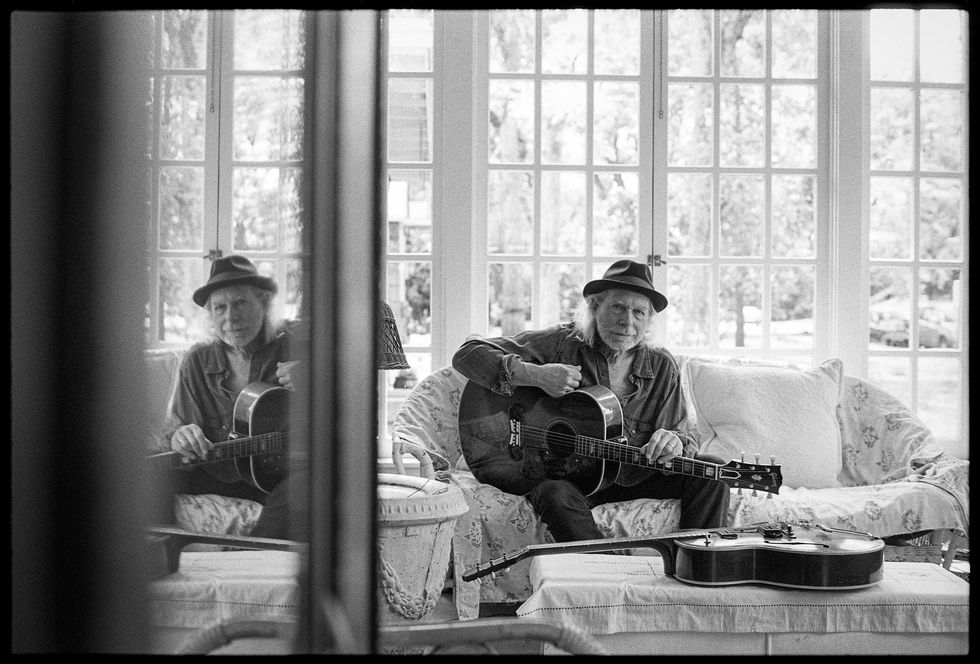
Buddy Miller’s in-home studio has plenty of sunlight as well as guitars. Birdwatcher Richard Thompson enjoyed the avian life outside these windows while he recorded solos for 2013’s Miller-“made” Electric.
Photo by Michael WilsonVocalizing with the great songwriter Dan Penn, one of the revered writers for the Muscle Shoals and Memphis hit machines, was particularly important to Miller, who came of age with Southern soul as an important ingredient in his stew of influences. Penn and Miller shared vocals on the Temptations’ “Don't Look Back,” and Miller cut the 84-year-old giant’s “Not Enough Time to Change” as a ballad for piano and horns.
Miller shares his taste for blending deep roots and occasional orbital sonics with Robert Plant. The two began collaborating on the Raising Sand tour with Alison Krauss in 2007 and continued working through the formative period of Plant’s Band of Joy. Both Miller and Plant began their careers during the freewheeling late ’60s, when rock ’n’ roll seemed like a wide-open frontier, with no creative fences. And they’ve carried that notion forward.
“Robert told me he never considered Led Zeppelin a blues band,” Miller relates. “He said they were avant-garde. And I get that. But for me, the most important thing is to create a setting so the songs can breathe and tell their stories.”
Miller’s journey to mastery has been steered by an intense work ethic. Decades before he stood onstage with the likes of Plant, Krauss, and Harris—and made cameos like his annual appearance as bandleader of the Americana Music Association’s televised awards ceremony at Nashville’s historic Ryman Auditorium—he started in garage bands.
“It’s like it was in the beginning for me now. It’s just the magic of making music—as much about singing as it is playing.”
At 17, fueled by the thrill of the Beatles and the old-timey music he loved, Miller joined a working group in upstate New York that traveled to the West Coast for a record deal that fizzled. They had to play on the steps of UC Berkeley to earn gas money to get home. Back in the New York/New Jersey area, he joined a country-rock band and became spellbound by the songs he heard by Texas songwriters like Guy Clark and Townes Van Zandt. So his next stop was Austin in 1975.
After five years of hard gigging, during which he met and played in a band with Julie, they moved to New York City. The Millers played the Lone Star Cafe and other urban watering holes before briefly moving to Los Angeles and then to Nashville, where Buddy had been showcasing regularly with country singer-songwriter Jim Lauderdale. (Today, Miller and Lauderdale host the Buddy & Jim Show on SiriusXM radio.) In Music City, the Millers found a more roots-friendly and affordable environment, and Buddy and Julie’s career as songwriters and collaborators took off, as did Buddy’s own trajectory as a bandleader, guitarist-for-hire, and producer.
 Photo by Michael Wilson
“When you’re broke, you take any work you can as long as it’s good and it resonates—and even when I’d gotten on firm footing, I kept taking work, because I got into the habit of not ever saying no,” Miller explains. “It’s a survival instinct, and it takes a while to let go of that.” Besides 2019’s Breakdown on 20th Ave. South and 2023’s In the Throes, which were both literal in-house projects with Julie, Miller hasn’t produced a full album for another artist since he made Healing Tide with the War and Treaty in 2018.
Another new wrinkle in Miller’s recording process was his use of the Universal Audio Dream ’65 Reverb-Amp pedal. “I tend to go with whatever’s handy for guitars or gear,” he says. “So I was messing with solos, and it was late at night. Julie was asleep, so I plugged into the Dream ’65. When I came back and listened to it two days later, I thought, ‘That sounds good.’ I try not to overthink things, you know?” He’s also been a longtime user of Universal’s OX reactive amp attenuator with speaker modeling. At one time, an OX box sat atop each amp in his stereo setup. (“I love that stereo thing,” Miller notes. “Anything to help me get lost.”)
“You’ve got to find that thing that turns the switch in you … that gets you obsessed with it. For me, that was everything about guitar, everything about music.”
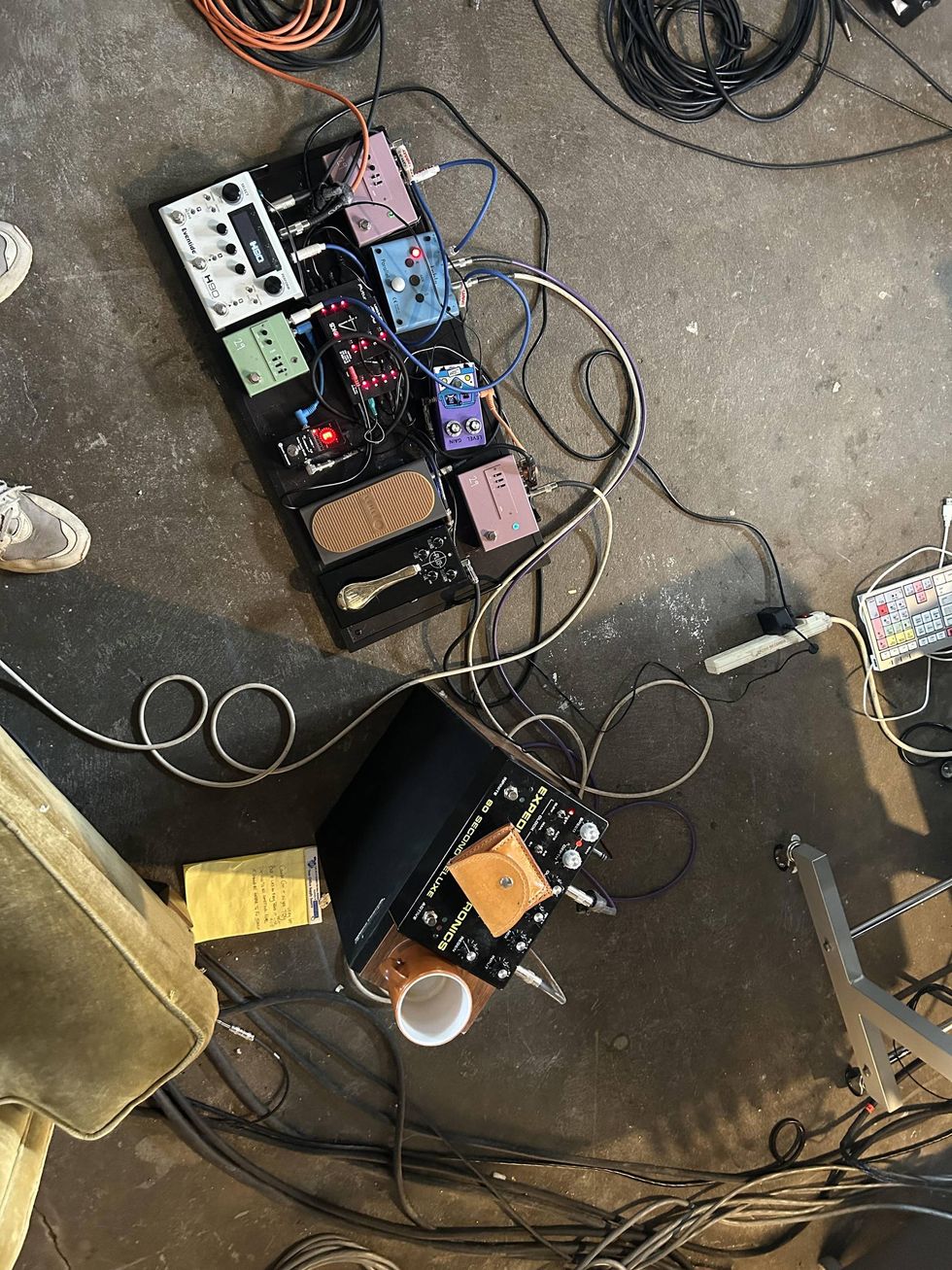
Currently, he plays through a Swart AST Pro and a Fender Deluxe tube reissue. And his pedal array is fairly simple, but enough to cover the aural waterfront: a Boss TU-3W tuner, a vintage Boss VB-2, an Xotic Effects RC Booster, an Analog Man King of Tone, a Fulltone Supa-Trem2, a Strymon Volante Magnetic Echo Machine, and a Strymon MultiSwitch Plus.
“These days, I only want to make records if it feels right,” Miller says. “I didn’t have to do this record. Nobody was waiting for a record from me. The label wasn't asking me. It’s like it was in the beginning for me now. It’s just the magic of making music—as much about singing as it is playing.
“You’ve got to find that thing that turns the switch in you … that gets you obsessed with it. For me, that was everything about guitar, everything about music. I didn’t have a whole lot of friends growing up. I had my record player. And then I found a friend that was like me, and off I went. It’s just about getting lost in the songs.”
Buddy Miller’s Gear
Guitars
- Vintage Wandre electrics (2)
- 1967 Fender Telecaster
Amps
- Swart AST Pro
- Fender Deluxe Reverb reissue
Strings
- D’Addario NYXL (.010–.046)
Effects
- Boss TU-3W
- Boss VB-2
- Xotic Effects RC Booster
- Analog Man King of Tone
- Fulltone Supa-Trem2
- Strymon Volante Magnetic Echo Machine
- Strymon MultiSwitch Plus