The legendary country musician and his right-hand man, guitarist Kenny Vaughan, prove that Fender guitars through Fender amps can still take you a long way in this world.
Today, we’re excited to bring you a Rig Rundown that we’ve been chasing for years: country legend Marty Stuart, and his right-hand man in his band the Fabulous Superlatives, Kenny Vaughan. Stuart and the Superlatives hit the road this year supporting their new instrumental record, Space Junk.
PG’s John Bohlinger recently convened with Stuart and Vaughan onstage at the CMA Theater in Nashville, where the duo walked us through the most prized pieces from their bottomless tone trunks. Tune in to get the details and stories in this special Rundown!
“Clarence is like a band member,” Stuart explains of his iconic Telecaster. “Still, in my mind, it’s Clarence’s band.” Stuart procured the Tele, which belonged to guitarist Clarence White, in the 1980s while playing in Johnny Cash’s band. Stuart has only modified two things on it: He moved the “Scruggs” tuning peg from the fifth string, and added a special, Ralph Mooney-built bender for the low E string. It’s triggered by the black “button” beneath the bridge—Mooney drilled a hole in the guitar and installed the rubber footing from one of the legs of his pedal-steel guitar. The rest of the guitar is stock—well, Clarence White-stock. The Jerry Jones sitar to Clarence’s left runs through the upper Deluxe Reverb, and through the Radial PZ-DI direct to front of house.
Stuart’s backup is a 1952 Fender Esquire, which he guesses is the best electric he owns. He bought it off of dealer and friend Danny Shea in New York City; before it entered Shea’s possession, it belonged to Mick Ronson. “You can tune it and come back a week from now, and it’s still in tune,” says Stuart.
Please Sign In
Stuart bought this mandolin from Roland White for $650, and turned it into a guestbook of sorts. It features signatures from Johnny Cash, Doc Watson, and plenty of others. Miked with an AEA Nuvo Series N22 ribbon mic, it sounds “big as a house,” says tech Mick Conley.
California Dreamin’
The “voice” of Stuart’s guitars is a silver-panel Fender Deluxe Reverb that he acquired in California from rental company SIR. “When I plugged into that amp, I saw palm trees and sunsets, and California popped out of the speaker,” recalls Stuart. He played it for three days, then bought it from SIR when he returned.
An AmpRx Brownie powers the pair of Deluxes.
Marty Stuart’s Pedalboard
Stuart’s main tools are a Boss TU-12EX, JHS Mini A/B, Radial BigShot PB-1, and an MXR Six Band EQ, plus an AEA R92 ribbon mic on his Deluxe Reverb. A JHS Switchback effects loop can engage a Keeley Super Phat Mod for solos; the MXR Reverb is on hand in case the Deluxe’s onboard ’verb fails, and the Flamma FS06 has a Deluxe Reverb emulation that shoots to front of house.
Acoustic instruments run through the Radial PZ-DI, and the Radial BigShot ABY is used for large shows when Stuart runs two amps.
Triple Threat
Vaughan’s principle instrument is this 3Bender T-style, built by Wade Black in Arkansas. Custom-made for Vaughan, it sports a pine body, maple cap, 21 frets, and is capable of bending three strings: the A, G, and B. A Fender Stratocaster is on standby.
Dan, Rick, and Marty
This Danelectro DC-12 is tuned to an open F major 9 chord, and runs through one channel of the Vibrolux with a bit of delay and compression. Vaughan plays it with both pickups engaged, and its flat radius makes it a speedy player.
After recording with Mike Campbell’s Rickenbacker 12-string, Vaughan picked up one of his own from a music store in Berry Hill. But this one is unique: It lacks the model’s classic sound hole, has Martin-style trim down its back, and the neck dates to 1969, while the pickups are from the early ’80s. The best hypothesis so far is that it was made by an employee at a music store in Pennsylvania.
The Martin D-45 dates to 1988, and is equipped with a Fishman Matrix pickup
Special ’67
Vaughan trusts his 1967 Vibrolux Reverb, miked, like Stuart, with an AEA R92.
Kenny Vaughan’s Amp and Pedalboard
Vaughan bought his first pedal back in 1966, and from his collection of hundreds, he’s chosen these special few for his live setup. There’s a Peterson Stobostomp, Dunlop volume pedal, Xotic XW-2 wah, Keeley-modded Ibanez Tube Screamer, Xotic SP Compressor and EP Booster, MXR Smartgate and Joshua, and Keeley Magnetic Echo, Comp Mini, Zoma, and Eccos.
Vaughan’s Rickenbacker runs through the Radial Pro-48 to front of house. A JHS Mini A/B handles switching, and the Radial PZ-DI handles acoustics.
The legendary country musician and his right-hand man, guitarist Kenny Vaughan, prove that Fender guitars through Fender amps can still take you a long way in this world.
Today, we’re excited to bring you a Rig Rundown that we’ve been chasing for years: country legend Marty Stuart, and his right-hand man in his band the Fabulous Superlatives, Kenny Vaughan. Stuart and the Superlatives hit the road this year supporting their new instrumental record, Space Junk.
PG’s John Bohlinger recently convened with Stuart and Vaughan onstage at the CMA Theater in Nashville, where the duo walked us through the most prized pieces from their bottomless tone trunks. Tune in to get the details and stories in this special Rundown!
“Clarence is like a band member,” Stuart explains of his iconic Telecaster. “Still, in my mind, it’s Clarence’s band.” Stuart procured the Tele, which belonged to guitarist Clarence White, in the 1980s while playing in Johnny Cash’s band. Stuart has only modified two things on it: He moved the “Scruggs” tuning peg from the fifth string, and added a special, Ralph Mooney-built bender for the low E string. It’s triggered by the black “button” beneath the bridge—Mooney drilled a hole in the guitar and installed the rubber footing from one of the legs of his pedal-steel guitar. The rest of the guitar is stock—well, Clarence White-stock. The Jerry Jones sitar to Clarence’s left runs through the upper Deluxe Reverb, and through the Radial PZ-DI direct to front of house.
Stuart’s backup is a 1952 Fender Esquire, which he guesses is the best electric he owns. He bought it off of dealer and friend Danny Shea in New York City; before it entered Shea’s possession, it belonged to Mick Ronson. “You can tune it and come back a week from now, and it’s still in tune,” says Stuart.
Please Sign In
Stuart bought this mandolin from Roland White for $650, and turned it into a guestbook of sorts. It features signatures from Johnny Cash, Doc Watson, and plenty of others. Miked with an AEA Nuvo Series N22 ribbon mic, it sounds “big as a house,” says tech Mick Conley.
California Dreamin’
The “voice” of Stuart’s guitars is a silver-panel Fender Deluxe Reverb that he acquired in California from rental company SIR. “When I plugged into that amp, I saw palm trees and sunsets, and California popped out of the speaker,” recalls Stuart. He played it for three days, then bought it from SIR when he returned.
An AmpRx Brownie powers the pair of Deluxes.
Marty Stuart’s Pedalboard
Stuart’s main tools are a Boss TU-12EX, JHS Mini A/B, Radial BigShot PB-1, and an MXR Six Band EQ, plus an AEA R92 ribbon mic on his Deluxe Reverb. A JHS Switchback effects loop can engage a Keeley Super Phat Mod for solos; the MXR Reverb is on hand in case the Deluxe’s onboard ’verb fails, and the Flamma FS06 has a Deluxe Reverb emulation that shoots to front of house.
Acoustic instruments run through the Radial PZ-DI, and the Radial BigShot ABY is used for large shows when Stuart runs two amps.
Triple Threat
Vaughan’s principle instrument is this 3Bender T-style, built by Wade Black in Arkansas. Custom-made for Vaughan, it sports a pine body, maple cap, 21 frets, and is capable of bending three strings: the A, G, and B. A Fender Stratocaster is on standby.
Dan, Rick, and Marty
This Danelectro DC-12 is tuned to an open F major 9 chord, and runs through one channel of the Vibrolux with a bit of delay and compression. Vaughan plays it with both pickups engaged, and its flat radius makes it a speedy player.
After recording with Mike Campbell’s Rickenbacker 12-string, Vaughan picked up one of his own from a music store in Berry Hill. But this one is unique: It lacks the model’s classic sound hole, has Martin-style trim down its back, and the neck dates to 1969, while the pickups are from the early ’80s. The best hypothesis so far is that it was made by an employee at a music store in Pennsylvania.
The Martin D-45 dates to 1988, and is equipped with a Fishman Matrix pickup
Special ’67
Vaughan trusts his 1967 Vibrolux Reverb, miked, like Stuart, with an AEA R92.
Kenny Vaughan’s Amp and Pedalboard
Vaughan bought his first pedal back in 1966, and from his collection of hundreds, he’s chosen these special few for his live setup. There’s a Peterson Stobostomp, Dunlop volume pedal, Xotic XW-2 wah, Keeley-modded Ibanez Tube Screamer, Xotic SP Compressor and EP Booster, MXR Smartgate and Joshua, and Keeley Magnetic Echo, Comp Mini, Zoma, and Eccos.
Vaughan’s Rickenbacker runs through the Radial Pro-48 to front of house. A JHS Mini A/B handles switching, and the Radial PZ-DI handles acoustics.
DragonForce shred wizard’s signature SE is specialized but built for lightning speed.
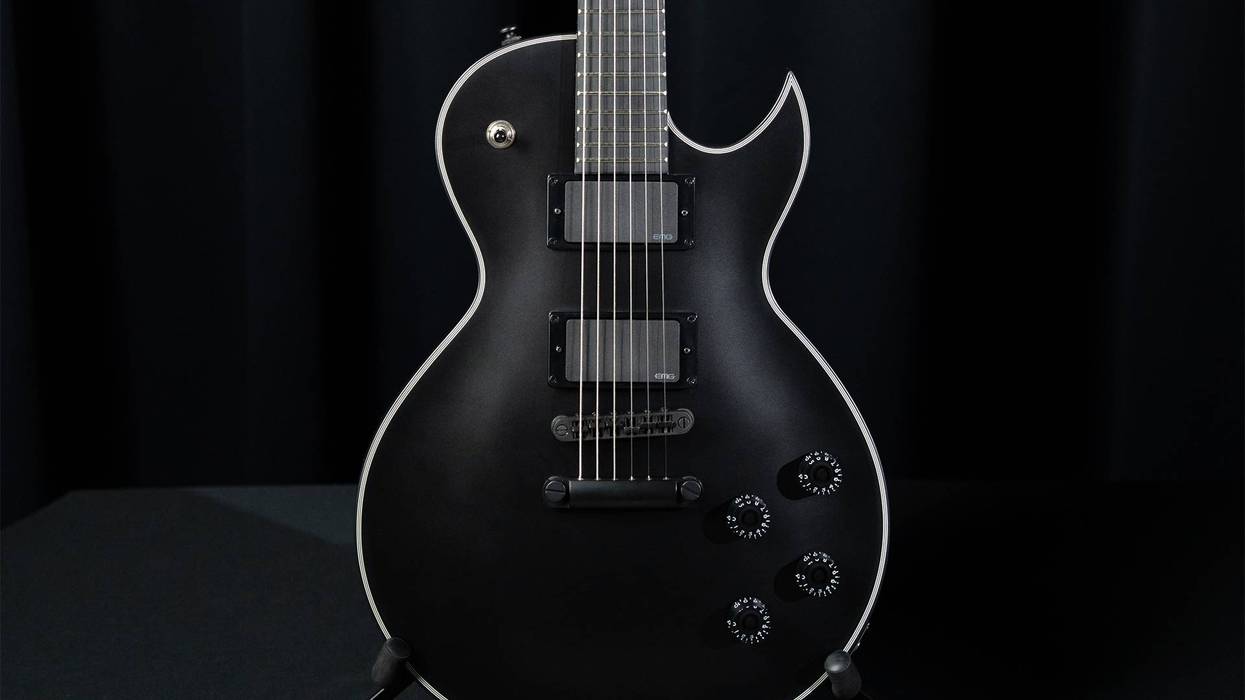
The SE Chleo is the result of an intimate collaboration between PRS Guitars and award-winning guitar player Herman Li. Best known for his work as one of the lead guitar players in the power metal band DragonForce, Li is a demanding guitarist known for his fast and precise playing style. Based on the exclusive 2025 PRS Chleo Limited Edition, this SE signature model is a unique guitar in the PRS lineup designed with the modern metal guitarist in mind. The SE Chleo boasts the same Fishman Fluence Signature Series Omniforce Herman Li pickups as the Limited Edition that preceded it. With three distinct voices and a versatile switching system, the guitar offers up to 13 unique tone combinations.
“With the PRS SE Chleo, we set out to create the best affordable guitar that delivers a unique combination of effortless playability, outstanding craftsmanship, and versatile tonal range. It combines modern innovations with classic style, giving players the tools they need to create everything from classic tones to cutting edge new sounds. The SE Chleo proves that a world-class instrument doesn’t have to break the bank—it’s a guitar that brings high-end performance within reach for everyone,” said Herman Li.
In addition to the Charcoal Purple Burst and Orchid Dusk that the Limited Edition models were offered in, the SE Chleo introduces a third color, Mantis Burst.
PG contributor Tom Butwin explores the versatile Pulze Mini from Hotone. The size of a smartphone, the Pulze mini sports full-featured modeling engine, extensive app control, and even a built-in USB audio interface. With 52 amp models, 48 cabinet simulations, 20 user-loaded IR slots, 7-slot effects chains, and up to 11.5 hours of battery life on headphones, you can practice anywhere, anytime.
Larkin Poe’s Rebecca and Megan Lovell join Axe Lords to talk guitars, their new album Bloom, their blood-harmony superpowers, and how building a recording studio with your spouse is a terrific way to test the structural integrity of a relationship—not to mention your credit card limit.
Rebecca walks us through how she became the reluctant lead singer, why she mostly relies on the bridge humbucker in her Strat, and how open tunings both elevate your riffs and ruin your life onstage. Meanwhile, Megan traces her lap-steel journey from a back-breaking vintage Rickenbacker to her signature model Electro-Liege. Warning: You may think you suck at music after she rips an improvised episode outro for us!
Axe Lords is presented in partnership with Premier Guitar. Hosted by Dave Hill, Cindy Hulej and Tom Beaujour. Produced by Studio Kairos. Executive Producer is Kirsten Cluthe. Edited by Justin Thomas at Revoice Media. Engineered by Patrick Samaha. Recorded at Kensaltown East. Artwork by Mark Dowd. Theme music by Valley Lodge.
Follow @axelordspod for updates, news, and cool stuff.